Another wheel day (and so on).

A customer brought in front and rear wheels built with ENVE 1-45 rims that we'd built for them in the past.

On the opposite side of the valve hole, the brake zone on the right side of the front wheel (based on the hub logo) had this melted appearance from heat sag.

And on the exact opposite side, the brake zone was buckled and bulged outward with protruding bumps.

The rear wheel showed a similar pattern, with bulging on the right side at the opposite phase from the valve hole.

The left side had almost no bulging, but the finish had changed color.

↑This is what other phases look like, for reference
Why does this happen right opposite the valve hole? ENVE rims have a seal patch on the opposite side of the valve hole where a removable valve hole cover was once present. That sealed portion is weaker when it comes to buckling and heat retention.

↑This is a 1-25 rim, and you can see where Swiss Stop Yellow King brake pads—which are on the harder end for carbon rim pads—melted and bonded to the rim. Once that happens, every braking creates more heat buildup in that area where the yellow pad meets the yellow rim coating compared to other spots. Once bulging starts (as you can see in the image above), brake pad debris gets trapped and collected, creating a vicious cycle of even more heat buildup.

↑The cover came off, but I didn't deliberately remove it—it just stuck to the tubular tape when we removed the tire. Shimano and Easton rims also have similar covers opposite the valve hole. With early batches of Shimano WH-7801C, that cover was actually aluminum.

We're rebuilding these wheels with Nomu Lab Wheel #2 rims. For the rear wheel, most of the Leaf hub bearings needed replacement and the spoke length wasn't reusable, so I already built a different rear wheel using a 660 hub the other day. If we could have just transferred the rim, I might have just replaced the bearings instead.

The front wheel was an Evolite hub, 20H, CX-RAY inpoke radial build, but we're changing it to an outpoke radial build. The spoke length for the new build is shorter, so the spokes can't be reused. The parts we're transferring are the front hub and the front and rear tubular tires.

↑This is what the cover phase looks like after removing the front tire

Done building it.

Evolite hub, 20H, CX-RAY outpoke radial build. Oh, and the original front wheel's nipples were the third-generation brass nipples from ENVE's four generations of nipples, and I reused those as well.
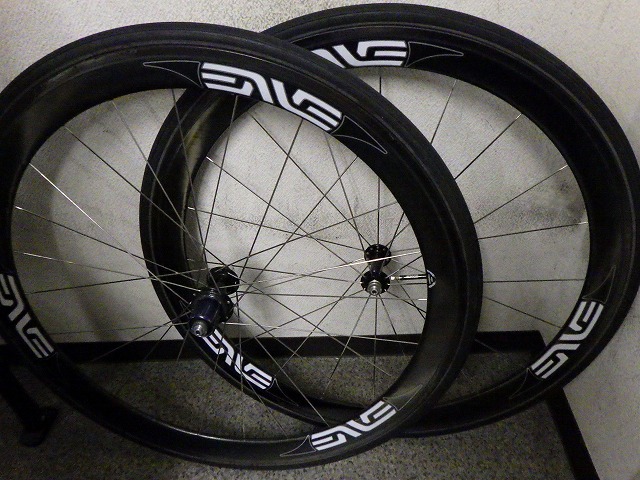
A customer brought in front and rear wheels built with ENVE 1-45 rims that we'd built for them in the past.

On the opposite side of the valve hole, the brake zone on the right side of the front wheel (based on the hub logo) had this melted appearance from heat sag.

And on the exact opposite side, the brake zone was buckled and bulged outward with protruding bumps.

The rear wheel showed a similar pattern, with bulging on the right side at the opposite phase from the valve hole.

The left side had almost no bulging, but the finish had changed color.

↑This is what other phases look like, for reference
Why does this happen right opposite the valve hole? ENVE rims have a seal patch on the opposite side of the valve hole where a removable valve hole cover was once present. That sealed portion is weaker when it comes to buckling and heat retention.

↑This is a 1-25 rim, and you can see where Swiss Stop Yellow King brake pads—which are on the harder end for carbon rim pads—melted and bonded to the rim. Once that happens, every braking creates more heat buildup in that area where the yellow pad meets the yellow rim coating compared to other spots. Once bulging starts (as you can see in the image above), brake pad debris gets trapped and collected, creating a vicious cycle of even more heat buildup.

↑The cover came off, but I didn't deliberately remove it—it just stuck to the tubular tape when we removed the tire. Shimano and Easton rims also have similar covers opposite the valve hole. With early batches of Shimano WH-7801C, that cover was actually aluminum.

We're rebuilding these wheels with Nomu Lab Wheel #2 rims. For the rear wheel, most of the Leaf hub bearings needed replacement and the spoke length wasn't reusable, so I already built a different rear wheel using a 660 hub the other day. If we could have just transferred the rim, I might have just replaced the bearings instead.

The front wheel was an Evolite hub, 20H, CX-RAY inpoke radial build, but we're changing it to an outpoke radial build. The spoke length for the new build is shorter, so the spokes can't be reused. The parts we're transferring are the front hub and the front and rear tubular tires.

↑This is what the cover phase looks like after removing the front tire

Done building it.

Evolite hub, 20H, CX-RAY outpoke radial build. Oh, and the original front wheel's nipples were the third-generation brass nipples from ENVE's four generations of nipples, and I reused those as well.