Another wheel day (and so on).
It wasn't supposed to be that kind of wheel, but...
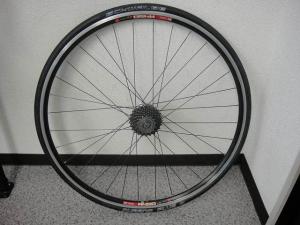
I received a PowerTap rear wheel on consignment.
The customer is requesting a hub overhaul.
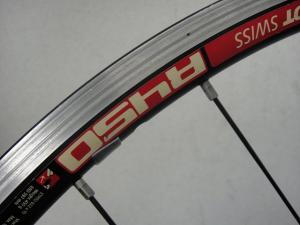
The rim is a DT R450.

It was built with a 4-cross pattern, but the non-drive side was definitely loose...
Lately I'm not really building regular wheels (symmetrical left and right spoke count), so
maybe this is just how "normal hand-built" wheels are these days.
Since I ended up disassembling it anyway, I didn't check the centering,
but it's safe to say the rim was either perfectly centered or very close.
In that state, the spoke tension on the freewheel side was sufficiently tight.
Apologies if this comes across as condescending, but it's built correctly.
The DT R450 has roughly the same rim depth as Kinlin's XR200,
but the spoke tension on the freewheel side of this wheel
is about 105% of what I'd normally use when building a Nomu Lab Wheel No. 5.
This is very close to the rim's limit value.
(By "not normal" I mean cases where I'm told to "tension it tight")
All the spokes are black DT Competition,
so in blog-speak, this is "full Competition 4-cross".
If the freewheel side spoke tension is adequate and the rim center is true,
then you're stuck in a dead end.
(If you try to bring up the loose non-drive side, the rim shifts toward the non-drive side,
and you can't shift the rim back toward the freewheel side
without compromising spoke tension—that's the situation).
While maintaining the obvious prerequisite that the rim is centered,
when you bring the freewheel side spoke tension to this value,
with this hub, these spokes, and this lacing pattern,
the ratio of non-drive side spoke tension to freewheel side tension
will be the same regardless of who builds it.
What I usually write about here is
"with ordinary, unremarkable materials—no special hub designs—
I want to maximize this ratio as much as possible".
Actually, I showed a customer in the shop today
how this wheel and the Nomu Lab Wheel No. 5
have "nearly identical freewheel side Competition spoke tension (this wheel slightly higher),
yet the No. 5 has significantly more tension on the non-drive side".
I try to write about this occasionally, but
there's nothing magical about "wheels that I (Nomu Lab) built".
That kind of nonsense should be eliminated first thing.
It's not a sin for buyers to lack knowledge about wheels,
but it is a sin for sellers to be that way.
I think the same conclusion emerges whether you analyze something analytically or digitally,
but this industry rampantly mixes analog analysis with occult nonsense
to take advantage of buyers' ignorance (other industries might be the same).
I've heard recently that this blog has made it harder for shops to deceive customers,
but that's not my concern.
I can just quietly do work that doesn't require deceiving customers,
so there's no problem if it becomes harder to do so.
The bicycle shop industry traditionally has
an atmosphere where "it's okay for sellers to be arrogant".
There are plenty of pompous old-timers who lecture from on high,
but if this were any other type of independent retail shop, it would've gone under long ago.
I think this contributes to the intimidating image (hard to enter shops)
and drives people toward mail order...
Oh, I need to stop here—getting dangerous. Plus I'm way off-topic.
Going back a bit, what's impressed me recently about
left-right equal diameter spokes with left-right different spoke count is
a 28-hole PowerTap with full Competition 4-8 lacing.
When several customers squeezed the spokes,
they couldn't help but laugh at how little difference there was between sides.
"The non-drive side seems tighter," some said,
but that's impossible.
That sensation is an effect of the "lacing pattern" itself.
That's why I distinguish between "true spoke tension" and "apparent spoke tension".
"Spoke tension" is "the tension" "on the spoke",
so it's independent of spoke thickness.
It's "the tension acting on a spoke of a particular gauge".
The force by which the nipple threatens to break through the rim—what I call "RK" (my blog's neologism)—
is not in pure proportion to spoke tension; it relates to cross-sectional area and such.
If it were directly proportional, there'd be no need to create the term RK.
To those who recently commented "I built a front wheel with different-diameter spokes":
the tension meter numbers work out that way, but
what I'm looking at isn't the difference itself, but the "something" that emerges from it.
I want to eliminate the left-right difference in this "something".
This relates not to "making spoke extension more tangential"
but to "keeping spoke count below the bisecting line while maximizing the number of spokes on the non-drive side as much as possible"
when building.
Oh, I can't write more about this. I've gone off on a tangent in a different direction from before.
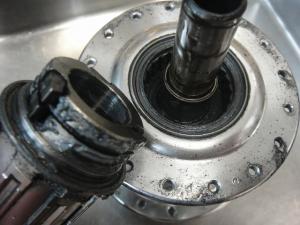
With the customer's permission, I'm rebuilding it as 4-6 lacing.
So I'm disassembling the wheel.
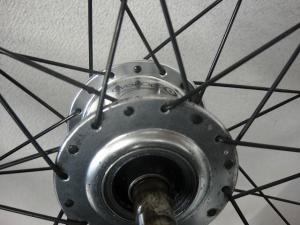
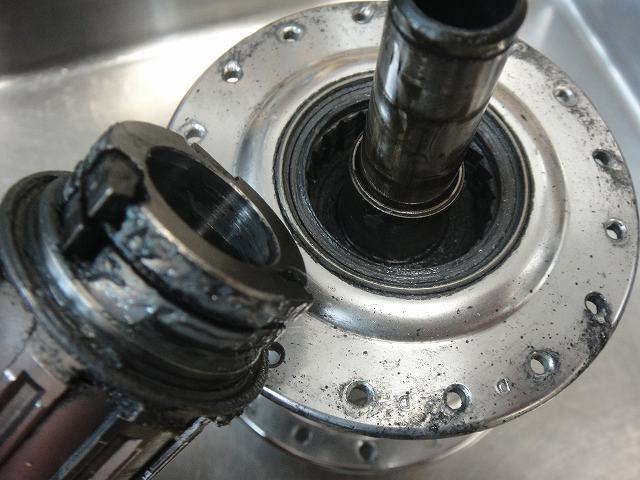
Inside the hub, the grease wasn't just dirty—it was completely dried out.
The seal on the freewheel body stuck to the hub shell rather than the freewheel body itself.
It's not a definitive indicator, but
it seems like there's a high probability of this happening when grease dries up (no scientific basis).
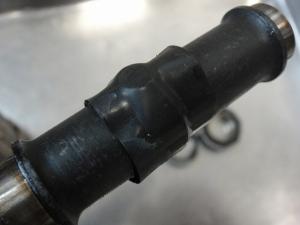
The unenthusiastic tape was
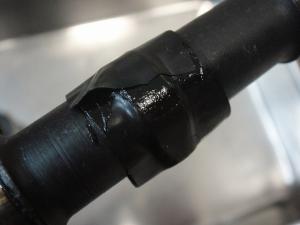
its adhesive had started seeping, so
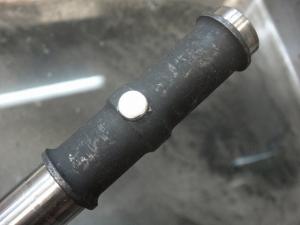

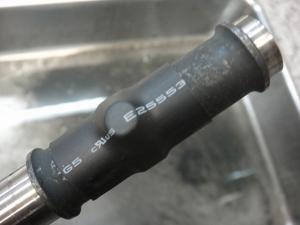
I did the usual heat-shrink tubing treatment.
The bearings in PowerTap hubs have a loose press fit.
Compared to, say, Mavic, it's quite loose.
Since the bearings themselves are standard parts, there shouldn't be much variation in manufacturer tolerances
or between individual units from the same manufacturer,
so the bearing press fit surface on the hub must be oversized.
With a new PowerTap hub, I don't usually pull the bearings just to swap the magnet tape
for heat-shrink tubing.
But with PowerTap hubs, since the bearing press fit is loose as mentioned,
pulling new bearings shouldn't cause any damage.
If someone says "it's new but I'd like the heat-shrink tubing treatment," I'll do it,
so please let me know.
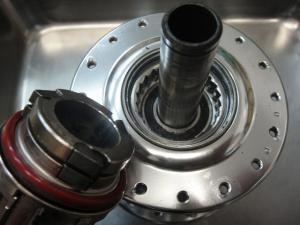
Got it cleaned up
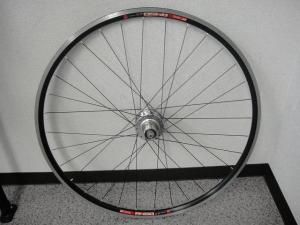
All built up
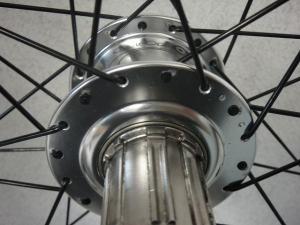
Quietly swapped reverse Italian lacing for Italian lacing
(I'm so used to big letters that no one will notice in this small font)
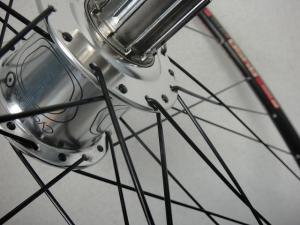
Anyway, something I always say:
shiny silver hubs are really nice.
It wasn't supposed to be that kind of wheel, but...
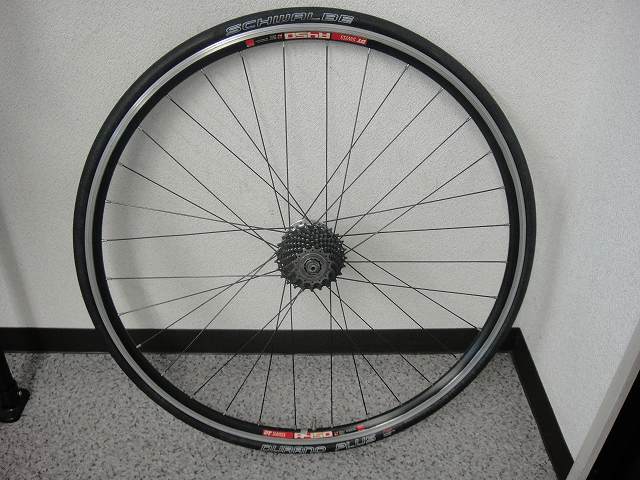
I received a PowerTap rear wheel on consignment.
The customer is requesting a hub overhaul.
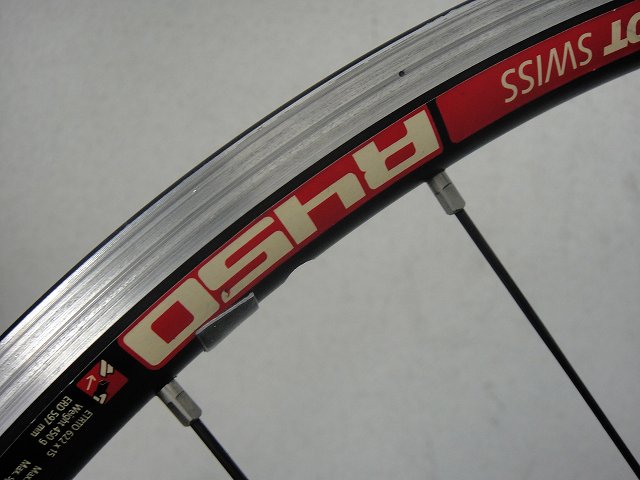
The rim is a DT R450.
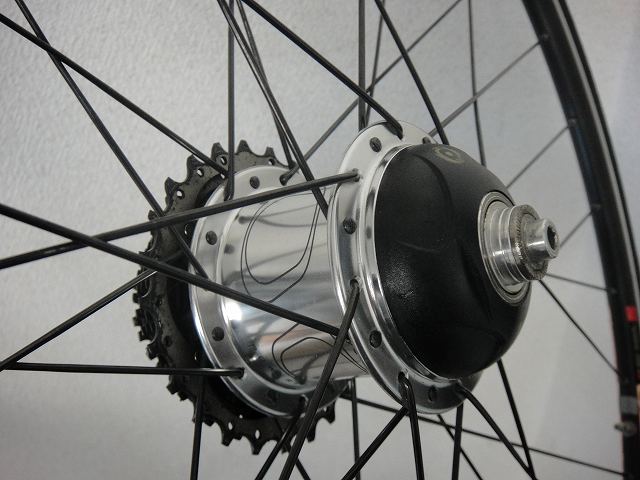
It was built with a 4-cross pattern, but the non-drive side was definitely loose...
Lately I'm not really building regular wheels (symmetrical left and right spoke count), so
maybe this is just how "normal hand-built" wheels are these days.
Since I ended up disassembling it anyway, I didn't check the centering,
but it's safe to say the rim was either perfectly centered or very close.
In that state, the spoke tension on the freewheel side was sufficiently tight.
Apologies if this comes across as condescending, but it's built correctly.
The DT R450 has roughly the same rim depth as Kinlin's XR200,
but the spoke tension on the freewheel side of this wheel
is about 105% of what I'd normally use when building a Nomu Lab Wheel No. 5.
This is very close to the rim's limit value.
(By "not normal" I mean cases where I'm told to "tension it tight")
All the spokes are black DT Competition,
so in blog-speak, this is "full Competition 4-cross".
If the freewheel side spoke tension is adequate and the rim center is true,
then you're stuck in a dead end.
(If you try to bring up the loose non-drive side, the rim shifts toward the non-drive side,
and you can't shift the rim back toward the freewheel side
without compromising spoke tension—that's the situation).
While maintaining the obvious prerequisite that the rim is centered,
when you bring the freewheel side spoke tension to this value,
with this hub, these spokes, and this lacing pattern,
the ratio of non-drive side spoke tension to freewheel side tension
will be the same regardless of who builds it.
What I usually write about here is
"with ordinary, unremarkable materials—no special hub designs—
I want to maximize this ratio as much as possible".
Actually, I showed a customer in the shop today
how this wheel and the Nomu Lab Wheel No. 5
have "nearly identical freewheel side Competition spoke tension (this wheel slightly higher),
yet the No. 5 has significantly more tension on the non-drive side".
I try to write about this occasionally, but
there's nothing magical about "wheels that I (Nomu Lab) built".
That kind of nonsense should be eliminated first thing.
It's not a sin for buyers to lack knowledge about wheels,
but it is a sin for sellers to be that way.
I think the same conclusion emerges whether you analyze something analytically or digitally,
but this industry rampantly mixes analog analysis with occult nonsense
to take advantage of buyers' ignorance (other industries might be the same).
I've heard recently that this blog has made it harder for shops to deceive customers,
but that's not my concern.
I can just quietly do work that doesn't require deceiving customers,
so there's no problem if it becomes harder to do so.
The bicycle shop industry traditionally has
an atmosphere where "it's okay for sellers to be arrogant".
There are plenty of pompous old-timers who lecture from on high,
but if this were any other type of independent retail shop, it would've gone under long ago.
I think this contributes to the intimidating image (hard to enter shops)
and drives people toward mail order...
Oh, I need to stop here—getting dangerous. Plus I'm way off-topic.
Going back a bit, what's impressed me recently about
left-right equal diameter spokes with left-right different spoke count is
a 28-hole PowerTap with full Competition 4-8 lacing.
When several customers squeezed the spokes,
they couldn't help but laugh at how little difference there was between sides.
"The non-drive side seems tighter," some said,
but that's impossible.
That sensation is an effect of the "lacing pattern" itself.
That's why I distinguish between "true spoke tension" and "apparent spoke tension".
"Spoke tension" is "the tension" "on the spoke",
so it's independent of spoke thickness.
It's "the tension acting on a spoke of a particular gauge".
The force by which the nipple threatens to break through the rim—what I call "RK" (my blog's neologism)—
is not in pure proportion to spoke tension; it relates to cross-sectional area and such.
If it were directly proportional, there'd be no need to create the term RK.
To those who recently commented "I built a front wheel with different-diameter spokes":
the tension meter numbers work out that way, but
what I'm looking at isn't the difference itself, but the "something" that emerges from it.
I want to eliminate the left-right difference in this "something".
This relates not to "making spoke extension more tangential"
but to "keeping spoke count below the bisecting line while maximizing the number of spokes on the non-drive side as much as possible"
when building.
Oh, I can't write more about this. I've gone off on a tangent in a different direction from before.
With the customer's permission, I'm rebuilding it as 4-6 lacing.
So I'm disassembling the wheel.
Inside the hub, the grease wasn't just dirty—it was completely dried out.
The seal on the freewheel body stuck to the hub shell rather than the freewheel body itself.
It's not a definitive indicator, but
it seems like there's a high probability of this happening when grease dries up (no scientific basis).
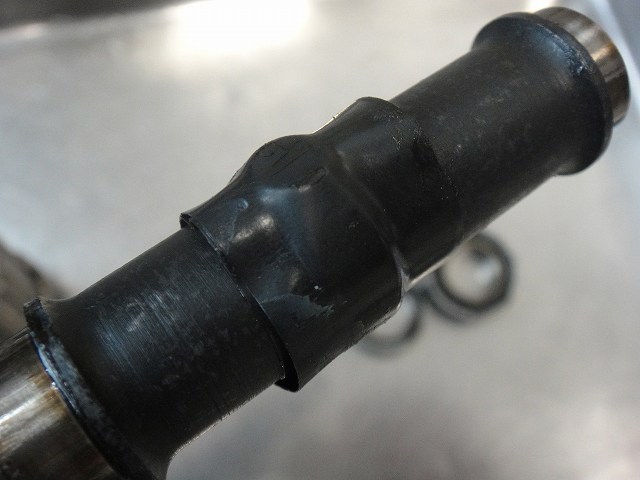
The unenthusiastic tape was
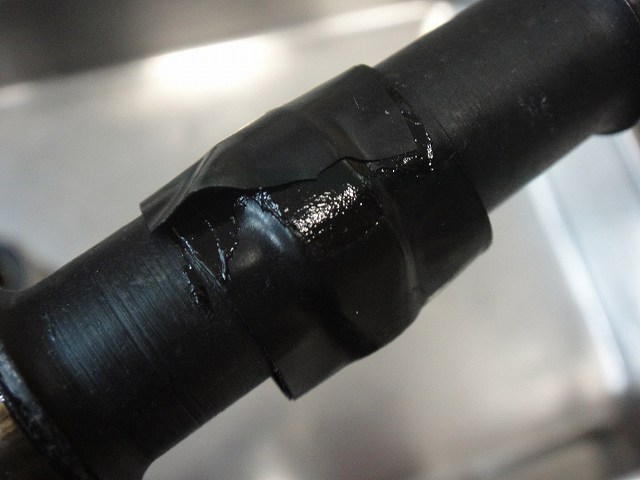
its adhesive had started seeping, so
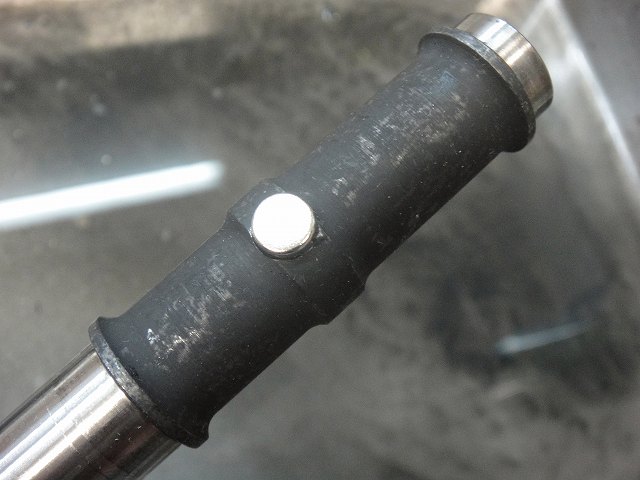
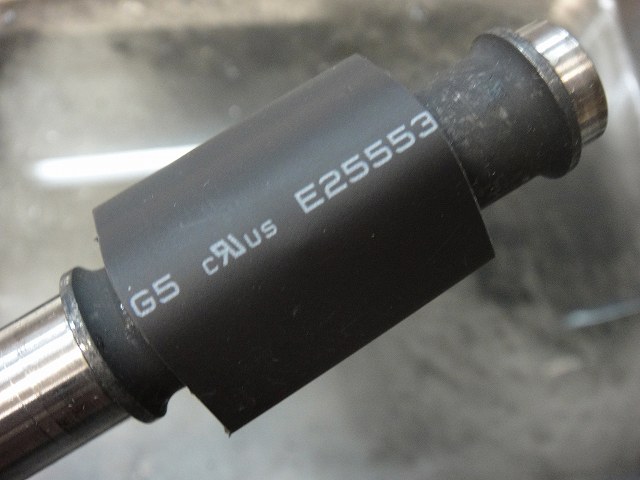
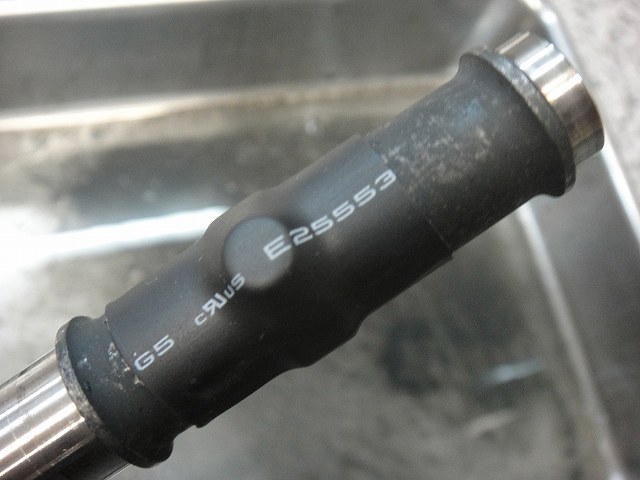
I did the usual heat-shrink tubing treatment.
The bearings in PowerTap hubs have a loose press fit.
Compared to, say, Mavic, it's quite loose.
Since the bearings themselves are standard parts, there shouldn't be much variation in manufacturer tolerances
or between individual units from the same manufacturer,
so the bearing press fit surface on the hub must be oversized.
With a new PowerTap hub, I don't usually pull the bearings just to swap the magnet tape
for heat-shrink tubing.
But with PowerTap hubs, since the bearing press fit is loose as mentioned,
pulling new bearings shouldn't cause any damage.
If someone says "it's new but I'd like the heat-shrink tubing treatment," I'll do it,
so please let me know.
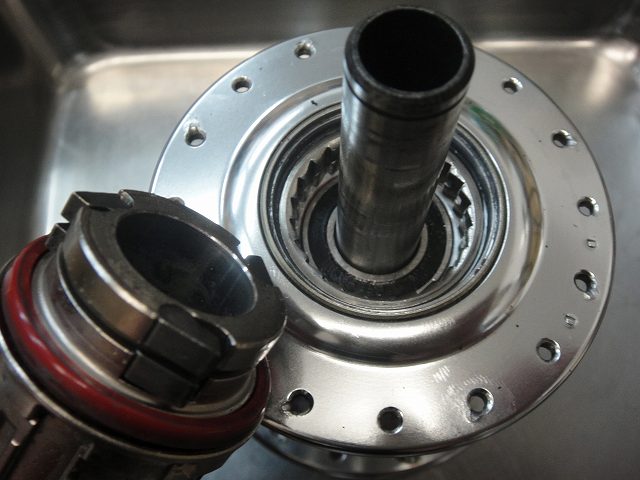
Got it cleaned up
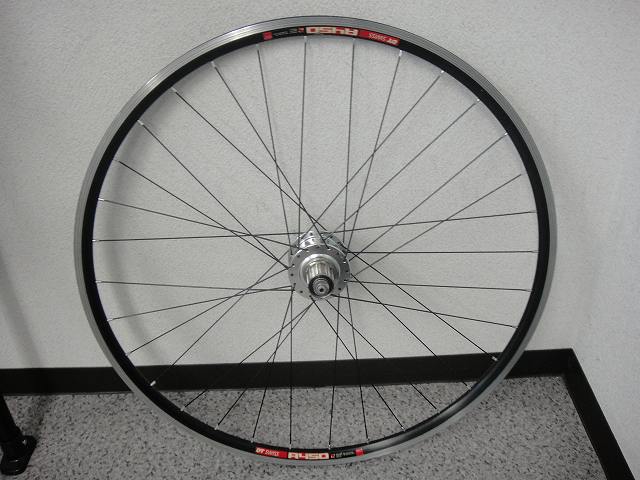
All built up
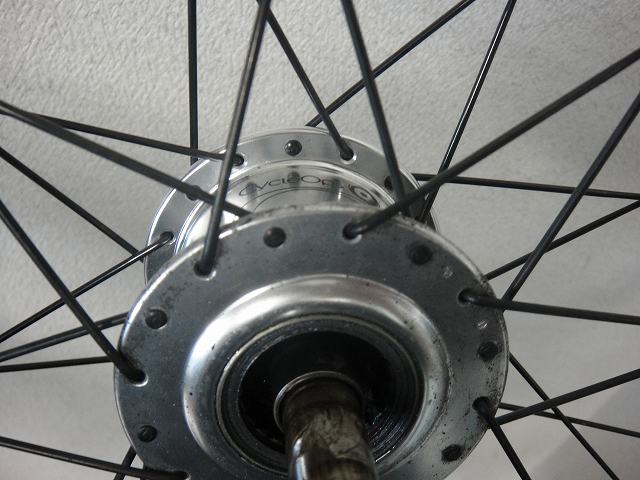
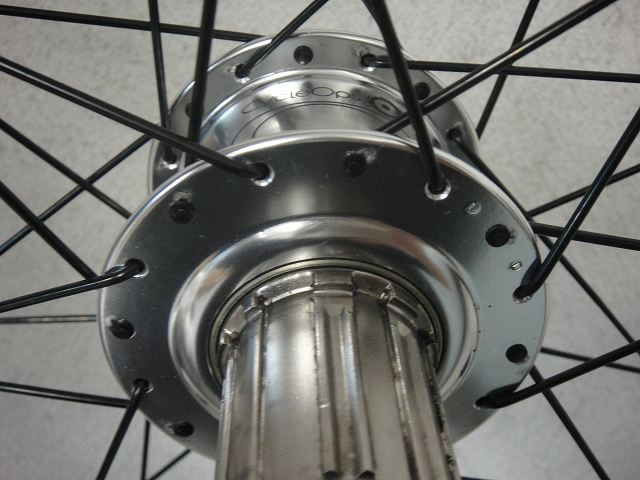
Quietly swapped reverse Italian lacing for Italian lacing
(I'm so used to big letters that no one will notice in this small font)
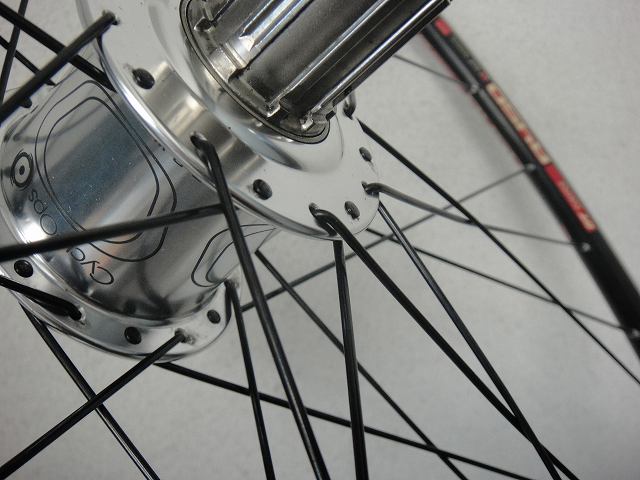
Anyway, something I always say:
shiny silver hubs are really nice.