I had several damaged winter gloves in my collection, so I threw them out and personally purchased a pair of Tni's Windtex gloves.
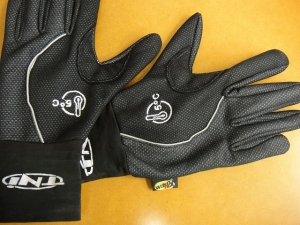
Tni's winter gloves used to come in two models:
"Windstopper Gloves" and "Windtex Gloves."
The current winter glove lineup only has the Windtex model now,
but these are different from the old Windtex gloves.
That's why I wrote "New" in the title, though I'm just doing that on my own—
the product name is still just "Windtex Gloves."
The old Windtex gloves had thick velcro at the wrist for fastening,
but the current model has the same shape as the old Windstopper Gloves that used to be available.
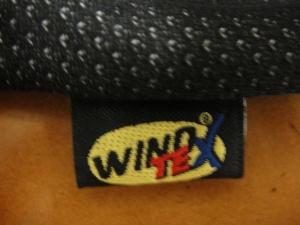
Windtex is the name of a fabric made by Italy's VAGOTEX company,
while Windstopper is the name of a fabric made by America's GORE company.
It would be rude to rank them as upper and lower from different companies, but
I think Windstopper offers better wind and cold resistance
(at least if the fabric thickness is the same).
Gloves and apparel made with Windstopper also tend to be pricier
than those made with Windtex.
Back when there were two models, the Windstopper Gloves were definitely the more expensive option.
The Windstopper Gloves had the Windstopper logo
(that red octagon with "WIND STOPPER" on it) sewn onto the back of the hand,
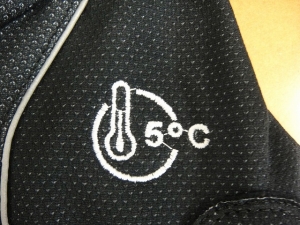
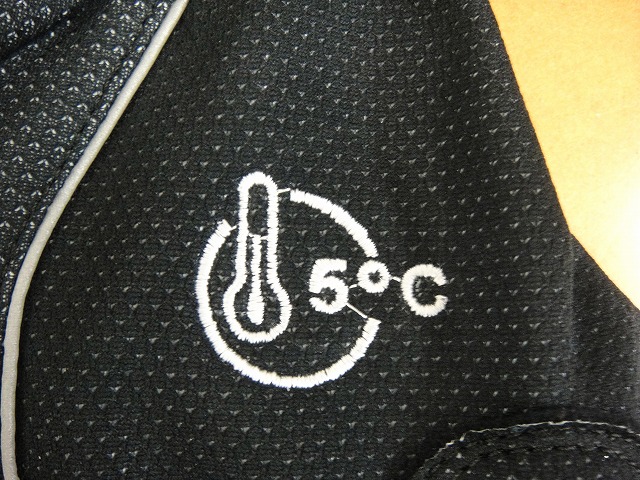
and featured embroidery reading "−5℃".
The old Windtex Gloves didn't have this embroidery.
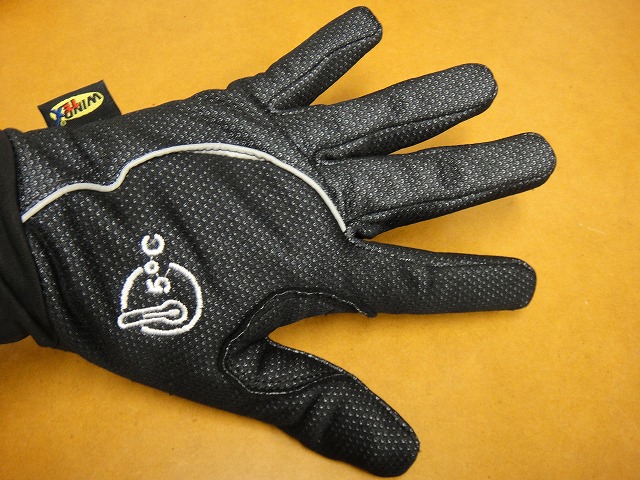
As for the new Windtex Gloves,
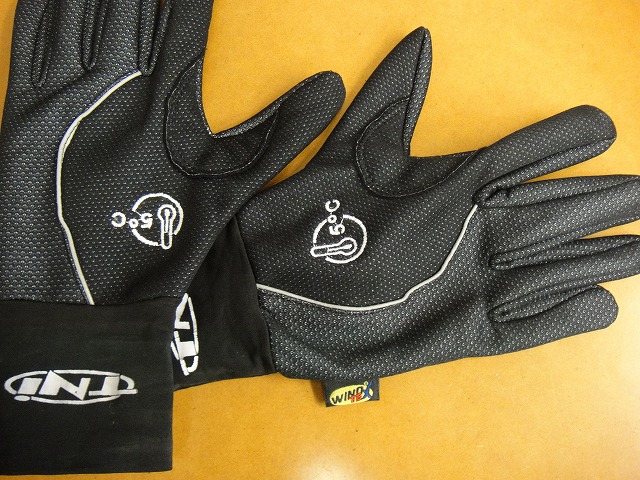
they have embroidery reading "5℃" instead of "−5℃".
Either way, there's really no guarantee that they'll be fine at that temperature,
but I kind of like how they're being a bit modest and revising downward—
there's a certain honesty in that attention to detail.
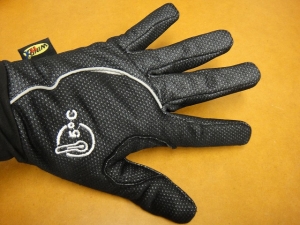
So I held the back of my glove to my mouth and blew hard,
and absolutely no wind came through.
As far as wind resistance goes, it seems equivalent to Windstopper.
The real difference comes down to the thermal insulation and warmth of the fabric itself.
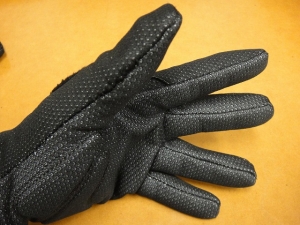
That said, gloves with overkill cold protection can get sweaty and uncomfortable.
For winter cycling in Osaka, this level of protection is honestly more than enough.
I can say with confidence because I know from experience—
the new Windtex Gloves are definitely warmer than the old model.
They've moved quite a bit toward Windstopper-level performance.
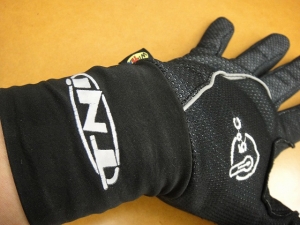
The wrist area is made of stretchy material, but getting your hand through is quite tight.
This is unavoidable if you want the warmth.
(It's not an unpleasantly restrictive tightness, though.)
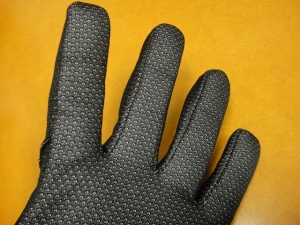
And when you spread your fingers, they look like this,
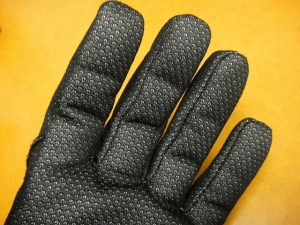
but in a relaxed state the knuckles show through.
This is partly because the fabric is thinner than Windstopper,
but also because the fingers are cut a bit snugly.
The importer, Tri-Sports, recommends going "one size larger,"
but it doesn't feel undersized so much as the fingers are tight
and the wrist is hard to get through.
They come in S, M, and L, and I found L works for me.
Even if XL existed, I think L would still be fine.
Guys with really large hands might struggle a bit with L.
Because the fingers are fairly snug and the fabric isn't too thick,
I find lever operation is actually quite easy.
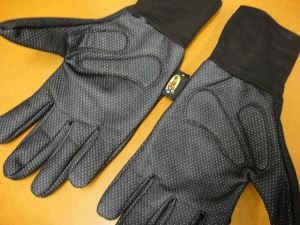
I also like that the palm padding is thin.
I don't like how drop bars feel more distant when you grip the brake lever,
so I prefer thin palms.
The fabric was stiff and somewhat rough at first, and the lining felt scratchy,
which made my hands itch. But after one wash, both issues completely disappeared.
This is something I heard from a Tri-Sports person way back,
but Tni does 100% quality inspection of their gloves before shipping.
Apparently someone spends their time transferring inspected gloves
from cardboard boxes on one side to boxes on the other,
but there's only one inspector, and nobody else can even tell
what's wrong with the rejected gloves.
Maybe they can spot sewing defects that only become visible with experience,
or maybe it's something like "the middle finger on the right hand is too tight, reject."
If they're doing inspection at the level of determining chick gender,
the defect rate should be lower, if not zero.
Rejecting defective (or potentially defective) items before sale is a cost negative—
it requires labor costs and the rejected items don't sell.
But in the long run, it's definitely a plus.
"So this is how manufacturers and brands build their reputation,"
was the takeaway from that conversation.
Tni's winter gloves used to come in two models:
"Windstopper Gloves" and "Windtex Gloves."
The current winter glove lineup only has the Windtex model now,
but these are different from the old Windtex gloves.
That's why I wrote "New" in the title, though I'm just doing that on my own—
the product name is still just "Windtex Gloves."
The old Windtex gloves had thick velcro at the wrist for fastening,
but the current model has the same shape as the old Windstopper Gloves that used to be available.
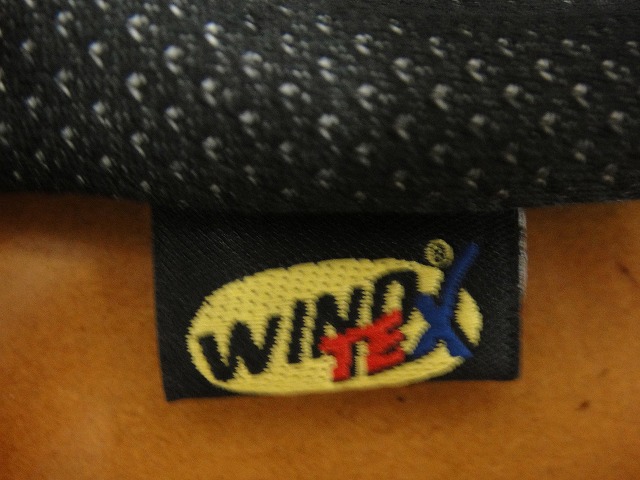
Windtex is the name of a fabric made by Italy's VAGOTEX company,
while Windstopper is the name of a fabric made by America's GORE company.
It would be rude to rank them as upper and lower from different companies, but
I think Windstopper offers better wind and cold resistance
(at least if the fabric thickness is the same).
Gloves and apparel made with Windstopper also tend to be pricier
than those made with Windtex.
Back when there were two models, the Windstopper Gloves were definitely the more expensive option.
The Windstopper Gloves had the Windstopper logo
(that red octagon with "WIND STOPPER" on it) sewn onto the back of the hand,
and featured embroidery reading "−5℃".
The old Windtex Gloves didn't have this embroidery.
As for the new Windtex Gloves,
they have embroidery reading "5℃" instead of "−5℃".
Either way, there's really no guarantee that they'll be fine at that temperature,
but I kind of like how they're being a bit modest and revising downward—
there's a certain honesty in that attention to detail.
So I held the back of my glove to my mouth and blew hard,
and absolutely no wind came through.
As far as wind resistance goes, it seems equivalent to Windstopper.
The real difference comes down to the thermal insulation and warmth of the fabric itself.
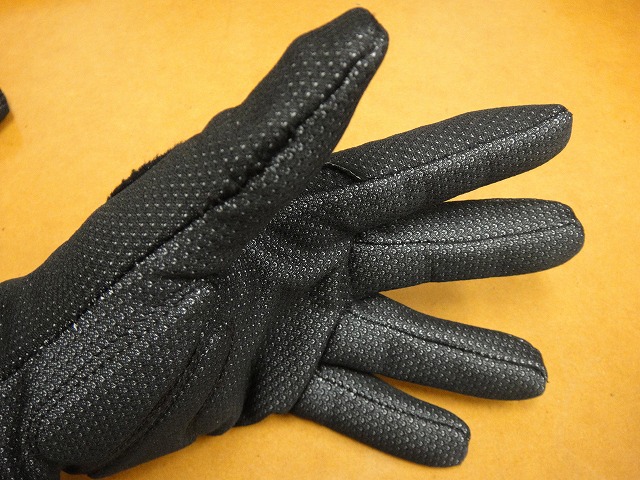
That said, gloves with overkill cold protection can get sweaty and uncomfortable.
For winter cycling in Osaka, this level of protection is honestly more than enough.
I can say with confidence because I know from experience—
the new Windtex Gloves are definitely warmer than the old model.
They've moved quite a bit toward Windstopper-level performance.
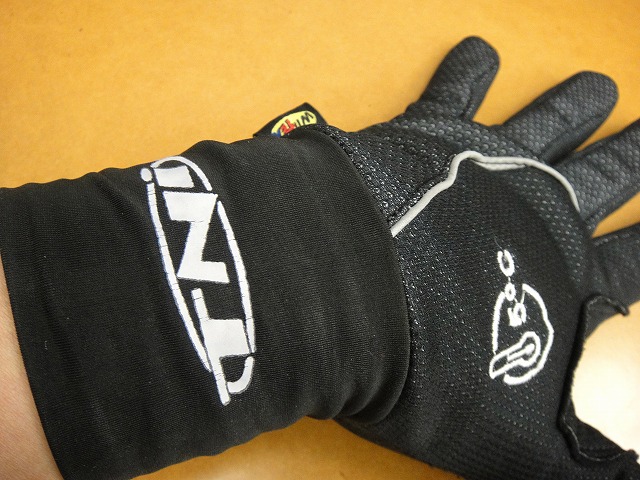
The wrist area is made of stretchy material, but getting your hand through is quite tight.
This is unavoidable if you want the warmth.
(It's not an unpleasantly restrictive tightness, though.)
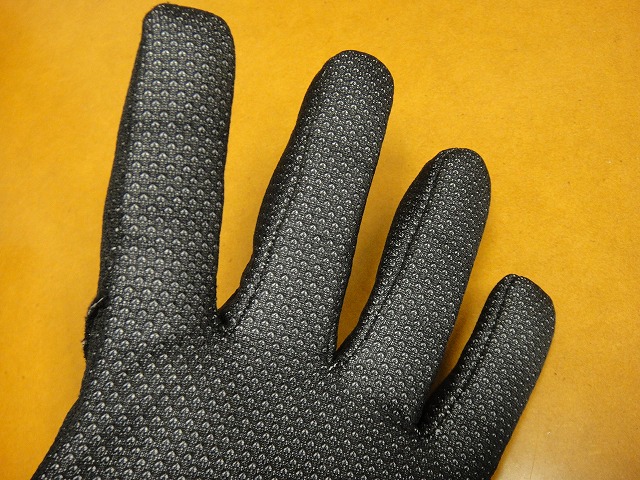
And when you spread your fingers, they look like this,
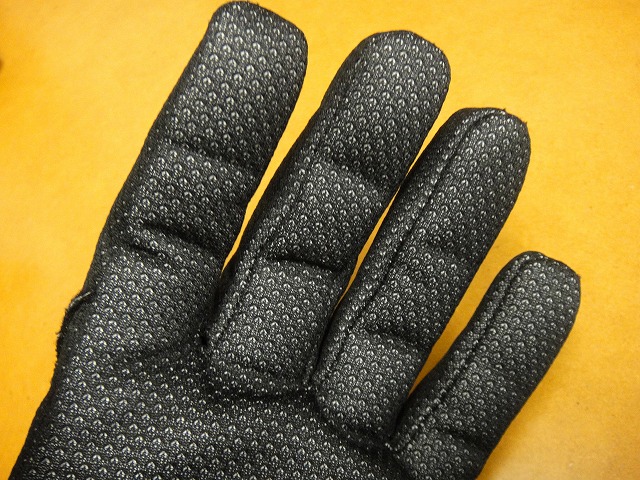
but in a relaxed state the knuckles show through.
This is partly because the fabric is thinner than Windstopper,
but also because the fingers are cut a bit snugly.
The importer, Tri-Sports, recommends going "one size larger,"
but it doesn't feel undersized so much as the fingers are tight
and the wrist is hard to get through.
They come in S, M, and L, and I found L works for me.
Even if XL existed, I think L would still be fine.
Guys with really large hands might struggle a bit with L.
Because the fingers are fairly snug and the fabric isn't too thick,
I find lever operation is actually quite easy.
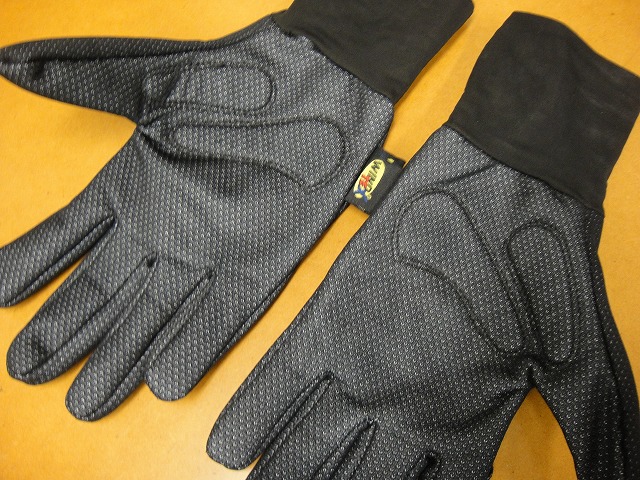
I also like that the palm padding is thin.
I don't like how drop bars feel more distant when you grip the brake lever,
so I prefer thin palms.
The fabric was stiff and somewhat rough at first, and the lining felt scratchy,
which made my hands itch. But after one wash, both issues completely disappeared.
This is something I heard from a Tri-Sports person way back,
but Tni does 100% quality inspection of their gloves before shipping.
Apparently someone spends their time transferring inspected gloves
from cardboard boxes on one side to boxes on the other,
but there's only one inspector, and nobody else can even tell
what's wrong with the rejected gloves.
Maybe they can spot sewing defects that only become visible with experience,
or maybe it's something like "the middle finger on the right hand is too tight, reject."
If they're doing inspection at the level of determining chick gender,
the defect rate should be lower, if not zero.
Rejecting defective (or potentially defective) items before sale is a cost negative—
it requires labor costs and the rejected items don't sell.
But in the long run, it's definitely a plus.
"So this is how manufacturers and brands build their reputation,"
was the takeaway from that conversation.