Another wheel day (and so on).
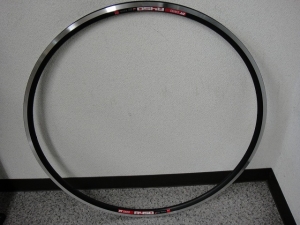
A customer dropped off a DT R450 rim with me.

This rim has indicator notches spaced at 45° intervals on each side—eight of them total.
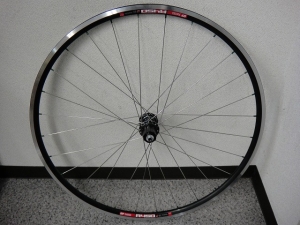
Got it built up.
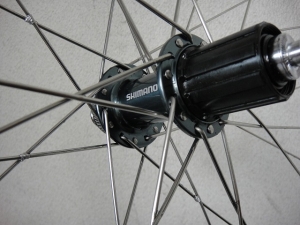
Hub is a Shimano FH-CX75,
spokes are Sapim Strong on the freewheel side
and DT Competition on the non-freewheel side.
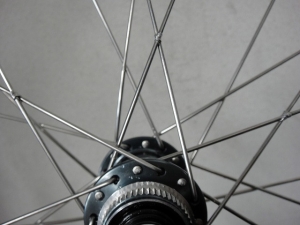
Since this is a disc brake compatible hub, I built it JIS cross.
48-spoke would have been possible too, but the customer wanted 46-spoke,
so I went with that. With 46-spoke, the relationship between "Italian left-drop" and "JIS right-drop" reverses,
so in this case it becomes left-drop JIS cross.
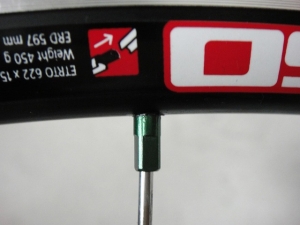
Nipples are green per the customer's request.
The rim sticker says ERD (effective rim diameter) 597mm,
but that's a lie. At least when I measure it by the same standard as other manufacturers,
it's not 597mm, and not even close.
If you trust that and determine spoke length based on it, you'll be in real trouble.
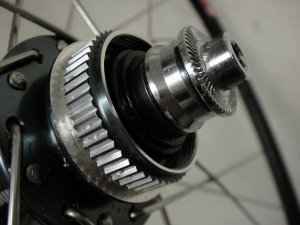
Dimensionally, it's not an MTB hub adaptation,
but rather a road hub with the left side lengthened by 5mm.
So the dropout is among the best of current Shimano hubs.
If it were a threaded steel axle, you'd just lengthen the shaft 5mm
and add a 5mm spacer on the left side,
but with an aluminum shaft and a lock nut/end cap combo,
they had to specially make an end cap that's 5mm longer.
I'm concerned that there's no thin washer between the hub wrench nut (the black one)
and the end nut (the silver one),
which makes it prone to seizing, spinning, and coming loose.
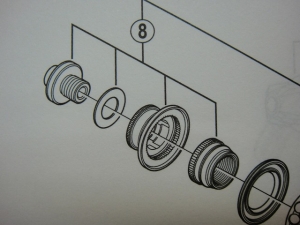
↑This is an exploded diagram of the current Dura-Ace hub FH-9000,
and you can see it has a thin washer right after the left end nut.
The FH-CX75 lacks this, so the bearing adjustment you carefully set
gets thrown off easily when you loosen (or if it loosens) the left end nut.
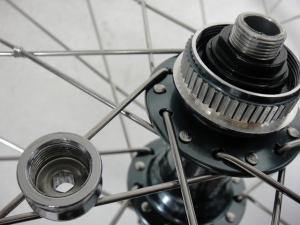
↑When you loosen the left end nut, the adjacent nut comes loose with it to some degree.
A single washer makes a huge difference here.
It's a poorly designed setup, honestly.
Since my actual measurement of the over-lock nut dimension came to about 134.5mm,
I'm torn between adding a spacer around 1mm thick (which would require re-centering the wheel)
or applying a threadlocker to the shaft that won't come loose but can still be loosened when needed.
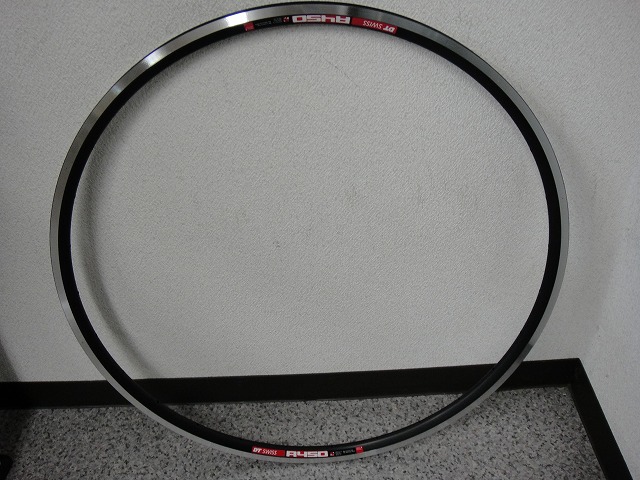
A customer dropped off a DT R450 rim with me.
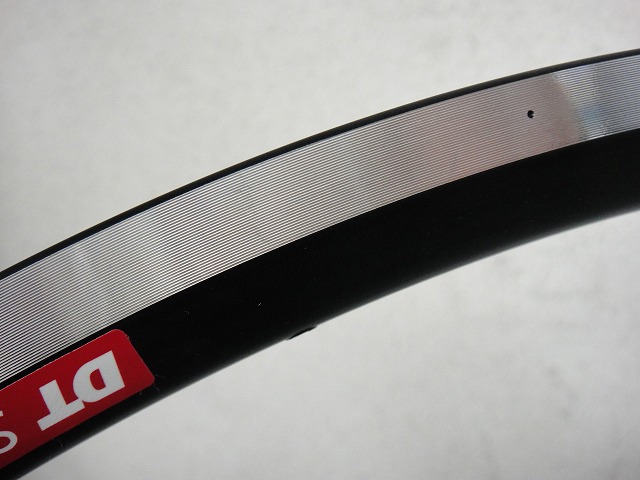
This rim has indicator notches spaced at 45° intervals on each side—eight of them total.
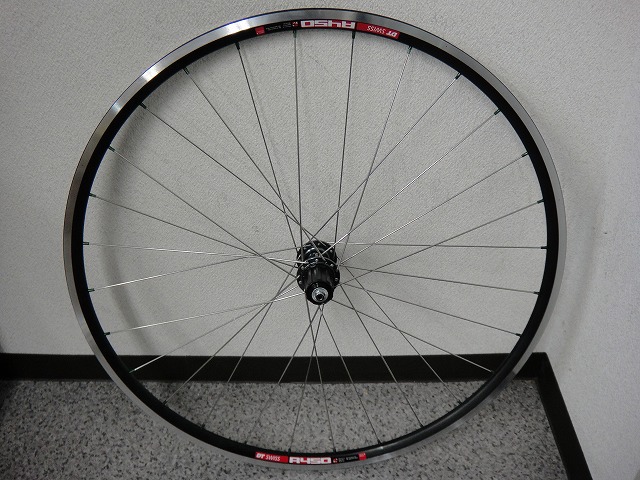
Got it built up.
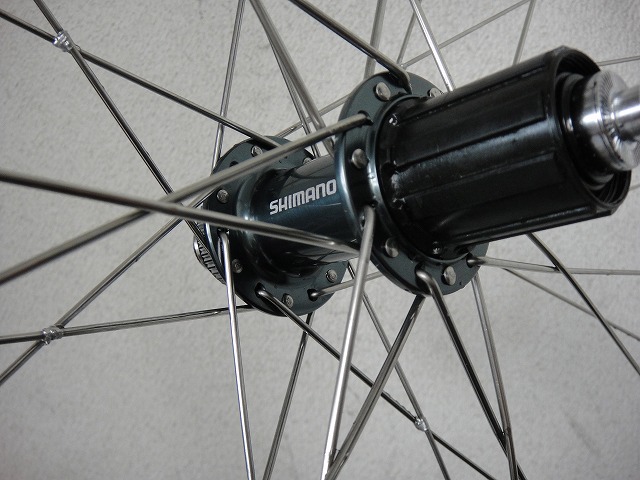
Hub is a Shimano FH-CX75,
spokes are Sapim Strong on the freewheel side
and DT Competition on the non-freewheel side.

Since this is a disc brake compatible hub, I built it JIS cross.
48-spoke would have been possible too, but the customer wanted 46-spoke,
so I went with that. With 46-spoke, the relationship between "Italian left-drop" and "JIS right-drop" reverses,
so in this case it becomes left-drop JIS cross.

Nipples are green per the customer's request.
The rim sticker says ERD (effective rim diameter) 597mm,
but that's a lie. At least when I measure it by the same standard as other manufacturers,
it's not 597mm, and not even close.
If you trust that and determine spoke length based on it, you'll be in real trouble.
Dimensionally, it's not an MTB hub adaptation,
but rather a road hub with the left side lengthened by 5mm.
So the dropout is among the best of current Shimano hubs.
If it were a threaded steel axle, you'd just lengthen the shaft 5mm
and add a 5mm spacer on the left side,
but with an aluminum shaft and a lock nut/end cap combo,
they had to specially make an end cap that's 5mm longer.
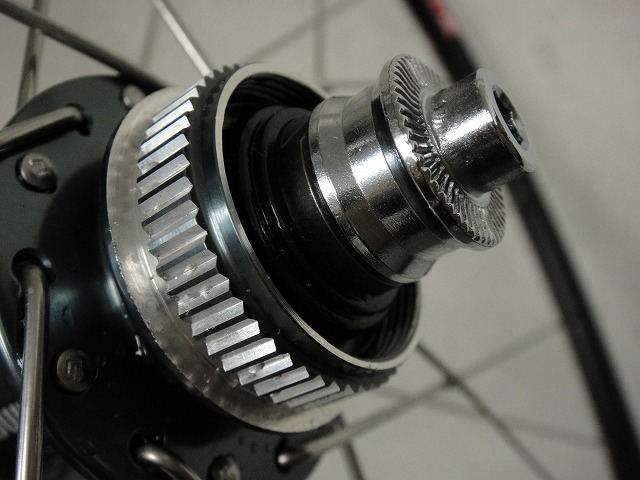
I'm concerned that there's no thin washer between the hub wrench nut (the black one)
and the end nut (the silver one),
which makes it prone to seizing, spinning, and coming loose.
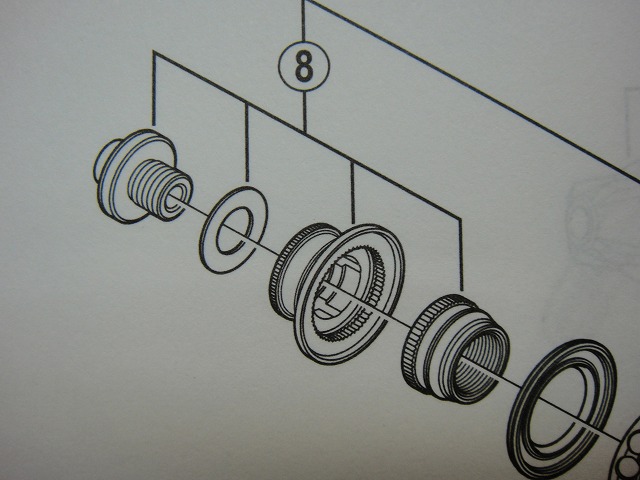
↑This is an exploded diagram of the current Dura-Ace hub FH-9000,
and you can see it has a thin washer right after the left end nut.
The FH-CX75 lacks this, so the bearing adjustment you carefully set
gets thrown off easily when you loosen (or if it loosens) the left end nut.
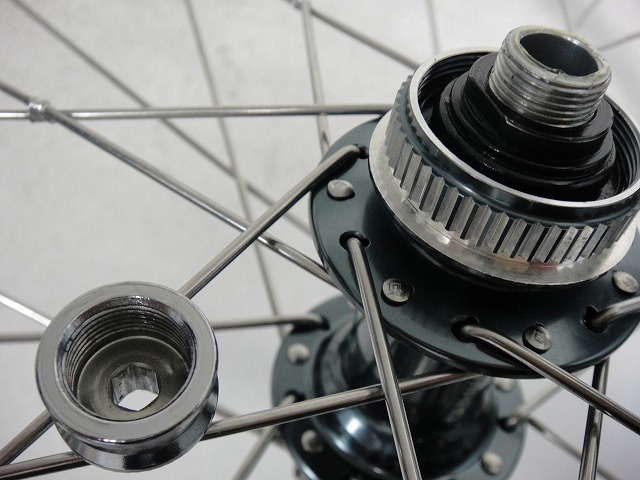
↑When you loosen the left end nut, the adjacent nut comes loose with it to some degree.
A single washer makes a huge difference here.
It's a poorly designed setup, honestly.
Since my actual measurement of the over-lock nut dimension came to about 134.5mm,
I'm torn between adding a spacer around 1mm thick (which would require re-centering the wheel)
or applying a threadlocker to the shaft that won't come loose but can still be loosened when needed.