Another wheel build today (details omitted).
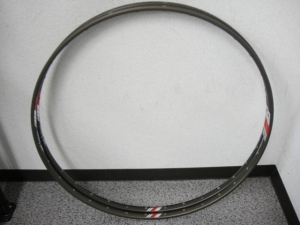
A customer left me with a rim.
It's a Campagnolo Record rim.
It measures 390g, but from the feel when tensioning the wheel,
it seemed like a much heavier rim—incredibly durable.
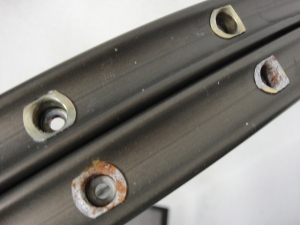
Both rims came wrapped together in plastic wrap,
but one section of the wrap was torn,
and only the eyelets on the torn side have completely rusted over.
Such a small difference in storage conditions leads to this kind of damage.
With this style of classical low-profile rim, the inner diameters are pretty similar.
Spoke length only changes slightly depending on hub dimensions,
so the old-school bike shop guys can look at a rim and say from experience
something like "32-hole six-cross lacing uses ○○○mm".
I measure the inner diameter of any unfamiliar rim myself, but this one surprised me.
Because the eyelet area is so thick, the rim's inner diameter used for spoke length calculation
ends up being larger.
Probably the largest inner diameter rim I've ever measured.
Since I'm building it with a Record hub, the 8-spoke rear wheel easily exceeded 310mm.
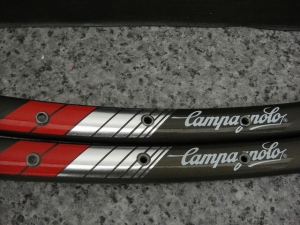
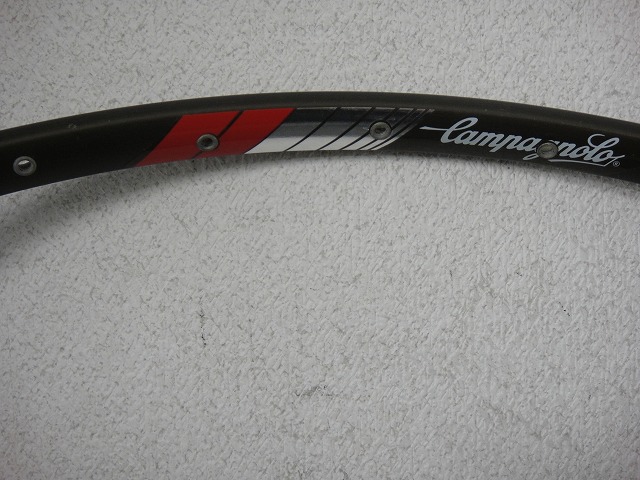
Campagnolo rims from this era have
a maker logo sticker and
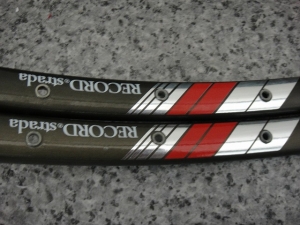
the rim model name sticker applied in opposite directions.
This is not a mistake.
The two stickers are positioned on opposite sides of the rim,
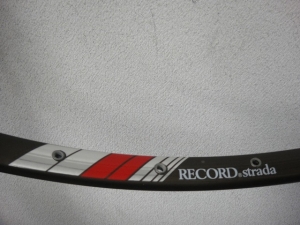
arranged so that when you orient one sticker to read it right-side up at the bottom,

the other one also reads right-side up when you look at the top.
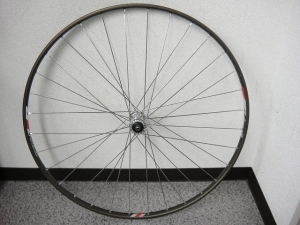
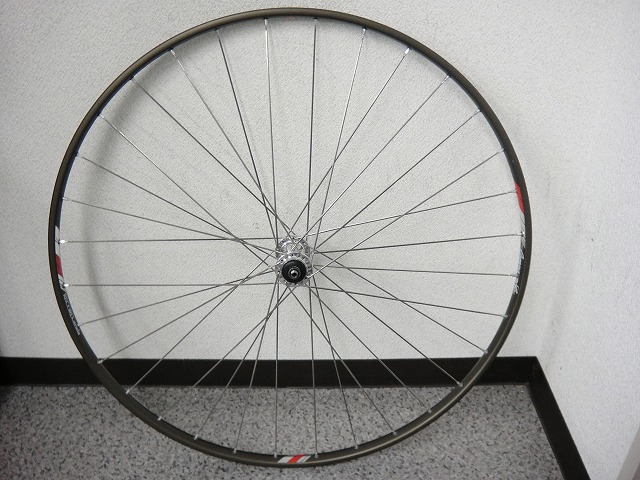
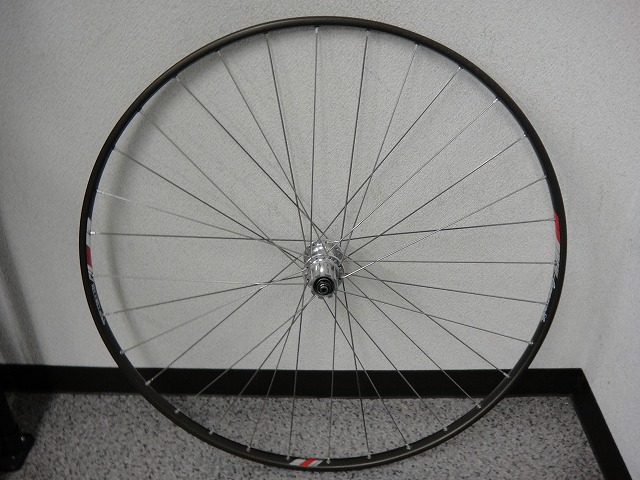
Got the front wheel built.
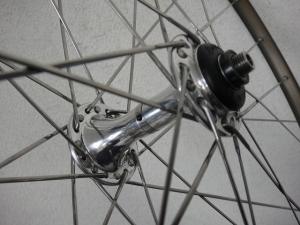
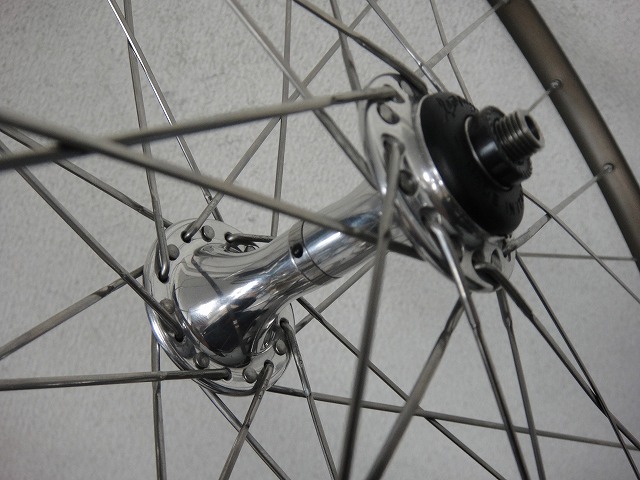
CX-RAY Italian six-cross (regular six-cross) lacing.
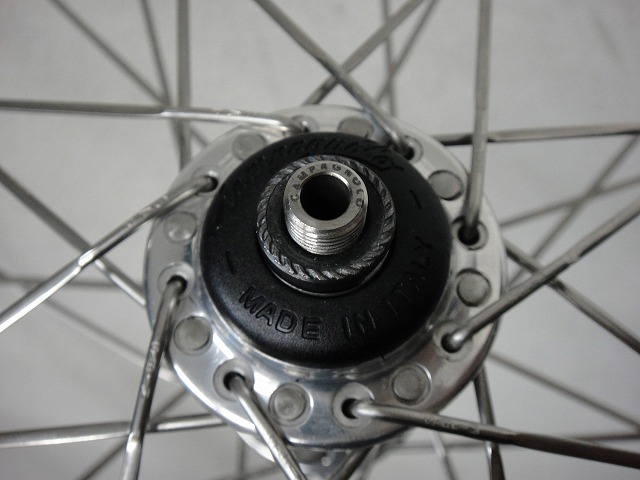
The hub is a Record. There are many Record hubs out there,
but this is the titanium-shaft version from the Record era—
the generation right before they switched to aluminum shafts.
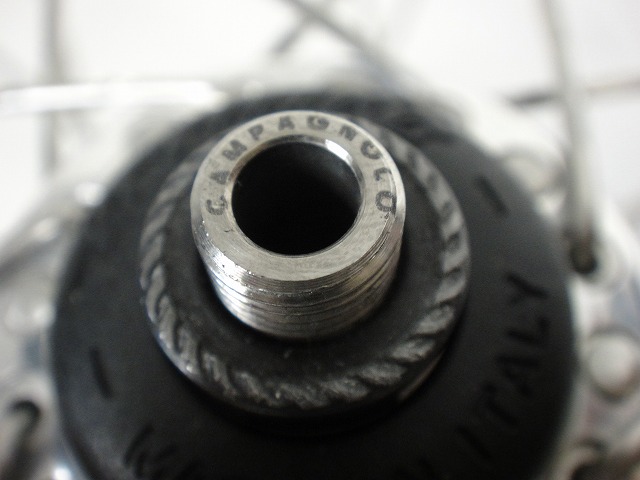
The hub appears to have no left-right distinction or concept, but...

↑The titanium-shaft version has a CAMPAGNOLO stamp on one end of the shaft,
so you orient that side to the right when looking at the wheel in the direction of travel.
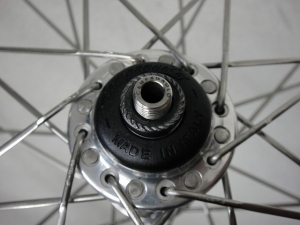
Once you lace it in Italian pattern,
the lacing direction itself becomes the left-right distinction, making it easier to tell.
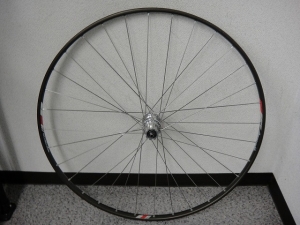
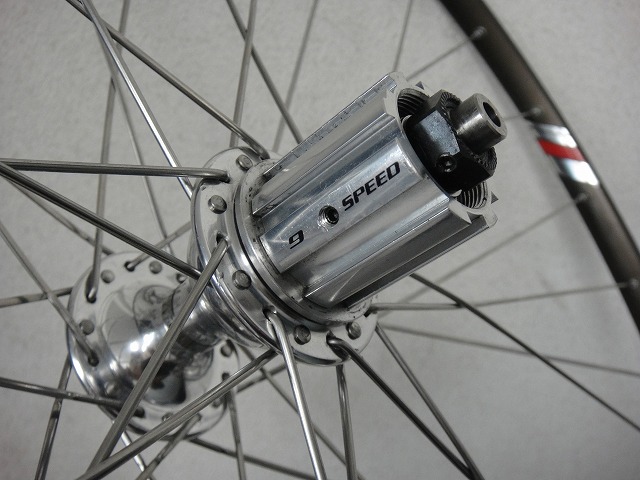
Rear wheel is also built.
Since I can't do 8-spoke, I've done semi-Comp 46 lacing instead.
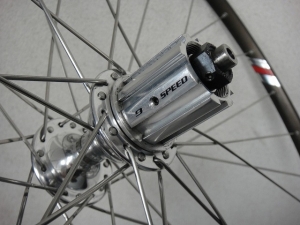
It's a Record rear hub from the same generation as the front hub, also titanium-shaft version.
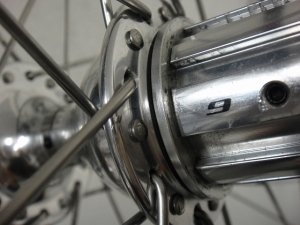
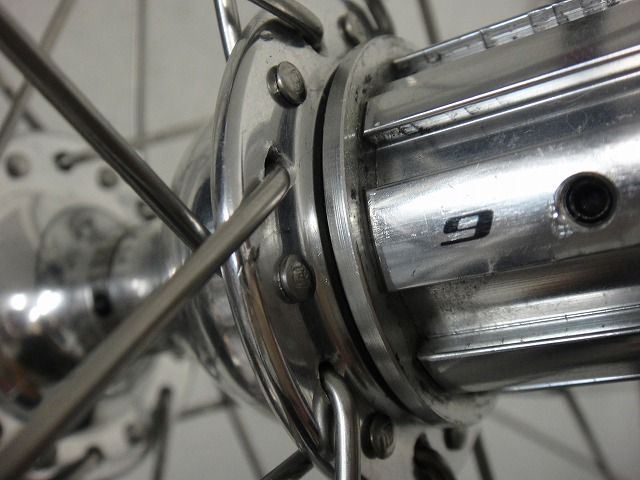
This hub has a right flange width of only about 18mm.
Modern 11-speed hubs are similar,
but for its time, this was bizarrely tight for cassette spacing (ochoko).
The freewheel body section is so thick,
I think they could've positioned the right flange further out.
However, since current 11-speed sprockets fit on this 9-speed freehub,
you could say this hub was ahead of its time (no need to have anticipated it though).
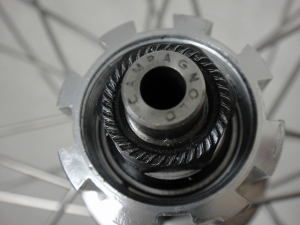
↑The rear hub also has stamping on the end of the right shaft.

Rear hubs from this era came with a lockring for 12-tooth top (shown in the image above, left).
In Campagnolo's philosophy, the lockring belonged with the rear hub,
so sprockets didn't come with a lockring.
However, when you bought a 11-tooth top sprocket,
it came with an 11-tooth lockring,
so people who went with 11-tooth ended up with a pile of unused 11-tooth lockriings.
From the late 10-speed era onward, the lockring became part of the sprocket package,
and rear hubs stopped coming with one.
This lockring is valuable stuff.
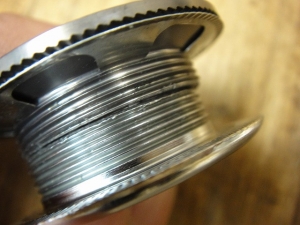
↑The top image shows the current lockring and the bottom is the old one,
but the current version has a thread diameter of 27mm while the old one is 26mm—they're completely incompatible.
In the top image, the threads line up on the left, so you can see they're offset on the right.
This hub's 9-speed freehub can take 11-speed sprockets,
but you must use the old lockring.
Lose it and you're in serious trouble (though I have tons of them).
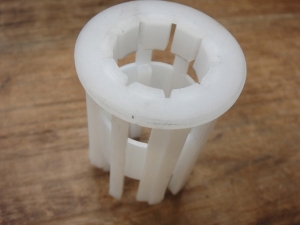
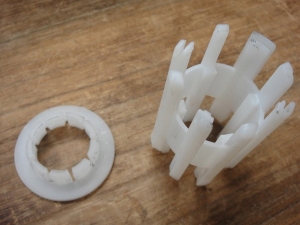
↑Modern versions have the lockring attached to the Campagnolo sprocket holder itself,
so the "lockring-shaped cap" that used to be there is no longer included.
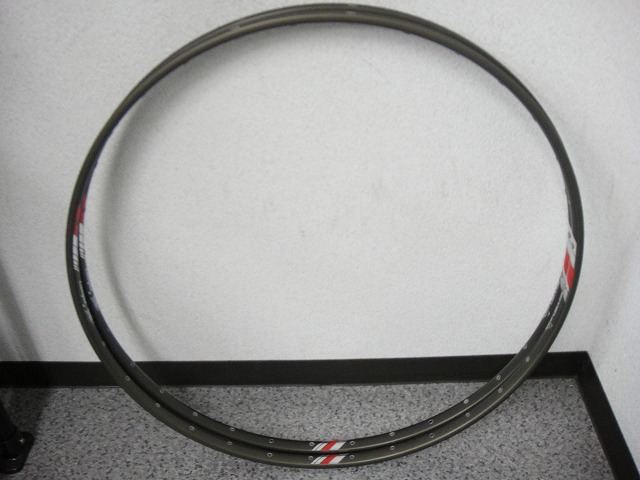
A customer left me with a rim.
It's a Campagnolo Record rim.
It measures 390g, but from the feel when tensioning the wheel,
it seemed like a much heavier rim—incredibly durable.
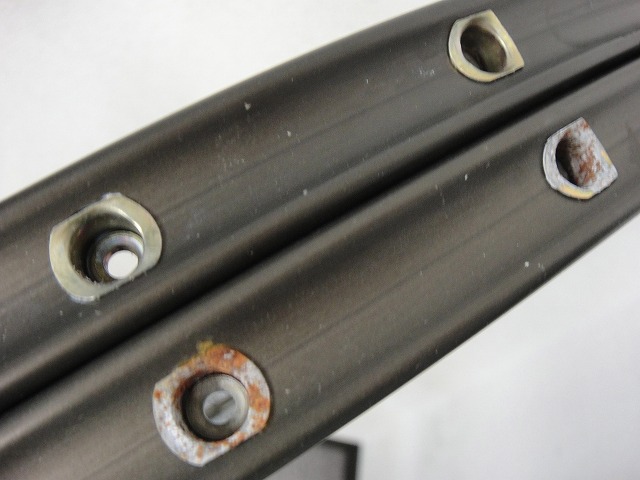
Both rims came wrapped together in plastic wrap,
but one section of the wrap was torn,
and only the eyelets on the torn side have completely rusted over.
Such a small difference in storage conditions leads to this kind of damage.
With this style of classical low-profile rim, the inner diameters are pretty similar.
Spoke length only changes slightly depending on hub dimensions,
so the old-school bike shop guys can look at a rim and say from experience
something like "32-hole six-cross lacing uses ○○○mm".
I measure the inner diameter of any unfamiliar rim myself, but this one surprised me.
Because the eyelet area is so thick, the rim's inner diameter used for spoke length calculation
ends up being larger.
Probably the largest inner diameter rim I've ever measured.
Since I'm building it with a Record hub, the 8-spoke rear wheel easily exceeded 310mm.
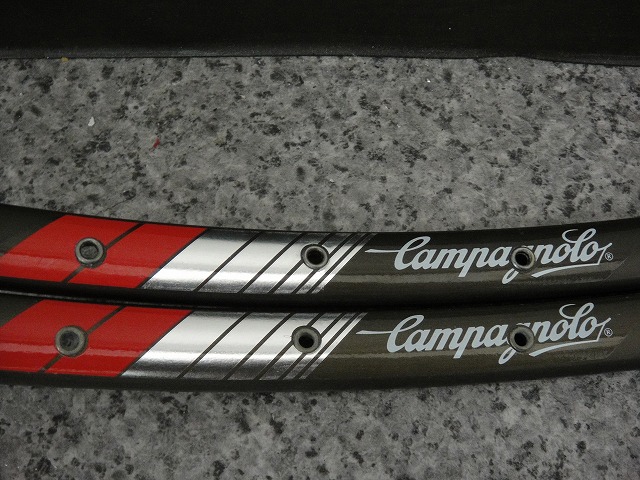
Campagnolo rims from this era have
a maker logo sticker and
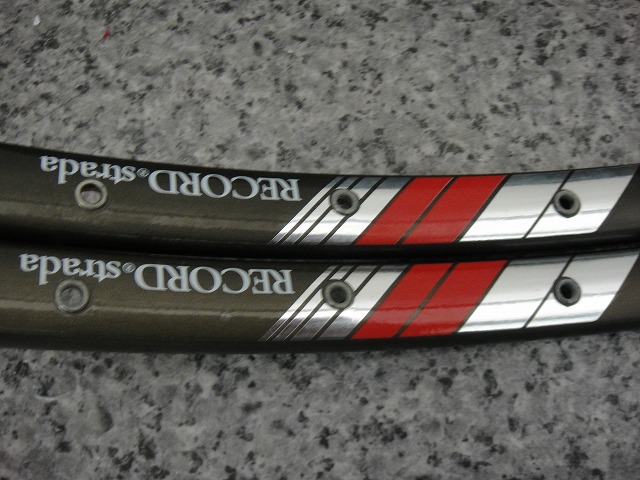
the rim model name sticker applied in opposite directions.
This is not a mistake.
The two stickers are positioned on opposite sides of the rim,
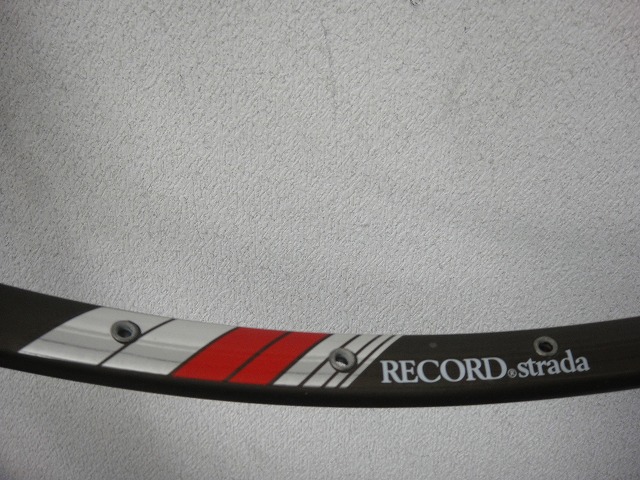
arranged so that when you orient one sticker to read it right-side up at the bottom,
the other one also reads right-side up when you look at the top.
Got the front wheel built.
CX-RAY Italian six-cross (regular six-cross) lacing.
The hub is a Record. There are many Record hubs out there,
but this is the titanium-shaft version from the Record era—
the generation right before they switched to aluminum shafts.
The hub appears to have no left-right distinction or concept, but...
↑The titanium-shaft version has a CAMPAGNOLO stamp on one end of the shaft,
so you orient that side to the right when looking at the wheel in the direction of travel.
Once you lace it in Italian pattern,
the lacing direction itself becomes the left-right distinction, making it easier to tell.
Rear wheel is also built.
Since I can't do 8-spoke, I've done semi-Comp 46 lacing instead.
It's a Record rear hub from the same generation as the front hub, also titanium-shaft version.
This hub has a right flange width of only about 18mm.
Modern 11-speed hubs are similar,
but for its time, this was bizarrely tight for cassette spacing (ochoko).
The freewheel body section is so thick,
I think they could've positioned the right flange further out.
However, since current 11-speed sprockets fit on this 9-speed freehub,
you could say this hub was ahead of its time (no need to have anticipated it though).
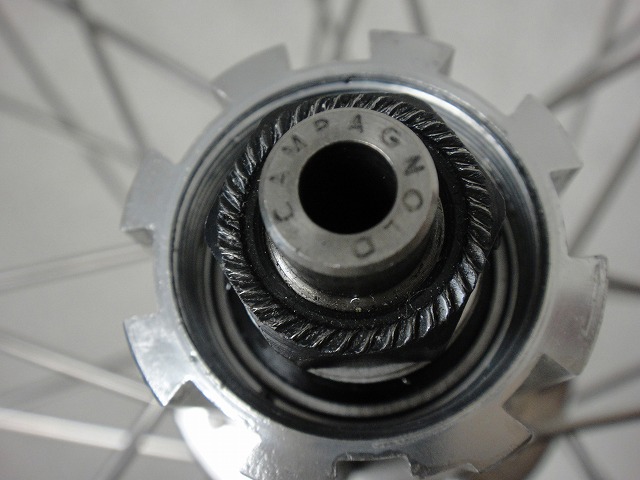
↑The rear hub also has stamping on the end of the right shaft.
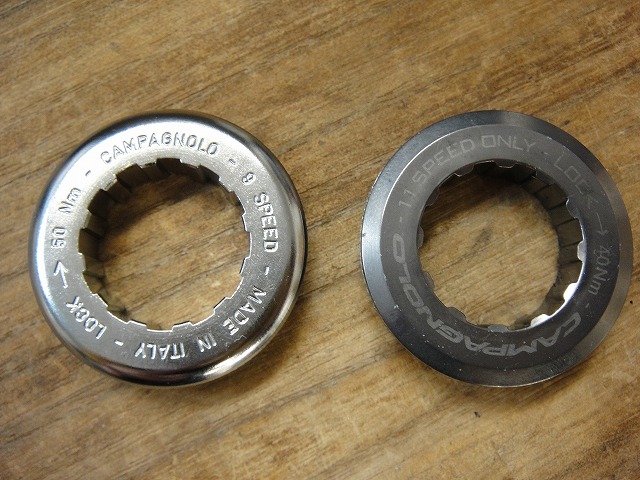
Rear hubs from this era came with a lockring for 12-tooth top (shown in the image above, left).
In Campagnolo's philosophy, the lockring belonged with the rear hub,
so sprockets didn't come with a lockring.
However, when you bought a 11-tooth top sprocket,
it came with an 11-tooth lockring,
so people who went with 11-tooth ended up with a pile of unused 11-tooth lockriings.
From the late 10-speed era onward, the lockring became part of the sprocket package,
and rear hubs stopped coming with one.
This lockring is valuable stuff.
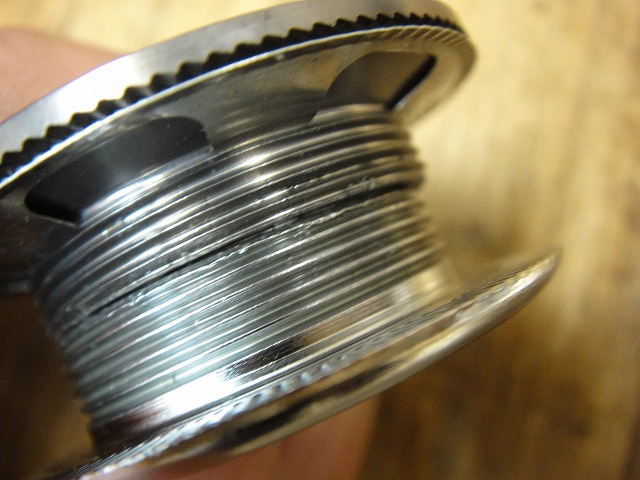
↑The top image shows the current lockring and the bottom is the old one,
but the current version has a thread diameter of 27mm while the old one is 26mm—they're completely incompatible.
In the top image, the threads line up on the left, so you can see they're offset on the right.
This hub's 9-speed freehub can take 11-speed sprockets,
but you must use the old lockring.
Lose it and you're in serious trouble (though I have tons of them).
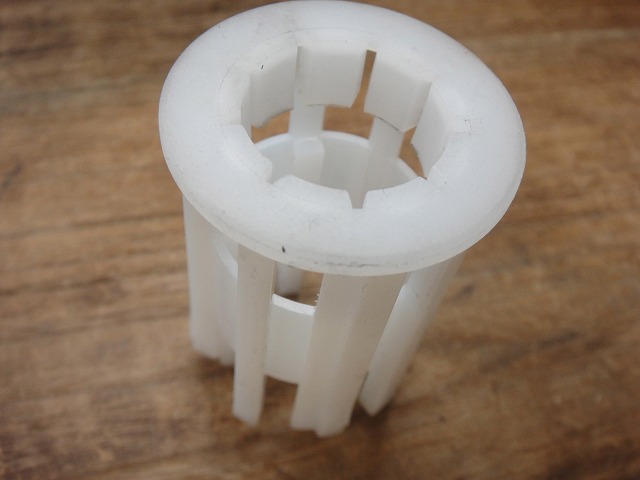
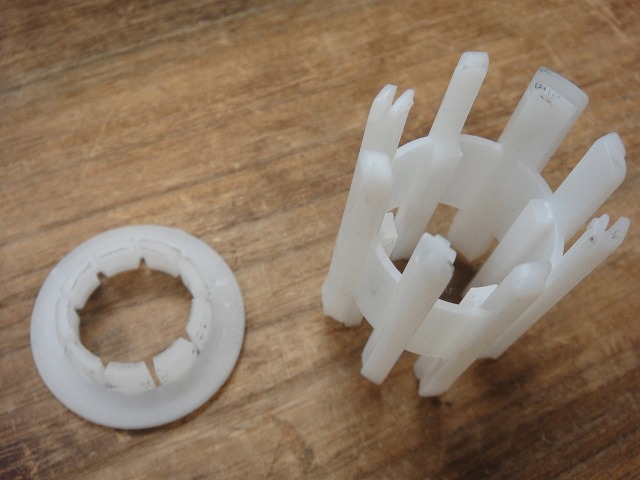
↑Modern versions have the lockring attached to the Campagnolo sprocket holder itself,
so the "lockring-shaped cap" that used to be there is no longer included.