A customer asked me to replace the headset top cap on their bike with a thinner one.
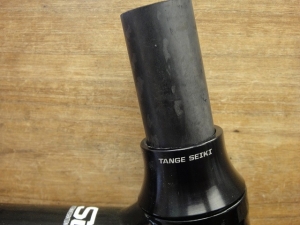
Not that I need to mention the model, but it's a Cannondale CAAD10.

This is a Tange Seiki (Japanese bearing manufacturer) tall top cap.
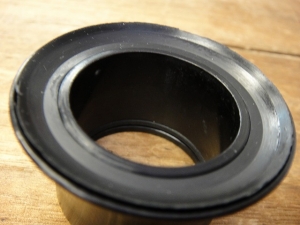
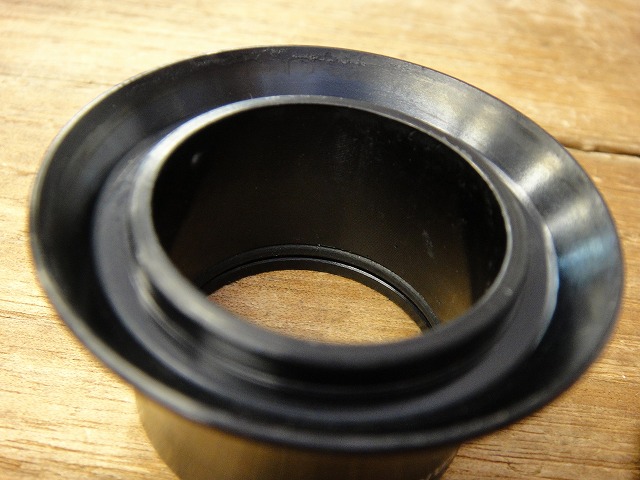
Flipped it over.
It has a rubber seal ring for waterproofing.
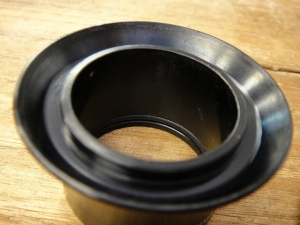
Removed the seal too.
The nusumi dimension at this point (which I'll explain later) is critical.
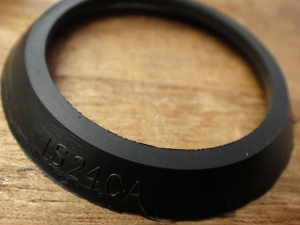
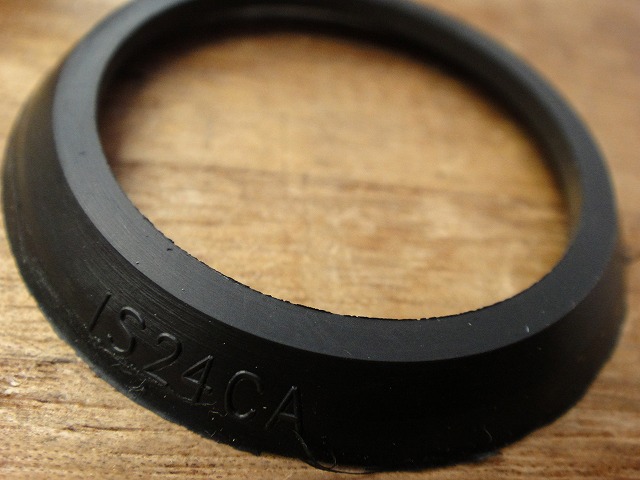
The seal has "IS24" written on it,
which indicates the headset type.
Tange headsets come in IS series and ZS series,

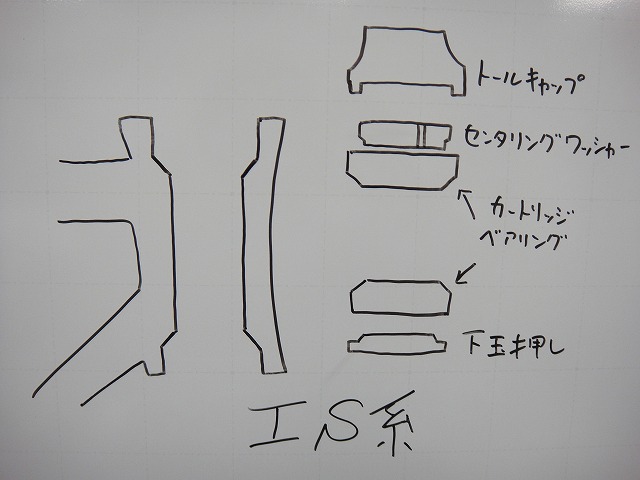
The IS series
is a headset used when the frame has an angled seat
for the cartridge bearing to sit in.
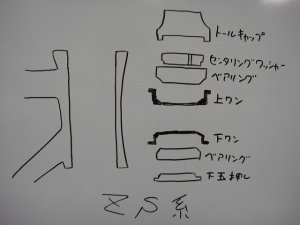
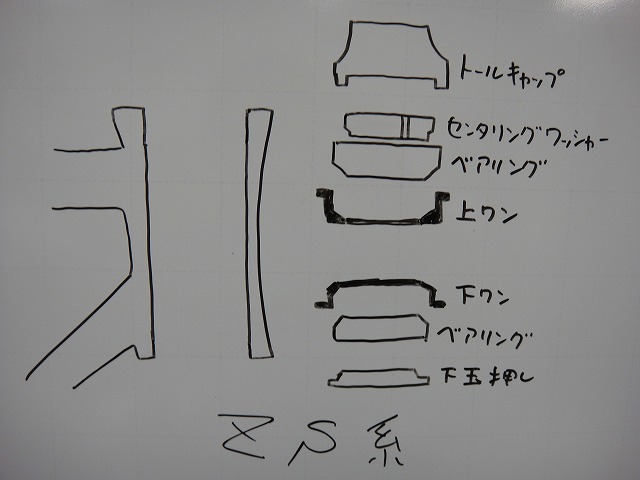
The ZS series
is a headset type where you press-fit a seat into the frame first, then install the bearing.
Unrelated to the ZS series,
press-fit seat types have replaceable seats, so instead of a cartridge bearing,
there's also a type where balls contact the seat directly via a ball retainer.
These are inexpensive and commonly found on budget complete bikes.
When Trek and Anchor bikes with this type come in for repair, parts are hard to source and it's a real pain.
And Orbea's Aqua used to have cartridge bearings when it was made in Spain,
but after they started making them in China, they switched to retainers and...
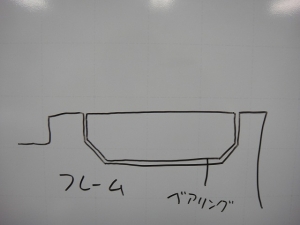
Whether the seat is integrated or separate, it houses the cartridge bearing the same way.
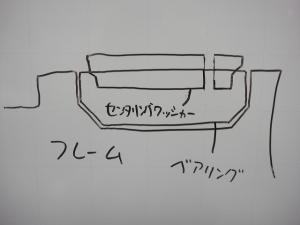
Then you install the centering washer.
This washer has a slot cut into it,
and because of the contact angle between bearing and seat, the contact angle between washer and bearing,
and the slot in the washer, compression guides
the steering axis to a single, wobble-free center.
This removes play.
Pinarello's proprietary headset has bearings at a 90° angle, so
the bearings are pressed very firmly into the frame (otherwise there'd be play).
With Campagnolo, they use a slotless plastic washer,
but it has tight dimensional tolerances and geometry to prevent play.
There are also designs that rely on rubber ring compression for centering,
but aside from those exceptions, most headsets use slotted washers.
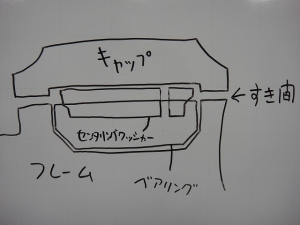
Then you install the cap.
You need a small gap between the cap and frame—
even just paper-thin is fine.
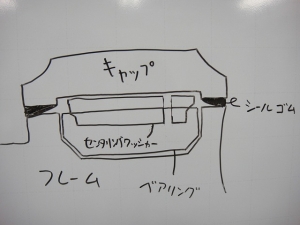
When the cap edge has a seal rubber,
light contact is fine.

The cap has its own nusumi dimension.
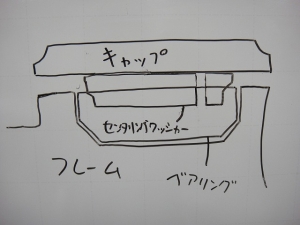
When the top surface of the centering washer sticks out from the frame,
installing one with zero or near-zero nusumi dimension creates a gap.
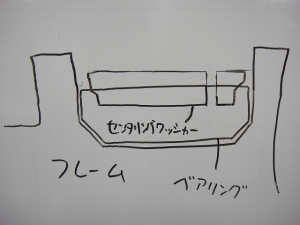
Conversely, when the washer top surface is recessed below the frame
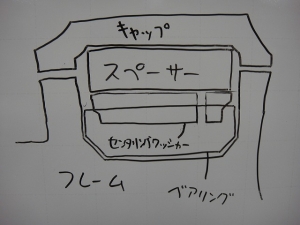
you need to add spacers of appropriate thickness
so the cap and frame don't contact.
As headset internals wear, compression increases, so
if the gap is very small, extended use can cause the cap to contact the frame,
making steering abnormally stiff.
For these spacers, we use 0.5mm iron ones from headset manufacturers,
but standard stem spacers also come in 1mm and 2mm aluminum, so we use those in combination.
If during adjustment two 0.5mm iron spacers equal 1mm,
swapping them for an aluminum 1mm spacer is recommended.
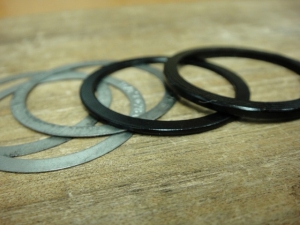
↑From left: iron 0.5mm, aluminum 1mm, aluminum 2mm
The iron 0.5mm spacer is somewhat hard to source.
Aluminum spacers are consistently available.
The iron spacer isn't stainless, so it can rust.
For these two reasons, I recommend
replacing 1mm unit spacers with aluminum ones.
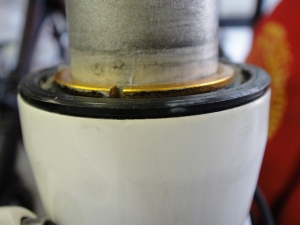
↑This is my Ridley's head tube,
and since it has a black cup pressed into the frame, it's a separate-seat design.
(It's FSA, not Tange ZS, but)
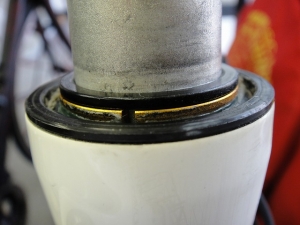
I'm installing a thin Tange ZS2 top cap on this,
and based on test-fitting with the ZS2's nusumi width, the spacer thickness needed
to prevent frame contact is 2mm.
As I mentioned before, if the headset wears,
2.5mm might be needed here eventually.

Cap installed.
It looks like it's touching, but the rubber seal means there's no problem.
Basically, whether the original top cap was Tange IS, ZS, or something else like FSA,
as long as it meets the condition that
"the cap edge doesn't contact the frame," it's fine.
This cap isn't a functional adjustment part for headset play,
so if you don't mind the bearings being visible, you don't have to install one at all.
But for dust and water protection, and for appearance, I think it's still necessary.
When customers ask for a replacement, they almost always say "as thin as possible,"
but if the nusumi dimension works out, the Tange ZS2 is probably the thinnest option available.
Campagnolo headsets have a slotless washer whose top surface
has a shape incompatible with anything except Campagnolo's own top cap,
so a ZS2 cap won't fit.
But Campagnolo's stock cap is already extremely thin, so there's no issue.
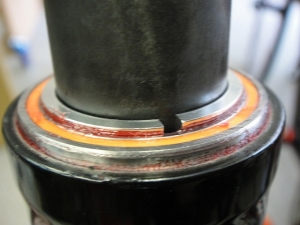
As for the CAAD10 from the beginning, the washer top surface protrudes more than on my Ridley.
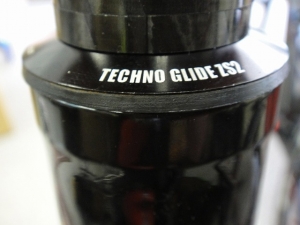
By coincidence, it worked without adjustment.
Any higher washer position would create a gap, so it's right on the edge.
It's convenient that a recessed washer surface is adjustable.
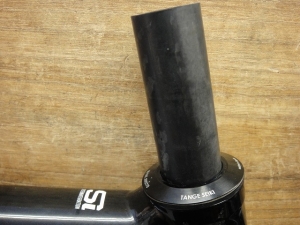
One more thing to note:
The ZS2 cap has an outer diameter of about 48mm,
while the original IS24 is about 49mm, so it's slightly smaller.
(Though the rubber seal makes it hard to tell)
If the outer diameter is larger than the original cap,
it will protrude from the head tube and look ugly.
If it's the same or slightly smaller, it looks fine.
Considering these issues and the nusumi dimension, if installation is possible,
the Tange ZS2 top cap (available as a separate part) is the one I'd recommend for a thin cap option.

Not that I need to mention the model, but it's a Cannondale CAAD10.
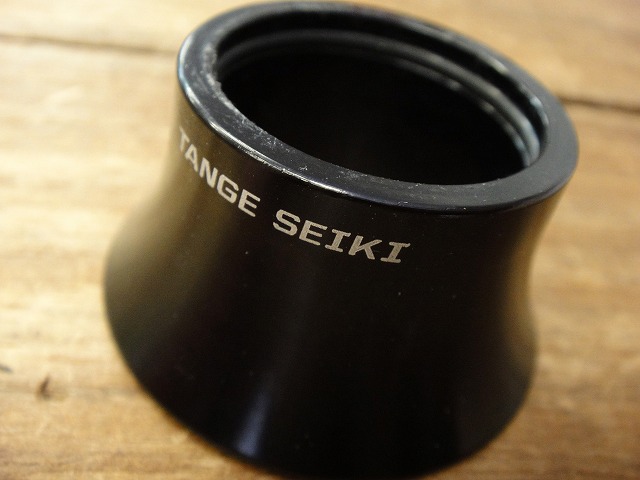
This is a Tange Seiki (Japanese bearing manufacturer) tall top cap.
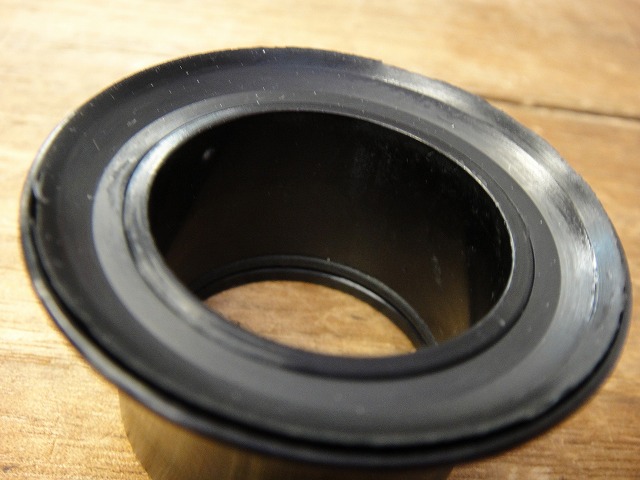
Flipped it over.
It has a rubber seal ring for waterproofing.
Removed the seal too.
The nusumi dimension at this point (which I'll explain later) is critical.
The seal has "IS24" written on it,
which indicates the headset type.
Tange headsets come in IS series and ZS series,
The IS series
is a headset used when the frame has an angled seat
for the cartridge bearing to sit in.
The ZS series
is a headset type where you press-fit a seat into the frame first, then install the bearing.
Unrelated to the ZS series,
press-fit seat types have replaceable seats, so instead of a cartridge bearing,
there's also a type where balls contact the seat directly via a ball retainer.
These are inexpensive and commonly found on budget complete bikes.
And Orbea's Aqua used to have cartridge bearings when it was made in Spain,
but after they started making them in China, they switched to retainers and...
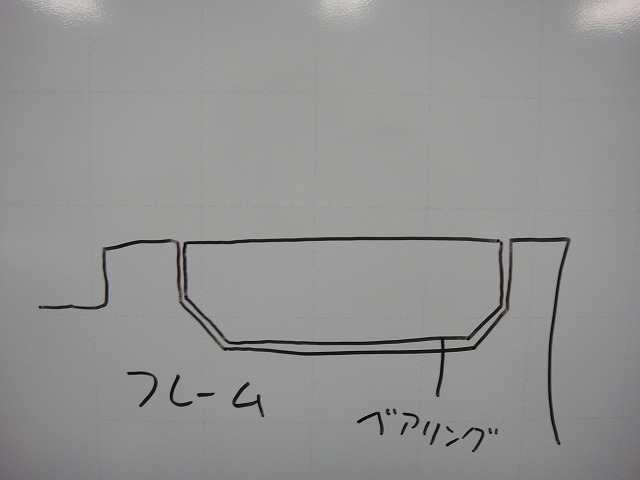
Whether the seat is integrated or separate, it houses the cartridge bearing the same way.
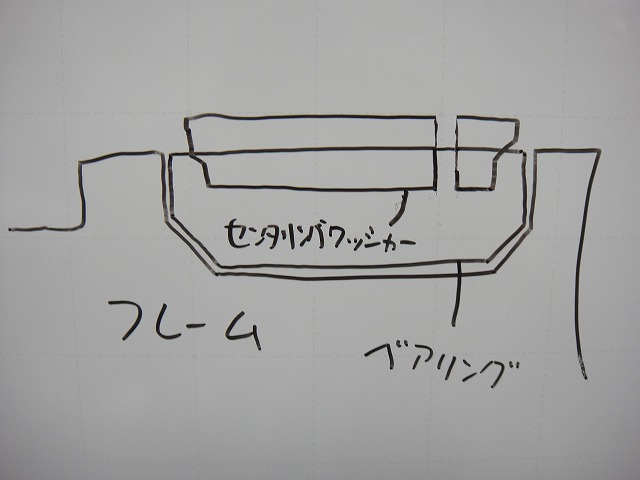
Then you install the centering washer.
This washer has a slot cut into it,
and because of the contact angle between bearing and seat, the contact angle between washer and bearing,
and the slot in the washer, compression guides
the steering axis to a single, wobble-free center.
This removes play.
Pinarello's proprietary headset has bearings at a 90° angle, so
the bearings are pressed very firmly into the frame (otherwise there'd be play).
With Campagnolo, they use a slotless plastic washer,
but it has tight dimensional tolerances and geometry to prevent play.
There are also designs that rely on rubber ring compression for centering,
but aside from those exceptions, most headsets use slotted washers.
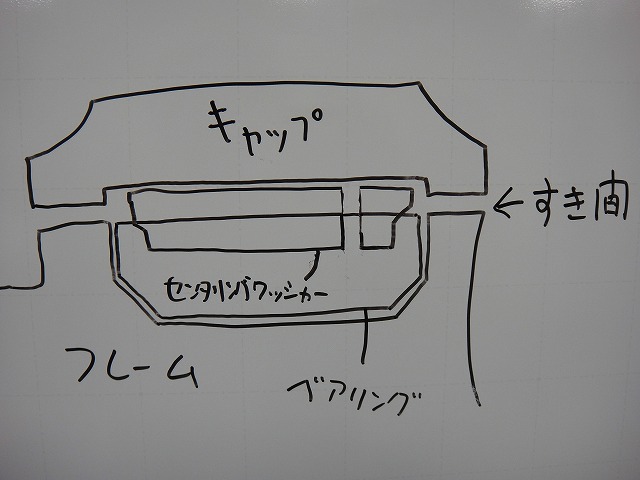
Then you install the cap.
You need a small gap between the cap and frame—
even just paper-thin is fine.
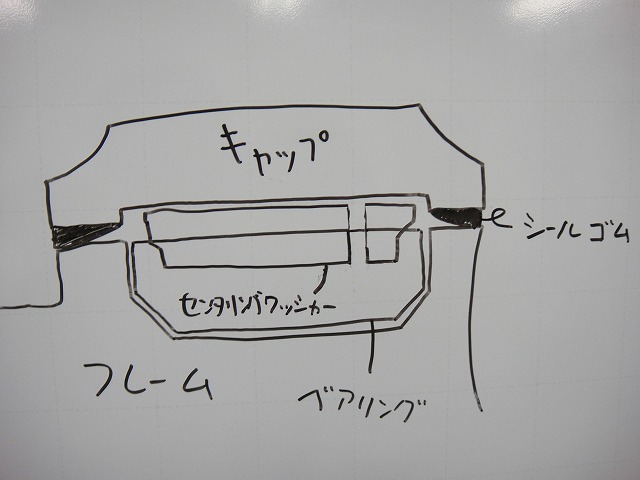
When the cap edge has a seal rubber,
light contact is fine.
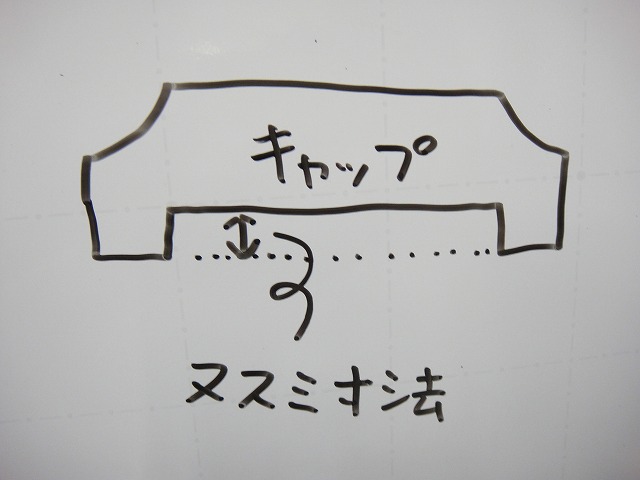
The cap has its own nusumi dimension.
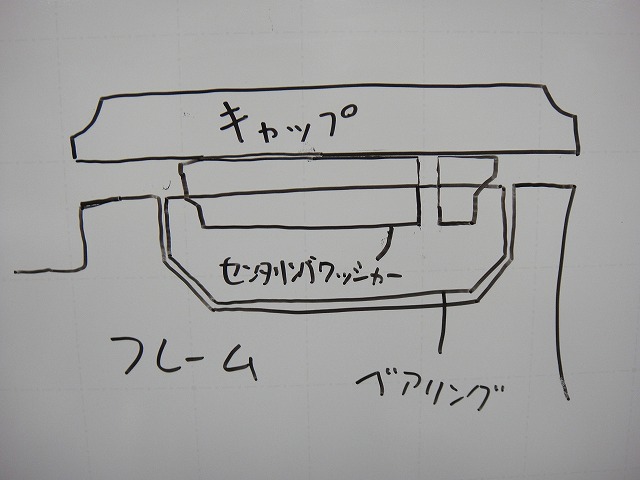
When the top surface of the centering washer sticks out from the frame,
installing one with zero or near-zero nusumi dimension creates a gap.

Conversely, when the washer top surface is recessed below the frame
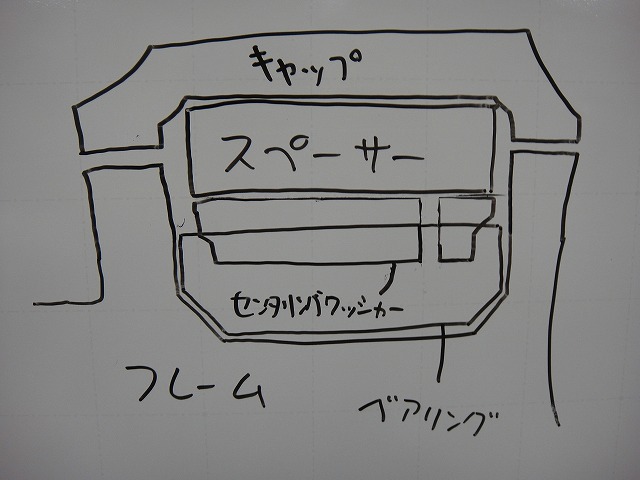
you need to add spacers of appropriate thickness
so the cap and frame don't contact.
As headset internals wear, compression increases, so
if the gap is very small, extended use can cause the cap to contact the frame,
making steering abnormally stiff.
For these spacers, we use 0.5mm iron ones from headset manufacturers,
but standard stem spacers also come in 1mm and 2mm aluminum, so we use those in combination.
If during adjustment two 0.5mm iron spacers equal 1mm,
swapping them for an aluminum 1mm spacer is recommended.
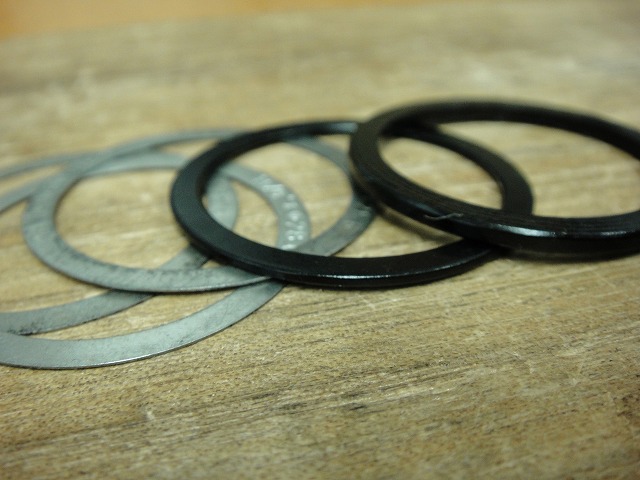
↑From left: iron 0.5mm, aluminum 1mm, aluminum 2mm
The iron 0.5mm spacer is somewhat hard to source.
Aluminum spacers are consistently available.
The iron spacer isn't stainless, so it can rust.
For these two reasons, I recommend
replacing 1mm unit spacers with aluminum ones.
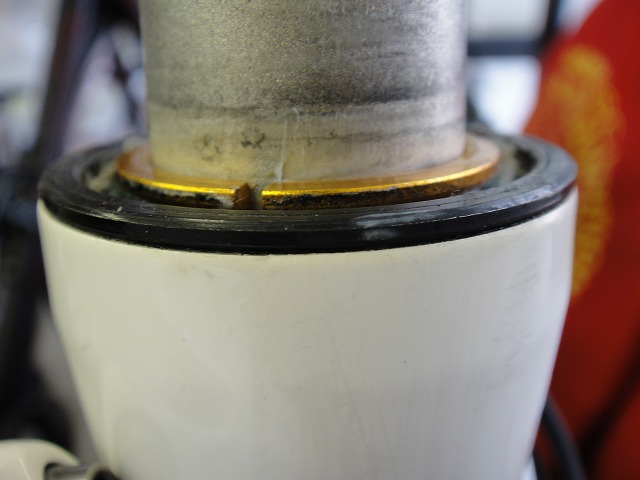
↑This is my Ridley's head tube,
and since it has a black cup pressed into the frame, it's a separate-seat design.
(It's FSA, not Tange ZS, but)
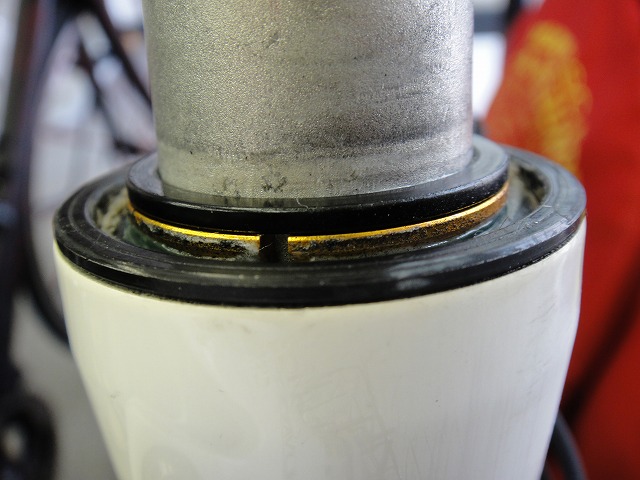
I'm installing a thin Tange ZS2 top cap on this,
and based on test-fitting with the ZS2's nusumi width, the spacer thickness needed
to prevent frame contact is 2mm.
As I mentioned before, if the headset wears,
2.5mm might be needed here eventually.
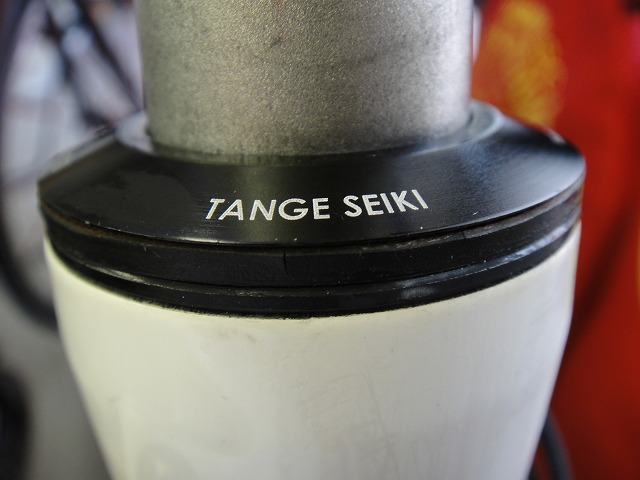
Cap installed.
It looks like it's touching, but the rubber seal means there's no problem.
Basically, whether the original top cap was Tange IS, ZS, or something else like FSA,
as long as it meets the condition that
"the cap edge doesn't contact the frame," it's fine.
This cap isn't a functional adjustment part for headset play,
so if you don't mind the bearings being visible, you don't have to install one at all.
But for dust and water protection, and for appearance, I think it's still necessary.
When customers ask for a replacement, they almost always say "as thin as possible,"
but if the nusumi dimension works out, the Tange ZS2 is probably the thinnest option available.
Campagnolo headsets have a slotless washer whose top surface
has a shape incompatible with anything except Campagnolo's own top cap,
so a ZS2 cap won't fit.
But Campagnolo's stock cap is already extremely thin, so there's no issue.
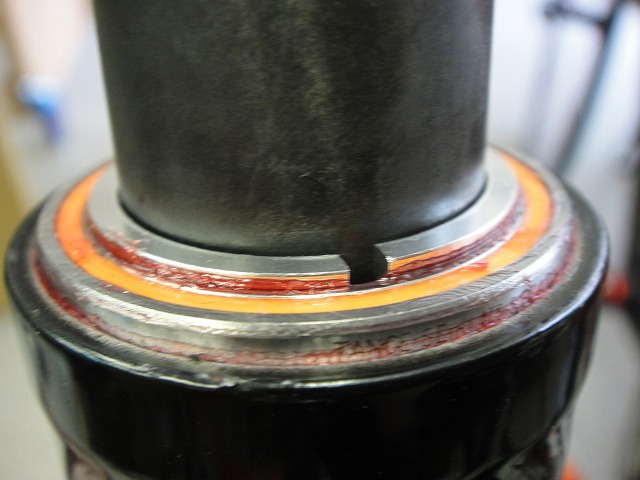
As for the CAAD10 from the beginning, the washer top surface protrudes more than on my Ridley.
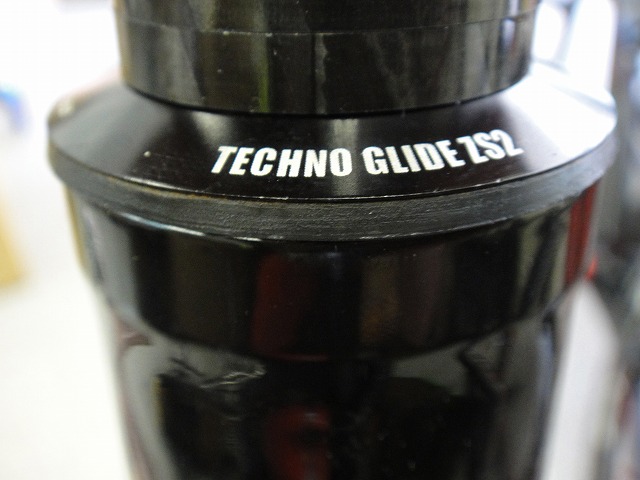
By coincidence, it worked without adjustment.
Any higher washer position would create a gap, so it's right on the edge.
It's convenient that a recessed washer surface is adjustable.
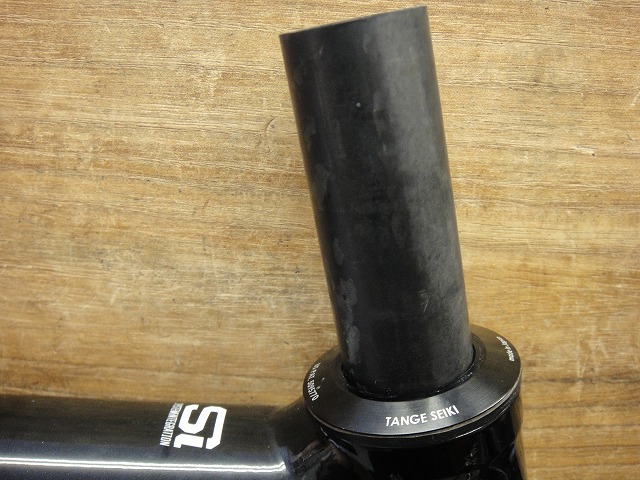
One more thing to note:
The ZS2 cap has an outer diameter of about 48mm,
while the original IS24 is about 49mm, so it's slightly smaller.
(Though the rubber seal makes it hard to tell)
If the outer diameter is larger than the original cap,
it will protrude from the head tube and look ugly.
If it's the same or slightly smaller, it looks fine.
Considering these issues and the nusumi dimension, if installation is possible,
the Tange ZS2 top cap (available as a separate part) is the one I'd recommend for a thin cap option.