I investigated the spoke weight ratio of Hoshi's Aero SB3 spokes.
"Spoke weight ratio" is a coined term for this blog, and it refers to
when the weight per 1mm of length of a 2.0mm plain spoke is set as 100%,
what percentage other spokes become.
This is something I've written about many times, but as spokes get longer,
generally the proportion of the butted section relative to the total spoke length
(whether round or aero) increases.
So with a particular butted spoke, there should be differences in spoke weight ratio
between a 100mm length and a 10000mm length,
but in the 240–310mm range usable for 700C wheels,
the variation isn't that large.
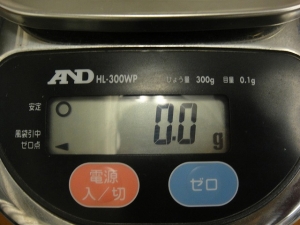
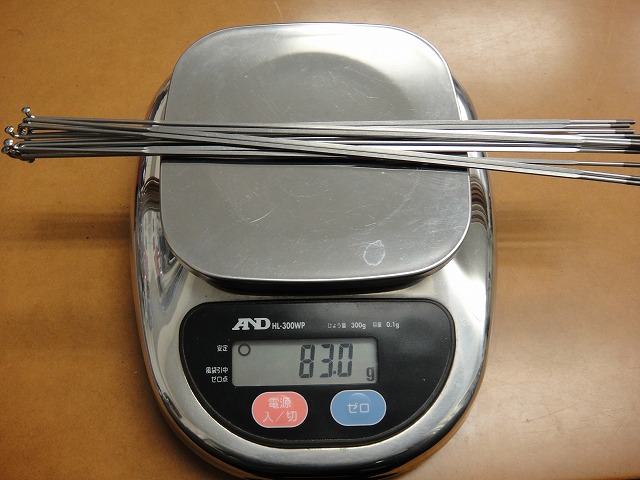
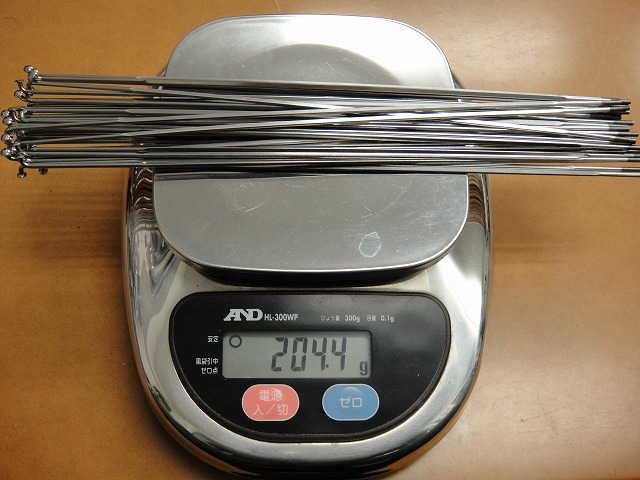
I use a scale that can measure to 0.1g precision.
Since the maximum measurable value is 300g,
when there are many spokes, I adjust so it doesn't exceed 300g.
More samples are better, naturally,
but some lengths I have very few of in my collection.
Here's what I found:
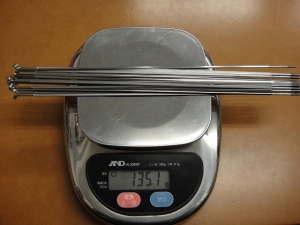
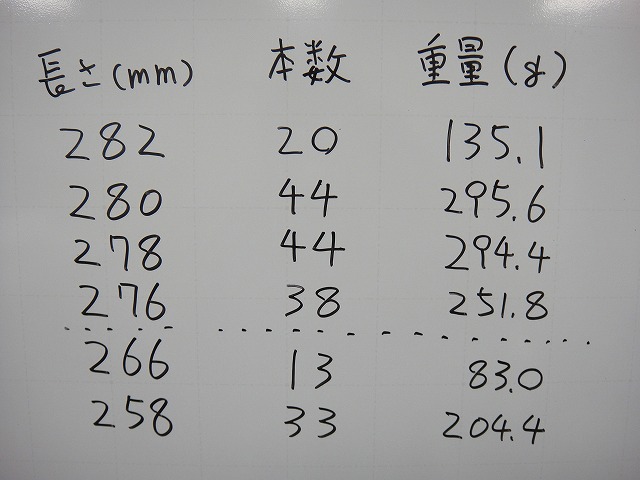
282mm, 20 spokes, 135.1g
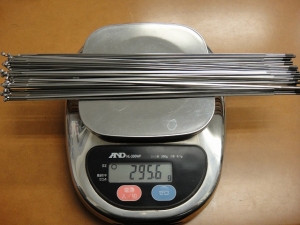
280mm, 44 spokes, 295.6g
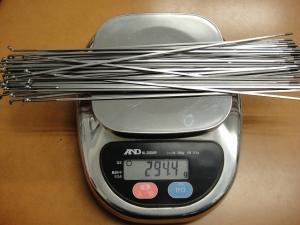
278mm, 44 spokes, 294.4g
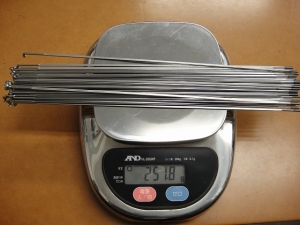
276mm, 38 spokes, 251.8g
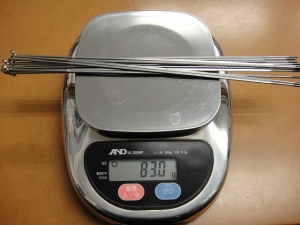
266mm, 13 spokes, 83.0g
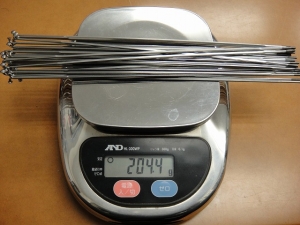
258mm, 33 spokes, 204.4g
was the result.
I have more samples than this, but I'll stop here.
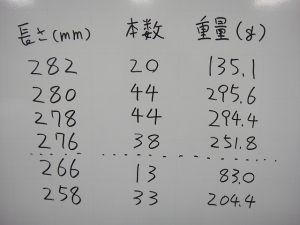
When I write it out, it looks like this.
There's a dashed line at one spot for a reason:
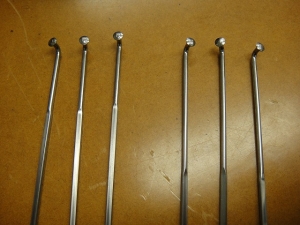
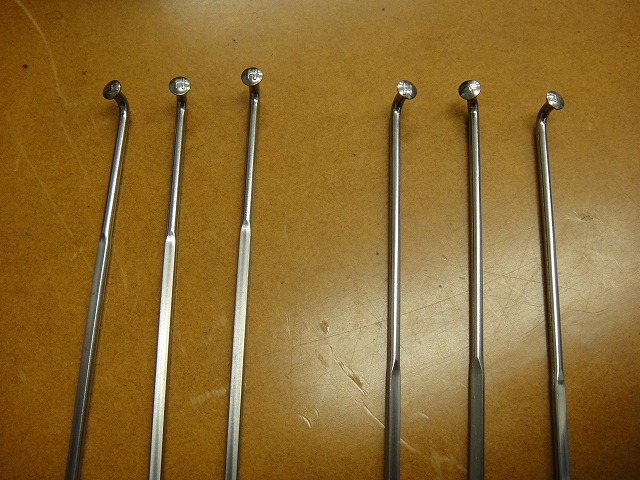
With the Aero SB, when the length gets shorter than a certain point (around 270mm?),
the manufacturing method or jig seems to change, and the non-butted section becomes longer.
When this happens, the proportion of 2.0mm plain (100% weight ratio) increases,
so the spoke weight ratio is expected to become larger.
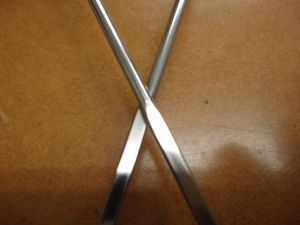
As a side note, when building a wheel with this spoke,
if the butted section happens to align exactly with the crossing lace,
it can cause quite significant noise.
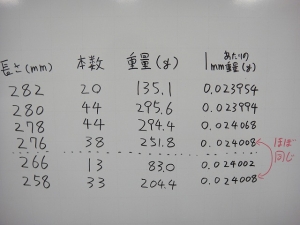
I calculated the weight per 1mm of length.
Contrary to what I wrote earlier, even crossing the dashed line,
there was no significant difference in the values.
The reason I wrote "approximately the same" for 276mm and 258mm
is that when rounding to seven decimal places, the values up to six decimal places were identical.

The reference value for 100% spoke weight ratio is 0.0257,
so I calculated the spoke weight ratio from there.
The reason the fractional parts differ for 276mm and 258mm
is that the number of decimal places I rounded to before calculation was different.
From these results, I'm determining the spoke weight ratio of the Aero SB3 (No. 14)
to be "93.4%".
What's surprising is that from just 13 266mm spokes,
you still get a pretty average value.
If the scale's precision were 1g instead of 0.1g,
you'd want to increase the sample size by about 10 times.
This spoke weight ratio value is useful in various ways.
First, it can be used to estimate finished wheel weight.
For example, if 24 pieces of 290mm Aero SB3 spokes,
290 × 24 × 0.0257 × 0.934 = 167.06, so
the spoke weight would be about 167g.
This is quite accurate.
Then, if you add the hub and rim and nipple weights (preferably measured, or nominal values if necessary),
you can get a rough idea of the wheel's weight.
Incidentally, if I take the highest measured value from earlier, 278mm, 44 spokes, 294.4g,
and calculate it using the spoke weight ratio of 93.4%, I get 293.6g.
You'd rarely use 44 spokes in a single wheel,
but even with 44, the error is only this much.
Another use is when building non-drive-side / drive-side different diameter wheels
and calculating spoke tension differences between sides.
In my case, I use "the cross-sectional area ratio to a virtual plain spoke of that spoke's weight ratio".
This treats Aero SB3 and a 1.868mm diameter plain spoke as
"having the same behavior regarding spoke tension because the weight ratios are the same",
but if you really think about it, it's theoretically possible to have a
round butted 2.0–1.0–2.0mm spoke with 93.4% weight ratio,
and whether that should be treated the same way is a bit of a stretch.
However, I haven't had practical problems with this (measured values roughly match felt results),
so I use it as the basis for certain calculations.
Why I need to reduce a butted spoke to a plain spoke is
inside baseball, so I can't write about it.
Since this blog also serves as my personal notes,
I'm writing the spoke weight ratio here for quick reference when I need the Aero SB3 specs.
I could just list the number, but
I wanted to document how to practically measure spoke weight ratio and that
surprisingly few samples still give results close to the average, so I included the photos.
This Aero SB3, by the way, is not a retail item.
It's discontinued, and I'd like to see it reissued, but
I'm sure the exact same Aero SB3 can't be obtained anymore.
Recently I got a comment with the gist of "Why don't you use Hoshi spokes?", so I'll answer here.
Hoshi spokes once had consistent spoke head stamps:
for Starbright, it was "H", and for Stainless, it was "☆".
(Starbright is also stainless steel in material,
but "stainless" here refers to the spoke product name)
Currently, these stamps are apparently mixed on some products,
but I can't see a rational reason to deliberately make
a product that's already hard to distinguish visually even harder to distinguish.
As a product to sell to customers, it's lost trustworthiness.
Also, the magnetic response is quite different between current Starbright
and this vintage Starbright.
To me, a spoke's magnetic properties are a very important element in gauging its characteristics.
A large difference means the material or manufacturing process (such as work hardening) has changed significantly,
so it can't be considered the same thing.
To be blunt, it's a different product.
If Starbright had remained as it was back then,
especially plain spokes—I like them more than DT's Champion,
so I'd probably be using them on my regular wheel builds.
"Spoke weight ratio" is a coined term for this blog, and it refers to
when the weight per 1mm of length of a 2.0mm plain spoke is set as 100%,
what percentage other spokes become.
This is something I've written about many times, but as spokes get longer,
generally the proportion of the butted section relative to the total spoke length
(whether round or aero) increases.
So with a particular butted spoke, there should be differences in spoke weight ratio
between a 100mm length and a 10000mm length,
but in the 240–310mm range usable for 700C wheels,
the variation isn't that large.
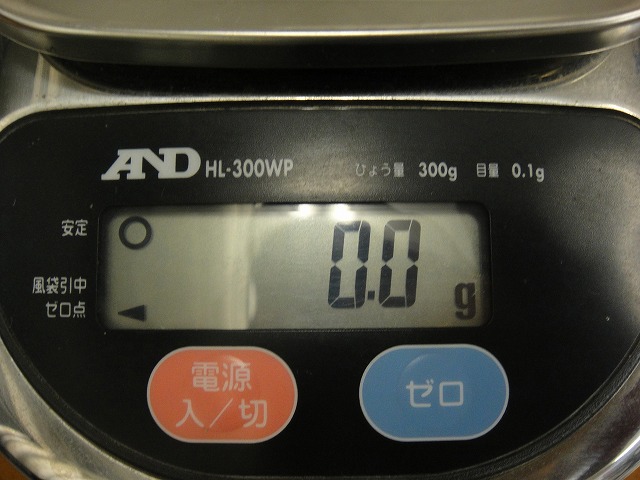
I use a scale that can measure to 0.1g precision.
Since the maximum measurable value is 300g,
when there are many spokes, I adjust so it doesn't exceed 300g.
More samples are better, naturally,
but some lengths I have very few of in my collection.
Here's what I found:
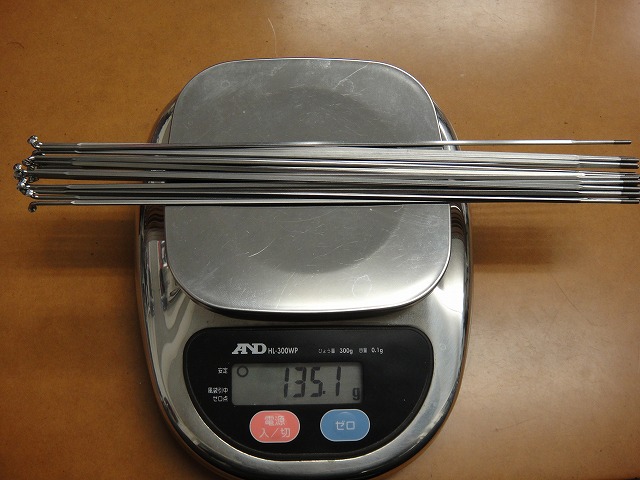
282mm, 20 spokes, 135.1g
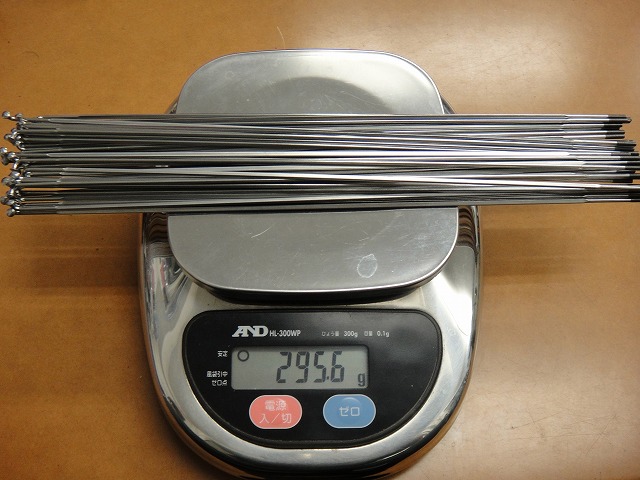
280mm, 44 spokes, 295.6g
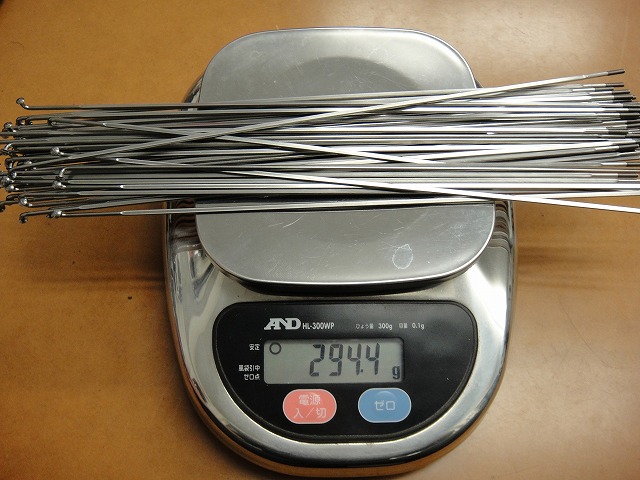
278mm, 44 spokes, 294.4g
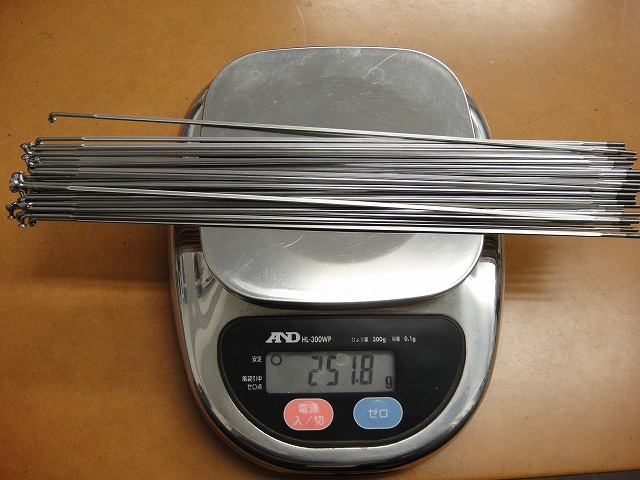
276mm, 38 spokes, 251.8g
266mm, 13 spokes, 83.0g
258mm, 33 spokes, 204.4g
was the result.
I have more samples than this, but I'll stop here.
When I write it out, it looks like this.
There's a dashed line at one spot for a reason:
With the Aero SB, when the length gets shorter than a certain point (around 270mm?),
the manufacturing method or jig seems to change, and the non-butted section becomes longer.
When this happens, the proportion of 2.0mm plain (100% weight ratio) increases,
so the spoke weight ratio is expected to become larger.
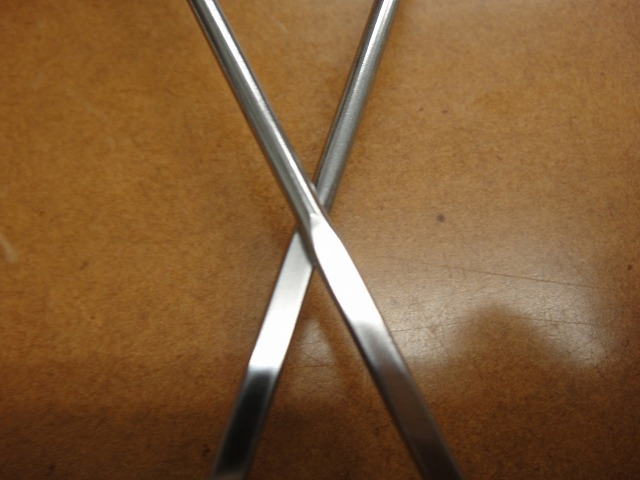
As a side note, when building a wheel with this spoke,
if the butted section happens to align exactly with the crossing lace,
it can cause quite significant noise.
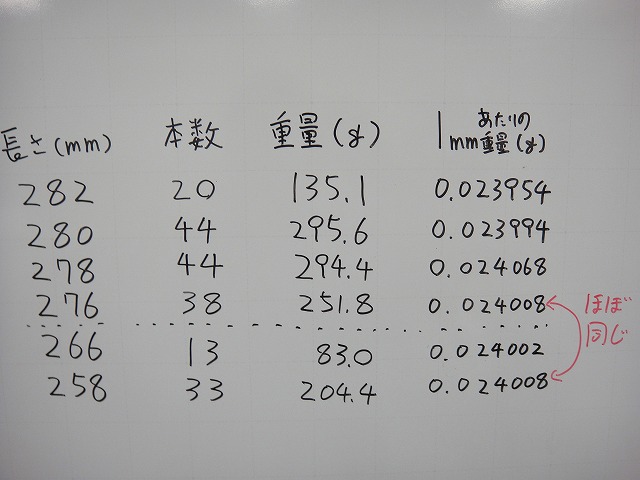
I calculated the weight per 1mm of length.
Contrary to what I wrote earlier, even crossing the dashed line,
there was no significant difference in the values.
The reason I wrote "approximately the same" for 276mm and 258mm
is that when rounding to seven decimal places, the values up to six decimal places were identical.
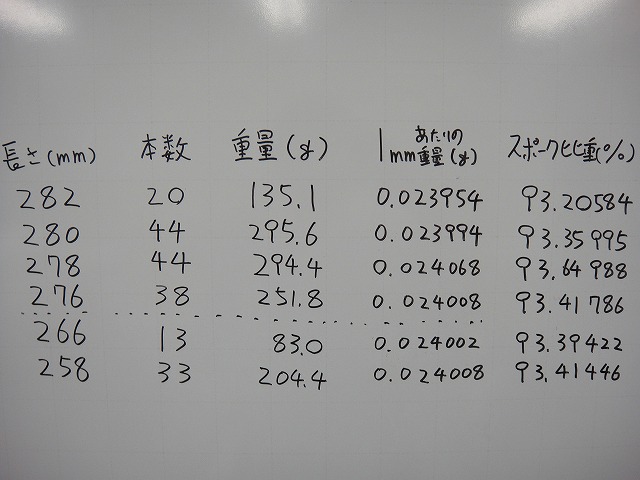
The reference value for 100% spoke weight ratio is 0.0257,
so I calculated the spoke weight ratio from there.
The reason the fractional parts differ for 276mm and 258mm
is that the number of decimal places I rounded to before calculation was different.
From these results, I'm determining the spoke weight ratio of the Aero SB3 (No. 14)
to be "93.4%".
What's surprising is that from just 13 266mm spokes,
you still get a pretty average value.
If the scale's precision were 1g instead of 0.1g,
you'd want to increase the sample size by about 10 times.
This spoke weight ratio value is useful in various ways.
First, it can be used to estimate finished wheel weight.
For example, if 24 pieces of 290mm Aero SB3 spokes,
290 × 24 × 0.0257 × 0.934 = 167.06, so
the spoke weight would be about 167g.
This is quite accurate.
Then, if you add the hub and rim and nipple weights (preferably measured, or nominal values if necessary),
you can get a rough idea of the wheel's weight.
Incidentally, if I take the highest measured value from earlier, 278mm, 44 spokes, 294.4g,
and calculate it using the spoke weight ratio of 93.4%, I get 293.6g.
You'd rarely use 44 spokes in a single wheel,
but even with 44, the error is only this much.
Another use is when building non-drive-side / drive-side different diameter wheels
and calculating spoke tension differences between sides.
In my case, I use "the cross-sectional area ratio to a virtual plain spoke of that spoke's weight ratio".
This treats Aero SB3 and a 1.868mm diameter plain spoke as
"having the same behavior regarding spoke tension because the weight ratios are the same",
but if you really think about it, it's theoretically possible to have a
round butted 2.0–1.0–2.0mm spoke with 93.4% weight ratio,
and whether that should be treated the same way is a bit of a stretch.
However, I haven't had practical problems with this (measured values roughly match felt results),
so I use it as the basis for certain calculations.
Why I need to reduce a butted spoke to a plain spoke is
inside baseball, so I can't write about it.
Since this blog also serves as my personal notes,
I'm writing the spoke weight ratio here for quick reference when I need the Aero SB3 specs.
I could just list the number, but
I wanted to document how to practically measure spoke weight ratio and that
surprisingly few samples still give results close to the average, so I included the photos.
This Aero SB3, by the way, is not a retail item.
It's discontinued, and I'd like to see it reissued, but
I'm sure the exact same Aero SB3 can't be obtained anymore.
Recently I got a comment with the gist of "Why don't you use Hoshi spokes?", so I'll answer here.
Hoshi spokes once had consistent spoke head stamps:
for Starbright, it was "H", and for Stainless, it was "☆".
(Starbright is also stainless steel in material,
but "stainless" here refers to the spoke product name)
Currently, these stamps are apparently mixed on some products,
but I can't see a rational reason to deliberately make
a product that's already hard to distinguish visually even harder to distinguish.
As a product to sell to customers, it's lost trustworthiness.
Also, the magnetic response is quite different between current Starbright
and this vintage Starbright.
To me, a spoke's magnetic properties are a very important element in gauging its characteristics.
A large difference means the material or manufacturing process (such as work hardening) has changed significantly,
so it can't be considered the same thing.
To be blunt, it's a different product.
If Starbright had remained as it was back then,
especially plain spokes—I like them more than DT's Champion,
so I'd probably be using them on my regular wheel builds.
Products Mentioned in This Article
- 🛒 Hoshi Aero SB3 bicycle spoke
- 🛒 Hoshi Aero SB3 stainless steel spoke
- 🛒 Hoshi Starbright bicycle spoke
* Amazon affiliate links — prices may vary
Original Japanese post: のむラボ日記 #1212