There's a spoke lacing pattern called pair spokes.
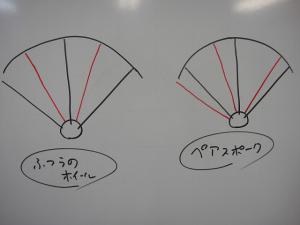
The degree varies by manufacturer and model, but
by deliberately designing the phase relationship between the rim and hub spoke holes,
it creates a spoke lacing with non-uniform spoke spacing.
Let me think about the merits of this arrangement.
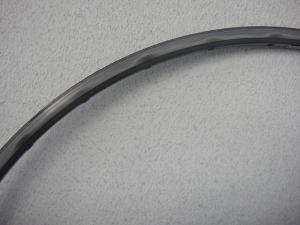
↑This is a normal rim, but the hard anodized surface has been worn down by the brake
leaving marks on the rim sidewall that look like sword blade patterns.
If you look closely, the marks go: dark, light, dark, light, dark... from left to right.
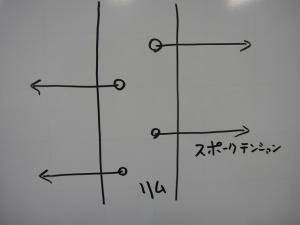
A normal rim gets pulled alternately left and right at the spoke holes, so
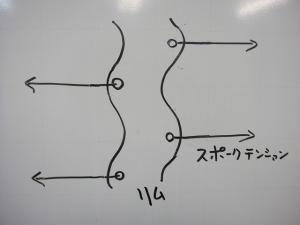
the rim takes on a wave-like shape side to side.
Exaggerating it, it looks something like the diagram above.
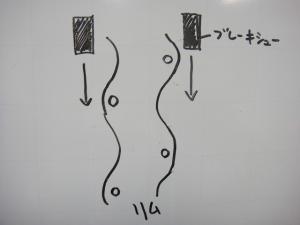
When the rim in that state gets worn down by the brake shoes,
it creates those patterns we saw earlier.
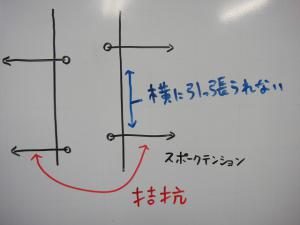
With pair spokes, because the spoke holes are positioned closely,
the rim doesn't wave side to side.
(It might bulge slightly side to side, but that's about it.)
Also, the section between pair spokes doesn't experience lateral stress,
which is another characteristic.
Looking at just this, pair spokes seem superior.
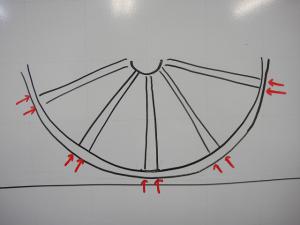
Pair spokes have non-uniform spoke tension adjustment points,
so you can't dial in radial runout cleanly.
The base of the spoke holes ends up recessed inward compared to other sections.
Additionally, lateral runout between one pair spoke and the next is
difficult to adjust, which is another drawback.
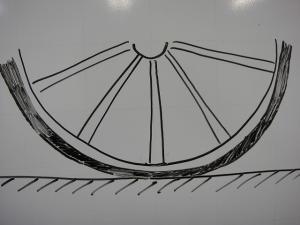
As for radial runout, if you dial it in carefully despite the difficulty,
you can keep the rim runout smaller than the deformation of the tire contact patch,
so you won't notice or be bothered by it while riding.
Basically, pair spokes have no real advantages (the disadvantages outweigh any benefits)
—that's my assessment. But pair spokes have something like a "faith-based belief"
in their aerodynamic advantage, and I can't completely deny that claim.
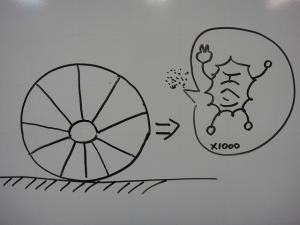
Here's the cute little bug character appearing again. Don't do a peace sign.
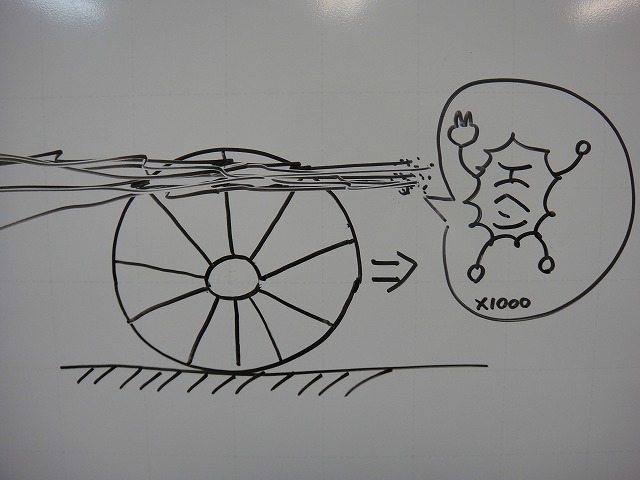
I'll release these bugs head-on toward a rotating wheel.
As I mentioned in the cycloid curve post, the top half of a rotating wheel
moves faster than the wheel's speed, so I'll observe how the bugs scatter
in the top half of the wheel.
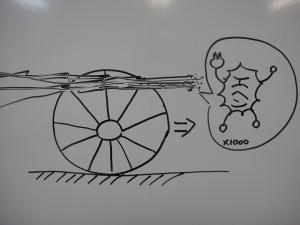
The group of bugs scatters every time they pass through a spoke.
A wheel that guides the bugs through more smoothly
has what I call "high aerodynamic bug-deflection characteristics" in this blog.
Though technically the term "streamlining effect" already exists,
I still use "aerodynamic bug-deflection characteristics," and there's a reason for that,
but that reason is a secret.
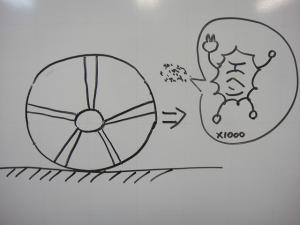
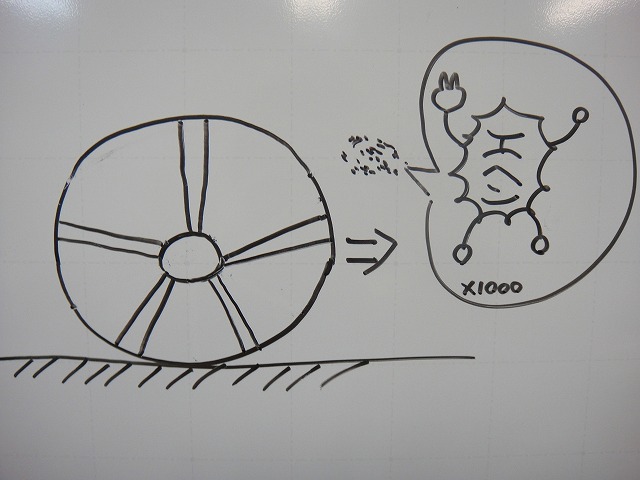
Let me consider the same thing with pair spokes.
Of course the actual number of spokes is the same.
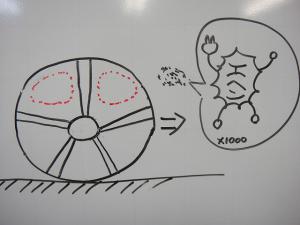
There's a "bug-friendly zone" between pair spokes.
This makes pair spokes "visually appear to be aerodynamically superior."
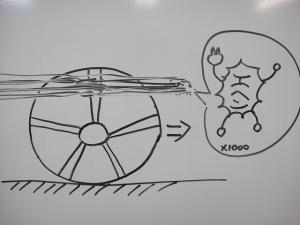
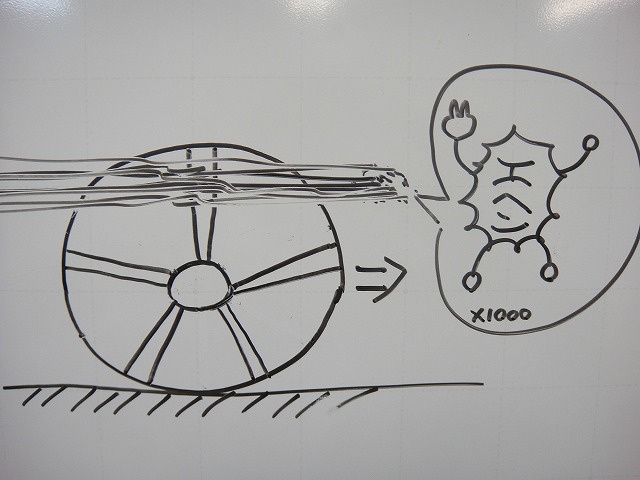
I released the bugs the same way. The diagram looks good,
but are pair spokes really superior in aerodynamic bug-deflection characteristics?
This diagram looks more like the bugs are hitting a stationary wheel
rather than a rotating one.
Let me look at this from a different angle.
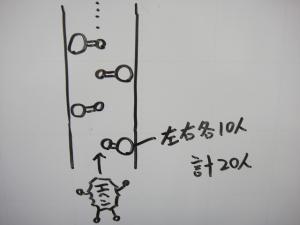
One night, the little bug was walking down a dark road.
Suddenly, a burly man in front threw a lariat at him.
Then another kept coming, left and right in rapid succession, showing no mercy.
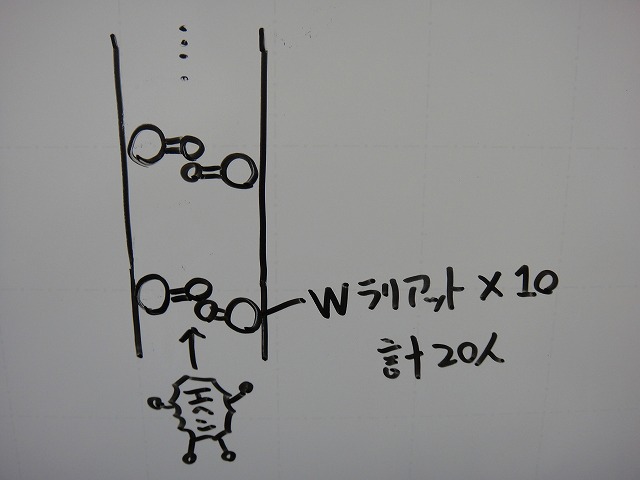
The bug took lariats from a total of 20 people.
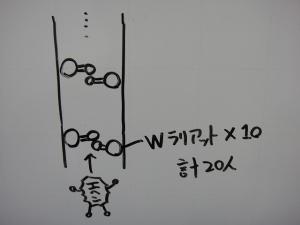
On another occasion,
this time two people threw lariats at him simultaneously, left and right.
That happened 10 times, for a total of 20 lariats from 20 people.
If the second scenario causes less lasting damage to the body,
then pair spokes could be said to have an aerodynamic advantage.

Now consider a guillotine pendulum, Indiana Jones style,
swinging left and right in front of you.
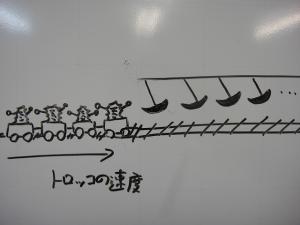
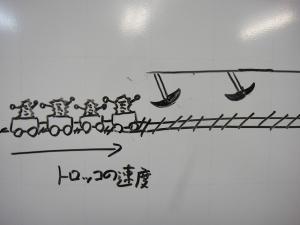
A mine cart carrying the little bugs passes under the pendulum.
The mine cart moves at constant speed and can't stop arbitrarily.
If the pendulum motion is synchronized and the pendulum spacing is arranged
in a pair-spoke pattern, the survival rate would be higher.
As far as pair spokes go, my best expression is: they sacrifice overall wheel precision
in exchange for possibly—just possibly—having aerodynamic benefits.
Notice how the first statement is definitive and the latter speculative?
That should tell you something.
Some people consider Campagnolo's G3 lacing a type of pair spoke,
but that's absurd! That's a spoke lacing pattern that transcends the pair spoke concept entirely.
This will get long, so I'll cover it another day.
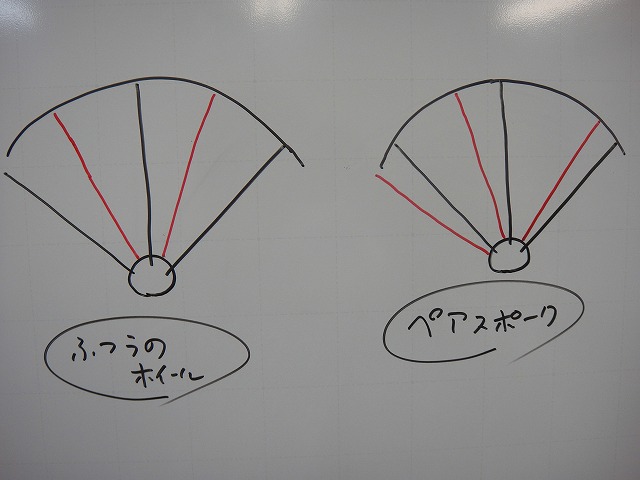
The degree varies by manufacturer and model, but
by deliberately designing the phase relationship between the rim and hub spoke holes,
it creates a spoke lacing with non-uniform spoke spacing.
Let me think about the merits of this arrangement.
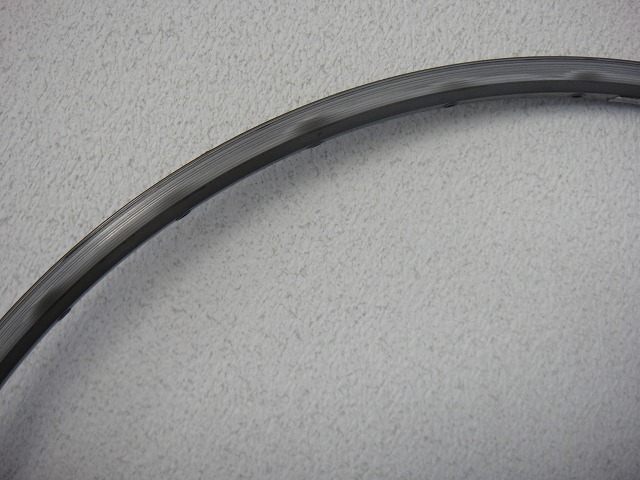
↑This is a normal rim, but the hard anodized surface has been worn down by the brake
leaving marks on the rim sidewall that look like sword blade patterns.
If you look closely, the marks go: dark, light, dark, light, dark... from left to right.
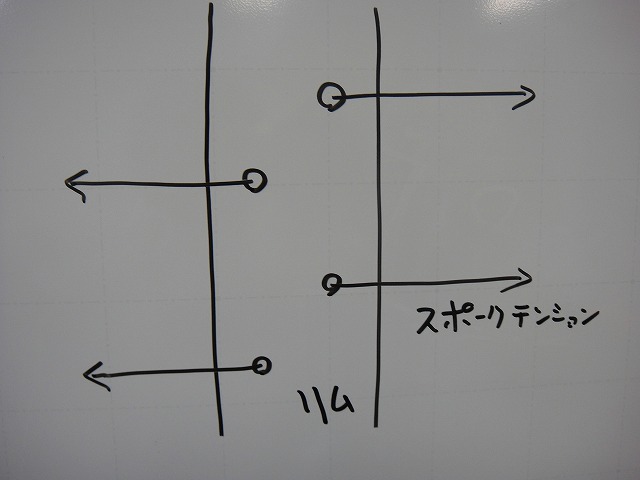
A normal rim gets pulled alternately left and right at the spoke holes, so
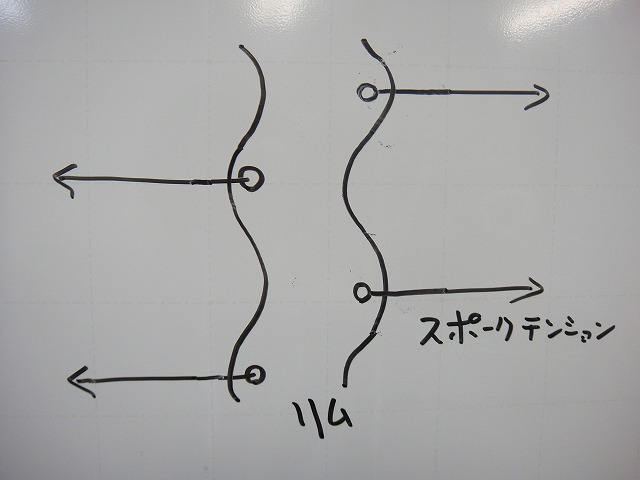
the rim takes on a wave-like shape side to side.
Exaggerating it, it looks something like the diagram above.
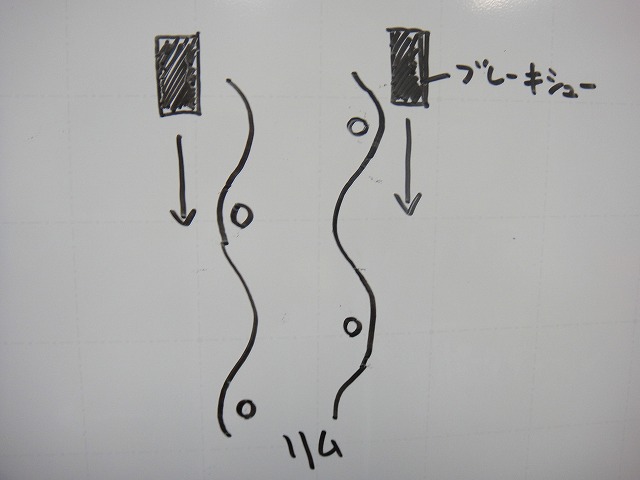
When the rim in that state gets worn down by the brake shoes,
it creates those patterns we saw earlier.

With pair spokes, because the spoke holes are positioned closely,
the rim doesn't wave side to side.
(It might bulge slightly side to side, but that's about it.)
Also, the section between pair spokes doesn't experience lateral stress,
which is another characteristic.
Looking at just this, pair spokes seem superior.
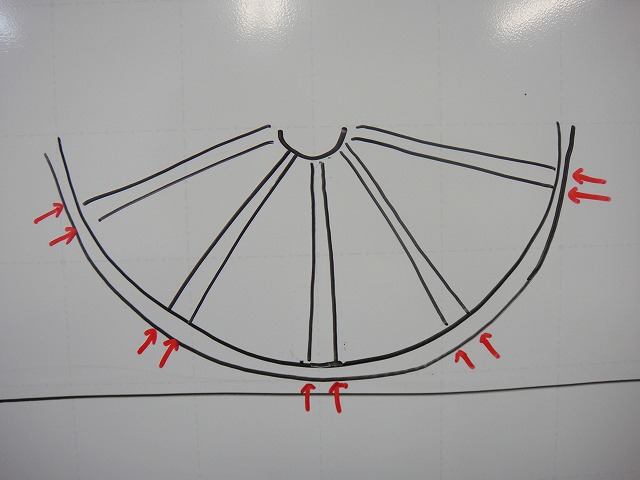
Pair spokes have non-uniform spoke tension adjustment points,
so you can't dial in radial runout cleanly.
The base of the spoke holes ends up recessed inward compared to other sections.
Additionally, lateral runout between one pair spoke and the next is
difficult to adjust, which is another drawback.

As for radial runout, if you dial it in carefully despite the difficulty,
you can keep the rim runout smaller than the deformation of the tire contact patch,
so you won't notice or be bothered by it while riding.
Basically, pair spokes have no real advantages (the disadvantages outweigh any benefits)
—that's my assessment. But pair spokes have something like a "faith-based belief"
in their aerodynamic advantage, and I can't completely deny that claim.
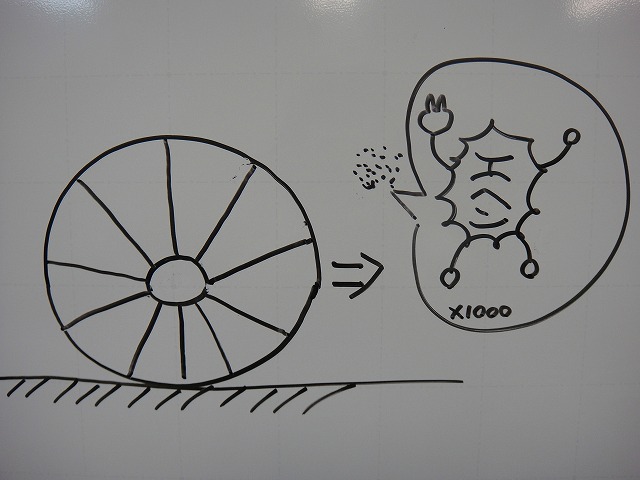
Here's the cute little bug character appearing again. Don't do a peace sign.
I'll release these bugs head-on toward a rotating wheel.
As I mentioned in the cycloid curve post, the top half of a rotating wheel
moves faster than the wheel's speed, so I'll observe how the bugs scatter
in the top half of the wheel.
The group of bugs scatters every time they pass through a spoke.
A wheel that guides the bugs through more smoothly
has what I call "high aerodynamic bug-deflection characteristics" in this blog.
Though technically the term "streamlining effect" already exists,
I still use "aerodynamic bug-deflection characteristics," and there's a reason for that,
but that reason is a secret.
Let me consider the same thing with pair spokes.
Of course the actual number of spokes is the same.

There's a "bug-friendly zone" between pair spokes.
This makes pair spokes "visually appear to be aerodynamically superior."
I released the bugs the same way. The diagram looks good,
but are pair spokes really superior in aerodynamic bug-deflection characteristics?
This diagram looks more like the bugs are hitting a stationary wheel
rather than a rotating one.
Let me look at this from a different angle.

One night, the little bug was walking down a dark road.
Suddenly, a burly man in front threw a lariat at him.
Then another kept coming, left and right in rapid succession, showing no mercy.
The bug took lariats from a total of 20 people.
On another occasion,
this time two people threw lariats at him simultaneously, left and right.
That happened 10 times, for a total of 20 lariats from 20 people.
If the second scenario causes less lasting damage to the body,
then pair spokes could be said to have an aerodynamic advantage.
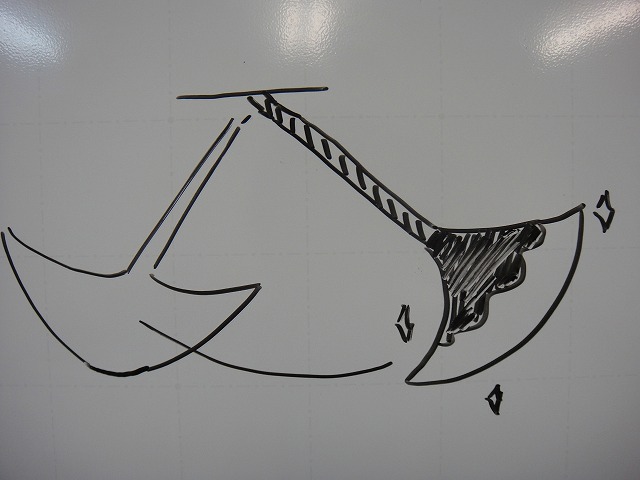
Now consider a guillotine pendulum, Indiana Jones style,
swinging left and right in front of you.
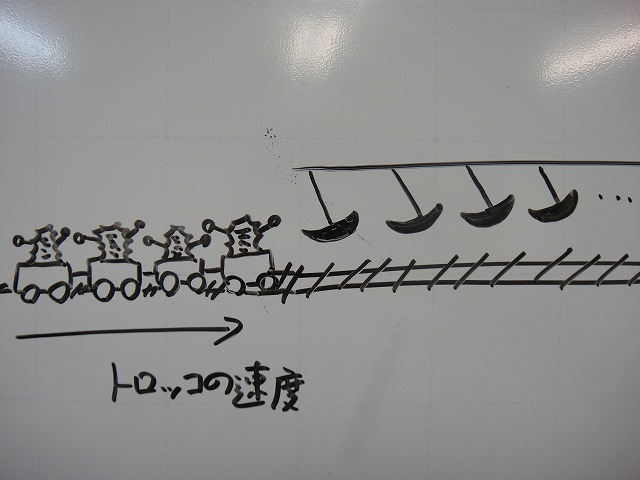
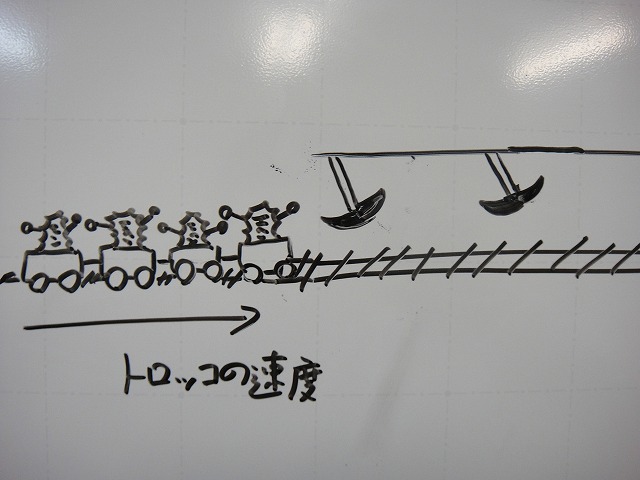
A mine cart carrying the little bugs passes under the pendulum.
The mine cart moves at constant speed and can't stop arbitrarily.
If the pendulum motion is synchronized and the pendulum spacing is arranged
in a pair-spoke pattern, the survival rate would be higher.
As far as pair spokes go, my best expression is: they sacrifice overall wheel precision
in exchange for possibly—just possibly—having aerodynamic benefits.
Notice how the first statement is definitive and the latter speculative?
That should tell you something.
Some people consider Campagnolo's G3 lacing a type of pair spoke,
but that's absurd! That's a spoke lacing pattern that transcends the pair spoke concept entirely.
This will get long, so I'll cover it another day.