I received a question: "Why are spoke holes offset toward the flange side on aluminum rims, but offset the opposite direction on carbon rims?"
If a rim's spoke hole offset is wrong, you basically can't build the wheel.
Since I haven't seen the specific situation in detail, I'm not entirely sure, but I suspect what appears to be the case is just that—and the holes aren't actually offset incorrectly. This is especially true for manufacturer-assembled wheels. So let me write about rim spoke hole offset.
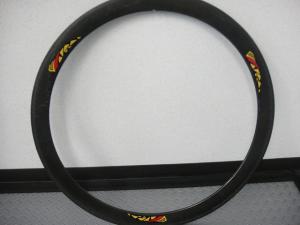
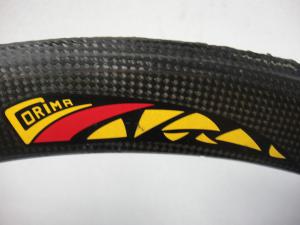
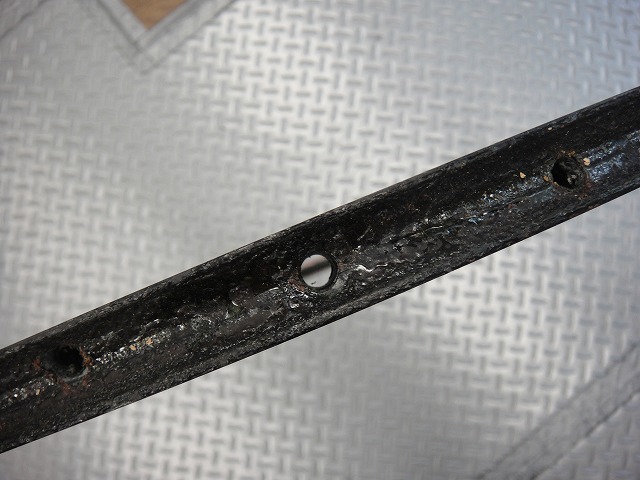
↑This is a Corima rim from quite a few generations back.
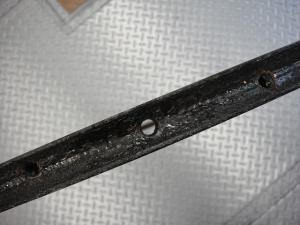
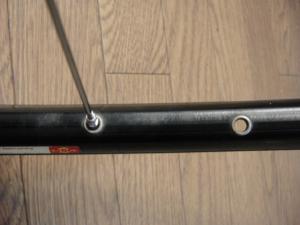
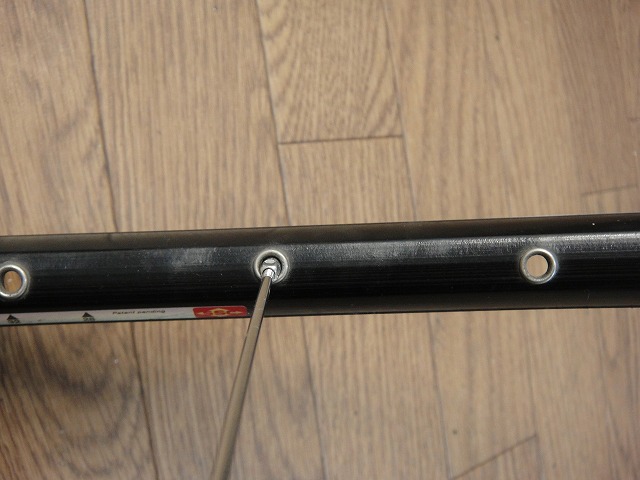
Looking at the spoke holes near the valve hole from above. You can see the spoke holes are quite offset left and right.

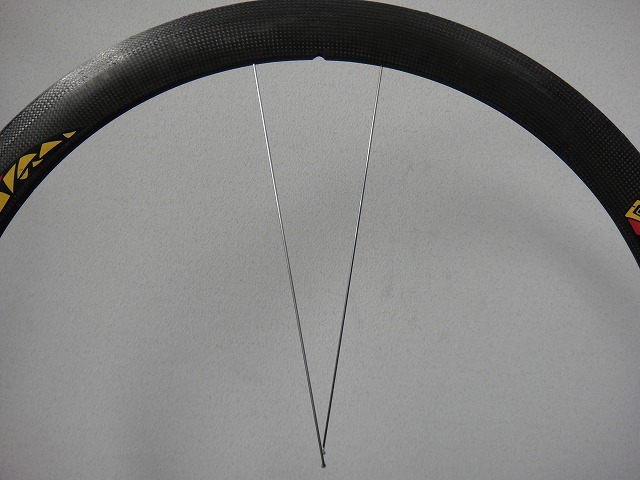
I actually threaded spokes through holes on both sides of the valve hole. When viewed from the side, you can't really tell, but

when viewed from front to back, the hole offset is this pronounced. This rim is classified as: "When the wheel is viewed from the side with the valve hole at the top, the spoke hole is offset in the direction of the flange on the right side of the valve." Since most rims are like this, I call this rim orientation the "correct rim" in this blog.
When viewing the wheel from the right side of the image, the spoke on the right side of the valve (toward the back in the image) is offset in the direction away from you—a correct rim. This spoke directionality is quite strong, and you can't build a wheel against it. It's not impossible, but the part of the rim that holds the nipple experiences considerable ongoing stress.
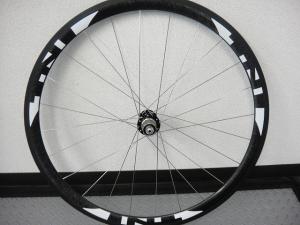
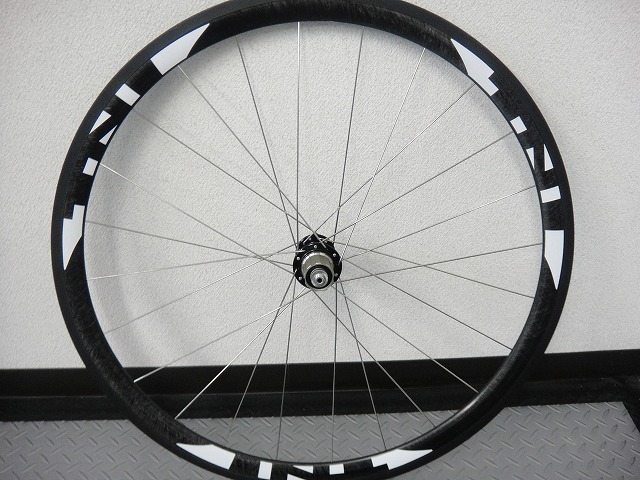
Now let's look at Nomu Lab wheel #2.
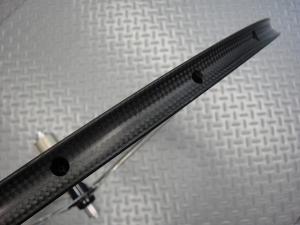
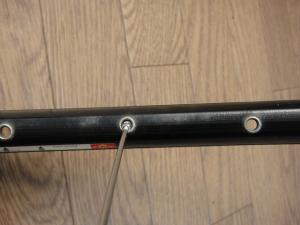
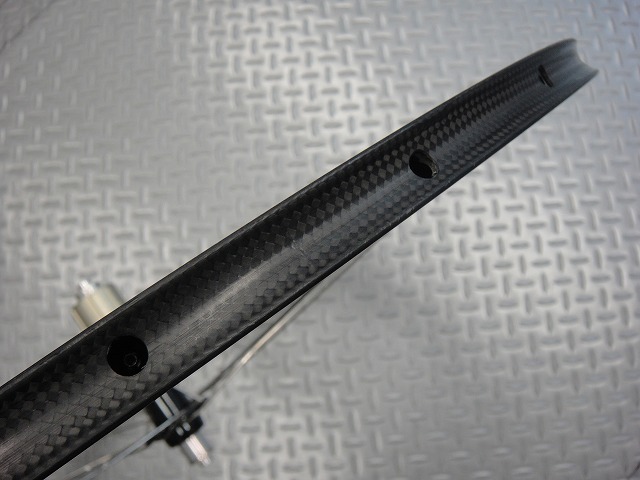
Not as pronounced as the Corima, but the holes are offset a fair amount.
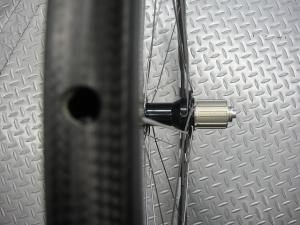
↑This hole is offset to the left, but the spoke extends to the right. Diagramming this
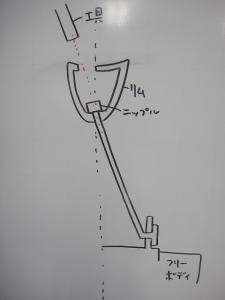
looks like this. Because the spoke's angle of entry into the rim is diagonal, the hole at the rim's outer perimeter must be offset laterally, or adjustment with tools becomes difficult (or impossible). So this hole offset and assembly method are correctly matched.
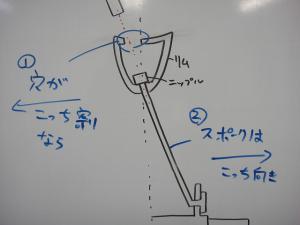
I've added annotations showing hole offset and spoke direction. Is your wheel like this? If so, you're good.
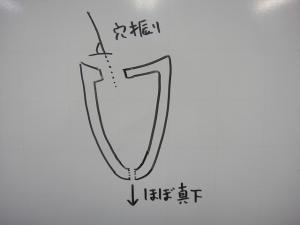
Actually, even with significant rim spoke hole offset, the spoke holes themselves are drilled nearly straight down. Deep rims have no offset in their inner spoke holes (neither correct nor reverse), so they could theoretically be built the opposite way, but
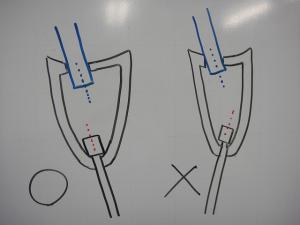
since the outer rim holes are drilled with the assumption of building as a correct rim, the holes are offset in the direction the tool enters. So if you don't treat it as a correct rim, it's essentially impossible to build.
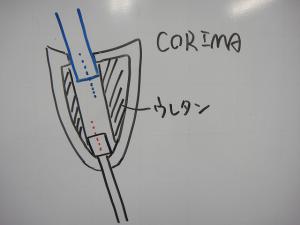
With Corima rims, for example, the rim isn't hollow but has urethane injected inside, so tools can only enter straight or at an angle, nothing else.
So, the rim's spoke hole offset direction and the direction spokes extend are opposite. If your comment about "carbon rims having spoke holes offset the opposite direction" refers to this, there's no problem. If the outer rim's hole offset and the spoke direction are the same, let me know.
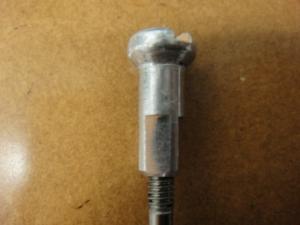
About normal wheels. The base of the nipple has a rounded shape close to spherical, so
wheels can be built following the offset
or built reverse (though the stress on the nipple remains significant). However, building with reverse offset doesn't feel good.
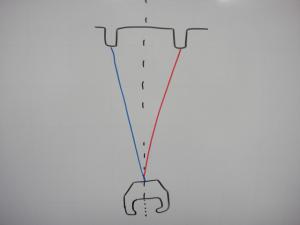
↑I've been drawing diagrams like this,

but when considering spoke hole offset, it looks like this.
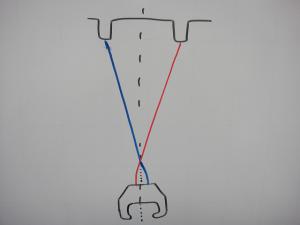
Reverse offset looks like this—at first glance it's "not exactly caterpillar-friendly." Actually, this theoretically increases lateral stiffness, but since rim spoke hole offset includes not just left-right position but also angle, the nipple stress disadvantage means it should be avoided.
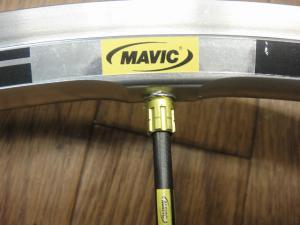
The strongest spoke hole offset directionality is found in wheels like Ksyrium and R-SYS. These wheels have threads cut directly into the rim. It's essentially screwing a screw in. Once several threads are engaged, the nipple becomes nearly immobile relative to the rim.
The threads aren't visible in the image above, but
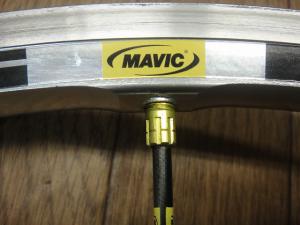
looking at the opposite side of the same nipple, you can see about two threads. This shows how diagonally the threads enter.
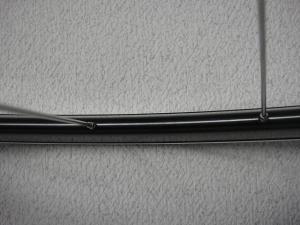
With TNi's AL300 rim, there's no spoke hole offset on either the inner or outer perimeter. Additionally, since it doesn't use internal nipples, theoretically there's no problem treating it as reverse rim when doing tangent lacing. Conventionally it feels awkward, so I build it as a correct rim.
If a rim's spoke hole offset is wrong, you basically can't build the wheel.
Since I haven't seen the specific situation in detail, I'm not entirely sure, but I suspect what appears to be the case is just that—and the holes aren't actually offset incorrectly. This is especially true for manufacturer-assembled wheels. So let me write about rim spoke hole offset.
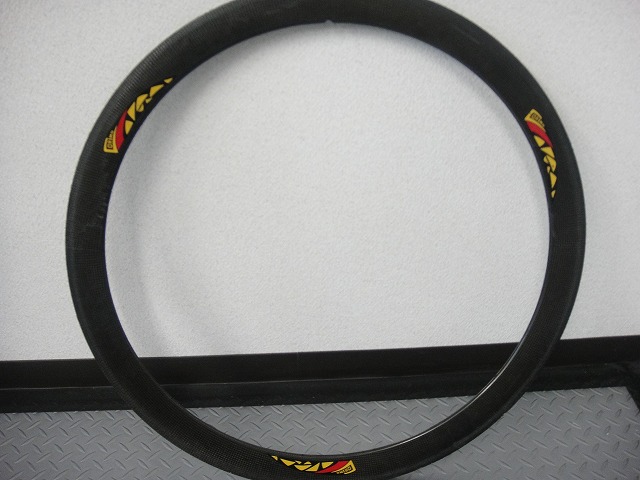

↑This is a Corima rim from quite a few generations back.
Looking at the spoke holes near the valve hole from above. You can see the spoke holes are quite offset left and right.
I actually threaded spokes through holes on both sides of the valve hole. When viewed from the side, you can't really tell, but

when viewed from front to back, the hole offset is this pronounced. This rim is classified as: "When the wheel is viewed from the side with the valve hole at the top, the spoke hole is offset in the direction of the flange on the right side of the valve." Since most rims are like this, I call this rim orientation the "correct rim" in this blog.
When viewing the wheel from the right side of the image, the spoke on the right side of the valve (toward the back in the image) is offset in the direction away from you—a correct rim. This spoke directionality is quite strong, and you can't build a wheel against it. It's not impossible, but the part of the rim that holds the nipple experiences considerable ongoing stress.
Now let's look at Nomu Lab wheel #2.
Not as pronounced as the Corima, but the holes are offset a fair amount.
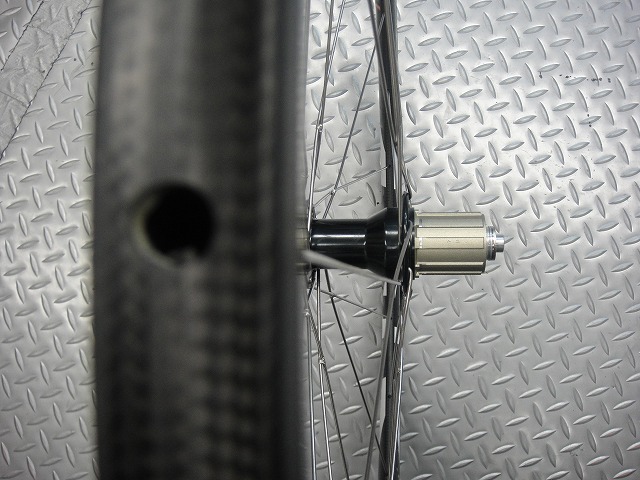
↑This hole is offset to the left, but the spoke extends to the right. Diagramming this

looks like this. Because the spoke's angle of entry into the rim is diagonal, the hole at the rim's outer perimeter must be offset laterally, or adjustment with tools becomes difficult (or impossible). So this hole offset and assembly method are correctly matched.

I've added annotations showing hole offset and spoke direction. Is your wheel like this? If so, you're good.
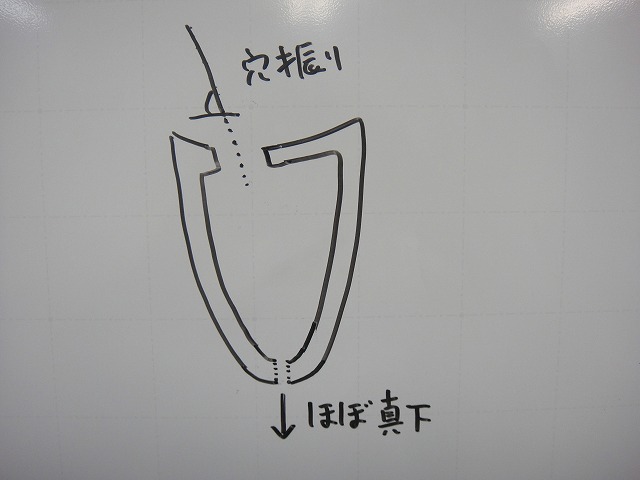
Actually, even with significant rim spoke hole offset, the spoke holes themselves are drilled nearly straight down. Deep rims have no offset in their inner spoke holes (neither correct nor reverse), so they could theoretically be built the opposite way, but

since the outer rim holes are drilled with the assumption of building as a correct rim, the holes are offset in the direction the tool enters. So if you don't treat it as a correct rim, it's essentially impossible to build.
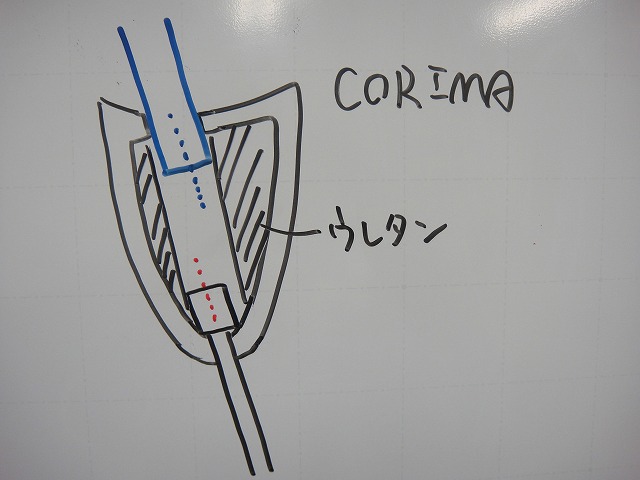
With Corima rims, for example, the rim isn't hollow but has urethane injected inside, so tools can only enter straight or at an angle, nothing else.
So, the rim's spoke hole offset direction and the direction spokes extend are opposite. If your comment about "carbon rims having spoke holes offset the opposite direction" refers to this, there's no problem. If the outer rim's hole offset and the spoke direction are the same, let me know.

About normal wheels. The base of the nipple has a rounded shape close to spherical, so
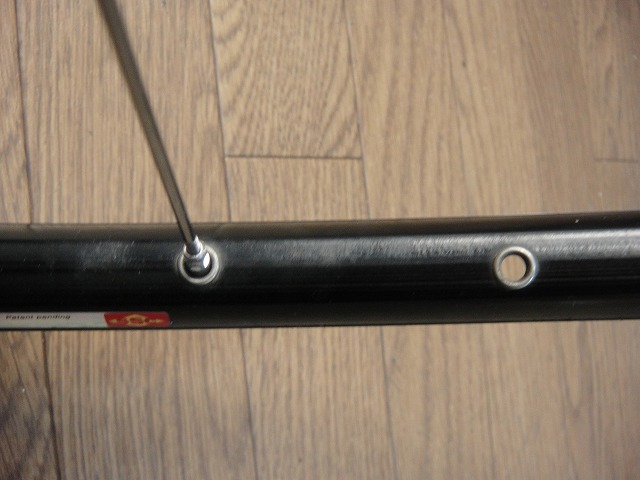
wheels can be built following the offset
or built reverse (though the stress on the nipple remains significant). However, building with reverse offset doesn't feel good.

↑I've been drawing diagrams like this,
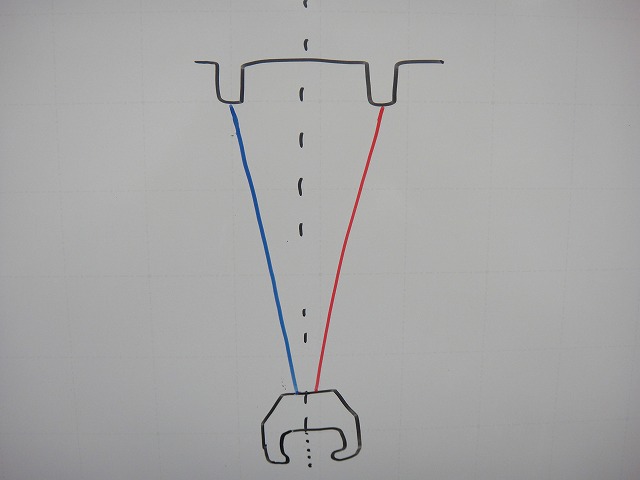
but when considering spoke hole offset, it looks like this.
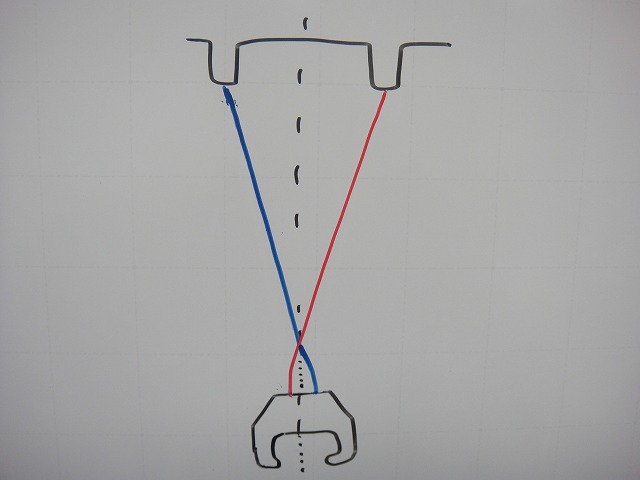
Reverse offset looks like this—at first glance it's "not exactly caterpillar-friendly." Actually, this theoretically increases lateral stiffness, but since rim spoke hole offset includes not just left-right position but also angle, the nipple stress disadvantage means it should be avoided.
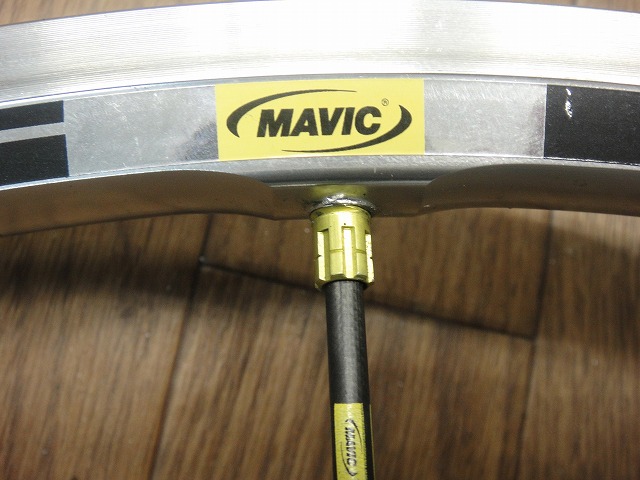
The strongest spoke hole offset directionality is found in wheels like Ksyrium and R-SYS. These wheels have threads cut directly into the rim. It's essentially screwing a screw in. Once several threads are engaged, the nipple becomes nearly immobile relative to the rim.
The threads aren't visible in the image above, but
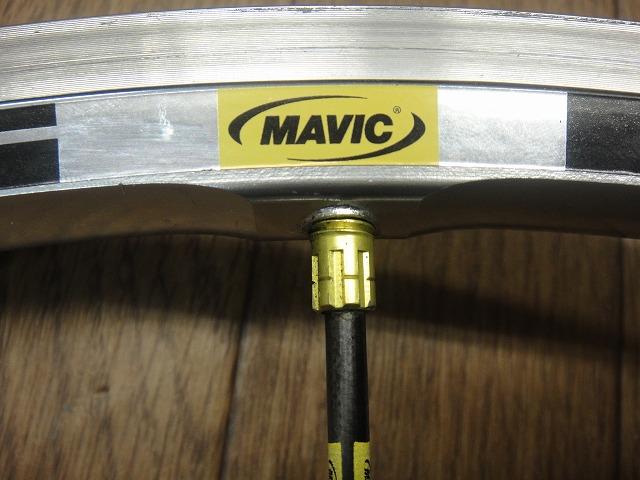
looking at the opposite side of the same nipple, you can see about two threads. This shows how diagonally the threads enter.
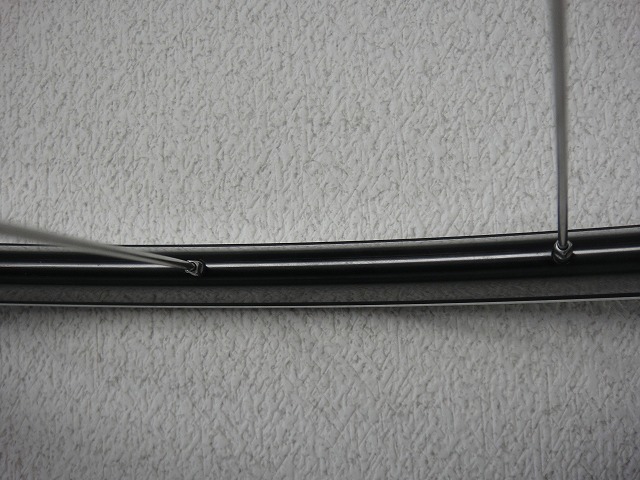
With TNi's AL300 rim, there's no spoke hole offset on either the inner or outer perimeter. Additionally, since it doesn't use internal nipples, theoretically there's no problem treating it as reverse rim when doing tangent lacing. Conventionally it feels awkward, so I build it as a correct rim.