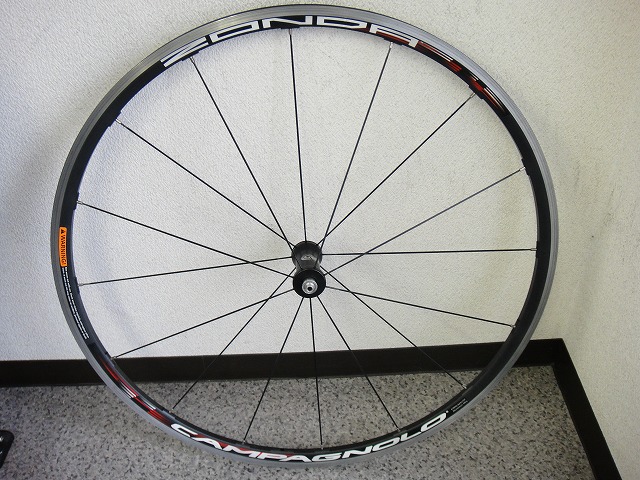
I received a Zonda from a customer.
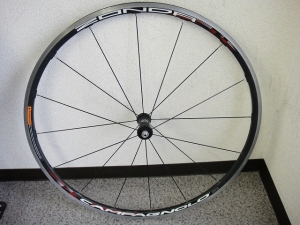
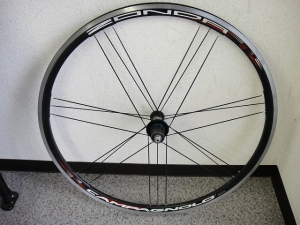
Regarding when the manufacturer applies stickers to the rim,
it's probably before the wheel is built.
Built wheels can't lay flat, so applying stickers would be a hassle.
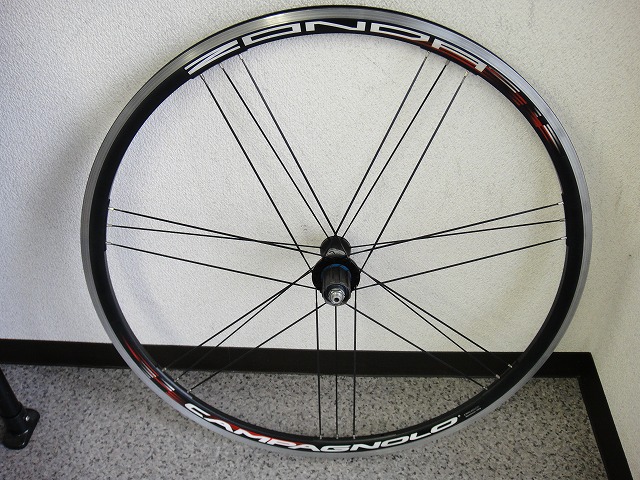
In the case of rear rims with G3 spokes or 2:1 spokes,
the hole drilling has such a strong directional orientation
that the rim has left and right attributes even without stickers.
The same applies with offset rims and so on.
When applying stickers to such rims,
the people at Campagnolo and Fulcrum factories
apply the orange WARNING sticker to the left side of the direction of travel
at quite a high probability, though not 100%.
This is what I call "left WARNING" in this blog.
In contrast, front rims don't have left and right attributes,
so the WARNING sticker actually determines the left and right attributes.
After the stickered rim is handed over, the next process is building the wheel.
The rear rim absolutely cannot be built in reverse.
If the rear rim were 100% left WARNING,
and if there were a certain number of people who don't care at all about the sticker direction
during the wheel-building process,
then right WARNING should only appear on front wheels.
In reality, right WARNING rear wheels do exist,
but they're clearly fewer than front wheels, so
we can understand that
"people applying stickers to rims tend to care relatively more about left WARNING"
and
"people building wheels tend to not look at the sticker at all, relatively speaking."
If the latter condition were completely random,
right WARNING should be 50%, but
since left WARNING is slightly more common,
it seems some people do care a bit.
Anyway, it doesn't affect performance so it doesn't really matter,
but this one also had right WARNING only on the front wheel.
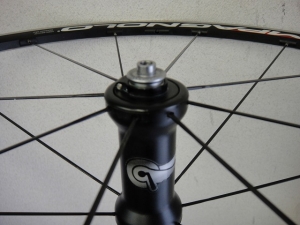
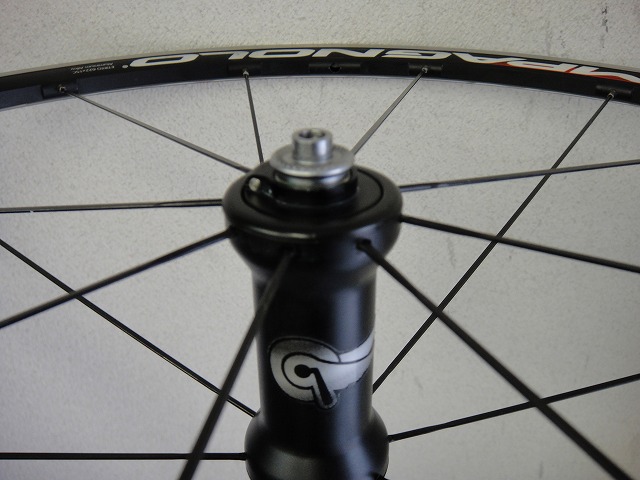
The customer wanted me to look inside the hubs on both wheels.
The front hub didn't have any particular issues.
The best ball bearing adjustment is
"as loose as possible while preventing axial play,"
but it was slightly tighter than that, so I loosened it.

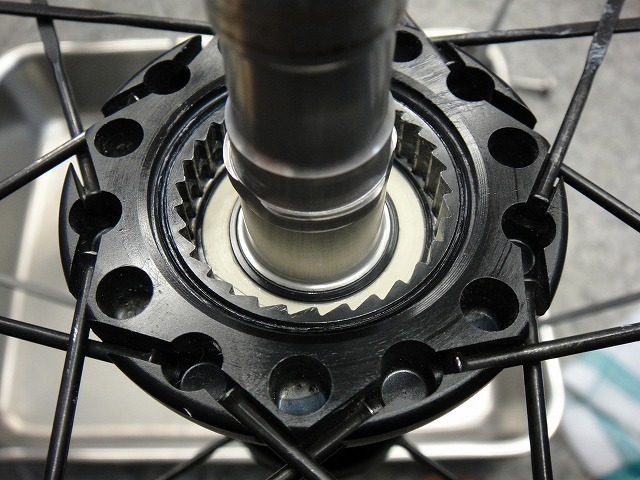
The rear hub had a grainy feeling in rotation, so I disassembled and cleaned it.
What I found was that the ball bearing was also just adjusted too tight,
and the balls and races weren't particularly damaged.
However, the feel to the touch resembled the early stages of pitting corrosion,
so I cleaned it while I had it apart anyway.
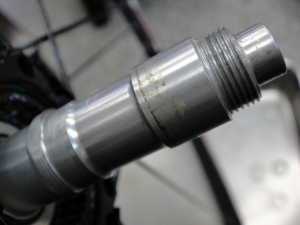
↑Of the two bearings lined up inside the freebody,
the shaft is showing false rust from the outer bearing.
It's not severe enough to really call it false rust,
but I applied grease to the freebody bearings anyway.
The wheels are essentially true, with just slight centering drift on the rear wheel.
Bonus

It's not just wheels that show indifference to left/right and front/back orientation—
I've seen evidence of this with wheel bags too.
The reinforcement patch (synthetic leather) against the hub axle or quick release
usually appears on the outside, as in the image above.
Most current models are probably like this.
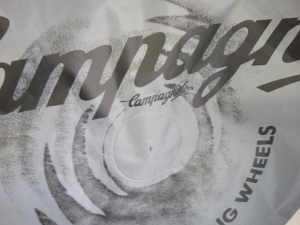
But some have the patch on the inside instead.
There's a cross mark in the center that serves as a manufacturing guide.
I thought, "sloppy work again..."
But it turns out this one actually has deliberate differentiation.
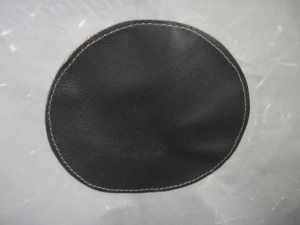
↑The inside patch version has a leather-like finish,
while the outside patch version has a textured finish with horizontal ridges.
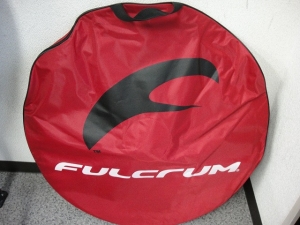
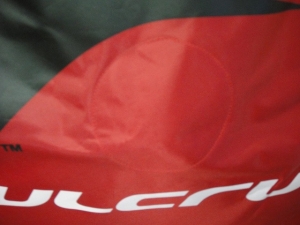
As far as I know, Fulcrum always uses the inside patch.
Perhaps because of this, there's no center mark.
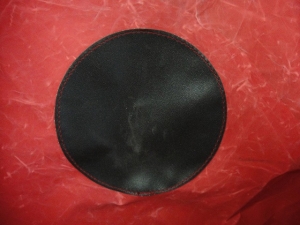
↑The inside patch finish is the same as Campagnolo.
Around the time Fulcrum came out, inside patches were seen on Campagnolo bags too,
but there was mixing even then.
There was a period when they were trying to transition to match Fulcrum's inside patch,
and mixing occurred only in Campagnolo, but
afterwards they apparently returned to 100% outside patches.
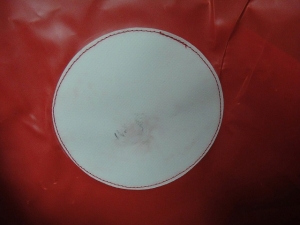
↑Some Fulcrum inside patches are white.
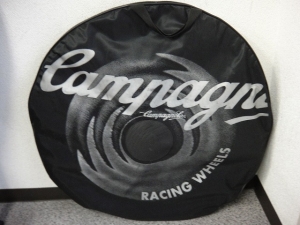
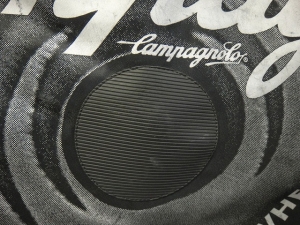
↑This is Campagnolo's previous-generation wheel bag (black swirl), and
for this and the generation before it (black jagged pattern),
100% as far as I know had the textured patch on the outside,
so Campagnolo's wheel bags with the inside patch version
were apparently made while temporarily following
Fulcrum's wheel bag manufacturing process.
I asked someone from Campagnolo Japan about this long ago,
and they said there's no performance difference based on which side the patch is on,
so I was told not to worry about it.
Regarding when the manufacturer applies stickers to the rim,
it's probably before the wheel is built.
Built wheels can't lay flat, so applying stickers would be a hassle.
In the case of rear rims with G3 spokes or 2:1 spokes,
the hole drilling has such a strong directional orientation
that the rim has left and right attributes even without stickers.
The same applies with offset rims and so on.
When applying stickers to such rims,
the people at Campagnolo and Fulcrum factories
apply the orange WARNING sticker to the left side of the direction of travel
at quite a high probability, though not 100%.
This is what I call "left WARNING" in this blog.
In contrast, front rims don't have left and right attributes,
so the WARNING sticker actually determines the left and right attributes.
After the stickered rim is handed over, the next process is building the wheel.
The rear rim absolutely cannot be built in reverse.
If the rear rim were 100% left WARNING,
and if there were a certain number of people who don't care at all about the sticker direction
during the wheel-building process,
then right WARNING should only appear on front wheels.
In reality, right WARNING rear wheels do exist,
but they're clearly fewer than front wheels, so
we can understand that
"people applying stickers to rims tend to care relatively more about left WARNING"
and
"people building wheels tend to not look at the sticker at all, relatively speaking."
If the latter condition were completely random,
right WARNING should be 50%, but
since left WARNING is slightly more common,
it seems some people do care a bit.
Anyway, it doesn't affect performance so it doesn't really matter,
but this one also had right WARNING only on the front wheel.
The customer wanted me to look inside the hubs on both wheels.
The front hub didn't have any particular issues.
The best ball bearing adjustment is
"as loose as possible while preventing axial play,"
but it was slightly tighter than that, so I loosened it.
The rear hub had a grainy feeling in rotation, so I disassembled and cleaned it.
What I found was that the ball bearing was also just adjusted too tight,
and the balls and races weren't particularly damaged.
However, the feel to the touch resembled the early stages of pitting corrosion,
so I cleaned it while I had it apart anyway.
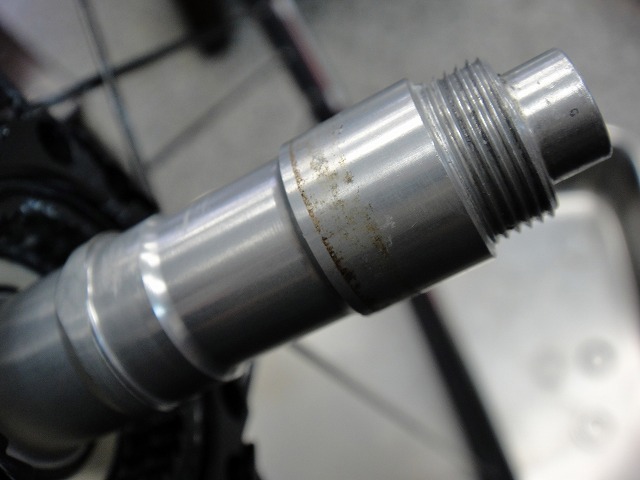
↑Of the two bearings lined up inside the freebody,
the shaft is showing false rust from the outer bearing.
It's not severe enough to really call it false rust,
but I applied grease to the freebody bearings anyway.
The wheels are essentially true, with just slight centering drift on the rear wheel.
Bonus

It's not just wheels that show indifference to left/right and front/back orientation—
I've seen evidence of this with wheel bags too.
The reinforcement patch (synthetic leather) against the hub axle or quick release
usually appears on the outside, as in the image above.
Most current models are probably like this.
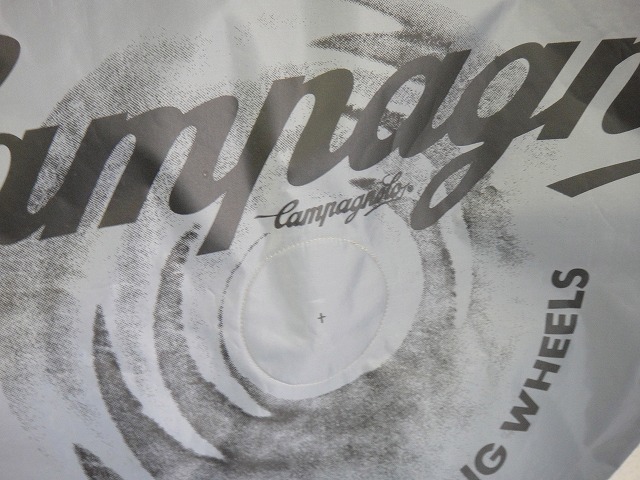
But some have the patch on the inside instead.
There's a cross mark in the center that serves as a manufacturing guide.
I thought, "sloppy work again..."
But it turns out this one actually has deliberate differentiation.
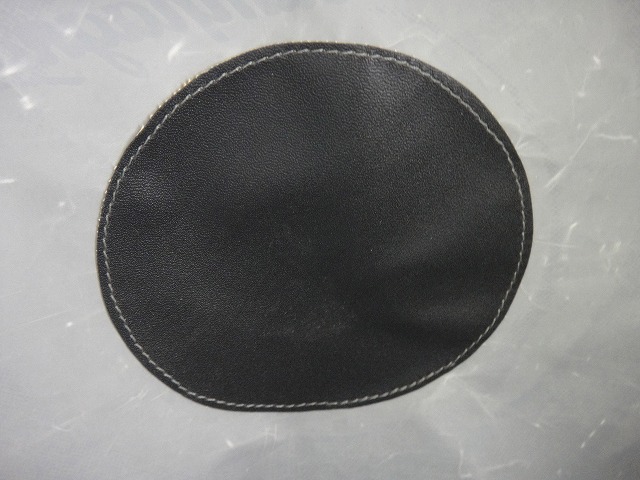
↑The inside patch version has a leather-like finish,
while the outside patch version has a textured finish with horizontal ridges.
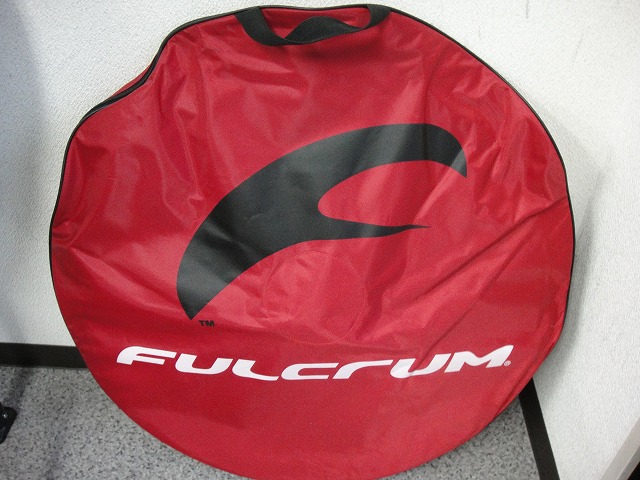
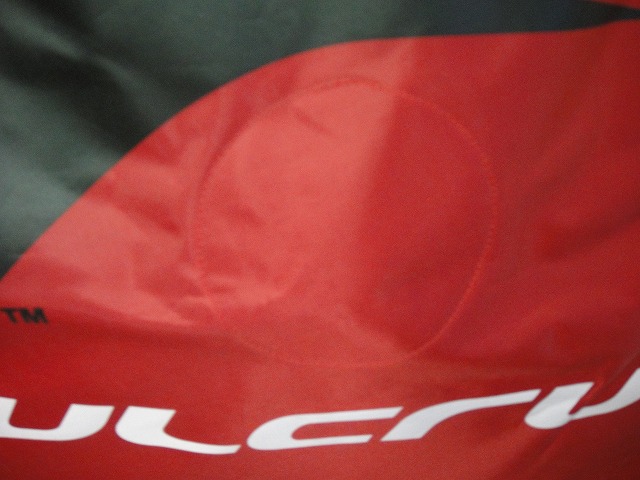
As far as I know, Fulcrum always uses the inside patch.
Perhaps because of this, there's no center mark.
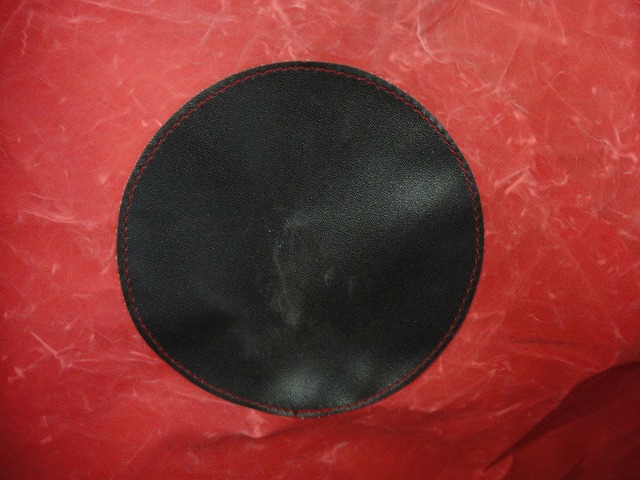
↑The inside patch finish is the same as Campagnolo.
Around the time Fulcrum came out, inside patches were seen on Campagnolo bags too,
but there was mixing even then.
There was a period when they were trying to transition to match Fulcrum's inside patch,
and mixing occurred only in Campagnolo, but
afterwards they apparently returned to 100% outside patches.
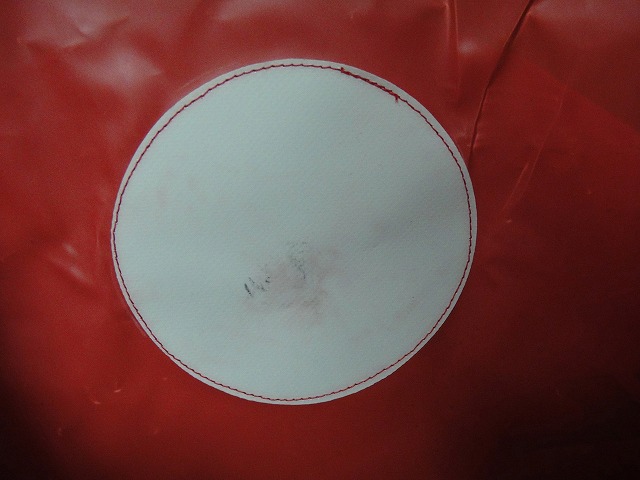
↑Some Fulcrum inside patches are white.
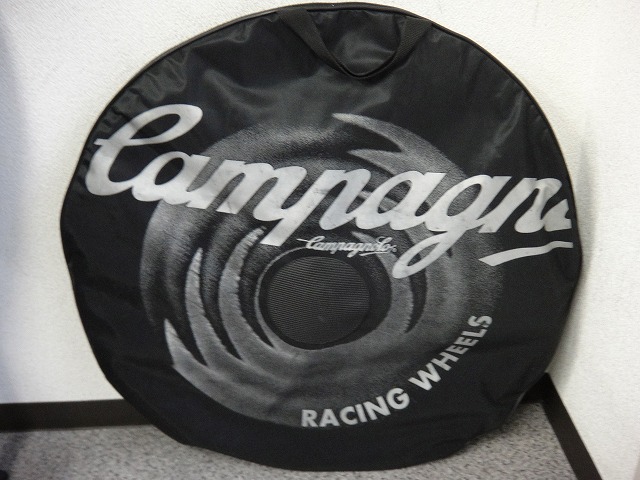
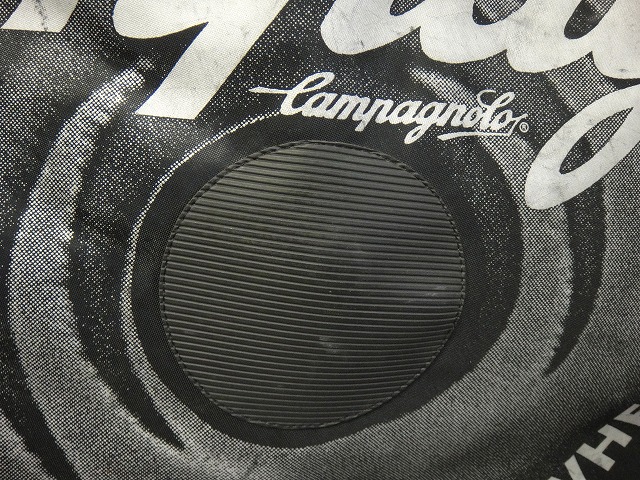
↑This is Campagnolo's previous-generation wheel bag (black swirl), and
for this and the generation before it (black jagged pattern),
100% as far as I know had the textured patch on the outside,
so Campagnolo's wheel bags with the inside patch version
were apparently made while temporarily following
Fulcrum's wheel bag manufacturing process.
I asked someone from Campagnolo Japan about this long ago,
and they said there's no performance difference based on which side the patch is on,
so I was told not to worry about it.