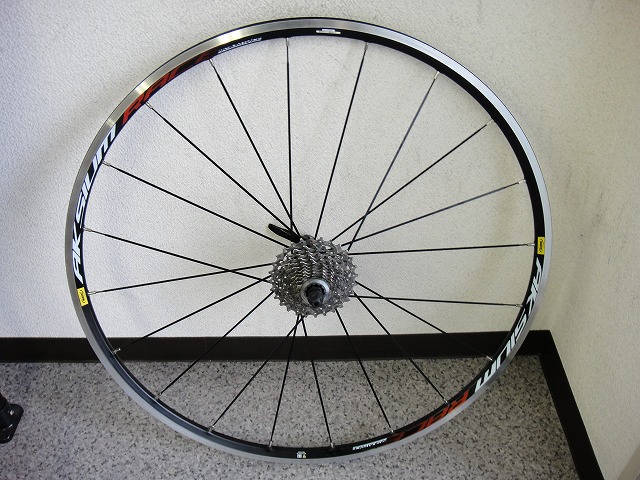
I received an Aksium from a customer.
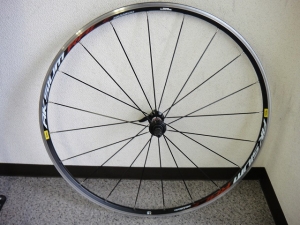
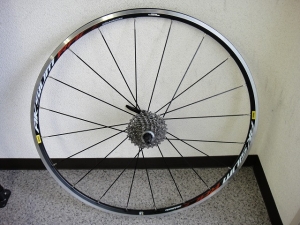
Based on the spec changes, this is the second-generation Aksium.
The rim says "Aksium Race," but that's been the same since the first generation,
and they don't really have different series like Aksium Pro or Équipé or Elite or anything like that,
so in the catalog it's just listed as "Aksium."
There may be lots of exceptions, but
with complete wheelsets, the rim weight is sometimes intentionally varied
between front and rear.
The reason for this is probably that
the rear wheel experiences greater buckling damage,
so they make the rear rim heavier than the front rim.
The first-generation Aksium had
wheels with an unusual hub flange and offset spoke design.
This wheel has 20 spokes front and 24 spokes rear,
but the measured weight is about 540g for the front rim and about 590g for the rear rim.
A 50g difference is hard to explain as variation,
and since I measured 2 front and 3 rear,
this is almost certainly a deliberate design difference.
Since the hole counts are different, the spare rim part numbers are obviously also different—they're "different parts."
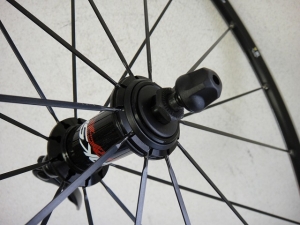
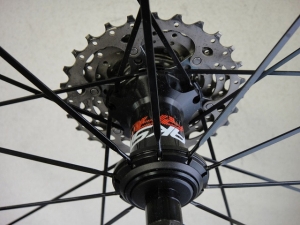
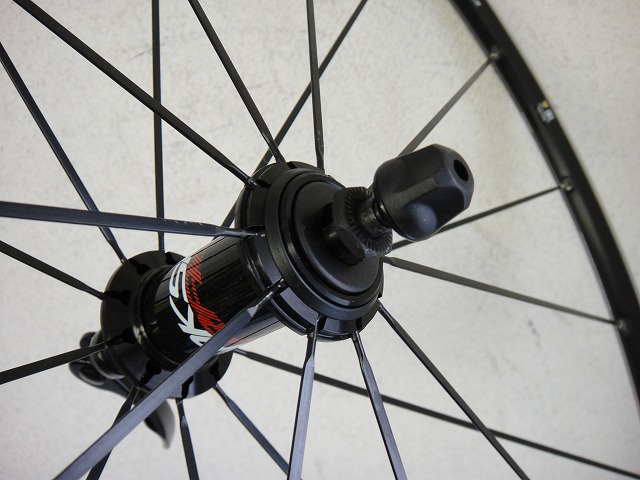
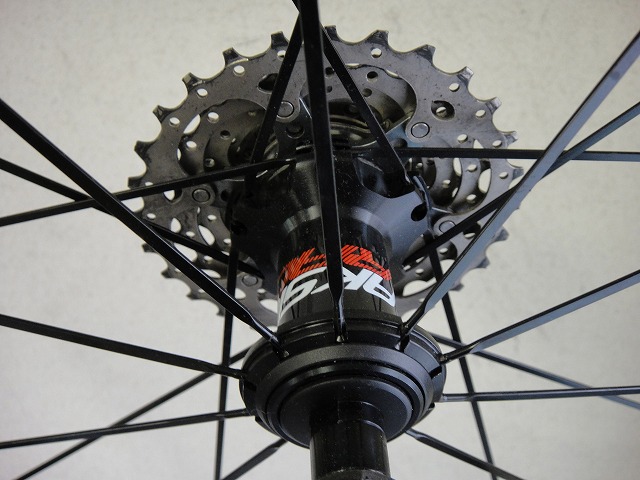
With the second-generation Aksium, both front and rear went to 20 spokes.
The part numbers are the same for both, so they share the same rim.
(There are silver and black rim versions, so there are 2 different part numbers for the color difference, but not for front/rear distinction.)
The first-generation Aksium is the 2006 model,
and this one is the 2008 model (officially called Aksium 08 by Mavic),
which they claim is 140g lighter than the previous model. The breakdown is:
Front wheel: 920g → 870g (−50g)
Rear wheel: 1075g → 985g (−90g)
So even accounting for weight differences from the hub shape changes,
the front and rear rims of the second-generation Aksium
seem to have the weight and strength comparable to the first-gen front rim.
The Ksyrium also has a clear weight difference between front and rear rims that's not just individual variation,
and that's because the rear rim is an offset rim.
Shimano's WO and tubeless C24-series rims also have slight weight differences
front to rear, but that's within normal variation.
The rear rim is an offset rim and about 2mm taller.
Campagnolo and Fulcrum's middle-class and above aluminum rim models also
have rear rims about 30g heavier, but that's because the rim height is different to begin with.
I've heard people say "the 2WAY-FIT rear wheel has a short tubeless valve and it's hard to inflate,"
but that's not because the valve is short—it's because
the rear rim height is higher compared to the standard-length tubeless valve.
↑end of rambling↑
-------------------------------------------------------
↓getting to the main point↓
Both wheels had center offset, and
there was quite a bit of wobble that seemed to develop from riding (not from the start),
so I straightened it out.

Based on the spec changes, this is the second-generation Aksium.
The rim says "Aksium Race," but that's been the same since the first generation,
and they don't really have different series like Aksium Pro or Équipé or Elite or anything like that,
so in the catalog it's just listed as "Aksium."
There may be lots of exceptions, but
with complete wheelsets, the rim weight is sometimes intentionally varied
between front and rear.
The reason for this is probably that
the rear wheel experiences greater buckling damage,
so they make the rear rim heavier than the front rim.
The first-generation Aksium had
wheels with an unusual hub flange and offset spoke design.
This wheel has 20 spokes front and 24 spokes rear,
but the measured weight is about 540g for the front rim and about 590g for the rear rim.
A 50g difference is hard to explain as variation,
and since I measured 2 front and 3 rear,
this is almost certainly a deliberate design difference.
Since the hole counts are different, the spare rim part numbers are obviously also different—they're "different parts."
With the second-generation Aksium, both front and rear went to 20 spokes.
The part numbers are the same for both, so they share the same rim.
(There are silver and black rim versions, so there are 2 different part numbers for the color difference, but not for front/rear distinction.)
The first-generation Aksium is the 2006 model,
and this one is the 2008 model (officially called Aksium 08 by Mavic),
which they claim is 140g lighter than the previous model. The breakdown is:
Front wheel: 920g → 870g (−50g)
Rear wheel: 1075g → 985g (−90g)
So even accounting for weight differences from the hub shape changes,
the front and rear rims of the second-generation Aksium
seem to have the weight and strength comparable to the first-gen front rim.
The Ksyrium also has a clear weight difference between front and rear rims that's not just individual variation,
and that's because the rear rim is an offset rim.
Shimano's WO and tubeless C24-series rims also have slight weight differences
front to rear, but that's within normal variation.
The rear rim is an offset rim and about 2mm taller.
Campagnolo and Fulcrum's middle-class and above aluminum rim models also
have rear rims about 30g heavier, but that's because the rim height is different to begin with.
I've heard people say "the 2WAY-FIT rear wheel has a short tubeless valve and it's hard to inflate,"
but that's not because the valve is short—it's because
the rear rim height is higher compared to the standard-length tubeless valve.
↑end of rambling↑
-------------------------------------------------------
↓getting to the main point↓
Both wheels had center offset, and
there was quite a bit of wobble that seemed to develop from riding (not from the start),
so I straightened it out.