More wheel work today (and so on). This is a continuation from the other day.
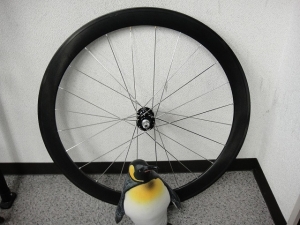
Since there are stickers on the freewheel side in two places,
I shot this from the non-freewheel side.
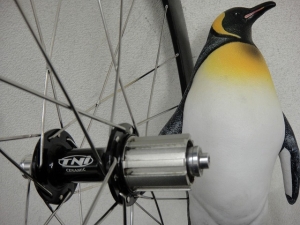
The hub is a Tni Wing Hub (similar to the front wheel),
built with 24H semi-strong 46-spoke lacing with wire ties.
Strong/CX-RAY represents the maximum difference combination
for left-right different-diameter spoke lacing within normally available spoke sizes.
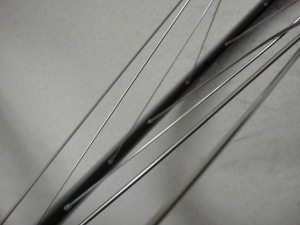
This angle works pretty nicely too.
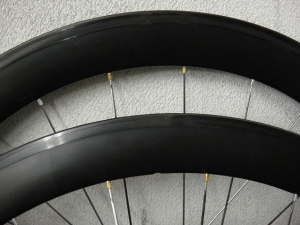
I built it with silver aluminum nipples,
but at the customer's request, only the areas beside the valve are gold aluminum nipples.
By the way, about "laced and soldered" construction—
lacing means the steel wires are actually "bound together".
It's not just wrapped around.
The solder is only there to prevent the binding from coming loose.
Whether the spokes are properly bound can be easily checked before soldering.
If you grip the spoke crossing firmly and the binding doesn't slip,
that's a proper "tied lacing" that's worth doing.
If the crossing position moves loosely and sloppily,
it's just decorative "wrapped lacing".
Though, even with wrapped lacing, if you apply enough solder,
the crossing will solidify to some degree.
Really, you should do proper tied lacing and solidify the crossing
with just the lacing before soldering... but that's how it goes.
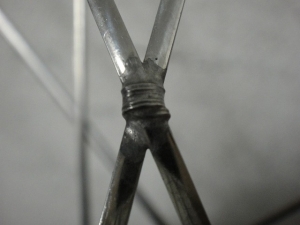
Before the rebuild, it was "wrapped lacing".
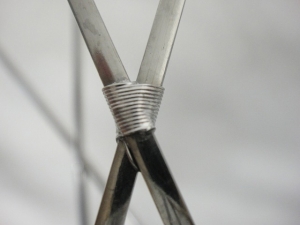
After the rebuild, it's "tied lacing".
The solder looks thin, but it's doing its job properly.
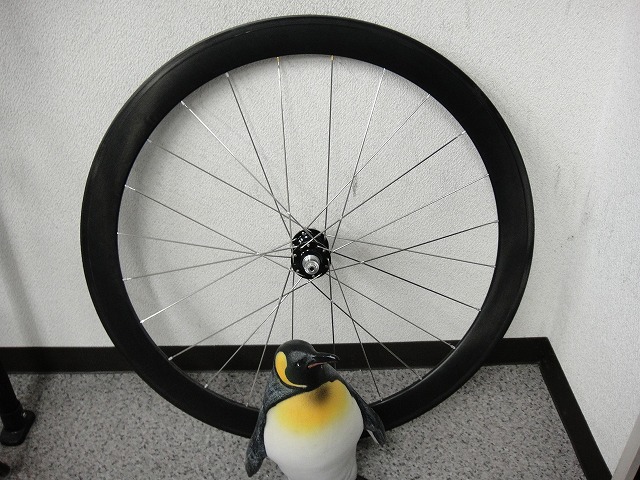
Since there are stickers on the freewheel side in two places,
I shot this from the non-freewheel side.
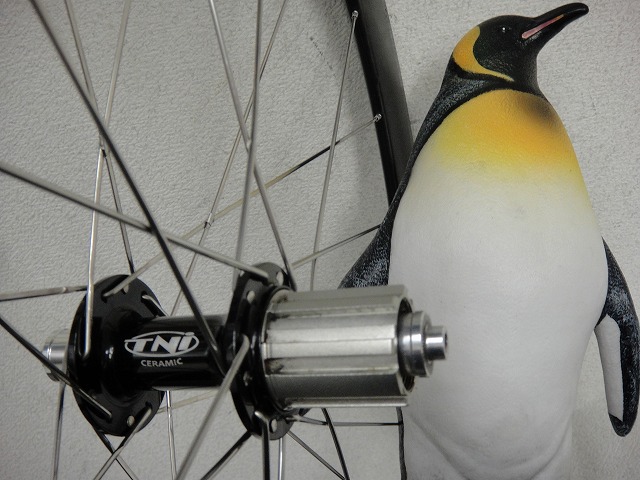
The hub is a Tni Wing Hub (similar to the front wheel),
built with 24H semi-strong 46-spoke lacing with wire ties.
Strong/CX-RAY represents the maximum difference combination
for left-right different-diameter spoke lacing within normally available spoke sizes.
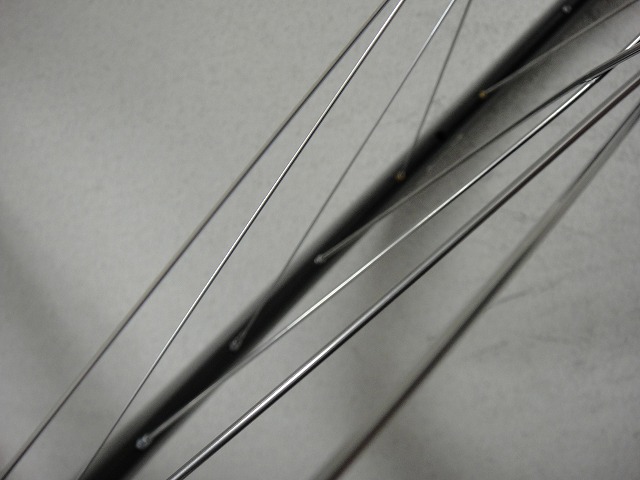
This angle works pretty nicely too.
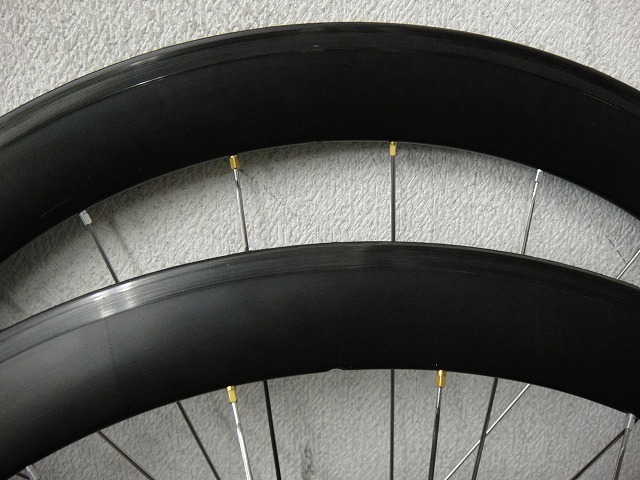
I built it with silver aluminum nipples,
but at the customer's request, only the areas beside the valve are gold aluminum nipples.
By the way, about "laced and soldered" construction—
lacing means the steel wires are actually "bound together".
It's not just wrapped around.
The solder is only there to prevent the binding from coming loose.
Whether the spokes are properly bound can be easily checked before soldering.
If you grip the spoke crossing firmly and the binding doesn't slip,
that's a proper "tied lacing" that's worth doing.
If the crossing position moves loosely and sloppily,
it's just decorative "wrapped lacing".
Though, even with wrapped lacing, if you apply enough solder,
the crossing will solidify to some degree.
Really, you should do proper tied lacing and solidify the crossing
with just the lacing before soldering... but that's how it goes.
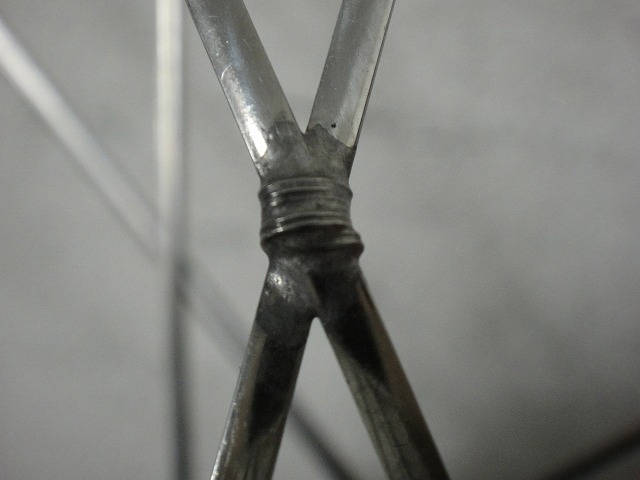
Before the rebuild, it was "wrapped lacing".

After the rebuild, it's "tied lacing".
The solder looks thin, but it's doing its job properly.