I'm going to write about Magura's hydraulic caliper brakes.
If you haven't seen the previous post, please check that one first.

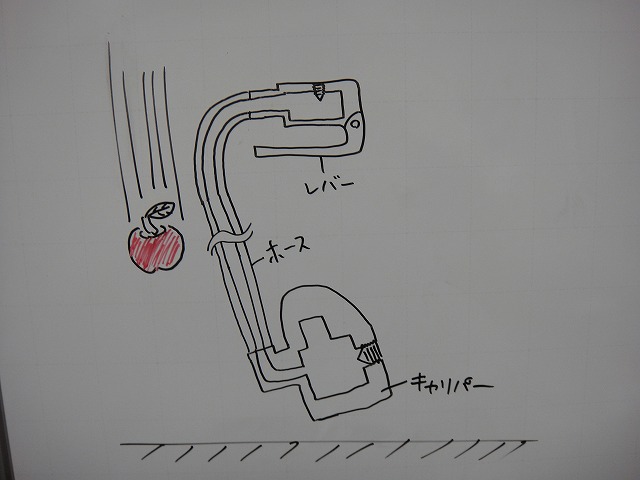
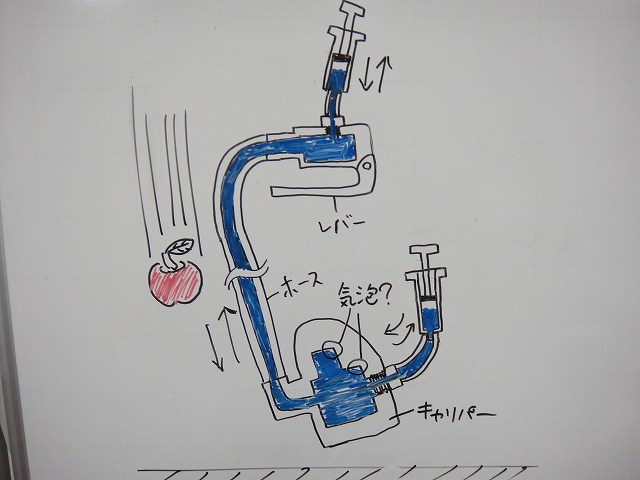
↑I've omitted a lot of the internal mechanisms of the caliper and lever, but
if you just draw the oil lines it looks something like this.

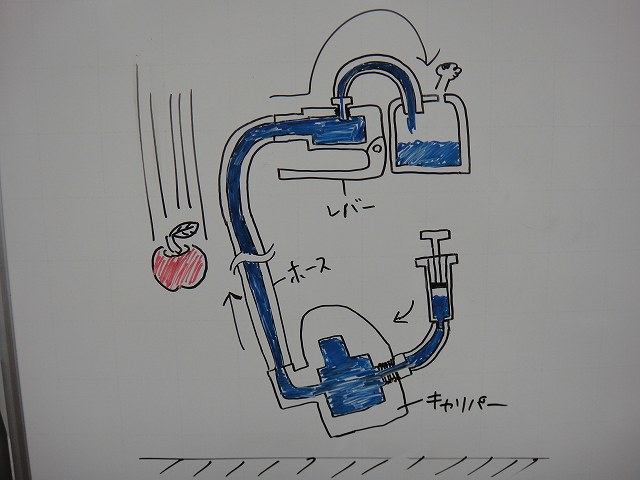
With Magura's official bleeding kit,
you screw a syringe with a threaded adapter onto the caliper side
and push fresh fluid with no air bubbles in a one-way direction
toward the lever side.

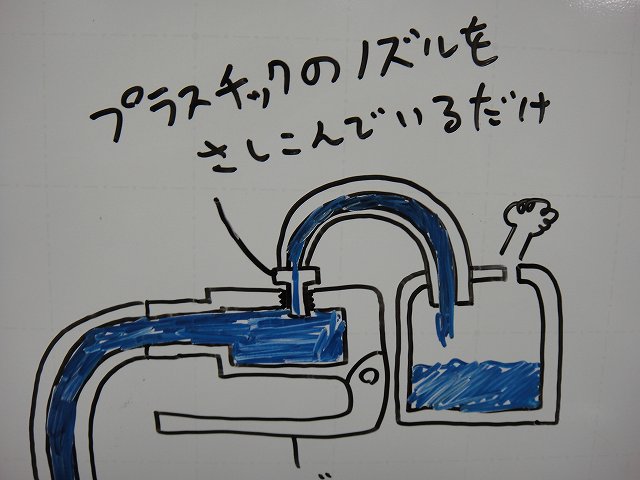
The lever side isn't threaded, so it's not sealed—
if you pull the syringe on the caliper side, air gets sucked in through the gap.
Since this lever type has no reservoir tank,
you can't squeeze the lever to push the bubbles out either.
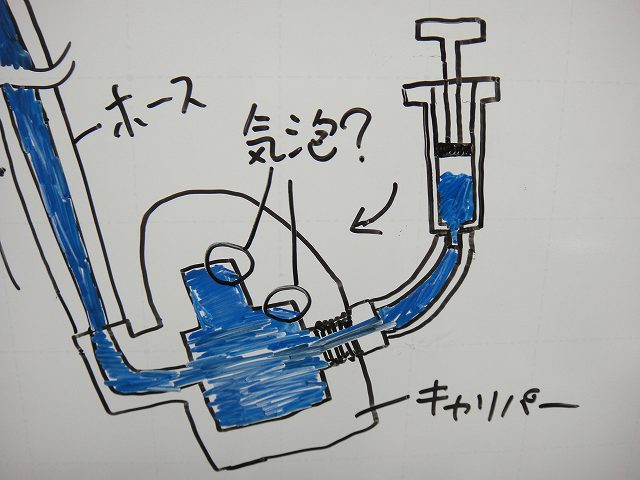
Normally this shouldn't be a problem, but

↑if there's a bubble in this area, I wondered whether pushing fluid one-way only
would actually get all the air out in one go.


This is what the caliper-side adapter looks like.
Magura uses a proprietary brake fluid called Royal Blood.
Noble blood is blue.
Not that it matters, but crab blood is also blue (→here).

↑When I unscrewed the end fitting on the lever side

↑it looks like this.
The thread is M6, but the pitch is 0.75mm, which is a special size.

↑Standard M6 thread pitch is normally 1.0mm (left in the image above).
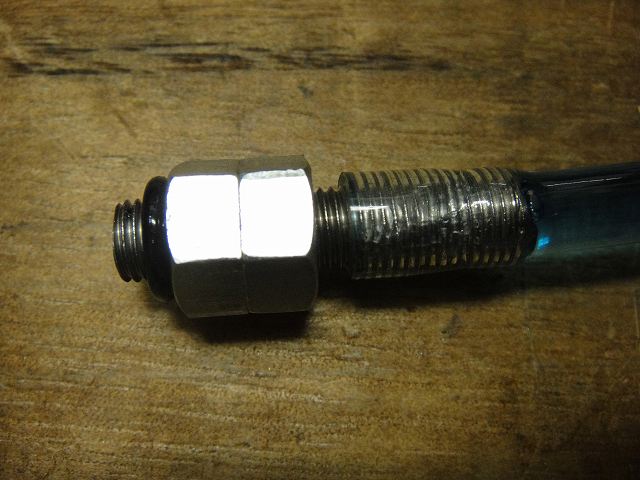
So I went and got an M6 thread and nut with 0.75mm pitch and


made this tool.
I call it the 「S☆B Wagomurānu」.
Drilling a straight hole through a steel screw for an oil line
to a decent length is extremely difficult.
(I couldn't source special-pitch aluminum screws)

As long as brake fluid doesn't leak from the joint between the S☆B Wagomurānu and the lever,

by pushing and pulling sealed syringes against each other,
you can do a "forced extraction of air bubbles."
This is how Avid and others do it.

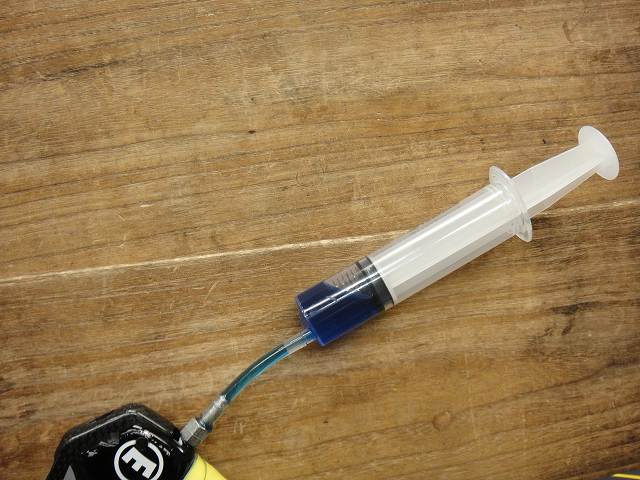
↑I installed the S☆B Wagomurānu.

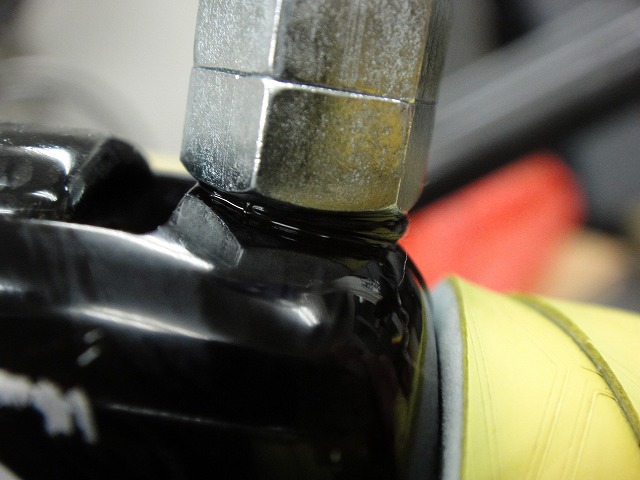
The area around the lever hole isn't flat,
so you need to tighten it until the thick rubber O-ring is fully compressed.
Hand-tightening alone won't work—you need a 10mm wrench.
(The caliper side also needs a wrench to tighten properly)
The O-ring being wet with brake fluid is just from leakage during installation;
there's been no leakage since.

I first fill the oil line with fresh fluid before working.
When I push the syringe on the lever side, the syringe on the caliper side gets pushed out.
There's no fluid leakage from the lever side hole.
One large bubble came out. It's not backflow from the syringe.
After that, some very fine bubbles came out too,
but after that, no more bubbles came out even with more pushing and pulling.
This isn't essential, but after trying it,
the slight sponginess from air is gone, so it does work.
As for what the S☆B stands for in "S☆B Wagomurānu,"
it's exactly what you'd imagine:
「Syringe☆Bleeding:Syringe Bleeding」.
If you haven't seen the previous post, please check that one first.
↑I've omitted a lot of the internal mechanisms of the caliper and lever, but
if you just draw the oil lines it looks something like this.
With Magura's official bleeding kit,
you screw a syringe with a threaded adapter onto the caliper side
and push fresh fluid with no air bubbles in a one-way direction
toward the lever side.
The lever side isn't threaded, so it's not sealed—
if you pull the syringe on the caliper side, air gets sucked in through the gap.
Since this lever type has no reservoir tank,
you can't squeeze the lever to push the bubbles out either.
Normally this shouldn't be a problem, but
↑if there's a bubble in this area, I wondered whether pushing fluid one-way only
would actually get all the air out in one go.

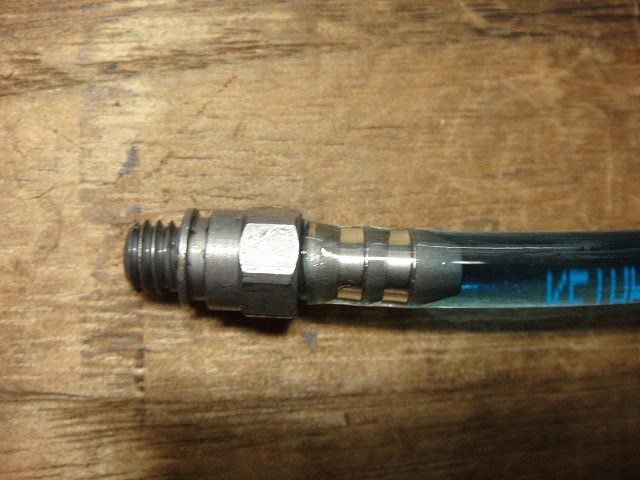
This is what the caliper-side adapter looks like.
Magura uses a proprietary brake fluid called Royal Blood.
Noble blood is blue.
Not that it matters, but crab blood is also blue (→here).
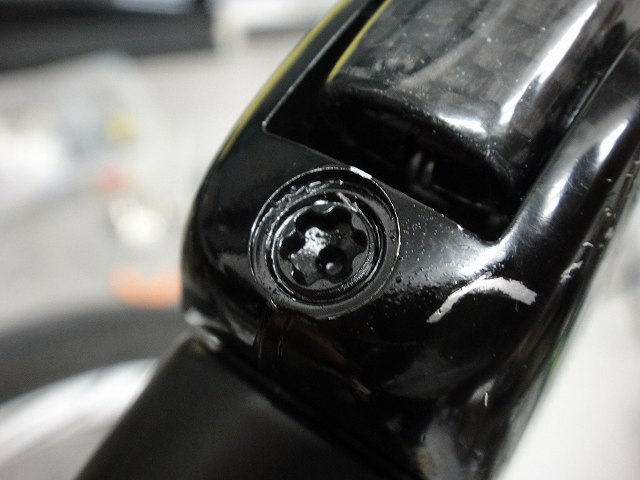
↑When I unscrewed the end fitting on the lever side

↑it looks like this.
The thread is M6, but the pitch is 0.75mm, which is a special size.
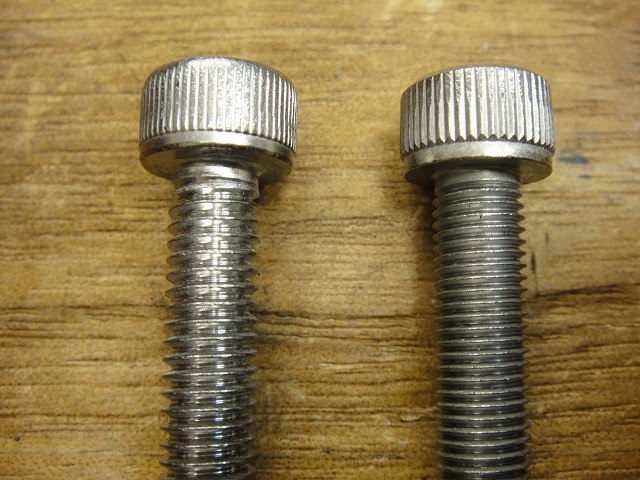
↑Standard M6 thread pitch is normally 1.0mm (left in the image above).
So I went and got an M6 thread and nut with 0.75mm pitch and
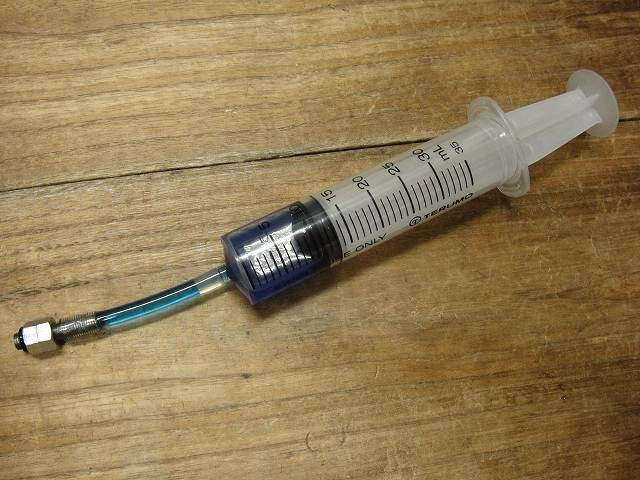
made this tool.
I call it the 「S☆B Wagomurānu」.
Drilling a straight hole through a steel screw for an oil line
to a decent length is extremely difficult.
(I couldn't source special-pitch aluminum screws)

As long as brake fluid doesn't leak from the joint between the S☆B Wagomurānu and the lever,
by pushing and pulling sealed syringes against each other,
you can do a "forced extraction of air bubbles."
This is how Avid and others do it.
↑I installed the S☆B Wagomurānu.
The area around the lever hole isn't flat,
so you need to tighten it until the thick rubber O-ring is fully compressed.
Hand-tightening alone won't work—you need a 10mm wrench.
(The caliper side also needs a wrench to tighten properly)
The O-ring being wet with brake fluid is just from leakage during installation;
there's been no leakage since.
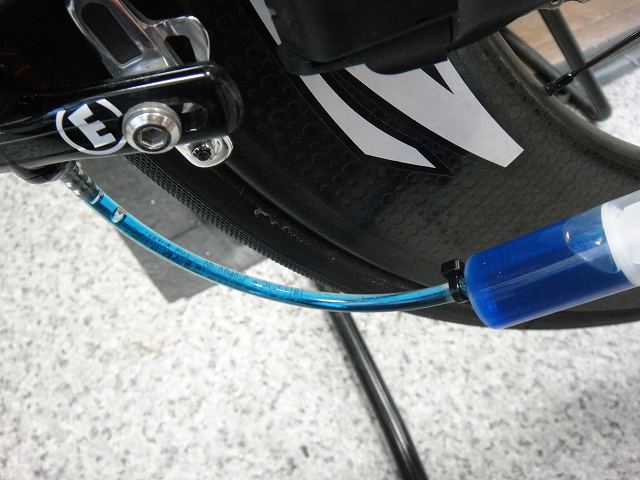
I first fill the oil line with fresh fluid before working.
When I push the syringe on the lever side, the syringe on the caliper side gets pushed out.
There's no fluid leakage from the lever side hole.
One large bubble came out. It's not backflow from the syringe.
After that, some very fine bubbles came out too,
but after that, no more bubbles came out even with more pushing and pulling.
This isn't essential, but after trying it,
the slight sponginess from air is gone, so it does work.
As for what the S☆B stands for in "S☆B Wagomurānu,"
it's exactly what you'd imagine:
「Syringe☆Bleeding:Syringe Bleeding」.