Recently I've been impressed by something about the long-cage rear derailleur for 11S Altegra,
the "RD-6800-GS",
so I'm going to write about it.

Before that.
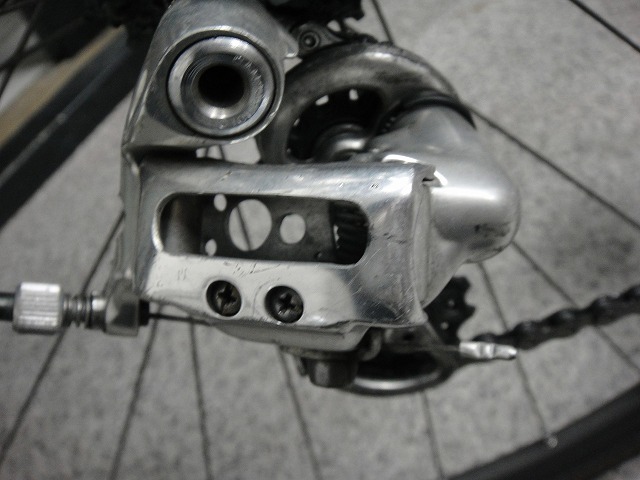
The image above is
an utterly unremarkable (※) Altegra rear derailleur on my bike.
※Don't worry about this, it's not asking for input

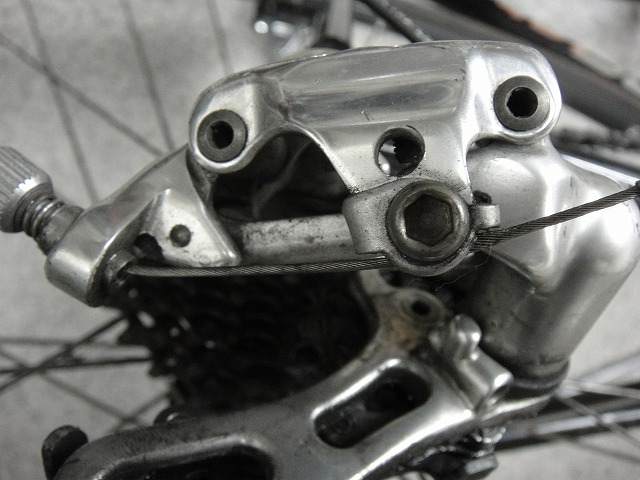
Regarding the position where the shift cable is fixed,
when viewing the rear derailleur from the right side in the direction of travel,
the cable is anchored on the far side of the fixing bolt.
From here on in this article, I'll call this "rear pull".

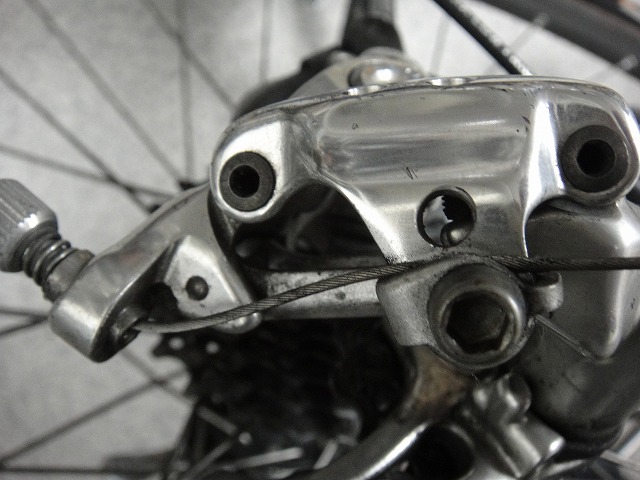
↑Next, I deliberately anchored the shift cable on the near side of the fixing bolt incorrectly.
From here on, I'll call this "front pull".
Between rear pull and front pull, the cable length differs only slightly
from the cable stop onward to the fixing bolt,
but with just this tiny difference, the incorrect method causes shifting to misalign.
When I actually tried shifting this way,
on the second shift operation it wouldn't align at all.
A rear derailleur designed for rear pull must use rear pull,
and a rear derailleur designed for front pull must use front pull
for cable anchoring.

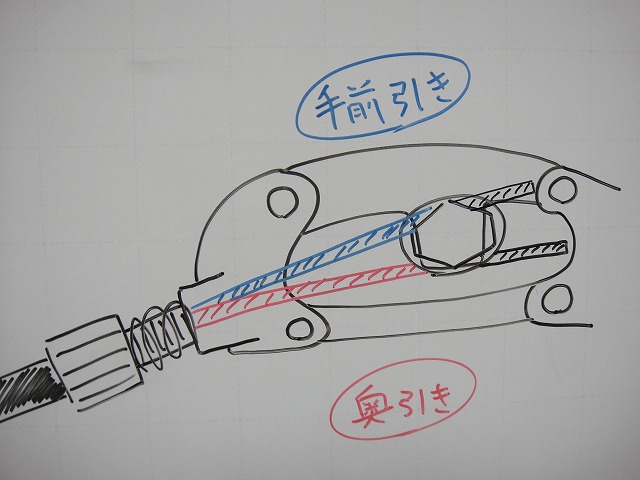
↑When you look at the rear derailleur from below, it looks like this,
the length of cable from the cable stop to the fixing bolt
shown in color in the image above
I'll call the "cable length" in this article.
If the cable length changes even slightly,
when you pull a fixed amount of shift cable (when you shift via the lever),
the amount the rear derailleur's parallelogram moves also changes.
So the cable length of the rear derailleur and the length of the parallelogram's sides
are considered with precision in their totality.

Now the topic shifts,
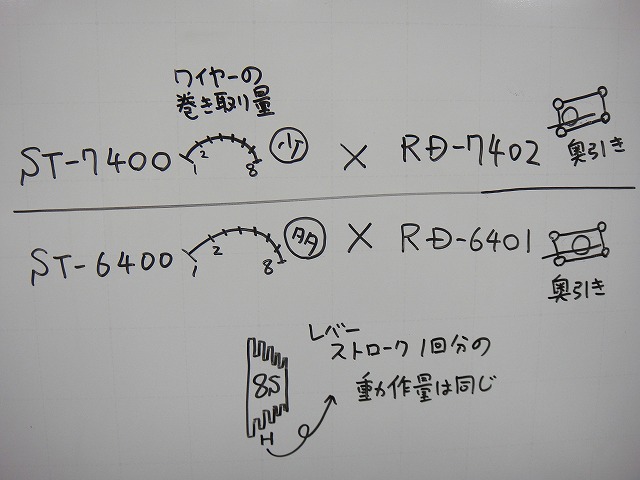
this is the world's first STI lever and the corresponding rear derailleur

the ST-7400 and

RD-7402.
Later, STI levers also appeared in the second-tier 600 Altegra,
but after releasing the ST-7400, Shimano apparently reconsidered something
and changed the amount of cable the STI lever pulls in per shift operation
(probably wanting lighter action even if it meant increasing stroke),
so there is no compatibility between the ST-7400 and ST-6400.

↑That's the situation.
Just to add, the shift from top to second gear
pulls more cable than the other shifts.
In response to this lever difference,

the rear derailleur doesn't change the parallelogram length
but rather changes the
"cable length" to match
the STI lever's cable pull, and

keeps the rear derailleur's range of motion (= the tooth spacing of the corresponding sprocket)
the same.
From this point onward through the 7900 series, basically
the ratio of "parallelogram length / cable length" remains the same.
Only the RD-7402 has a unique ratio.
Speaking roughly and ignoring pulley width, for example
the ST-7900 and RD-6401 do 10S rear shifting,
the ST-7800 and RD-7700 do 10S rear shifting,
the ST-7700 and RD-7800 do 9S rear shifting,
and the ST-6400 and RD-7900 do 8S rear shifting.
In other words, it follows the lever's speed count.
That combination in red on the second line from the top—
when the 7800 series first came out and supply couldn't keep up,
Shimano-sponsored cyclists' bikes were basically set up this way.
The important thing to note here is that, for example, the RD-7700 and RD-7800
don't have the same parallelogram length.
They combine to maintain the same ratio overall with cable length.
Regarding this cable length, Shimano's road rear derailleurs
have made an interesting public statement just once in the past, and

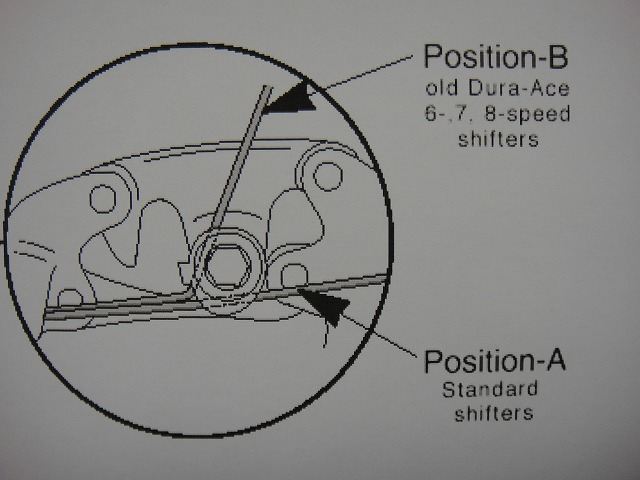
↑if you want to use the ST-7400 with an RD-6402 or later rear derailleur,
you can anchor the cable at position B in the diagram above and it will work.
Position B in this diagram differs from the front pull at the beginning,
but you can think of it as front pull. In other words,
ST-7400 × RD-7402 rear pull and
ST-6400 × RD-6401 rear pull and
ST-7400 × RD-6401 front pull
all have the "same" range of motion per shift operation.
In my assessment, this "same" is not "exactly the same".
If this counts as the same,
then the tooth spacing of current Shimano 11S and Campagnolo 11S sprockets
should also count as "the same", I think.
Well, shifting was less critical back then, and
it was likely stated as a rescue measure for users who'd already bought the ST-7400.
Just to add,
if you use a 10S lever with RD-6401 through RD-7900 rear derailleurs
and pull at position B, the motion per shift operation
approximates 9S.
Though this probably wasn't guaranteed by the maker.
~Preamble end~

The main topic.
Here are two RD-6800s, but

↑the left is the long-cage GS, the right is the short-cage SS.
In past Shimano road rear derailleurs,
when both SS and GS were offered, the GS was for front triple use.

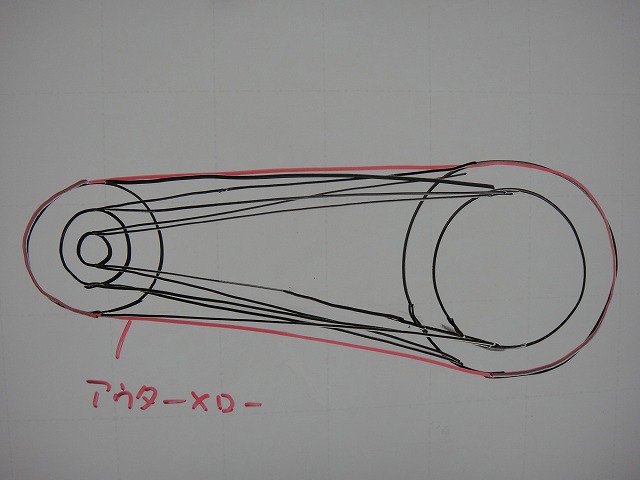
Why make the cage longer.
With multi-speed drivetrains, the chain length changes
depending on the combination of front and rear gears after shifting,
and with a 22S system (front × rear), there are 22 possible chain lengths.
The longest one, outer × low,
needs adequate slack, but

when shifting to the shortest combination,
inner × top,
the rear derailleur needs enough chain slack to prevent
the lower run and upper pulley from making contact.
With a front double, you don't need
to make the pulley cage that long, but

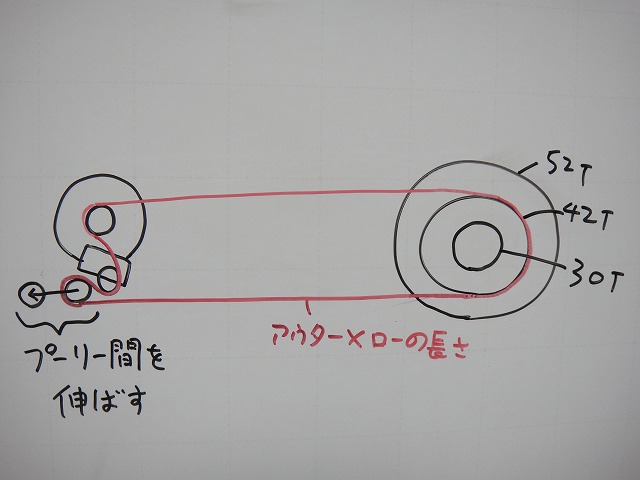
with a front triple, you really do have to make the pulley cage longer.
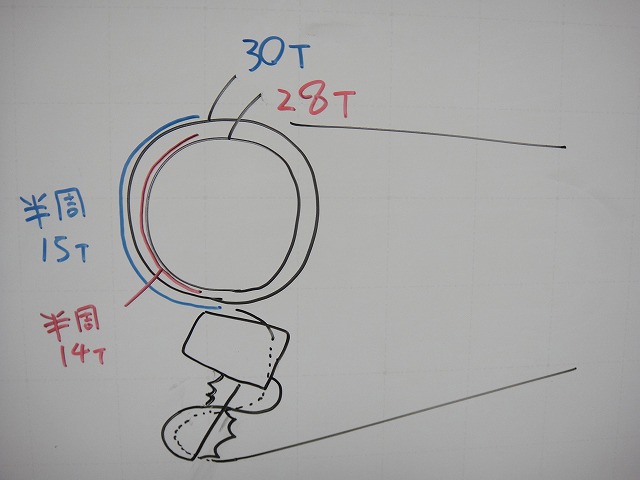
The diagram above shows 52-42-30T,
which is the tooth count for Shimano's front triple except on the 7703 series.
When shifting to a 30T front ring,
the lower run of chain can't maintain a straight line (slack can't be taken up),
so you have to make the pulley cage longer—you can imagine this.

But the 6800 has no front triple version.
The RD-6800-GS is characterized by
supporting a 30T low sprocket—which the 9000 Dura-Ace lacks a GS version for.
The 9000 and 9070 rear derailleurs support up to 28T, but
when you think in terms of roughly half a chain wrap,
28T and 30T differ by just 1T (one chain link).
So the question was why an RD-6800,
designed without a front triple in mind,
would need a GS version.
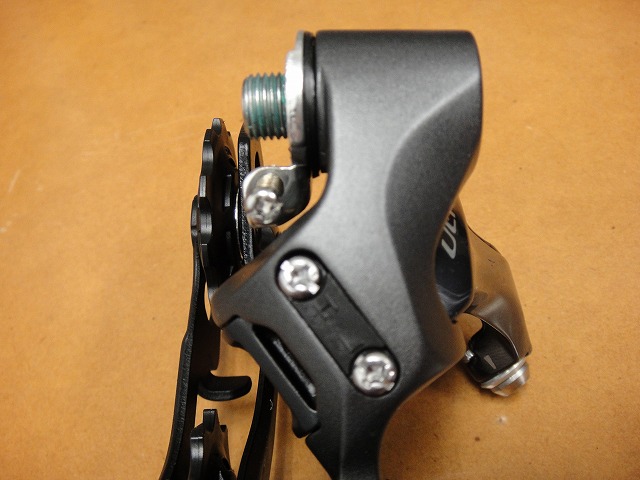
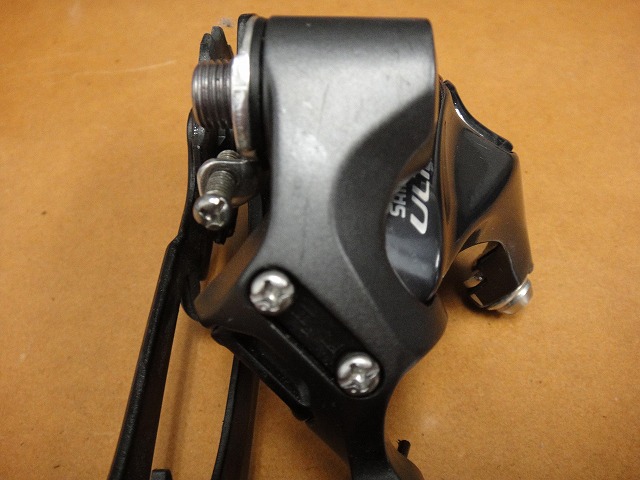
Until I saw the actual parts.

The angle through which a rear derailleur's parallelogram strokes
is called "slant angle", and this differs considerably between road and MTB.
MTB, which has larger low gear teeth, has
a deeper slant angle.
As for the RD-6800,

↑SS

↑GS
the GS has a deeper slant angle.
Look at the angular difference between the rear derailleur mounting bolt and the parallelogram.
Not all rear derailleurs have their adjustment screws aligned perpendicular to slant angle,
but the RD-6800 roughly does,
so if it's hard to see, just look at the angle of the adjustment screws.
This is where it first becomes impressive.
Previous GS rear derailleurs were just "lazy lengthening of the cage"
with no differences from the SS except the cage,
but this GS is purpose-designed from the parallelogram section onward.

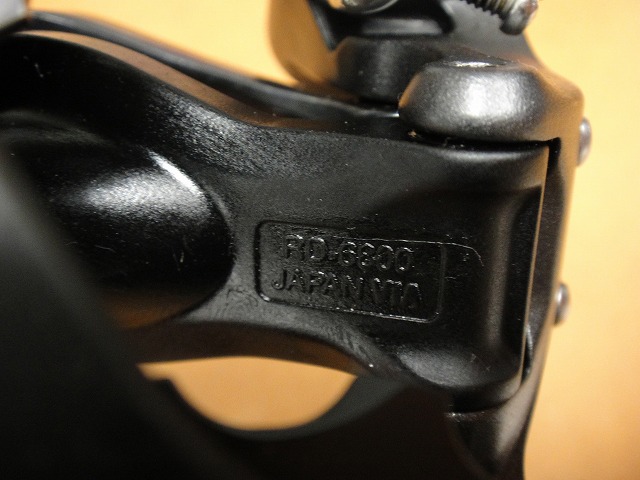
↑SS

↑GS
The backing plate markings are both "RD-6800", but
these are not the same part.
The GS has a longer distance between the parallelogram's pivot points.

↑SS

↑GS
If you look closely, you can see the fine details differ.
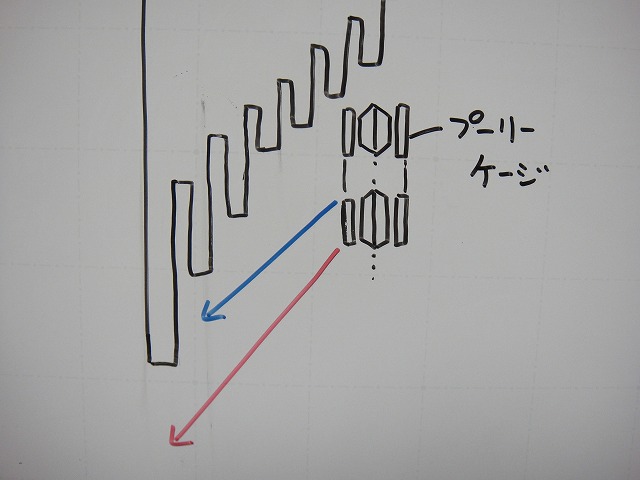
When the parallelogram gets longer,

the lateral movement per degree of angle increases, so

when you have a large low gear and apply a deep slant angle,
the parallelogram doesn't run out of available travel.
Now, if you just lengthened the parallelogram,
naturally the cable pull required for shifting would also change, so
you'd have to prepare a dedicated STI and sprockets,
which doesn't make sense cost-wise,

↑SS

↑GS
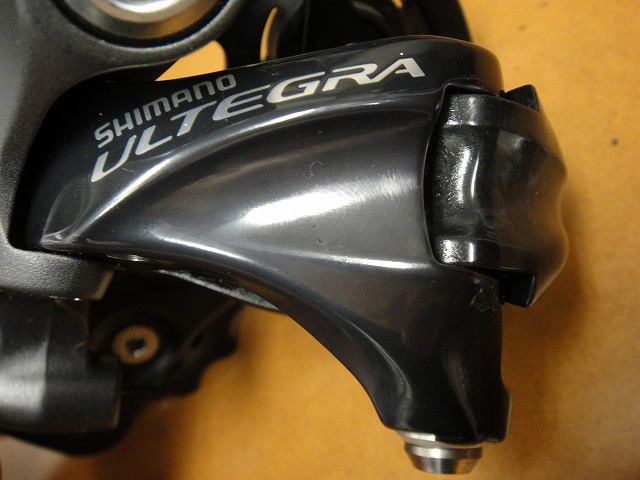
so they're handling it by adjusting the "cable length" mentioned at the outset
in conjunction with the parallelogram pivot-to-pivot distance.
Notice how the front plate shape and cable anchor position are completely different between SS and GS.

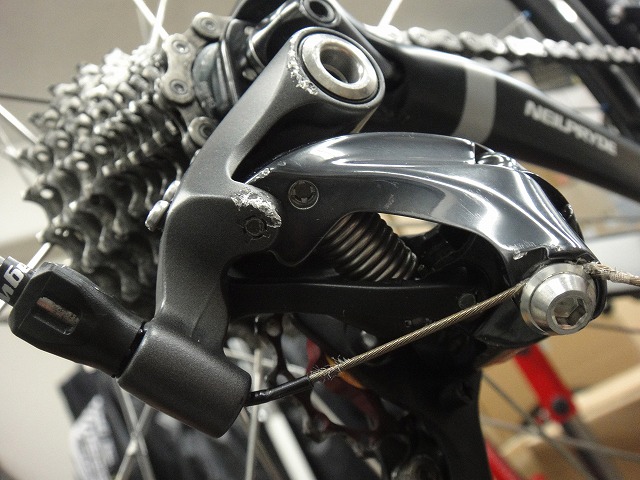
A downside of the RD-9000 series mechanical rear derailleur is that when shifting to the top gear,
the shift cable bends quite sharply.
These days a liner comes standard, but
only the very early RD-9000 didn't have one.
I fitted one on my own initiative,
but it had to be quite thin diameter, which was challenging.
With the RD-6800-GS, this angle becomes even more severe, and


where the SS uses front pull,


the GS switches to rear pull.

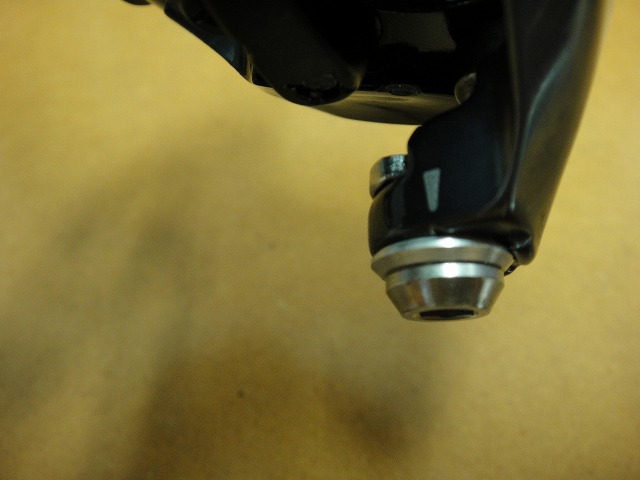
↑SS (front pull)

↑GS (rear pull)
That's what you see when comparing from below.
You can see how severe it would be if the GS weren't using rear pull.
Also, I tried to keep camera distance consistent, so
you should be able to see the difference in parallelogram length.
To summarize, whereas previously GS was just the SS converted to a long cage,
with the RD-6800, the GS
・changed the slant angle
・changed the parallelogram length
・set the cable anchor position for the corresponding "cable length"
・and to address cable angle concerns, switched from front pull to rear pull
What's impressive about this is that Altegra isn't the top-tier group.
"You can't first adopt on Dura-Ace,
then pay off development costs by just changing finish and material as you go down the grades."
However, as the highest tier supporting 30T low gears,
if this geometry is successively adopted by 105 and Tiagra,
it might be worthwhile.
While I won't say "low-gear 30T road bikes" will become universal,
they do seem to be increasing,
so maybe Shimano went all-out precisely to promote that.
Yes, I felt like I saw Shimano's serious side.
The whole thing started because I noticed the GS was using rear pull.
Also,
"SS = short parallelogram / short cable length" and
"GS = long parallelogram / long cable length"
even if their ratios match,
the shifting feel shouldn't be identical.
But because the frame-side conditions differ
(presence or absence of internal cable routing, outer length, etc.)
there's no noticeable difference to the rider.
the "RD-6800-GS",
so I'm going to write about it.
Before that.
The image above is
an utterly unremarkable (※) Altegra rear derailleur on my bike.
※Don't worry about this, it's not asking for input
Regarding the position where the shift cable is fixed,
when viewing the rear derailleur from the right side in the direction of travel,
the cable is anchored on the far side of the fixing bolt.
From here on in this article, I'll call this "rear pull".
↑Next, I deliberately anchored the shift cable on the near side of the fixing bolt incorrectly.
From here on, I'll call this "front pull".
Between rear pull and front pull, the cable length differs only slightly
from the cable stop onward to the fixing bolt,
but with just this tiny difference, the incorrect method causes shifting to misalign.
When I actually tried shifting this way,
on the second shift operation it wouldn't align at all.
A rear derailleur designed for rear pull must use rear pull,
and a rear derailleur designed for front pull must use front pull
for cable anchoring.
↑When you look at the rear derailleur from below, it looks like this,
the length of cable from the cable stop to the fixing bolt
shown in color in the image above
I'll call the "cable length" in this article.
If the cable length changes even slightly,
when you pull a fixed amount of shift cable (when you shift via the lever),
the amount the rear derailleur's parallelogram moves also changes.
So the cable length of the rear derailleur and the length of the parallelogram's sides
are considered with precision in their totality.

Now the topic shifts,
this is the world's first STI lever and the corresponding rear derailleur
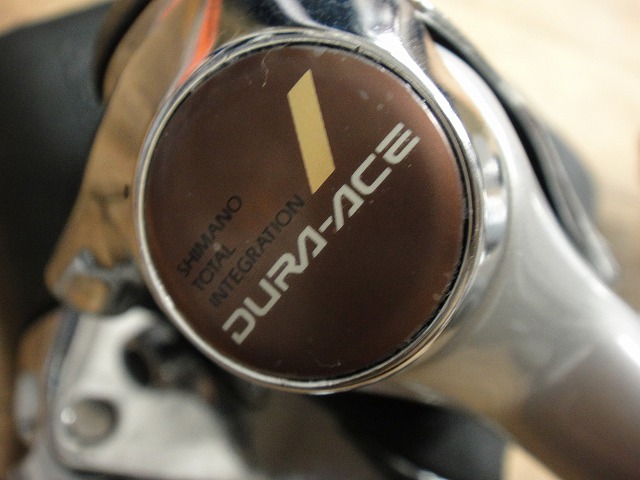
the ST-7400 and
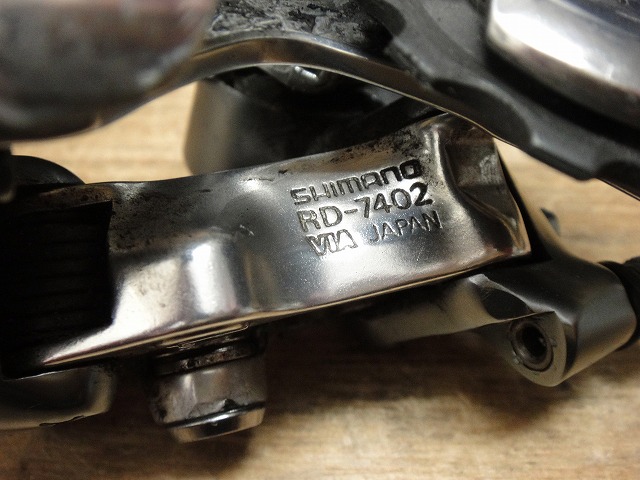
RD-7402.
Later, STI levers also appeared in the second-tier 600 Altegra,
but after releasing the ST-7400, Shimano apparently reconsidered something
and changed the amount of cable the STI lever pulls in per shift operation
(probably wanting lighter action even if it meant increasing stroke),
so there is no compatibility between the ST-7400 and ST-6400.
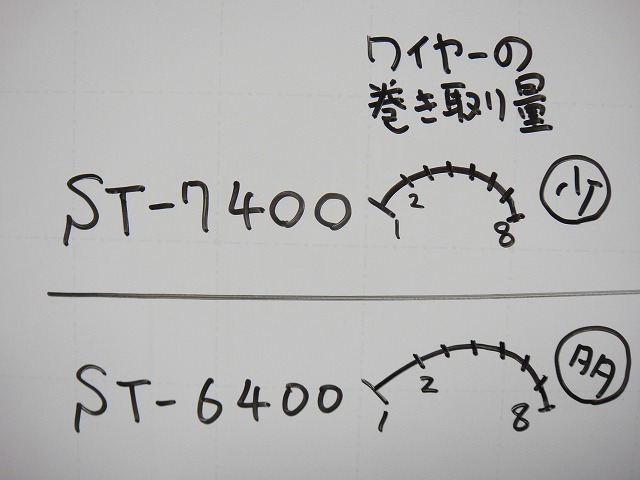
↑That's the situation.
Just to add, the shift from top to second gear
pulls more cable than the other shifts.
In response to this lever difference,
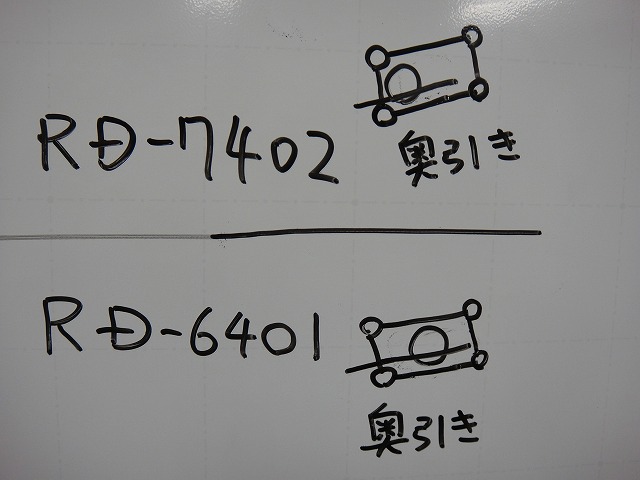
the rear derailleur doesn't change the parallelogram length
but rather changes the
"cable length" to match
the STI lever's cable pull, and
keeps the rear derailleur's range of motion (= the tooth spacing of the corresponding sprocket)
the same.
From this point onward through the 7900 series, basically
the ratio of "parallelogram length / cable length" remains the same.
Only the RD-7402 has a unique ratio.
Speaking roughly and ignoring pulley width, for example
the ST-7900 and RD-6401 do 10S rear shifting,
the ST-7800 and RD-7700 do 10S rear shifting,
the ST-7700 and RD-7800 do 9S rear shifting,
and the ST-6400 and RD-7900 do 8S rear shifting.
In other words, it follows the lever's speed count.
That combination in red on the second line from the top—
when the 7800 series first came out and supply couldn't keep up,
Shimano-sponsored cyclists' bikes were basically set up this way.
The important thing to note here is that, for example, the RD-7700 and RD-7800
don't have the same parallelogram length.
They combine to maintain the same ratio overall with cable length.
Regarding this cable length, Shimano's road rear derailleurs
have made an interesting public statement just once in the past, and
↑if you want to use the ST-7400 with an RD-6402 or later rear derailleur,
you can anchor the cable at position B in the diagram above and it will work.
Position B in this diagram differs from the front pull at the beginning,
but you can think of it as front pull. In other words,
ST-7400 × RD-7402 rear pull and
ST-6400 × RD-6401 rear pull and
ST-7400 × RD-6401 front pull
all have the "same" range of motion per shift operation.
In my assessment, this "same" is not "exactly the same".
If this counts as the same,
then the tooth spacing of current Shimano 11S and Campagnolo 11S sprockets
should also count as "the same", I think.
Well, shifting was less critical back then, and
it was likely stated as a rescue measure for users who'd already bought the ST-7400.
Just to add,
if you use a 10S lever with RD-6401 through RD-7900 rear derailleurs
and pull at position B, the motion per shift operation
approximates 9S.
Though this probably wasn't guaranteed by the maker.
~Preamble end~

The main topic.
Here are two RD-6800s, but

↑the left is the long-cage GS, the right is the short-cage SS.
In past Shimano road rear derailleurs,
when both SS and GS were offered, the GS was for front triple use.
Why make the cage longer.
With multi-speed drivetrains, the chain length changes
depending on the combination of front and rear gears after shifting,
and with a 22S system (front × rear), there are 22 possible chain lengths.
The longest one, outer × low,
needs adequate slack, but

when shifting to the shortest combination,
inner × top,
the rear derailleur needs enough chain slack to prevent
the lower run and upper pulley from making contact.
With a front double, you don't need
to make the pulley cage that long, but
with a front triple, you really do have to make the pulley cage longer.
The diagram above shows 52-42-30T,
which is the tooth count for Shimano's front triple except on the 7703 series.
When shifting to a 30T front ring,
the lower run of chain can't maintain a straight line (slack can't be taken up),
so you have to make the pulley cage longer—you can imagine this.
But the 6800 has no front triple version.
The RD-6800-GS is characterized by
supporting a 30T low sprocket—which the 9000 Dura-Ace lacks a GS version for.
The 9000 and 9070 rear derailleurs support up to 28T, but
when you think in terms of roughly half a chain wrap,
28T and 30T differ by just 1T (one chain link).
So the question was why an RD-6800,
designed without a front triple in mind,
would need a GS version.
Until I saw the actual parts.

The angle through which a rear derailleur's parallelogram strokes
is called "slant angle", and this differs considerably between road and MTB.
MTB, which has larger low gear teeth, has
a deeper slant angle.
As for the RD-6800,
↑SS
↑GS
the GS has a deeper slant angle.
Look at the angular difference between the rear derailleur mounting bolt and the parallelogram.
Not all rear derailleurs have their adjustment screws aligned perpendicular to slant angle,
but the RD-6800 roughly does,
so if it's hard to see, just look at the angle of the adjustment screws.
This is where it first becomes impressive.
Previous GS rear derailleurs were just "lazy lengthening of the cage"
with no differences from the SS except the cage,
but this GS is purpose-designed from the parallelogram section onward.
↑SS
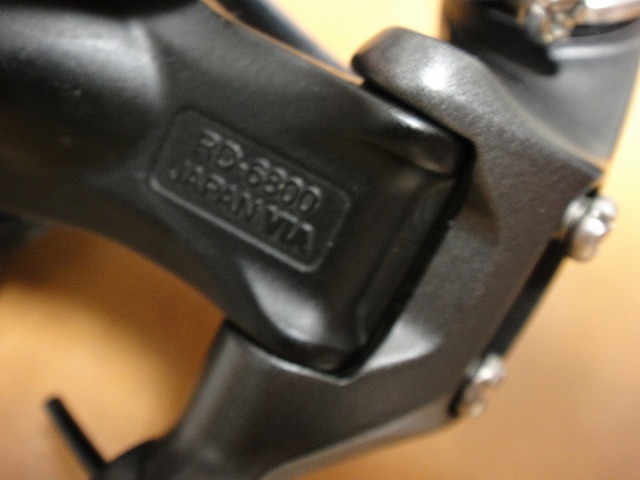
↑GS
The backing plate markings are both "RD-6800", but
these are not the same part.
The GS has a longer distance between the parallelogram's pivot points.
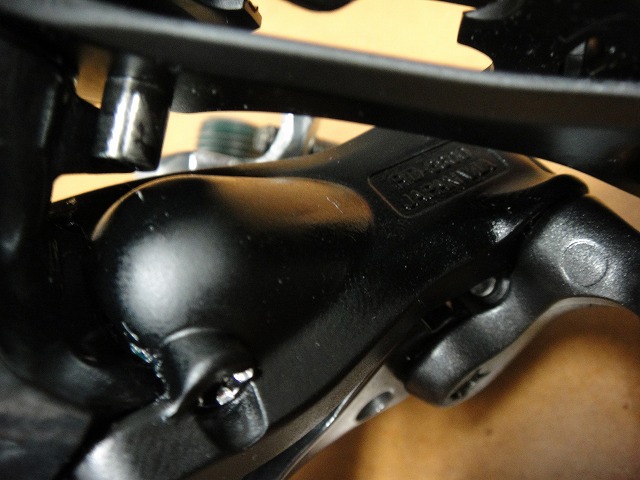
↑SS
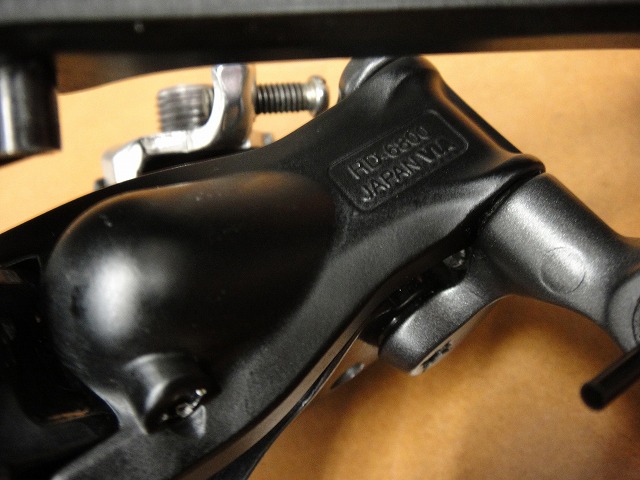
↑GS
If you look closely, you can see the fine details differ.
When the parallelogram gets longer,
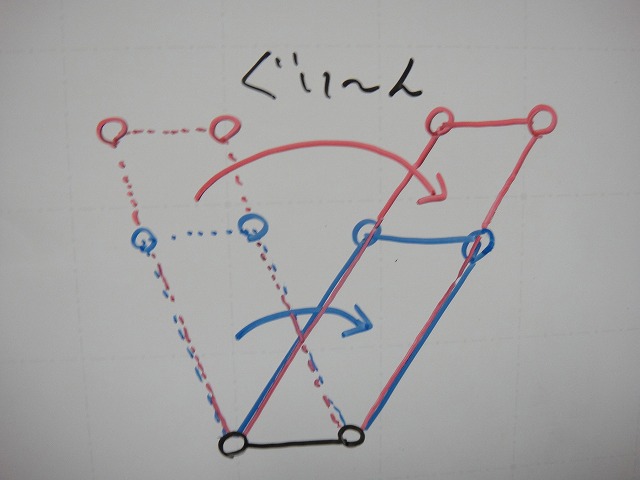
the lateral movement per degree of angle increases, so
when you have a large low gear and apply a deep slant angle,
the parallelogram doesn't run out of available travel.
Now, if you just lengthened the parallelogram,
naturally the cable pull required for shifting would also change, so
you'd have to prepare a dedicated STI and sprockets,
which doesn't make sense cost-wise,
↑SS

↑GS
so they're handling it by adjusting the "cable length" mentioned at the outset
in conjunction with the parallelogram pivot-to-pivot distance.
Notice how the front plate shape and cable anchor position are completely different between SS and GS.
A downside of the RD-9000 series mechanical rear derailleur is that when shifting to the top gear,
the shift cable bends quite sharply.
These days a liner comes standard, but
only the very early RD-9000 didn't have one.
I fitted one on my own initiative,
but it had to be quite thin diameter, which was challenging.
With the RD-6800-GS, this angle becomes even more severe, and

where the SS uses front pull,

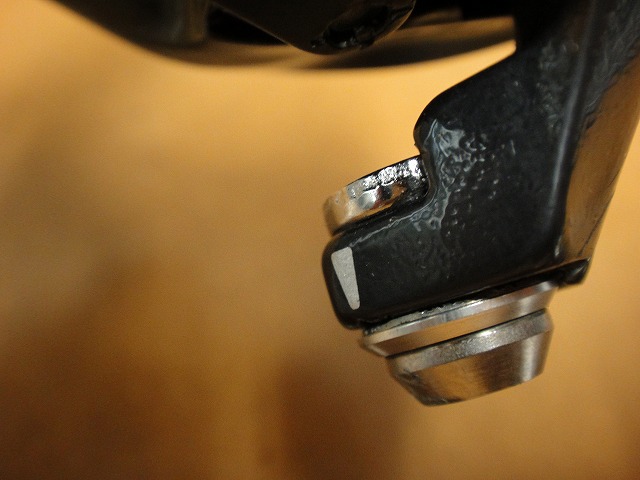
the GS switches to rear pull.

↑SS (front pull)
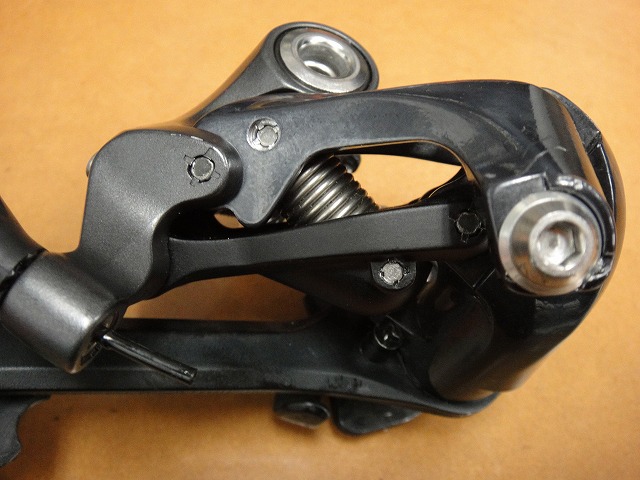
↑GS (rear pull)
That's what you see when comparing from below.
You can see how severe it would be if the GS weren't using rear pull.
Also, I tried to keep camera distance consistent, so
you should be able to see the difference in parallelogram length.
To summarize, whereas previously GS was just the SS converted to a long cage,
with the RD-6800, the GS
・changed the slant angle
・changed the parallelogram length
・set the cable anchor position for the corresponding "cable length"
・and to address cable angle concerns, switched from front pull to rear pull
What's impressive about this is that Altegra isn't the top-tier group.
"You can't first adopt on Dura-Ace,
then pay off development costs by just changing finish and material as you go down the grades."
However, as the highest tier supporting 30T low gears,
if this geometry is successively adopted by 105 and Tiagra,
it might be worthwhile.
While I won't say "low-gear 30T road bikes" will become universal,
they do seem to be increasing,
so maybe Shimano went all-out precisely to promote that.
Yes, I felt like I saw Shimano's serious side.
The whole thing started because I noticed the GS was using rear pull.
Also,
"SS = short parallelogram / short cable length" and
"GS = long parallelogram / long cable length"
even if their ratios match,
the shifting feel shouldn't be identical.
But because the frame-side conditions differ
(presence or absence of internal cable routing, outer length, etc.)
there's no noticeable difference to the rider.