A customer left a Ksyrium SLS (Mavic wheel) with me for service.

This is their first time bringing a bike to my shop.
They came to Osaka for New Year business and
brought this wheel along, having traveled several hundred kilometers.
They've only ridden it once since buying it (the braking surface is still clean too).
They brought only the rear wheel — no front wheel.
The fact that they brought just the rear wheel despite buying it recently
tells you everything: the customer already had an unshakable conviction
that the hub center is off-center.
When they installed other wheels they own on the frame,
the relationship to the brake was clearly different with only this wheel.
Just the other day I wrote something like "Mavic rear wheels are often off-center,"
and sure enough, this is another one.
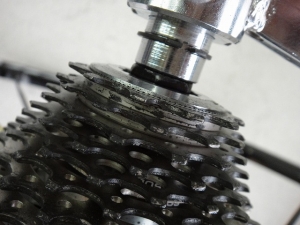
When I measured from the freewheel side with a centering gauge and then checked the opposite side...
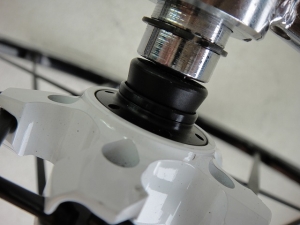
↑It was off by this much.
If I measure this side and set the gauge, an equal gap appears on the rim side at the freewheel end.
By the standards of my usual wheel inspections,
this isn't particularly severe.
But the reason I'm writing about this in such detail
is that there's a problem with how the customer acquired this wheel.
The customer bought this wheel from a well-known domestic mail-order shop
that sells bike parts cheap.
At purchase, they paid extra — about 800–1000 yen per wheel
for a "centering and truing service".
And yet the centering wasn't done at all. That's what bothers me.
(Frankly, charging labor for this kind of check is questionable in the first place.
What's even the point of buying from a shop?)
Worse, the customer had already figured out "the center is probably off" — that's how obvious it is.
The customer says they've only ridden it once, but if the center had been properly set,
it wouldn't drift this much even after a year of riding, let alone one time.
This isn't a problem with the gauge's accuracy either.
I have two gauges with lower precision than this one, and even they
detect an offset far beyond what would count as "off-center."
(There are cases where only this gauge can detect extremely subtle runout,
but this is nowhere near that level of minor deviation.)
Stop stealing money from customers
for work you don't actually do. (※)
(※) Not a typo.

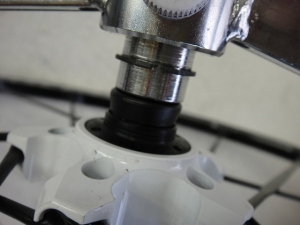
The center is now correct.
Actually, the spoke tension itself was obviously quite loose,
so I tightened it up a bit as well.
The rim was initially pulled toward the non-freewheel side,
so I deliberately shifted it past center toward the freewheel side first,
then tightened the non-freewheel side to bring it back to center.
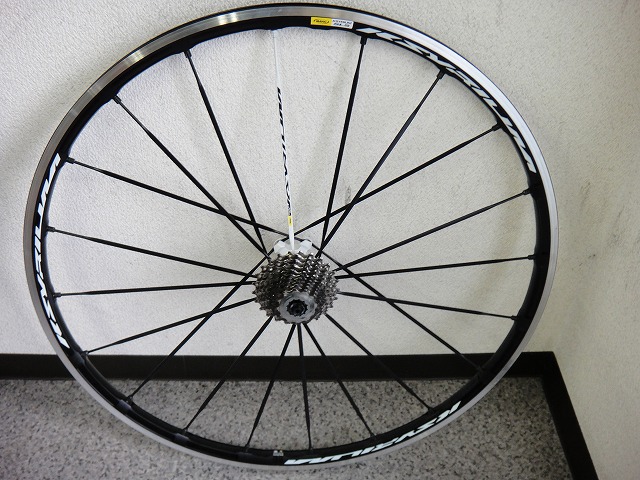
This is their first time bringing a bike to my shop.
They came to Osaka for New Year business and
brought this wheel along, having traveled several hundred kilometers.
They've only ridden it once since buying it (the braking surface is still clean too).
They brought only the rear wheel — no front wheel.
The fact that they brought just the rear wheel despite buying it recently
tells you everything: the customer already had an unshakable conviction
that the hub center is off-center.
When they installed other wheels they own on the frame,
the relationship to the brake was clearly different with only this wheel.
Just the other day I wrote something like "Mavic rear wheels are often off-center,"
and sure enough, this is another one.
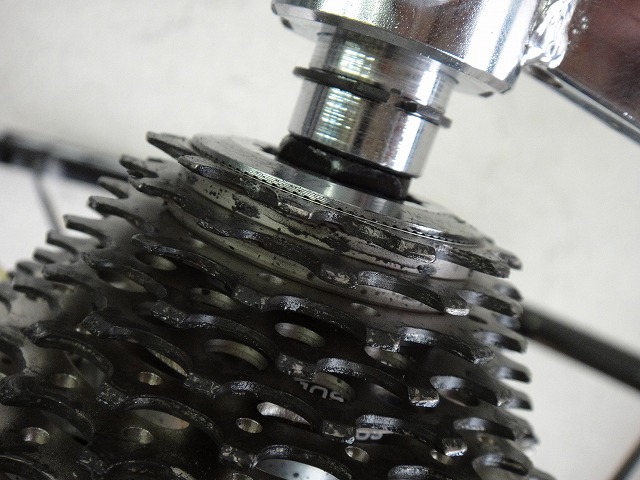
When I measured from the freewheel side with a centering gauge and then checked the opposite side...
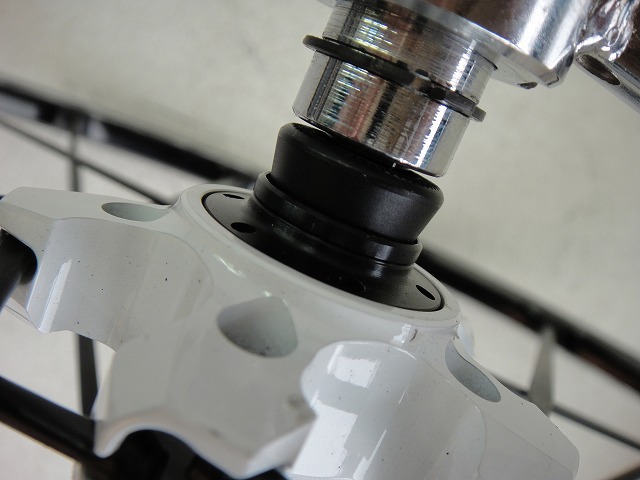
↑It was off by this much.
If I measure this side and set the gauge, an equal gap appears on the rim side at the freewheel end.
By the standards of my usual wheel inspections,
this isn't particularly severe.
But the reason I'm writing about this in such detail
is that there's a problem with how the customer acquired this wheel.
The customer bought this wheel from a well-known domestic mail-order shop
that sells bike parts cheap.
At purchase, they paid extra — about 800–1000 yen per wheel
for a "centering and truing service".
And yet the centering wasn't done at all. That's what bothers me.
(Frankly, charging labor for this kind of check is questionable in the first place.
What's even the point of buying from a shop?)
Worse, the customer had already figured out "the center is probably off" — that's how obvious it is.
The customer says they've only ridden it once, but if the center had been properly set,
it wouldn't drift this much even after a year of riding, let alone one time.
This isn't a problem with the gauge's accuracy either.
I have two gauges with lower precision than this one, and even they
detect an offset far beyond what would count as "off-center."
(There are cases where only this gauge can detect extremely subtle runout,
but this is nowhere near that level of minor deviation.)
Stop stealing money from customers
for work you don't actually do. (※)
(※) Not a typo.
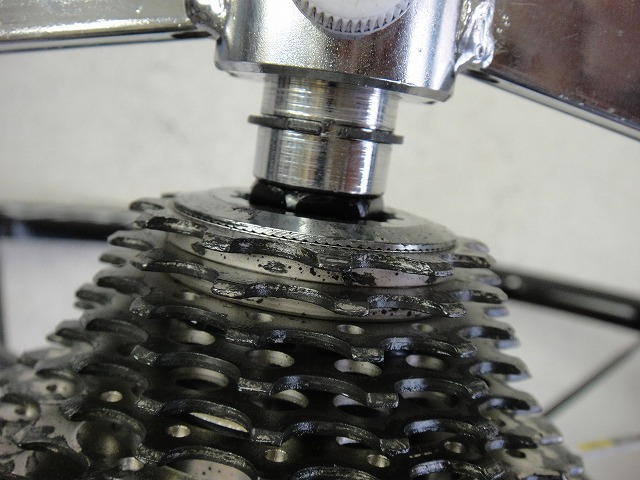
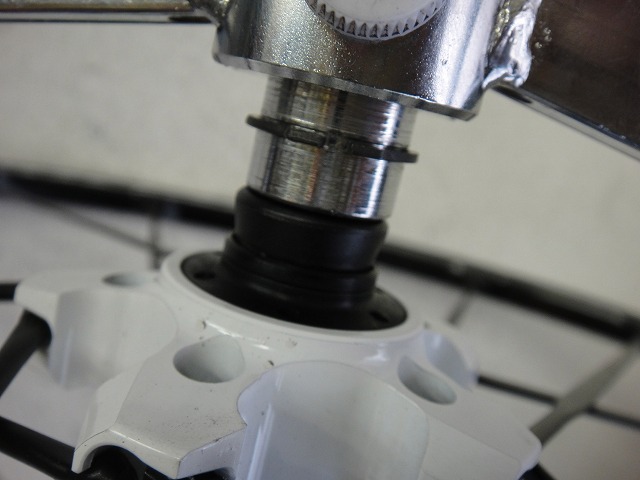
The center is now correct.
Actually, the spoke tension itself was obviously quite loose,
so I tightened it up a bit as well.
The rim was initially pulled toward the non-freewheel side,
so I deliberately shifted it past center toward the freewheel side first,
then tightened the non-freewheel side to bring it back to center.