I impulse-bought a Seiko Tuno Chrono revival model.
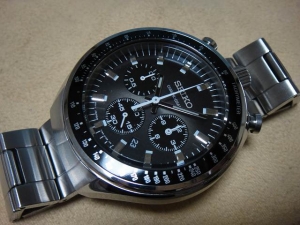
I put a question mark after "revival," but
this time around, it's more of a revival in name only,
so I'd say it's more of a homage or inspiration.
The reason it's called a "Tuno Chrono" is
because the crown and operating buttons are on the 12 o'clock side, and the buttons look like horns.
Domestic Tuno Chronos that existed in the 1970s
included Seiko's "Black Horse" and "Brown Horse" (black or brown dials and tachymeter)
and Citizen's "Panda" (white dial with black subdials),
and this model is supposedly a revival of the Black Horse.
Although, it's nothing like it at all, frankly.
If you're interested in the Black Horse or Panda, please search for them yourself.
Official images of these don't really exist on manufacturer websites,
and I'd rather not repost personal images (or watch shop images) from the internet, so I won't include them here.
This Tuno Chrono has model number SCEB009 and a pre-tax list price of 24,000 yen,
and it's positioned as a model in Seiko's budget-tier "Spirit" line.
Even as a budget line, Spirit models are typically centered around 30,000 yen list price.
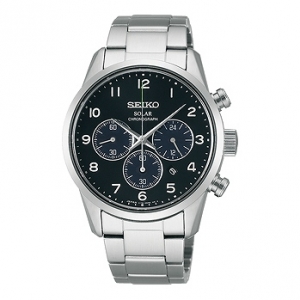
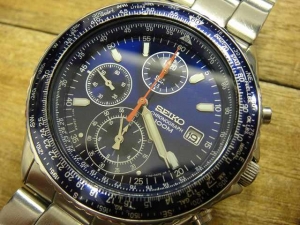
↑This is the Spirit model SBPY137 (pre-tax list price 32,000 yen), a solar-powered chronograph.
The three subdials arranged horizontally plus a date window at the 4 o'clock position
has become the standard style for recent Seiko watches.
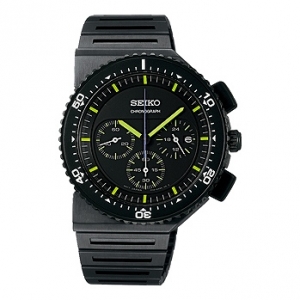
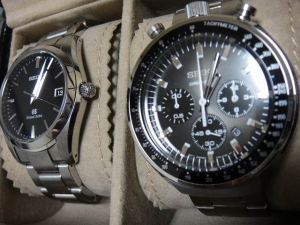
↑I originally went to the watch shop with almost zero intention to buy, just to look at this Giugiaro (Italian design) revival model,
but I happened to spot the Tuno Chrono and impulse-bought it.
Since it's a distribution-limited model, the fact that it's somewhat hard to find if you want to see the actual product before buying was also one reason for the impulse purchase.
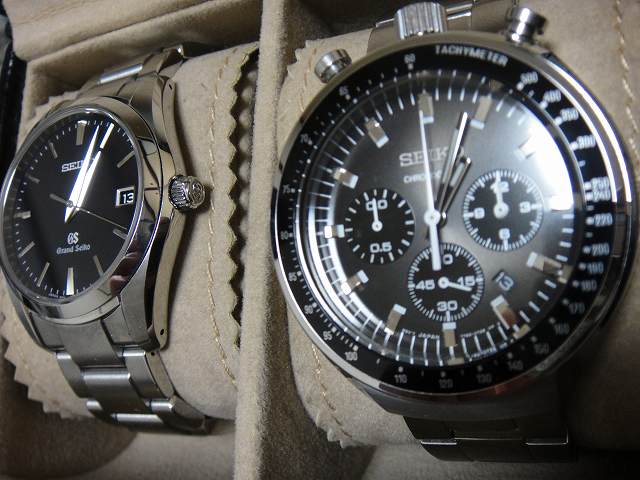
The Giugiaro in the image is also a Spirit-tier product
with model number SCED017 and a pre-tax list price of 32,000 yen.
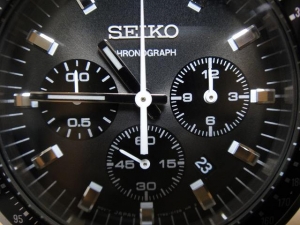
The dial is where the Black Horse and this so-called revival model differ completely.
When you look at it close-up like this, it's nothing but an ordinary Spirit.
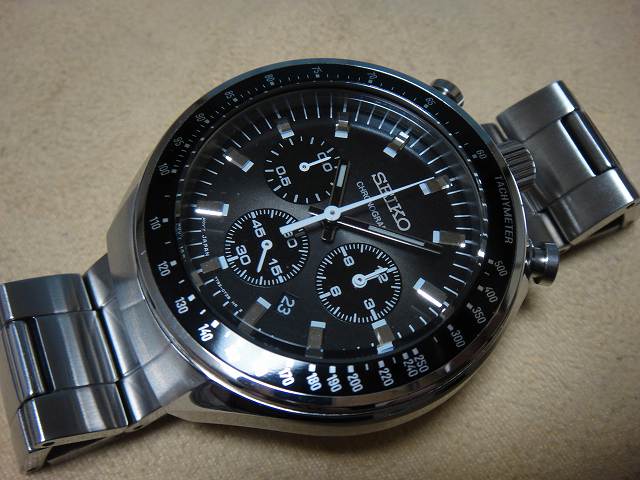
The center seconds hand on the dial is the chronograph seconds hand,
the subdial at 3 o'clock is the chronograph minutes counter,
the subdial at 6 o'clock is the watch function seconds hand,
and the subdial at 9 o'clock is the chronograph 1/20-second counter.
The dial completes one rotation in one second with 20 divisions, so it can measure 1/20 of a second.

↑In this case, it's reading about 8.7 seconds.
The 1/20-second counter stops after 10 minutes from the start of measurement, probably because it drains the battery.
Even though the hand stops, the internal measurement continues,
so when you press the lap or stop button, the hand moves to the measurement position and then stops.
When you restart the chronograph, the 1/20-second counter runs again for another 10 minutes,
so the accurate description is "it runs for 10 minutes after the last operation."
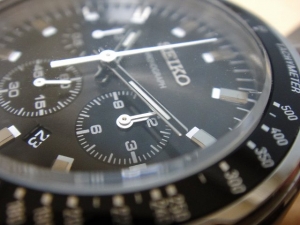
The subdial at 3 o'clock not only has the 60-minute counter with the minute hand,
but also an hour hand for 12-hour measurement,
so it's like having a small watch as a separate complication.
The tachymeter on the bezel is very similar to the Black Horse,
but Seiko's tachymeters have always looked like this anyway.
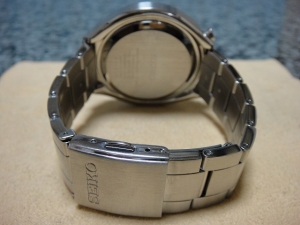
The nearly square clasp that recent Seiko is committed to.
The "half link" needed for fine adjustment wasn't included.
Instead, the clasp has adjustment holes for fine-tuning.
The clasp position seems quite far toward 6 o'clock, but
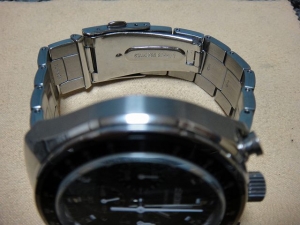
the position of the three-fold clasp when viewed from the inside
is almost in the middle, so this is fine.
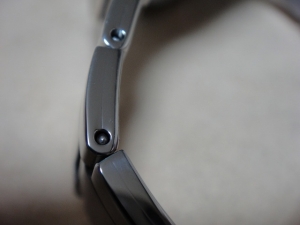
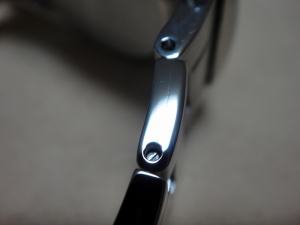
The band is adjusted with split pins.
The specs are appropriate for the price, so I have no complaints.
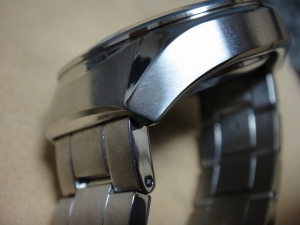
The case thickness and shape are actually quite similar to the Black Horse.
The Black Horse is mechanical, so it's even thicker,
but this one is relatively thick for a quartz watch,
so they must have had the original in mind to some extent.
The band edges are straight rather than flush-fit, which also follows the original.
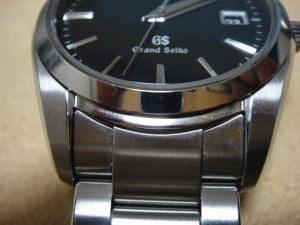
↑Flush-fit refers to
the ends of the metal band being rounded and cut to fit snugly against the case.
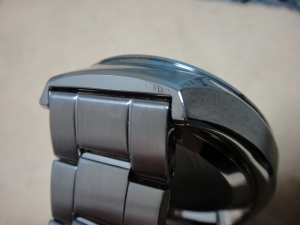
↑With this Tuno Chrono, the band ends are straight.
Even if you swap it for a urethane strap or something, there won't be gaps between the strap and case,
so it won't look awkward, which is nice.
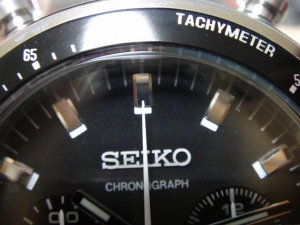
When I bought this Tuno Chrono,
the chronograph seconds hand's return-to-zero position was off by about 0.3 seconds from the exactly 60-second mark.
I'd noticed it before buying, but since there are few places where you can see the actual product
and the other two available colors looked visually harsh,
I had no choice but to go with this one.
The manual even states that regarding the chronograph seconds hand's return-to-zero position,
"anywhere between 59 and 1 second is not abnormal and is within specification,"
so I gave up.
When I mentioned this to someone I recently met who works at Seiko,
they told me that with this movement, if you pull out the crown and hold down the button,
you can fine-tune the hand position, so
I tried it and got it perfectly aligned.
Moreover, that operation method is actually written in the manual if you look carefully.
You should always read the manual thoroughly.
By the way, Spirit doesn't have any other chronograph models with a 1/20-second counter.
When I looked it up, this movement's model number is "7T92."
The 1/20-second counter specification is rare at Seiko, so
if we're talking about recent models, you can be pretty sure that 1/20-second counter = 7T92.
When I researched other models that use the 7T92,
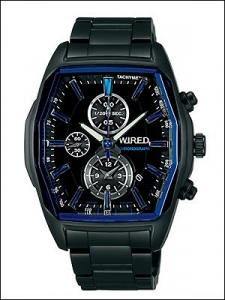
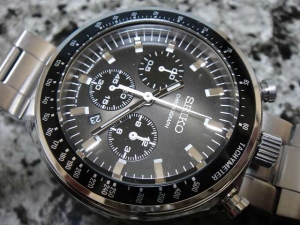
↑I found the Wired AGAV097 (pre-tax list price 24,000 yen).
Wired is not a Seiko brand but rather a brand of Seiko Nexstage, a related company.
Also, it seems the 7T92 is commonly used in overseas gray-market chronograph models.
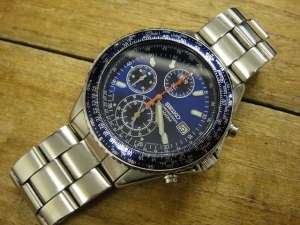
This isn't my watch, but I borrowed it for the photo.
This is also a 7T92 model.
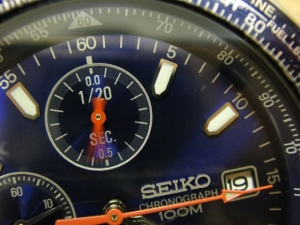
↑It has the 1/20-second counter.
With the 7T92, as I mentioned earlier about being able to fine-tune the chronograph seconds hand position,
to be precise, the specification is
"you can arbitrarily set the initial position of the hand that doesn't move when only the watch function is running."
In other words, I suspect that this Tuno Chrono is
"a lazy model where the 7T92 watch had its band position rotated 90 degrees,
and the initial positions of the chronograph seconds hand, totalizer, and 1/20-second counter
were simply rotated 90 degrees."
The date window can be positioned anywhere as long as you drill holes at the same distance from the dial center.
Note:
"To begin with, watches with the crown position at somewhere other than 3 o'clock
—whether mechanical or quartz—just have the movement rotated and the hands repositioned.
It's not about corners being cut."
I received this comment, and they're absolutely right.
The phrase "cutting corners" was imprecise on my part.
What I meant by "cutting corners" wasn't about reusing the movement, but rather
"if they're going to claim it's a Black Horse revival, I'd like them to put in a bit more effort to make the dial resemble the original."
That said, if they had seriously recreated the original looks,
the price point would never fit within the Spirit tier at all,
so this is probably the sweet spot
(the line where consumers will actually buy the product).
If the alternative were a version that truly looked like a genuine Black Horse recreation
but cost 100,000 yen instead, there would still be buyers, but the absolute numbers would plummet.
In any case, thank you for the comment.
As for my second reason for buying,
I had briefly owned a Brown Horse in absolutely terrible condition,
and I was drawn to this watch because I could at least enjoy the Tuno Chrono vibe with it.
↑If you rotated the band mounting angle by 90 degrees on this one
and manually adjusted the hand initial positions...
↑...you'd get this.
Really clever.
They took an existing movement plus a case and band that look the part,
made a Tuno Chrono out of it, and once someone who saw it got the idea, they made their purchase...
It's not about winning or losing, but I definitely lost—I was impulse-bought by them.
Price-wise, the Spirit Tuno Chrono was higher than the gray-market 7T92 models or Wired,
so maybe that's why the band and clasp finishing was just slightly better here.
To summarize, even though it might sound like I'm criticizing it thoroughly,
the feel of the chronograph pushbuttons is excellent, so I do like it.
If the third subdial didn't have a 1/20-second counter,
it would typically have a 24-hour counter that goes around once in 24 hours instead.
Both the solar Spirit and Giugiaro mentioned at the beginning have that.
But is that really necessary?
The situations where you can't tell day from night—
like cave exploration that includes sleeping in a lightless environment,
or being trapped by a mine collapse—where knowing whether it's 3 AM or 3 PM would be helpful...
that's never happened to me.
With a mechanical watch, if it stops at a time you can't tell (like 11 o'clock vs. 11 PM) and you adjust the date, you risk damaging the gears,
but with a quartz, as long as the battery lasts, the watch function never stops,
so this isn't something I need to worry about.
Anyway, I've broken my vow never to buy a watch with a date function again.
Ugh, adjusting the date is such a hassle (five times a year, but still).
I put a question mark after "revival," but
this time around, it's more of a revival in name only,
so I'd say it's more of a homage or inspiration.
The reason it's called a "Tuno Chrono" is
because the crown and operating buttons are on the 12 o'clock side, and the buttons look like horns.
Domestic Tuno Chronos that existed in the 1970s
included Seiko's "Black Horse" and "Brown Horse" (black or brown dials and tachymeter)
and Citizen's "Panda" (white dial with black subdials),
and this model is supposedly a revival of the Black Horse.
Although, it's nothing like it at all, frankly.
If you're interested in the Black Horse or Panda, please search for them yourself.
Official images of these don't really exist on manufacturer websites,
and I'd rather not repost personal images (or watch shop images) from the internet, so I won't include them here.
This Tuno Chrono has model number SCEB009 and a pre-tax list price of 24,000 yen,
and it's positioned as a model in Seiko's budget-tier "Spirit" line.
Even as a budget line, Spirit models are typically centered around 30,000 yen list price.
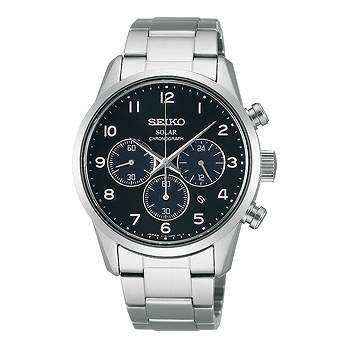
↑This is the Spirit model SBPY137 (pre-tax list price 32,000 yen), a solar-powered chronograph.
The three subdials arranged horizontally plus a date window at the 4 o'clock position
has become the standard style for recent Seiko watches.
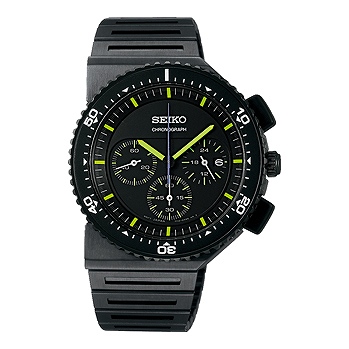
↑I originally went to the watch shop with almost zero intention to buy, just to look at this Giugiaro (Italian design) revival model,
but I happened to spot the Tuno Chrono and impulse-bought it.
Since it's a distribution-limited model, the fact that it's somewhat hard to find if you want to see the actual product before buying was also one reason for the impulse purchase.
The Giugiaro in the image is also a Spirit-tier product
with model number SCED017 and a pre-tax list price of 32,000 yen.
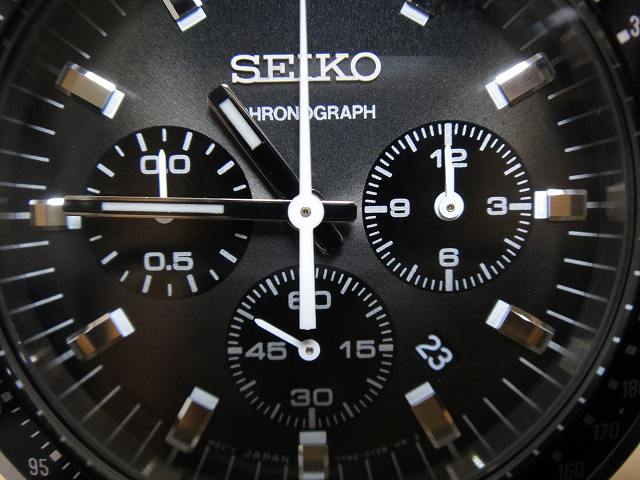
The dial is where the Black Horse and this so-called revival model differ completely.
When you look at it close-up like this, it's nothing but an ordinary Spirit.
The center seconds hand on the dial is the chronograph seconds hand,
the subdial at 3 o'clock is the chronograph minutes counter,
the subdial at 6 o'clock is the watch function seconds hand,
and the subdial at 9 o'clock is the chronograph 1/20-second counter.
The dial completes one rotation in one second with 20 divisions, so it can measure 1/20 of a second.

↑In this case, it's reading about 8.7 seconds.
The 1/20-second counter stops after 10 minutes from the start of measurement, probably because it drains the battery.
Even though the hand stops, the internal measurement continues,
so when you press the lap or stop button, the hand moves to the measurement position and then stops.
When you restart the chronograph, the 1/20-second counter runs again for another 10 minutes,
so the accurate description is "it runs for 10 minutes after the last operation."
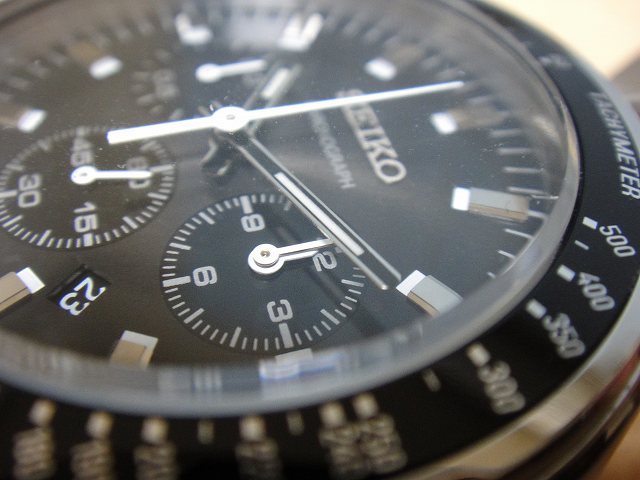
The subdial at 3 o'clock not only has the 60-minute counter with the minute hand,
but also an hour hand for 12-hour measurement,
so it's like having a small watch as a separate complication.
The tachymeter on the bezel is very similar to the Black Horse,
but Seiko's tachymeters have always looked like this anyway.
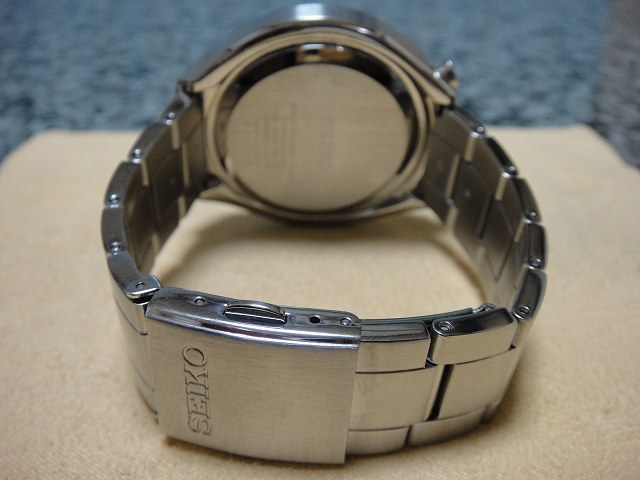
The nearly square clasp that recent Seiko is committed to.
The "half link" needed for fine adjustment wasn't included.
Instead, the clasp has adjustment holes for fine-tuning.
The clasp position seems quite far toward 6 o'clock, but
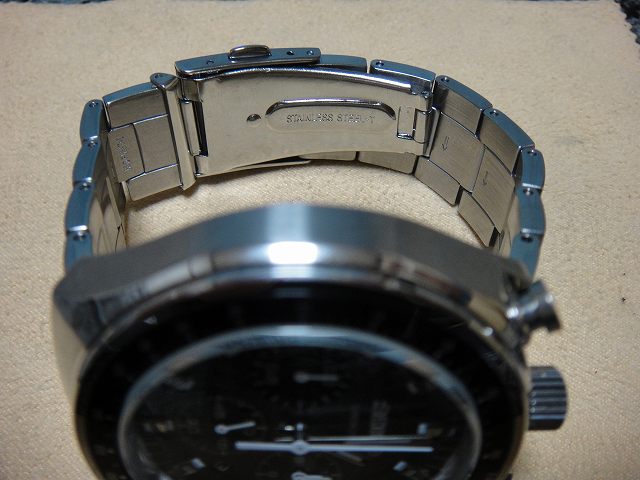
the position of the three-fold clasp when viewed from the inside
is almost in the middle, so this is fine.
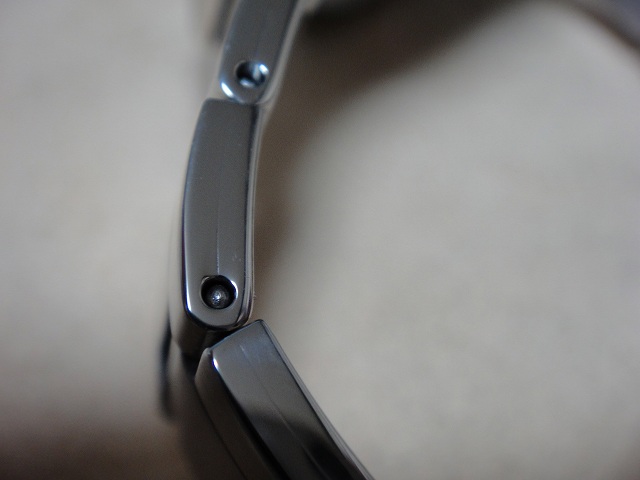
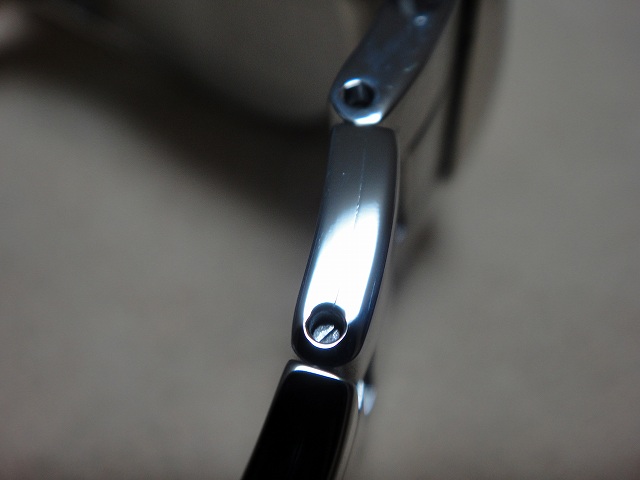
The band is adjusted with split pins.
The specs are appropriate for the price, so I have no complaints.
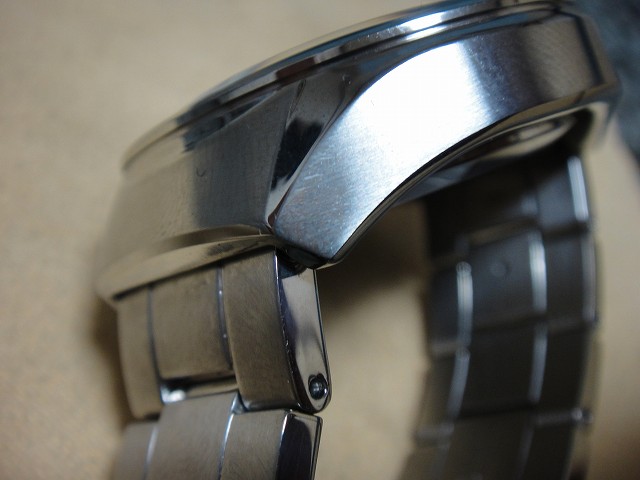
The case thickness and shape are actually quite similar to the Black Horse.
The Black Horse is mechanical, so it's even thicker,
but this one is relatively thick for a quartz watch,
so they must have had the original in mind to some extent.
The band edges are straight rather than flush-fit, which also follows the original.
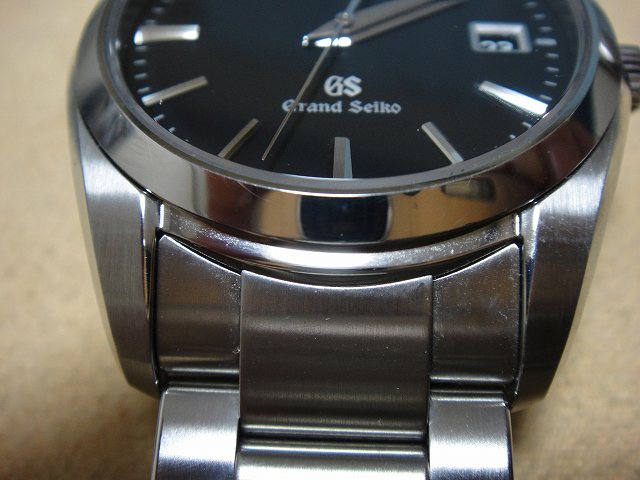
↑Flush-fit refers to
the ends of the metal band being rounded and cut to fit snugly against the case.
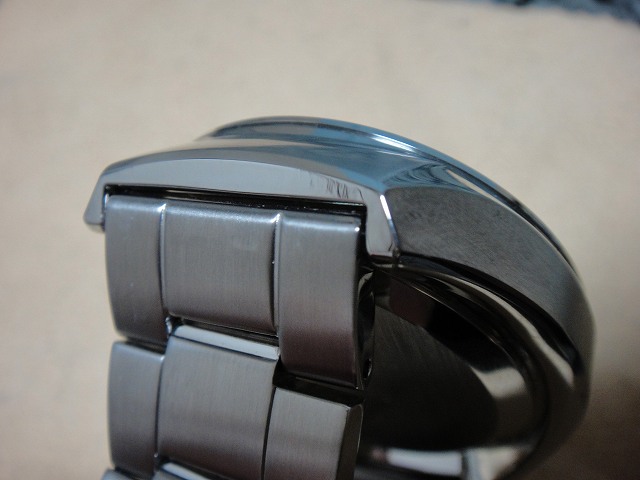
↑With this Tuno Chrono, the band ends are straight.
Even if you swap it for a urethane strap or something, there won't be gaps between the strap and case,
so it won't look awkward, which is nice.
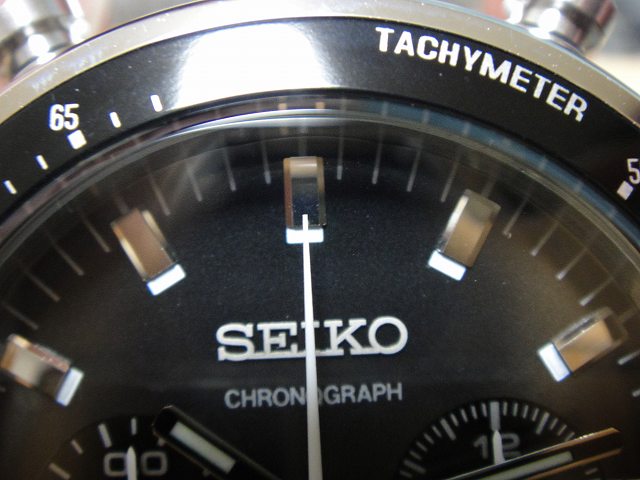
When I bought this Tuno Chrono,
the chronograph seconds hand's return-to-zero position was off by about 0.3 seconds from the exactly 60-second mark.
I'd noticed it before buying, but since there are few places where you can see the actual product
and the other two available colors looked visually harsh,
I had no choice but to go with this one.
The manual even states that regarding the chronograph seconds hand's return-to-zero position,
"anywhere between 59 and 1 second is not abnormal and is within specification,"
so I gave up.
When I mentioned this to someone I recently met who works at Seiko,
they told me that with this movement, if you pull out the crown and hold down the button,
you can fine-tune the hand position, so
I tried it and got it perfectly aligned.
Moreover, that operation method is actually written in the manual if you look carefully.
You should always read the manual thoroughly.
By the way, Spirit doesn't have any other chronograph models with a 1/20-second counter.
When I looked it up, this movement's model number is "7T92."
The 1/20-second counter specification is rare at Seiko, so
if we're talking about recent models, you can be pretty sure that 1/20-second counter = 7T92.
When I researched other models that use the 7T92,
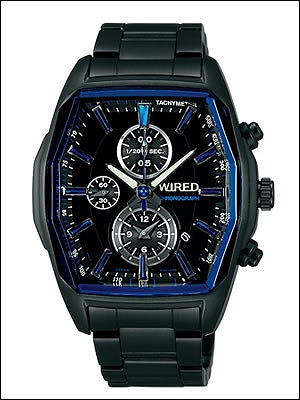
↑I found the Wired AGAV097 (pre-tax list price 24,000 yen).
Wired is not a Seiko brand but rather a brand of Seiko Nexstage, a related company.
Also, it seems the 7T92 is commonly used in overseas gray-market chronograph models.

This isn't my watch, but I borrowed it for the photo.
This is also a 7T92 model.
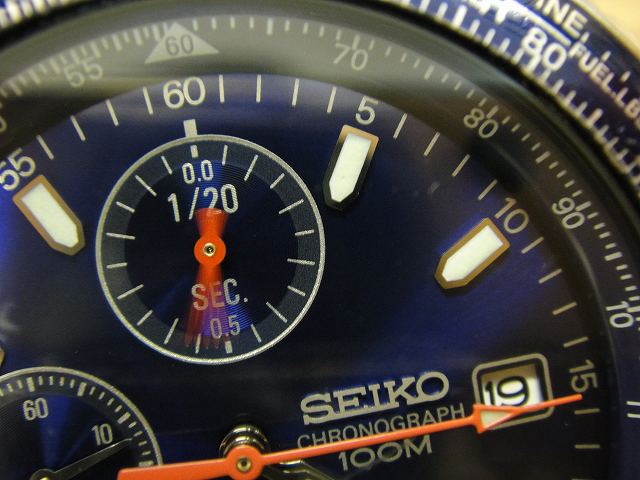
↑It has the 1/20-second counter.
With the 7T92, as I mentioned earlier about being able to fine-tune the chronograph seconds hand position,
to be precise, the specification is
"you can arbitrarily set the initial position of the hand that doesn't move when only the watch function is running."
In other words, I suspect that this Tuno Chrono is
"a lazy model where the 7T92 watch had its band position rotated 90 degrees,
and the initial positions of the chronograph seconds hand, totalizer, and 1/20-second counter
were simply rotated 90 degrees."
The date window can be positioned anywhere as long as you drill holes at the same distance from the dial center.
Note:
"To begin with, watches with the crown position at somewhere other than 3 o'clock
—whether mechanical or quartz—just have the movement rotated and the hands repositioned.
It's not about corners being cut."
I received this comment, and they're absolutely right.
The phrase "cutting corners" was imprecise on my part.
What I meant by "cutting corners" wasn't about reusing the movement, but rather
"if they're going to claim it's a Black Horse revival, I'd like them to put in a bit more effort to make the dial resemble the original."
That said, if they had seriously recreated the original looks,
the price point would never fit within the Spirit tier at all,
so this is probably the sweet spot
(the line where consumers will actually buy the product).
If the alternative were a version that truly looked like a genuine Black Horse recreation
but cost 100,000 yen instead, there would still be buyers, but the absolute numbers would plummet.
In any case, thank you for the comment.
As for my second reason for buying,
I had briefly owned a Brown Horse in absolutely terrible condition,
and I was drawn to this watch because I could at least enjoy the Tuno Chrono vibe with it.

↑If you rotated the band mounting angle by 90 degrees on this one
and manually adjusted the hand initial positions...
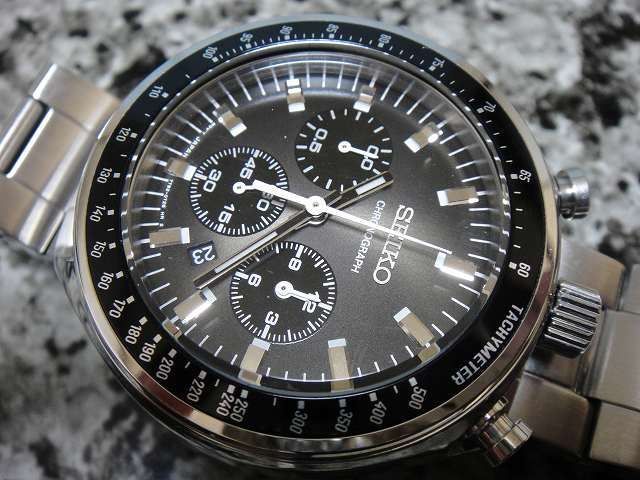
↑...you'd get this.
Really clever.
They took an existing movement plus a case and band that look the part,
made a Tuno Chrono out of it, and once someone who saw it got the idea, they made their purchase...
It's not about winning or losing, but I definitely lost—I was impulse-bought by them.
Price-wise, the Spirit Tuno Chrono was higher than the gray-market 7T92 models or Wired,
so maybe that's why the band and clasp finishing was just slightly better here.
To summarize, even though it might sound like I'm criticizing it thoroughly,
the feel of the chronograph pushbuttons is excellent, so I do like it.
If the third subdial didn't have a 1/20-second counter,
it would typically have a 24-hour counter that goes around once in 24 hours instead.
Both the solar Spirit and Giugiaro mentioned at the beginning have that.
But is that really necessary?
The situations where you can't tell day from night—
like cave exploration that includes sleeping in a lightless environment,
or being trapped by a mine collapse—where knowing whether it's 3 AM or 3 PM would be helpful...
that's never happened to me.
With a mechanical watch, if it stops at a time you can't tell (like 11 o'clock vs. 11 PM) and you adjust the date, you risk damaging the gears,
but with a quartz, as long as the battery lasts, the watch function never stops,
so this isn't something I need to worry about.
Anyway, I've broken my vow never to buy a watch with a date function again.
Ugh, adjusting the date is such a hassle (five times a year, but still).