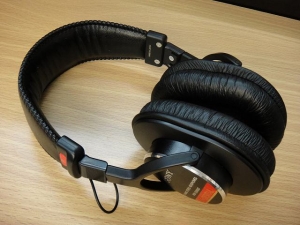
I bought Sony's MDR-CD900ST, the standard reference model for monitor headphones.
Apparently it's essential equipment for people who actually make music in studios and such.
The reason is that "it faithfully reproduces the original sound," and produces sound without coloration or flavor processing...
I'm not on the production side, just a listener, but I thought it would be good to have one of these.
Shure's SRH440 and AKG's K271Mk2 were also options, but I went with the CD900ST.
Both the SRH440 and K271 have detachable cables, and there are various third-party compatible cables available.
The SRH440 has a coiled cable, so as someone who hates coiled cables, I'd need to swap it out.
Also, I frequently see reviews saying the headband contacts at a single point on the top of the head, making extended use uncomfortable.
From what I tried on, the contact point is indeed like that, but I figured it would probably be okay.
As for the K271, the appearance is quite large.
That's natural since it wasn't designed with portable use in mind.
In any case, the 3-meter cable is a bit long for my use case, so I wanted something I could swap out.
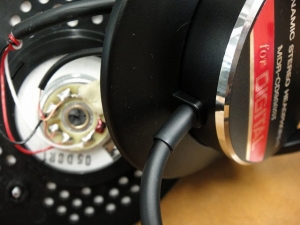
But the CD900ST has a non-detachable 3-meter cable with a 6.3mm standard plug.
I could have just shortened the cable, but I thought, why not make it a proper detachable cable setup?
So I decided to modify it.
This model is designed for professional use, so there's no warranty coverage except for a very short period right after purchase (basically just for initial defects).
In exchange, being a pro tool, all spare parts are available for purchase.
In theory, you could buy all the spare parts and assemble it yourself.
(Though it would cost more than buying the unit outright. Plus it involves soldering.)
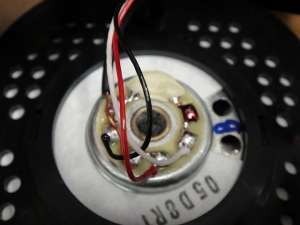
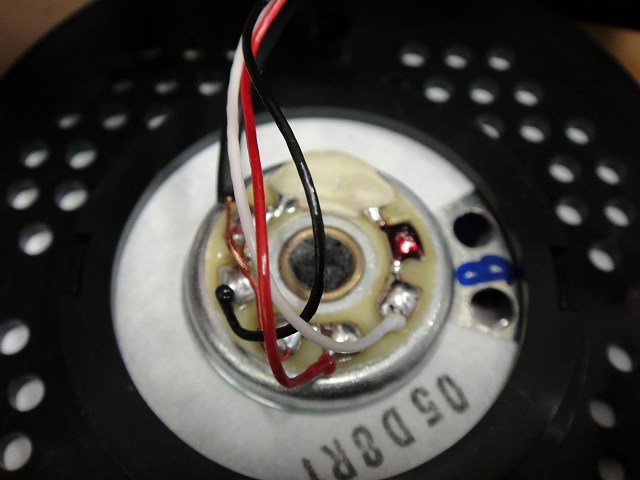
If you don't remember the wiring, you'll be in for a rough time later.
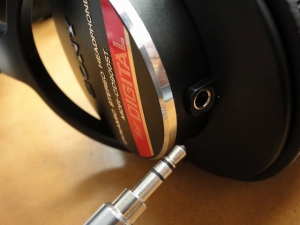
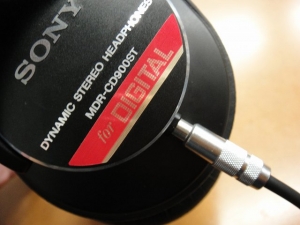
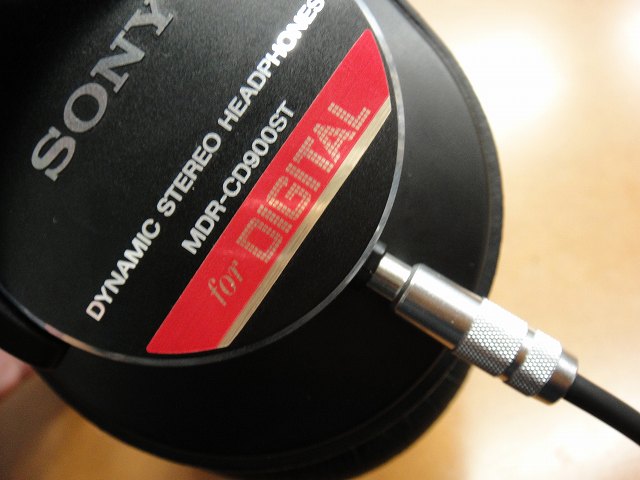
Done.
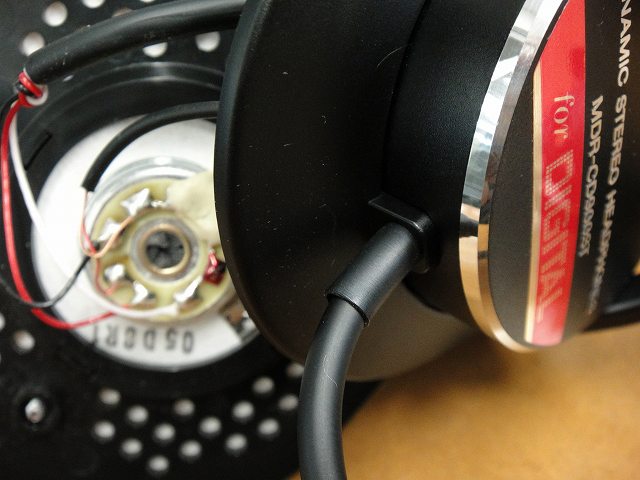
I've installed a 3.5mm mini plug female connector on the headphone side.
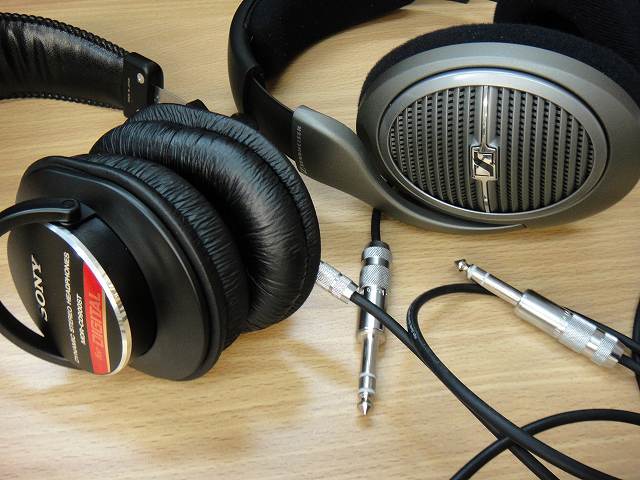
For the cable, you just need one with a 3.5mm male connector on the headphone side and a 3.5mm or 6.3mm male connector on the player side.
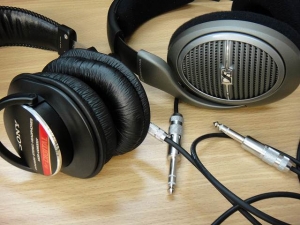
You can make cables yourself, but not without difficulty.
In cases like Sennheiser's HD598 series with deep-seating connectors that require a 90° twist, Shure's bayonet-type connectors, or AKG's 3-pin female connectors, you can't make them from generic connectors.
Because of that, I often use Oyaide's (Japanese audio cable manufacturer) HPC series.
This cable does have quite a bit of handling noise when rubbing against clothing, but you don't notice it when sound is coming from the headphones.
Also, it lacks flexibility.
I honestly can't tell if the sound quality is good or bad.
What I can say is that I haven't felt it got worse (otherwise I wouldn't use it).
The HPC series also comes in versions for the SRH440 and K271.
They come in 1.3-meter or 2.5-meter lengths, with player-side connectors in either standard or mini plug format, for a total of four configurations.
Both of the ones in the image above are "1.3m / standard plug."
This Oyaide standard plug has fantastic click feel when inserting.
It's just a small difference from other connectors of the same specification, but there's no looseness whatsoever.
As for the actual sound... hmm, it's relentless.
The sound resolution is uncomfortably high (← that's a compliment).
The CD900ST is often described as "flat" or "neutral," and I think this is what they mean.
Compared to the "listening" headphones I've used before, the high-frequency output is abnormal, but if this is the standard, then I can understand just how much the other headphones are processing the sound.
I say "relentless" because you can really tell when the audio source quality is poor.
Sure enough, it's more suited to picking apart the sound than to listening to music.
In other words, it's a tool designed for that purpose.
The CD900ST produces everything from highs to lows equally and cleanly.
Sounds that usually play vaguely in the background behind the main melody come through clearly.
The soundstage is narrow, or rather, it's tight in terms of resolution—but in a good way.
My favorite song is Don McLean's "American Pie," but the piano sound is so clear that the vocals recede a bit.
Billy Joel's "Piano Man" — the piano is one thing, but the harmonica sound is just sharp.
It's not that the volume is loud; the sound is hard, or rather sharp, and it feels like it's stabbing your eardrums.
This was a first for me.
And I've been discovering "Oh, so it's been making that sound too?" quite frequently.
Sounds that are almost completely masked by the coloration of regular headphones come through clearly here.
When I listen to sounds I first noticed on the CD900ST on my regular headphones, I can confirm that yes, they are there, though faintly.
It's like the cocktail party effect, I suppose — sounds that I couldn't hear before knowing "there's this sound here," become audible once I know about them.
This has been an incredible experience for me.
On Jamiroquai's "Virtual Insanity," in the chorus section
(the "Futures made of virtual insanity now..." part), there's a bell-like "cong cong cong" sound that runs throughout.
On headphones other than the CD900ST, this sound isn't very clear.
While we're on the subject of "American Pie":
Madonna did a cover of Don McLean's "American Pie," but the CD audio version of her cover, when listened to on the CD900ST,
shows the patchwork nature of the layered sounds and effects very clearly.
This was something I never noticed until I listened on the CD900ST. Scary stuff.
But when I listen to it again on a Sennheiser HD700, it doesn't bother me anymore.
Those seams where you'd think "okay, this was definitely a separate take" get smoothed over so you can't tell.
Listening naturally like that is nice.
With the CD900ST, the flaws are so obvious they drive me crazy.
↑ That's because it's literally made for that purpose.
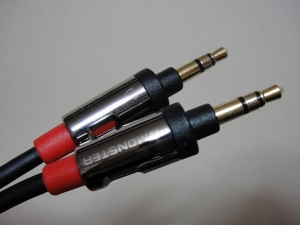
Since I've modified it to accept different cables, I can use it with a portable player if I have a roughly 1.0-meter cable with 3.5mm male connectors on both ends.
It's a closed design, so there is some sound leakage—you need to be careful with volume levels.
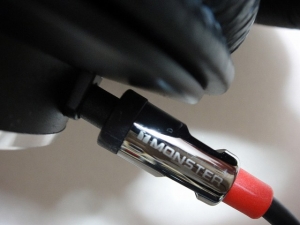
I found a perfect 0.9-meter one from Monster Cable.
"Perfect" isn't just about the length—
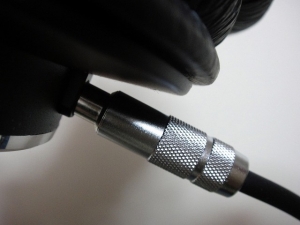
the connector shape matters too.
The image above is the Oyaide from earlier, but there's very little clearance between the connector cover and the headphone's housing.
I don't think it'll be a problem this time, but if I do this mod again in the future, I'll try mounting the female connector slightly outward.
Phew, that was close.
The MDR-CD900ST shares much of its structure with Sony's MDR-7506, but there are quite a few differences.
The 7506 comes with a coiled cable and supports mini plugs, the main unit folds up, the driver output is bass-heavy, and the resolution doesn't match the CD900ST.
Also, the ear pads are thicker.
The parts themselves can be shared (though probably not recommended), so you could theoretically swap the folding parts from the 7506 to make the CD900ST foldable.
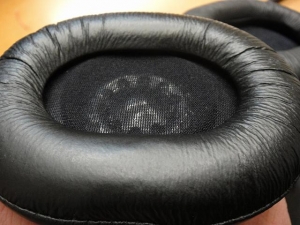
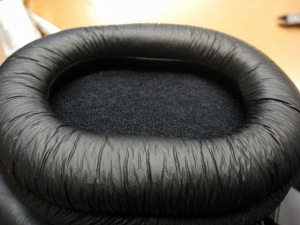
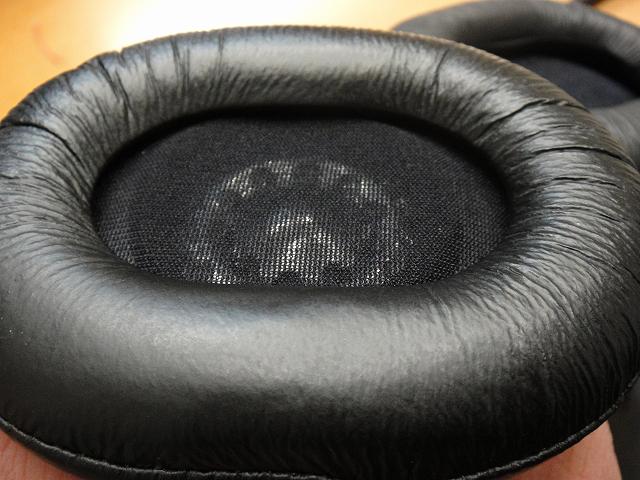
As for the ear pads, the CD900ST has thin cushioning, and what covers the driver is thin fabric.
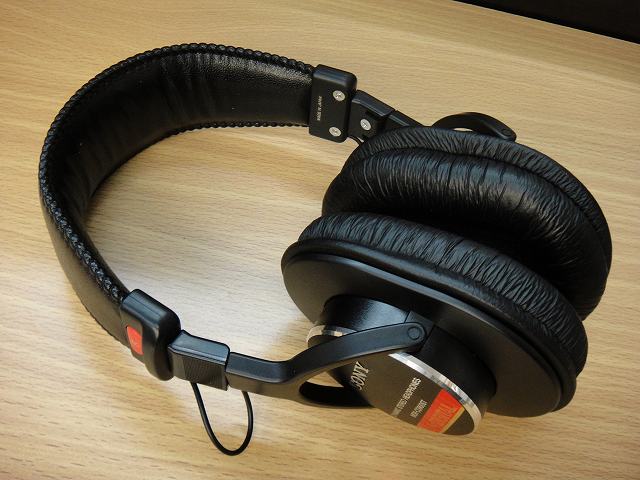
Thinking it would improve the weak clamping force and enhance the fit, I swapped in ear pads from the 7506.
The image at the top is after I modified it to be detachable and swapped the pads.
The 7506's ear pad cushioning is thicker, and the sponge covering the driver is also somewhat thicker.
The CD900ST's "sound feels close" quality is probably not unrelated to the driver being physically closer to the ear, so even setting aside the fact that this is an unapproved combination, it goes against the manufacturer's intended sound character.
Thin fabric versus sponge would mean the "original sound authenticity" reaching the ear differs.
But I do prefer the fit this way.
About that patchwork quality I mentioned earlier with Madonna's version of "American Pie," the SRH440 barely shows it at all.
(So it's better for music listening.)
Good or bad, the CD900ST seems superior in terms of faithful reproduction of each individual note.
I'm a Sennheiser devotee (I make donations every year or so, haha), but Sennheiser's monitor headphones, the HD380PRO and HD280PRO, don't seem well-suited for this kind of sound flaw-hunting use.
The sound is kind of rounded, and they don't seem to pursue original sound reproduction.
However, their external sound isolation performance is extremely high, so I do think they're better suited for DJs.
Even if you're not involved in music production, the CD900ST is recommended as a second or subsequent headphone—as long as the 6.3mm standard plug spec isn't a dealbreaker.
As I've mentioned several times, it doesn't necessarily produce "good sound."
It just strips your music naked.
For tracks like Steppenwolf's "Born to Be Wild," the naked sound actually seems better.
The guitar really sings.

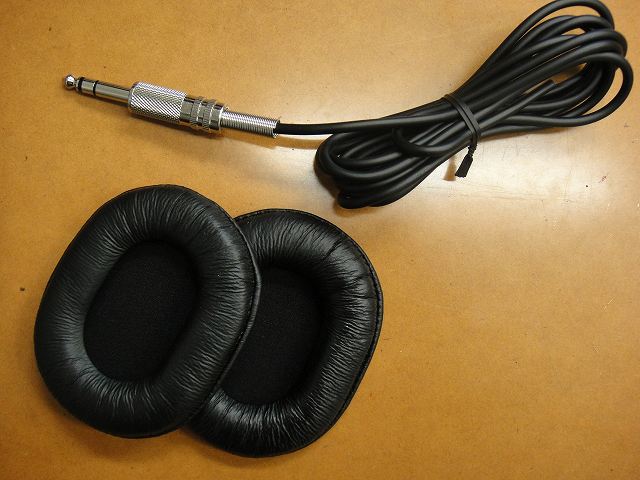
If anyone needs the original cable and ear pads (both unused) that I removed during the modification, please stop by the shop and I'll give them to you.
First come, first served—one person only.
I trimmed about 0.3 meters off the cable during the modification and used the wire inside, so it's slightly shorter than the original.
Apparently it's essential equipment for people who actually make music in studios and such.
The reason is that "it faithfully reproduces the original sound," and produces sound without coloration or flavor processing...
I'm not on the production side, just a listener, but I thought it would be good to have one of these.
Shure's SRH440 and AKG's K271Mk2 were also options, but I went with the CD900ST.
Both the SRH440 and K271 have detachable cables, and there are various third-party compatible cables available.
The SRH440 has a coiled cable, so as someone who hates coiled cables, I'd need to swap it out.
Also, I frequently see reviews saying the headband contacts at a single point on the top of the head, making extended use uncomfortable.
From what I tried on, the contact point is indeed like that, but I figured it would probably be okay.
As for the K271, the appearance is quite large.
That's natural since it wasn't designed with portable use in mind.
In any case, the 3-meter cable is a bit long for my use case, so I wanted something I could swap out.
But the CD900ST has a non-detachable 3-meter cable with a 6.3mm standard plug.
I could have just shortened the cable, but I thought, why not make it a proper detachable cable setup?
So I decided to modify it.
This model is designed for professional use, so there's no warranty coverage except for a very short period right after purchase (basically just for initial defects).
In exchange, being a pro tool, all spare parts are available for purchase.
In theory, you could buy all the spare parts and assemble it yourself.
(Though it would cost more than buying the unit outright. Plus it involves soldering.)
If you don't remember the wiring, you'll be in for a rough time later.

Done.
I've installed a 3.5mm mini plug female connector on the headphone side.
For the cable, you just need one with a 3.5mm male connector on the headphone side and a 3.5mm or 6.3mm male connector on the player side.
You can make cables yourself, but not without difficulty.
In cases like Sennheiser's HD598 series with deep-seating connectors that require a 90° twist, Shure's bayonet-type connectors, or AKG's 3-pin female connectors, you can't make them from generic connectors.
Because of that, I often use Oyaide's (Japanese audio cable manufacturer) HPC series.
This cable does have quite a bit of handling noise when rubbing against clothing, but you don't notice it when sound is coming from the headphones.
Also, it lacks flexibility.
I honestly can't tell if the sound quality is good or bad.
What I can say is that I haven't felt it got worse (otherwise I wouldn't use it).
The HPC series also comes in versions for the SRH440 and K271.
They come in 1.3-meter or 2.5-meter lengths, with player-side connectors in either standard or mini plug format, for a total of four configurations.
Both of the ones in the image above are "1.3m / standard plug."
This Oyaide standard plug has fantastic click feel when inserting.
It's just a small difference from other connectors of the same specification, but there's no looseness whatsoever.
As for the actual sound... hmm, it's relentless.
The sound resolution is uncomfortably high (← that's a compliment).
The CD900ST is often described as "flat" or "neutral," and I think this is what they mean.
Compared to the "listening" headphones I've used before, the high-frequency output is abnormal, but if this is the standard, then I can understand just how much the other headphones are processing the sound.
I say "relentless" because you can really tell when the audio source quality is poor.
Sure enough, it's more suited to picking apart the sound than to listening to music.
In other words, it's a tool designed for that purpose.
The CD900ST produces everything from highs to lows equally and cleanly.
Sounds that usually play vaguely in the background behind the main melody come through clearly.
The soundstage is narrow, or rather, it's tight in terms of resolution—but in a good way.
My favorite song is Don McLean's "American Pie," but the piano sound is so clear that the vocals recede a bit.
Billy Joel's "Piano Man" — the piano is one thing, but the harmonica sound is just sharp.
It's not that the volume is loud; the sound is hard, or rather sharp, and it feels like it's stabbing your eardrums.
This was a first for me.
And I've been discovering "Oh, so it's been making that sound too?" quite frequently.
Sounds that are almost completely masked by the coloration of regular headphones come through clearly here.
When I listen to sounds I first noticed on the CD900ST on my regular headphones, I can confirm that yes, they are there, though faintly.
It's like the cocktail party effect, I suppose — sounds that I couldn't hear before knowing "there's this sound here," become audible once I know about them.
This has been an incredible experience for me.
On Jamiroquai's "Virtual Insanity," in the chorus section
(the "Futures made of virtual insanity now..." part), there's a bell-like "cong cong cong" sound that runs throughout.
On headphones other than the CD900ST, this sound isn't very clear.
While we're on the subject of "American Pie":
Madonna did a cover of Don McLean's "American Pie," but the CD audio version of her cover, when listened to on the CD900ST,
shows the patchwork nature of the layered sounds and effects very clearly.
This was something I never noticed until I listened on the CD900ST. Scary stuff.
But when I listen to it again on a Sennheiser HD700, it doesn't bother me anymore.
Those seams where you'd think "okay, this was definitely a separate take" get smoothed over so you can't tell.
Listening naturally like that is nice.
With the CD900ST, the flaws are so obvious they drive me crazy.
↑ That's because it's literally made for that purpose.
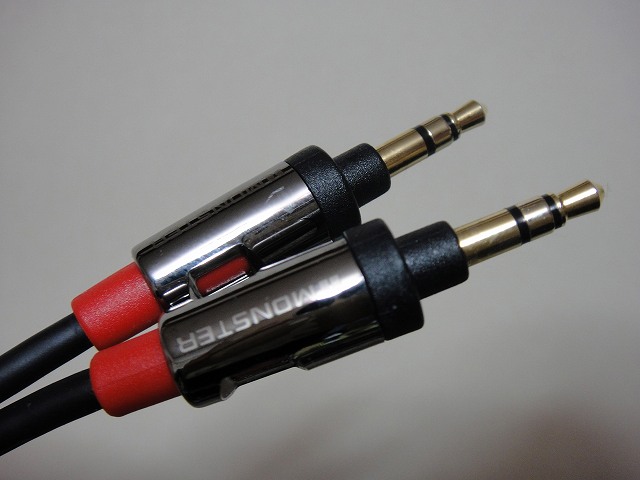
Since I've modified it to accept different cables, I can use it with a portable player if I have a roughly 1.0-meter cable with 3.5mm male connectors on both ends.
It's a closed design, so there is some sound leakage—you need to be careful with volume levels.
I found a perfect 0.9-meter one from Monster Cable.
"Perfect" isn't just about the length—
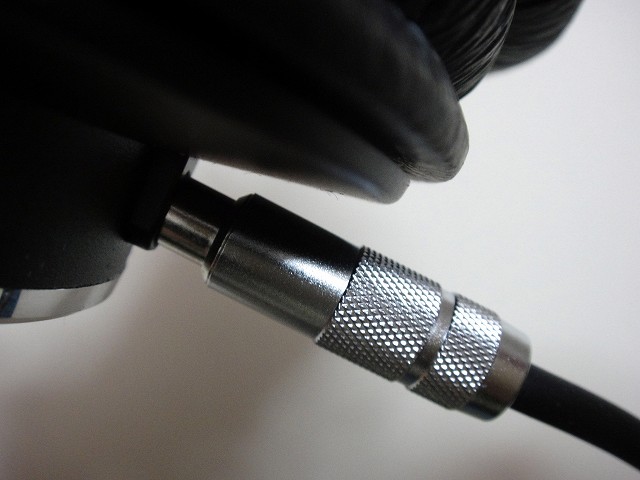
the connector shape matters too.
The image above is the Oyaide from earlier, but there's very little clearance between the connector cover and the headphone's housing.
I don't think it'll be a problem this time, but if I do this mod again in the future, I'll try mounting the female connector slightly outward.
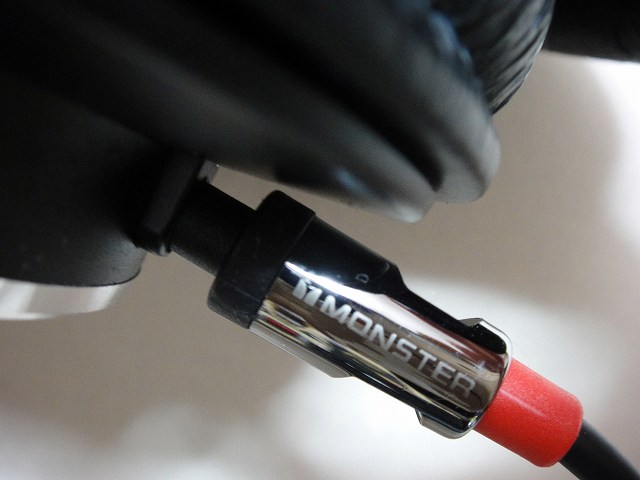
Phew, that was close.
The MDR-CD900ST shares much of its structure with Sony's MDR-7506, but there are quite a few differences.
The 7506 comes with a coiled cable and supports mini plugs, the main unit folds up, the driver output is bass-heavy, and the resolution doesn't match the CD900ST.
Also, the ear pads are thicker.
The parts themselves can be shared (though probably not recommended), so you could theoretically swap the folding parts from the 7506 to make the CD900ST foldable.
As for the ear pads, the CD900ST has thin cushioning, and what covers the driver is thin fabric.

Thinking it would improve the weak clamping force and enhance the fit, I swapped in ear pads from the 7506.
The image at the top is after I modified it to be detachable and swapped the pads.
The 7506's ear pad cushioning is thicker, and the sponge covering the driver is also somewhat thicker.
The CD900ST's "sound feels close" quality is probably not unrelated to the driver being physically closer to the ear, so even setting aside the fact that this is an unapproved combination, it goes against the manufacturer's intended sound character.
Thin fabric versus sponge would mean the "original sound authenticity" reaching the ear differs.
But I do prefer the fit this way.
About that patchwork quality I mentioned earlier with Madonna's version of "American Pie," the SRH440 barely shows it at all.
(So it's better for music listening.)
Good or bad, the CD900ST seems superior in terms of faithful reproduction of each individual note.
I'm a Sennheiser devotee (I make donations every year or so, haha), but Sennheiser's monitor headphones, the HD380PRO and HD280PRO, don't seem well-suited for this kind of sound flaw-hunting use.
The sound is kind of rounded, and they don't seem to pursue original sound reproduction.
However, their external sound isolation performance is extremely high, so I do think they're better suited for DJs.
Even if you're not involved in music production, the CD900ST is recommended as a second or subsequent headphone—as long as the 6.3mm standard plug spec isn't a dealbreaker.
As I've mentioned several times, it doesn't necessarily produce "good sound."
It just strips your music naked.
For tracks like Steppenwolf's "Born to Be Wild," the naked sound actually seems better.
The guitar really sings.
If anyone needs the original cable and ear pads (both unused) that I removed during the modification, please stop by the shop and I'll give them to you.
First come, first served—one person only.
I trimmed about 0.3 meters off the cable during the modification and used the wire inside, so it's slightly shorter than the original.