A customer brought in a WH-9000 C24 rear wheel for us to work on.
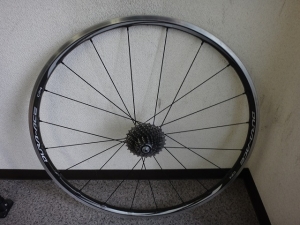
They rode it on their bike to us.
Apparently about a week ago, they had the wheel trued at some shop,
but immediately after — while still attached to the frame — visible wobbling appeared,
so they brought it to us.
Whoa!
I'm not going to say that shop's name!
(I honestly didn't ask, I don't know it.
I requested they not tell me because I'd probably write it here.
As a general rule, I don't ask for information that isn't necessary for the repair)
I could fix just the runout quickly enough, but
the centering was off — and not just a little.
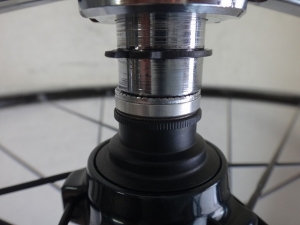
↑Measured from the non-drive side . . .
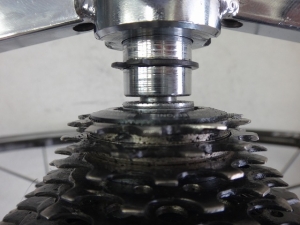
↑There's this much clearance from the drive side.
When I showed it to the customer, they said "That's about the thickness of a one-yen coin,"
and I have to say, that's a great analogy. I might use it from now on.
For reference, a one-yen coin is 1.5mm thick.
And to make matters worse, the spoke tension was flabby on both sides.

↑When I put a marker tape at the final cross on the non-drive side and squeezed it . . .
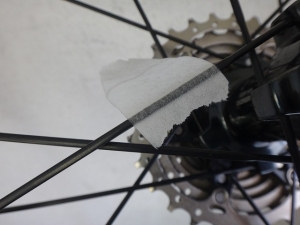
It deflects this much even with light pressure.
The spoke tension was so low that the typical problem of
"aero spokes rotating and their flat direction shifting all over the place"
was happening everywhere.
Did they only true while loosening? I can't understand it, but
if you can't diagnose properly, don't touch it.
I'm glad I didn't ask which shop it was — I definitely would've written it down if I knew.
With an Optibar rear wheel, minor lateral runout is unavoidable, so
I overlook some of it, but
this had severe vertical runout despite equal spoke counts on both sides.
It looked like someone had been messing with it all over the place.
Plus, the drive side was already loose from the start, so
after correcting the vertical runout, I tightened the drive side first and showed the customer
the centering error that resulted, then I tightened the non-drive side and corrected the center.
The reason I tightened the drive side first is that it's harder to adjust later.
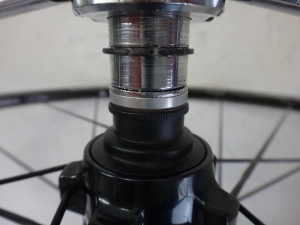
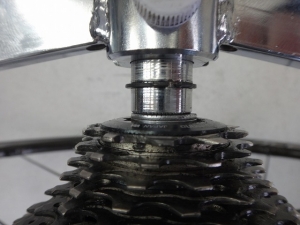
↑After the work
Looking at the camera timestamps,
those first two photos were at 14:40, and these two were at 15:06.
This was one of the tougher fights.
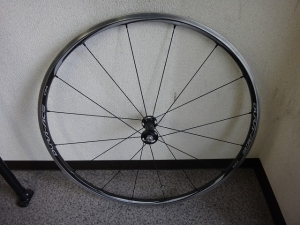
While I was at it, I checked the front wheel too,
and there was barely any centering offset and almost no runout.
This one hadn't been botched, so it was fine from the start.
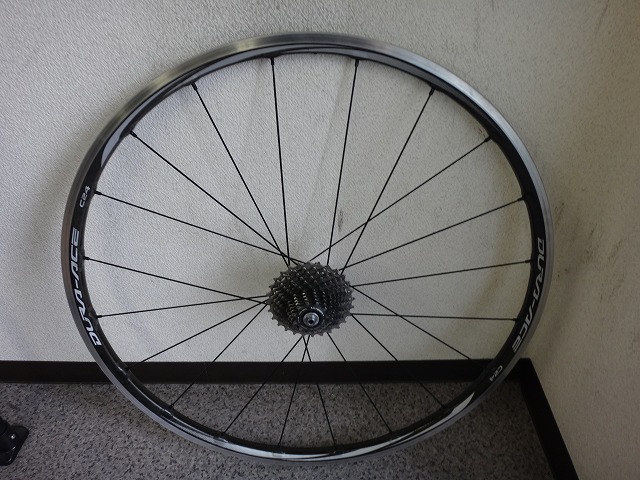
They rode it on their bike to us.
Apparently about a week ago, they had the wheel trued at some shop,
but immediately after — while still attached to the frame — visible wobbling appeared,
so they brought it to us.
Whoa!
I'm not going to say that shop's name!
(I honestly didn't ask, I don't know it.
I requested they not tell me because I'd probably write it here.
As a general rule, I don't ask for information that isn't necessary for the repair)
I could fix just the runout quickly enough, but
the centering was off — and not just a little.

↑Measured from the non-drive side . . .
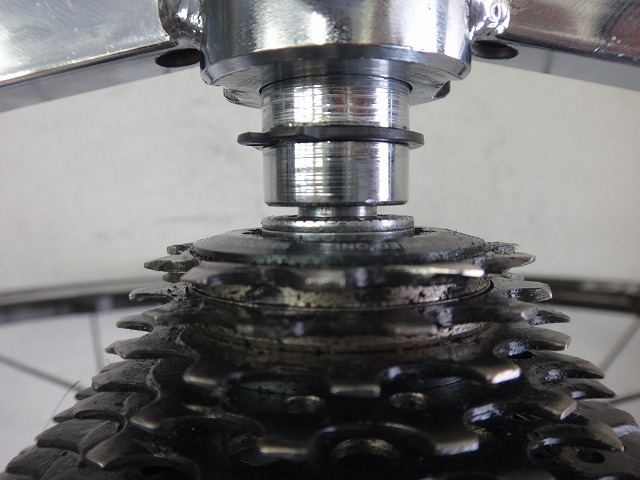
↑There's this much clearance from the drive side.
When I showed it to the customer, they said "That's about the thickness of a one-yen coin,"
and I have to say, that's a great analogy. I might use it from now on.
For reference, a one-yen coin is 1.5mm thick.
And to make matters worse, the spoke tension was flabby on both sides.
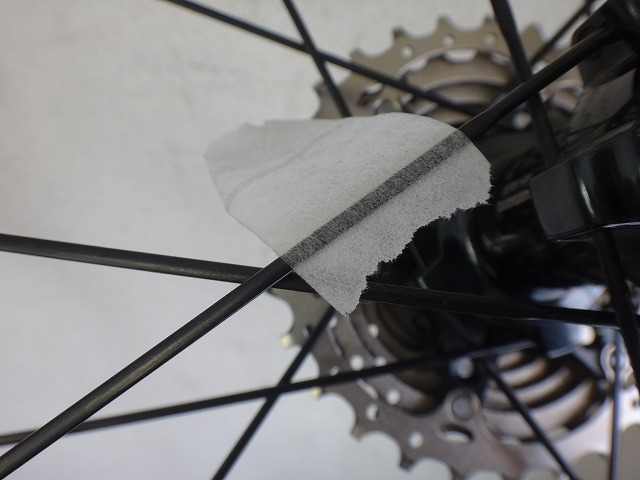
↑When I put a marker tape at the final cross on the non-drive side and squeezed it . . .
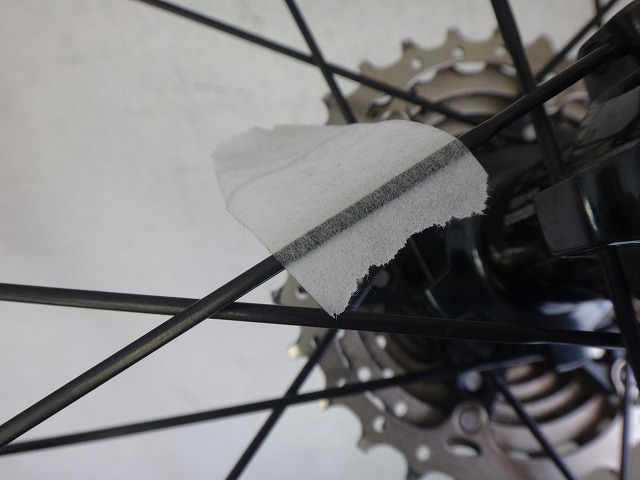
It deflects this much even with light pressure.
The spoke tension was so low that the typical problem of
"aero spokes rotating and their flat direction shifting all over the place"
was happening everywhere.
Did they only true while loosening? I can't understand it, but
if you can't diagnose properly, don't touch it.
I'm glad I didn't ask which shop it was — I definitely would've written it down if I knew.
With an Optibar rear wheel, minor lateral runout is unavoidable, so
I overlook some of it, but
this had severe vertical runout despite equal spoke counts on both sides.
It looked like someone had been messing with it all over the place.
Plus, the drive side was already loose from the start, so
after correcting the vertical runout, I tightened the drive side first and showed the customer
the centering error that resulted, then I tightened the non-drive side and corrected the center.
The reason I tightened the drive side first is that it's harder to adjust later.


↑After the work
Looking at the camera timestamps,
those first two photos were at 14:40, and these two were at 15:06.
This was one of the tougher fights.
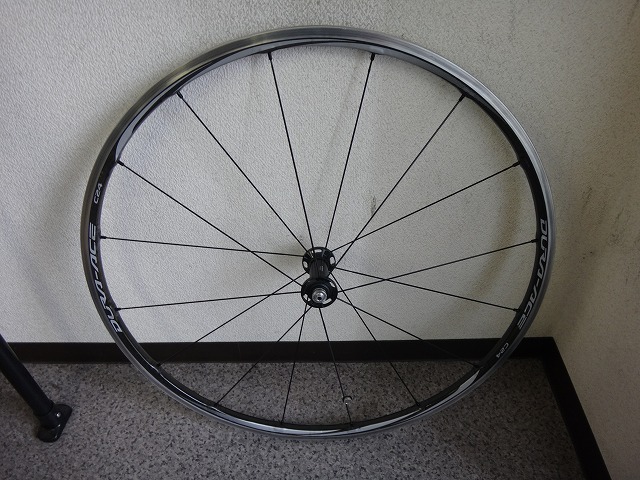
While I was at it, I checked the front wheel too,
and there was barely any centering offset and almost no runout.
This one hadn't been botched, so it was fine from the start.