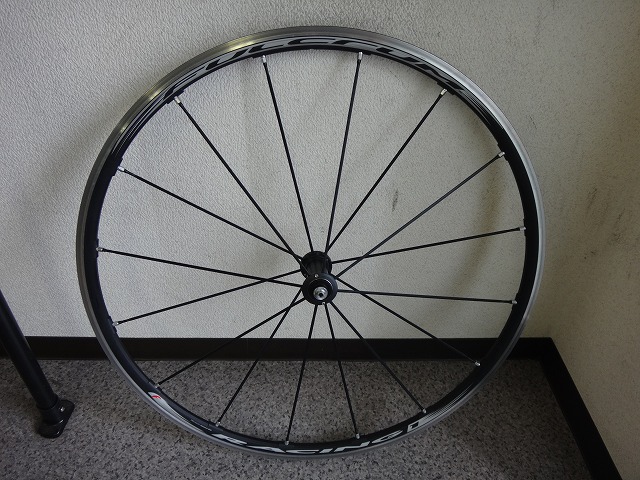
I received a Racing 1 from a customer on consignment.
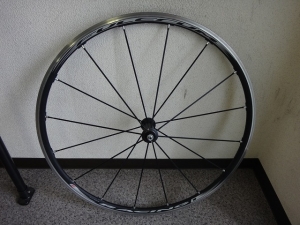

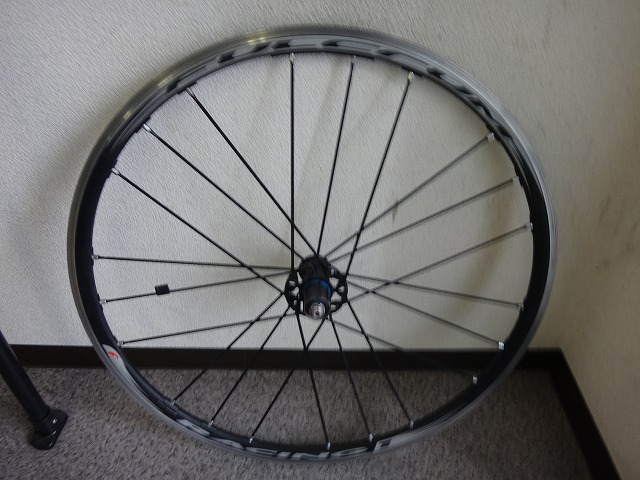
The rear wheel photo came out blurry from camera shake...
He's used it for about 1 year / 3,000 km, so he's hoping for an overhaul.
In particular, he wants to know if we can make the hub rotation a bit lighter,
so I'll do everything I can in the work to pursue that.

↑Front hub


↑Rear hub
The bearings show no signs of damage.
After cleaning and regreasing, the rear wheel rotation became noticeably lighter.
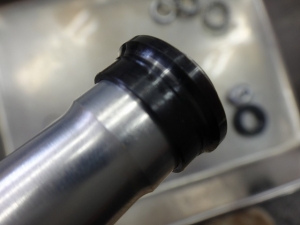
↑This is the front hub,
and you can see the bearing tracks cleanly marked on the ball race.
As I've written many times before,
you can't achieve Campagnolo and Fulcrum's optimal ball bearing contact
without getting the balls to ride up and out of these tracks.
The adjustment can only do so much.
The rear hub's ball race hadn't shown this pattern as clearly yet,
so it was rotating slightly heavier than the front hub.
But precisely because of that, I think the improvement from regreasing and bearing adjustment
felt more noticeable.
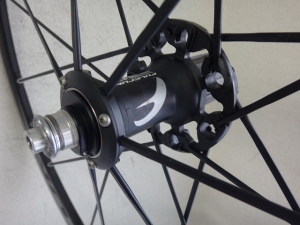
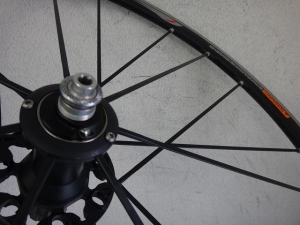
Since the rear wheel had a reverse-logo hub / left WARNING rim,
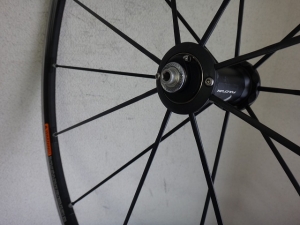
I followed suit with the front wheel too.
Since the spoke magnet is on the rear wheel,
the front wheel orientation doesn't really matter.
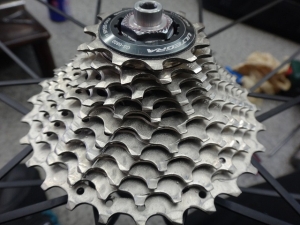
I normally use two types of parts cleaner,
and the expensive one costs about 7 times as much as the cheaper one.
The effectiveness is clearly different, and the evaporation time varies too.
The more expensive one's evaporation time in particular (on the slower-drying side of medium-dry)
is formulated with that property in mind, and there are situations where this is essential.
This time I used the expensive one for cleaning the hubs,
but when I use it on sprockets, I normally use the cheaper one.
Even to achieve the same result, the cheaper one doesn't require
7 times the quantity, so
I figured the cheaper one would be fine,
but the sales person from the expensive brand (WAK○'S ←the 4th character is redacted just to be safe)
told me about the cheaper one: "It's basically like water (doesn't clean things well)".
So this time, while I was cleaning the hubs, I also
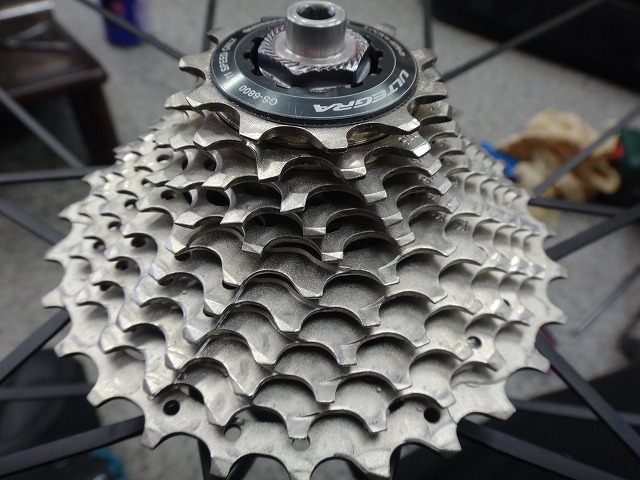
cleaned the sprocket with the same expensive parts cleaner, and it certainly cleans well.
With a sprocket that's worn down significantly,
you can't remove dirt that's lodged deep in the fine scratches,
but this sprocket hadn't worn that much, so
at a glance it came out looking brand new.
He's used it for about 1 year / 3,000 km, so he's hoping for an overhaul.
In particular, he wants to know if we can make the hub rotation a bit lighter,
so I'll do everything I can in the work to pursue that.
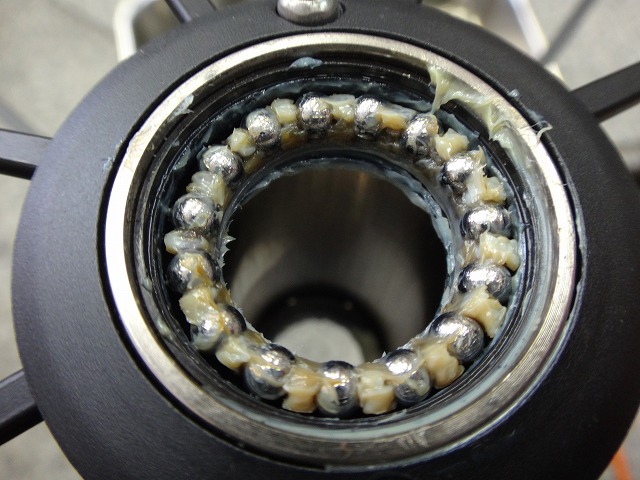
↑Front hub
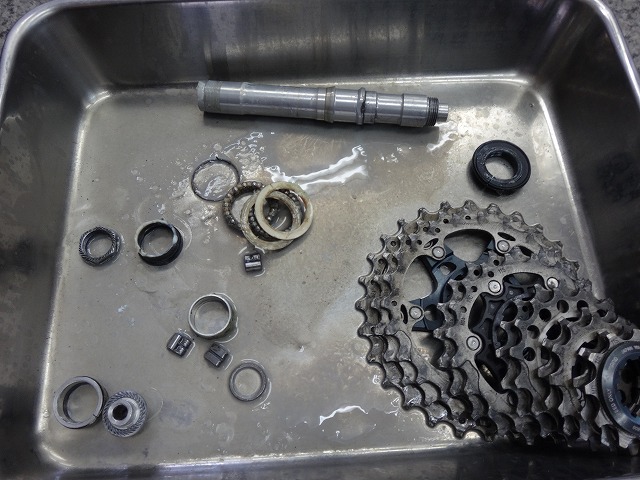

↑Rear hub
The bearings show no signs of damage.
After cleaning and regreasing, the rear wheel rotation became noticeably lighter.
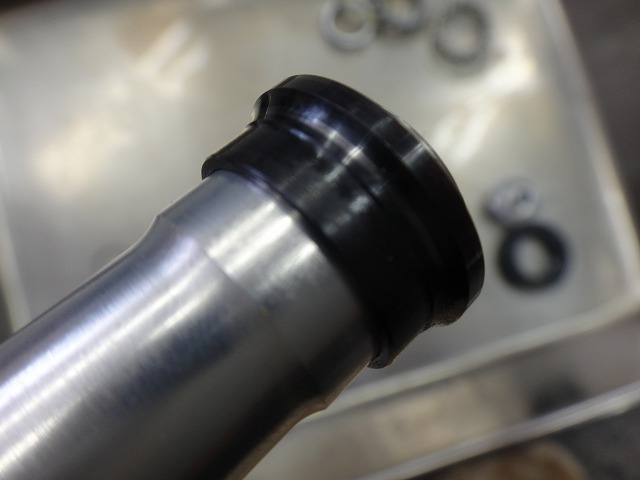
↑This is the front hub,
and you can see the bearing tracks cleanly marked on the ball race.
As I've written many times before,
you can't achieve Campagnolo and Fulcrum's optimal ball bearing contact
without getting the balls to ride up and out of these tracks.
The adjustment can only do so much.
The rear hub's ball race hadn't shown this pattern as clearly yet,
so it was rotating slightly heavier than the front hub.
But precisely because of that, I think the improvement from regreasing and bearing adjustment
felt more noticeable.

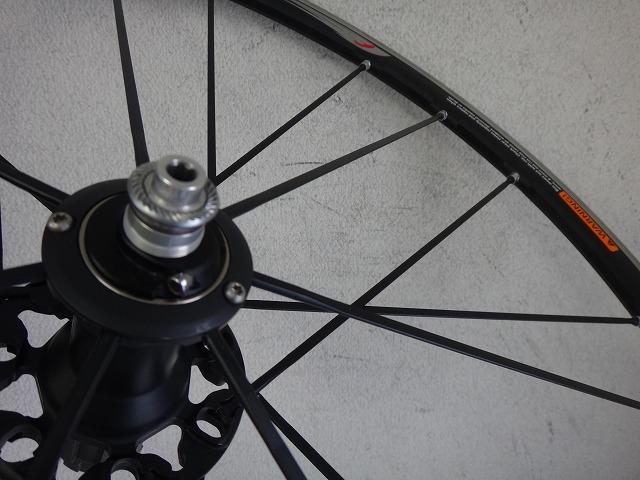
Since the rear wheel had a reverse-logo hub / left WARNING rim,
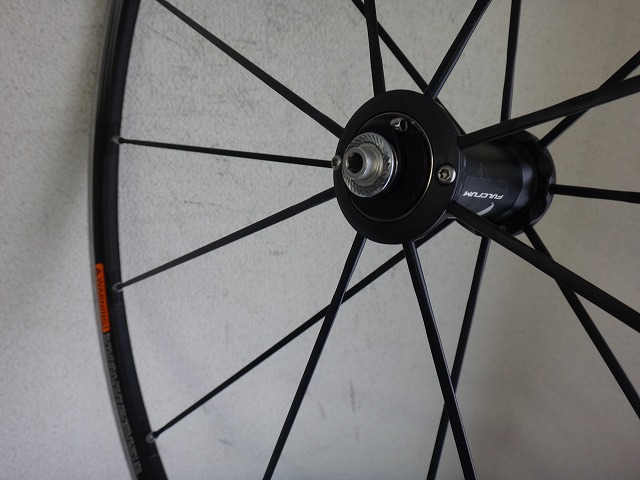
I followed suit with the front wheel too.
Since the spoke magnet is on the rear wheel,
the front wheel orientation doesn't really matter.
I normally use two types of parts cleaner,
and the expensive one costs about 7 times as much as the cheaper one.
The effectiveness is clearly different, and the evaporation time varies too.
The more expensive one's evaporation time in particular (on the slower-drying side of medium-dry)
is formulated with that property in mind, and there are situations where this is essential.
This time I used the expensive one for cleaning the hubs,
but when I use it on sprockets, I normally use the cheaper one.
Even to achieve the same result, the cheaper one doesn't require
7 times the quantity, so
I figured the cheaper one would be fine,
but the sales person from the expensive brand (WAK○'S ←the 4th character is redacted just to be safe)
told me about the cheaper one: "It's basically like water (doesn't clean things well)".
So this time, while I was cleaning the hubs, I also
cleaned the sprocket with the same expensive parts cleaner, and it certainly cleans well.
With a sprocket that's worn down significantly,
you can't remove dirt that's lodged deep in the fine scratches,
but this sprocket hadn't worn that much, so
at a glance it came out looking brand new.