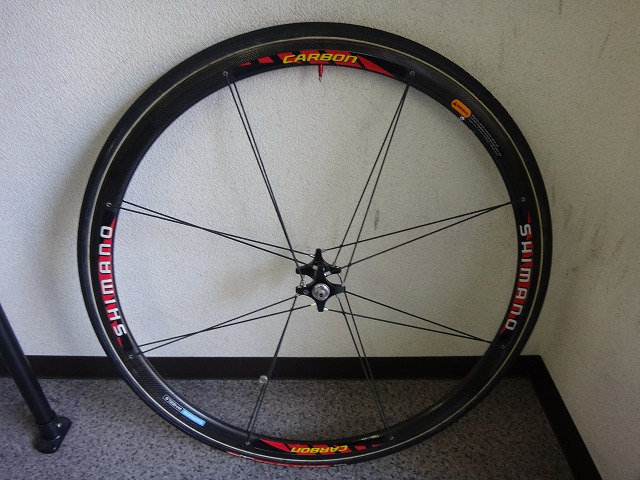
I received a WH-7701C from a customer.
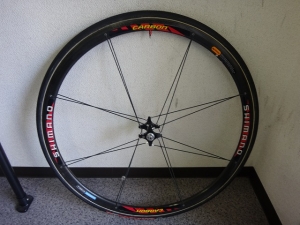
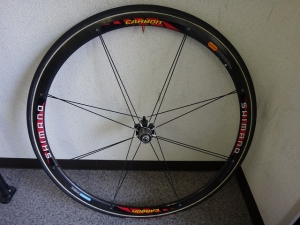
If complete wheels are supposed to have distinctive design from each maker,
then this is Shimano's masterpiece.
If taking the best parts from other manufacturers and piecing them together is okay,
then I'd say the current C35 fits that bill.
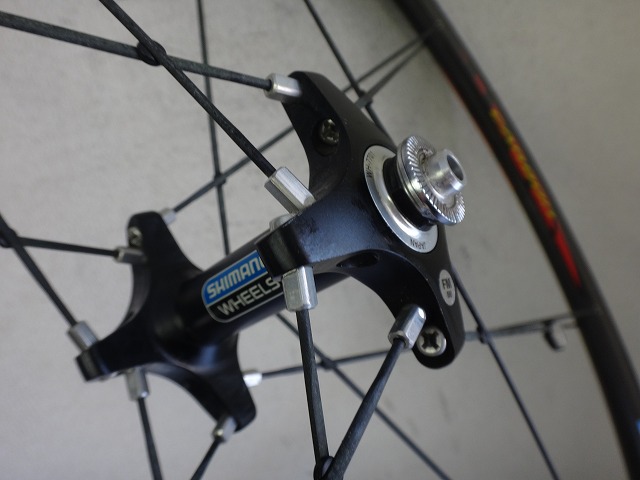
The front hub has a cross-shaped flange with spokes that cross left and right,
creating a pair-spoke structure.
The 7700 has the same structure on the rear hub as well, but
due to wide flange fraud (first instance), the 7701
had its rear hub flange width and spoke arrangement changed.
The condition is remarkably good because it had been lying dormant in the corner of a shop for a long time.
According to the customer, the ride feel is "unreliable,"
but that's unavoidable given the obsession with using fewer spokes.
If you evaluate it for qualities other than snappiness and accept it as "that's just how it is,"
it's actually an interesting wheel.
The customer also requested an inspection,
and mentioned that the hubs might not be in good condition, so they wanted me to check them out.
Both wheels had no center offset, and only very slight runout.
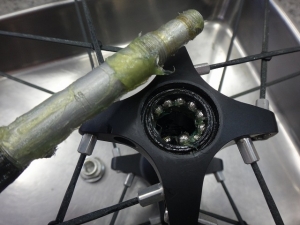
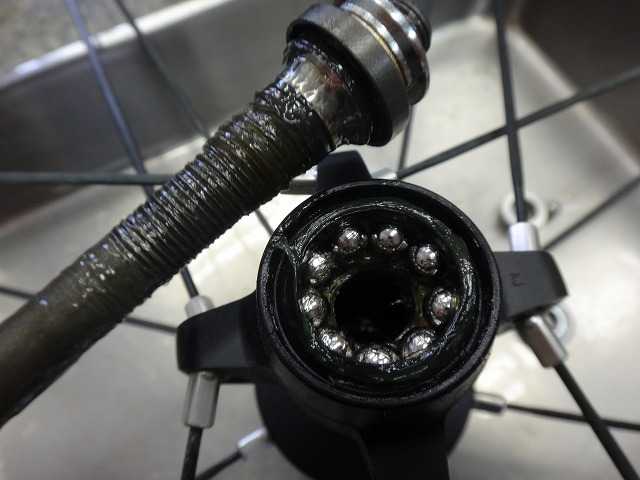
The front hub grease appeared to have no problems, but it's actually finished.
The grease components have evaporated.
The texture is crumbly with no viscosity.
If you think of grease as an oil-saturated sponge,
this had become like the leftover crumbs of a sponge with the oil completely drained out.
No wonder—it had been left alone for over 10 years.
→ I cleaned it and re-greased it.
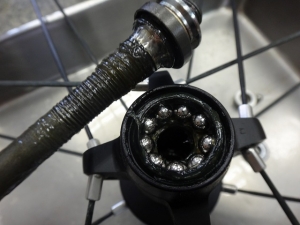
The rear hub grease was dirty, but
it retained its moisture.
The front hub certainly showed no obvious damage to the balls at first glance,
but once I wiped away the grease dirt, it was practically like new.
→ I cleaned it and re-greased it.
The roughness in the rotation of both wheels disappeared, and they now spin smoothly.
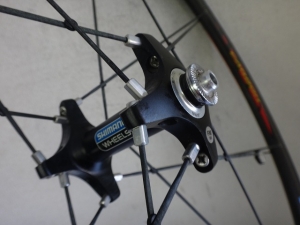
Wheels with this kind of cross-shaped flange
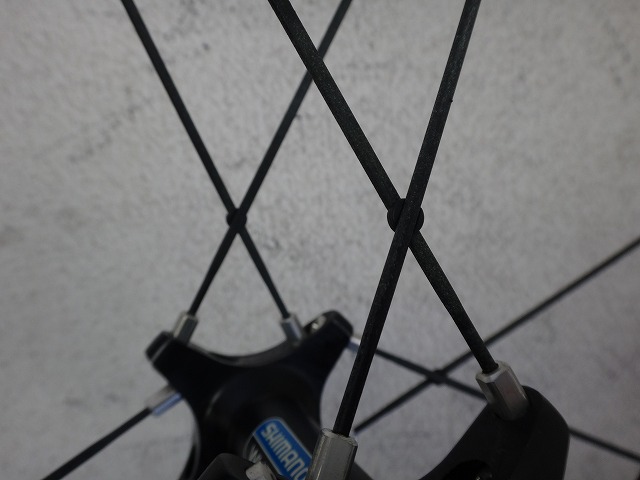
are laced with the final cross (though it's just the first cross).

It's equivalent to JIS-style lacing, and there's a reason for this.
One reason might be that the front wheel maintains the same spoke position relationships
regardless of which direction it's installed,
but in my opinion,
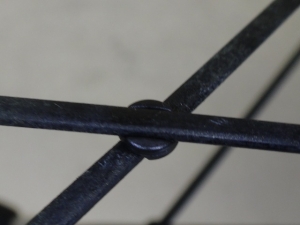
it's more likely because "only one type of noise prevention disc wedged in the cross is needed."
The disc has slots cut on both sides for spokes to fit into,
but if it were Italian-style or reverse Italian-style lacing,
you'd need different pieces with mirror-reversed slot directions.
(The formal name for this black disc—red blood cell, sorry, my Japanese is off—
is "spoke spacer.")
Characteristic surface rust that commonly appears on early Shimano spokes
(actually, it happens 100% of the time) is showing up,
but there's not much you can do about it.

Unlike the 7700, the 7701's rear hub has radial lacing on the freewheel side and

a wide flange design.
It would have been nice if the freewheel side had been a bit more large-flanged.
The very early Fulcrums are similar, but the 7700
has the maintenance advantage of having equal spoke lengths on both sides of the rear wheel (purely for maintenance purposes, mind you).
On the 7701, the freewheel side is 278mm and the non-freewheel side is 294mm, so
I think if they'd gone ahead and made the rear hub dimensions high-low,
it would have been quite transformed.
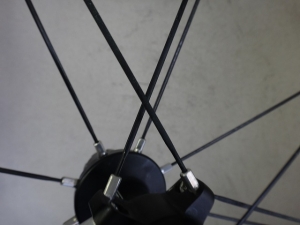
The final cross on the non-freewheel side
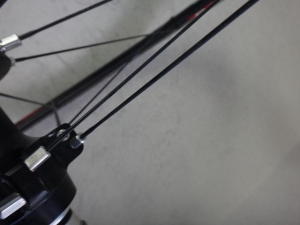
isn't laced due to the flange shape constraints—it's too close to lace.
With radial lacing on the freewheel side and a non-laced first cross on the non-freewheel side,
the anti-twist performance under hard pedaling seems low, and it actually is.
With this wheel, even when I tensioned the spokes properly,
the ride feel didn't change much (the snappiness didn't dramatically improve),
so I didn't do any additional tension adjustment.
Just to be clear, I do like this wheel.
The wind-flow sensation on the front wheel really is outstanding.

If complete wheels are supposed to have distinctive design from each maker,
then this is Shimano's masterpiece.
then I'd say the current C35 fits that bill.
The front hub has a cross-shaped flange with spokes that cross left and right,
creating a pair-spoke structure.
The 7700 has the same structure on the rear hub as well, but
due to wide flange fraud (first instance), the 7701
had its rear hub flange width and spoke arrangement changed.
The condition is remarkably good because it had been lying dormant in the corner of a shop for a long time.
According to the customer, the ride feel is "unreliable,"
but that's unavoidable given the obsession with using fewer spokes.
If you evaluate it for qualities other than snappiness and accept it as "that's just how it is,"
it's actually an interesting wheel.
The customer also requested an inspection,
and mentioned that the hubs might not be in good condition, so they wanted me to check them out.
Both wheels had no center offset, and only very slight runout.

The front hub grease appeared to have no problems, but it's actually finished.
The grease components have evaporated.
The texture is crumbly with no viscosity.
If you think of grease as an oil-saturated sponge,
this had become like the leftover crumbs of a sponge with the oil completely drained out.
No wonder—it had been left alone for over 10 years.
→ I cleaned it and re-greased it.
The rear hub grease was dirty, but
it retained its moisture.
The front hub certainly showed no obvious damage to the balls at first glance,
but once I wiped away the grease dirt, it was practically like new.
→ I cleaned it and re-greased it.
The roughness in the rotation of both wheels disappeared, and they now spin smoothly.
Wheels with this kind of cross-shaped flange
are laced with the final cross (though it's just the first cross).
It's equivalent to JIS-style lacing, and there's a reason for this.
One reason might be that the front wheel maintains the same spoke position relationships
regardless of which direction it's installed,
but in my opinion,
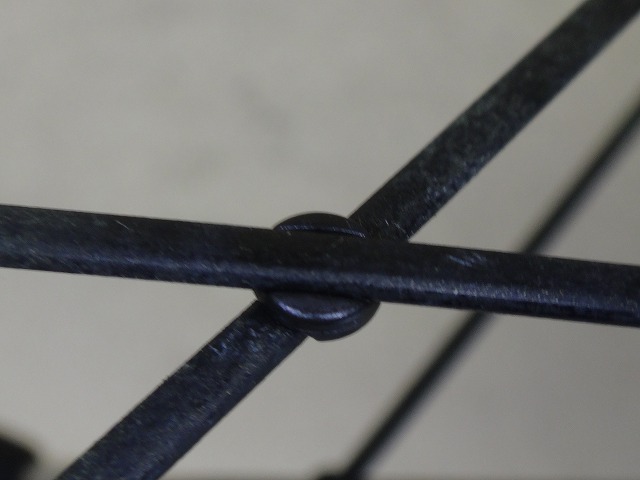
it's more likely because "only one type of noise prevention disc wedged in the cross is needed."
The disc has slots cut on both sides for spokes to fit into,
but if it were Italian-style or reverse Italian-style lacing,
you'd need different pieces with mirror-reversed slot directions.
(The formal name for this black disc—red blood cell, sorry, my Japanese is off—
is "spoke spacer.")
Characteristic surface rust that commonly appears on early Shimano spokes
(actually, it happens 100% of the time) is showing up,
but there's not much you can do about it.

Unlike the 7700, the 7701's rear hub has radial lacing on the freewheel side and

a wide flange design.
It would have been nice if the freewheel side had been a bit more large-flanged.
The very early Fulcrums are similar, but the 7700
has the maintenance advantage of having equal spoke lengths on both sides of the rear wheel (purely for maintenance purposes, mind you).
On the 7701, the freewheel side is 278mm and the non-freewheel side is 294mm, so
I think if they'd gone ahead and made the rear hub dimensions high-low,
it would have been quite transformed.

The final cross on the non-freewheel side

isn't laced due to the flange shape constraints—it's too close to lace.
With radial lacing on the freewheel side and a non-laced first cross on the non-freewheel side,
the anti-twist performance under hard pedaling seems low, and it actually is.
With this wheel, even when I tensioned the spokes properly,
the ride feel didn't change much (the snappiness didn't dramatically improve),
so I didn't do any additional tension adjustment.
Just to be clear, I do like this wheel.
The wind-flow sensation on the front wheel really is outstanding.