Another day of wheeling (and so on).
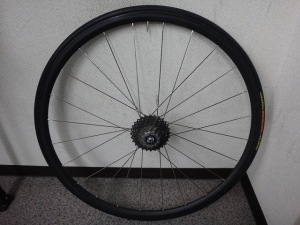
A customer left me a low-profile carbon rim wheelset. It's one I built myself years ago.
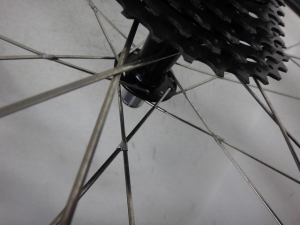
It's currently built with 24H full CX-RAY 46-spoke crossed lacing with tie-ins, but they want me to rebuild it as semi-competition (unequal spoke gauge on non-drive side).
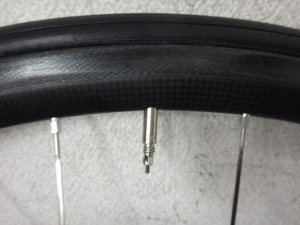
The tire was mounted with tubular tape, but apparently it shifts a bit under braking.
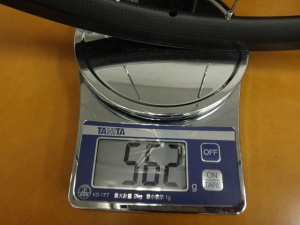
I removed the tire and sprocket, then cleaned off all the tape from the rim. For a rear wheel, it's surprisingly heavy.
Now I'm going to convert this to semi-competition, following a specific procedure.

↑Before the rebuild it looks like this, but
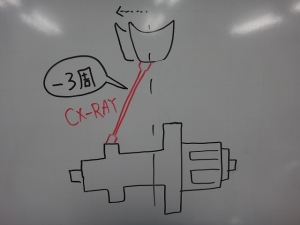
I cleanly remove the drive-side spokes, then loosen the non-drive-side nipples exactly three full turns each. The rim shifts toward the non-drive side at this point, but since the spoke tension is already released, that doesn't really matter.
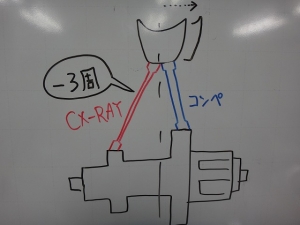
Next, from that state, I tension the drive side with competition-spec spokes. I bring the spoke tension to just under 95% of the final target. (The remaining tension rises automatically when I tension the non-drive side.) The reason I loosened the non-drive side is because otherwise the drive side can't be tensioned sufficiently. At this stage, I don't touch the non-drive-side nipples that I loosened by three turns.
I've now fully tensioned the drive side. The rim has shifted quite far toward the drive side. If true unequal-diameter lacing isn't a myth, then even after tightening the non-drive-side nipples back exactly three turns, the rim should still be offset toward the drive side. The amount I need to tension the non-drive side further to center it represents the difference in spoke tension between the full CX-RAY and semi-competition configurations. I say "spoke tension difference" because both use CX-RAY, but what really matters is the difference in spoke deflection.
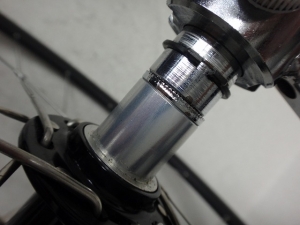
I've tightened the non-drive side three turns. If the drive-side spokes had been tensioned to the same level as before in full CX-RAY, the wheel center should now be true. But when I check the non-drive-side dimension against the drive side,
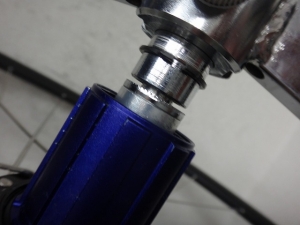
↑there's this much gap. Even though I "loosened exactly three turns," it's probably not definitely between 1079° and 1081°, and I'll admit I'm ignoring spoke material elongation (if I'd rebuilt the drive side with "fresh" CX-RAY to match the pre-rebuild tension, strictly speaking the wheel center wouldn't come out perfectly), but the actual result shouldn't show major differences.
At this state, the amount the non-drive-side nipple wraps around the spoke is the same as before the rebuild, but with the semi-competition configuration, I can tension the non-drive side unilaterally until this gap disappears.
I loosened the non-drive side three turns, tensioned the drive side without touching the non-drive side, then tightened it back three turns. Quite a bit of fine radial and lateral runout appeared. That tells me the geometry doesn't restore itself that mechanically.
In normal wheel building, I avoid introducing suchamateurish runout by making adjustments all over the place beforehand, so this was actually a refreshing experience.
Since there's lateral runout, the "temporary center" in the image above will naturally vary a little depending on the rim phase where I take measurements, but it's roughly like this.
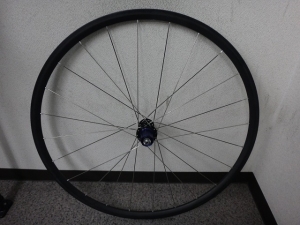
All built.
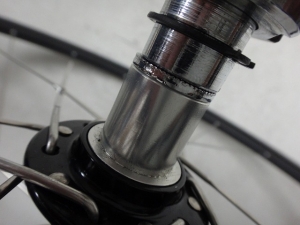
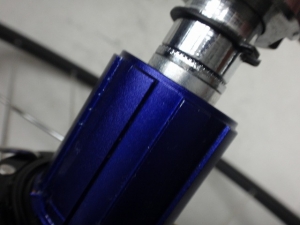
Since I did this wheel build as a verification exercise, it actually took longer than building one completely from scratch.
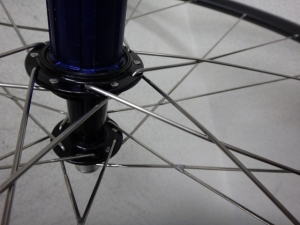
↑Both before and after the rebuild, I tension the spokes to the maximum that the rim tolerates. But since the spoke diameter is different, the deflection is completely different. The non-drive side could be tensioned with a straightforward increase, so the deflection dropped dramatically.
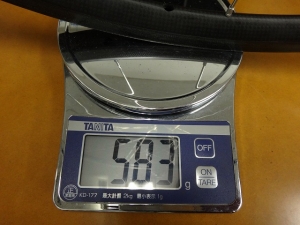
I won't deny that semi-competition wheels end up heavier than full CX-RAY. Of course they do. In this case it's 21g heavier, and with a low-profile rim at that—on a higher rim the difference might be under 20g. Whether you can feel that "20g heavier" difference while riding is, I'd say, basically impossible. But improved snap and wheel stiffness? Those you'll definitely notice.
What matters is that the improvements are perceptible (= major factors), while things you can't feel (= minor factors) aren't insignificant but shouldn't be pursued at the expense of the major factors—that's my philosophy. If you want a lightweight wheel, why not do left-right CX-RAY radial lacing and space-out the spokes from a 24H hub to build a 12H rear wheel? It'll have runout galore and excessive deflection, but if lightness is your primary concern, so what? That's an extreme, but fixating on minor factors is exactly that kind of thinking. In my view, things like non-drive-side radial lacing, broken-spoke unequal-spoke-count lacing, or narrow-flange hubs fall into the same category—in most cases even when they have merits, "merit < demerit." That said, small-wheeled bikes do benefit from narrow-flange front hubs due to spoke angle considerations, and in track and TT racing air resistance can't be ignored (heavy components are worth it for that!), so conditions change what constitutes major and minor factors. You need enough flexibility to recognize that sometimes skipping the semi-competition approach is correct. For instance, if the rider weighs under 50kg or you're building a 32-spoke rear wheel, taking the lightness of full CX-RAY might actually be better.
Being able to imagine where this sweet spot lies is a critical point in hand-built wheels. Actually, I hardly ever consciously vary spoke tension based on rider weight. My baseline is "as tight as the rim allows," and I rarely feel the need to intentionally build something loose. Make those adjustments with tire pressure and frame choice instead. There's no reason to deliberately build a wheel with poor responsiveness. You hear "comfortable wheel" all the time, but if hand-built wheels were the only option still available, the wheels I'd build with my recipe and tension would definitely get called "What's wrong with you, building such a stiff wheel?" in that alternate reality. But in reality, off-the-shelf wheels with radially pure longitudinal stiffness far beyond hand-built standards exist everywhere now. So customers who own wheels like Shimano Dura-Ace C24 or Campagnolo Racing Zero often tell me things like, "Hand-built wheels have just the right rigidity—not too stiff," and every time I have to say, "Actually, these are quite stiff for hand-built..."
The stiffest wheel I own, by far, is a Mavic Cosmic Carbone Ultimate. But just today, a customer who also owns the same Cosmic Carbone Ultimate told me the "Nomu Lab Wheel 06 (provisional name)" has the perfect ride feel with just the right "moderate" springiness. ...Uh, that "moderate" springiness wasn't intentional. Nomu Lab Wheel 06 is built with the rim's limits in mind, maxed out on tension, so ideally I'd want it criticized as "stiff!" The Cosmic Carbone Ultimate is the one that's strange (in a good way).
Because of—or thanks to—off-the-shelf wheels, the rider's baseline expectations for wheel stiffness have been pushed way up. So there's no need to intentionally build loose wheels.
This is tricky—what tag should I use? "Nomu Lab Wheels," "Wheel Talk," or "Hand-Built vs. Off-the-Shelf"...
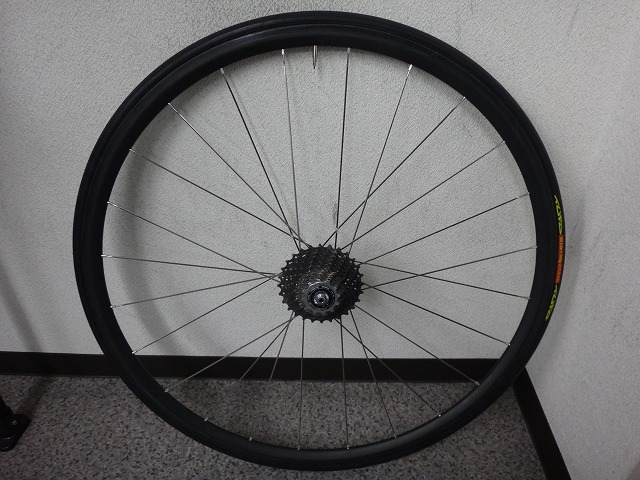
A customer left me a low-profile carbon rim wheelset. It's one I built myself years ago.

It's currently built with 24H full CX-RAY 46-spoke crossed lacing with tie-ins, but they want me to rebuild it as semi-competition (unequal spoke gauge on non-drive side).
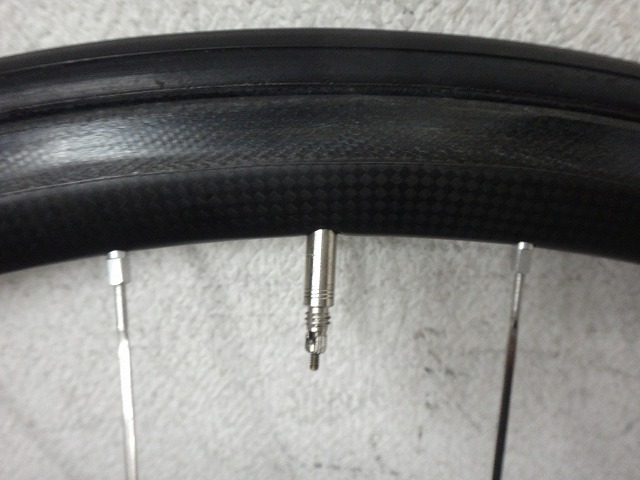
The tire was mounted with tubular tape, but apparently it shifts a bit under braking.
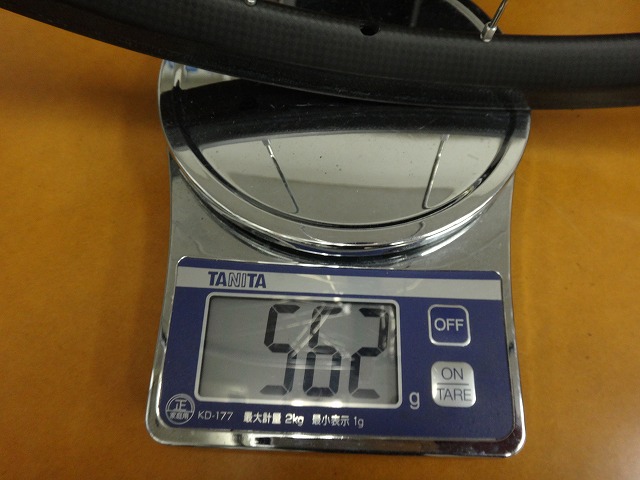
I removed the tire and sprocket, then cleaned off all the tape from the rim. For a rear wheel, it's surprisingly heavy.
Now I'm going to convert this to semi-competition, following a specific procedure.
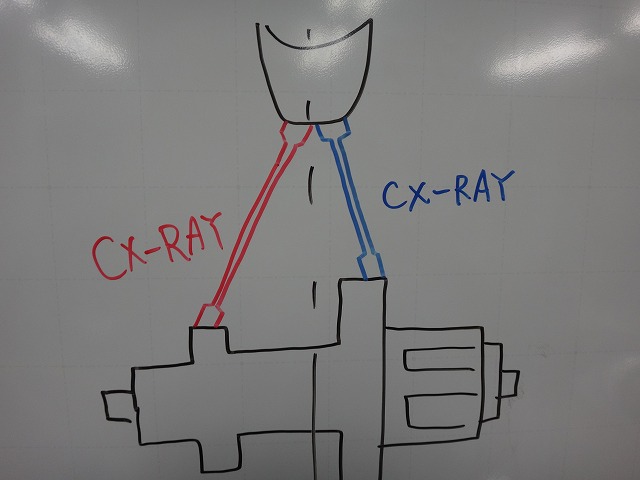
↑Before the rebuild it looks like this, but
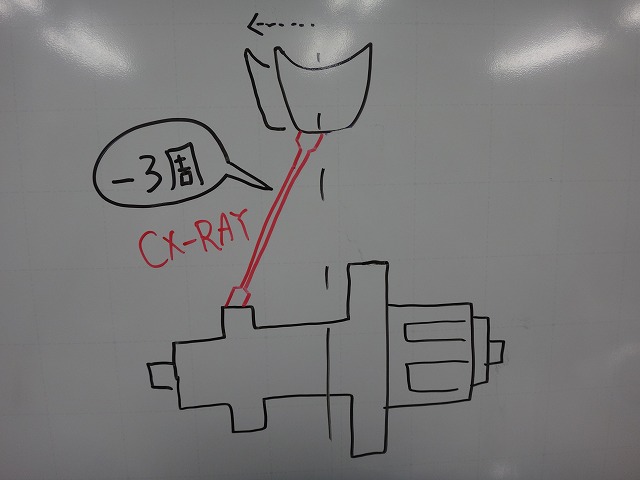
I cleanly remove the drive-side spokes, then loosen the non-drive-side nipples exactly three full turns each. The rim shifts toward the non-drive side at this point, but since the spoke tension is already released, that doesn't really matter.

Next, from that state, I tension the drive side with competition-spec spokes. I bring the spoke tension to just under 95% of the final target. (The remaining tension rises automatically when I tension the non-drive side.) The reason I loosened the non-drive side is because otherwise the drive side can't be tensioned sufficiently. At this stage, I don't touch the non-drive-side nipples that I loosened by three turns.
I've now fully tensioned the drive side. The rim has shifted quite far toward the drive side. If true unequal-diameter lacing isn't a myth, then even after tightening the non-drive-side nipples back exactly three turns, the rim should still be offset toward the drive side. The amount I need to tension the non-drive side further to center it represents the difference in spoke tension between the full CX-RAY and semi-competition configurations. I say "spoke tension difference" because both use CX-RAY, but what really matters is the difference in spoke deflection.
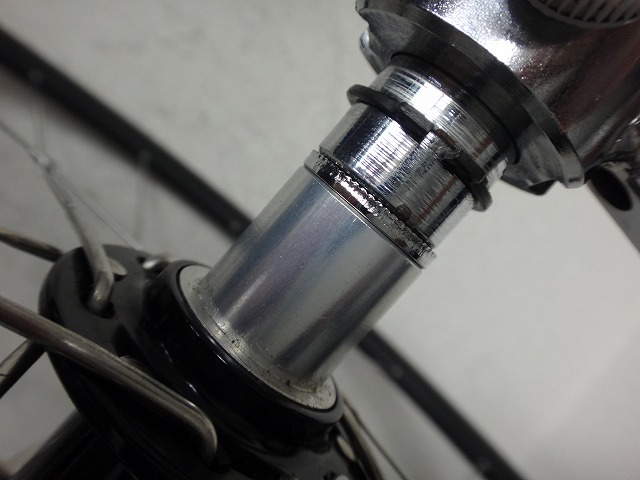
I've tightened the non-drive side three turns. If the drive-side spokes had been tensioned to the same level as before in full CX-RAY, the wheel center should now be true. But when I check the non-drive-side dimension against the drive side,

↑there's this much gap. Even though I "loosened exactly three turns," it's probably not definitely between 1079° and 1081°, and I'll admit I'm ignoring spoke material elongation (if I'd rebuilt the drive side with "fresh" CX-RAY to match the pre-rebuild tension, strictly speaking the wheel center wouldn't come out perfectly), but the actual result shouldn't show major differences.
At this state, the amount the non-drive-side nipple wraps around the spoke is the same as before the rebuild, but with the semi-competition configuration, I can tension the non-drive side unilaterally until this gap disappears.
I loosened the non-drive side three turns, tensioned the drive side without touching the non-drive side, then tightened it back three turns. Quite a bit of fine radial and lateral runout appeared. That tells me the geometry doesn't restore itself that mechanically.
In normal wheel building, I avoid introducing such
Since there's lateral runout, the "temporary center" in the image above will naturally vary a little depending on the rim phase where I take measurements, but it's roughly like this.

All built.
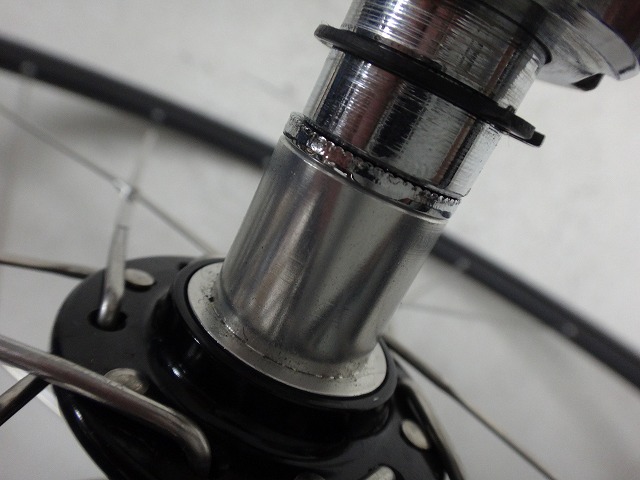
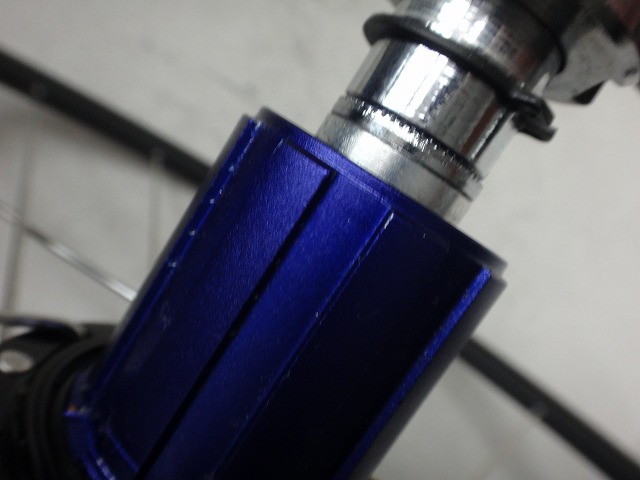
Since I did this wheel build as a verification exercise, it actually took longer than building one completely from scratch.
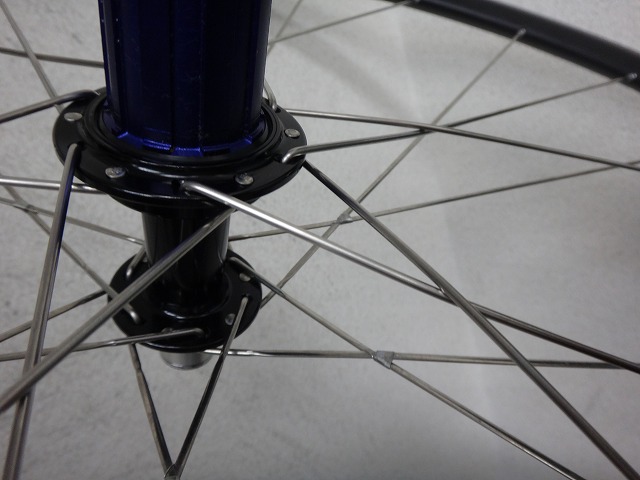
↑Both before and after the rebuild, I tension the spokes to the maximum that the rim tolerates. But since the spoke diameter is different, the deflection is completely different. The non-drive side could be tensioned with a straightforward increase, so the deflection dropped dramatically.

I won't deny that semi-competition wheels end up heavier than full CX-RAY. Of course they do. In this case it's 21g heavier, and with a low-profile rim at that—on a higher rim the difference might be under 20g. Whether you can feel that "20g heavier" difference while riding is, I'd say, basically impossible. But improved snap and wheel stiffness? Those you'll definitely notice.
What matters is that the improvements are perceptible (= major factors), while things you can't feel (= minor factors) aren't insignificant but shouldn't be pursued at the expense of the major factors—that's my philosophy. If you want a lightweight wheel, why not do left-right CX-RAY radial lacing and space-out the spokes from a 24H hub to build a 12H rear wheel? It'll have runout galore and excessive deflection, but if lightness is your primary concern, so what? That's an extreme, but fixating on minor factors is exactly that kind of thinking. In my view, things like non-drive-side radial lacing, broken-spoke unequal-spoke-count lacing, or narrow-flange hubs fall into the same category—in most cases even when they have merits, "merit < demerit." That said, small-wheeled bikes do benefit from narrow-flange front hubs due to spoke angle considerations, and in track and TT racing air resistance can't be ignored (heavy components are worth it for that!), so conditions change what constitutes major and minor factors. You need enough flexibility to recognize that sometimes skipping the semi-competition approach is correct. For instance, if the rider weighs under 50kg or you're building a 32-spoke rear wheel, taking the lightness of full CX-RAY might actually be better.
Being able to imagine where this sweet spot lies is a critical point in hand-built wheels. Actually, I hardly ever consciously vary spoke tension based on rider weight. My baseline is "as tight as the rim allows," and I rarely feel the need to intentionally build something loose. Make those adjustments with tire pressure and frame choice instead. There's no reason to deliberately build a wheel with poor responsiveness. You hear "comfortable wheel" all the time, but if hand-built wheels were the only option still available, the wheels I'd build with my recipe and tension would definitely get called "What's wrong with you, building such a stiff wheel?" in that alternate reality. But in reality, off-the-shelf wheels with radially pure longitudinal stiffness far beyond hand-built standards exist everywhere now. So customers who own wheels like Shimano Dura-Ace C24 or Campagnolo Racing Zero often tell me things like, "Hand-built wheels have just the right rigidity—not too stiff," and every time I have to say, "Actually, these are quite stiff for hand-built..."
The stiffest wheel I own, by far, is a Mavic Cosmic Carbone Ultimate. But just today, a customer who also owns the same Cosmic Carbone Ultimate told me the "Nomu Lab Wheel 06 (provisional name)" has the perfect ride feel with just the right "moderate" springiness. ...Uh, that "moderate" springiness wasn't intentional. Nomu Lab Wheel 06 is built with the rim's limits in mind, maxed out on tension, so ideally I'd want it criticized as "stiff!" The Cosmic Carbone Ultimate is the one that's strange (in a good way).
Because of—or thanks to—off-the-shelf wheels, the rider's baseline expectations for wheel stiffness have been pushed way up. So there's no need to intentionally build loose wheels.
This is tricky—what tag should I use? "Nomu Lab Wheels," "Wheel Talk," or "Hand-Built vs. Off-the-Shelf"...