2:1 Lacing and F3 Spokes Discussion
"You say 'unbalanced,' but
the resultant force of the F1 spoke and the adjacent crossing F2 spoke
is directly opposed by the spoke on the non-freewheel side,
so there's no imbalance here, is there?
Aren't you getting tunnel vision by obsessing over the crossed spokes?"
—I received this comment.
Regarding the text I highlighted in red:
That's correct, but

↑unlike radial lacing with every other spoke removed alternately,
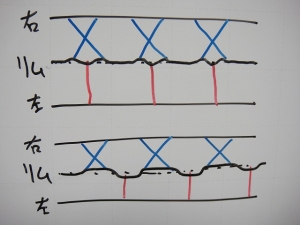
↑the F3 spoke balanced and unbalanced types have completely different limits
in how far you can dial out lateral runout.
By "balance" here, I don't mean "overall wheel balance"
but rather "lateral deformation of the rim."
Rather than narrow vision,
I'd appreciate it if you'd understand that
"I'm only addressing this particular aspect here."
Next,
"Your description regarding Fulcrum is also incorrect.
(I'll phrase it this way deliberately) The early models are evenly-spaced balanced type,
from a certain period onward they switched to uneven-spacing unbalanced type
(quasi-G3, if you will), right?"
—Regarding this:
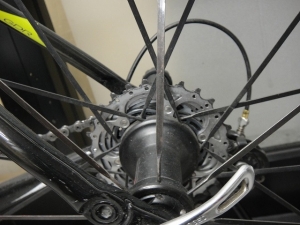
↑The image I used in the article is the original Racing 3, which is evenly-spaced balanced type.
The current model is
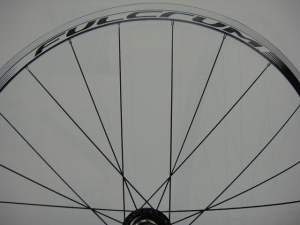
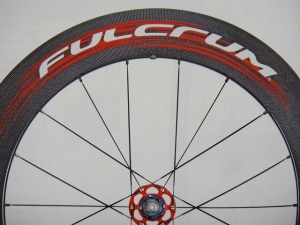
Even the latest model
has steel spoke evenly-spaced models that are balanced type, but...
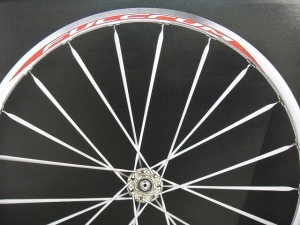
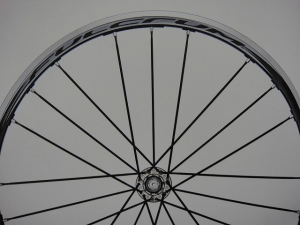
The aluminum spoke model with a phase gap
on the non-freewheel side
was indeed unbalanced type!
You're absolutely right—I made an error. Thank you for pointing that out.
I've added a correction (→here)
Incidentally, the first model to introduce the phase gap
was Racing 1 and Zero with 2WAY-FIT.
(This is when Racing 1 also switched to aluminum spokes
and the front hub shell became carbon)
Since then, even non-2WAY-FIT models have switched to the gap phase.
Finally.
"That said, the 2:1 wheel in the other article really is a silly pattern—
putting the crossed spokes into adjacent rim holes"
—regarding this:
That's actually what I wanted to write about.
Since I had hand-built and factory-assembled wheels with F3 spoke unbalanced-type 2:1 lacing
come in one after another, I thought it was the perfect opportunity.
Since I forgot to write this in the article, I'll note it here:
The biggest drawback of 2:1 lacing, in my view, is that
"the spokes on the non-freewheel side tend to break easily."
Compared to that major issue, the difficulty of dialing out lateral runout with unbalanced type is minor...
or so I thought, but then I encountered actual real-world examples where it became unusable,
so it turned out to be quite a significant factor.
"It's a problem level that needs to be overcome to make something saleable."
Considering all this, with Fulcrum—and I also wrote this in the linked article—
they properly meet the requirement of having a "rigid rim,"
meaning a rim that resists deformation from spoke tension.
Because I've done rim truing on Racing-whatevers with phase gaps
countless times, and I've never once thought
"Ah, this thing's unbalanced type, so runout adjustment is tough."
(With 2:1 lacing it definitely is tougher, that's true.
But compared to the old evenly-spaced aluminum spoke models,
it doesn't particularly make you think "unbalanced type" about it—that's what I mean.)
"You say 'unbalanced,' but
the resultant force of the F1 spoke and the adjacent crossing F2 spoke
is directly opposed by the spoke on the non-freewheel side,
so there's no imbalance here, is there?
Aren't you getting tunnel vision by obsessing over the crossed spokes?"
—I received this comment.
Regarding the text I highlighted in red:
That's correct, but
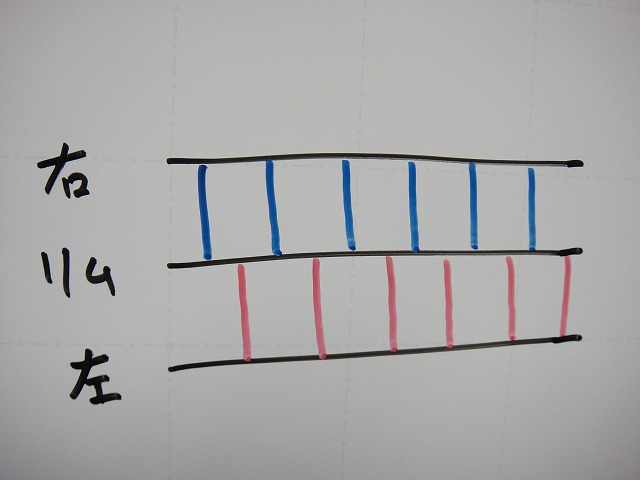
↑unlike radial lacing with every other spoke removed alternately,
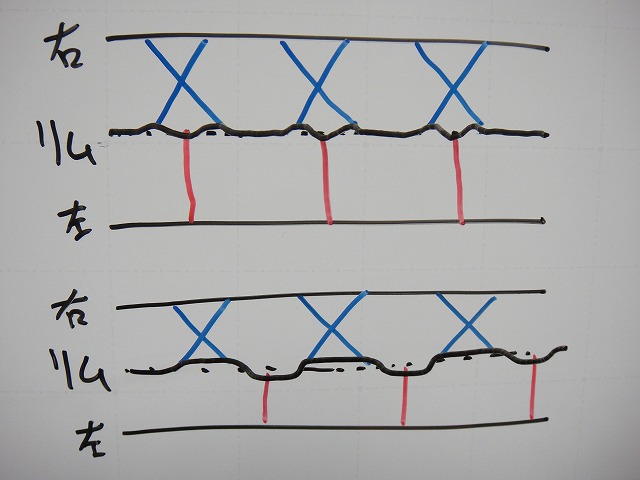
↑the F3 spoke balanced and unbalanced types have completely different limits
in how far you can dial out lateral runout.
By "balance" here, I don't mean "overall wheel balance"
but rather "lateral deformation of the rim."
Rather than narrow vision,
I'd appreciate it if you'd understand that
"I'm only addressing this particular aspect here."
Next,
"Your description regarding Fulcrum is also incorrect.
(I'll phrase it this way deliberately) The early models are evenly-spaced balanced type,
from a certain period onward they switched to uneven-spacing unbalanced type
(quasi-G3, if you will), right?"
—Regarding this:
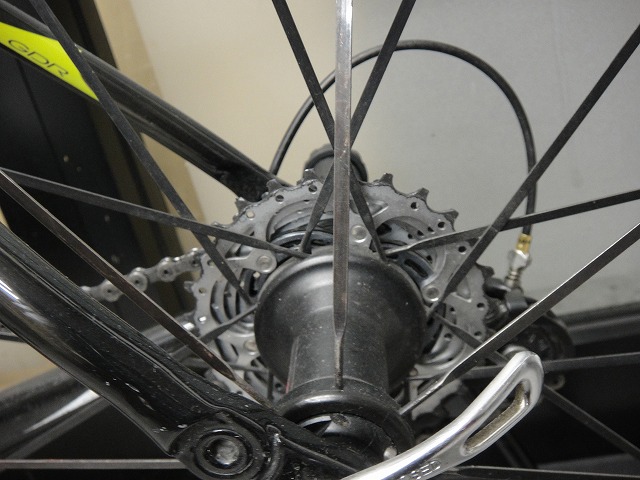
↑The image I used in the article is the original Racing 3, which is evenly-spaced balanced type.
The current model is
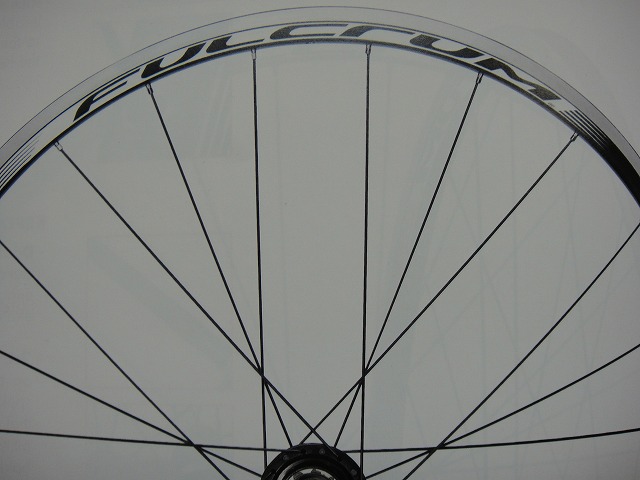
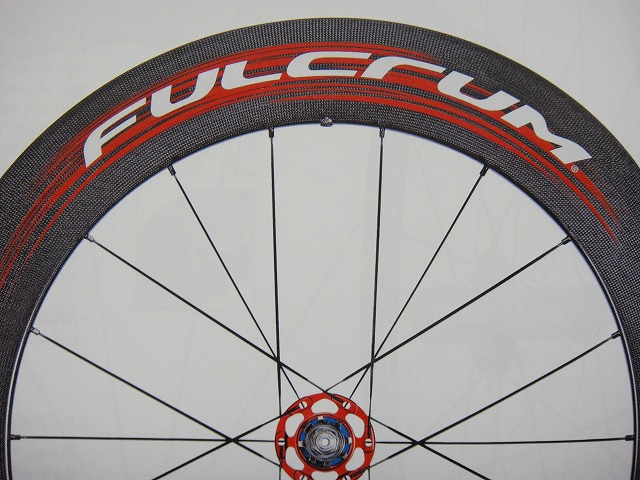
Even the latest model
has steel spoke evenly-spaced models that are balanced type, but...

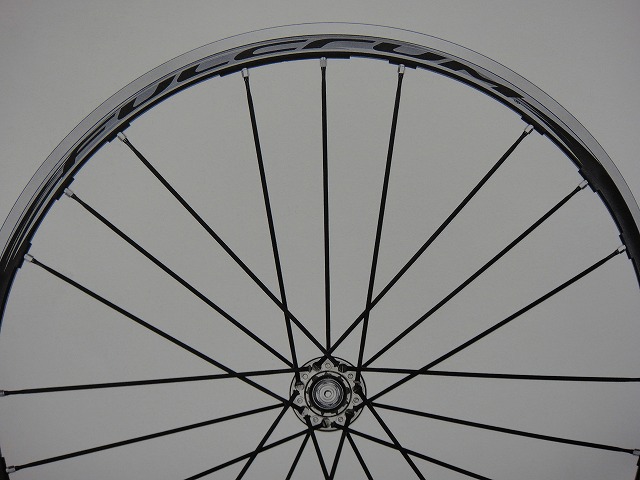
The aluminum spoke model with a phase gap
on the non-freewheel side
was indeed unbalanced type!
You're absolutely right—I made an error. Thank you for pointing that out.
I've added a correction (→here)
Incidentally, the first model to introduce the phase gap
was Racing 1 and Zero with 2WAY-FIT.
(This is when Racing 1 also switched to aluminum spokes
and the front hub shell became carbon)
Since then, even non-2WAY-FIT models have switched to the gap phase.
Finally.
"That said, the 2:1 wheel in the other article really is a silly pattern—
putting the crossed spokes into adjacent rim holes"
—regarding this:
That's actually what I wanted to write about.
Since I had hand-built and factory-assembled wheels with F3 spoke unbalanced-type 2:1 lacing
come in one after another, I thought it was the perfect opportunity.
Since I forgot to write this in the article, I'll note it here:
The biggest drawback of 2:1 lacing, in my view, is that
"the spokes on the non-freewheel side tend to break easily."
Compared to that major issue, the difficulty of dialing out lateral runout with unbalanced type is minor...
or so I thought, but then I encountered actual real-world examples where it became unusable,
so it turned out to be quite a significant factor.
"It's a problem level that needs to be overcome to make something saleable."
Considering all this, with Fulcrum—and I also wrote this in the linked article—
they properly meet the requirement of having a "rigid rim,"
meaning a rim that resists deformation from spoke tension.
Because I've done rim truing on Racing-whatevers with phase gaps
countless times, and I've never once thought
"Ah, this thing's unbalanced type, so runout adjustment is tough."
(With 2:1 lacing it definitely is tougher, that's true.
But compared to the old evenly-spaced aluminum spoke models,
it doesn't particularly make you think "unbalanced type" about it—that's what I mean.)