Another wheel day (details omitted).
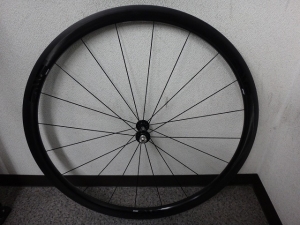
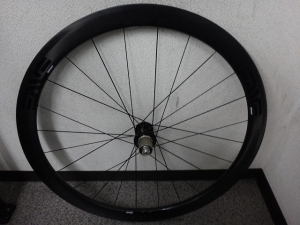
I built a wheel using ENVE's SES (Smart Envi System) 3.4 rim.
The "3.4" is the name for a set pairing the 35mm-high front 20H rim and
the 45mm-high rear 24H rim.
Since the rear rim isn't an offset rim and they're sold separately,
you don't strictly have to follow this pairing,
but the 35mm rim only comes in 20H and the 45mm only in 24H,
and the rim widths differ front-to-rear by design,
so it's safer to build them as SES intended.
Smart Envi, compared to the traditional Envi rim,
is presented as the result of rigorously optimizing rim cross-section shape and width from an aerodynamic standpoint,
but I suspect aerodynamics is just the public-facing story, and they actually got spooked by
buckling failures and settled on this shape out of caution.
ZIPP already did something similar with the Firecrest,
so honestly, this is just copying their homework.
Firecrest touts mainly aerodynamic benefits too, but neither ZIPP nor ENVE
will touch the real issue: that rim weight increases significantly.
The older ENVE rims had an exceptionally good height-to-weight ratio
(for example, with the 1-45, you couldn't easily find another brand's rim of similar height that was comparably light),
but they've gradually gotten heavier over the years as they got nervous about failure reports—
though I respect that they honestly update the specs in their catalogs—
so switching to the SES as the main lineup might actually be a smart move.
Broadening rim width to improve buckling resistance isn't unique to ENVE or ZIPP,
so I'm not criticizing them.
A dramatic reduction in failure cases is a genuine performance improvement.
It's simply that they've weighted this factor more heavily in their decision-making.
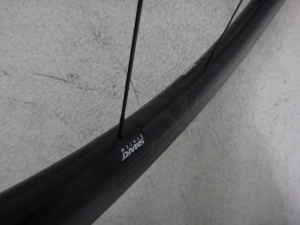
These rims are quite "boxy."
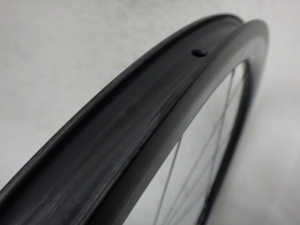
By the way, this build is WO spec.
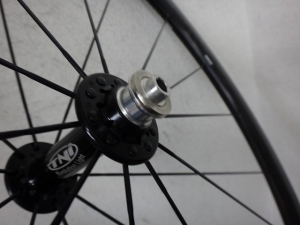
Front wheel: Evolite hub 20H, black CX-RAY outpoke radial lacing,
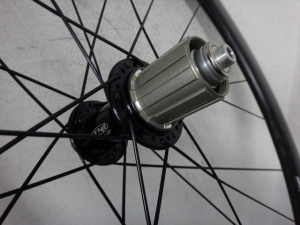
Rear wheel: Evolite hub 24H, black in a half-comp 4-cross lacing pattern.
I'll do the truing later.
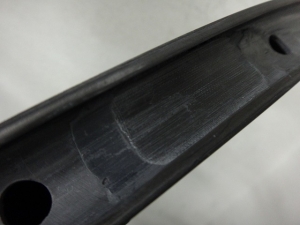
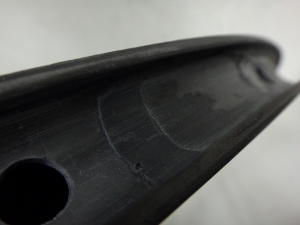
The valve hole caps are bonded on pretty aggressively.
The caps themselves are also thicker and larger than the old ones.
This doesn't affect a WO rim, but with older rims,
if you taped on a tubular tire and then peeled off the tape,
the cap could potentially lift.
With the current model, that basically shouldn't happen.
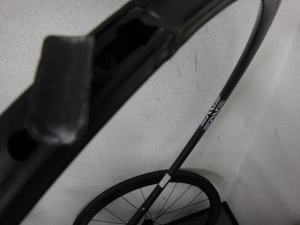
↑This is an ENVE 1-25, but
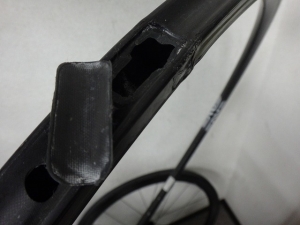
↑the cap came off.
In this case, it buckled right at the valve hole and
the cap popped off from the shock of the rim failure itself—
the tape didn't pull it off.
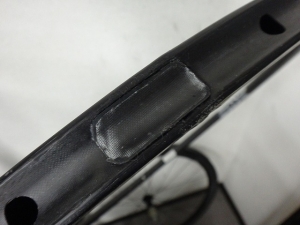
↑It probably looked something like this.


I built a wheel using ENVE's SES (Smart Envi System) 3.4 rim.
The "3.4" is the name for a set pairing the 35mm-high front 20H rim and
the 45mm-high rear 24H rim.
Since the rear rim isn't an offset rim and they're sold separately,
you don't strictly have to follow this pairing,
but the 35mm rim only comes in 20H and the 45mm only in 24H,
and the rim widths differ front-to-rear by design,
so it's safer to build them as SES intended.
Smart Envi, compared to the traditional Envi rim,
is presented as the result of rigorously optimizing rim cross-section shape and width from an aerodynamic standpoint,
but I suspect aerodynamics is just the public-facing story, and they actually got spooked by
buckling failures and settled on this shape out of caution.
ZIPP already did something similar with the Firecrest,
so honestly, this is just copying their homework.
Firecrest touts mainly aerodynamic benefits too, but neither ZIPP nor ENVE
will touch the real issue: that rim weight increases significantly.
The older ENVE rims had an exceptionally good height-to-weight ratio
(for example, with the 1-45, you couldn't easily find another brand's rim of similar height that was comparably light),
but they've gradually gotten heavier over the years as they got nervous about failure reports—
though I respect that they honestly update the specs in their catalogs—
so switching to the SES as the main lineup might actually be a smart move.
Broadening rim width to improve buckling resistance isn't unique to ENVE or ZIPP,
so I'm not criticizing them.
A dramatic reduction in failure cases is a genuine performance improvement.
It's simply that they've weighted this factor more heavily in their decision-making.
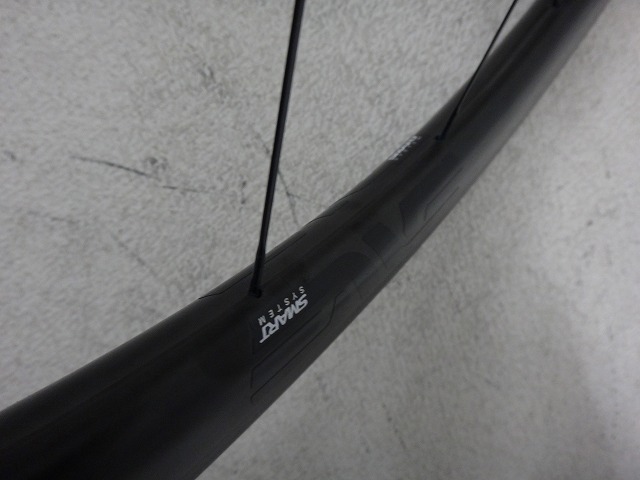
These rims are quite "boxy."
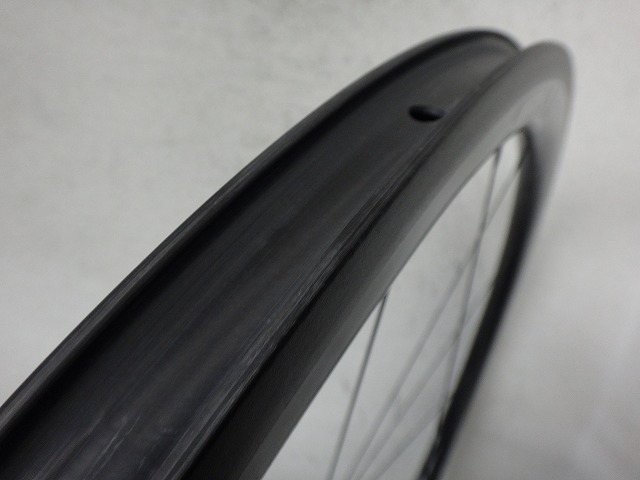
By the way, this build is WO spec.
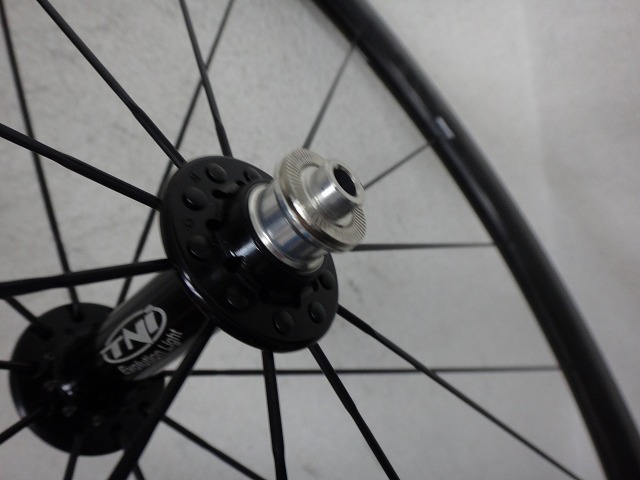
Front wheel: Evolite hub 20H, black CX-RAY outpoke radial lacing,
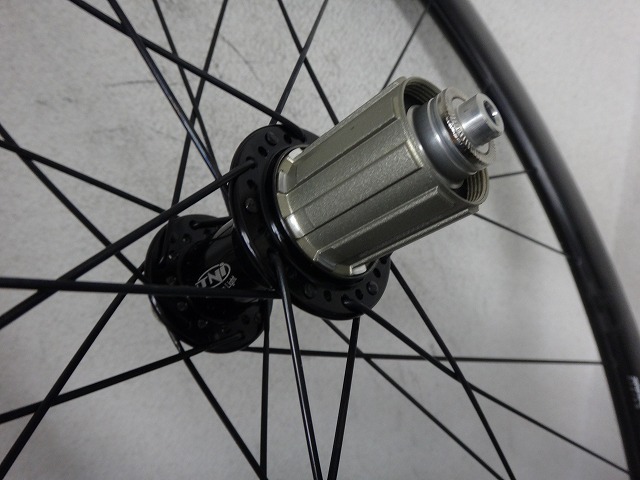
Rear wheel: Evolite hub 24H, black in a half-comp 4-cross lacing pattern.
I'll do the truing later.
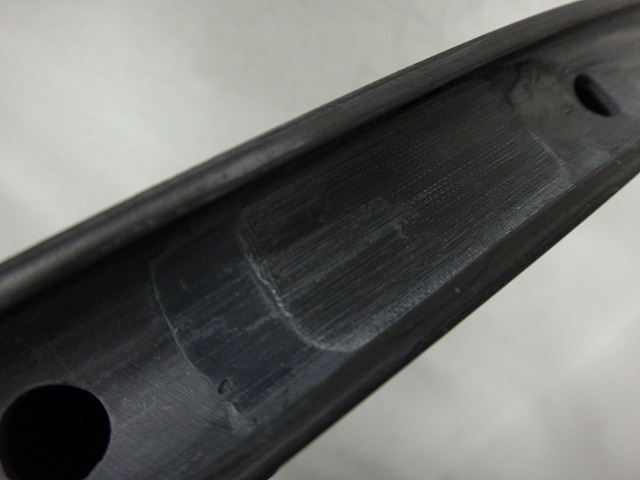
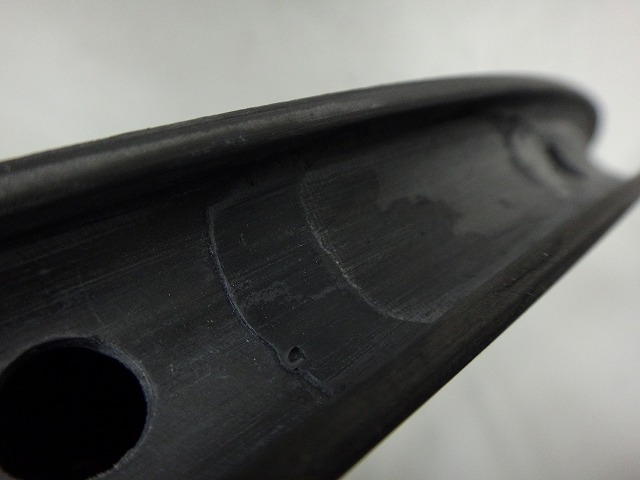
The valve hole caps are bonded on pretty aggressively.
The caps themselves are also thicker and larger than the old ones.
This doesn't affect a WO rim, but with older rims,
if you taped on a tubular tire and then peeled off the tape,
the cap could potentially lift.
With the current model, that basically shouldn't happen.

↑This is an ENVE 1-25, but
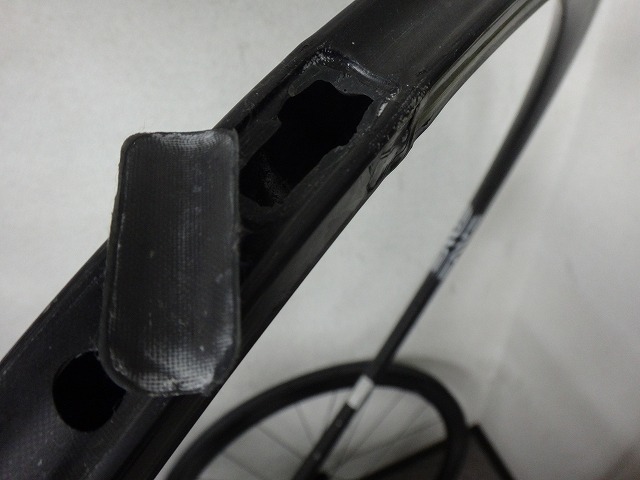
↑the cap came off.
In this case, it buckled right at the valve hole and
the cap popped off from the shock of the rim failure itself—
the tape didn't pull it off.

↑It probably looked something like this.