Another day of wheel building (and so on).
But first.
I built a wheel with an ALEXRIMS R390 rim, and the recent R390 is a completely different animal from before—the seam treatment has gotten substantially better.
Aluminum rims are manufactured by bending curtain-rail-like material and joining it, but with small-diameter rims, the difference between inner and outer circumference is large, or rather the curvature is tight, so the seam treatment tends to be rough.
The R390 20-inch rim I built today had precision that didn't betray its small inner diameter at all.
I'm praising it, but what if only these two I have on hand happen to be the good ones?
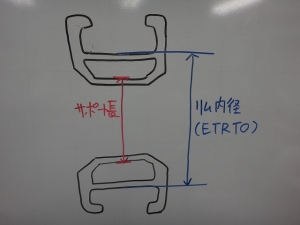
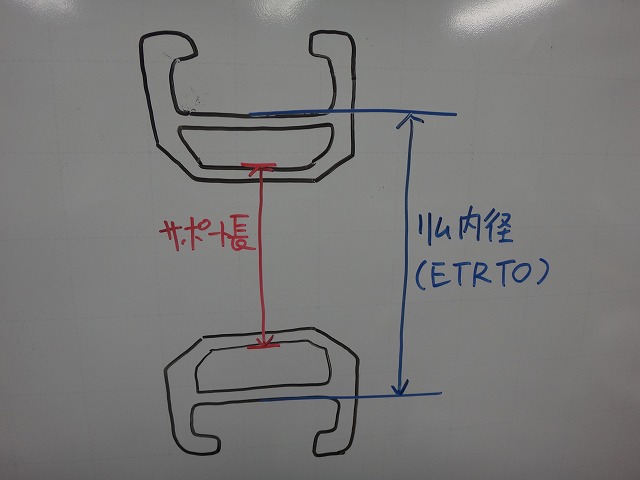
"20-inch rim" actually comes in two types: WO rims and HE rims, and these have different rim inner diameters (the blue line in the diagram above).
WO 20-inch is 451mm, HE 20-inch is 406mm—they're completely different standards.
Roughly speaking, WO is for skinny road tires, while HE is for the larger-volume MTB-style tires.
Rim inner diameter is determined by the standard, but the spoke support length shown in the diagram above (red line) varies depending on rim height and nipple type. This is the number you actually need to calculate spoke length.
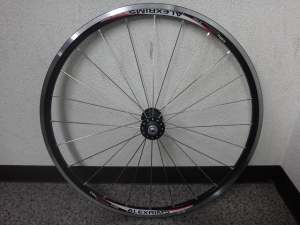
So I built a wheel with the 451mm WO standard R390 rim.

Front wheel: HB-9000 24H all-Campagnolo outpoke radial lace,
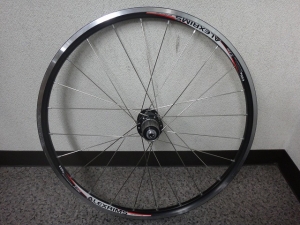
Rear wheel: FH-9000 24H all-Campagnolo 4-cross lace, no crossing guide.
This time all-Campagnolo 1.8mm (15 gauge) plain spokes.
This is per customer request, but if they hadn't specified anything, I'd normally go for 14 gauge Competition. Since I can't source short Competition spokes for this wheel, I'd end up using 15 gauge Champion anyway. So if my customer figured that out and specified all-Campagnolo 15 gauge themselves, that's sharp thinking.
Color was open, so I went with silver.
The nipples will always be in contact with the brass ferrule, so rather than worrying about galvanic corrosion and switching to brass nipples... I actually chose aluminum nipples instead, which resist that problem.
(Though I'm just using my usual ones anyway)
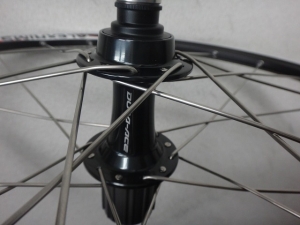
When the rim is smaller than 20-inch or the hub flange dimensions are large, lacing the final spoke crossing gets tricky, so I build without crossing. This time I had plenty of room, so I wove it in.
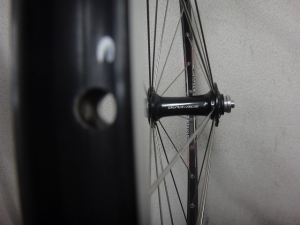
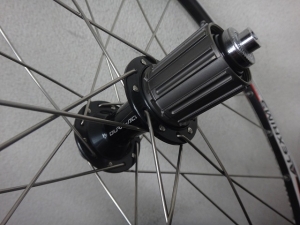
I build with the hub shell phase visible from the valve hole aligned to the DURA-ACE marking location, but this is something I do on my own initiative and has nothing to do with performance.
With Shimano's factory-built wheels, the phase visible from the valve hole is actually on the opposite side from where the grade name is written—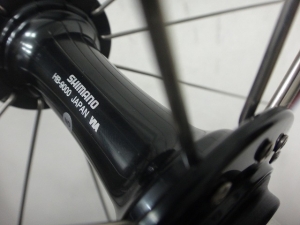 right at this position.
Since I knowingly chose the DURA-ACE side for the valve hole, please don't worry about it.
The Dura-Ace hub was brought in by the customer, and that's also an excellent choice.
Small-diameter wheels have higher hub rotation counts per distance traveled than large-diameter wheels, and since the spokes are shorter, they transmit road impacts very well.
(That's why many small-wheeled frames have suspension)
Another consideration is that with the hub sitting close to the road surface, it's more prone to water ingress from splashing and mud.
What holds up well against these conditions is a cup-and-cone bearing hub with a high-quality water-resistant seal,
and right now I think the Dura-Ace hub is the toughest hub under these conditions.
The Chris King hub is also good, but its seals aren't quite as robust as Dura-Ace's (in exchange, it spins lighter), and the bearing balls are smaller than Dura-Ace's, so it's a close second.
But first.
I built a wheel with an ALEXRIMS R390 rim, and the recent R390 is a completely different animal from before—the seam treatment has gotten substantially better.
Aluminum rims are manufactured by bending curtain-rail-like material and joining it, but with small-diameter rims, the difference between inner and outer circumference is large, or rather the curvature is tight, so the seam treatment tends to be rough.
The R390 20-inch rim I built today had precision that didn't betray its small inner diameter at all.
"20-inch rim" actually comes in two types: WO rims and HE rims, and these have different rim inner diameters (the blue line in the diagram above).
WO 20-inch is 451mm, HE 20-inch is 406mm—they're completely different standards.
Roughly speaking, WO is for skinny road tires, while HE is for the larger-volume MTB-style tires.
Rim inner diameter is determined by the standard, but the spoke support length shown in the diagram above (red line) varies depending on rim height and nipple type. This is the number you actually need to calculate spoke length.
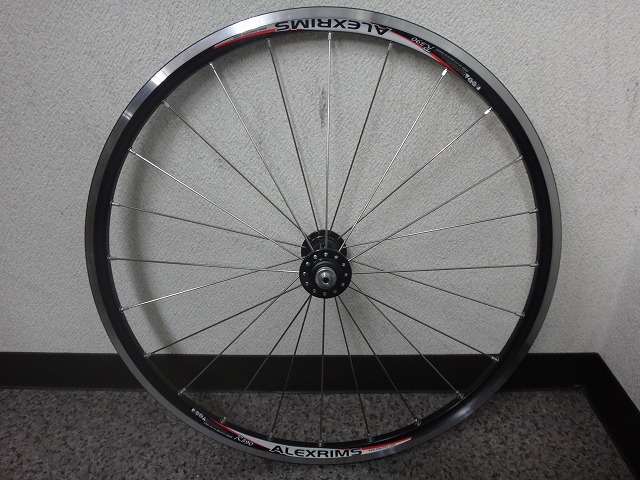
So I built a wheel with the 451mm WO standard R390 rim.
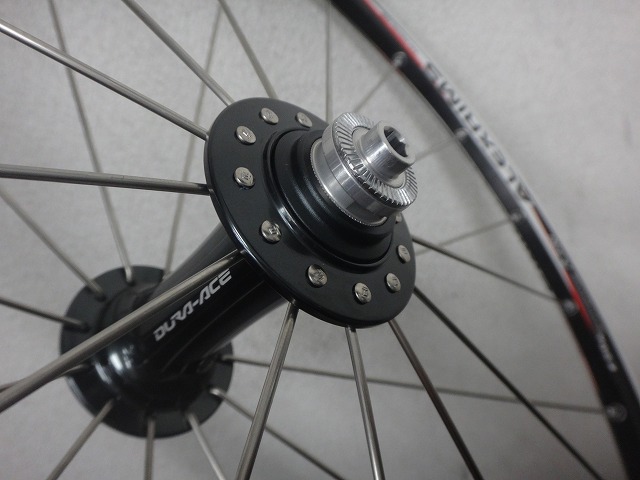
Front wheel: HB-9000 24H all-Campagnolo outpoke radial lace,

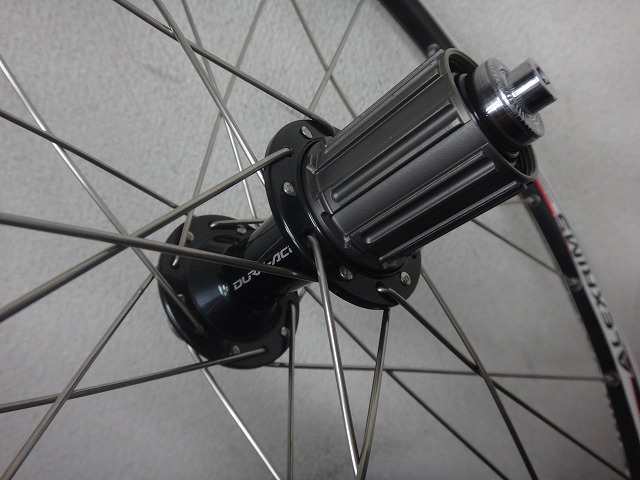
Rear wheel: FH-9000 24H all-Campagnolo 4-cross lace, no crossing guide.
This time all-Campagnolo 1.8mm (15 gauge) plain spokes.
This is per customer request, but if they hadn't specified anything, I'd normally go for 14 gauge Competition. Since I can't source short Competition spokes for this wheel, I'd end up using 15 gauge Champion anyway. So if my customer figured that out and specified all-Campagnolo 15 gauge themselves, that's sharp thinking.
Color was open, so I went with silver.
The nipples will always be in contact with the brass ferrule, so rather than worrying about galvanic corrosion and switching to brass nipples... I actually chose aluminum nipples instead, which resist that problem.
(Though I'm just using my usual ones anyway)
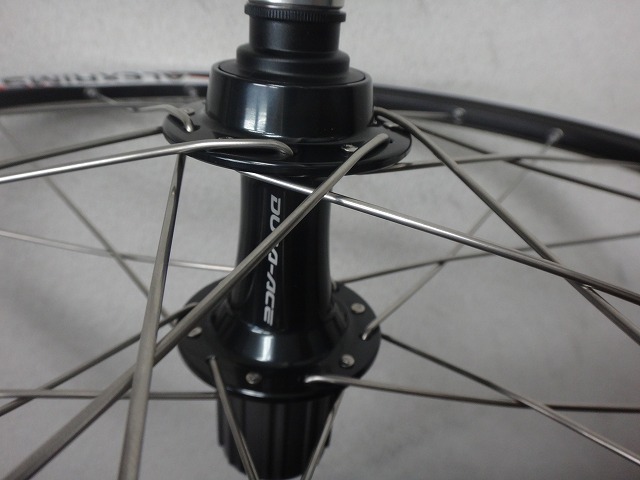
When the rim is smaller than 20-inch or the hub flange dimensions are large, lacing the final spoke crossing gets tricky, so I build without crossing. This time I had plenty of room, so I wove it in.

I build with the hub shell phase visible from the valve hole aligned to the DURA-ACE marking location, but this is something I do on my own initiative and has nothing to do with performance.
With Shimano's factory-built wheels, the phase visible from the valve hole is actually on the opposite side from where the grade name is written—
 right at this position.
Since I knowingly chose the DURA-ACE side for the valve hole, please don't worry about it.
The Dura-Ace hub was brought in by the customer, and that's also an excellent choice.
Small-diameter wheels have higher hub rotation counts per distance traveled than large-diameter wheels, and since the spokes are shorter, they transmit road impacts very well.
(That's why many small-wheeled frames have suspension)
Another consideration is that with the hub sitting close to the road surface, it's more prone to water ingress from splashing and mud.
What holds up well against these conditions is a cup-and-cone bearing hub with a high-quality water-resistant seal,
and right now I think the Dura-Ace hub is the toughest hub under these conditions.
The Chris King hub is also good, but its seals aren't quite as robust as Dura-Ace's (in exchange, it spins lighter), and the bearing balls are smaller than Dura-Ace's, so it's a close second.