Another day of wheels (and so on).

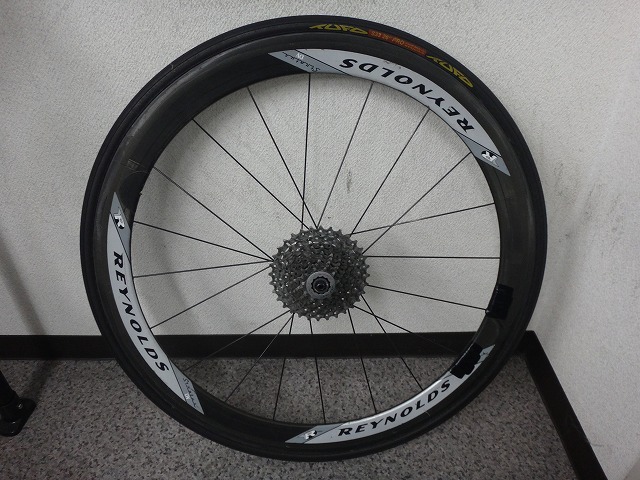
A customer dropped off a rear wheel built with a Reynolds Stratos DV 26-inch tubular rim.
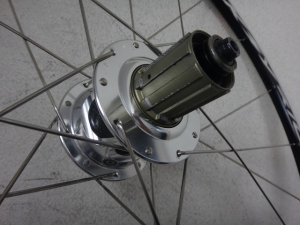
The hub is a PowerTap SL+.
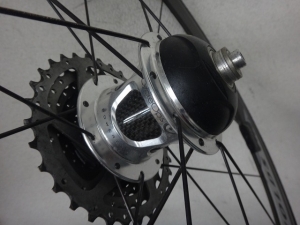
20H, all-black Campagnolo Nervarolo reverse Italian cross lacing.
PowerTap hubs are fundamentally prohibited from radial lacing,
and especially on the non-freehub side it's strictly forbidden.
Back when Mavic complete wheels were built with Cosmic Carbon rims,
the freehub side was laced radial.
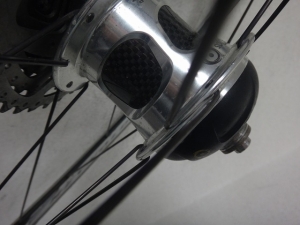
With a large flange and 10H on each side, the flange holes are spaced far apart,
but apparently it was still impossible to weave the final crossing
of the inpokes and outpokes (well, the first crossing).
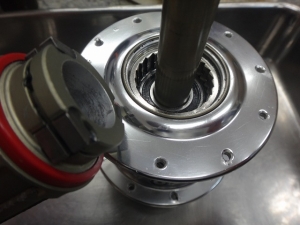
I disassembled it.
While I was at it, I cleaned the hub.
This hub and
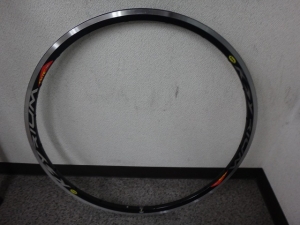
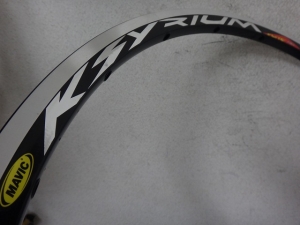
The customer wants a wheel built with an original-generation Ksyrium Elite 650C rear rim.
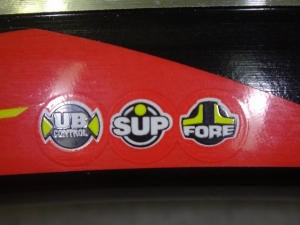
The patented Mavic technique of cutting coarse threads into the inner rim using high-heat bits
is called "FORE" technology,
and the first wheel to adopt it was the original Ksyrium SSC.
Mavic's MTB wheel lineup includes the Crossmax, but
Crossmax existed before Ksyrium
and was originally built with steel spokes.
After the Ksyrium SSC came out, it became a sort of "26-inch Ksyrium SSC"—
an aluminum spoke wheel—but as a budget version,
there was a model called Crosslock that used the specification of
"FORE rim with an adapter to use standard nipples."
The original Ksyrium Elite had the feel of being the road version of this Crosslock,
a FORE-rimmed wheel built using nipple adapters.
(The current Ksyrium Elite and Crosslock don't use this design)
And so, even if the spoke hole count matches the hub,
building a wheel with a FORE rear rim can sometimes be impossible...
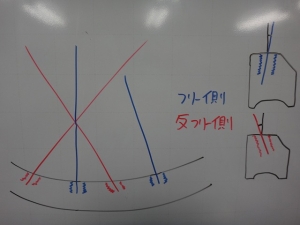
The Ksyrium rear rim has incredibly directional threading on the FORE holes,
so the freehub side can only be laced radially.
Even with a correctly-drilled rim, lacing it reverse-drilled is impossible.
Furthermore, because it's an offset rim, the hole positions are angled
to account for the geometry to each flange.
So if building is possible at all, it must be 4-cross lacing,
meaning the freehub-side radial lacing that PowerTap fundamentally prohibits is unavoidable...
I was about to explain this to the customer when
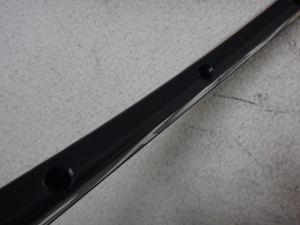
↑it turned out to have no hole offset and wasn't an offset rim.
FORE-hole Ksyriums (excluding Equipe models) come in 18H front and 20H rear,
so this 20H rim is definitely a rear rim.
The spoke-path directionality to the hub must be taken up at the contact point
between the adapter and nipple.
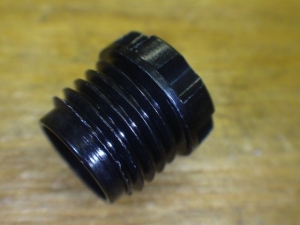
↑This is the adapter.
It's reverse-threaded so it won't loosen from nipple rotation.
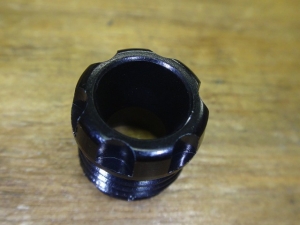
You can screw it into the rim using Mavic's tool.
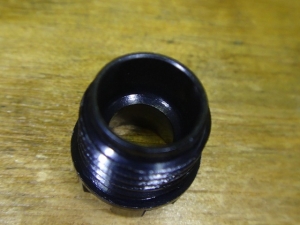
↑This is where the nipple engages.
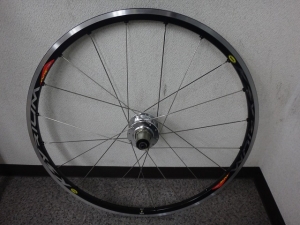
It went together.
20H, half-Campagnolo 4-cross, no bracing.
No bracing was the customer's request.
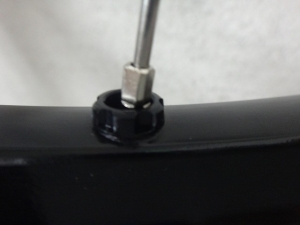
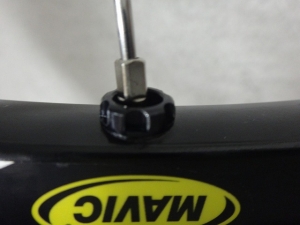
↑Here's the spoke directionality.
The adapter-type FORE threads holes
are cut straight along the radial line from the wheel center.
By the way, I said the Reynolds rim at the beginning was 26-inch
and the Ksyrium Elite rim was 650C in this post,
but these come from different origins and aren't the same standard.
In the world of road racers (a single vehicle category) that originally had
100% tubular rims only,
bead-hook type rims and tires in a 700C size came later—
a size that could share frames, forks, and brakes.
So calling something "700C tubular" or "28-inch WO"
is, even if understood, technically incorrect.
You won't find tubular tires labeled 650C
or WO tires labeled 26-inch.
(General-use 26-inch is HE, not 26-inch WO)
A customer dropped off a rear wheel built with a Reynolds Stratos DV 26-inch tubular rim.
The hub is a PowerTap SL+.
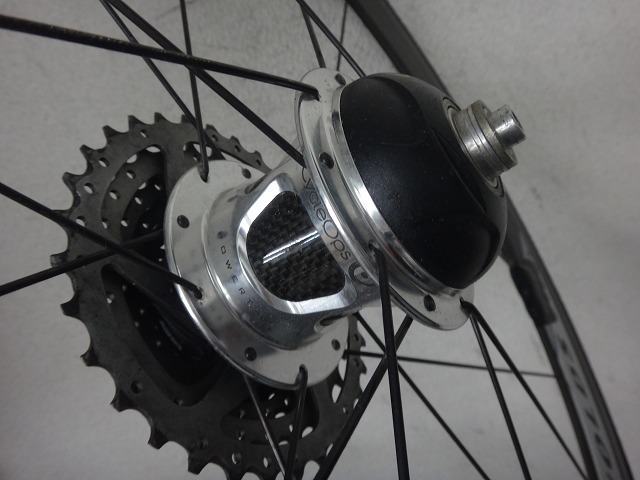
20H, all-black Campagnolo Nervarolo reverse Italian cross lacing.
PowerTap hubs are fundamentally prohibited from radial lacing,
and especially on the non-freehub side it's strictly forbidden.
Back when Mavic complete wheels were built with Cosmic Carbon rims,
the freehub side was laced radial.

With a large flange and 10H on each side, the flange holes are spaced far apart,
but apparently it was still impossible to weave the final crossing
of the inpokes and outpokes (well, the first crossing).
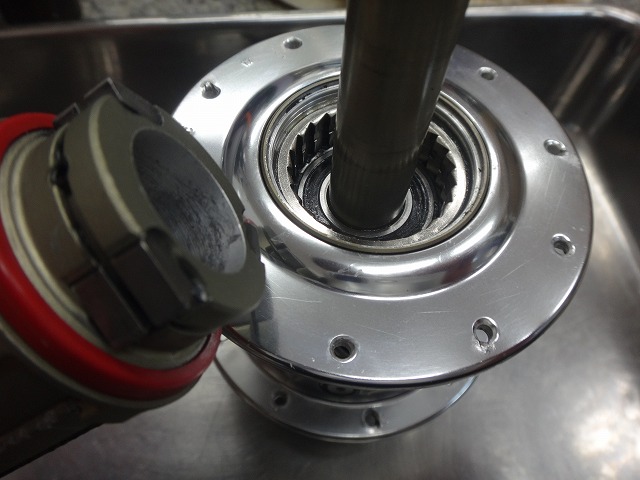
I disassembled it.
While I was at it, I cleaned the hub.
This hub and


The customer wants a wheel built with an original-generation Ksyrium Elite 650C rear rim.
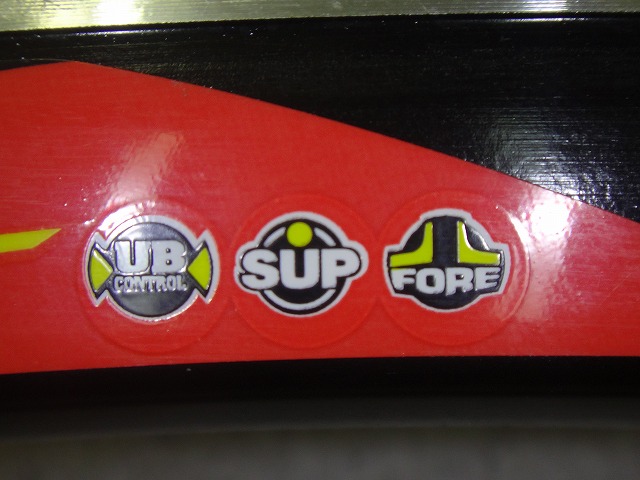
The patented Mavic technique of cutting coarse threads into the inner rim using high-heat bits
is called "FORE" technology,
and the first wheel to adopt it was the original Ksyrium SSC.
Mavic's MTB wheel lineup includes the Crossmax, but
Crossmax existed before Ksyrium
and was originally built with steel spokes.
After the Ksyrium SSC came out, it became a sort of "26-inch Ksyrium SSC"—
an aluminum spoke wheel—but as a budget version,
there was a model called Crosslock that used the specification of
"FORE rim with an adapter to use standard nipples."
The original Ksyrium Elite had the feel of being the road version of this Crosslock,
a FORE-rimmed wheel built using nipple adapters.
(The current Ksyrium Elite and Crosslock don't use this design)
And so, even if the spoke hole count matches the hub,
building a wheel with a FORE rear rim can sometimes be impossible...
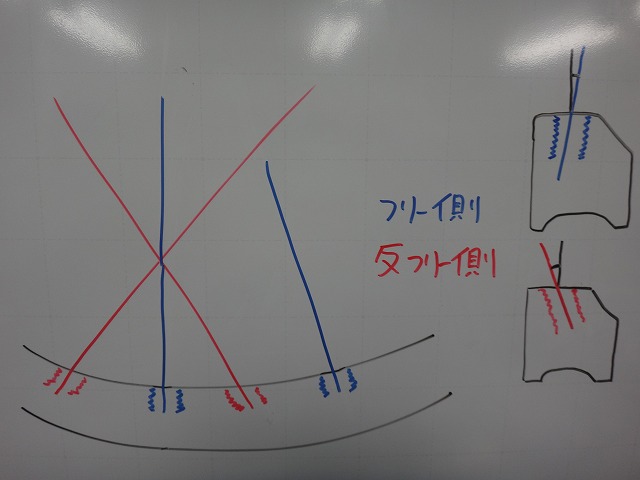
The Ksyrium rear rim has incredibly directional threading on the FORE holes,
so the freehub side can only be laced radially.
Even with a correctly-drilled rim, lacing it reverse-drilled is impossible.
Furthermore, because it's an offset rim, the hole positions are angled
to account for the geometry to each flange.
So if building is possible at all, it must be 4-cross lacing,
meaning the freehub-side radial lacing that PowerTap fundamentally prohibits is unavoidable...
I was about to explain this to the customer when

↑it turned out to have no hole offset and wasn't an offset rim.
FORE-hole Ksyriums (excluding Equipe models) come in 18H front and 20H rear,
so this 20H rim is definitely a rear rim.
The spoke-path directionality to the hub must be taken up at the contact point
between the adapter and nipple.
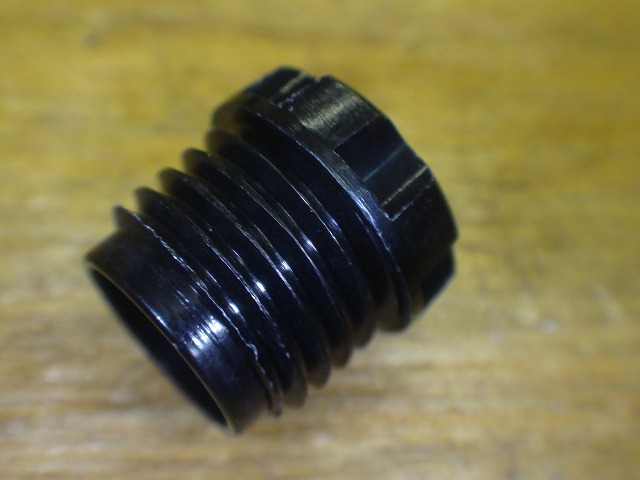
↑This is the adapter.
It's reverse-threaded so it won't loosen from nipple rotation.
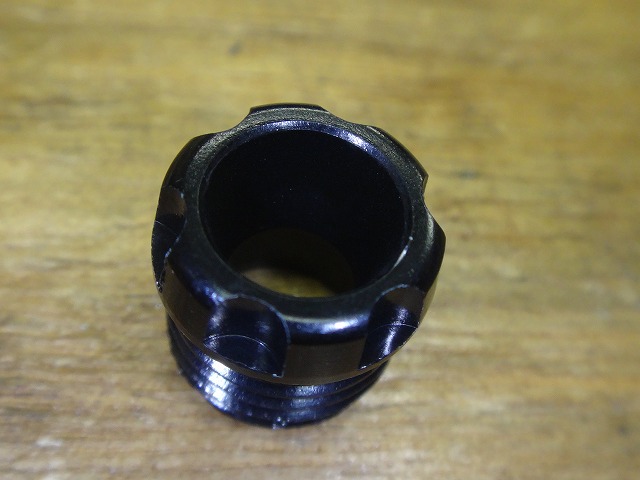
You can screw it into the rim using Mavic's tool.
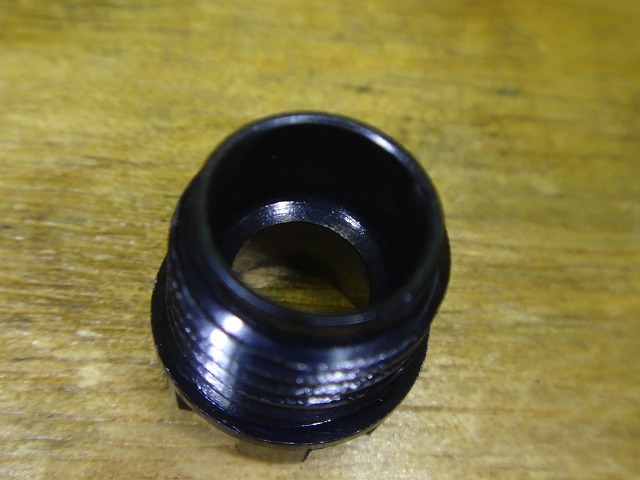
↑This is where the nipple engages.
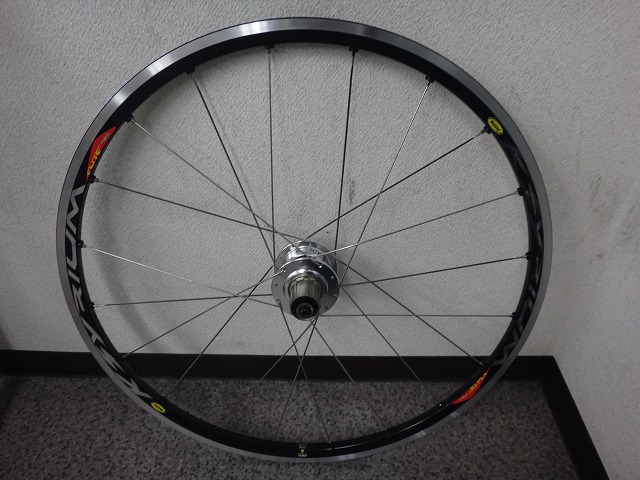
It went together.

20H, half-Campagnolo 4-cross, no bracing.
No bracing was the customer's request.
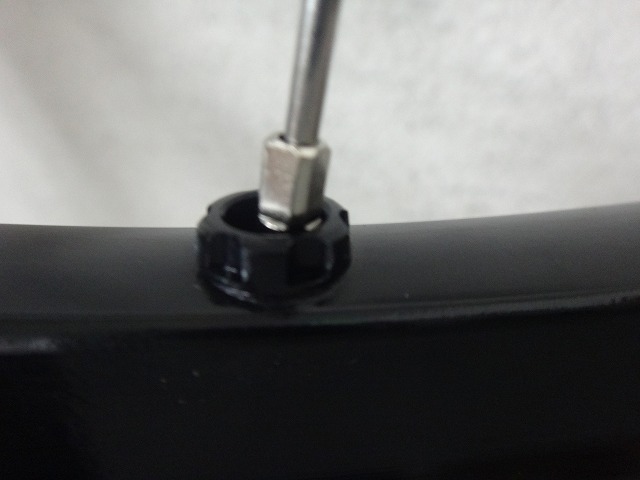

↑Here's the spoke directionality.
The adapter-type FORE threads holes
are cut straight along the radial line from the wheel center.
By the way, I said the Reynolds rim at the beginning was 26-inch
and the Ksyrium Elite rim was 650C in this post,
but these come from different origins and aren't the same standard.
In the world of road racers (a single vehicle category) that originally had
100% tubular rims only,
bead-hook type rims and tires in a 700C size came later—
a size that could share frames, forks, and brakes.
So calling something "700C tubular" or "28-inch WO"
is, even if understood, technically incorrect.
You won't find tubular tires labeled 650C
or WO tires labeled 26-inch.
(General-use 26-inch is HE, not 26-inch WO)