Another wheel day (and so on).
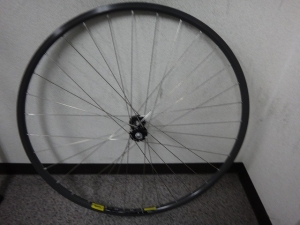
I built a front wheel with Open Pro rims.
The hub is a Record 32H.
Based on the printing on the box, this is a 32H hub from when 28H and 36H options existed before the current lineup, but the specs themselves are identical to the current version.
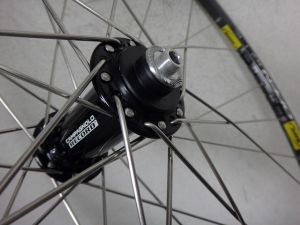
I built it with all Campagnolo spokes in a 2-cross pattern.
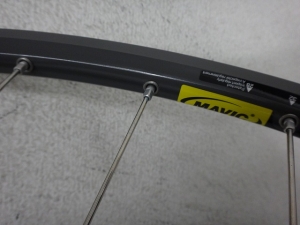
This anodize color, often called hard anodize by other manufacturers, is called CD by Mavic.
The difference from silver or black is that the anodize coating extends all the way to the brake zone, and this CD rim is noticeably stiffer compared to other colors.
You can feel it even while building.
Actually, black is also slightly stiffer than silver, but the gap between black and CD is much larger than that difference.
The manufacturer's stated spoke tension is the same regardless of rim color, but there's enough difference that you could argue for setting it separately for each anodize color.
(Though if we're being honest, the number of holes in the rim is actually a bigger factor when it comes to ultimate tension limits anyway)
Anyone who's built a fair number of wheels has probably experienced this: when the wheel is slowly rotating on the truing stand, you don't detect any lateral run-out, but when it's spinning fast you hear a rhythmic "shh, shh, shh" as the TM detects the run-out.
This happens because the hub has slight play in it.
I noticed the front hub had very slight play at the beginning of wheel building, but I left it alone at that point. By the time I'd finished tightening everything up, significant lateral play had developed.
This is because this hub uses a cup-and-cone bearing design.
(The same thing can happen with cartridge bearings too, but because the bearing design is different it's not usually as pronounced)
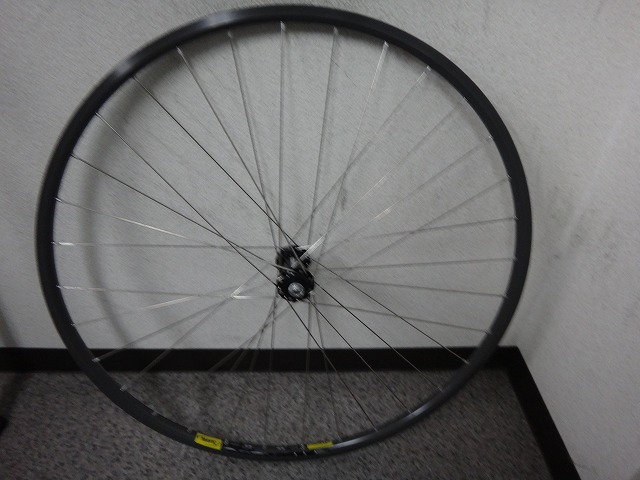
I built a front wheel with Open Pro rims.
The hub is a Record 32H.
Based on the printing on the box, this is a 32H hub from when 28H and 36H options existed before the current lineup, but the specs themselves are identical to the current version.

I built it with all Campagnolo spokes in a 2-cross pattern.
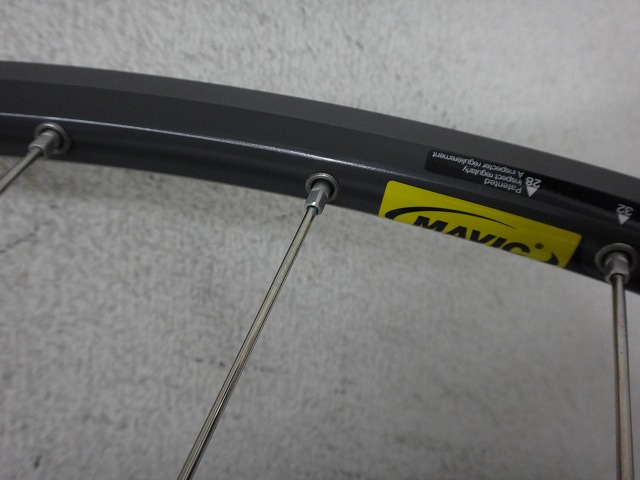
This anodize color, often called hard anodize by other manufacturers, is called CD by Mavic.
The difference from silver or black is that the anodize coating extends all the way to the brake zone, and this CD rim is noticeably stiffer compared to other colors.
You can feel it even while building.
Actually, black is also slightly stiffer than silver, but the gap between black and CD is much larger than that difference.
The manufacturer's stated spoke tension is the same regardless of rim color, but there's enough difference that you could argue for setting it separately for each anodize color.
(Though if we're being honest, the number of holes in the rim is actually a bigger factor when it comes to ultimate tension limits anyway)
Anyone who's built a fair number of wheels has probably experienced this: when the wheel is slowly rotating on the truing stand, you don't detect any lateral run-out, but when it's spinning fast you hear a rhythmic "shh, shh, shh" as the TM detects the run-out.
This happens because the hub has slight play in it.
I noticed the front hub had very slight play at the beginning of wheel building, but I left it alone at that point. By the time I'd finished tightening everything up, significant lateral play had developed.
This is because this hub uses a cup-and-cone bearing design.
(The same thing can happen with cartridge bearings too, but because the bearing design is different it's not usually as pronounced)