A customer brought in a 3T Mercurio 60 for us to work on.
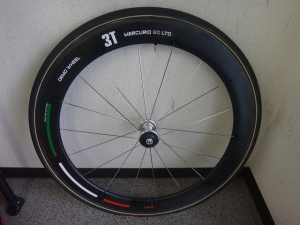
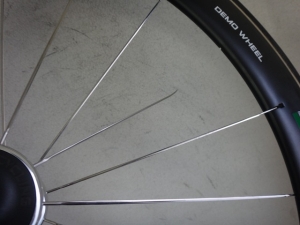
One spoke was missing from the front wheel.
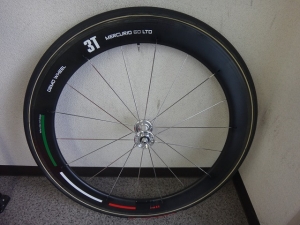
Fixed it (pretty straightforward).
While I was at it, I also inspected the rear wheel they brought along with it.
Since they had included a lateral runout inspection sheet,
there was only minor lateral runout that had developed since they started riding it.
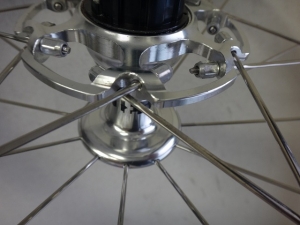
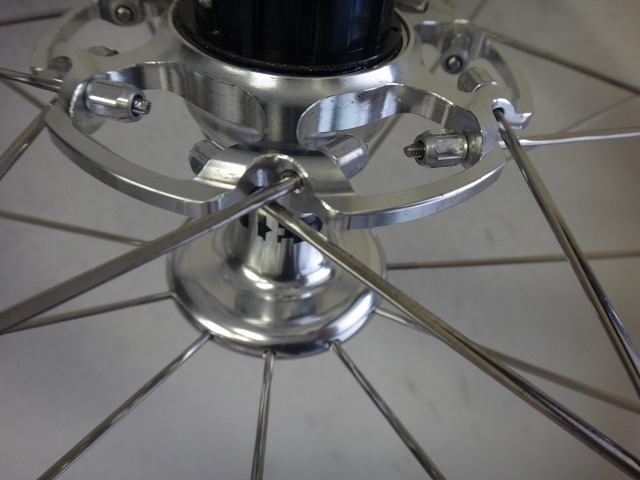
The way the nipples are attached to these front and rear hubs
is remarkably similar to Cronometro wheel designs.
Maybe the patent period has expired?
Some folks might think "that's similar to Cane Creek too,"
but that's actually because Cane Creek acquired Cronometro to start their wheel business—
it's exactly the same relationship as Easton and Velomax had.
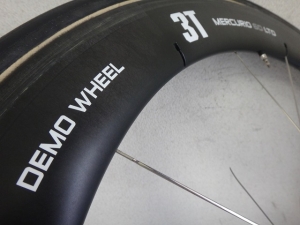
The Mercurio 60 has a different rimside design as a demo wheel for test rides.
These dealer demo wheels are purchased from 3T distributors
(at a slightly discounted price, but still bought outright).
For a set period—I forget if it was three months or six months—
shops are allowed to use them as demo wheels to let customers try them,
and then sell them afterwards.
But if it's something you borrowed or received for free, that's one thing.
From a shop's perspective, laying out cash to purchase demo wheels,
only to turn them into used stock later, feels like a bad deal.
So what happened was these wheels would sit in boxes gathering dust,
and then get dumped at clearance prices.
The original retail price was ¥273,000 including tax (¥260,000 + tax),
but actual selling prices crashed hard across various auction sites and elsewhere.
I don't know the total number of demo wheels distributed,
but there must have been quite a few,
and the discounted demo wheels alone probably ended up covering
a significant portion of the projected demand for Mercurio 60s
across Japan.
Moreover,
there was talk at the time like "I heard someone bought a Mercurio 60 demo wheel for 10-something thousand yen,
so if I buy a regular Mercurio 60 at 10 or 20 percent off,
I'd feel like I got a bad deal, so I lost interest in buying one."
Because of stories like that, from around 2012-13,
I almost never saw actual non-demo Mercurio 60 wheels in the shop.
The demo wheels weren't functioning as trial products at all,
and worse than that, they ended up dragging down sales of the regular product line.
The fact that there wasn't just one importer also meant
no one could control the brand and product image.
Regardless of how well the wheels actually performed, the marketing completely fell fl
Hmm, is that a customer arriving? Who could that be at this hour?
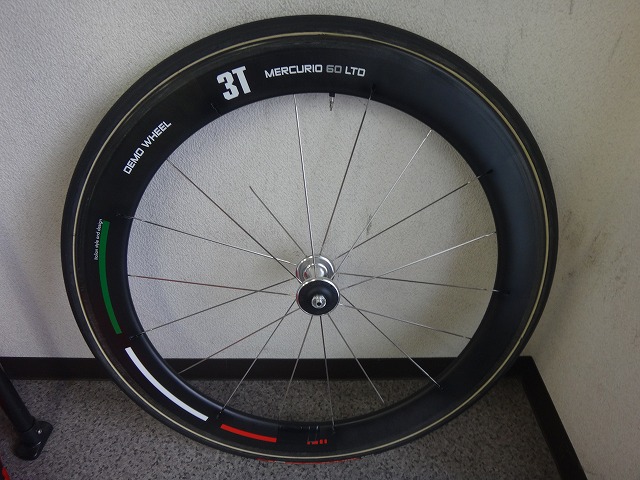

One spoke was missing from the front wheel.
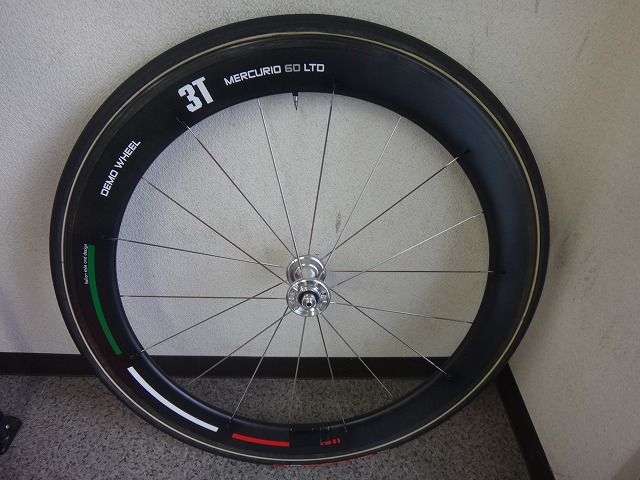
Fixed it (pretty straightforward).
While I was at it, I also inspected the rear wheel they brought along with it.
Since they had included a lateral runout inspection sheet,
there was only minor lateral runout that had developed since they started riding it.
The way the nipples are attached to these front and rear hubs
is remarkably similar to Cronometro wheel designs.
Maybe the patent period has expired?
Some folks might think "that's similar to Cane Creek too,"
but that's actually because Cane Creek acquired Cronometro to start their wheel business—
it's exactly the same relationship as Easton and Velomax had.
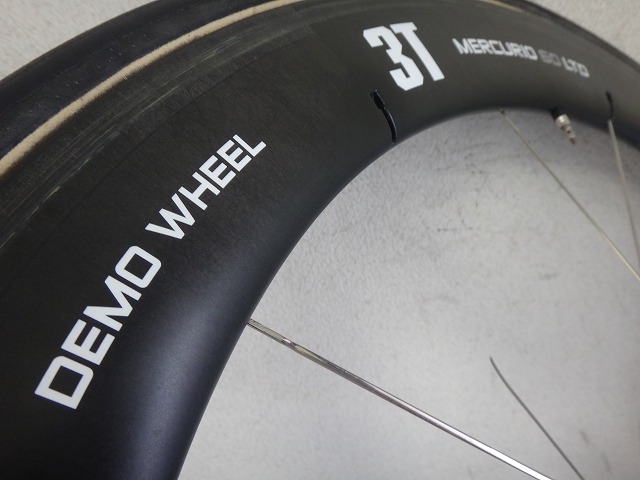
The Mercurio 60 has a different rimside design as a demo wheel for test rides.
These dealer demo wheels are purchased from 3T distributors
(at a slightly discounted price, but still bought outright).
For a set period—I forget if it was three months or six months—
shops are allowed to use them as demo wheels to let customers try them,
and then sell them afterwards.
But if it's something you borrowed or received for free, that's one thing.
From a shop's perspective, laying out cash to purchase demo wheels,
only to turn them into used stock later, feels like a bad deal.
So what happened was these wheels would sit in boxes gathering dust,
and then get dumped at clearance prices.
The original retail price was ¥273,000 including tax (¥260,000 + tax),
but actual selling prices crashed hard across various auction sites and elsewhere.
I don't know the total number of demo wheels distributed,
but there must have been quite a few,
and the discounted demo wheels alone probably ended up covering
a significant portion of the projected demand for Mercurio 60s
across Japan.
Moreover,
there was talk at the time like "I heard someone bought a Mercurio 60 demo wheel for 10-something thousand yen,
so if I buy a regular Mercurio 60 at 10 or 20 percent off,
I'd feel like I got a bad deal, so I lost interest in buying one."
Because of stories like that, from around 2012-13,
I almost never saw actual non-demo Mercurio 60 wheels in the shop.
The demo wheels weren't functioning as trial products at all,
and worse than that, they ended up dragging down sales of the regular product line.
The fact that there wasn't just one importer also meant
no one could control the brand and product image.
Regardless of how well the wheels actually performed, the marketing completely fell fl
Hmm, is that a customer arriving? Who could that be at this hour?
Products Mentioned in This Article
* Amazon affiliate links — prices may vary
Original Japanese post: のむラボ日記 #2145