I received a comment about the ZIPP rear hub from my previous post.
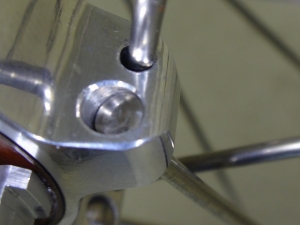
「The spoke roots look pretty tight, is this okay?
Was this hub built with a deeper rim than the XR300?
Like the 808?
This is the difficult part of straight-spoke-only hubs.」
That's a good question. Hehe.
↑Yes, that's it.
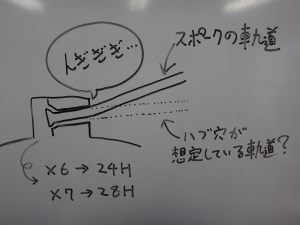
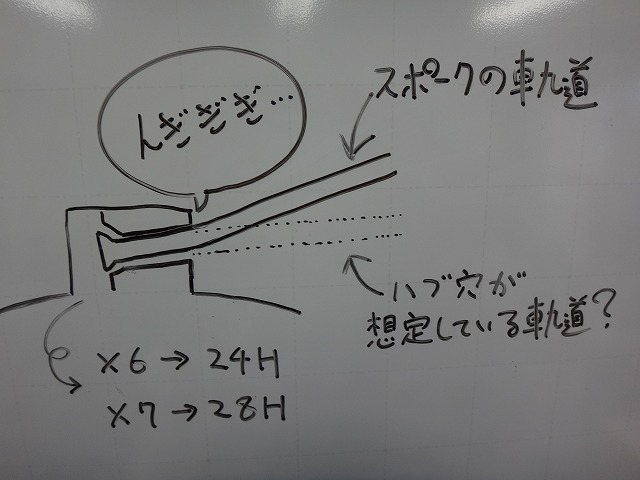
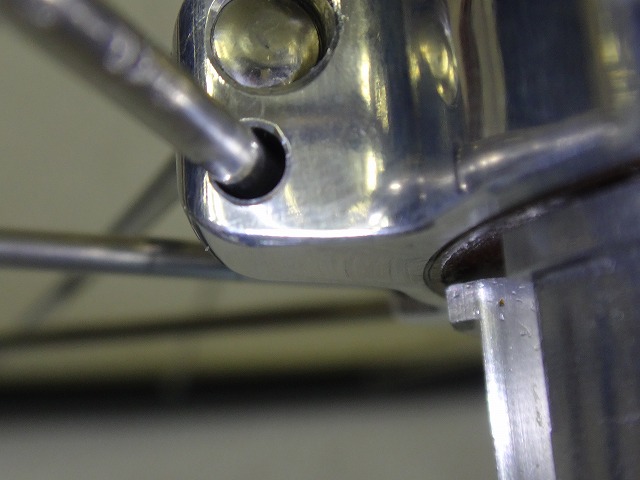
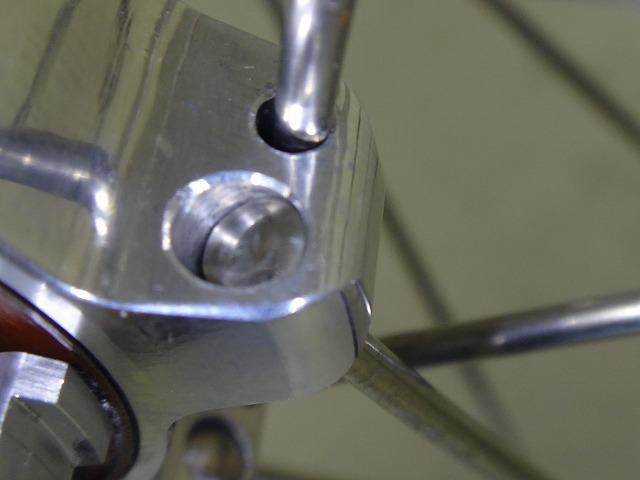
The actual spoke trajectory deviates outward along the tangent of the hub flange,
when viewed relative to the trajectory extending from the center axis of the hub hole.
Once assembled (with tension applied), it wasn't a problem,
but during pre-assembly, the spoke deflected and curved slightly,
so I even suspected it might not be possible to build it 4-cross.
(In that case the spoke length would change)
I was curious about this, so I did some research before building the wheel.
Here's what I found:

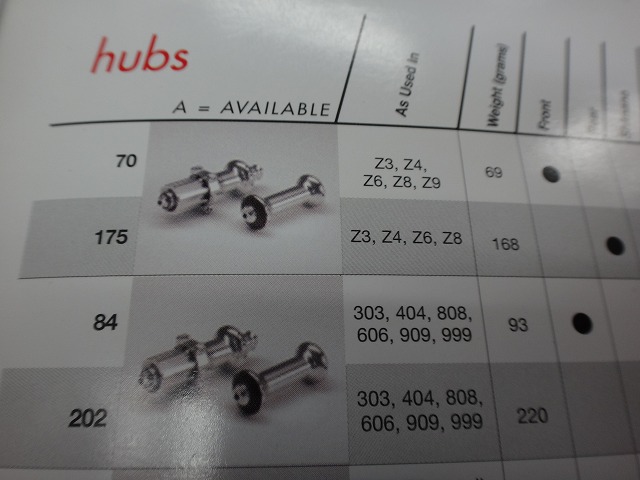
↑That rear hub appears in a 2005 catalog.

↑This is the 202 hub from that line.
It's unrelated to the low-height rim wheel 202.
Rather, 202 wheels didn't exist back then, as they're not even listed in the catalog.
There's also a 175 hub with the same appearance but lighter material,
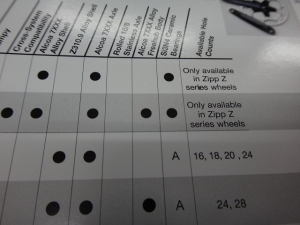
but the 175 only came factory on the Z-series, which was ZIPP's highest-end line back then,
and there's no other way to obtain one.
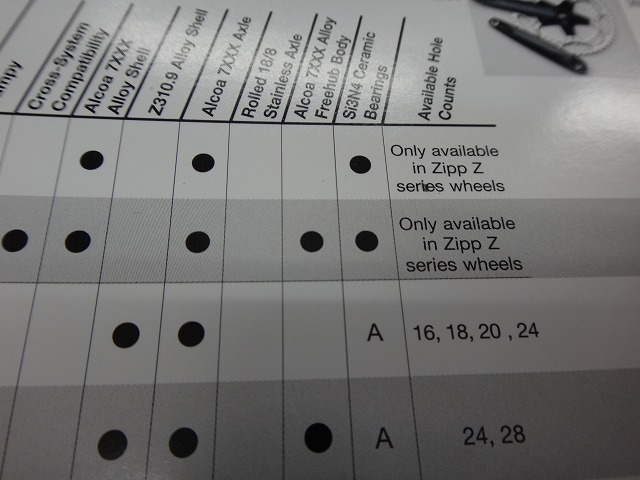
The 202 rear hub comes in both 24H and 28H specifications.
Complete wheels used one or the other hole count,
and rear 28H was adopted on track rear wheels for 404 wheels,
cyclocross rear wheels, and similar applications.
As a tangent, with 808 wheels (rim height 81mm),
20H is actually better than 24H for the rear—or rather,
24H is overkill (the same is true for Nomu Lab Wheel No. 3),
but the 808 rear wheels from back then were 24H spec.
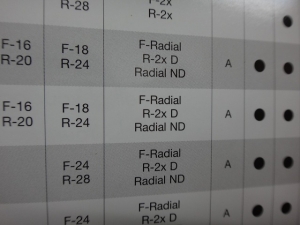
Regarding how complete wheels were built back then,
as shown in the chart, whether 24H or 28H,
the front and rear non-drive side (anti-freewheel side) are radial laced,
and the rear drive side is 2x (two-cross = 4-cross).
So even with a 28H hub, 4-cross was indeed the correct way.
However, as shown in the diagram at the beginning,
it's a fact that the hub hole orientation and actual trajectory don't align perfectly.
Looking at the hub, it seems unlikely they made precise changes to the hole recess
based on rim height, so I suspect
they simply added one more flange hole for the 28H version
while keeping the hub hole machining identical,
which resulted in this situation.
As the comment mentions, as rim height increases,
the angle does become more tangential,
but among complete wheels from back then with rear 28H,
only three had them: the 303 and 404 pavé cross, and the 404 track wheel.
The angle difference between these rims and the XR300 rim height is less than
the angle difference that would result from making a 28H hub with the same orientation as the 24H hub
and building it the same way (4-cross).
("Making a 28H hub with the same orientation as the 24H hub" is hypothetical)
By the way, in the chart in the image above, you can see rear 20H on the left,
which is for 26-inch wheels.
While not sold as individual hubs,
if you disassemble a complete 26-inch rear wheel,
you can get the 202 hub in 20H.
With 20H as well, it's still 4-cross, but having one hub design with one orientation
cover all three—20H, 24H, and 28H—is quite a stretch,
and "spoke angle when building 4-cross" is actually
not absolute but relative.
When the hub and rim dimensions are the same,
20H 4-cross, 24H 4-cross, and 28H 4-cross
all have different spoke angles, so
"same build method with different hole counts on one orientation hub"
is pretty tight.
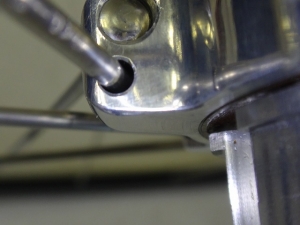
As I said before, my assumption that the hub orientation didn't change is just my guess,
but since ZIPP themselves built 28H hubs 4-cross,
and the spoke neck rubs on the flange hole
(even with a 404 rim, you probably can't completely avoid it),
this is how the spec is, so it's unavoidable.
Given the stress on the spoke neck with 90-degree-bend spokes,
it's negligible enough to ignore.
By the way, the comment you sent—
to notice this just from looking at the image in my previous post...
And to also mention how conditions change with different rim heights...
Impressive insight. How scary.
Thank you for the comment.
「The spoke roots look pretty tight, is this okay?
Was this hub built with a deeper rim than the XR300?
Like the 808?
This is the difficult part of straight-spoke-only hubs.」
That's a good question. Hehe.
↑Yes, that's it.
The actual spoke trajectory deviates outward along the tangent of the hub flange,
when viewed relative to the trajectory extending from the center axis of the hub hole.
Once assembled (with tension applied), it wasn't a problem,
but during pre-assembly, the spoke deflected and curved slightly,
so I even suspected it might not be possible to build it 4-cross.
(In that case the spoke length would change)
I was curious about this, so I did some research before building the wheel.
Here's what I found:

↑That rear hub appears in a 2005 catalog.
↑This is the 202 hub from that line.
It's unrelated to the low-height rim wheel 202.
Rather, 202 wheels didn't exist back then, as they're not even listed in the catalog.
There's also a 175 hub with the same appearance but lighter material,
but the 175 only came factory on the Z-series, which was ZIPP's highest-end line back then,
and there's no other way to obtain one.
The 202 rear hub comes in both 24H and 28H specifications.
Complete wheels used one or the other hole count,
and rear 28H was adopted on track rear wheels for 404 wheels,
cyclocross rear wheels, and similar applications.
As a tangent, with 808 wheels (rim height 81mm),
20H is actually better than 24H for the rear—or rather,
24H is overkill (the same is true for Nomu Lab Wheel No. 3),
but the 808 rear wheels from back then were 24H spec.

Regarding how complete wheels were built back then,
as shown in the chart, whether 24H or 28H,
the front and rear non-drive side (anti-freewheel side) are radial laced,
and the rear drive side is 2x (two-cross = 4-cross).
So even with a 28H hub, 4-cross was indeed the correct way.
However, as shown in the diagram at the beginning,
it's a fact that the hub hole orientation and actual trajectory don't align perfectly.
Looking at the hub, it seems unlikely they made precise changes to the hole recess
based on rim height, so I suspect
they simply added one more flange hole for the 28H version
while keeping the hub hole machining identical,
which resulted in this situation.
As the comment mentions, as rim height increases,
the angle does become more tangential,
but among complete wheels from back then with rear 28H,
only three had them: the 303 and 404 pavé cross, and the 404 track wheel.
The angle difference between these rims and the XR300 rim height is less than
the angle difference that would result from making a 28H hub with the same orientation as the 24H hub
and building it the same way (4-cross).
("Making a 28H hub with the same orientation as the 24H hub" is hypothetical)
By the way, in the chart in the image above, you can see rear 20H on the left,
which is for 26-inch wheels.
While not sold as individual hubs,
if you disassemble a complete 26-inch rear wheel,
you can get the 202 hub in 20H.
With 20H as well, it's still 4-cross, but having one hub design with one orientation
cover all three—20H, 24H, and 28H—is quite a stretch,
and "spoke angle when building 4-cross" is actually
not absolute but relative.
When the hub and rim dimensions are the same,
20H 4-cross, 24H 4-cross, and 28H 4-cross
all have different spoke angles, so
"same build method with different hole counts on one orientation hub"
is pretty tight.
As I said before, my assumption that the hub orientation didn't change is just my guess,
but since ZIPP themselves built 28H hubs 4-cross,
and the spoke neck rubs on the flange hole
(even with a 404 rim, you probably can't completely avoid it),
this is how the spec is, so it's unavoidable.
Given the stress on the spoke neck with 90-degree-bend spokes,
it's negligible enough to ignore.
By the way, the comment you sent—
to notice this just from looking at the image in my previous post...
And to also mention how conditions change with different rim heights...
Impressive insight. How scary.
Thank you for the comment.