Another wheel day (and so on).
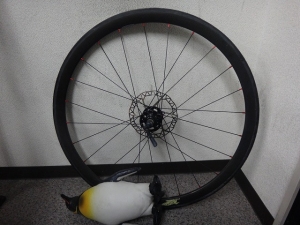
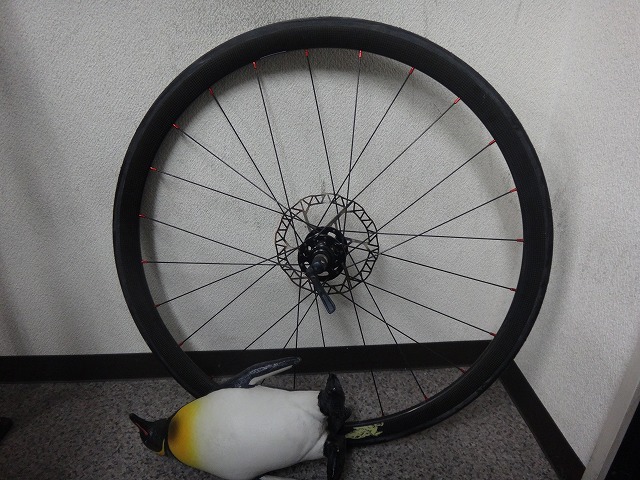
A customer dropped off a front wheel built with a disc brake hub
and a 38mm tall carbon rim.
※Just a peg
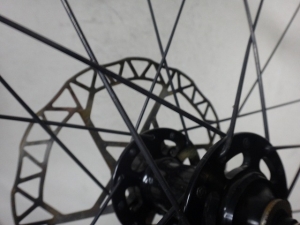
24-hole, black all-competition, reverse Italian lacing,
but it's not just that spoke tension is slack—
there's also a usage issue that's developed.
When braking, there's a creaking noise coming from the spoke crossings.
I thought it might only happen when I ride it, so I checked with the customer too,
but it definitely creaks.
This is caused by the braking force of the hub-side brake,
but with complete wheelsets using black spokes, not lacing the crossings
or using radial lacing on the non-freewheel side for the rear
is a passive solution to prevent spoke noise
during hard efforts and out-of-saddle climbing.
I suspect that even with the current slack tension,
if the spokes were silver, no noise would occur,
so just changing the spoke color would solve the noise issue.
Separately from that, this hub has the side where the spokes are more upright (rotor side)
with a smaller flange—it's a reverse high-low flange arrangement.
Even with a Dura-Ace hub's difference of 45mm on the freewheel side and 44mm on the non-freewheel side—
just 1mm in diameter, 0.5mm in radius—the high-low difference shows up in the feel of building,
so a reverse high-low is genuinely very difficult to build tightly.
Incidentally, this hub has a 2mm difference in diameter for its reverse high-low.
(The Tni (Tni disc rear hub) also has a smaller flange on the freewheel side,
so getting the non-freewheel side tight is no easy task)
So this front wheel, partly due to the reverse high-low,
had especially slack tension on the non-rotor side.
The customer's request was to tighten this up a bit.

Built it.
The Kirin beer-like sticker that was on the rim is gone,
but I didn't peel it off—it just faded.
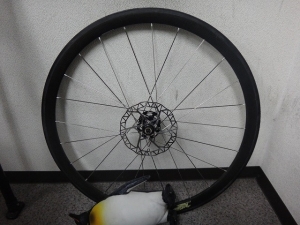
↑opposite side
Before rebuilding, this front wheel had the rim reversed left to right.
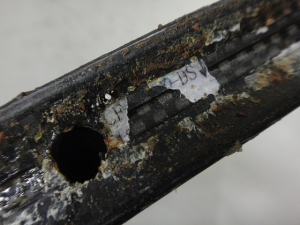
There were faint marks remaining on the rim's outer edge, which saved me,
but there's an instruction that says "DS↓ (Drive Side this way)".
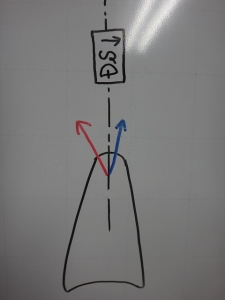
This rim is 24H, but by the manufacturer's specification it seems to be a rear-only rim.
Even on Nomulabo wheels (Nomulabo wheels) no. 2,
the 24H and 28H have drive-side specifications.
Specifying drive side means
the rim's hole offset angle is deliberately different left and right.
There are clearly different left and right hole offsets in normal rim orientation,
but I couldn't visually confirm the angular difference between left and right,
so it might be fine to build it reversed as long as you keep it in normal rim orientation,
but since there's an instruction, it's better to follow it.
With wheels using this rim,
you also see a 2:1 lacing approach that completely ignores
the alternating hole offsets on left and right,
so for someone who doesn't think deeply about (or doesn't know about) such things,
the rim orientation probably doesn't matter either way.
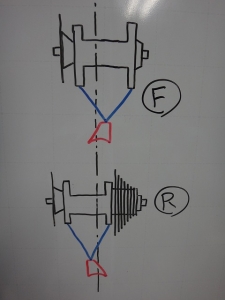
The term "DS (Drive Side)"
exists because wheels with offset (where the rim peak leans to one side)
are generally rear wheels,
but disc brake front hubs also have offset.
In that case, the rotor side has spokes at a steeper angle,
so it has the character of what would be the freewheel side on a rear hub.
Therefore, "DS↓" should point toward the rotor side.
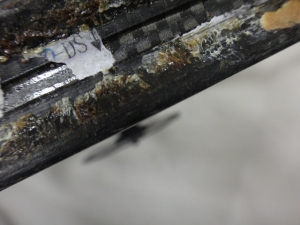
So
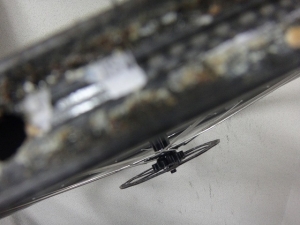
I did this.
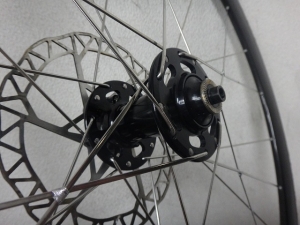
A similar but slightly different point:
when building a wheel with an offset rim and disc brake hub,
logically speaking,
"move the rim holes toward the side where spoke angle is more relaxed,"
so the rim orientation changes front to back.
There are people who assume "the offset rim peak is always angled left"
and build the front wheel reversed, but they should think it through more.
The spokes are butted (half-butted).
The right side is CX-RAY, so you could call it reverse half-butted.
I used 64-spoke reverse Italian lacing with cross and led.
With a small-flange 24H hub, in 66-spoke lacing,
the spoke bending gets tight at the final crossing and the one before it.
Since this is large flange, I initially thought 66-spoke lacing with same-diameter spokes on both sides would be fine,
but because of the reverse high-low and
the right flange being fairly wide (wide flange width is appreciated for lateral stiffness
but increases the offset amount), I built it with
different-diameter different-quantity spokes on left and right and led at the final crossing on the angle-relaxed side
to minimize the difference in spoke deformation between sides.
It had an effect, but clearly not as much as with better-conditioned hubs.
Even with all this, it's only just above average.
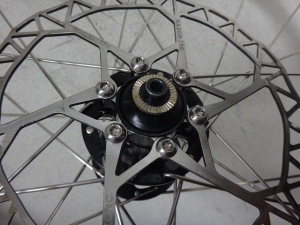
I forgot to take a before photo,
but I cleaned up the rotor rust nicely with a rubber stone.
A customer dropped off a front wheel built with a disc brake hub
and a 38mm tall carbon rim.
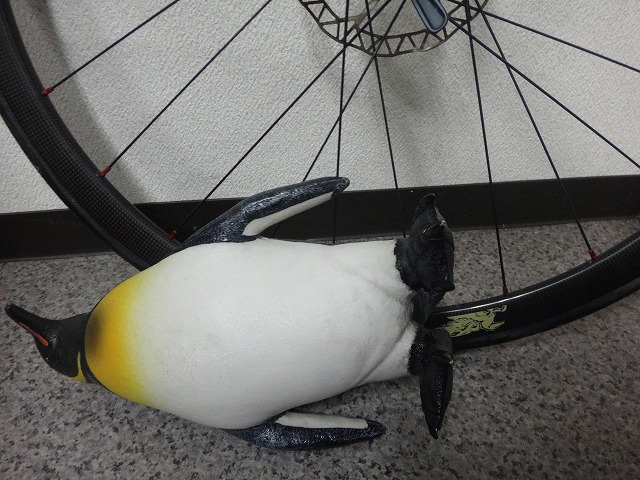
※Just a peg
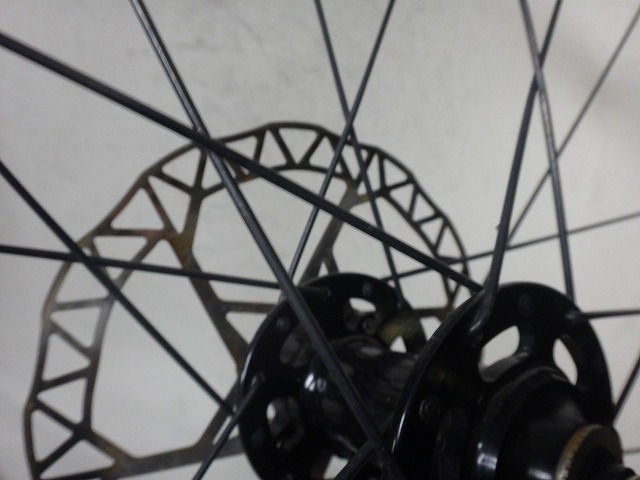
24-hole, black all-competition, reverse Italian lacing,
but it's not just that spoke tension is slack—
there's also a usage issue that's developed.
When braking, there's a creaking noise coming from the spoke crossings.
I thought it might only happen when I ride it, so I checked with the customer too,
but it definitely creaks.
This is caused by the braking force of the hub-side brake,
but with complete wheelsets using black spokes, not lacing the crossings
or using radial lacing on the non-freewheel side for the rear
is a passive solution to prevent spoke noise
during hard efforts and out-of-saddle climbing.
I suspect that even with the current slack tension,
if the spokes were silver, no noise would occur,
so just changing the spoke color would solve the noise issue.
Separately from that, this hub has the side where the spokes are more upright (rotor side)
with a smaller flange—it's a reverse high-low flange arrangement.
Even with a Dura-Ace hub's difference of 45mm on the freewheel side and 44mm on the non-freewheel side—
just 1mm in diameter, 0.5mm in radius—the high-low difference shows up in the feel of building,
so a reverse high-low is genuinely very difficult to build tightly.
Incidentally, this hub has a 2mm difference in diameter for its reverse high-low.
(The Tni (Tni disc rear hub) also has a smaller flange on the freewheel side,
so getting the non-freewheel side tight is no easy task)
So this front wheel, partly due to the reverse high-low,
had especially slack tension on the non-rotor side.
The customer's request was to tighten this up a bit.
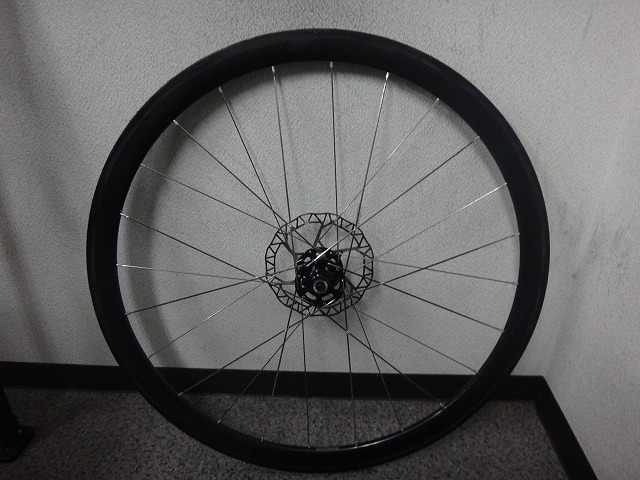
Built it.
The Kirin beer-like sticker that was on the rim is gone,
but I didn't peel it off—it just faded.
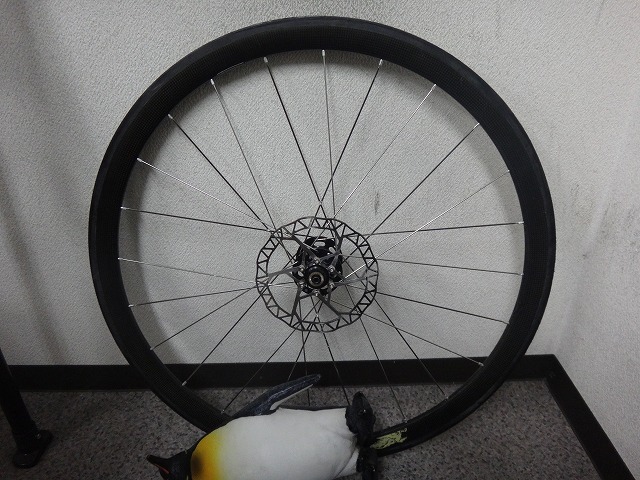
↑opposite side
Before rebuilding, this front wheel had the rim reversed left to right.
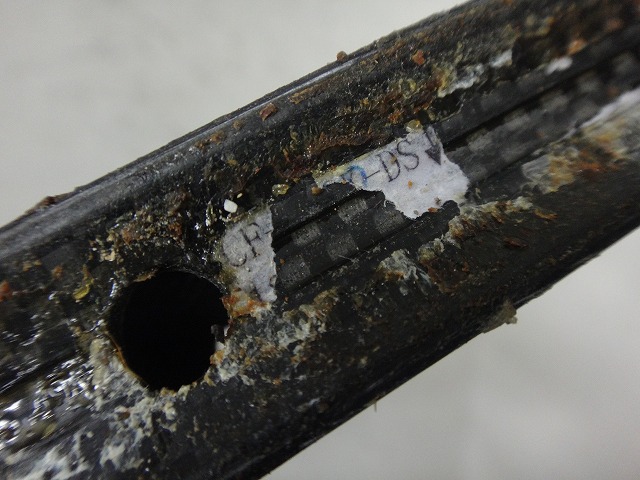
There were faint marks remaining on the rim's outer edge, which saved me,
but there's an instruction that says "DS↓ (Drive Side this way)".
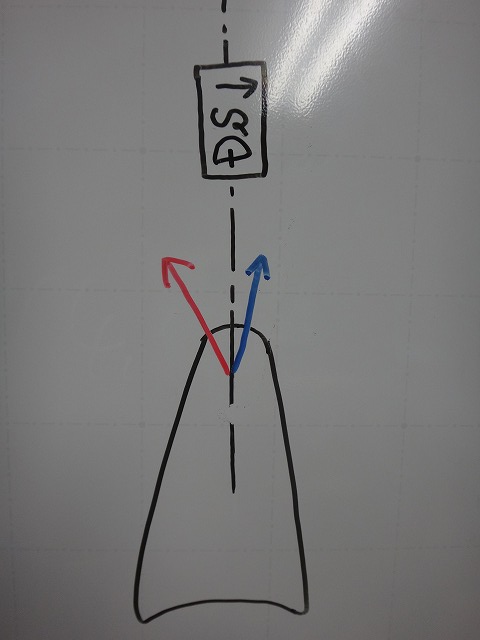
This rim is 24H, but by the manufacturer's specification it seems to be a rear-only rim.
Even on Nomulabo wheels (Nomulabo wheels) no. 2,
the 24H and 28H have drive-side specifications.
Specifying drive side means
the rim's hole offset angle is deliberately different left and right.
There are clearly different left and right hole offsets in normal rim orientation,
but I couldn't visually confirm the angular difference between left and right,
so it might be fine to build it reversed as long as you keep it in normal rim orientation,
but since there's an instruction, it's better to follow it.
With wheels using this rim,
you also see a 2:1 lacing approach that completely ignores
the alternating hole offsets on left and right,
so for someone who doesn't think deeply about (or doesn't know about) such things,
the rim orientation probably doesn't matter either way.
The term "DS (Drive Side)"
exists because wheels with offset (where the rim peak leans to one side)
are generally rear wheels,
but disc brake front hubs also have offset.
In that case, the rotor side has spokes at a steeper angle,
so it has the character of what would be the freewheel side on a rear hub.
Therefore, "DS↓" should point toward the rotor side.
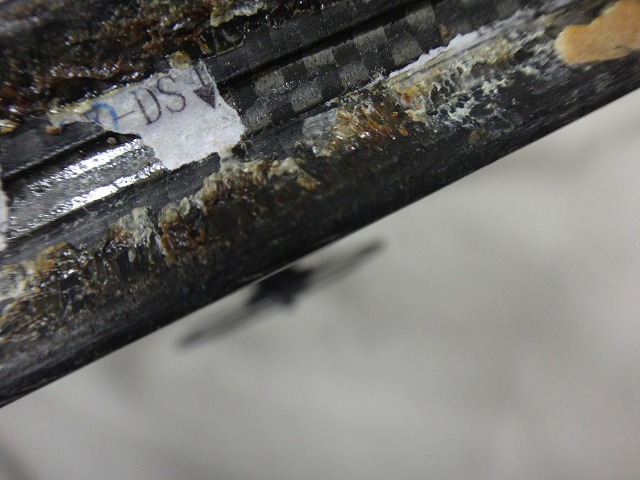
So
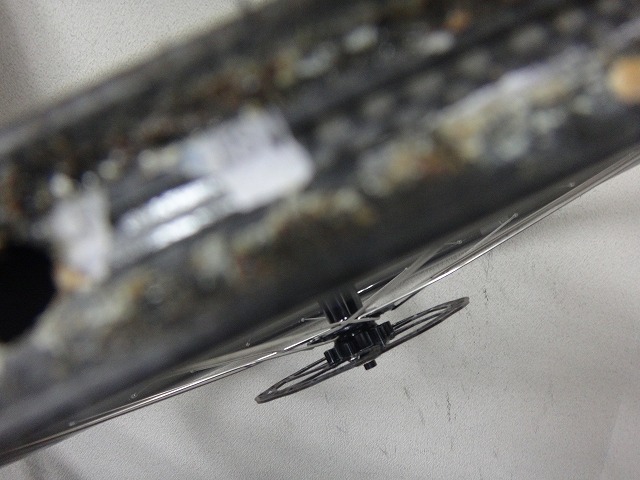
I did this.
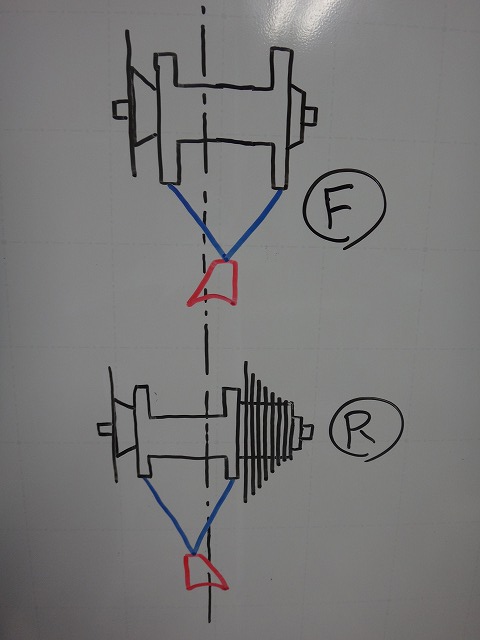
A similar but slightly different point:
when building a wheel with an offset rim and disc brake hub,
logically speaking,
"move the rim holes toward the side where spoke angle is more relaxed,"
so the rim orientation changes front to back.
There are people who assume "the offset rim peak is always angled left"
and build the front wheel reversed, but they should think it through more.
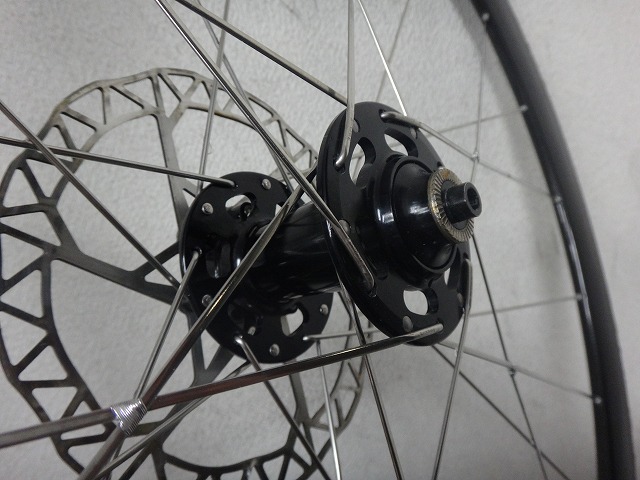
The spokes are butted (half-butted).
The right side is CX-RAY, so you could call it reverse half-butted.
I used 64-spoke reverse Italian lacing with cross and led.
With a small-flange 24H hub, in 66-spoke lacing,
the spoke bending gets tight at the final crossing and the one before it.
Since this is large flange, I initially thought 66-spoke lacing with same-diameter spokes on both sides would be fine,
but because of the reverse high-low and
the right flange being fairly wide (wide flange width is appreciated for lateral stiffness
but increases the offset amount), I built it with
different-diameter different-quantity spokes on left and right and led at the final crossing on the angle-relaxed side
to minimize the difference in spoke deformation between sides.
It had an effect, but clearly not as much as with better-conditioned hubs.
Even with all this, it's only just above average.
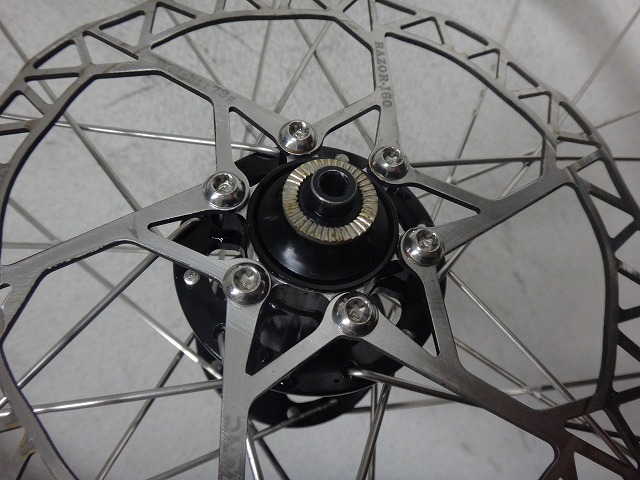
I forgot to take a before photo,
but I cleaned up the rotor rust nicely with a rubber stone.