A customer asked me to apply "Aqua Seal" to
the sidewall casing of a cyclocross tubular tire.
Aqua Seal is technically classified as an adhesive,
but since it maintains flexibility even after curing
and has excellent waterproofing properties,
it's more accurate to call it a waterproof repair sealant.
It can apparently be used for repairing wetsuits and shoes too.
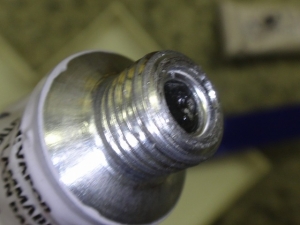
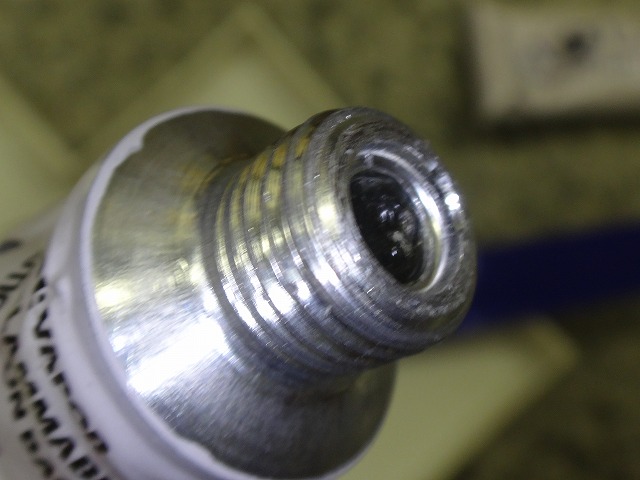
One of the two tubes the customer left with me
had partially hardened inside despite being brand new and unopened.
(The image shows right after puncturing the tube,
but no matter how hard I squeezed, nothing came out)
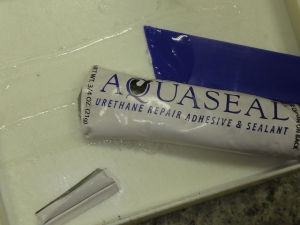
So I cut open the other end.
Aqua Seal comes in these printed tubes as the product form,
though they're packaged in blister packs that vary depending on the distributor,
but the contents are the same regardless.
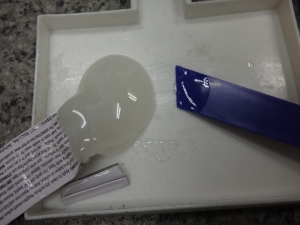
I squeezed out the contents.
I'll spread it with a scraper.
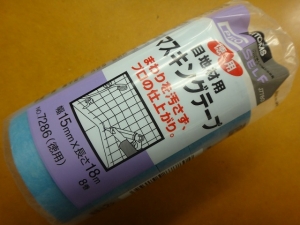
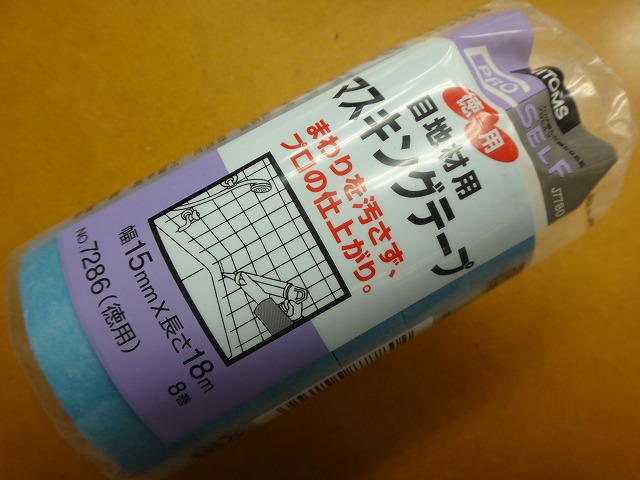
I use this caulk masking tape,
but anything else works fine too.
Thinner tape like the kind used for plastic model painting
tends to tear when pulled, so it's not ideal.
A single roll costs about 100 yen,
and the 8-pack set in the image is around 700 yen.
One roll is plenty even if you tape both sides of the front and rear rims.
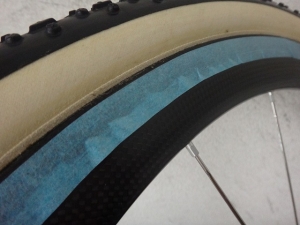
I apply the tape just slightly showing the outermost edge of the rim,
pressing firmly on the outer edge side and following the rim's curve.
If you take your time, it doesn't take too long.
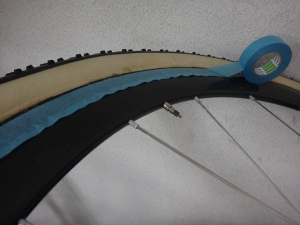
↑Like this
It's fine if the inner edge has excess tape frill.
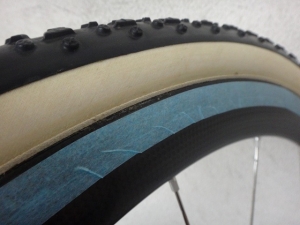
I press down the inner edge with my finger afterward too.
It will wrinkle, but that's no problem.
Just focus on keeping the outer edge tight and smooth.
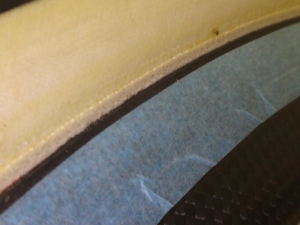
The reason I made the outermost edge visible is this:
while Aqua Seal is used partly to protect the tire sidewall from mud and water,
its main purpose is to seal the base tape seam precisely,
preventing water seepage into the base tape and tire separation.
Since it hardens while impregnating the fibers,
if applied properly, it protects tubular tires quite well from damage.
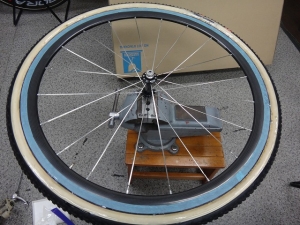
I have a wheel holding jig called a "hub axle holder" that works with a vise,
but if you don't, figure out some other good method (laughs).
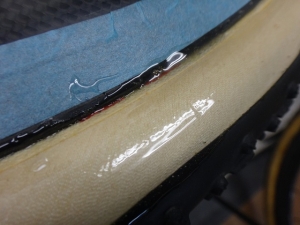
↑This one has a bit too much, so I'm spreading it with the scraper.
(If it comes out normally from the tube opening, of course you just use it as-is)
Focus on the base tape seam.
It needs about one night to cure fully,
but I wouldn't recommend doing this the day before a race.
Though it hardens by reacting with moisture in the air,
if you have leftover Aqua Seal in the tube that you want to use later,
it often hardens before then, so
storing it in the refrigerator helps prevent that.
(Or put it in a ziplock bag and store in the freezer,
then soak in hot water to thaw when reusing)
So, I've been writing this as if I've known about Aqua Seal for ages,
but honestly everything I've written here is mostly
secondhand information I heard from the knowledgeable cyclocross customers
who come to my shop, and I'm still pretty new to all this.
I need to study more.
the sidewall casing of a cyclocross tubular tire.
Aqua Seal is technically classified as an adhesive,
but since it maintains flexibility even after curing
and has excellent waterproofing properties,
it's more accurate to call it a waterproof repair sealant.
It can apparently be used for repairing wetsuits and shoes too.
One of the two tubes the customer left with me
had partially hardened inside despite being brand new and unopened.
(The image shows right after puncturing the tube,
but no matter how hard I squeezed, nothing came out)

So I cut open the other end.
Aqua Seal comes in these printed tubes as the product form,
though they're packaged in blister packs that vary depending on the distributor,
but the contents are the same regardless.

I squeezed out the contents.
I'll spread it with a scraper.
I use this caulk masking tape,
but anything else works fine too.
Thinner tape like the kind used for plastic model painting
tends to tear when pulled, so it's not ideal.
A single roll costs about 100 yen,
and the 8-pack set in the image is around 700 yen.
One roll is plenty even if you tape both sides of the front and rear rims.
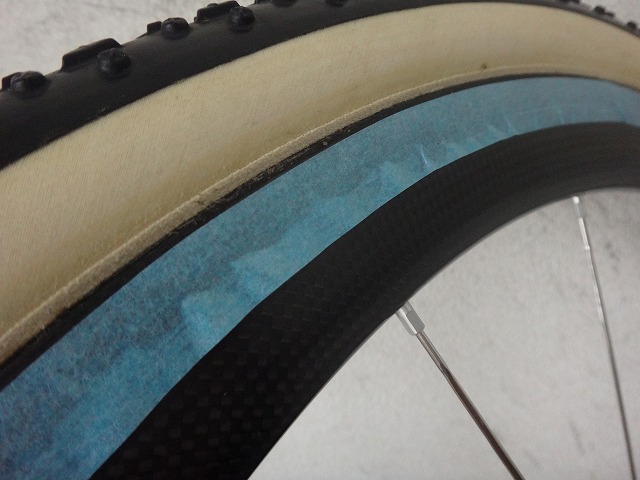
I apply the tape just slightly showing the outermost edge of the rim,
pressing firmly on the outer edge side and following the rim's curve.
If you take your time, it doesn't take too long.
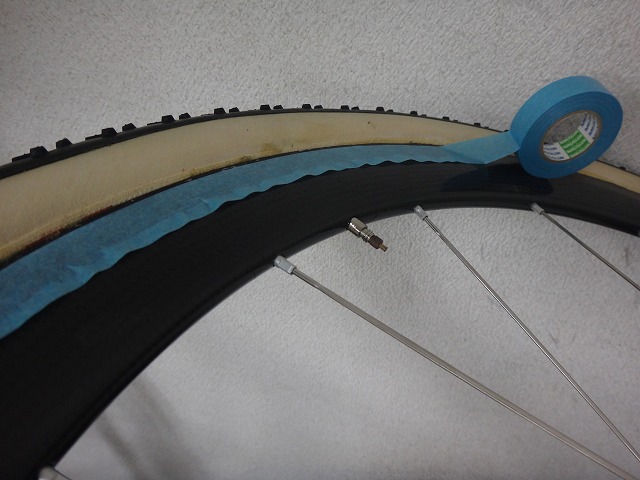
↑Like this
It's fine if the inner edge has excess tape frill.

I press down the inner edge with my finger afterward too.
It will wrinkle, but that's no problem.
Just focus on keeping the outer edge tight and smooth.
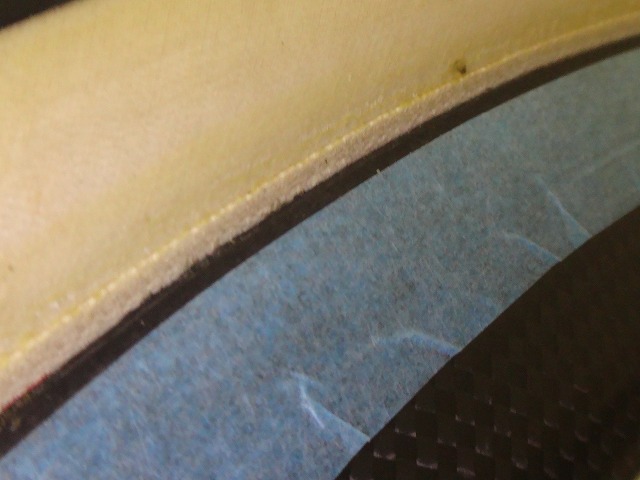
The reason I made the outermost edge visible is this:
while Aqua Seal is used partly to protect the tire sidewall from mud and water,
its main purpose is to seal the base tape seam precisely,
preventing water seepage into the base tape and tire separation.
Since it hardens while impregnating the fibers,
if applied properly, it protects tubular tires quite well from damage.
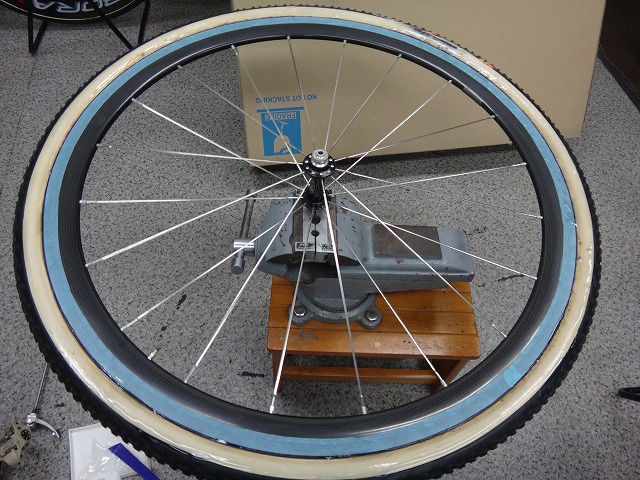
I have a wheel holding jig called a "hub axle holder" that works with a vise,
but if you don't, figure out some other good method (laughs).
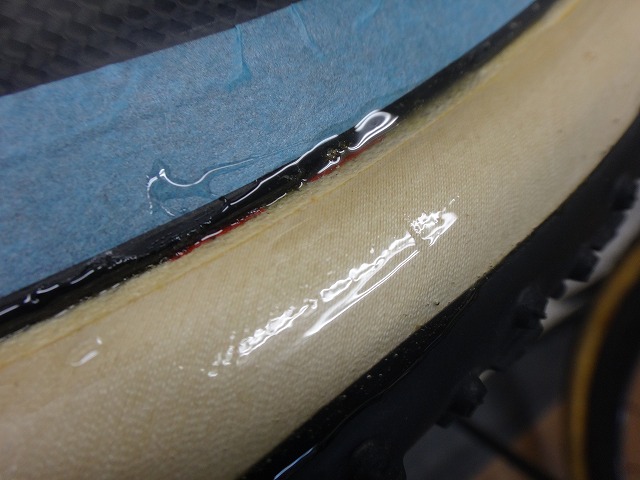
↑This one has a bit too much, so I'm spreading it with the scraper.
(If it comes out normally from the tube opening, of course you just use it as-is)
Focus on the base tape seam.
It needs about one night to cure fully,
but I wouldn't recommend doing this the day before a race.
Though it hardens by reacting with moisture in the air,
if you have leftover Aqua Seal in the tube that you want to use later,
it often hardens before then, so
storing it in the refrigerator helps prevent that.
(Or put it in a ziplock bag and store in the freezer,
then soak in hot water to thaw when reusing)
So, I've been writing this as if I've known about Aqua Seal for ages,
but honestly everything I've written here is mostly
secondhand information I heard from the knowledgeable cyclocross customers
who come to my shop, and I'm still pretty new to all this.
I need to study more.