Another wheel day (and so on).
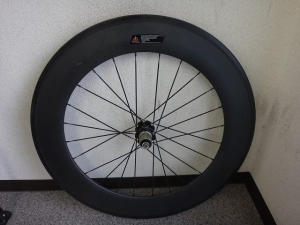
A customer left me an 88mm high carbon rim rear wheel to work on.
It's a WO rim, by the way.
It was built with CN spokes—flat aero spokes that require slitted holes—
but the customer wanted me to rebuild it a bit more solidly.
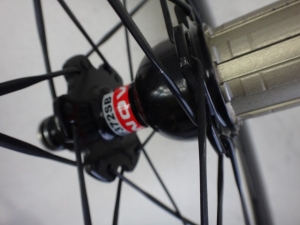
It's a Novatec F372 hub—one with the flange holes phased slightly differently—
laced 24H in the standard JIS pattern.
The flanges aren't particularly wide, so if I use equal-diameter spokes on both sides
and the same number on each side, the non-drive side should tension up decently too,
but it was feeling a bit loose.
I think part of it's the nature of the paint film on CN's black spokes,
but when you grab the cross-overs, they make quite a bit of creaking noise.
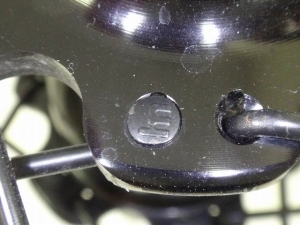
For the rebuild, the customer also wanted a hub swap.
That the original hub wasn't dimensionally very good
was something the customer had already figured out on their own—
I didn't need to tell them.
Maybe they found some blog or other
that goes into detail about wheel components
and picked up someunnecessary knowledge there.
The customer's preference was—first choice—
to use the original aero spokes on the drive side after rebuilding,
and black CX-RAY on the non-drive side,
or if that wasn't possible, black semi-competition spokes.
They said exactly what I was going to suggest, before I could.
The Evo hub flange isn't aero-slitted,
so if there's any possibility, it'd be the Leaf hub.
The Leaf hub sometimes has slitted holes, sometimes round holes,
and the left end nut is sometimes silver, sometimes black—
the specs shift slightly with every shipment,
but the current version has slitted holes.
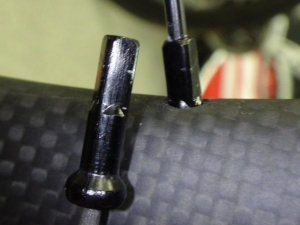
I carefully disassemble everything so I can recover all the spokes cleanly.
16mm long nipples (measuring closer to 16.5mm) were used,
but the rim's inner edge wall is extremely thick, so you can't build it with 12mm.
(Not impossible, but you shouldn't.)
I decided to reuse these ones this time.
Before the rebuild, the customer wasn't doing
a certain treatment to the nipples—
and I've explained this to them.
Whether or not you do this makes a huge difference in how much tension you can achieve—
a very important point.
I took this wheel a fair while ago,
but since the customer could make it to Osaka today,
I'm building the wheel right in front of them.

Disassembled.
In the image, from right to left:
Drive side inpokes
Drive side outpokes
Non-drive side inpokes
Non-drive side outpokes
lined up six of each.
This is because during the rebuild I want the original inpokes to go in as inpokes
and the original outpokes as outpokes,
but the bend angle of the spoke neck below the head
didn't show as much difference as I'd thought.
With hubs that have deep flange holes (wide flanges) like Duraace or Chris King,
you see the difference more clearly.
When building a rear wheel with equal-diameter flanges and equal numbers on each side,
the non-drive side spoke length is generally
about 2mm longer than the drive side.
With American Classic hubs this becomes
more like a 1mm difference rather than 2mm,
and since the hub on the wheel before rebuild was also narrow-flange,
I thought the difference would probably be 1mm on each side... but nope,
they were the same length on both sides.
All the spokes in the image are the same length. That's cutting corners too much!
After calculating, I found that cutting 1mm from these
would work for the drive side of the Leaf hub,
so I can keep the 12 unused ones as spares.
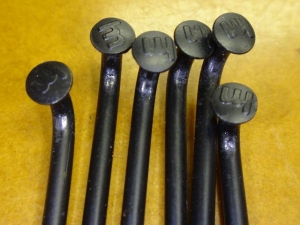
Between the inpokes and outpokes, there was
a faint but clear difference in wear on the spoke neck below the head,
but I'm only showing one (and keeping which one secret)
and I'm not writing about what the difference is or anything like that.
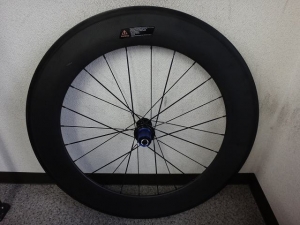
Built.
Leaf hub 24H, semi-CN flat aero spokes, 4-cross laced with spoke nipple covering.
Of course, not in the JIS pattern—I sneakily did it Italian-style instead.
The customer confirmed that even without the covering,
it's already more tense than before the rebuild.

A customer left me an 88mm high carbon rim rear wheel to work on.
It's a WO rim, by the way.
It was built with CN spokes—flat aero spokes that require slitted holes—
but the customer wanted me to rebuild it a bit more solidly.
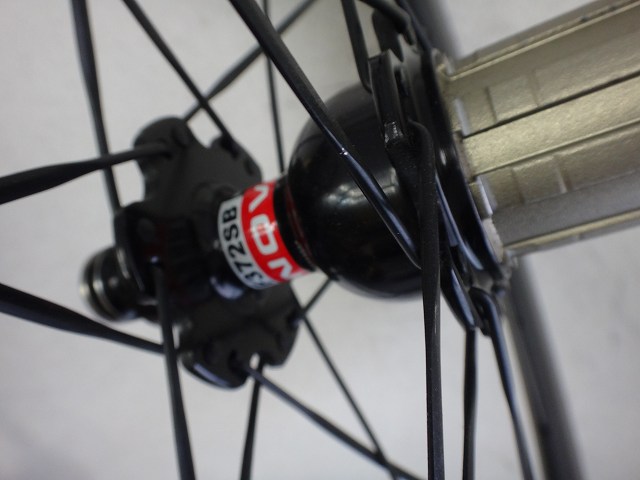
It's a Novatec F372 hub—one with the flange holes phased slightly differently—
laced 24H in the standard JIS pattern.
The flanges aren't particularly wide, so if I use equal-diameter spokes on both sides
and the same number on each side, the non-drive side should tension up decently too,
but it was feeling a bit loose.
I think part of it's the nature of the paint film on CN's black spokes,
but when you grab the cross-overs, they make quite a bit of creaking noise.
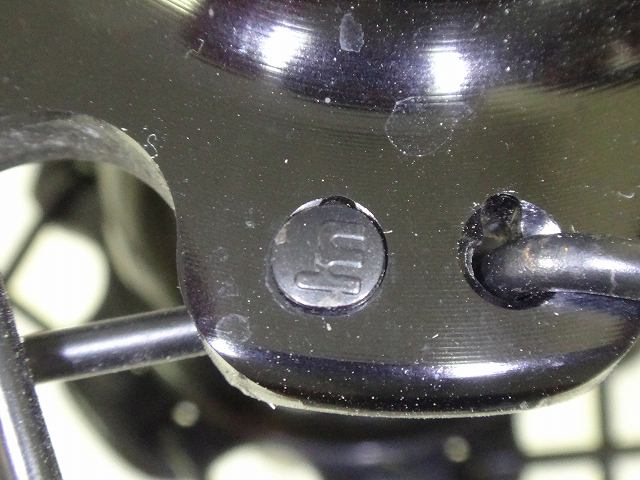
For the rebuild, the customer also wanted a hub swap.
That the original hub wasn't dimensionally very good
was something the customer had already figured out on their own—
I didn't need to tell them.
Maybe they found some blog or other
that goes into detail about wheel components
and picked up some
The customer's preference was—first choice—
to use the original aero spokes on the drive side after rebuilding,
and black CX-RAY on the non-drive side,
or if that wasn't possible, black semi-competition spokes.
They said exactly what I was going to suggest, before I could.
The Evo hub flange isn't aero-slitted,
so if there's any possibility, it'd be the Leaf hub.
The Leaf hub sometimes has slitted holes, sometimes round holes,
and the left end nut is sometimes silver, sometimes black—
the specs shift slightly with every shipment,
but the current version has slitted holes.
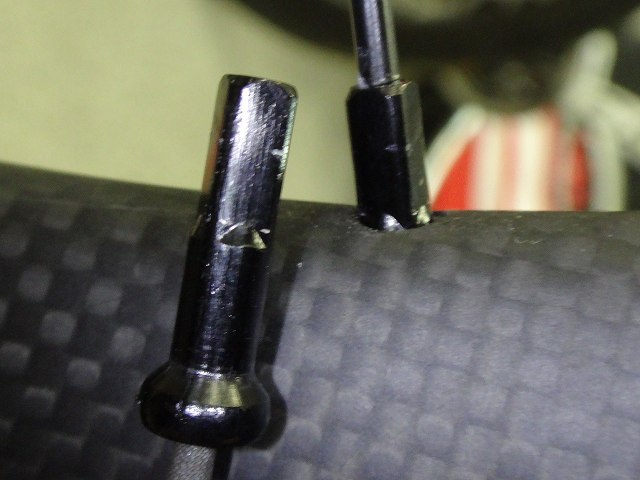
I carefully disassemble everything so I can recover all the spokes cleanly.
16mm long nipples (measuring closer to 16.5mm) were used,
but the rim's inner edge wall is extremely thick, so you can't build it with 12mm.
(Not impossible, but you shouldn't.)
I decided to reuse these ones this time.
Before the rebuild, the customer wasn't doing
a certain treatment to the nipples—
and I've explained this to them.
Whether or not you do this makes a huge difference in how much tension you can achieve—
a very important point.
I took this wheel a fair while ago,
but since the customer could make it to Osaka today,
I'm building the wheel right in front of them.
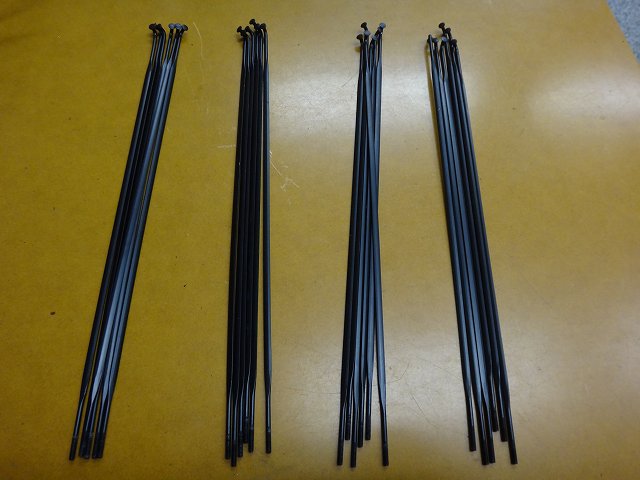
Disassembled.
In the image, from right to left:
Drive side inpokes
Drive side outpokes
Non-drive side inpokes
Non-drive side outpokes
lined up six of each.
This is because during the rebuild I want the original inpokes to go in as inpokes
and the original outpokes as outpokes,
but the bend angle of the spoke neck below the head
didn't show as much difference as I'd thought.
With hubs that have deep flange holes (wide flanges) like Duraace or Chris King,
you see the difference more clearly.
When building a rear wheel with equal-diameter flanges and equal numbers on each side,
the non-drive side spoke length is generally
about 2mm longer than the drive side.
With American Classic hubs this becomes
more like a 1mm difference rather than 2mm,
and since the hub on the wheel before rebuild was also narrow-flange,
I thought the difference would probably be 1mm on each side... but nope,
they were the same length on both sides.
All the spokes in the image are the same length. That's cutting corners too much!
After calculating, I found that cutting 1mm from these
would work for the drive side of the Leaf hub,
so I can keep the 12 unused ones as spares.
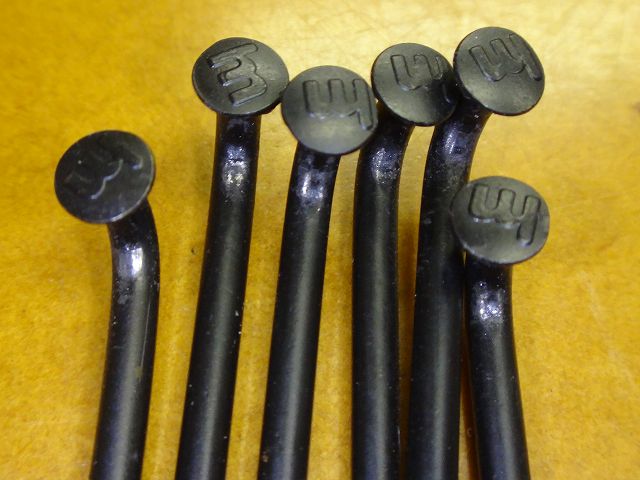
Between the inpokes and outpokes, there was
a faint but clear difference in wear on the spoke neck below the head,
but I'm only showing one (and keeping which one secret)
and I'm not writing about what the difference is or anything like that.
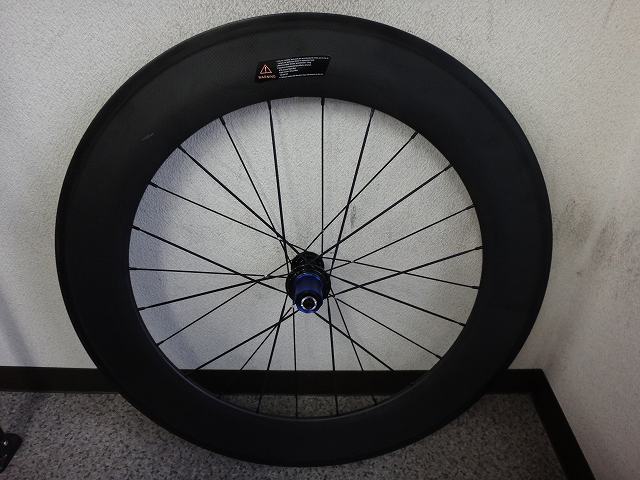
Built.
Leaf hub 24H, semi-CN flat aero spokes, 4-cross laced with spoke nipple covering.
Of course, not in the JIS pattern—I sneakily did it Italian-style instead.
The customer confirmed that even without the covering,
it's already more tense than before the rebuild.