A customer brought in a rear wheel from a Kyserium SLE (high-end road wheel) for service.
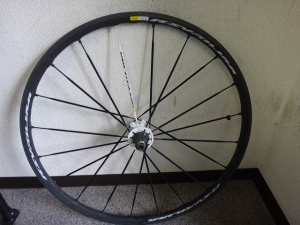
The hub rotation was sluggish, they said.
From what I could see,
the hub bearing rotation was within acceptable range for a contact-type seal,
but the freewheel body had extremely high drag.
The customer thought something was off enough to bring it to us,
so I doubt this is just their imagination,
but when they consulted the shop where they bought it,
apparently they were told "this is normal."
Since the customer did the right thing by asking the original shop first,
that retailer has no right to complain about them bringing it to us next.
The customer was pretty shocked when I figured out which shop it was,
but there are more than enough clues to work it out.
Some shops might be wondering why they're losing customers lately
due to a decline in technical credibility,
but I think it comes down to things like this piling up.
I'll write about a similar situation soon,
but here's my take:
at least take proper care of the products
you sold from your own shop
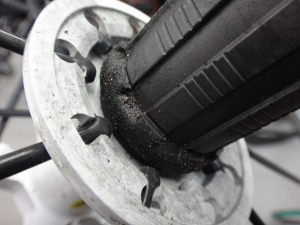
↑ First I removed the freewheel body...
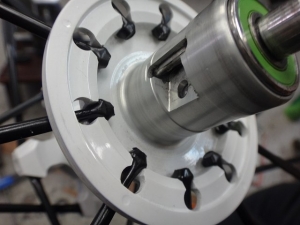
↑ I explained to the customer that this black grime ring formed in this area
is what's causing the sluggish freewheel body rotation.
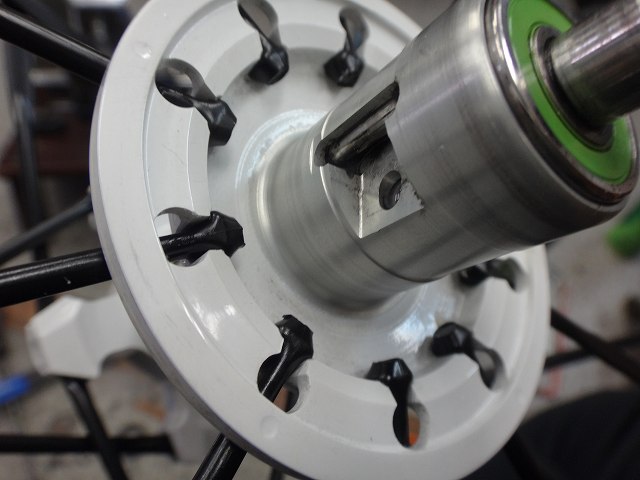
Oops, I accidentally posted the wrong image—should've been after cleaning (deadpan).
Regarding hub bearing rotation,
I applied a tiny bit of oil to only the 6901LU on the non-freewheel side.
LU is the part number for NTN's contact-type seal,
while LB is the non-contact type.
I explained that if we swapped it with the 6901LB we have in stock, rotation would be smoother,
but since Mavic deliberately chose the contact-type to prioritize dust sealing,
there's a case to be made that the LU is better when you factor in the maintenance costs of preserving initial performance.
I showed them how the seal sits on the bearing outer race
and how the membrane inside the seal rubs against the inner race—
I lifted the seal briefly to do the oil application so they could see this.
In the end, without replacing the bearing, not only did the freewheel body spin noticeably better,
but they also said the hub bearing rotation was "smoother now!"—
which confirms that the condition when they brought it in was definitely not "normal."
During inspection, the rim was off toward the non-freewheel side by about the thickness of a one-yen coin.
With rear wheels that have cup-and-cone hubs, the rim tends to drift toward the freewheel side over time with use
(except for R-SYS),
so being offset this much toward the non-freewheel side means it was like that from the start.
One last thing I'll mention:
putting Canon○le and Mav○c shop inventory on Yahoo Auctions
is seriously risky, so you really shouldn't do it.
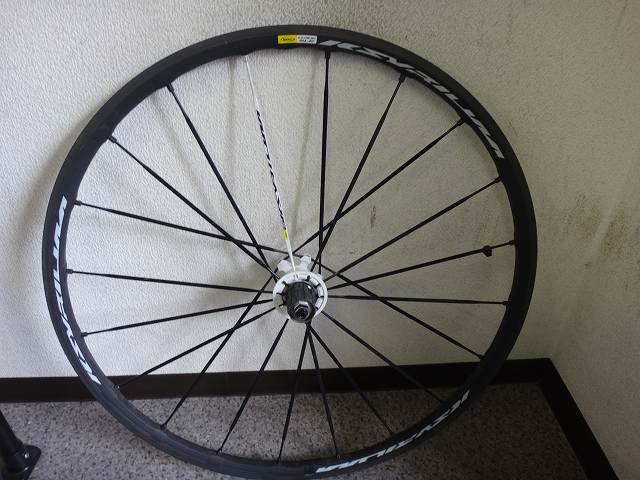
The hub rotation was sluggish, they said.
From what I could see,
the hub bearing rotation was within acceptable range for a contact-type seal,
but the freewheel body had extremely high drag.
The customer thought something was off enough to bring it to us,
so I doubt this is just their imagination,
but when they consulted the shop where they bought it,
apparently they were told "this is normal."
Since the customer did the right thing by asking the original shop first,
that retailer has no right to complain about them bringing it to us next.
The customer was pretty shocked when I figured out which shop it was,
but there are more than enough clues to work it out.
Some shops might be wondering why they're losing customers lately
due to a decline in technical credibility,
but I think it comes down to things like this piling up.
I'll write about a similar situation soon,
but here's my take:
at least take proper care of the products
you sold from your own shop
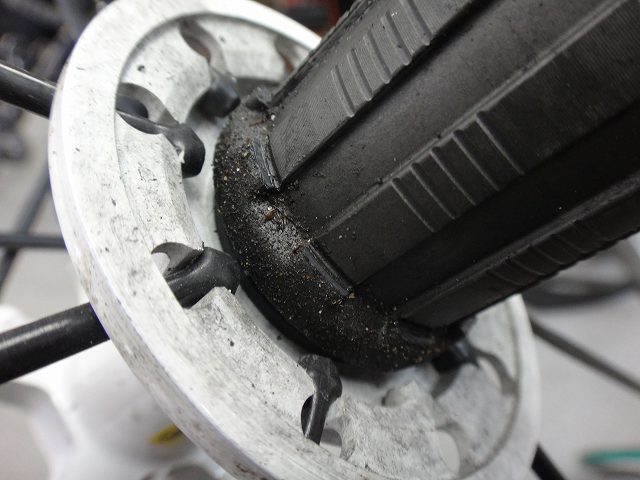
↑ First I removed the freewheel body...
↑ I explained to the customer that this black grime ring formed in this area
is what's causing the sluggish freewheel body rotation.
Oops, I accidentally posted the wrong image—should've been after cleaning (deadpan).
Regarding hub bearing rotation,
I applied a tiny bit of oil to only the 6901LU on the non-freewheel side.
LU is the part number for NTN's contact-type seal,
while LB is the non-contact type.
I explained that if we swapped it with the 6901LB we have in stock, rotation would be smoother,
but since Mavic deliberately chose the contact-type to prioritize dust sealing,
there's a case to be made that the LU is better when you factor in the maintenance costs of preserving initial performance.
I showed them how the seal sits on the bearing outer race
and how the membrane inside the seal rubs against the inner race—
I lifted the seal briefly to do the oil application so they could see this.
In the end, without replacing the bearing, not only did the freewheel body spin noticeably better,
but they also said the hub bearing rotation was "smoother now!"—
which confirms that the condition when they brought it in was definitely not "normal."
During inspection, the rim was off toward the non-freewheel side by about the thickness of a one-yen coin.
With rear wheels that have cup-and-cone hubs, the rim tends to drift toward the freewheel side over time with use
(except for R-SYS),
so being offset this much toward the non-freewheel side means it was like that from the start.
One last thing I'll mention:
putting Canon○le and Mav○c shop inventory on Yahoo Auctions
is seriously risky, so you really shouldn't do it.