In a recent article, I wrote something like "if you install an Easton stem's front cap upside down, it becomes 'Yo-Easton,' so fix it!" But depending on the stem model and situation, that's not actually possible—and that's what I'm going to explain now.

↑This is an EA90 stem from 2006–2008.
The angle is −10°.
Besides this, there are 0° and +10° versions, but −10° and +10° are not the same when flipped upside down—and that's a quirk unique to this stem.
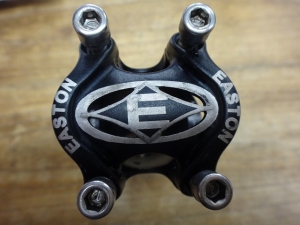
↑This reads "E-aston."
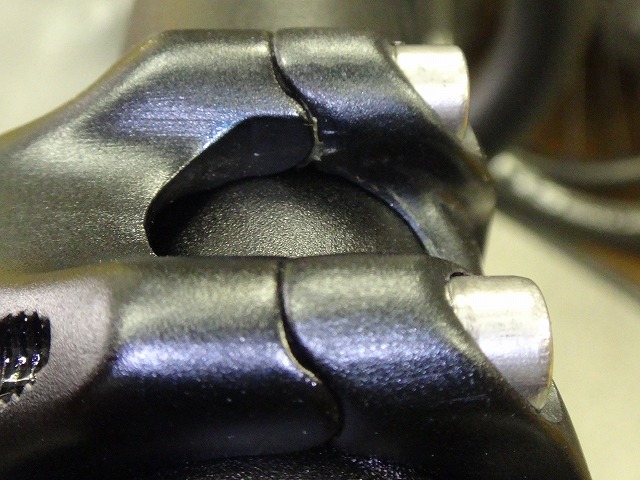
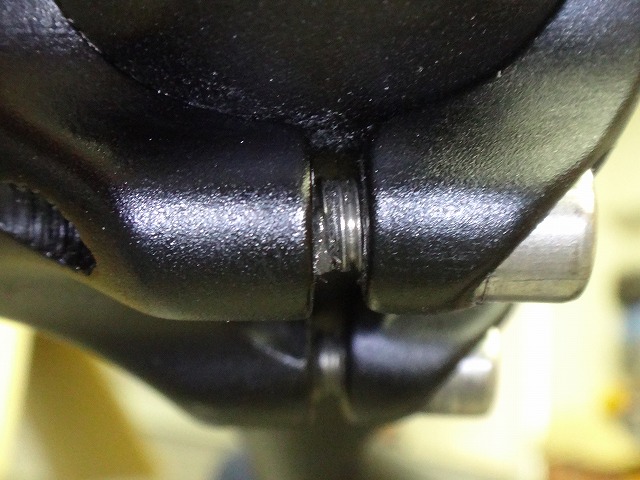
Now, the joint between the stem body and front cap—the upper side where you can read "E-aston" is
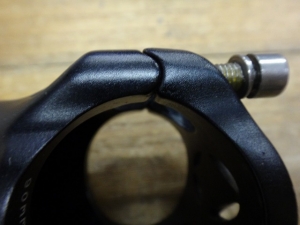
curved, while
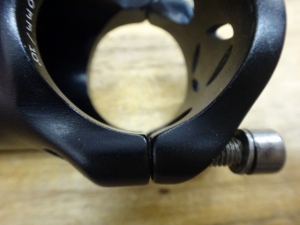
the lower side is flat.
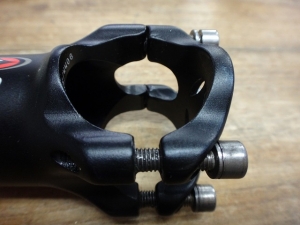
With this stem, the specified procedure is:
First tighten the curved side completely,
then secure the handlebar with the flat side
So the upper side functions like a hinge.
(Strictly speaking, it's not a hinge, but you get the idea.)
The relationship between the stem body and cap must match curve-to-curve and flat-to-flat, so
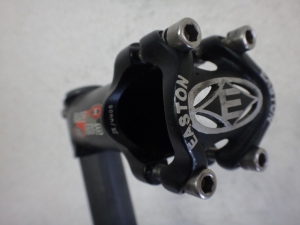
when a −10° stem reads "E-aston" and you flip it upside down,
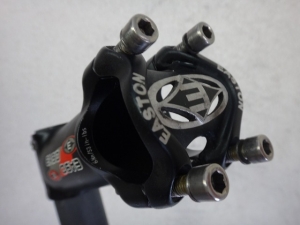
it will always become "Yo-aston."
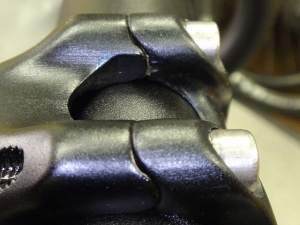
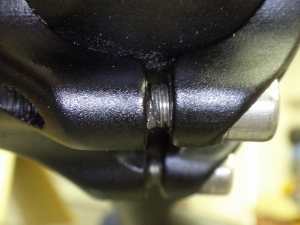
Installed according to the manufacturer's instructions.
This is an aluminum handlebar, but with carbon bars, this tightening configuration creates a stress state that's not ideal, so even knowing the manufacturer's instructions, it might be better to tighten with an even gap on both upper and lower sides. Especially with lightweight bars with thin walls.
Next, about the difference between −10° and +10° stems.
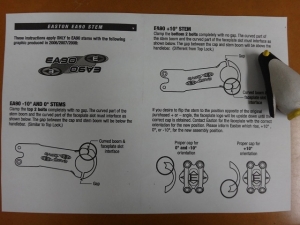
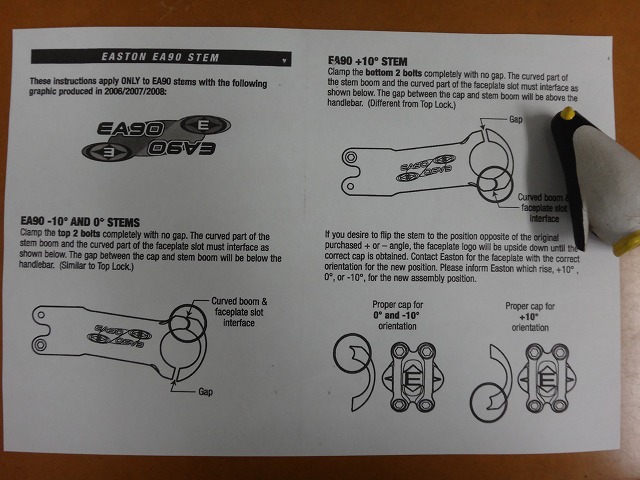
Here's the stem's instruction manual.
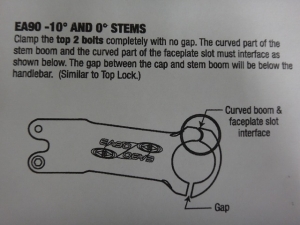
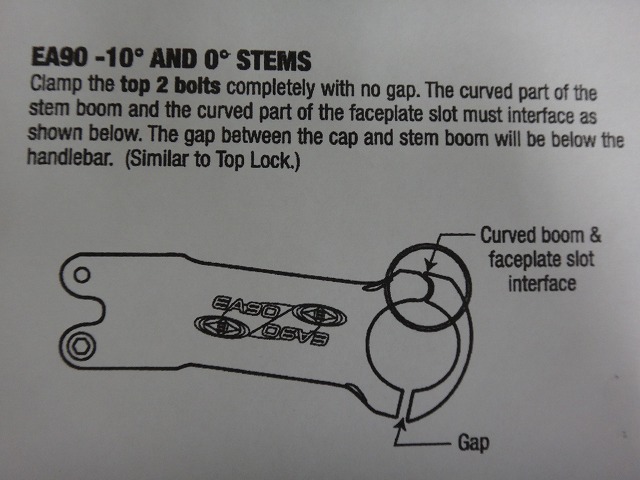
For −10° and 0°, the instruction is to completely tighten the two upper bolts and place the gap (gap) on the lower side of the front cap. Of course, what gets tightened is the curved side.
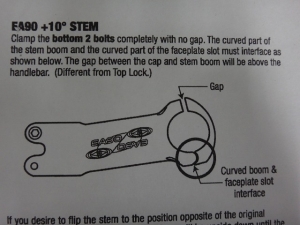
With the +10° version, the curved side is on the bottom, so you completely tighten that side first and place the gap on the upper side. It seems odd to have a gap at the top on a pseudo-hinge-type stem, but this is caused by the fact that "+10° and −10° stems use the same stem body"—a design shortcut. If the body is the same and the front cap is also the same, you can't avoid a "Yo-aston" condition with a +10° stem, but to prevent that,
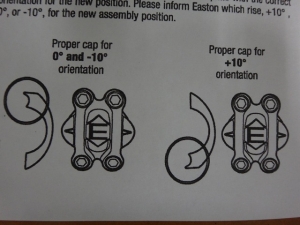
↑the +10° front cap has the curved side flipped top-to-bottom compared to other angles when in "E-aston" orientation.
When you consider the effort of either making two types of front caps or making an additional stem body variant, the former seems easier. On the lower-tier EA70 stem from the same period, you don't need to do hinge-style tightening—it has a normal front cap. But the "E" logo on the EA70 cap is an embossed 3D relief, while on the EA90 that labor was skipped and the "E" logo is just printed. This seems to be done purely because of the effort required to make a separate flipped front cap.
So −10° and +10° do give you the same angle when flipped, but the front cap is a different part, and if you use a +10° on the lower side, it will always read "Yo-aston."
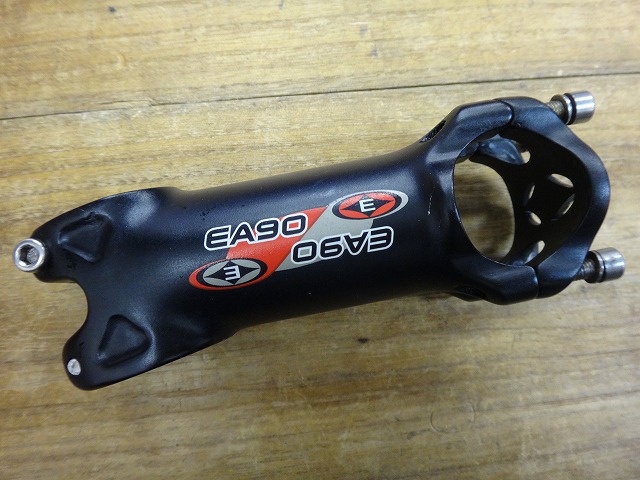
↑This is an EA90 stem from 2006–2008.
The angle is −10°.
Besides this, there are 0° and +10° versions, but −10° and +10° are not the same when flipped upside down—and that's a quirk unique to this stem.

↑This reads "E-aston."
Now, the joint between the stem body and front cap—the upper side where you can read "E-aston" is

curved, while

the lower side is flat.
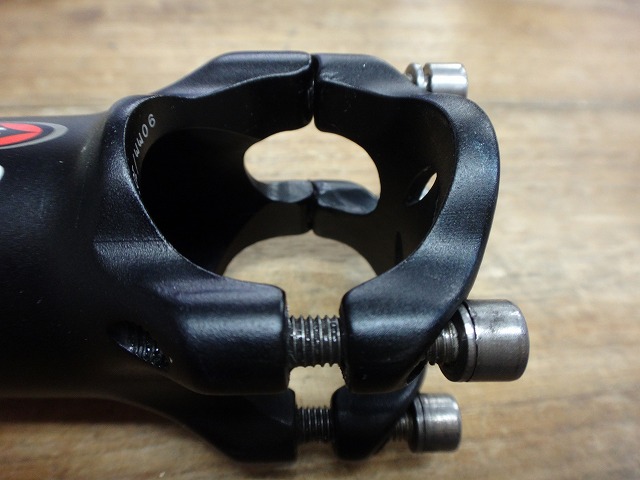
With this stem, the specified procedure is:
First tighten the curved side completely,
then secure the handlebar with the flat side
So the upper side functions like a hinge.
(Strictly speaking, it's not a hinge, but you get the idea.)
The relationship between the stem body and cap must match curve-to-curve and flat-to-flat, so
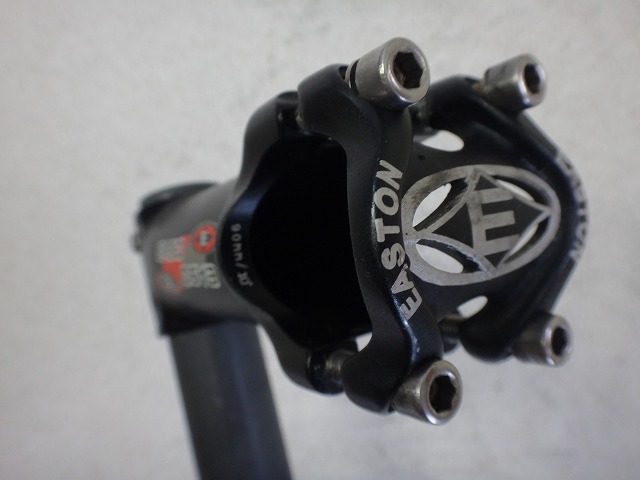
when a −10° stem reads "E-aston" and you flip it upside down,
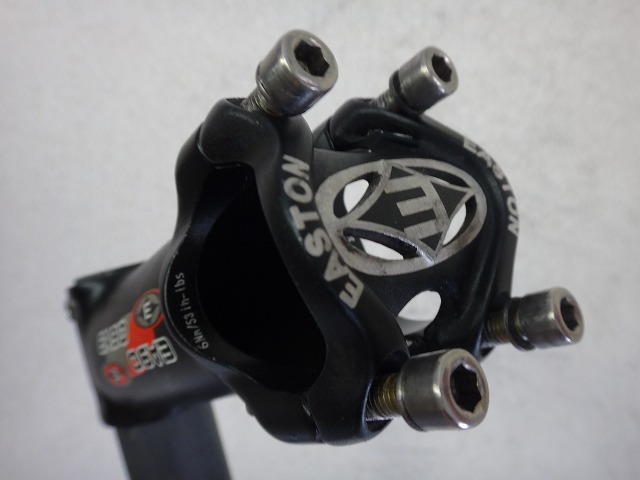
it will always become "Yo-aston."
Installed according to the manufacturer's instructions.
This is an aluminum handlebar, but with carbon bars, this tightening configuration creates a stress state that's not ideal, so even knowing the manufacturer's instructions, it might be better to tighten with an even gap on both upper and lower sides. Especially with lightweight bars with thin walls.
Next, about the difference between −10° and +10° stems.
Here's the stem's instruction manual.
For −10° and 0°, the instruction is to completely tighten the two upper bolts and place the gap (gap) on the lower side of the front cap. Of course, what gets tightened is the curved side.

With the +10° version, the curved side is on the bottom, so you completely tighten that side first and place the gap on the upper side. It seems odd to have a gap at the top on a pseudo-hinge-type stem, but this is caused by the fact that "+10° and −10° stems use the same stem body"—a design shortcut. If the body is the same and the front cap is also the same, you can't avoid a "Yo-aston" condition with a +10° stem, but to prevent that,

↑the +10° front cap has the curved side flipped top-to-bottom compared to other angles when in "E-aston" orientation.
When you consider the effort of either making two types of front caps or making an additional stem body variant, the former seems easier. On the lower-tier EA70 stem from the same period, you don't need to do hinge-style tightening—it has a normal front cap. But the "E" logo on the EA70 cap is an embossed 3D relief, while on the EA90 that labor was skipped and the "E" logo is just printed. This seems to be done purely because of the effort required to make a separate flipped front cap.
So −10° and +10° do give you the same angle when flipped, but the front cap is a different part, and if you use a +10° on the lower side, it will always read "Yo-aston."