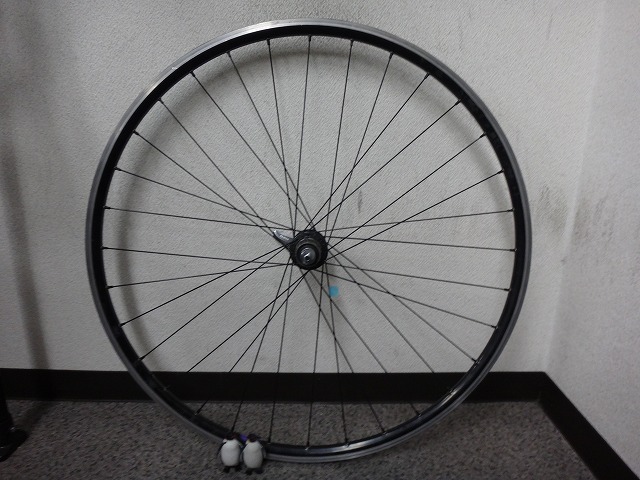
A customer left me a rear wheel built with a DT RR415 rim.
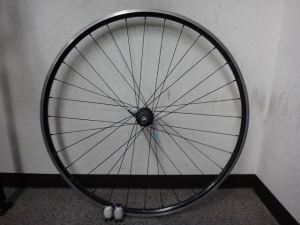
They wanted me to rebuild it because it's loose,
but with a budget-conscious condition.
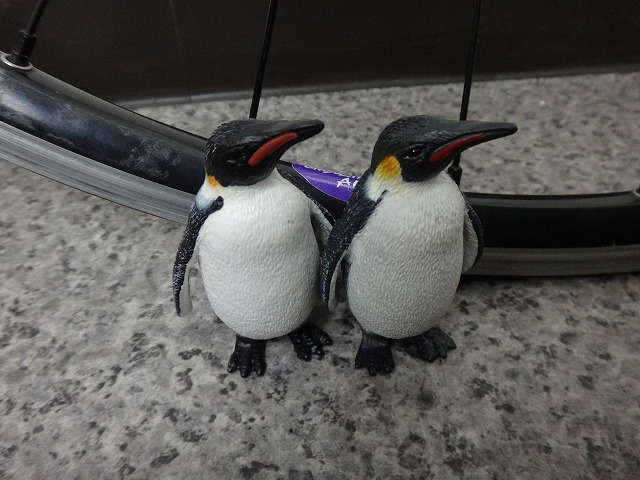
There's a sticker from some shop on it,
but it wasn't built here.
Since the original state was loose, another builder
replaced all the spokes and rebuilt it,
but that second builder said "it can't be tensioned any further."
I kind of know that second builder,
but from what I remember, they weren't someone who could build proper wheels.
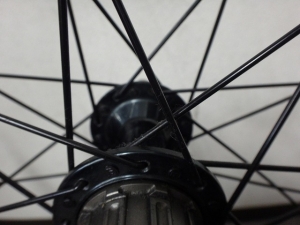
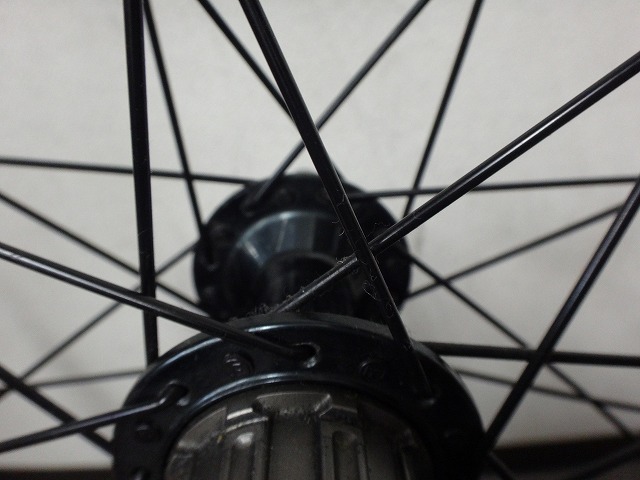
It's a 32H hub with 15-gauge plain spokes in a 6-cross Italian pattern,
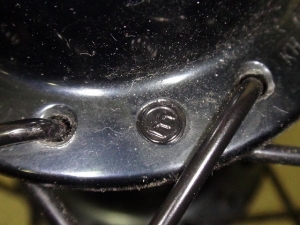
and the spokes are CN brand.
They said "it can't be tensioned any further,"
but that's not true.
Even with these conditions, there's still room to increase tension.
Before that though...
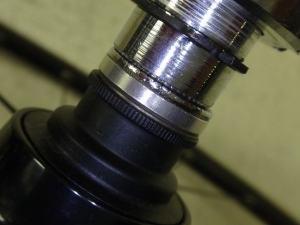
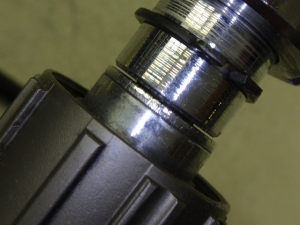
The wheel isn't centered—the rim is shifted toward the freewheel side,
so the non-freewheel side should be able to be tightened unilaterally until center is achieved.
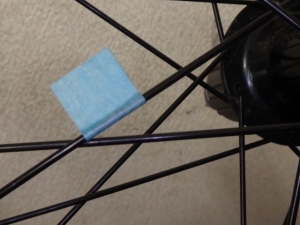
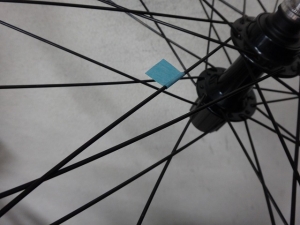
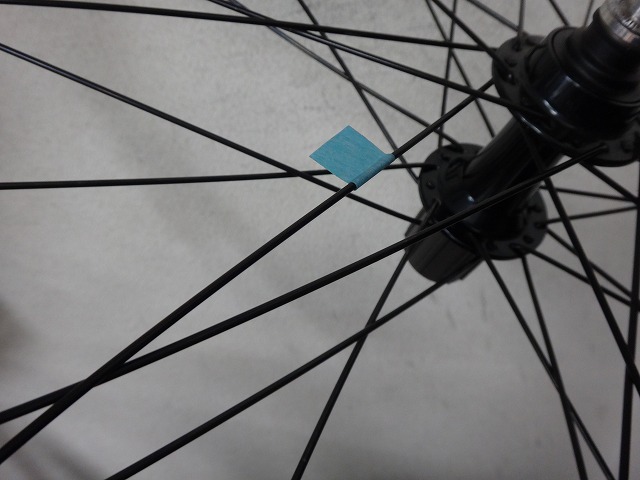
I put marking tape at the final crossing point
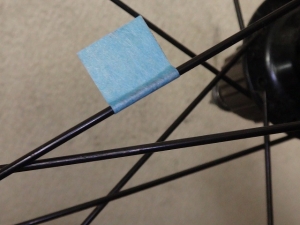
and hand-squeezed until spoke deformation disappeared.
If this reduces after rebuilding, that's what we're aiming for.
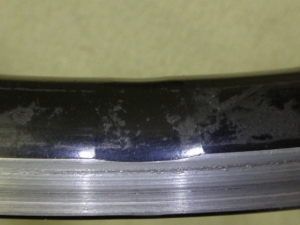
Since this is an RR-series rim, it has eyelets (R-series rims don't have them).
Rims with eyelets can't use Midol lubricant,
but the previous builder neglected other methods to improve nipple rotation
(or probably just didn't know the method),
so the problem is simply that the nipples won't turn—
it's not that further tightening is impossible.
This rim doesn't have an especially high specified limit tension,
but there's still room for improvement.
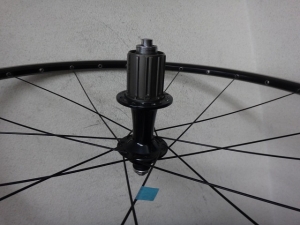
I sufficiently loosened the freewheel-side spokes before disassembling.
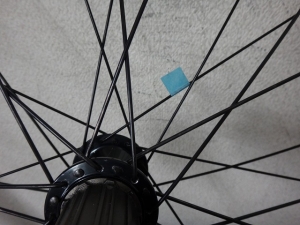
I replaced the freewheel-side spokes with Sapim Black Leader 14-gauge plain spokes
and changed the lacing pattern from left-hand 6-cross to right-hand 4-cross.
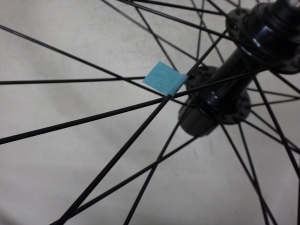
At the preliminary assembly stage, the freewheel-side tension is loose,
so the non-freewheel side is also very loose.
Even before disassembly, I made a point of not adjusting the non-freewheel-side nipples at all
and tensioned the freewheel side as much as possible.
At this stage lateral runout is nearly eliminated,
but I haven't done the radial runout correction that should have been done by now,
so I'll need to fine-tune the radial runout later.
The centering is worse than before disassembly,
but since the rim is still shifted toward the freewheel side,
the non-freewheel side can be tightened unilaterally.
Since I haven't touched the non-freewheel-side nipples at all up to this point,
the spoke deformation on that side will definitely be less than before rebuilding.
The freewheel side has spokes of different gauges to begin with,
so the difference from before rebuilding is even more dramatic.

It's built.
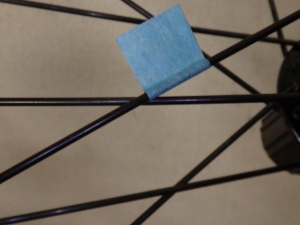
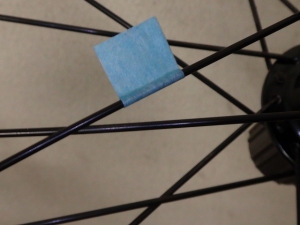
I hand-squeezed the non-freewheel side under the same conditions.
I didn't use any arbitrary methods, just to be clear.
If anything, I thought it would get harder, so this is a bit disappointing.
But the freewheel side is something else entirely, so that alone makes a big difference.
Now I'm the third builder of this wheel,
but the original state was probably a Revolution 6-cross pattern.
If I'd understood wheels a bit better,
I wouldn't have done a left-right equal-diameter equal-spoke 15-gauge plain pattern
in the rebuild from the original state,
but there's no point saying that now (←then don't say it).
They wanted me to rebuild it because it's loose,
but with a budget-conscious condition.
There's a sticker from some shop on it,
but it wasn't built here.
Since the original state was loose, another builder
replaced all the spokes and rebuilt it,
but that second builder said "it can't be tensioned any further."
I kind of know that second builder,
but from what I remember, they weren't someone who could build proper wheels.
It's a 32H hub with 15-gauge plain spokes in a 6-cross Italian pattern,
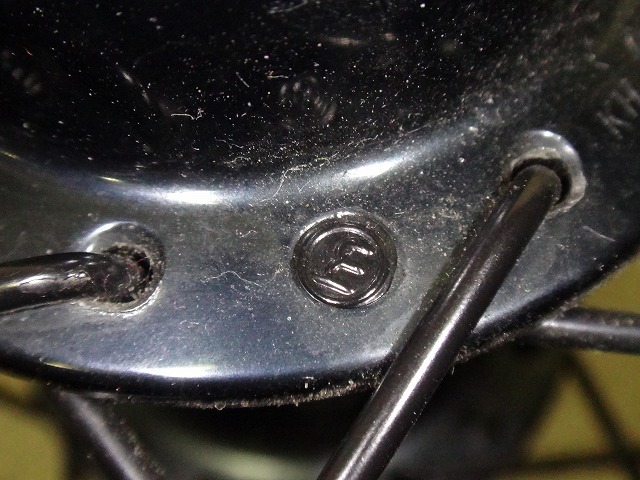
and the spokes are CN brand.
They said "it can't be tensioned any further,"
but that's not true.
Even with these conditions, there's still room to increase tension.
Before that though...
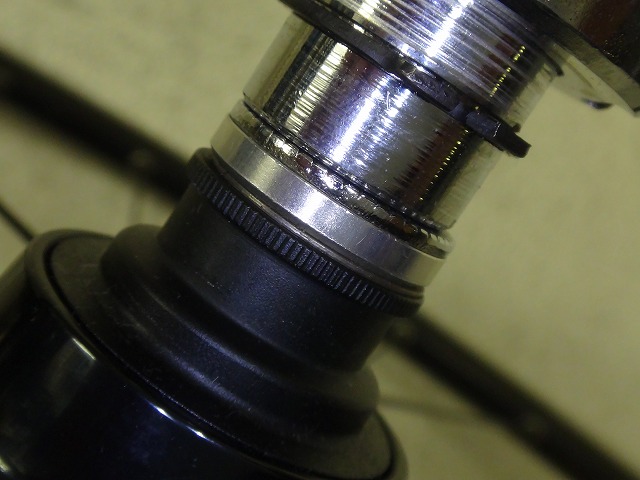
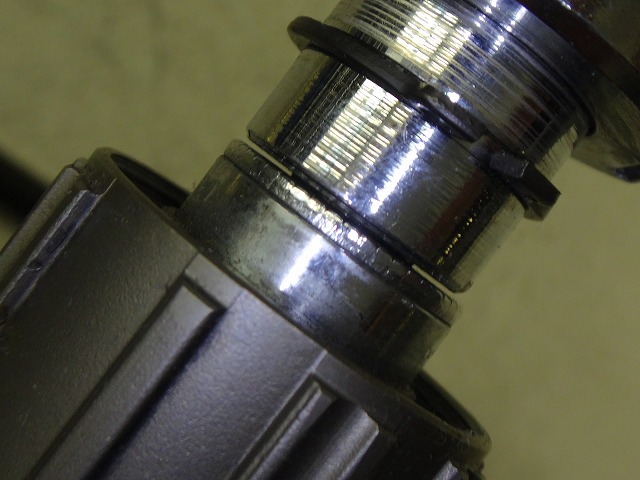
The wheel isn't centered—the rim is shifted toward the freewheel side,
so the non-freewheel side should be able to be tightened unilaterally until center is achieved.
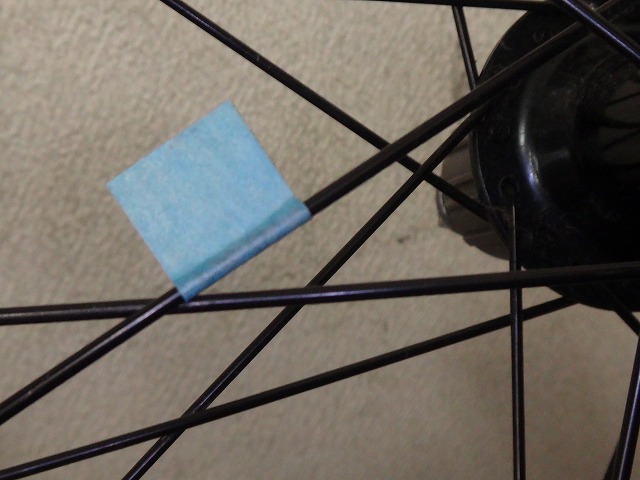
I put marking tape at the final crossing point
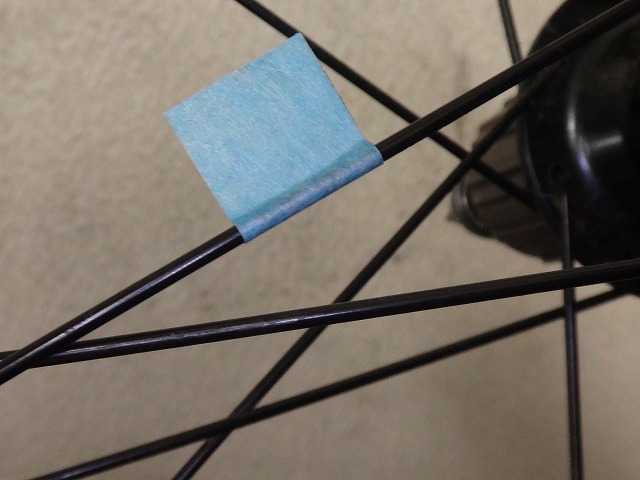
and hand-squeezed until spoke deformation disappeared.
If this reduces after rebuilding, that's what we're aiming for.
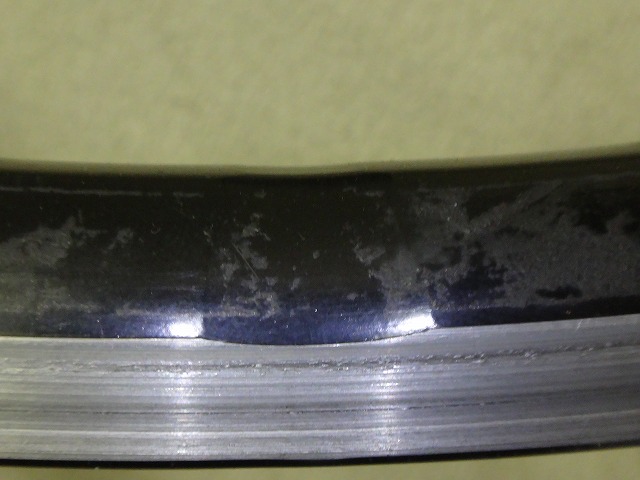
Since this is an RR-series rim, it has eyelets (R-series rims don't have them).
Rims with eyelets can't use Midol lubricant,
but the previous builder neglected other methods to improve nipple rotation
(or probably just didn't know the method),
so the problem is simply that the nipples won't turn—
it's not that further tightening is impossible.
This rim doesn't have an especially high specified limit tension,
but there's still room for improvement.
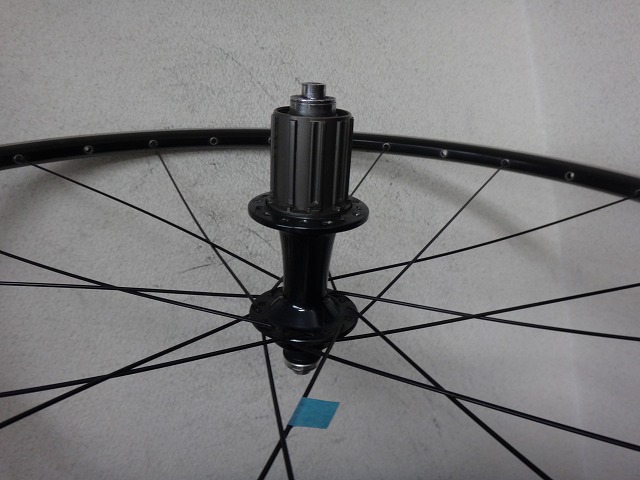
I sufficiently loosened the freewheel-side spokes before disassembling.
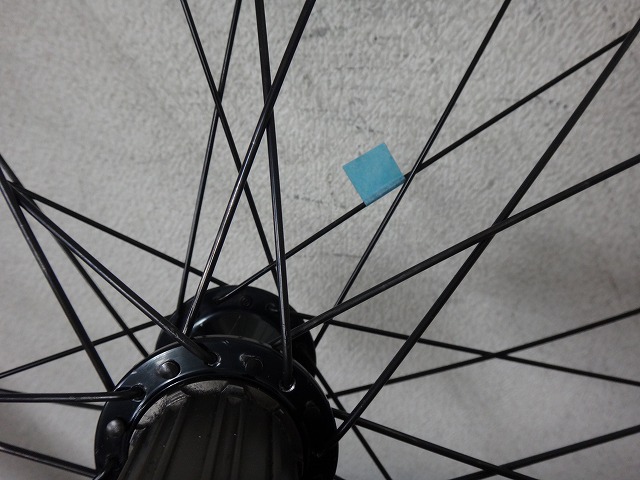
I replaced the freewheel-side spokes with Sapim Black Leader 14-gauge plain spokes
and changed the lacing pattern from left-hand 6-cross to right-hand 4-cross.

At the preliminary assembly stage, the freewheel-side tension is loose,
so the non-freewheel side is also very loose.
Even before disassembly, I made a point of not adjusting the non-freewheel-side nipples at all
and tensioned the freewheel side as much as possible.
At this stage lateral runout is nearly eliminated,
but I haven't done the radial runout correction that should have been done by now,
so I'll need to fine-tune the radial runout later.
The centering is worse than before disassembly,
but since the rim is still shifted toward the freewheel side,
the non-freewheel side can be tightened unilaterally.
Since I haven't touched the non-freewheel-side nipples at all up to this point,
the spoke deformation on that side will definitely be less than before rebuilding.
The freewheel side has spokes of different gauges to begin with,
so the difference from before rebuilding is even more dramatic.
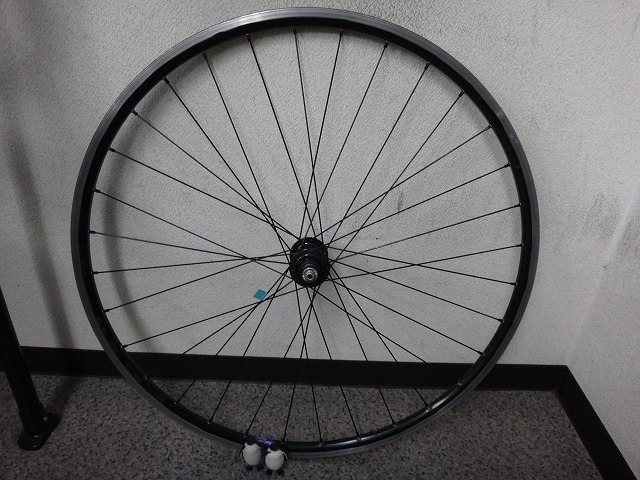
It's built.

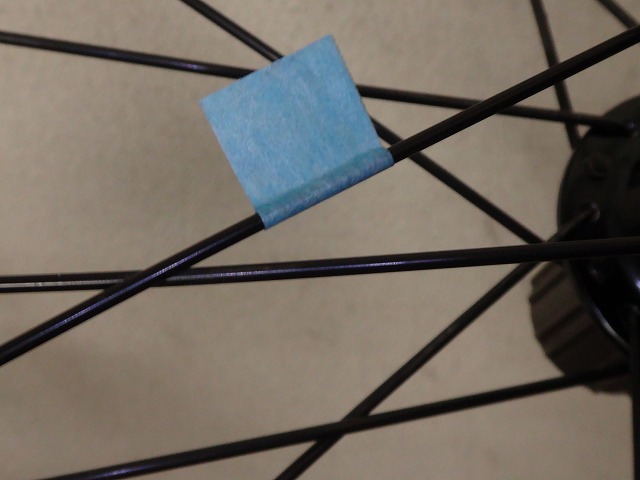
I hand-squeezed the non-freewheel side under the same conditions.
I didn't use any arbitrary methods, just to be clear.
If anything, I thought it would get harder, so this is a bit disappointing.
But the freewheel side is something else entirely, so that alone makes a big difference.
Now I'm the third builder of this wheel,
but the original state was probably a Revolution 6-cross pattern.
If I'd understood wheels a bit better,
I wouldn't have done a left-right equal-diameter equal-spoke 15-gauge plain pattern
in the rebuild from the original state,
but there's no point saying that now (←then don't say it).