I got a mysterious transmission from somewhere saying, "Use FOURIERS' add-on 40T gear!"
and

used actual parts arrived too.
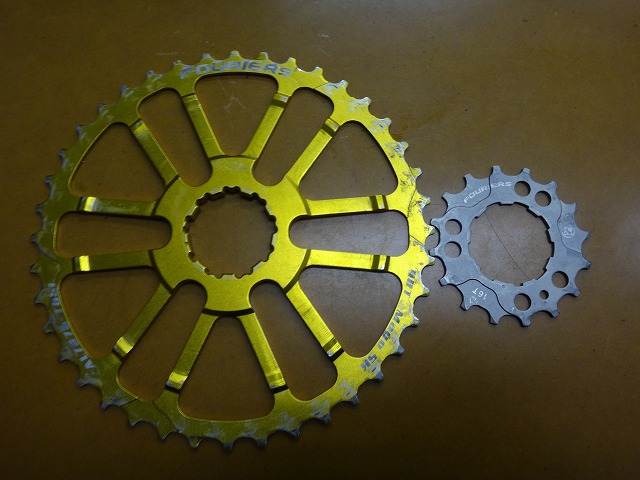
It's a set of 16T and 40T.
So what exactly is this?
It's a "kit to add-on a 40T or 42T gear inside the largest 36T gear of a Shimano 10-speed MTB sprocket."
This one is gold-colored, but there are other colors available.
There's a reason it's for 10-speed: because 11-speed sprockets already come stock with 11-40T.
11-40T and 11-42T and such are, due to derailleur capacity constraints,
effectively tooth counts reserved for front-single-only setups,
but this niche part answers the demand from people who want to try gear combinations like that without upgrading their whole drivetrain to 11-speed.

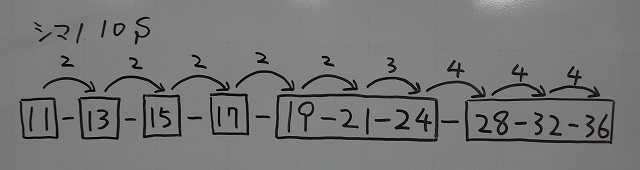
↑Shimano's XT 10-speed 11-36T sprocket is structured like this.
Multiple cogs grouped in the same box are inseparable units.
(In the case of XTR, they're the same tooth counts, but the low-side six cogs are
three separate units: "19-21," "24-28," "32-36")
From top to low across 9 shifts
there are 2T jumps 5 times → 3T jump 1 time → 4T jumps 3 times, but

↑like this, you remove the 15T and 17T, put in a 16T instead,
and use the leftover cog as the 40T (or 42T) low gear.
It feels a bit weird to have another 2T jump come in after a 2T jump → two 3T jumps from the top,
but that's unavoidable due to spider arm geometry.
If you were to install the factory 11→13 followed by a 16-19-22-25 unit,
you'd get 2T jump 1 time → 3T jumps 5 times → 4T jumps 3 times (in the case of 40T low),
but then 5 out of 10 cogs would be non-stock,
and at that point you might as well just buy the 11-40T 10-speed sprocket from Praxisworks (プラクシスワークス).
Praxis' 11-40T also only comes in 10-speed spec.
They know it's a niche product.
The configuration is 11-13-15-17-19-21-24-28-34-40,
and because of the added 15-17, the low end is a bit spaced out.
FOURIERS' strength is that you can easily upgrade to 40T with just two cogs,
and almost all the other gears are Shimano stock, so there are almost no shifting performance issues,
Plus, both are carried by Tri-Sports, so either way they sell (and so on)

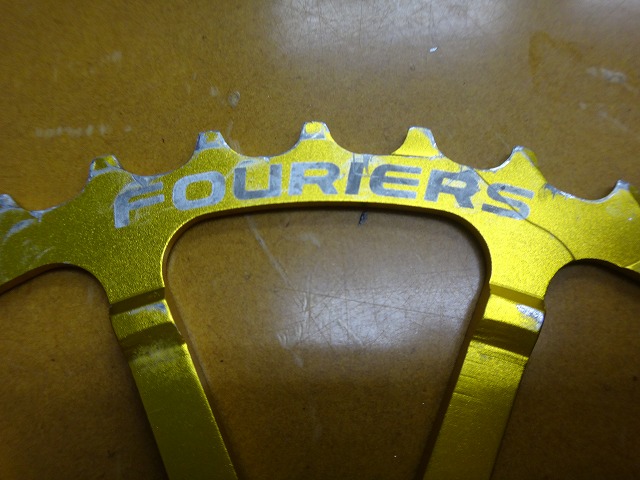
The FOURIERS brand might not be very famous,

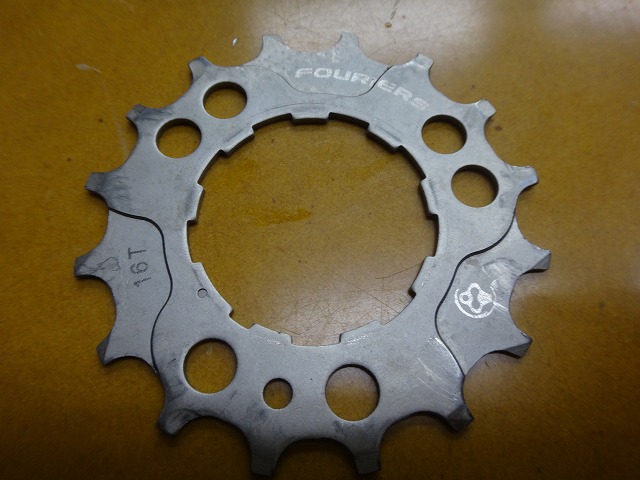
but when I saw the logo on the

16T,
I remembered.
FOURIERS makes these over-the-top MTB chain catchers that are like "basically a front mech!" but

with road chain catchers like TOKEN and Tni,

they seem to be charging royalties.

By the way, the sprocket I want to convert to 40T isn't XT or XTR,
but the budget-grade CS-HG50.
The tooth configuration is the same 11-36T as XT and such, but

the top and the 8 cogs after the second gear are riveted with pins and can't be taken apart.
In the past, some grades had these rivets that could be undone with an Allen key, but...

By the way, the reason Mavic's Shimano freebody spacers have 2mm removed at three spots,
or some 11-speed freebody 10-speed conversion 1.85mm spacers also have three spots removed,
is to avoid interference with these pins.

I ground down the rivets

and drove the pins out

and disassembled it.
Since these don't have spider arms, I'm free to choose which cogs to remove,
but it would be weird to have 15-16-17 and make a 1T jump in the middle,
so in the end I had no choice but to remove 15T and 17T and insert 16T.

↑That's what I did.
Now all that's left is to install the top two cogs.

This article is also a continuation of the road link story from the other day.

14-25T (14-15-16-17-18-19-20-21-23-25)

11-40T (11-13-16-19-21-24-28-32-36-40)
Red numbers are FOURIERS cogs

Without worrying about the hassle of flipping the rear wheel,
I ended up with a 17-speed sprocket of
11-13-14-15-16-17-18-19-20-
21-23-24-25-28-32-36-40,
with only 3 cogs overlapping out of 20.
Nice. (What's nice about it is unclear.)

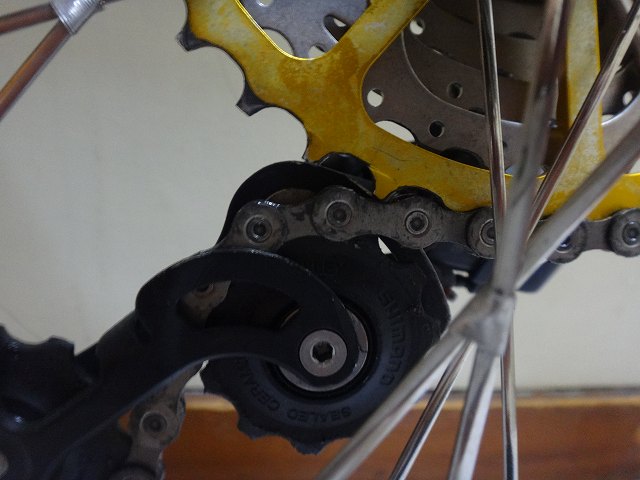
Shifted to 40T.
Just to be clear, this is a short-cage derailleur for road bikes.

I cut the chain to the length for 36T,
but since I'd built in some slack in the chain tension,
the link count could stay the same.

I adjusted the B-tension screw a bit,
but I didn't have to use all the threads.
Now it shifts smoothly without any grinding sensation.
I said last time "shifting performance drops with a road link,"
but as long as the pulley is directly under the sprocket teeth, shifting does happen.
It's just that with the top three cogs or so, the gap between the tooth tips and the pulley gets pretty big,
so the chain spends a long time at an angle during shifts, meaning power transfer is delayed—
in short, there definitely was a sluggish feel.

The current manufacturer website has corrected this, but
this image that supposedly used to be on their site is wrong.
If you count the sprocket before the gear swap, it comes to 9-speed.
Wrong: 19+21T and 24+32+36T
Correct: 19+21+24T and 28+32+36T
There's no way it jumps from 24T to 32T.
The Japanese distributor's site had this image, so be warned.
This is XT with the factory low-side 6 cogs as 3+3,

but the current site shows XTR as 2+2+2.
Either way, the point is the same: swap 15-17T for 16T
and add one more low gear.
Also, as a similar part to this,

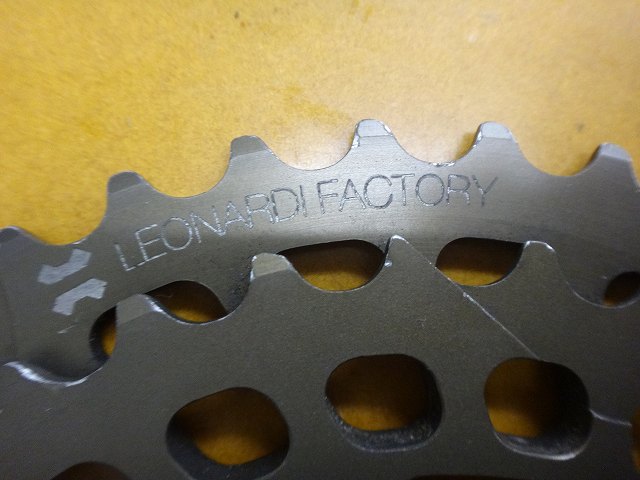
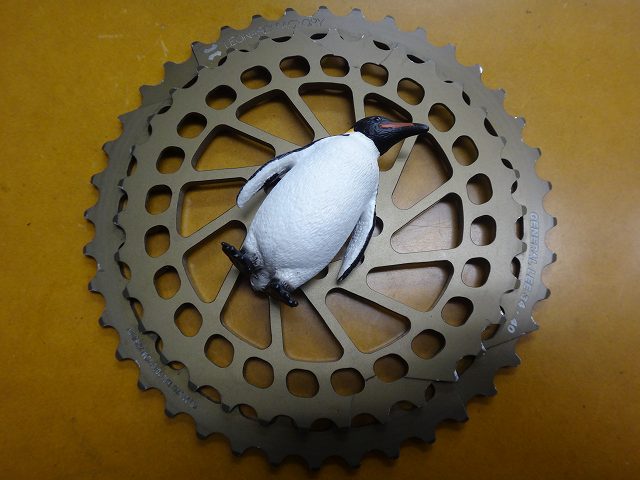
there's a part called General Lee from the brand Leonardi Factory,

but

I've never seen one in person, so I image-searched and grabbed these.
There are other tooth counts available too.
The manufacturer's site says:
"Leonardi's General Lee Kit is a simple and cheap way
to upgrade your 10 speed cassette~"
but it's a bit much even for the makers themselves to call it the "cheap way."
and
It's a set of 16T and 40T.
So what exactly is this?
It's a "kit to add-on a 40T or 42T gear inside the largest 36T gear of a Shimano 10-speed MTB sprocket."
This one is gold-colored, but there are other colors available.
There's a reason it's for 10-speed: because 11-speed sprockets already come stock with 11-40T.
11-40T and 11-42T and such are, due to derailleur capacity constraints,
effectively tooth counts reserved for front-single-only setups,
but this niche part answers the demand from people who want to try gear combinations like that without upgrading their whole drivetrain to 11-speed.
↑Shimano's XT 10-speed 11-36T sprocket is structured like this.
Multiple cogs grouped in the same box are inseparable units.
(In the case of XTR, they're the same tooth counts, but the low-side six cogs are
three separate units: "19-21," "24-28," "32-36")
From top to low across 9 shifts
there are 2T jumps 5 times → 3T jump 1 time → 4T jumps 3 times, but

↑like this, you remove the 15T and 17T, put in a 16T instead,
and use the leftover cog as the 40T (or 42T) low gear.
It feels a bit weird to have another 2T jump come in after a 2T jump → two 3T jumps from the top,
but that's unavoidable due to spider arm geometry.
If you were to install the factory 11→13 followed by a 16-19-22-25 unit,
you'd get 2T jump 1 time → 3T jumps 5 times → 4T jumps 3 times (in the case of 40T low),
but then 5 out of 10 cogs would be non-stock,
and at that point you might as well just buy the 11-40T 10-speed sprocket from Praxisworks (プラクシスワークス).
Praxis' 11-40T also only comes in 10-speed spec.
They know it's a niche product.
The configuration is 11-13-15-17-19-21-24-28-34-40,
and because of the added 15-17, the low end is a bit spaced out.
FOURIERS' strength is that you can easily upgrade to 40T with just two cogs,
and almost all the other gears are Shimano stock, so there are almost no shifting performance issues,
The FOURIERS brand might not be very famous,
but when I saw the logo on the
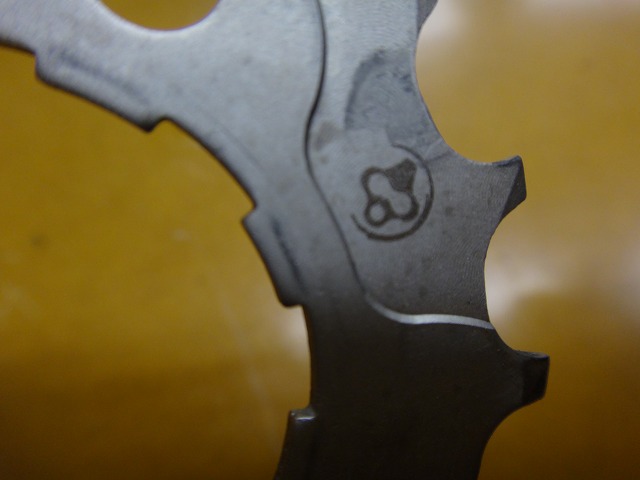
16T,
I remembered.
FOURIERS makes these over-the-top MTB chain catchers that are like "basically a front mech!" but

with road chain catchers like TOKEN and Tni,

they seem to be charging royalties.

By the way, the sprocket I want to convert to 40T isn't XT or XTR,
but the budget-grade CS-HG50.
The tooth configuration is the same 11-36T as XT and such, but
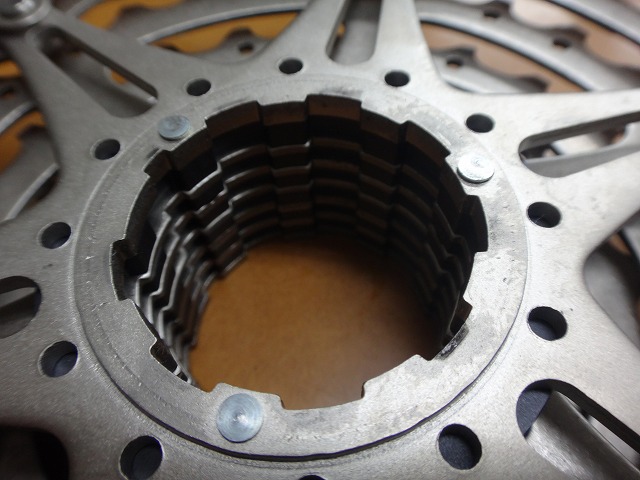
the top and the 8 cogs after the second gear are riveted with pins and can't be taken apart.
In the past, some grades had these rivets that could be undone with an Allen key, but...
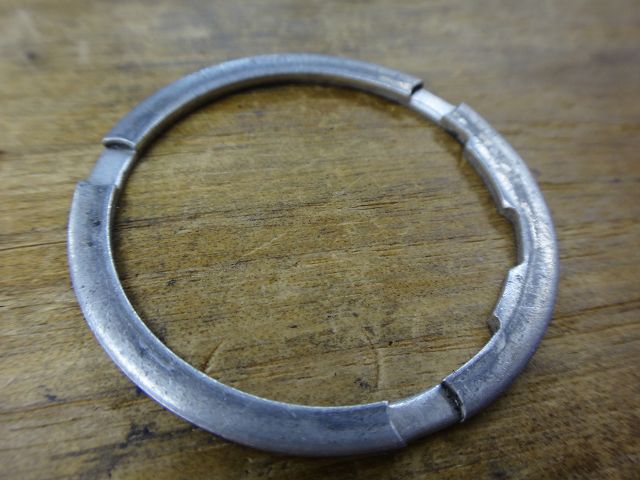
By the way, the reason Mavic's Shimano freebody spacers have 2mm removed at three spots,
or some 11-speed freebody 10-speed conversion 1.85mm spacers also have three spots removed,
is to avoid interference with these pins.
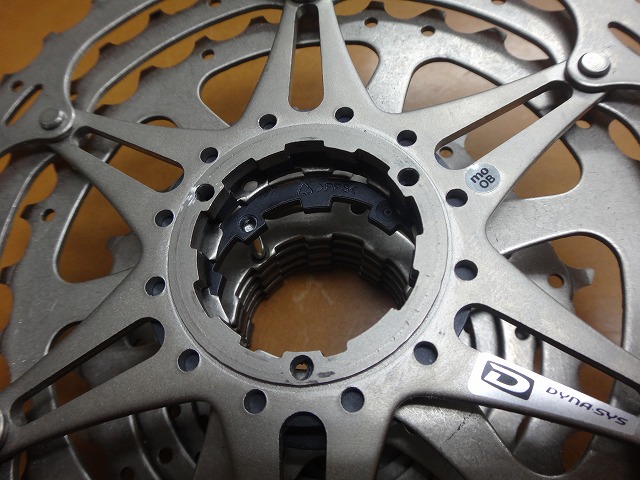
I ground down the rivets
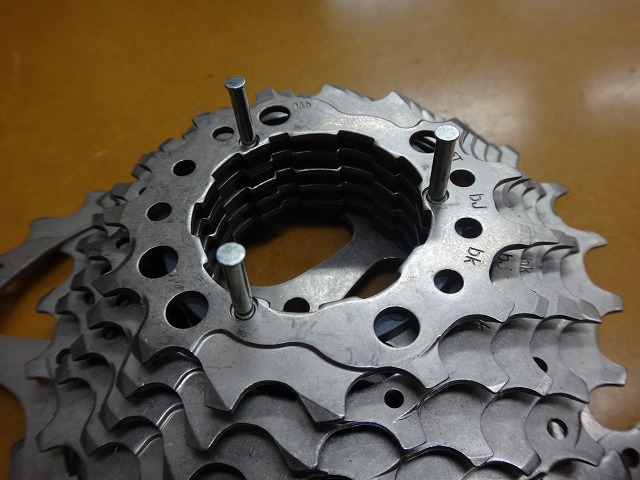
and drove the pins out

and disassembled it.
Since these don't have spider arms, I'm free to choose which cogs to remove,
but it would be weird to have 15-16-17 and make a 1T jump in the middle,
so in the end I had no choice but to remove 15T and 17T and insert 16T.

↑That's what I did.
Now all that's left is to install the top two cogs.
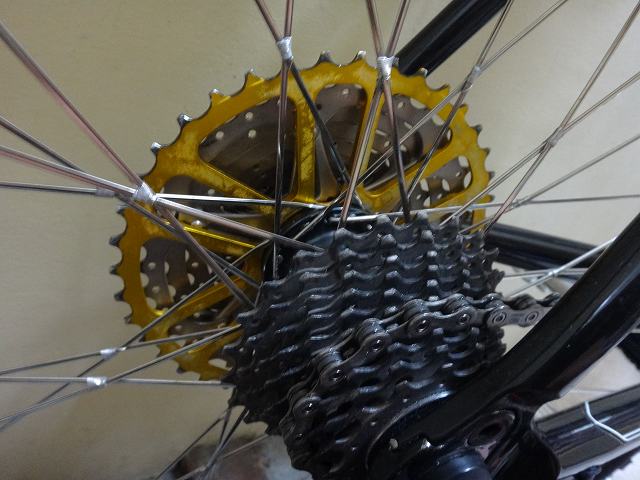
This article is also a continuation of the road link story from the other day.

14-25T (14-15-16-17-18-19-20-21-23-25)

11-40T (11-13-16-19-21-24-28-32-36-40)
Red numbers are FOURIERS cogs
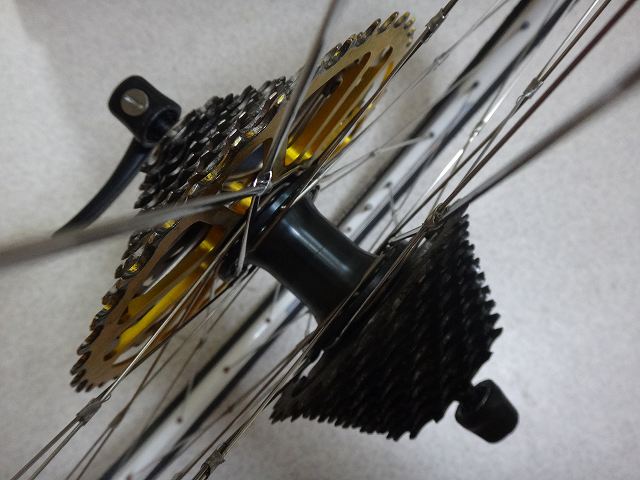
Without worrying about the hassle of flipping the rear wheel,
I ended up with a 17-speed sprocket of
11-13-14-15-16-17-18-19-20-
21-23-24-25-28-32-36-40,
with only 3 cogs overlapping out of 20.
Nice. (What's nice about it is unclear.)
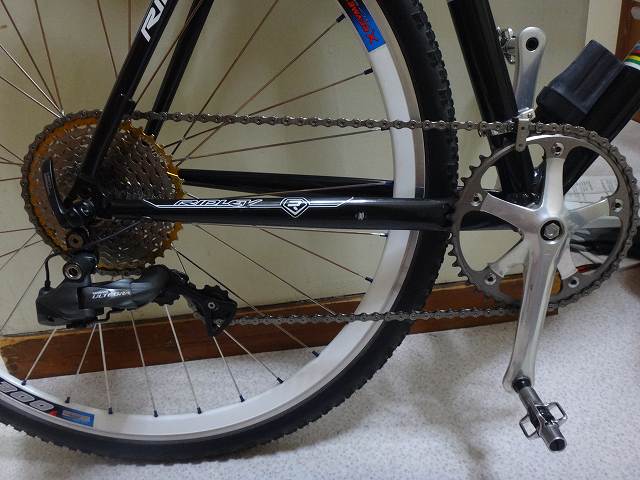
Shifted to 40T.
Just to be clear, this is a short-cage derailleur for road bikes.

I cut the chain to the length for 36T,
but since I'd built in some slack in the chain tension,
the link count could stay the same.
I adjusted the B-tension screw a bit,
but I didn't have to use all the threads.
Now it shifts smoothly without any grinding sensation.
I said last time "shifting performance drops with a road link,"
but as long as the pulley is directly under the sprocket teeth, shifting does happen.
It's just that with the top three cogs or so, the gap between the tooth tips and the pulley gets pretty big,
so the chain spends a long time at an angle during shifts, meaning power transfer is delayed—
in short, there definitely was a sluggish feel.

The current manufacturer website has corrected this, but
this image that supposedly used to be on their site is wrong.
If you count the sprocket before the gear swap, it comes to 9-speed.
Wrong: 19+21T and 24+32+36T
Correct: 19+21+24T and 28+32+36T
There's no way it jumps from 24T to 32T.
The Japanese distributor's site had this image, so be warned.
This is XT with the factory low-side 6 cogs as 3+3,

but the current site shows XTR as 2+2+2.
Either way, the point is the same: swap 15-17T for 16T
and add one more low gear.
Also, as a similar part to this,
there's a part called General Lee from the brand Leonardi Factory,

but
I've never seen one in person, so I image-searched and grabbed these.
There are other tooth counts available too.
The manufacturer's site says:
"Leonardi's General Lee Kit is a simple and cheap way
to upgrade your 10 speed cassette~"
but it's a bit much even for the makers themselves to call it the "cheap way."