A customer left me a wheel that appears to be an original Racing 1 with us for work.
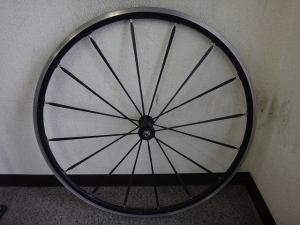
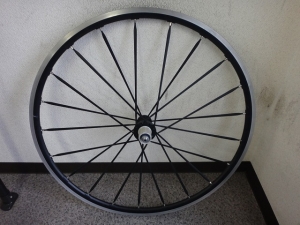
The rim shows signs of use, but it's almost perfectly true.
The rear wheel's center was slightly off though.
Per the customer's request, I've replaced it with a Shimano 11-speed white aluminum freebody.
This Racing 1 (probably) has me quite surprised—
there are a lot of suspicious things that don't add up.
The basic specs match the original Racing 1 generation,
and it definitely predates the Racing Zero.
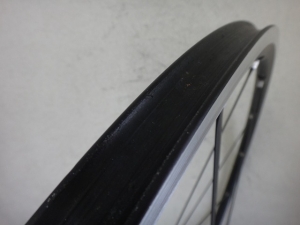
That's because this is a tubular rim.
The brand only made tubular versions for their flagship models,
so the Racing 1 after the Racing Zero never came in tubular configuration.
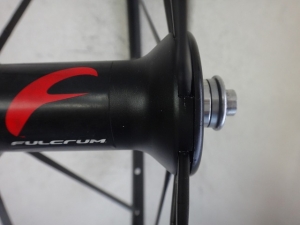
The curved profile from the hub shell to the flange is also characteristic of the Racing 1.
The Racing Zero has a distinctly angular transition where the line breaks sharply.
If it were just this, I'd have called it a tubular version of the original Racing 1 and left it at that, but...
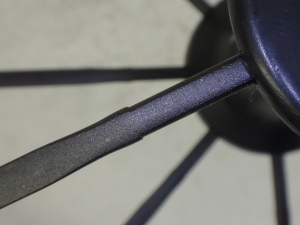
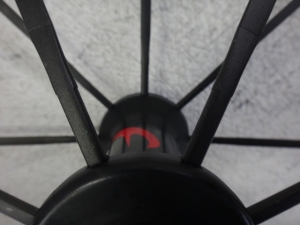
↑The front spokes have an unfamiliar step in the butted section.
The rear spokes don't have this.
The original Racing 1 shouldn't have had this either.
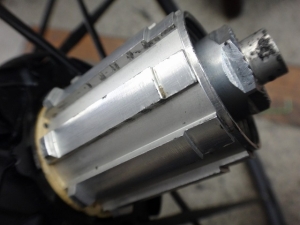
It has a Shimano 10-speed "dedicated" freebody on it,
but Campagnolo and Fulcrum Shimano 10-speed dedicated freebodies are aluminum,
and due to the spline geometry of Shimano's cassettes,
they beef up the outer section to avoid thinning it out,
and use a lockring with Campagnolo dimensions—a smaller diameter than Shimano's.
Back then, when people used Campagnolo wheels with Shimano components,
you needed a Campagnolo lockring tool,
so many people bought one out of necessity.
But this freebody actually works with Shimano lockrings.
Also, a Shimano 10-speed dedicated freebody
should have a gold-tinted anodize finish,
not silver like this one.
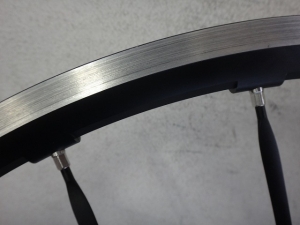
The rim is shaved between the nipple holes
(or you could say only the base of the nipples is reinforced),
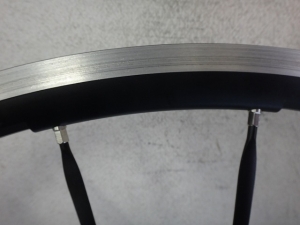
but at only one spot opposite the rim seam, that machining is absent.
Normally the valve hole goes here, but
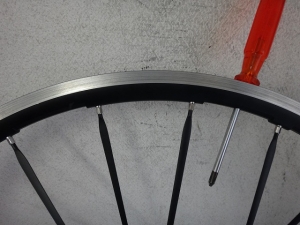
↑for some reason it's offset by one position.
Since the machining is absent at the opposite side of the rim seam,
the valve hole is positioned offset from directly opposite the seam.
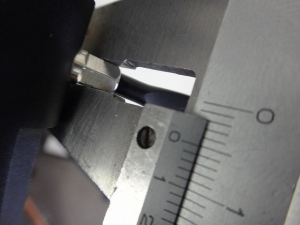
And the real kicker is the nipple size.
The Racing Zero uses 6mm aluminum nipples,
the original Racing 1 uses 5.5mm brass nipples,
but the front wheel had 5.5mm brass nipples while
the rear wheel had 5mm brass nipples.
The original Racing 1 nipple part number is "R1-N10" for both front and rear,
so the sizes shouldn't differ,
and I've never even seen a 5mm brass nipple before.
My guess is that this Racing 1 might be a prototype from before the original generation
that somehow ended up in circulation for some reason.
Racing 1 (Provisional).
Since the current owner isn't the original owner, the history is unclear.
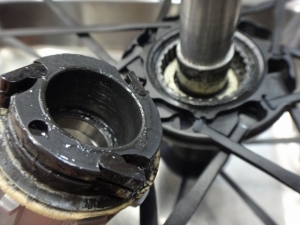
The current owner (customer) only has bikes with Shimano 11-speed components,
so the freebody needs to be replaced.
It originally had a round-hole freebody with a non-butted shaft.
The later rice-ball-hole freebodies
only work with butted shafts that have three notches,
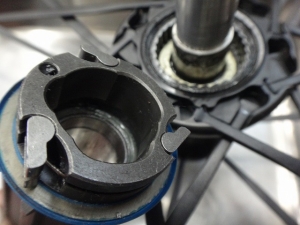
but the even later steel Shimano freebodies
have holes larger than round holes for both 10-speed and 11-speed,
so they can fit non-butted shafts.
In other words, with a steel freebody from that era
you can convert to 11-speed without swapping the shaft, but
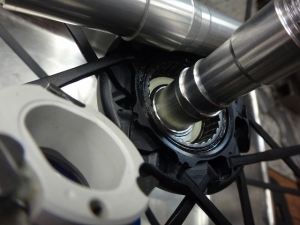
the latest white aluminum freebody went back to the rice-ball-hole design,
so in this case the shaft needs to be replaced.
We happened to have the hub shaft in stock as well.
The timeline's a bit mixed in this post, but during the shaft replacement
I remove the centering wedge washer (←which might throw off the center),
so I do the rear wheel truing work after
the shaft and freebody swap is complete.
The rear wheel's center offset might stem from that
(I didn't check it before the work, so I'm not sure),
but since I didn't have a 5mm nipple wrench, I had to rig something up,
so it was a bit of a struggle.
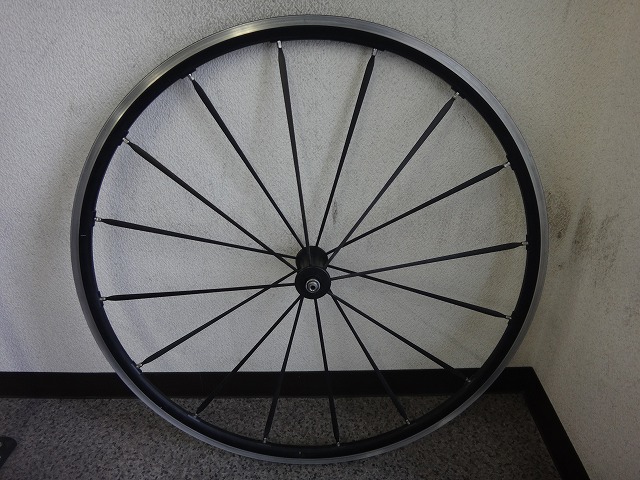

The rim shows signs of use, but it's almost perfectly true.
The rear wheel's center was slightly off though.
Per the customer's request, I've replaced it with a Shimano 11-speed white aluminum freebody.
This Racing 1 (probably) has me quite surprised—
there are a lot of suspicious things that don't add up.
The basic specs match the original Racing 1 generation,
and it definitely predates the Racing Zero.
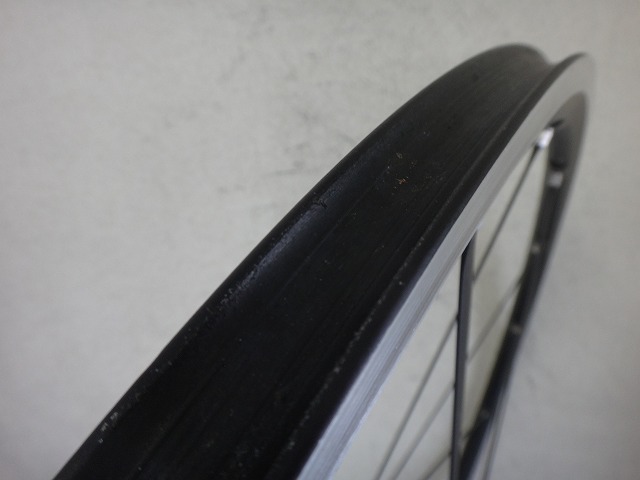
That's because this is a tubular rim.
The brand only made tubular versions for their flagship models,
so the Racing 1 after the Racing Zero never came in tubular configuration.

The curved profile from the hub shell to the flange is also characteristic of the Racing 1.
The Racing Zero has a distinctly angular transition where the line breaks sharply.
If it were just this, I'd have called it a tubular version of the original Racing 1 and left it at that, but...

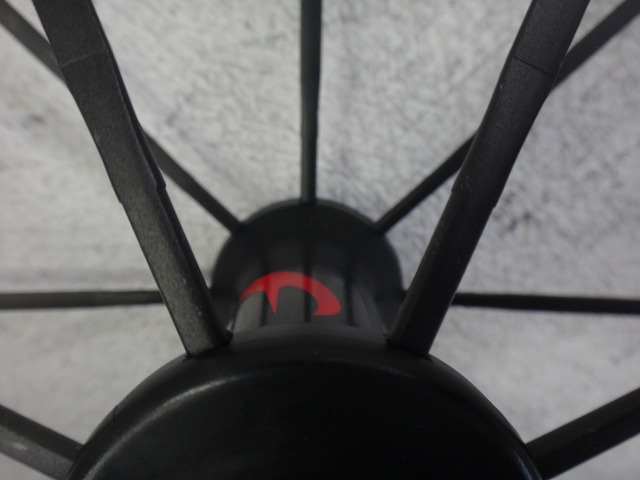
↑The front spokes have an unfamiliar step in the butted section.
The rear spokes don't have this.
The original Racing 1 shouldn't have had this either.
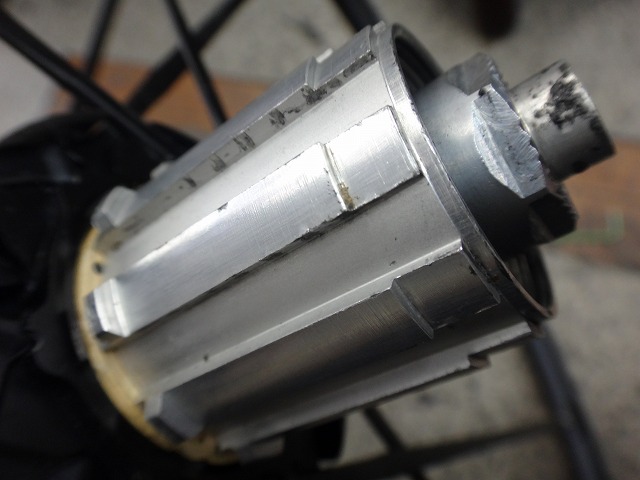
It has a Shimano 10-speed "dedicated" freebody on it,
but Campagnolo and Fulcrum Shimano 10-speed dedicated freebodies are aluminum,
and due to the spline geometry of Shimano's cassettes,
they beef up the outer section to avoid thinning it out,
and use a lockring with Campagnolo dimensions—a smaller diameter than Shimano's.
Back then, when people used Campagnolo wheels with Shimano components,
you needed a Campagnolo lockring tool,
so many people bought one out of necessity.
But this freebody actually works with Shimano lockrings.
Also, a Shimano 10-speed dedicated freebody
should have a gold-tinted anodize finish,
not silver like this one.
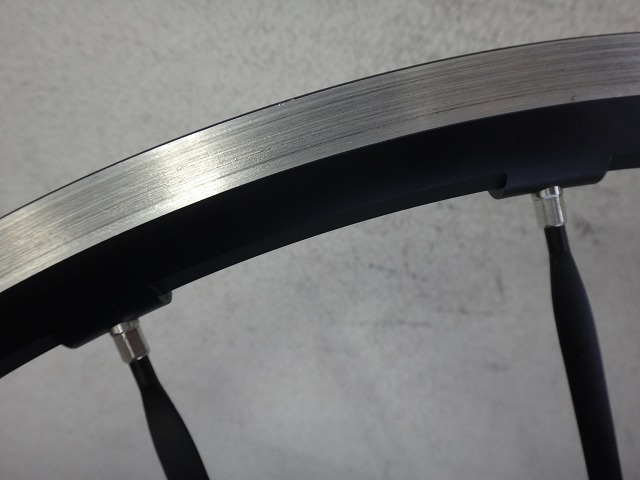
The rim is shaved between the nipple holes
(or you could say only the base of the nipples is reinforced),

but at only one spot opposite the rim seam, that machining is absent.
Normally the valve hole goes here, but
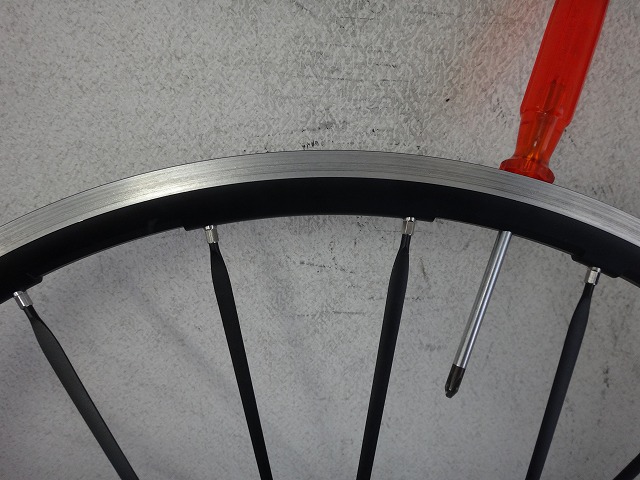
↑for some reason it's offset by one position.
Since the machining is absent at the opposite side of the rim seam,
the valve hole is positioned offset from directly opposite the seam.
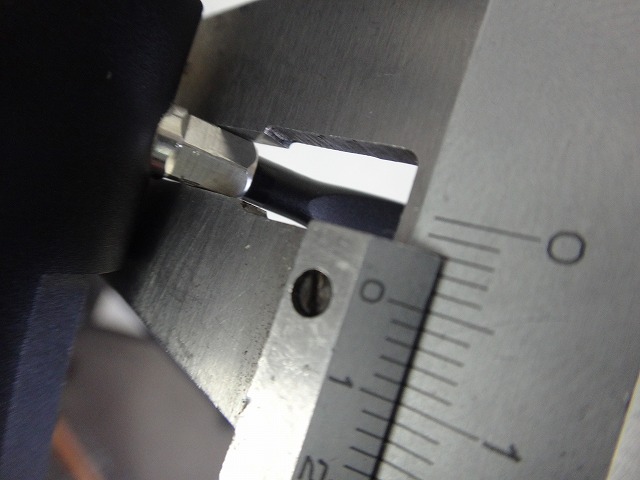
And the real kicker is the nipple size.
The Racing Zero uses 6mm aluminum nipples,
the original Racing 1 uses 5.5mm brass nipples,
but the front wheel had 5.5mm brass nipples while
the rear wheel had 5mm brass nipples.
The original Racing 1 nipple part number is "R1-N10" for both front and rear,
so the sizes shouldn't differ,
and I've never even seen a 5mm brass nipple before.
My guess is that this Racing 1 might be a prototype from before the original generation
that somehow ended up in circulation for some reason.
Racing 1 (Provisional).
Since the current owner isn't the original owner, the history is unclear.
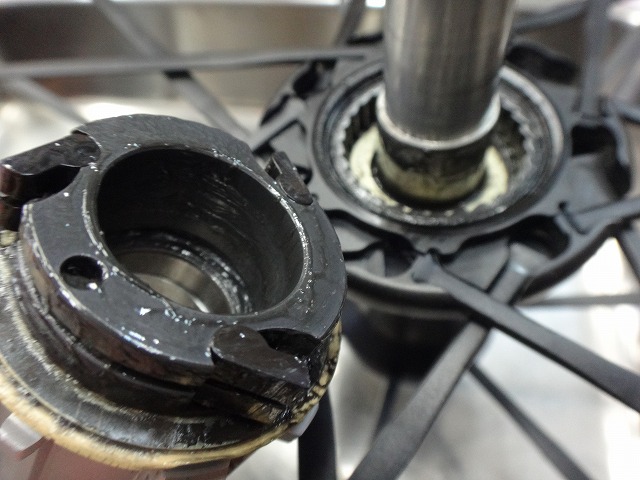
The current owner (customer) only has bikes with Shimano 11-speed components,
so the freebody needs to be replaced.
It originally had a round-hole freebody with a non-butted shaft.
The later rice-ball-hole freebodies
only work with butted shafts that have three notches,
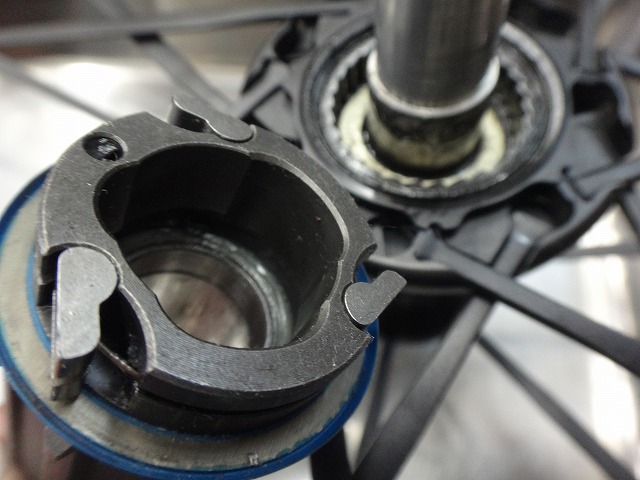
but the even later steel Shimano freebodies
have holes larger than round holes for both 10-speed and 11-speed,
so they can fit non-butted shafts.
In other words, with a steel freebody from that era
you can convert to 11-speed without swapping the shaft, but
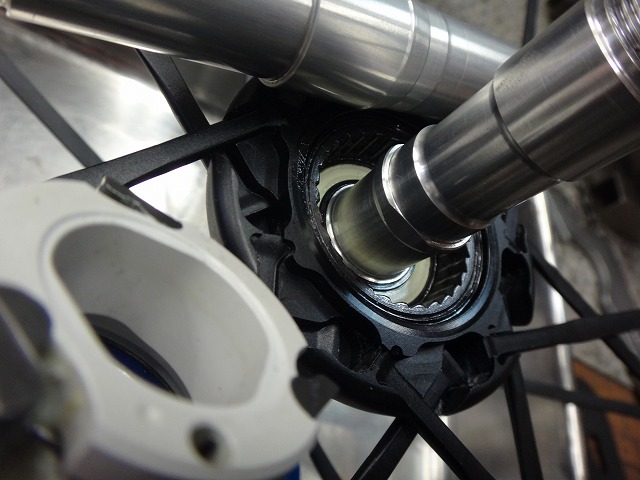
the latest white aluminum freebody went back to the rice-ball-hole design,
so in this case the shaft needs to be replaced.
We happened to have the hub shaft in stock as well.
The timeline's a bit mixed in this post, but during the shaft replacement
I remove the centering wedge washer (←which might throw off the center),
so I do the rear wheel truing work after
the shaft and freebody swap is complete.
The rear wheel's center offset might stem from that
(I didn't check it before the work, so I'm not sure),
but since I didn't have a 5mm nipple wrench, I had to rig something up,
so it was a bit of a struggle.