Another day of wheel work (and the rest is history).
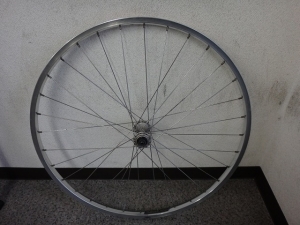
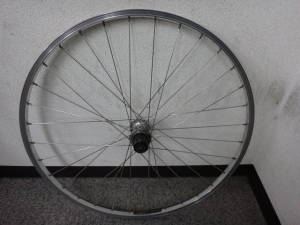
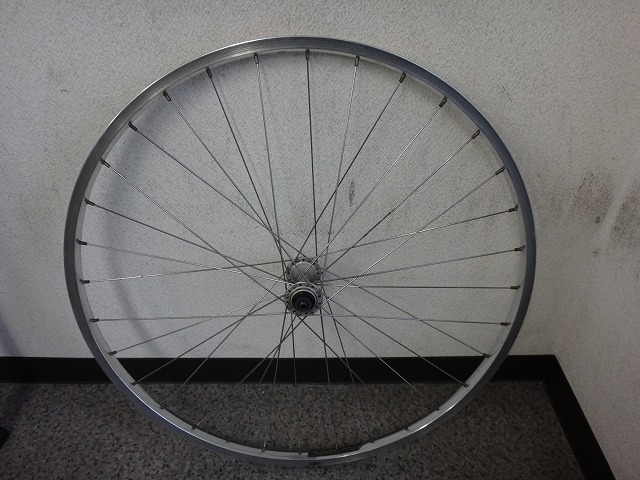
I received a pair of 26-inch MTB wheels from a customer.
Though these are wheels from an era where you don't need to qualify them as "26-inch".
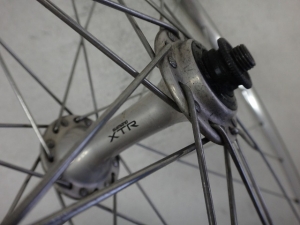
The hub is an original generation XTRA HB-900, 32H,
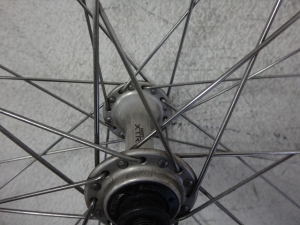
Spokes are Hoshi brand true Starbright #15 plain,
Nipples are brass, 6-cross Italian lacing.

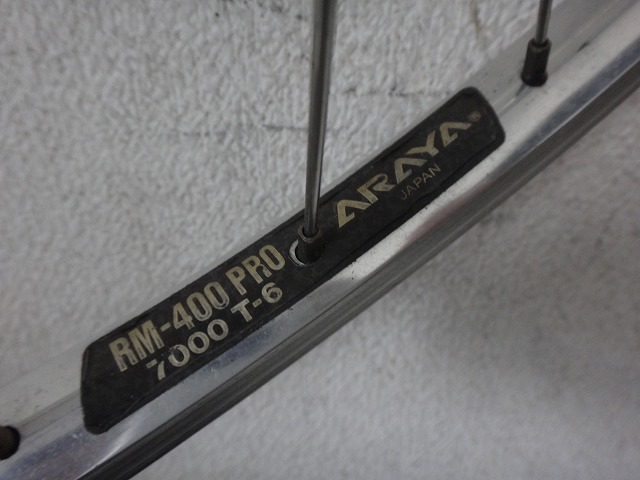
The rim is an Araya RM-400 Pro.
This rim is one of those that Araya absolutely couldn't make today.
That era when you could say "only masterpieces,"
that inspired lineup is gone now.

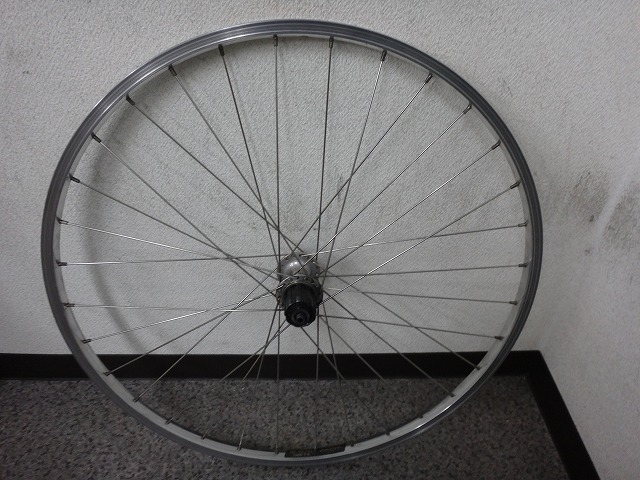
The rear wheel uses an FH-M900 hub
with unmarked (not Sapim) #14 plain spokes
in 6-cross Italian lacing.
Despite having the same spoke count and diameter on both sides, the non-freewheel side doesn't feel loose,
so I considered whether the rim might be offset toward the freewheel side,
but there was no centering error.

The rim is the same as the front wheel.
Both front and rear rim brake zones are worn and warped into curves,
so the customer wants the rims replaced.
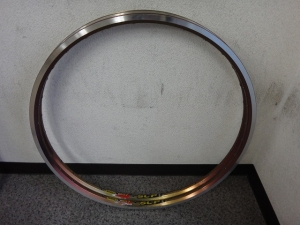
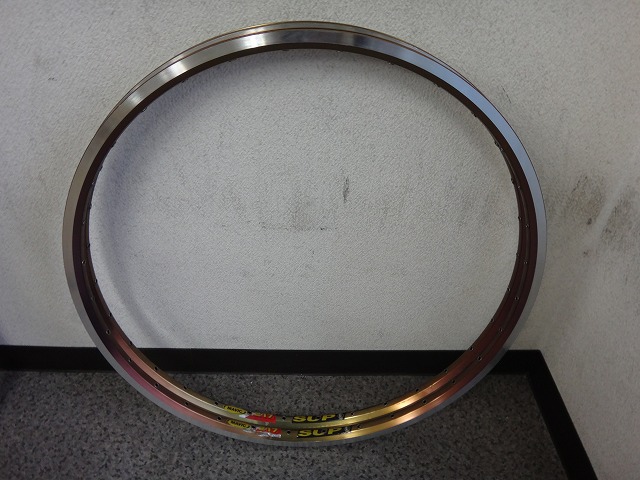
I also received the replacement rim.
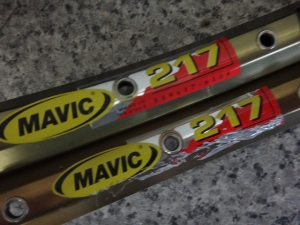
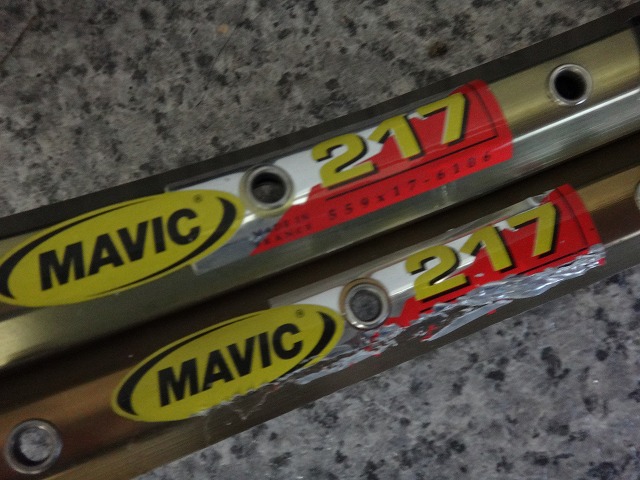
A Mavic 217.
There's a tradition that "rims ending in 17 are the flagship lightweight models for XC,"
starting with the 117
then this 217, followed by the X517 (←this one's a masterpiece) and the XC717.
Much later than the 117,
XC branding started appearing on cross-country rims
(so contemporary with the XC717), and after that
a trail-use rim series appeared with XM branding,
which includes the XM317, and at the lower end there's the XM117.
Maybe I'm the only one thinking "don't break the tradition of ending in 17 for lightweight rims"
or "don't use the 117 name,"
but I really wish they'd stop doing this sort of thing.

According to the manufacturer's site, the cross-country rim has changed to the XC722 model,
but the image still shows the XC717.
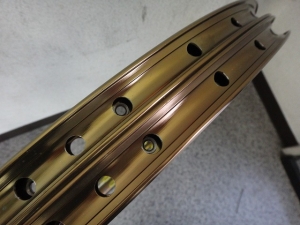
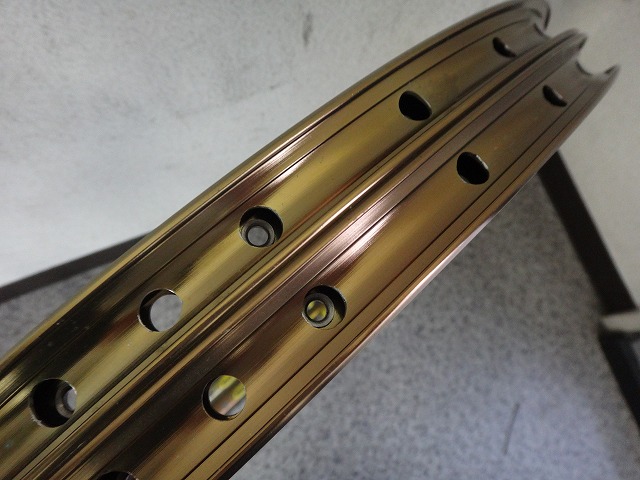
The 217 is a single eyelet rim.
That's fine, but...
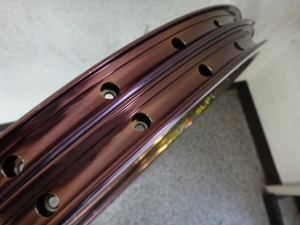
The anodize color has partially faded from sun exposure,
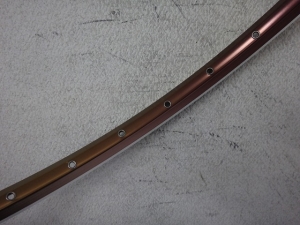
and while probably not intentional,
it has a nice gradient effect.
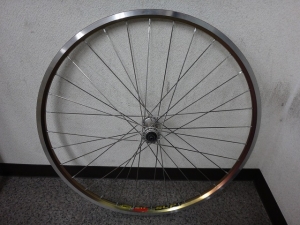
I rebuilt it.
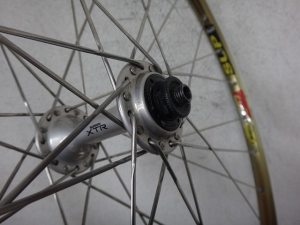
HB-M900, 32H, CX-RAY, 6-cross Italian lacing.
Based on how thin the flange is from the spoke hole outward,
radial lacing looked clearly risky, so I avoided it.
I could have done 4-cross, but
after thinking it through, I went with 6-cross this time.

The valve hole is Schrader, but the customer only uses Presta.
(The RM-400 Pro before rebuilding was Presta)

I installed a reducer.
Mavic makes an original split-type reducer,
but that's not what this is.
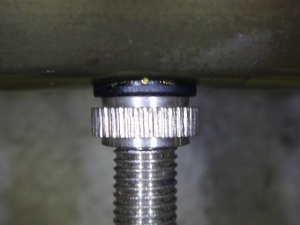
↑The Schwalbe stepped nut (shown in the image) functions as a reducer, but when it loosens up,
the valve still ends up angled, so it's just for peace of mind.
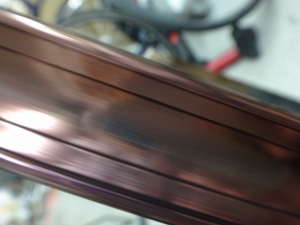
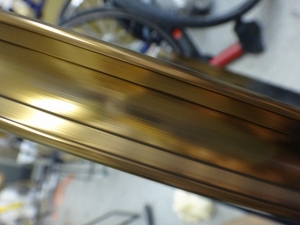
↑This isn't a photo of a section without rim holes—it's the wheel spinning.
The colors shift sharply as it rotates. Looks cool!
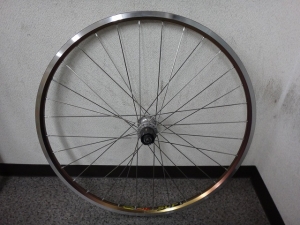
The rear wheel is done too.

FH-M900, 32H, all CX-RAY, 8-cross Italian lacing.
As for the bracing... either way works. If it were semi-comp, you probably wouldn't even need it.
Before rebuilding, I thought the spoke tension on both sides was close, but
the freewheel-side flange width came out to just under 23mm.
On current 11-speed road hubs, it's somewhere between 19mm and just over 20mm.
Since the over-locknut dimension is 135mm rather than 130mm,
that's 2.5mm extra slack per side compared to road hubs, and
since the freewheel body is shorter than current ones,
there's no need to tuck the right flange inward.
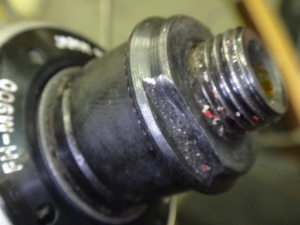
The left locknut was installed backward, so
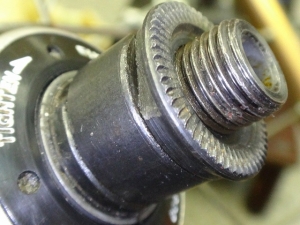
I fixed it.
What the heck.
The 217 rim actually weighs 414g. Pretty light.
Measured rim width came to 22.2mm,
which is actually narrower than modern road wide rims.
This rim can of course still accommodate tires 2 inches (50.8mm) or wider.
The RM-400 Pro actual weight was 395g.
The "400" in the rim name is the claimed weight, which follows the pattern of other Araya rims like
CTL-370, CTL-385, ProStaff 340, ProStaff 400,
RM-395 Team XC (also a masterpiece), and so on,
but RM-117 doesn't mean 117g, just so you know.
~Bonus~
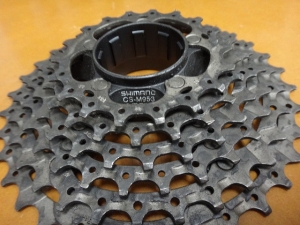
The sprocket to be installed is a CS-M953,
a 9-speed 950-series XTRA cassette, and it's rare.
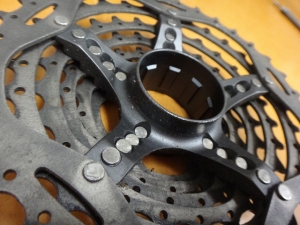
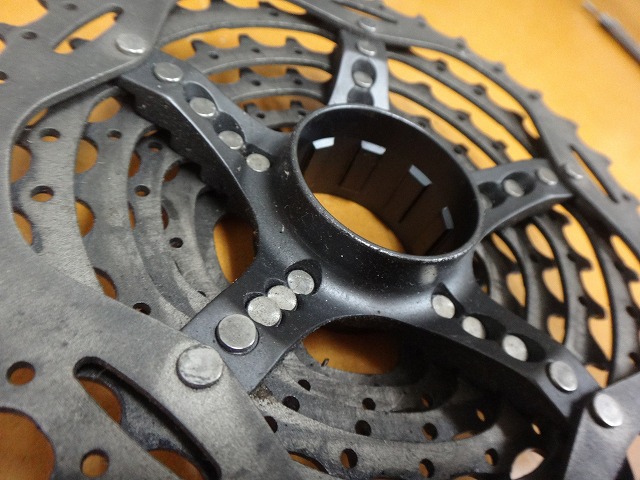
↑The spider arms have this cut-out shape,
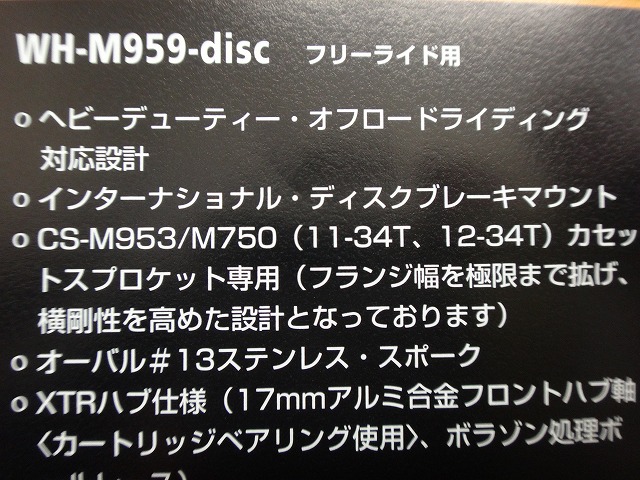
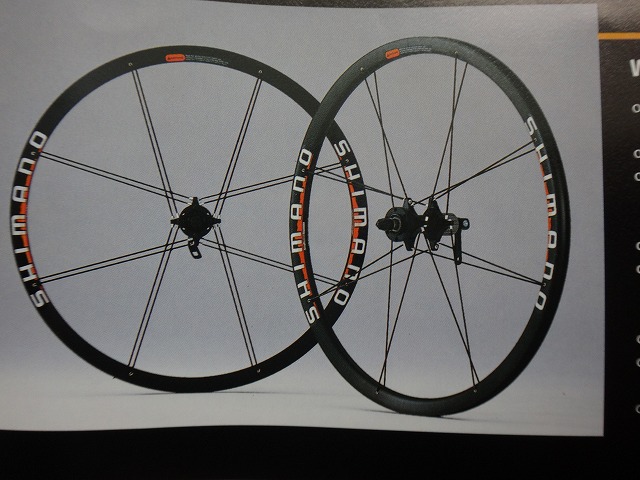
and Shimano's top-model complete wheel from the original three MTB wheel models,
the WH-M959,
can only accept the CS-M953 and the CS-M750 from the 750-series XT,
a ridiculously restrictive design.
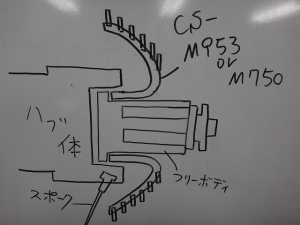
The freewheel body's end face is recessed into the hub body like this,
so only cassettes with cut-out spider arms
can be installed.
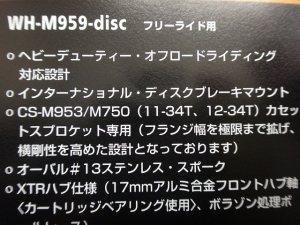
The stated reason is "for flange width security," but
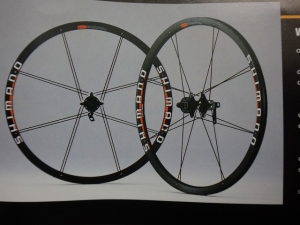
regardless of the hub body dimensions, the spoke count and lacing are
completely inadequate, so lateral stiffness is terrible—
it's extremely easy to exceed this with hand-built wheels.
That said, if you bumped the rear wheel to 24H,
you're looking at a 40g weight increase at minimum,
making it hard to market the wheel on lightness.
As for Shimano wheels,
the hub durability is overspec'd—excellent actually—but
the rim and spoke durability don't match that,
and they discontinue repair parts quickly anyway,
so ultimately they don't last long—a pattern unchanged since the first generation.
Just today I built a wheel with an XTRA hub from the previous generation,
and that's one more example of hand-built wheels lasting longer.
As for the CS-M953 and 750, both are discontinued and unobtainable,
so even if you own a WH-M959, you can't use it without the compatible cassette.
What a business model.
I checked repair parts too, and
the only part currently available from the CS-M953 and 750 range is
the "11T top cog for CS-M750" as a single unit.
Which is why I called it "rare" earlier.
I received a pair of 26-inch MTB wheels from a customer.
Though these are wheels from an era where you don't need to qualify them as "26-inch".
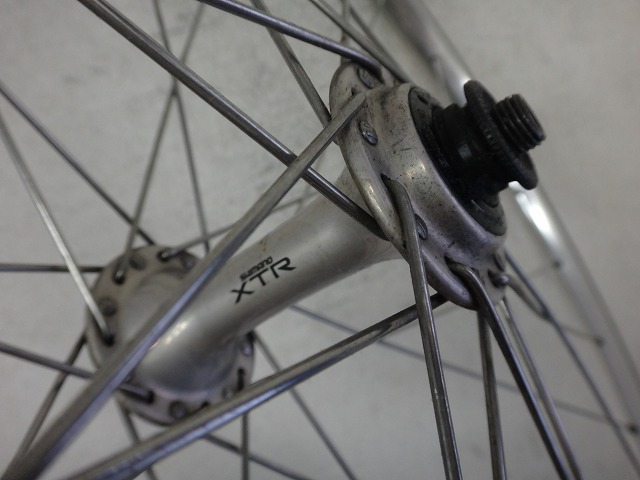
The hub is an original generation XTRA HB-900, 32H,
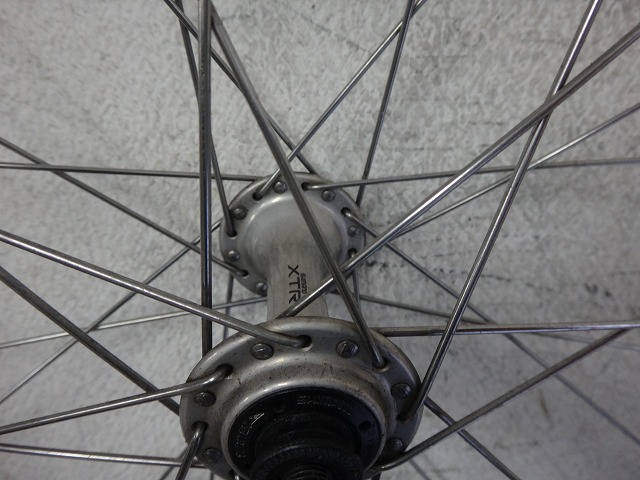
Spokes are Hoshi brand true Starbright #15 plain,
Nipples are brass, 6-cross Italian lacing.
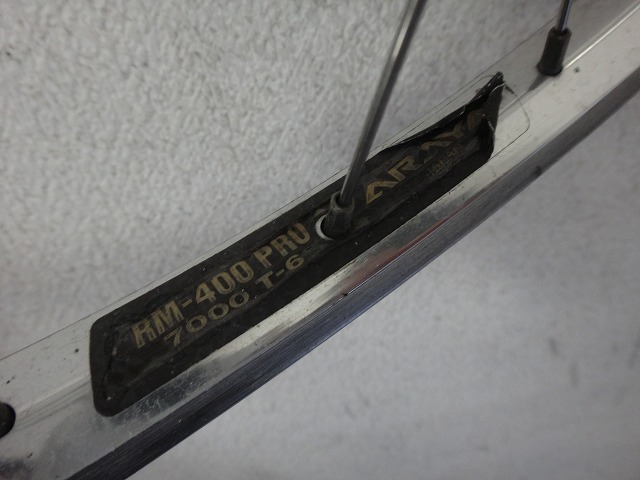
The rim is an Araya RM-400 Pro.
This rim is one of those that Araya absolutely couldn't make today.
That era when you could say "only masterpieces,"
that inspired lineup is gone now.
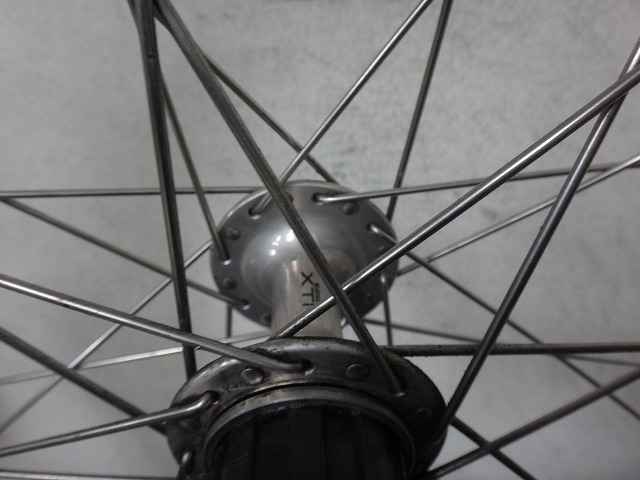
The rear wheel uses an FH-M900 hub
with unmarked (not Sapim) #14 plain spokes
in 6-cross Italian lacing.
Despite having the same spoke count and diameter on both sides, the non-freewheel side doesn't feel loose,
so I considered whether the rim might be offset toward the freewheel side,
but there was no centering error.
The rim is the same as the front wheel.
Both front and rear rim brake zones are worn and warped into curves,
so the customer wants the rims replaced.
I also received the replacement rim.
A Mavic 217.
There's a tradition that "rims ending in 17 are the flagship lightweight models for XC,"
starting with the 117
then this 217, followed by the X517 (←this one's a masterpiece) and the XC717.
Much later than the 117,
XC branding started appearing on cross-country rims
(so contemporary with the XC717), and after that
a trail-use rim series appeared with XM branding,
which includes the XM317, and at the lower end there's the XM117.
Maybe I'm the only one thinking "don't break the tradition of ending in 17 for lightweight rims"
or "don't use the 117 name,"
but I really wish they'd stop doing this sort of thing.

According to the manufacturer's site, the cross-country rim has changed to the XC722 model,
but the image still shows the XC717.
The 217 is a single eyelet rim.
That's fine, but...
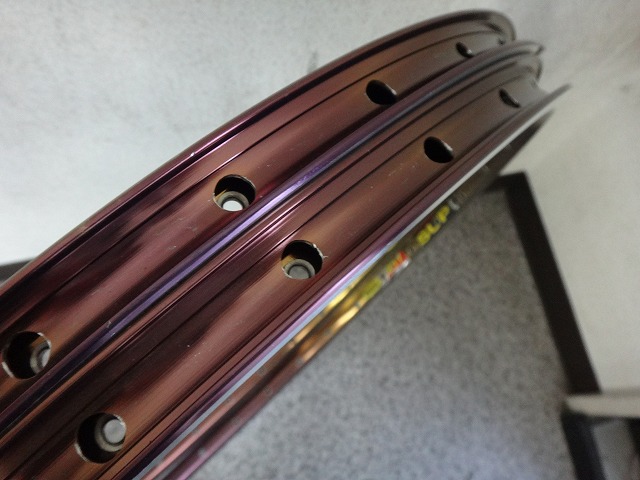
The anodize color has partially faded from sun exposure,
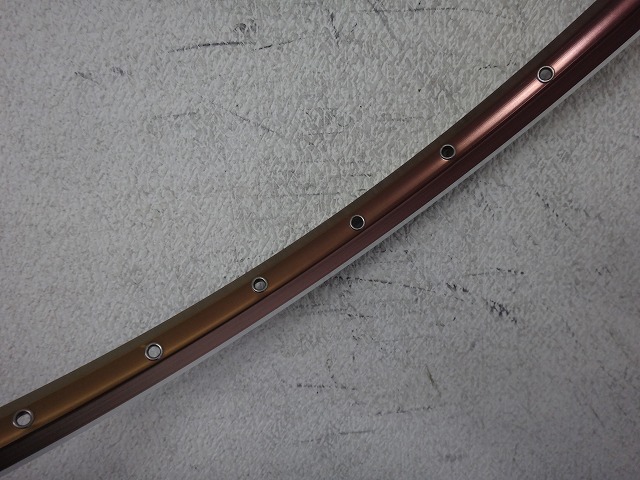
and while probably not intentional,
it has a nice gradient effect.
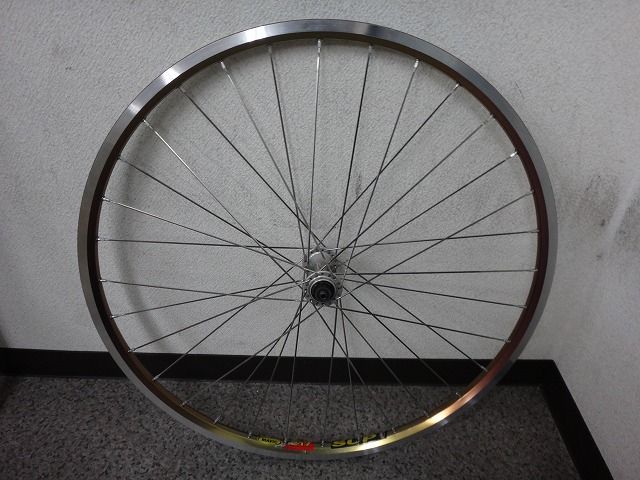
I rebuilt it.
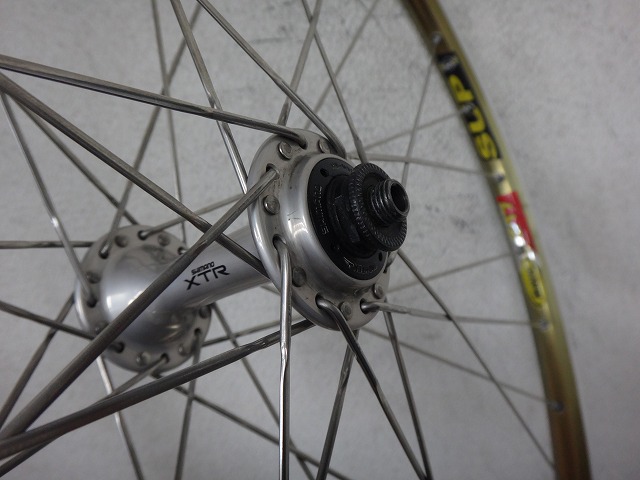
HB-M900, 32H, CX-RAY, 6-cross Italian lacing.
Based on how thin the flange is from the spoke hole outward,
radial lacing looked clearly risky, so I avoided it.
I could have done 4-cross, but
after thinking it through, I went with 6-cross this time.

The valve hole is Schrader, but the customer only uses Presta.
(The RM-400 Pro before rebuilding was Presta)

I installed a reducer.
Mavic makes an original split-type reducer,
but that's not what this is.
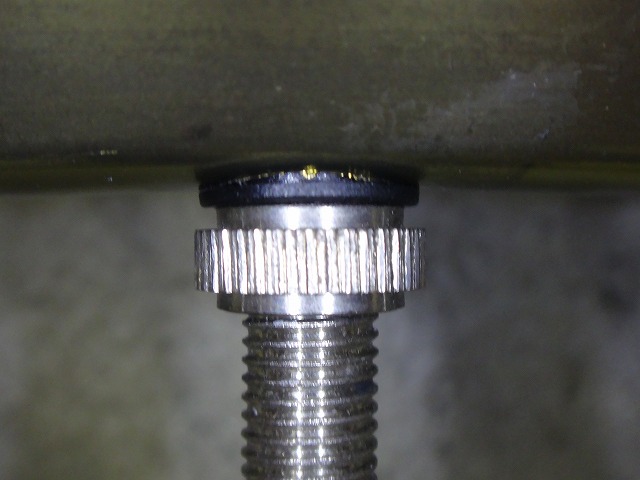
↑The Schwalbe stepped nut (shown in the image) functions as a reducer, but when it loosens up,
the valve still ends up angled, so it's just for peace of mind.
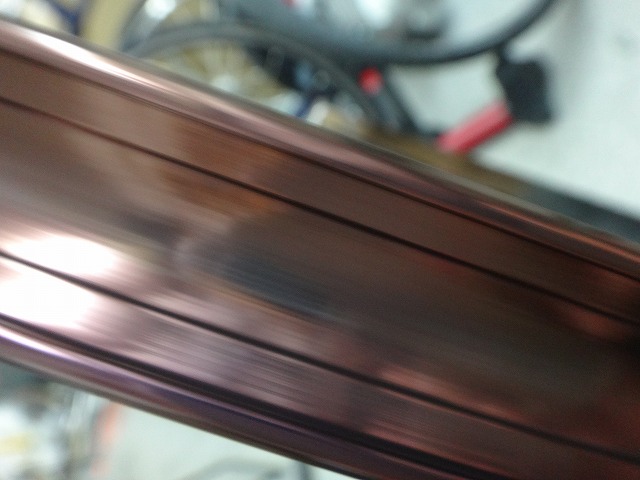
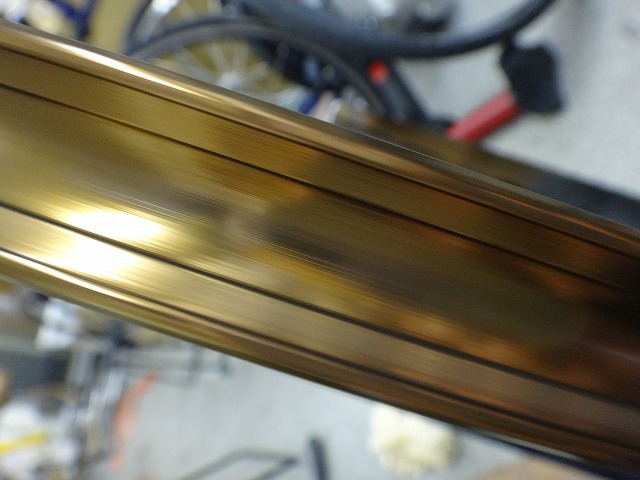
↑This isn't a photo of a section without rim holes—it's the wheel spinning.
The colors shift sharply as it rotates. Looks cool!
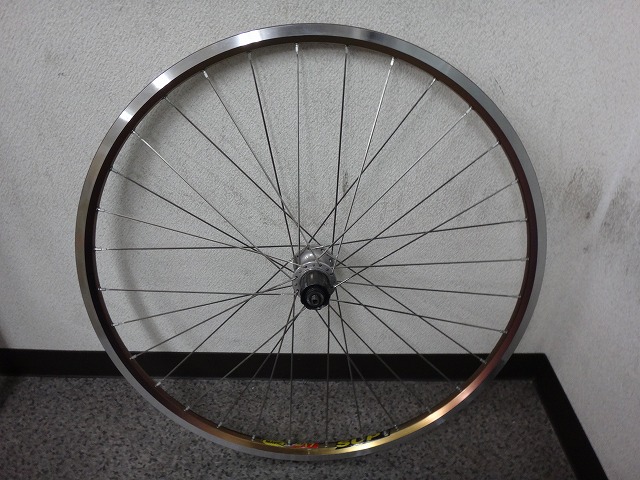
The rear wheel is done too.
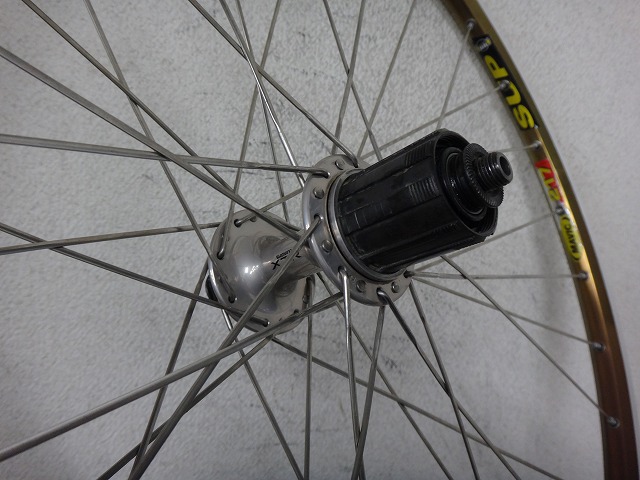
FH-M900, 32H, all CX-RAY, 8-cross Italian lacing.
As for the bracing... either way works. If it were semi-comp, you probably wouldn't even need it.
Before rebuilding, I thought the spoke tension on both sides was close, but
the freewheel-side flange width came out to just under 23mm.
On current 11-speed road hubs, it's somewhere between 19mm and just over 20mm.
Since the over-locknut dimension is 135mm rather than 130mm,
that's 2.5mm extra slack per side compared to road hubs, and
since the freewheel body is shorter than current ones,
there's no need to tuck the right flange inward.
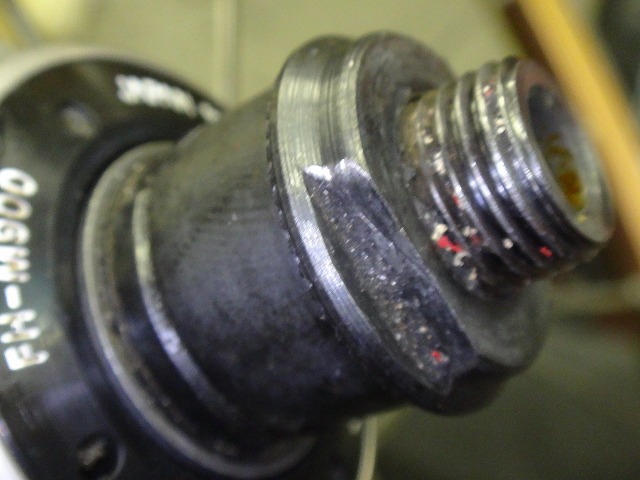
The left locknut was installed backward, so
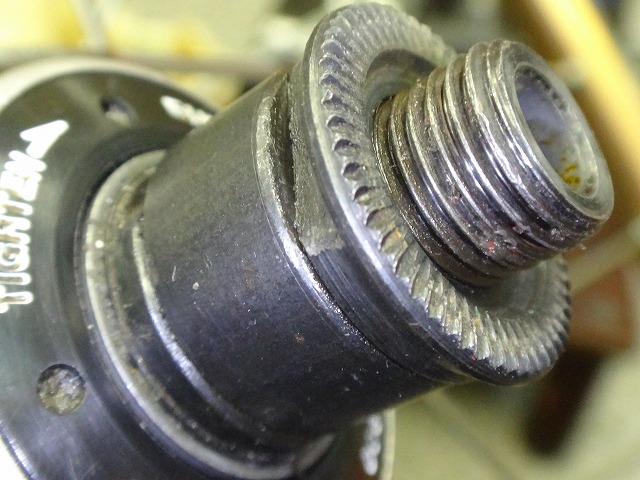
I fixed it.
What the heck.
The 217 rim actually weighs 414g. Pretty light.
Measured rim width came to 22.2mm,
which is actually narrower than modern road wide rims.
This rim can of course still accommodate tires 2 inches (50.8mm) or wider.
The RM-400 Pro actual weight was 395g.
The "400" in the rim name is the claimed weight, which follows the pattern of other Araya rims like
CTL-370, CTL-385, ProStaff 340, ProStaff 400,
RM-395 Team XC (also a masterpiece), and so on,
but RM-117 doesn't mean 117g, just so you know.
~Bonus~
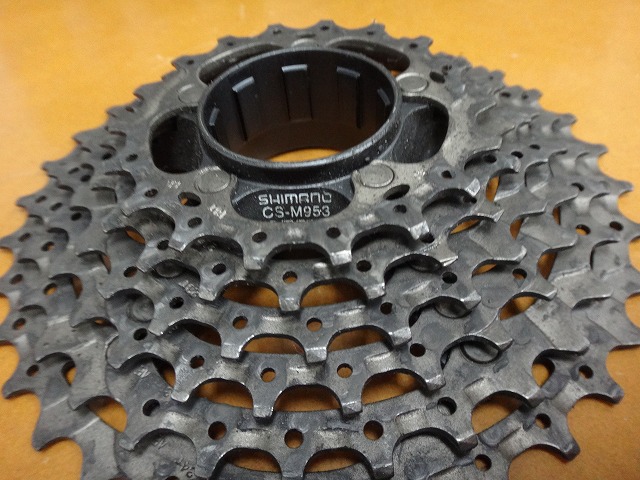
The sprocket to be installed is a CS-M953,
a 9-speed 950-series XTRA cassette, and it's rare.
↑The spider arms have this cut-out shape,
and Shimano's top-model complete wheel from the original three MTB wheel models,
the WH-M959,
can only accept the CS-M953 and the CS-M750 from the 750-series XT,
a ridiculously restrictive design.

The freewheel body's end face is recessed into the hub body like this,
so only cassettes with cut-out spider arms
can be installed.
The stated reason is "for flange width security," but
regardless of the hub body dimensions, the spoke count and lacing are
completely inadequate, so lateral stiffness is terrible—
it's extremely easy to exceed this with hand-built wheels.
That said, if you bumped the rear wheel to 24H,
you're looking at a 40g weight increase at minimum,
making it hard to market the wheel on lightness.
As for Shimano wheels,
the hub durability is overspec'd—excellent actually—but
the rim and spoke durability don't match that,
and they discontinue repair parts quickly anyway,
so ultimately they don't last long—a pattern unchanged since the first generation.
Just today I built a wheel with an XTRA hub from the previous generation,
and that's one more example of hand-built wheels lasting longer.
As for the CS-M953 and 750, both are discontinued and unobtainable,
so even if you own a WH-M959, you can't use it without the compatible cassette.
I checked repair parts too, and
the only part currently available from the CS-M953 and 750 range is
the "11T top cog for CS-M750" as a single unit.
Which is why I called it "rare" earlier.