A customer dropped off a Neutron for service.
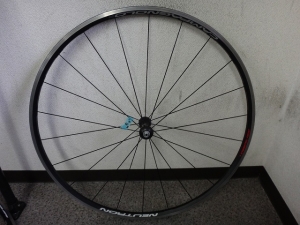

This is the standard Neutron model from after the later Neutron Ultra (a higher-end variant) was released.
The differences are that the inner rim has machined grooves and the tubular model was discontinued.
Both images above are after service, but
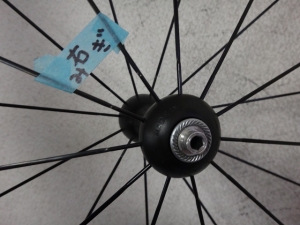
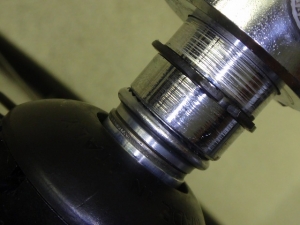
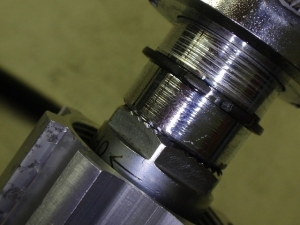
the front wheel dust caps look identical from both sides once installed, so I marked one for identification.
Remove the mark after installing the quick release or attaching the spoke magnet.
These dust caps once ranked in our "Top 20 Most Frequently Needed Spare Parts," so I kept them in stock.
But demand has dropped so much that I moved them off the list.
However, I recently ran out of stock and came up one short of what a customer needed, so I'll make sure to keep them on hand again.
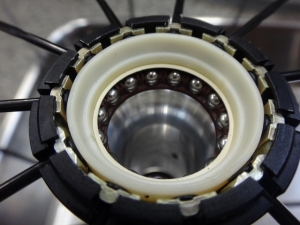
The hub interior came completely degreased, so I applied the grease I think is best.
It's a grease from a super-famous manufacturer, and according to their sales rep, our shop is basically the only bike shop ordering it.
Both wheels have almost no lateral runout, but there's a recent, good kind of unnaturalness to them—the kind that suggests they were just trued.
In these situations, whether the last person to work on them had a dishing gauge becomes the question. But
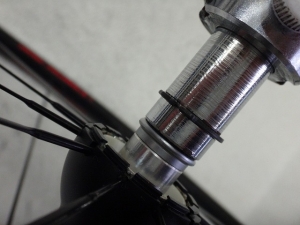

↑the front wheel was this far off-center
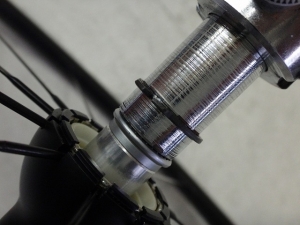
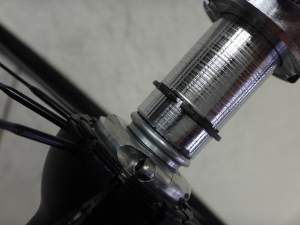
so I corrected it.
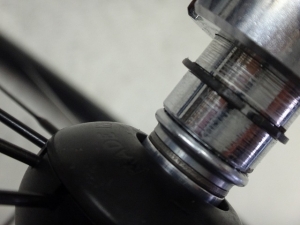
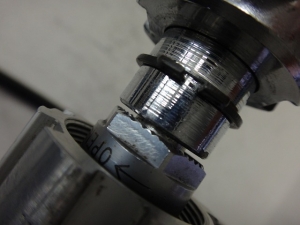
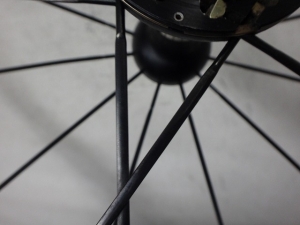
↑the rear wheel was this far off too
so I corrected it.
I was able to fix the rear wheel with just tightening on the non-freewheel side, so it actually worked out well.
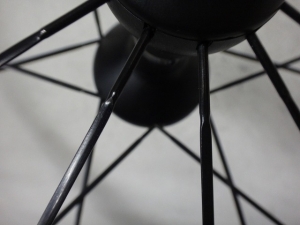
The Neutron (and Hyperon) features a left-right asymmetric spoke count ratio of roughly 65:100 with a high-low flange design (particularly small on the non-freewheel side),

plus a significant offset rim, so the freewheel side is remarkably solid—you wouldn't think it was built with a radial lacing on the freewheel side with equal spoke counts on both sides.
There are almost no rear wheels with radial lacing on the freewheel side that perform this well, but using thicker spokes on the freewheel side just doesn't make sense from a sales perspective when customers are shopping purely by catalog weight. With Nomulabo wheels, even against all CX-RAY, using half-competizione adds about 20g of weight
(depending on spoke length, but roughly that), and that 20g can easily push the rear wheel over the 100g threshold. For example, all CX-RAY at 695g, half-competizione at 715g.
I mentioned something similar before using Black Inc wheels as an example(→here), but I wish more people understood these kinds of detailed craftsmanship considerations.
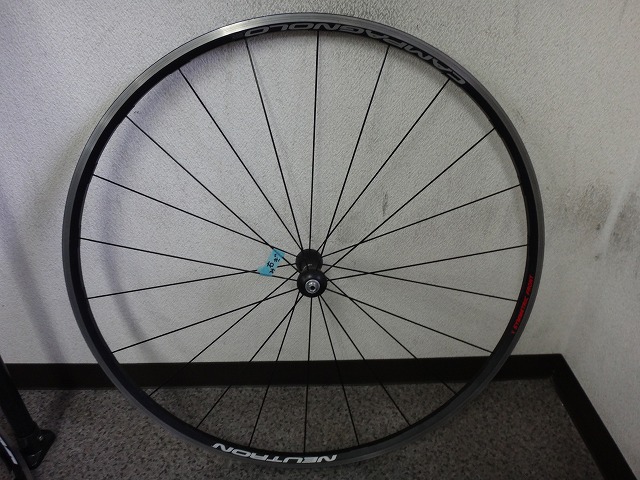
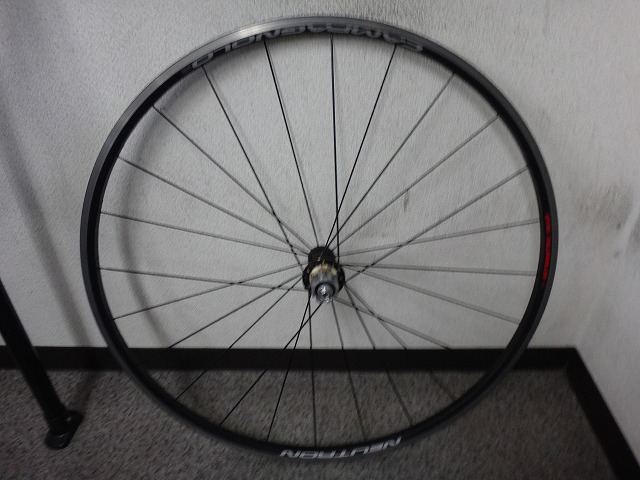
This is the standard Neutron model from after the later Neutron Ultra (a higher-end variant) was released.
The differences are that the inner rim has machined grooves and the tubular model was discontinued.
Both images above are after service, but
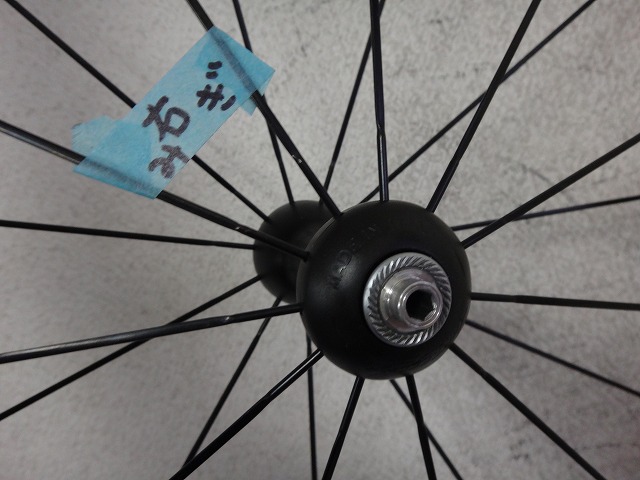
the front wheel dust caps look identical from both sides once installed, so I marked one for identification.
Remove the mark after installing the quick release or attaching the spoke magnet.
These dust caps once ranked in our "Top 20 Most Frequently Needed Spare Parts," so I kept them in stock.
But demand has dropped so much that I moved them off the list.
However, I recently ran out of stock and came up one short of what a customer needed, so I'll make sure to keep them on hand again.

The hub interior came completely degreased, so I applied the grease I think is best.
It's a grease from a super-famous manufacturer, and according to their sales rep, our shop is basically the only bike shop ordering it.
Both wheels have almost no lateral runout, but there's a recent, good kind of unnaturalness to them—the kind that suggests they were just trued.
In these situations, whether the last person to work on them had a dishing gauge becomes the question. But
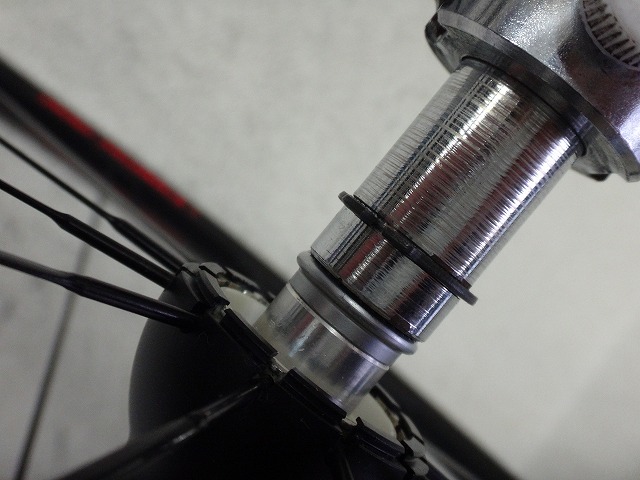
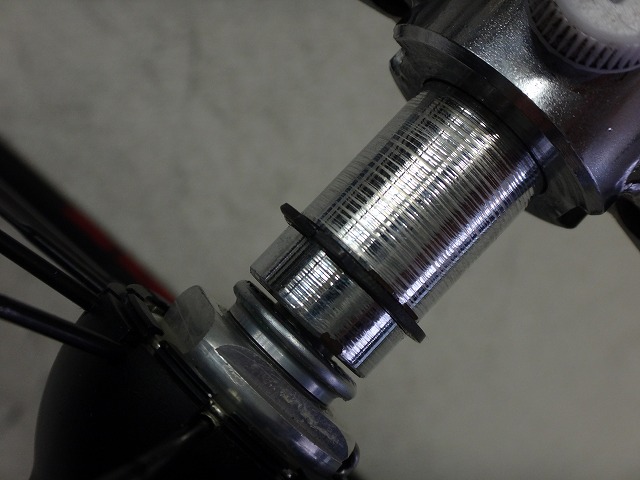
↑the front wheel was this far off-center
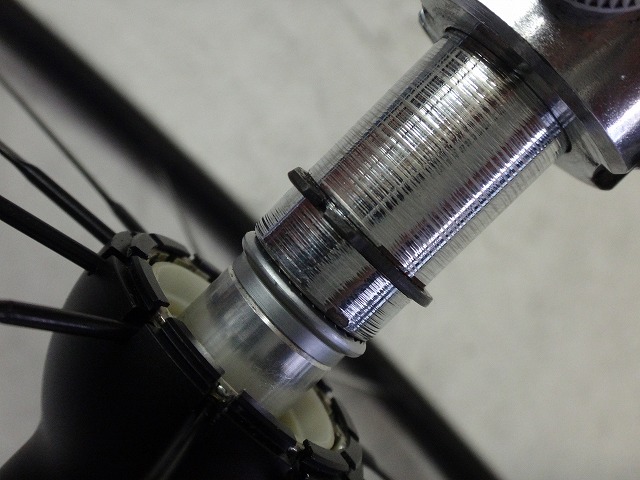
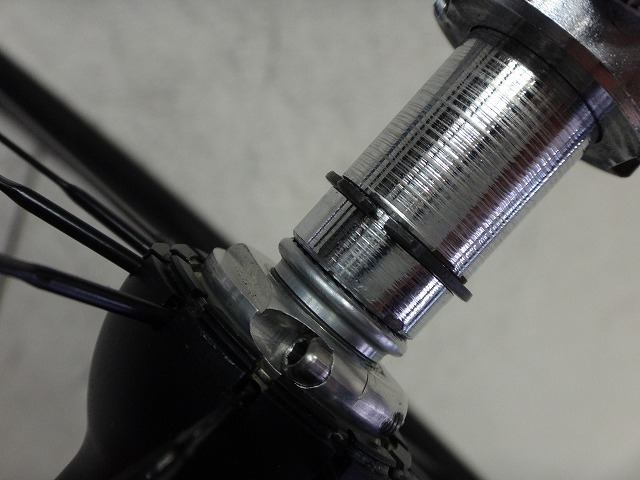
so I corrected it.
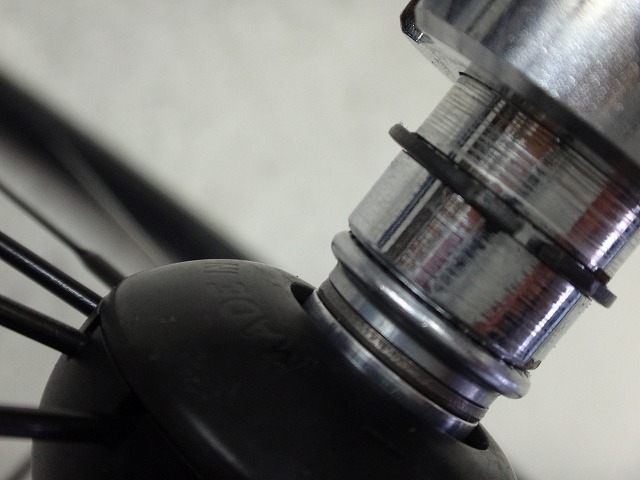
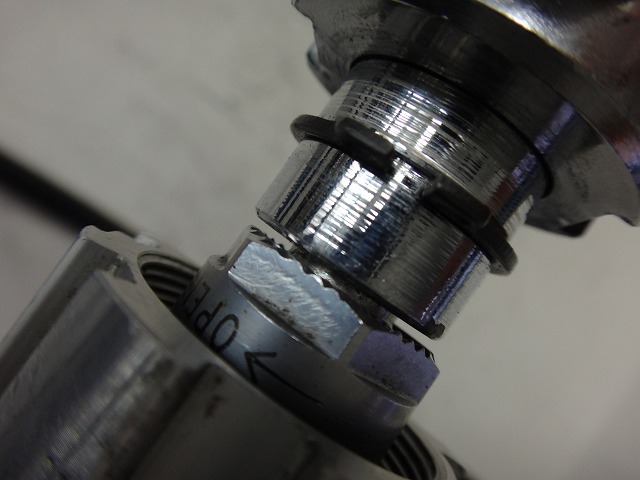
↑the rear wheel was this far off too
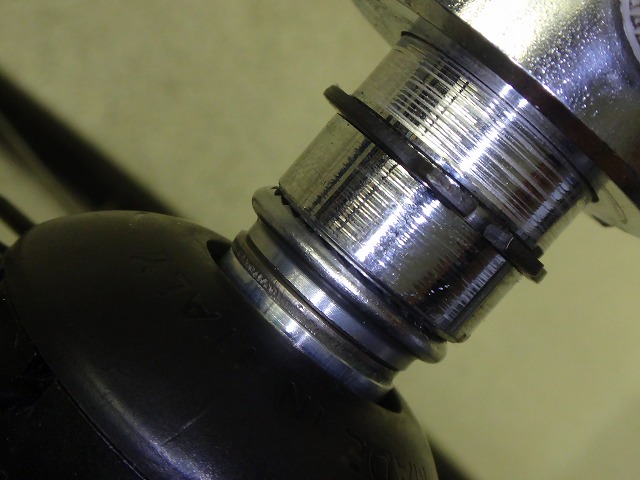
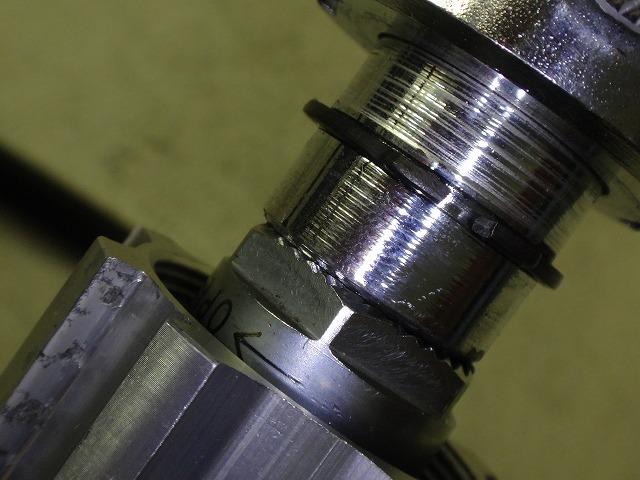
so I corrected it.
I was able to fix the rear wheel with just tightening on the non-freewheel side, so it actually worked out well.
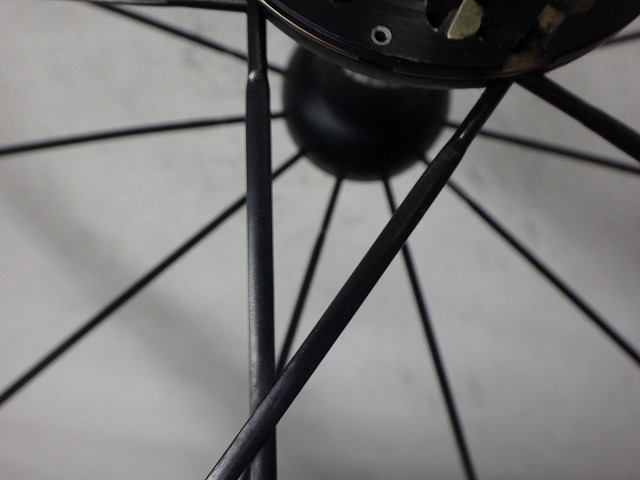
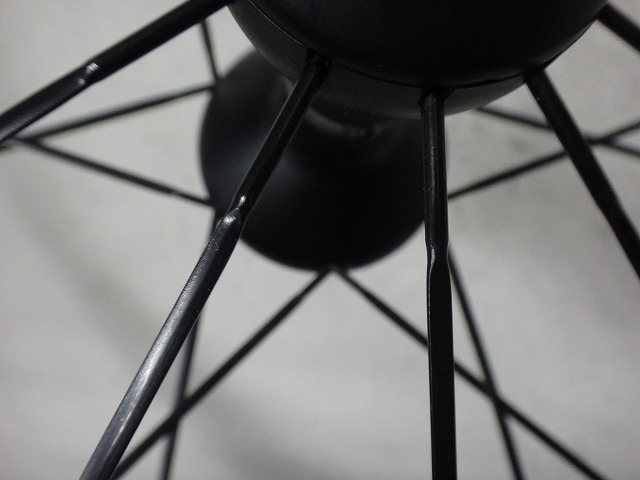
The Neutron (and Hyperon) features a left-right asymmetric spoke count ratio of roughly 65:100 with a high-low flange design (particularly small on the non-freewheel side),
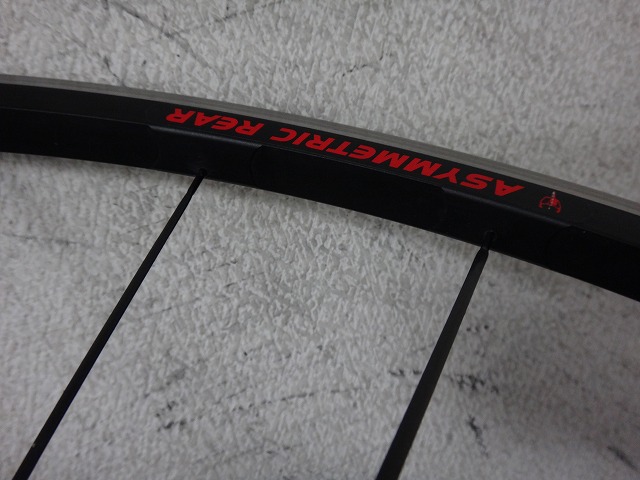
plus a significant offset rim, so the freewheel side is remarkably solid—you wouldn't think it was built with a radial lacing on the freewheel side with equal spoke counts on both sides.
There are almost no rear wheels with radial lacing on the freewheel side that perform this well, but using thicker spokes on the freewheel side just doesn't make sense from a sales perspective when customers are shopping purely by catalog weight. With Nomulabo wheels, even against all CX-RAY, using half-competizione adds about 20g of weight
(depending on spoke length, but roughly that), and that 20g can easily push the rear wheel over the 100g threshold. For example, all CX-RAY at 695g, half-competizione at 715g.
I mentioned something similar before using Black Inc wheels as an example(→here), but I wish more people understood these kinds of detailed craftsmanship considerations.