I bought a CatEye VOLT6000 (I didn't acquire it as stock).
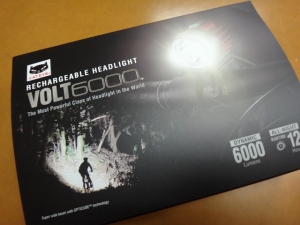
Excluding tax, just under 100,000 yen
Before I write about this.
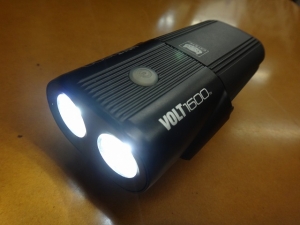
Regarding the VOLT1600, a friend of mine had to relocate
to some remote countryside prefecture for work,
and since there's not a single streetlight at night, making practice impossible,
I gave it to him.
※Because I phrased it this way, I can't name which prefecture.
By the way, "the transfer is planned for about 1.5 years" is just a verbal promise,
so don't trust it.
The VOLT1600 had no particular complaints performance-wise,
but when using the bright mode while gripping the top of the drop bar,
the heat from the light body transfers to my hand and gets quite hot.
It's unavoidable given how wide the light body is.
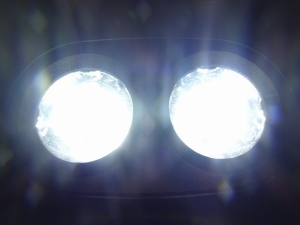
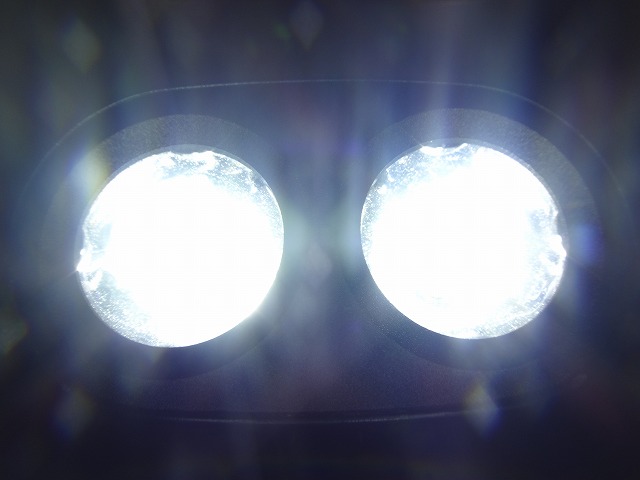
Also, with two LED bulbs producing a maximum of 1600 lumens,
in pitch-black conditions except for moonlight, when I covered one with my finger,
the illumination range narrowed and the brightness naturally decreased,
but visually it didn't seem like a fifty-percent reduction.
When I covered both, it became pitch black (of course).
With two bulbs producing 1600 lumens, I wondered if maybe
they're just adding up two 800-lumen bulbs as a single light source,
so I asked someone from CatEye at a trade show,
and they confirmed that's roughly correct.
In other words, the VOLT1600 is basically
"two VOLT800s placed side-by-side sharing a battery and lighting mode,"
making it effectively VOLT800 + 800.
You might think "why not just use the VOLT800?", but
the runtime at modest brightness levels is superior on the VOLT1600
thanks to its larger battery.
This matter got me stuck in the "single-bulb rechargeable light rabbit hole,"
which led me to trying lights from manufacturers other than CatEye for the first time in a while,
but I'll talk about that another time.

When you pull out the cylindrical outer box, a somewhat fancy case emerges.
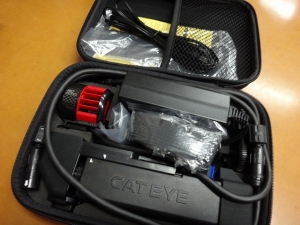
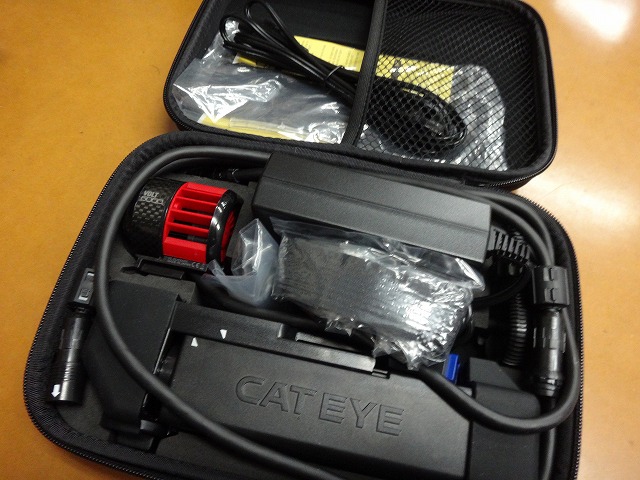
↑This is the complete contents.
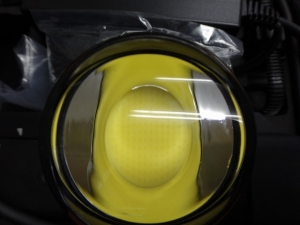
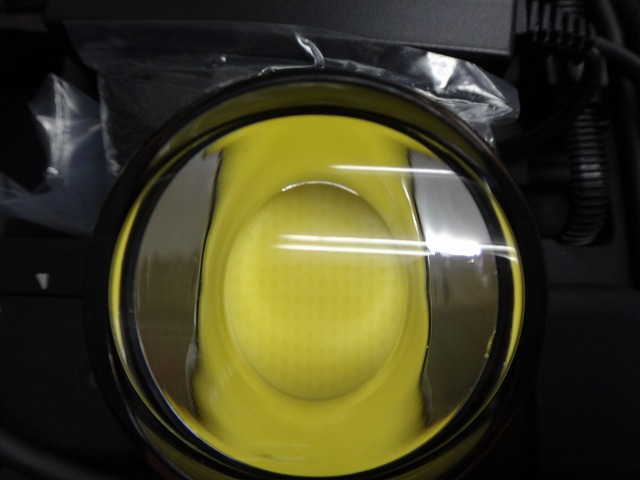
The light source of the VOLT6000 is listed on the manufacturer's site as
"ultra-high-brightness COB."
COB is short for Chip On Board,
which refers to a format where LED chips are laid out in a sheet pattern.
The combined total of these reaches a maximum of about 6000 lumens.
Addendum: I had written COB as "Clip On Board."
I had it correct in my head as Chip On Board,
but somehow I typed "Clip."
And then on the next line I wrote "LED chip"...
Thank you for pointing that out in the comments. I've corrected it.
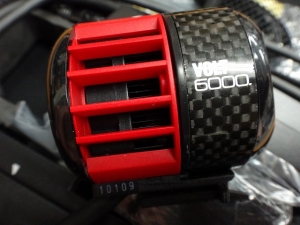
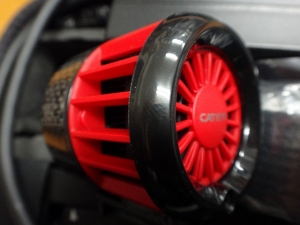
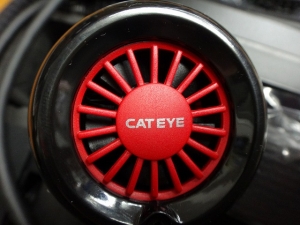
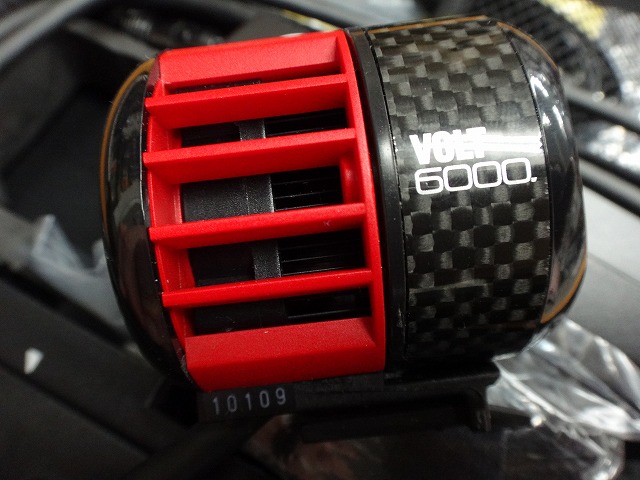
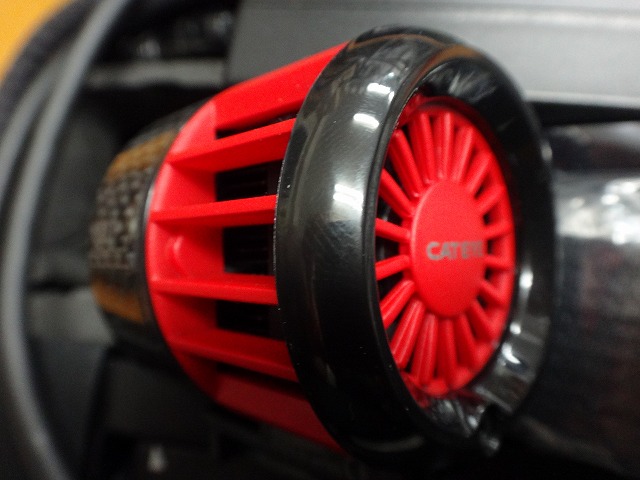
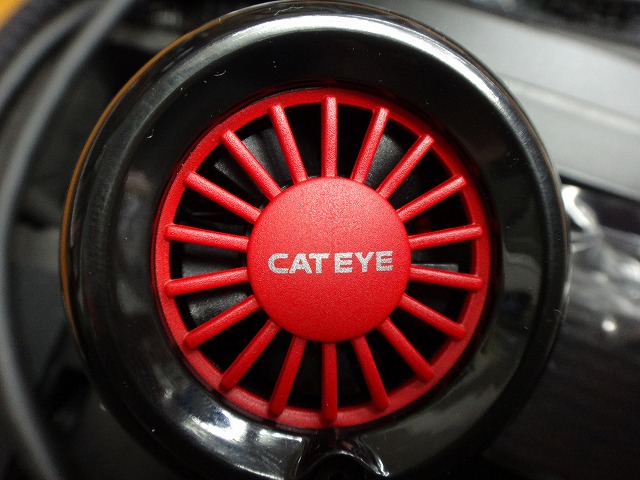
The light body has a cooling fan on the rear that cools the heated bulb.
While lit, it constantly makes a "fwooo" sound, which is quite loud.
You can see a serial number 10109 in the image,
but since this is for my own use and not for sale, it's fine.
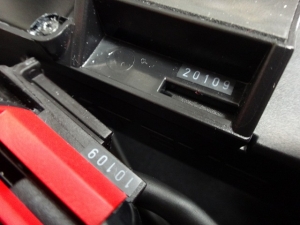
The control unit (described below) and the last four digits of the part number being the same is unlikely to be coincidence,
so it seems the top digit is 1 for the light body and 2 for the control unit,
and for complete units shipped from the factory (separate from spare parts shipments),
the serial numbers are matched.
By the way, this is a made-to-order item.
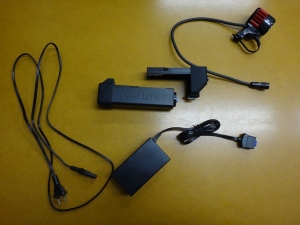
↑From top right: light body, control unit, battery, and charger.
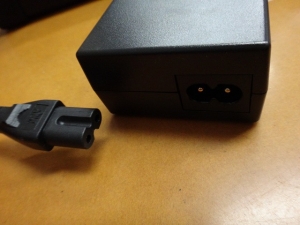
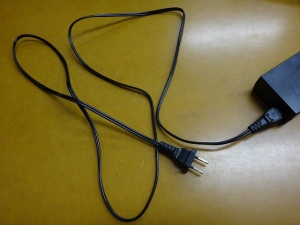
The charger is the common type with a detachable power cord.

The connector on the charger end that plugs into the battery
is called the BCG connector because it resembles the impression from a BCG vaccination shot
and as a double meaning for Blue Connector Guide.
I just made that up.
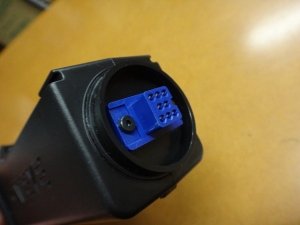
The battery has the female side of a BCG connector attached,
and connecting these allows charging.

The control unit also has the male side of a BCG connector,
and the battery plugs in here.
After inserting, turning the knob on the lower side engages
an anti-loss latch.
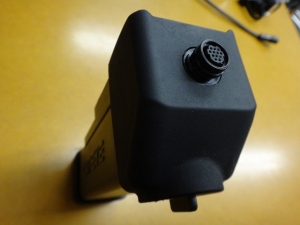
On the outside of the control unit is a round connector like this,

where the cord from the light body connects.
The question is, "Couldn't they have charged from this side instead?"
Well, given this design, it seems that wasn't possible.
If it were, handling would be slightly more convenient.
The control unit appears to be just converting the BCG connector to a round connector,
but there may be circuitry and a PCB inside
that actually "controls" the light's behavior.

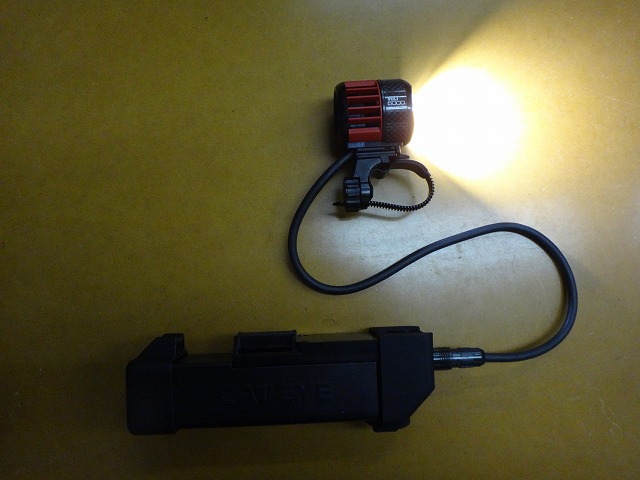
The basic mounting style involves using the included velcro strap
to secure the battery underneath the top tube.
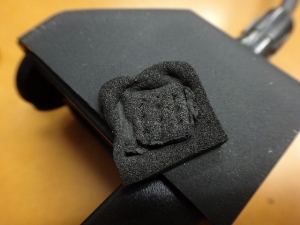
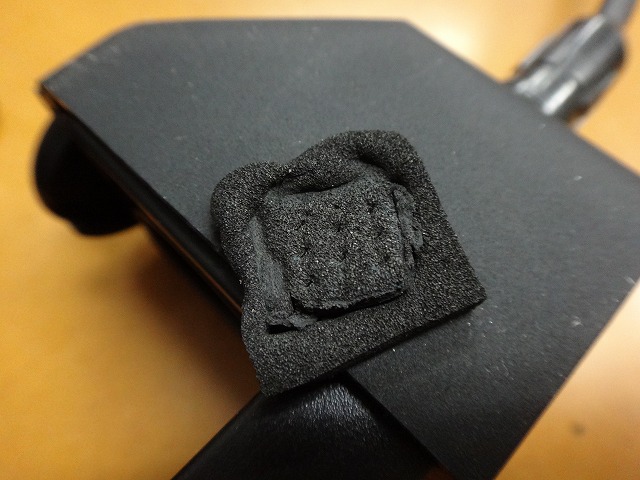
By the way, in the as-shipped state, between the battery and control unit's
BCG connectors there is something like this wedged in.
The manual doesn't explain whether it's necessary or not, and it's not available as a spare part,
so I assume it's just for protection during shipping,
but it was wedged in quite firmly between the BCG connectors, so

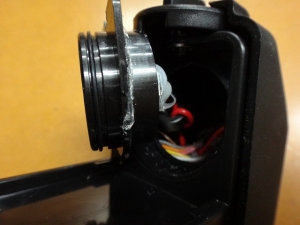
when I first pulled out the battery,
it came out along with this part.
Since I'm the one using this, I'm not asking for a replacement or anything,
but please don't complain about me fixing it myself.
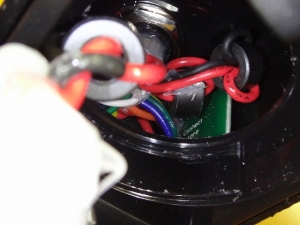
Sure enough, along with the connector conversion, there's a PCB inside.
Since the light body needs to have all but the front open for heat dissipation,
they probably wanted to keep the PCB on this side.
Given the extreme heat in high-brightness mode (your hand gets hot even 10cm in front of the lens),
it makes sense for the PCB to be here.
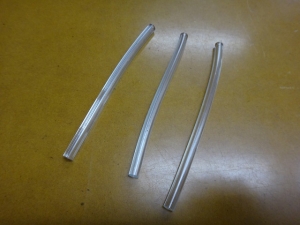
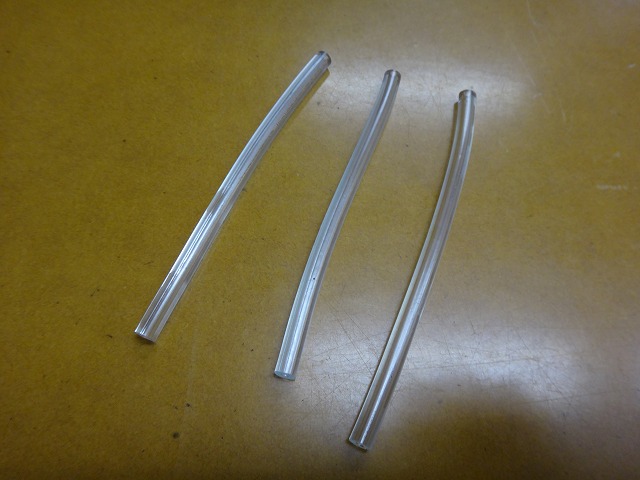
Three wire covers are included.
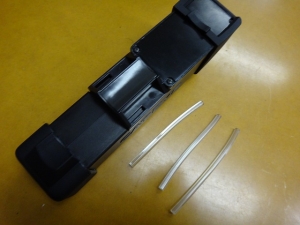
These prevent the velcro strap from pinching the wires
when securing the battery to the top tube.
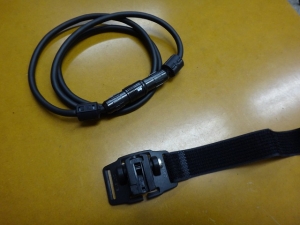
Included is a helmet mount bracket and strap,
as well as an extension cord between the light body and battery
for helmet-mounted use, in which case the battery goes in a backpack or similar.
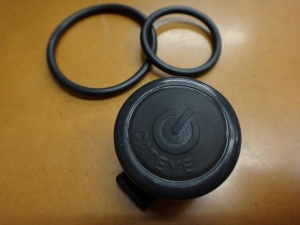
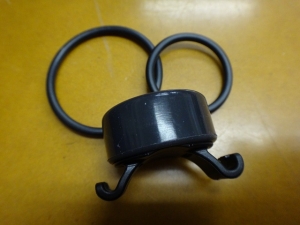
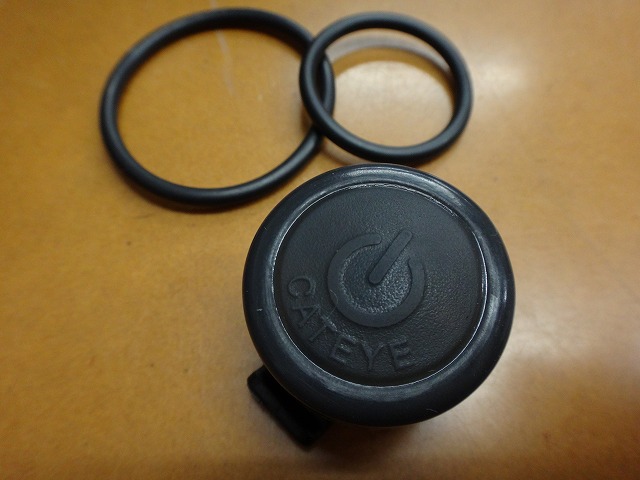
A remote switch was also included.
Being called a remote, it's wireless, and pairing with the body is done at the factory.
After battery replacement or if you buy this as a spare part separately,
you'll need to pair it yourself.
I remember hearing about some British guy who had electronic implants for impotence treatment,
but they happened to match the frequency of his neighbor's garage door opener remote,
so he'd get involuntary erections every time his neighbor went in or out.
That story came to mind.
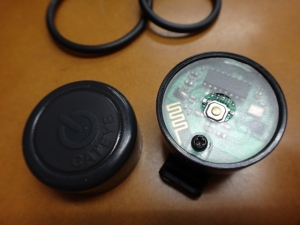
The button feels a bit mushy when pressed,
but I won't be using this anyway, so it doesn't bother me.
It's essential for those who mount the light body to the helmet.
I doubt anyone mounts the remote switch to their helmet.
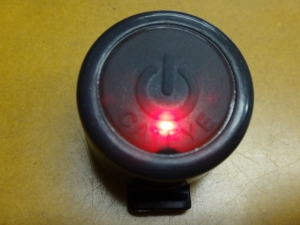
Push the button and it flashes for a moment.
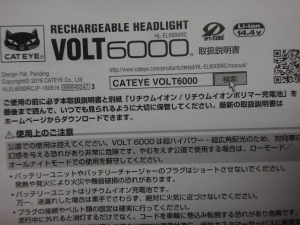
Now, this light is so bright that
"Please refrain from use on public roads"
is written in what sounds like a zen koan.
If absolutely necessary (←what does "absolutely necessary" even mean?) to use it on public roads,
you must strictly use only the two lower brightness modes of the five available,
they say.

Regarding the mode switching on the VOLT6000.
It's nearly the same as the VOLT1600 (→here),
but again, the Dynamic from double-click is different from
the Dynamic within the normal cycling modes,
and you can switch between "Dynamic and double-click Dynamic"
and "double-click Dynamic to double-click Dynamic." Also, there's no strobe mode.
If absolutely necessary (←what does "absolutely necessary" even mean?) to use on public roads,
you must strictly use only Low or All Night mode,
but to switch from All Night to Low,
you need to cycle through a brighter mode.
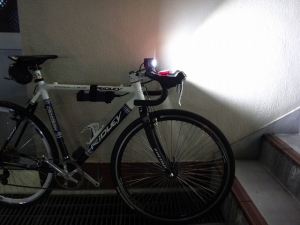
I turned it on.
Within our apartment complex, not directed at the street.
This is All Night mode.
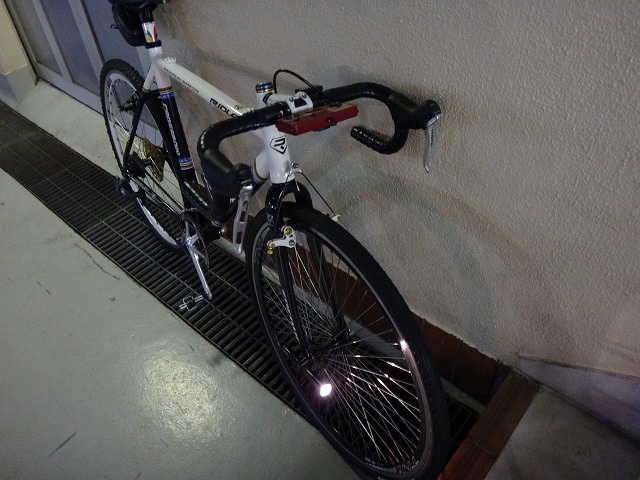
Incidentally, my cyclocross has three outer cable guides on the top tube
and I don't use any of them, so the wire covers are unnecessary.
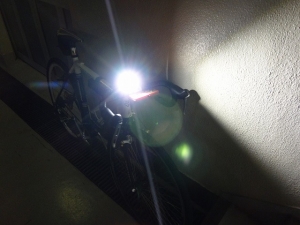
↑All Night mode
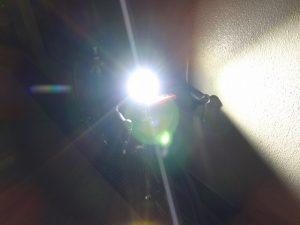
↑Dynamic mode
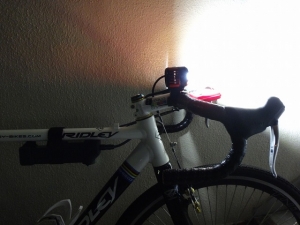
Dynamic mode from the side.
As mentioned in the manual, the beam pattern is ultra wide-angle,
and it spreads upward as well.
For shooting, I had the light body nearly horizontal,
but when mounted on a handlebar,
you need to tilt the beam significantly downward, and
actually it might be better to mount it inverted.
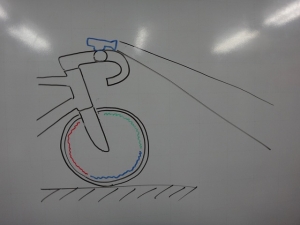
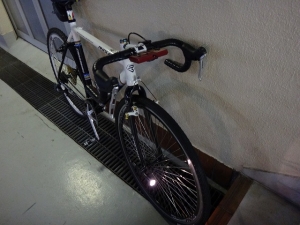
This time I shot with it mounted on the cyclocross,
but my commuter road bike is set up so that when the front wheel rotates,
light hitting it makes the nipples sparkle.
With the LED lights I normally use, this doesn't happen during normal operation—
only in bright daylight or when the wheel is lit by car headlights at night.

To illuminate the front wheel, you'd need to point the light down so far
that it no longer functions as a headlight.
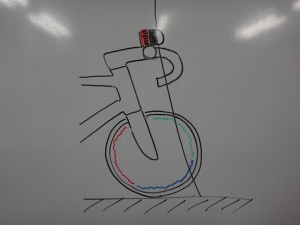
But with the VOLT6000, the front wheel sparkled even when mounted level.

Most lights have a beam edge that looks like an inverted parabola (y=x²),
but this one is nearly a horizontal line.
The manual only says to refrain from public road use,
but given the ultra wide-angle beam pattern,
the VOLT6000 seems intended for helmet-mounted off-road night riding.
If the beam were narrow, just turning your head would sweep the spotlight around,
but with beam characteristics like the VOLT6000's, your view stays stable.
If you're interested in the VOLT6000,
I'll try to keep one on display in the shop, so come take a look.
Actually, just looking at something you probably won't buy is pretty fun.
~Bonus~
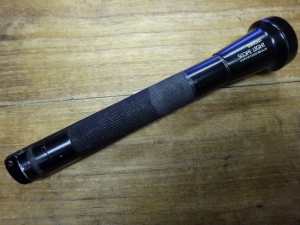
This is a Suntour Maglite-style light,

a model using two AA batteries and a krypton bulb.
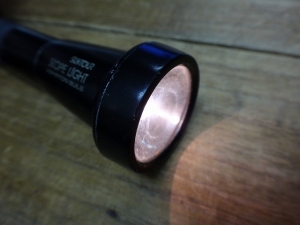
Still works.
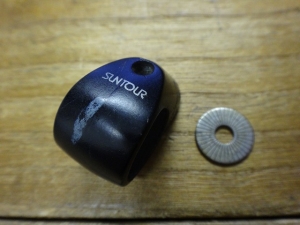
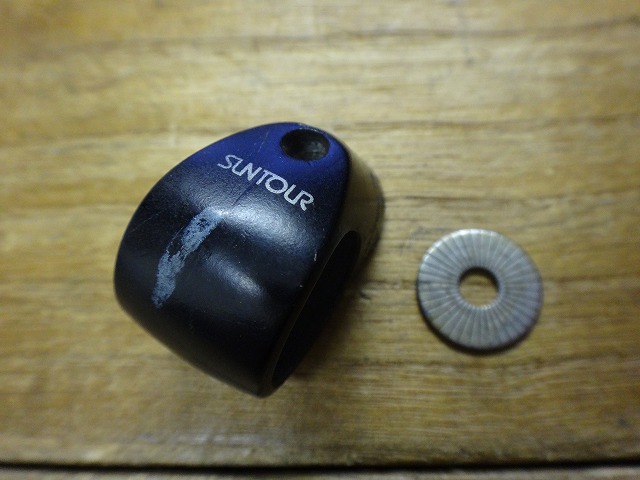
This is the bracket for that light—an adapter for mounting to the non-quick-release side of the front quick release.
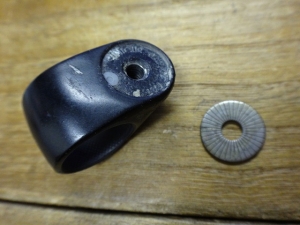
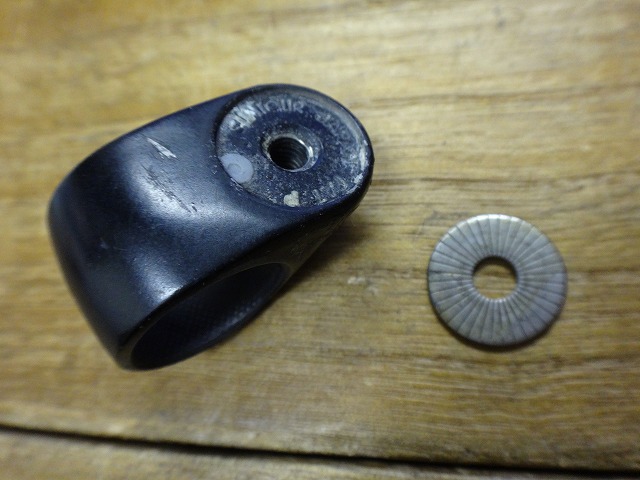
When you tighten the quick release, the washer
pushes out the gray plastic part,
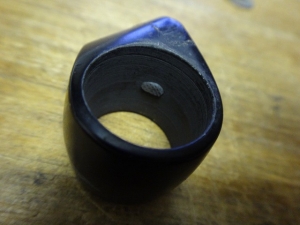
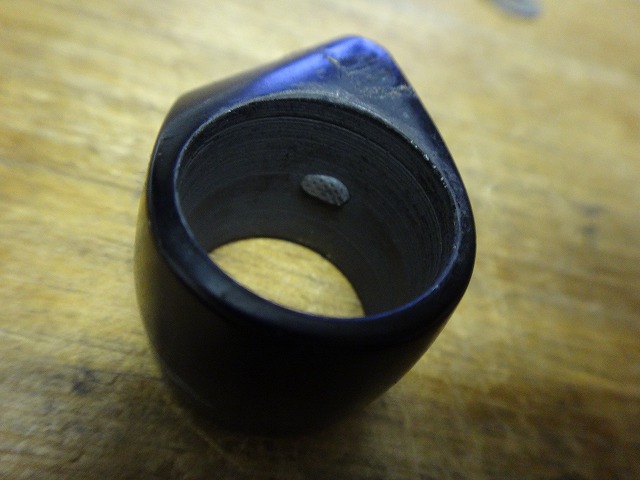
holding the light in place.

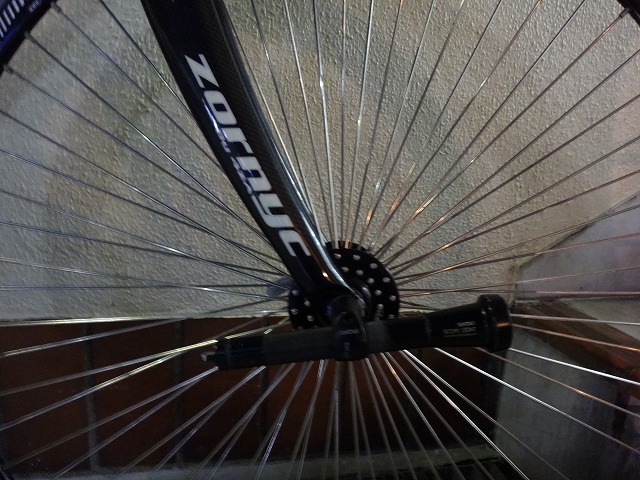
Installed.
I was writing this post and the sun came up.

Excluding tax, just under 100,000 yen
Before I write about this.

Regarding the VOLT1600, a friend of mine had to relocate
to some remote countryside prefecture for work,
and since there's not a single streetlight at night, making practice impossible,
I gave it to him.
※Because I phrased it this way, I can't name which prefecture.
By the way, "the transfer is planned for about 1.5 years" is just a verbal promise,
so don't trust it.
The VOLT1600 had no particular complaints performance-wise,
but when using the bright mode while gripping the top of the drop bar,
the heat from the light body transfers to my hand and gets quite hot.
It's unavoidable given how wide the light body is.
Also, with two LED bulbs producing a maximum of 1600 lumens,
in pitch-black conditions except for moonlight, when I covered one with my finger,
the illumination range narrowed and the brightness naturally decreased,
but visually it didn't seem like a fifty-percent reduction.
When I covered both, it became pitch black (of course).
With two bulbs producing 1600 lumens, I wondered if maybe
they're just adding up two 800-lumen bulbs as a single light source,
so I asked someone from CatEye at a trade show,
and they confirmed that's roughly correct.
In other words, the VOLT1600 is basically
"two VOLT800s placed side-by-side sharing a battery and lighting mode,"
making it effectively VOLT800 + 800.
You might think "why not just use the VOLT800?", but
the runtime at modest brightness levels is superior on the VOLT1600
thanks to its larger battery.
This matter got me stuck in the "single-bulb rechargeable light rabbit hole,"
which led me to trying lights from manufacturers other than CatEye for the first time in a while,
but I'll talk about that another time.
When you pull out the cylindrical outer box, a somewhat fancy case emerges.
↑This is the complete contents.
The light source of the VOLT6000 is listed on the manufacturer's site as
"ultra-high-brightness COB."
COB is short for Chip On Board,
which refers to a format where LED chips are laid out in a sheet pattern.
The combined total of these reaches a maximum of about 6000 lumens.
Addendum: I had written COB as "Clip On Board."
I had it correct in my head as Chip On Board,
but somehow I typed "Clip."
And then on the next line I wrote "LED chip"...
Thank you for pointing that out in the comments. I've corrected it.
The light body has a cooling fan on the rear that cools the heated bulb.
While lit, it constantly makes a "fwooo" sound, which is quite loud.
You can see a serial number 10109 in the image,
but since this is for my own use and not for sale, it's fine.

The control unit (described below) and the last four digits of the part number being the same is unlikely to be coincidence,
so it seems the top digit is 1 for the light body and 2 for the control unit,
and for complete units shipped from the factory (separate from spare parts shipments),
the serial numbers are matched.
By the way, this is a made-to-order item.
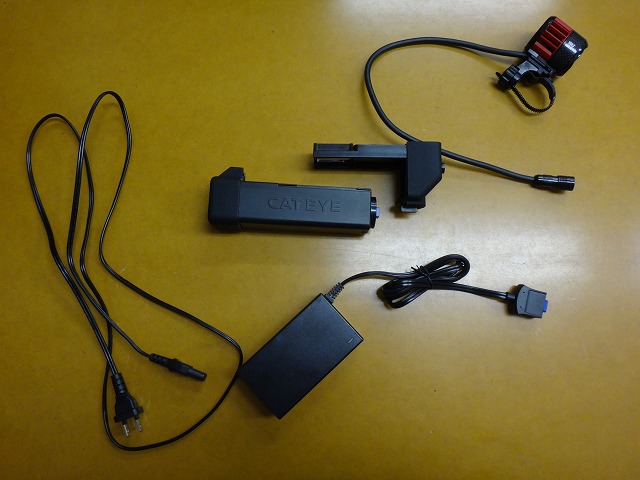
↑From top right: light body, control unit, battery, and charger.
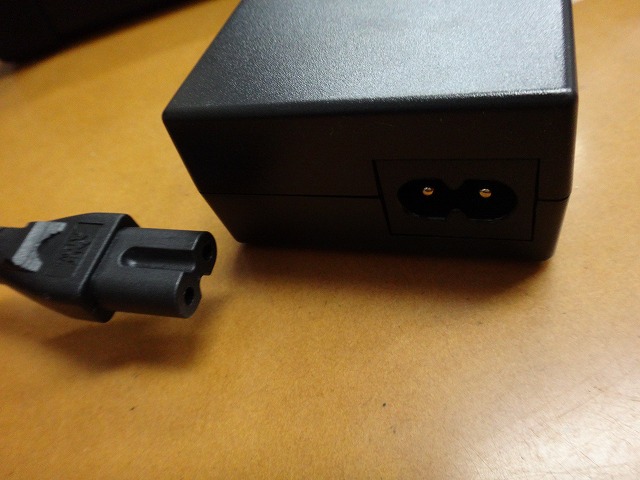
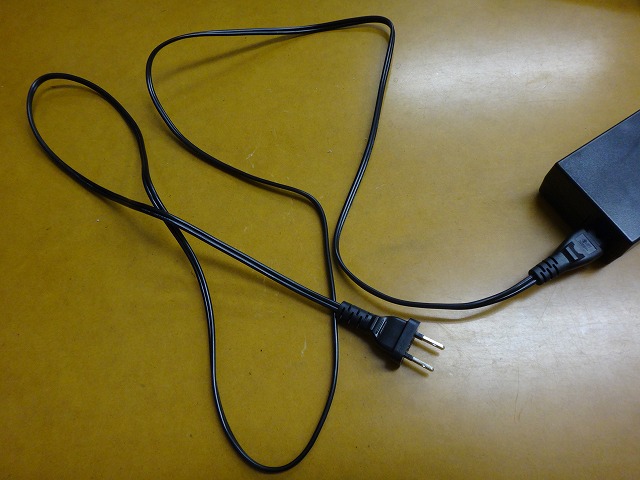
The charger is the common type with a detachable power cord.
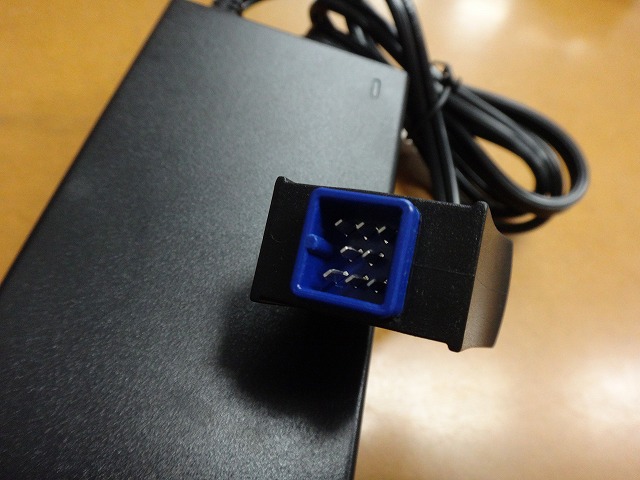
The connector on the charger end that plugs into the battery
is called the BCG connector because it resembles the impression from a BCG vaccination shot
and as a double meaning for Blue Connector Guide.
I just made that up.
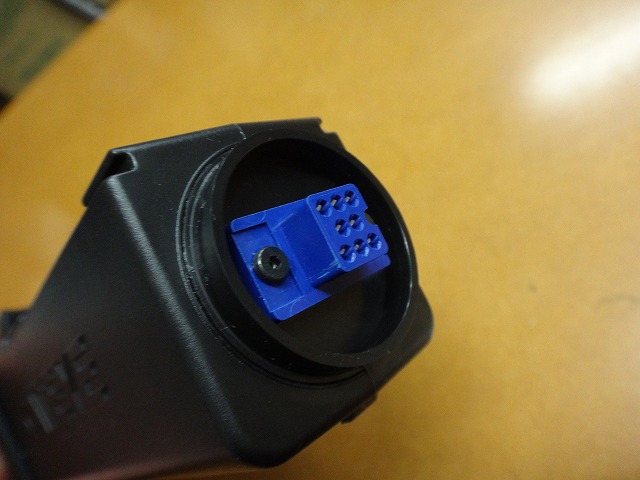
The battery has the female side of a BCG connector attached,
and connecting these allows charging.
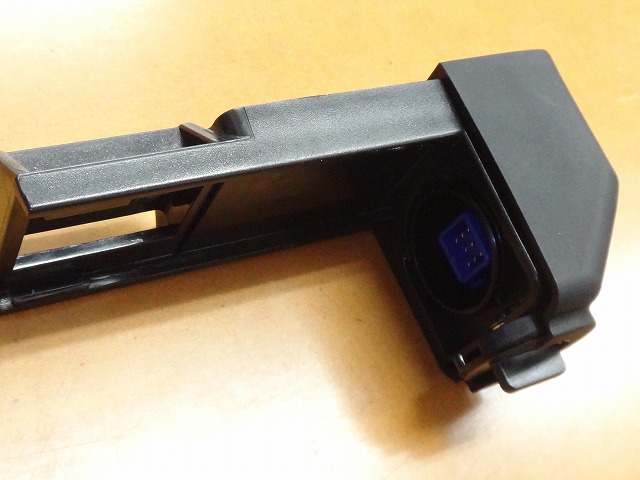
The control unit also has the male side of a BCG connector,
and the battery plugs in here.
After inserting, turning the knob on the lower side engages
an anti-loss latch.
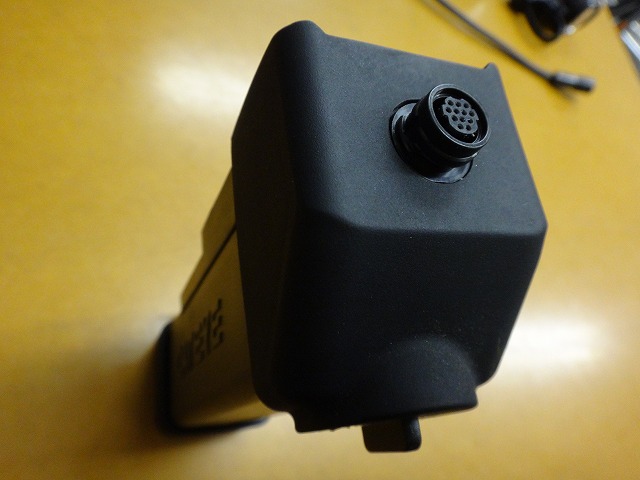
On the outside of the control unit is a round connector like this,
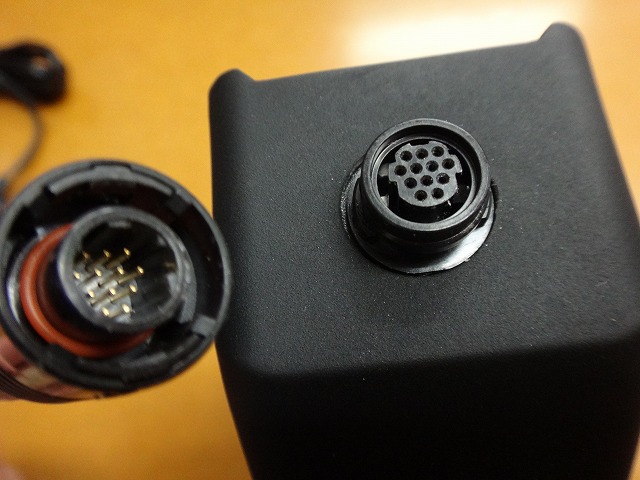
where the cord from the light body connects.
The question is, "Couldn't they have charged from this side instead?"
Well, given this design, it seems that wasn't possible.
If it were, handling would be slightly more convenient.
The control unit appears to be just converting the BCG connector to a round connector,
but there may be circuitry and a PCB inside
that actually "controls" the light's behavior.
The basic mounting style involves using the included velcro strap
to secure the battery underneath the top tube.
By the way, in the as-shipped state, between the battery and control unit's
BCG connectors there is something like this wedged in.
The manual doesn't explain whether it's necessary or not, and it's not available as a spare part,
so I assume it's just for protection during shipping,
but it was wedged in quite firmly between the BCG connectors, so


when I first pulled out the battery,
it came out along with this part.
Since I'm the one using this, I'm not asking for a replacement or anything,
but please don't complain about me fixing it myself.

Sure enough, along with the connector conversion, there's a PCB inside.
Since the light body needs to have all but the front open for heat dissipation,
they probably wanted to keep the PCB on this side.
Given the extreme heat in high-brightness mode (your hand gets hot even 10cm in front of the lens),
it makes sense for the PCB to be here.
Three wire covers are included.

These prevent the velcro strap from pinching the wires
when securing the battery to the top tube.

Included is a helmet mount bracket and strap,
as well as an extension cord between the light body and battery
for helmet-mounted use, in which case the battery goes in a backpack or similar.
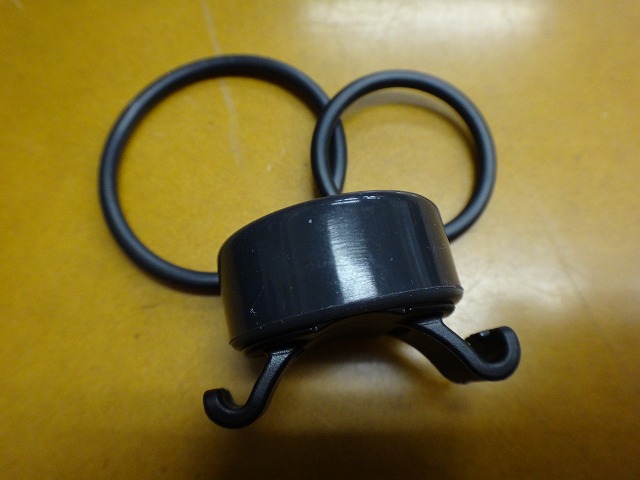
A remote switch was also included.
Being called a remote, it's wireless, and pairing with the body is done at the factory.
After battery replacement or if you buy this as a spare part separately,
you'll need to pair it yourself.
but they happened to match the frequency of his neighbor's garage door opener remote,
so he'd get involuntary erections every time his neighbor went in or out.
That story came to mind.
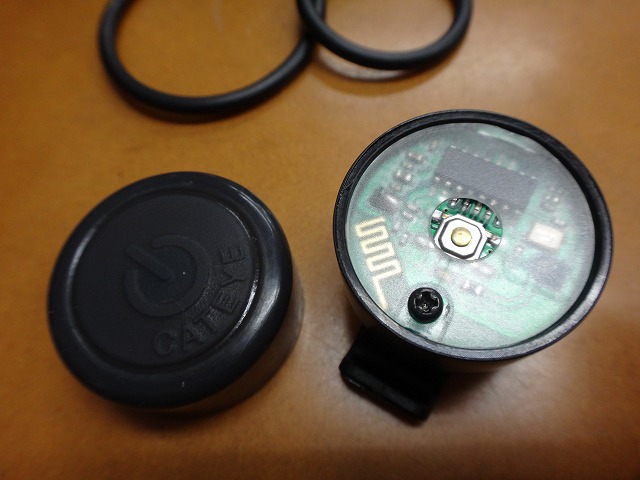
The button feels a bit mushy when pressed,
but I won't be using this anyway, so it doesn't bother me.
It's essential for those who mount the light body to the helmet.
I doubt anyone mounts the remote switch to their helmet.
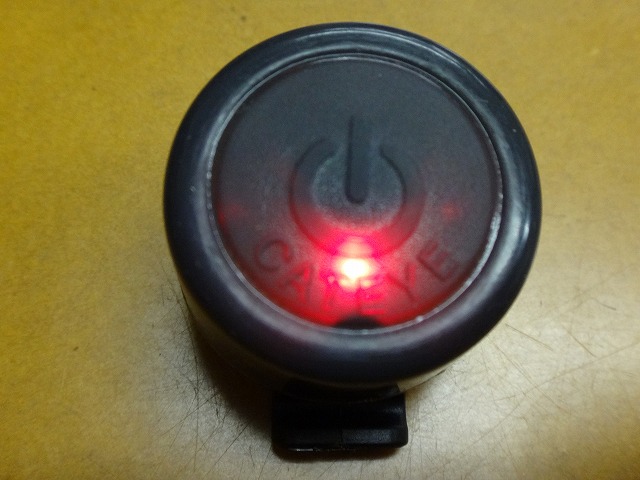
Push the button and it flashes for a moment.
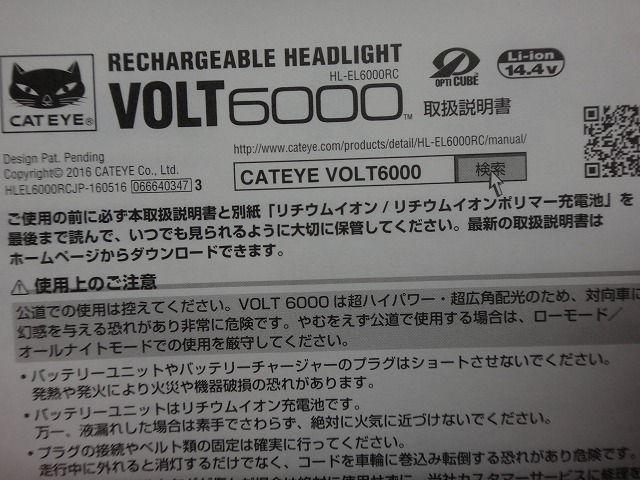
Now, this light is so bright that
"Please refrain from use on public roads"
is written in what sounds like a zen koan.
If absolutely necessary (←what does "absolutely necessary" even mean?) to use it on public roads,
you must strictly use only the two lower brightness modes of the five available,
they say.
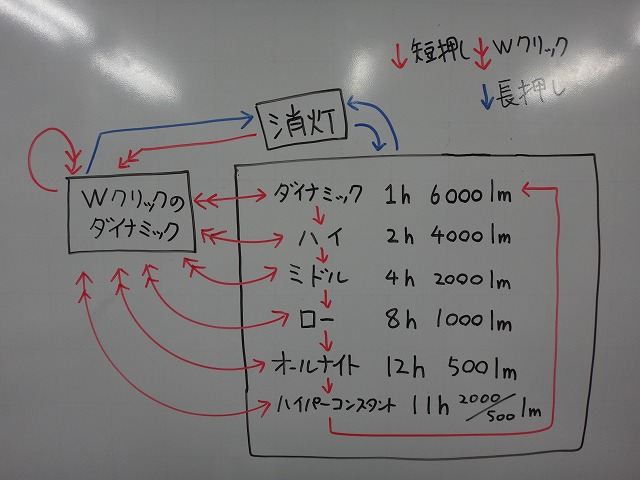
Regarding the mode switching on the VOLT6000.
It's nearly the same as the VOLT1600 (→here),
but again, the Dynamic from double-click is different from
the Dynamic within the normal cycling modes,
and you can switch between "Dynamic and double-click Dynamic"
and "double-click Dynamic to double-click Dynamic." Also, there's no strobe mode.
If absolutely necessary (←what does "absolutely necessary" even mean?) to use on public roads,
you must strictly use only Low or All Night mode,
but to switch from All Night to Low,
you need to cycle through a brighter mode.

I turned it on.
Within our apartment complex, not directed at the street.
This is All Night mode.
Incidentally, my cyclocross has three outer cable guides on the top tube
and I don't use any of them, so the wire covers are unnecessary.

↑All Night mode

↑Dynamic mode
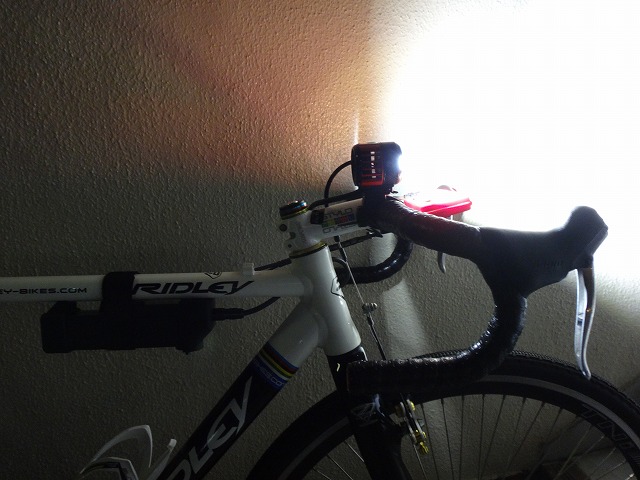
Dynamic mode from the side.
As mentioned in the manual, the beam pattern is ultra wide-angle,
and it spreads upward as well.
For shooting, I had the light body nearly horizontal,
but when mounted on a handlebar,
you need to tilt the beam significantly downward, and
actually it might be better to mount it inverted.
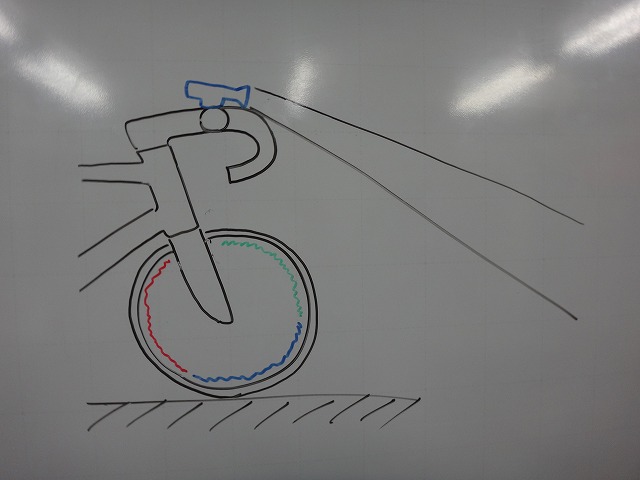
This time I shot with it mounted on the cyclocross,
but my commuter road bike is set up so that when the front wheel rotates,
light hitting it makes the nipples sparkle.
With the LED lights I normally use, this doesn't happen during normal operation—
only in bright daylight or when the wheel is lit by car headlights at night.
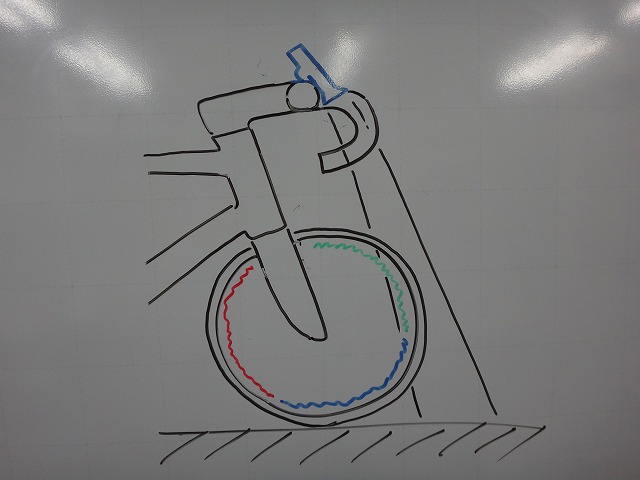
To illuminate the front wheel, you'd need to point the light down so far
that it no longer functions as a headlight.
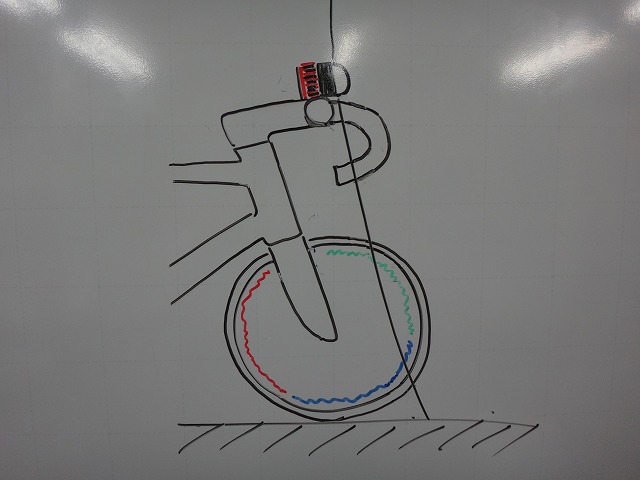
But with the VOLT6000, the front wheel sparkled even when mounted level.
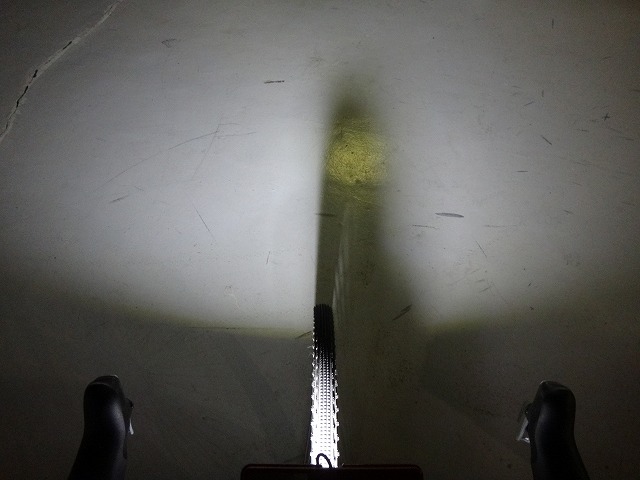
Most lights have a beam edge that looks like an inverted parabola (y=x²),
but this one is nearly a horizontal line.
The manual only says to refrain from public road use,
but given the ultra wide-angle beam pattern,
the VOLT6000 seems intended for helmet-mounted off-road night riding.
If the beam were narrow, just turning your head would sweep the spotlight around,
but with beam characteristics like the VOLT6000's, your view stays stable.
If you're interested in the VOLT6000,
I'll try to keep one on display in the shop, so come take a look.
~Bonus~

This is a Suntour Maglite-style light,
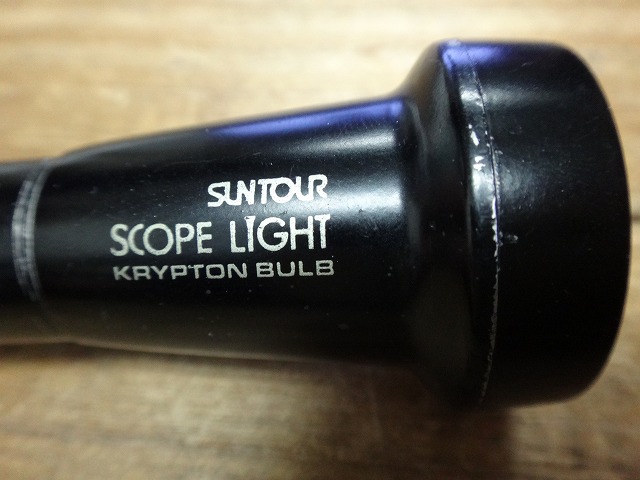
a model using two AA batteries and a krypton bulb.
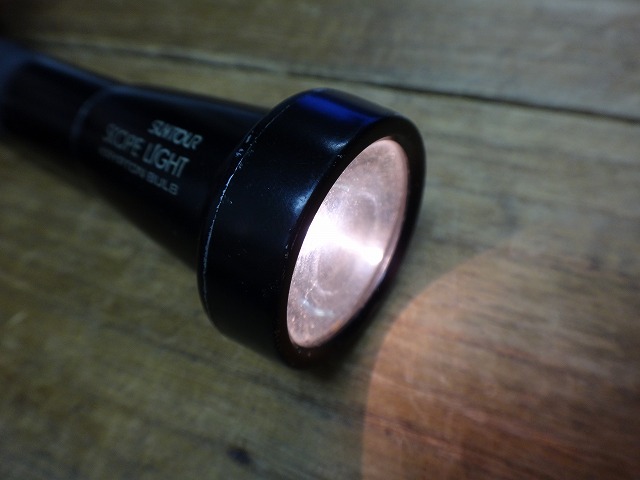
Still works.
This is the bracket for that light—an adapter for mounting to the non-quick-release side of the front quick release.
When you tighten the quick release, the washer
pushes out the gray plastic part,
holding the light in place.
Installed.
I was writing this post and the sun came up.