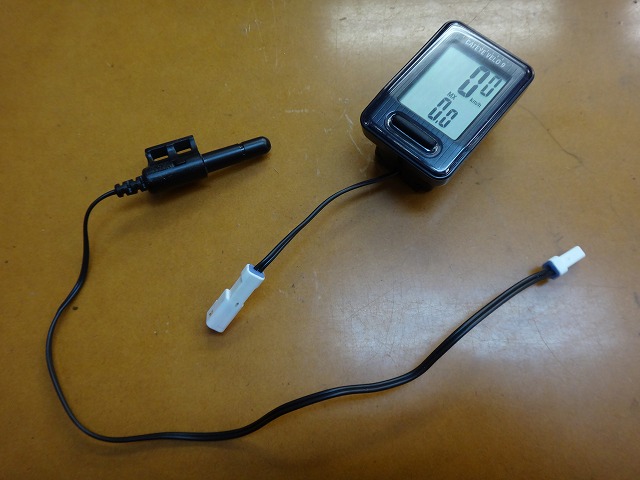
I took a Cat's Eye wired cycle computer
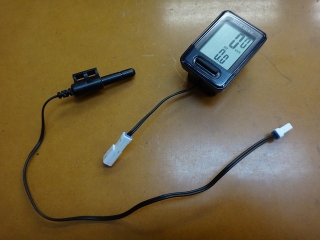
and trimmed it to the minimum necessary length, then split the cord in the middle. I've been thinking it would be nice to do this for ages, and I finally got around to making it.
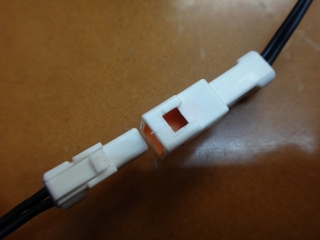
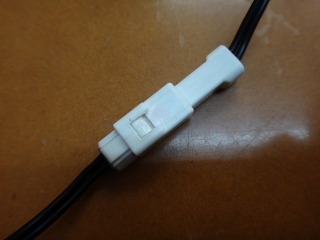
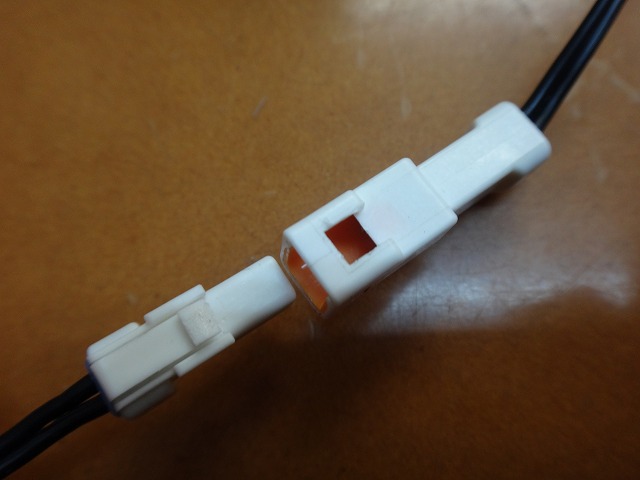
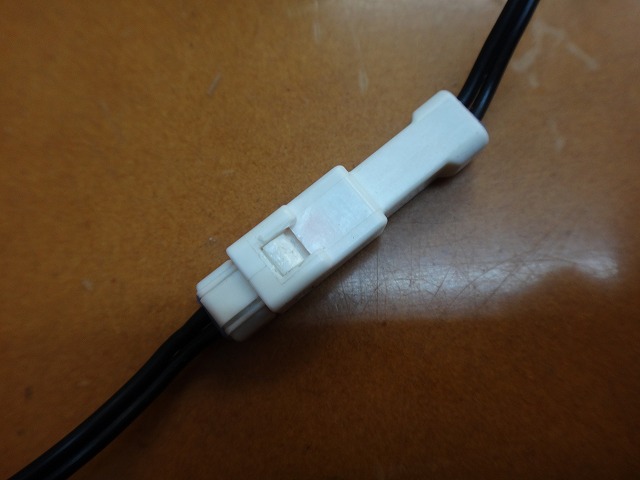
A waterproof connector.
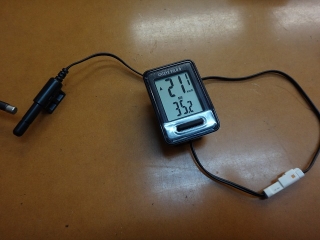
Of course it responds to the magnet.
Anyway, this has nothing to do with what I'm about to write.
It's just Cat's Eye-related.
The title "Nastro" is
an Italian word meaning tape or ribbon,
but when used as a bicycle part, in most cases it refers to bar tape,
and occasionally to rim tape.
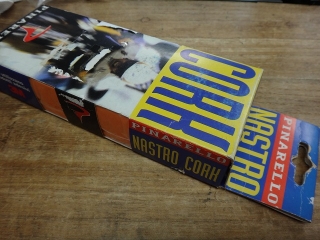
↑For example, this is Pinarello bar tape,
and it says "Nastro Cork."
The meaning is straightforward—cork bar tape.
Last year, I recommended Cat's Eye's "Shiny" bar tape to a racer who placed in the Champion class at Norikura, and installed it on their bike.
During a post-race interview, when asked "Did you have any special preference for equipment?", they apparently answered "Shiny bar tape."
You should've said something like "lightweight wheels I bought just before the race." Oh well.
At first glance it just looks like a wide nylon string,
but it doesn't slip that much as long as you don't grip it with bare hands covered in sweat.
In other words, it's not just a lightweight part—
it's actually a bar tape that works fine in practice.
The thing to watch out for is that if you lean the bike against a bumpy wall and the handlebar slides, it can tear easily.
Being careful about where you lean it is the way of those who use Shiny.
And this racer liked Shiny so much that
they apparently searched around for more,
but since it was discontinued long ago, there's no way to find ones in good condition. Ha ha.
Then one time at another race, there was a Cat's Eye booth, so
they asked the Cat's Eye person there, "Will you restock Shiny?"
"We've never made bar tape."
That's the shocking answer they got back.
Not everyone, of course, but
some employees don't know about their company's past products.
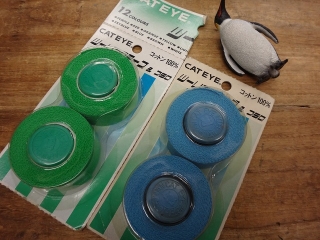
I'll go into more detail about Shiny later,
but first let me provide a definitive counterexample.
"Cat's Eye bar tape"
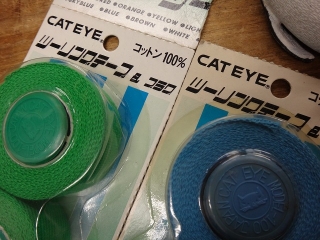
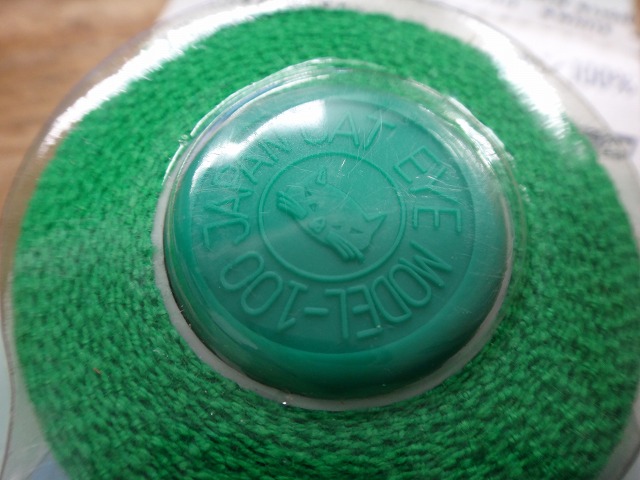
This one is made of cotton.
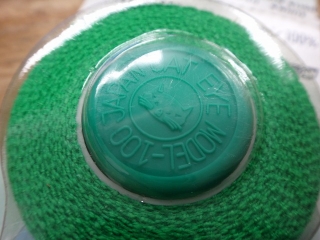
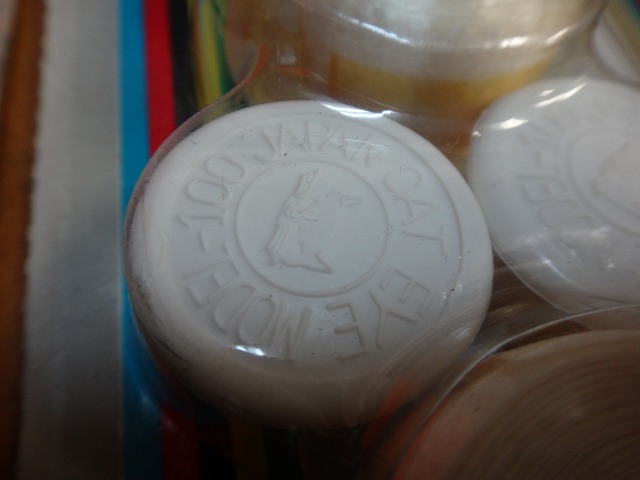
Also, remember that the included bar end cap
is "MODEL-100."
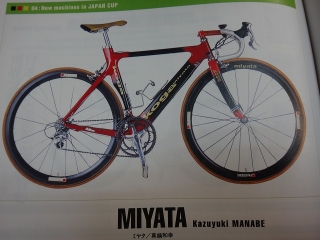
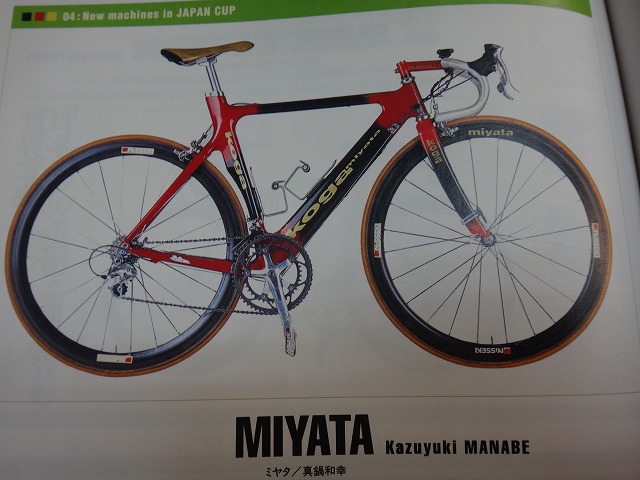
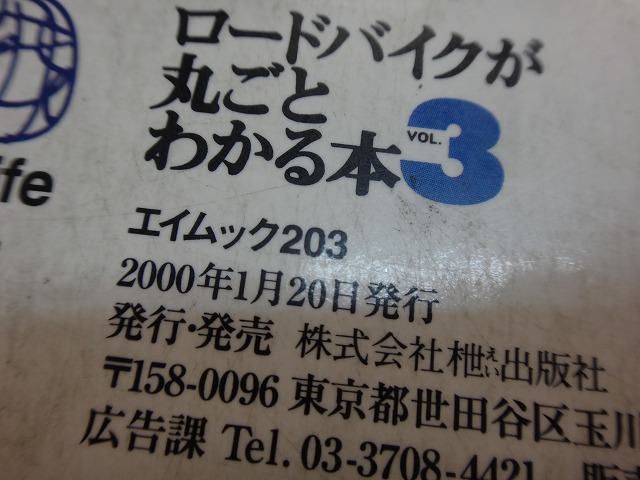
In a book I have called "Road Bikes Explained, Volume 3,"
there's a photo of Manabe's bike from Miyata (at the time),
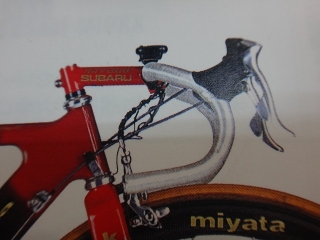
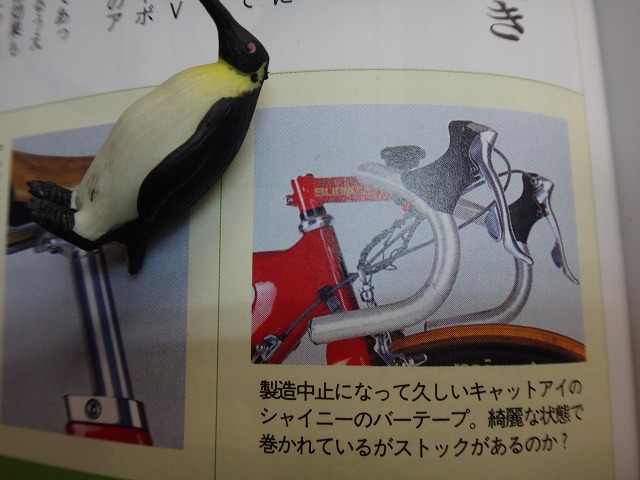
and the bar tape wrapped around this handlebar is Cat's Eye Shiny.
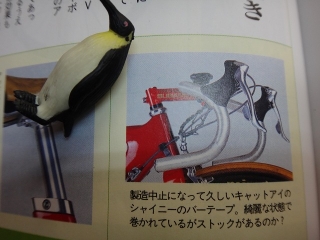
It says it's been discontinued for a long time,
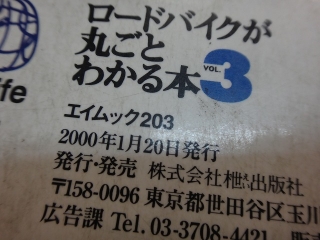
but this book came out about 20 years ago.
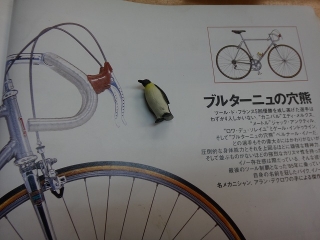
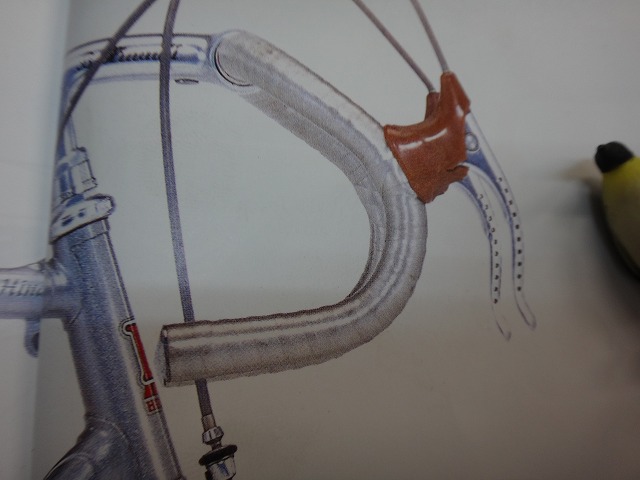
The same book also features Bernard Hinault's 1985 actual bike,

which also has what looks like Shiny-style bar tape, but
this is actually "Benotto," not Shiny.
Benotto is a Mexican brand that
produced frames in addition to bar tape,
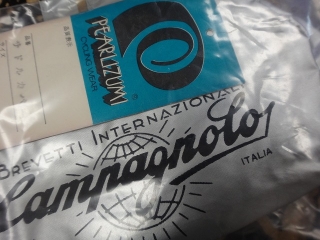
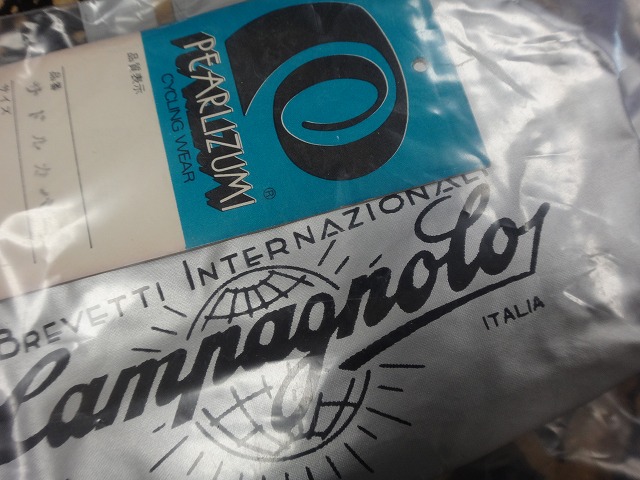
but got sued by Pierre Cardin to stop using the similar old logo.
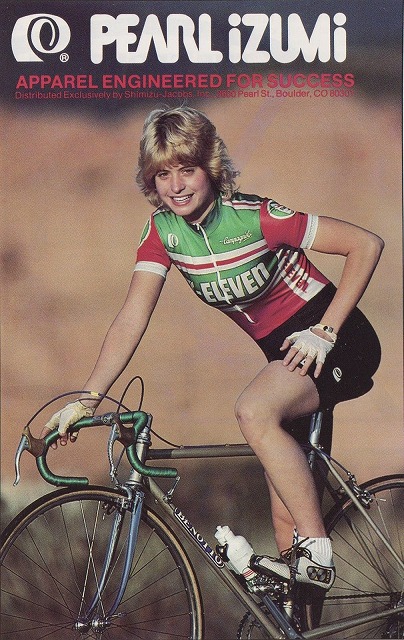
There's a poster from the old logo era of Pearl Izumi, featuring
Rebecca Twigg (spelled as Twigge on Wi○pedia), a strong female racer at the time,
and I have the actual poster, but I can't find it right now, so
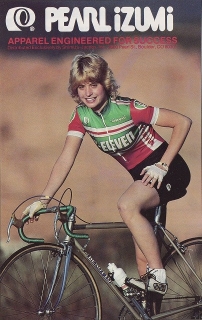
I grabbed an image from the internet.
Her team was Seven Eleven, and both the frame and bar tape are Benotto.
Here comes a flood of self-taken images

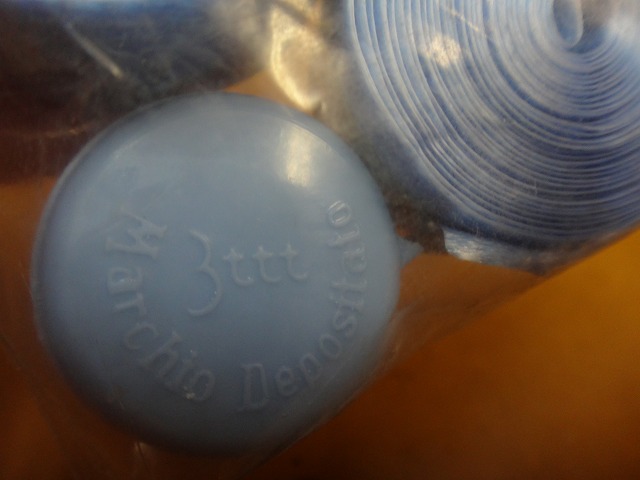
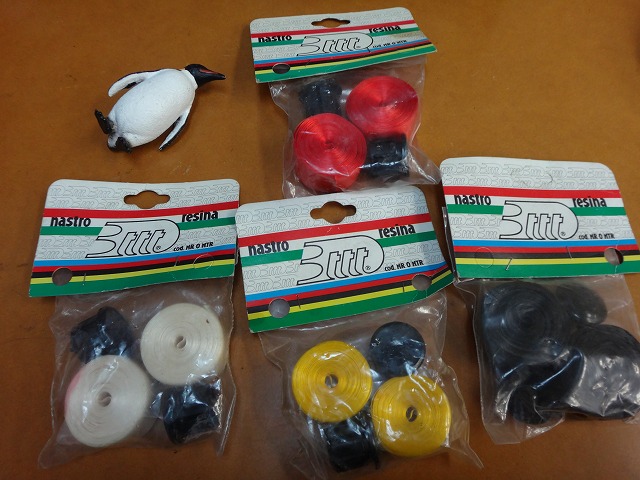
This is 3T's "Cello Nastro Professional," which is likely the origin of Shiny-style bar tape.
The meaning is straightforward—cello tape—but
Shiny-style bar tape doesn't have any adhesive tape or anything.
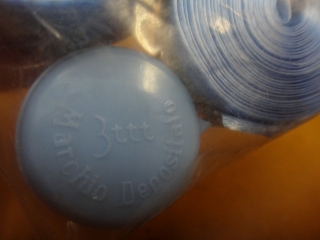
The logo on the packaging and bar end cap is from the earliest 3T era.
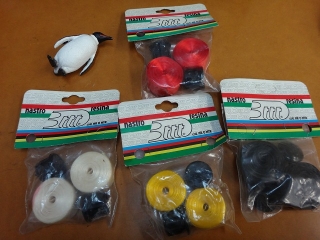
Next is Cello Nastro Pro from
the subsequent logo era.
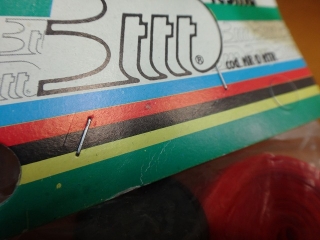
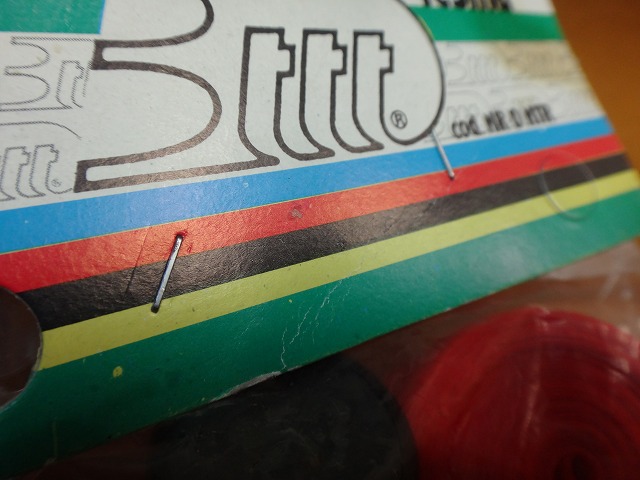
This features a stapler with shorter staples, similar to what you see
on old Campagnolo small parts bags—narrower than the Japanese standard.
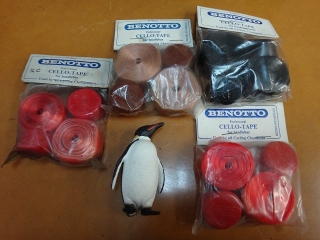
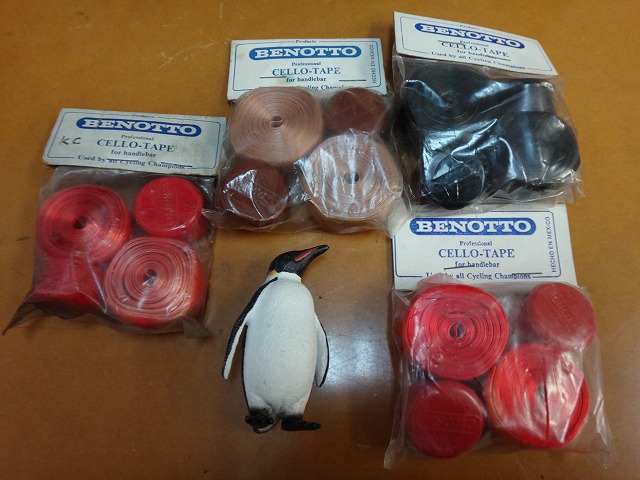
Whether this is related to Cello Nastro Pro is unclear, but
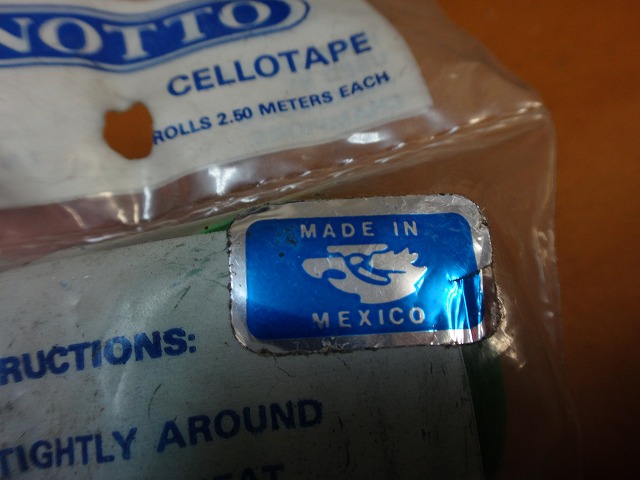
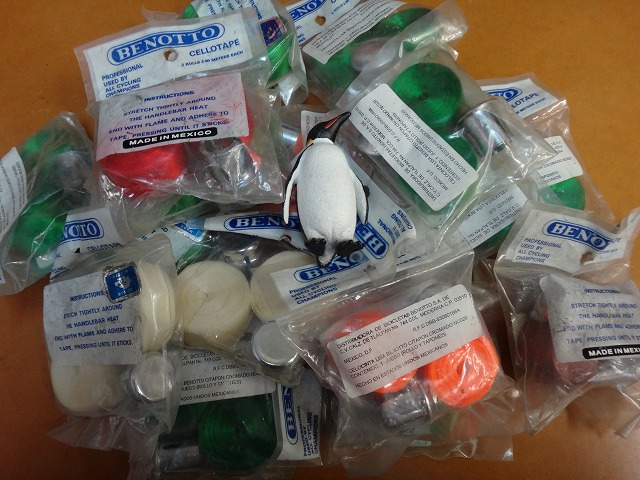
this is Benotto's "Cello Tape."
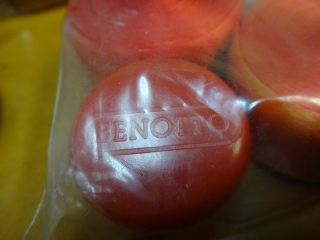
The early version had some paper packaging with BENOTTO logo
bar end caps,
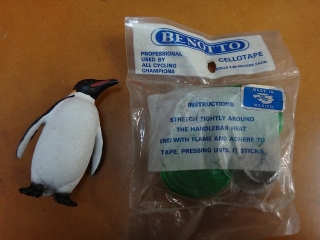
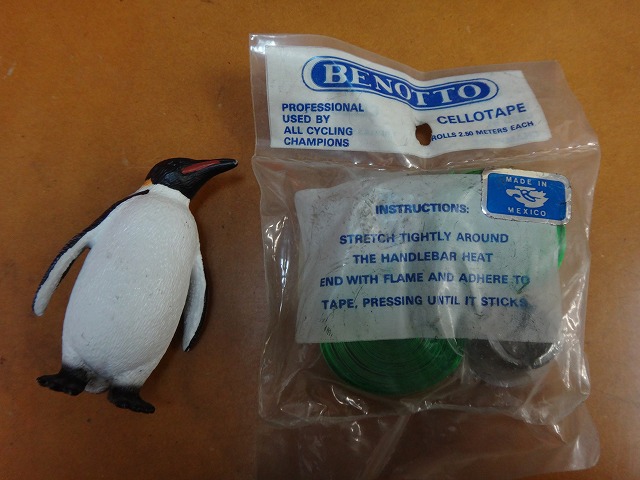
while the later version came in this packaging.
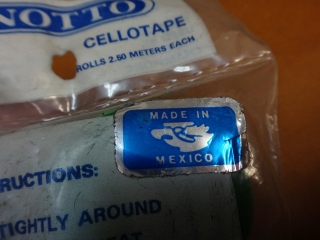
Made in Mexico.
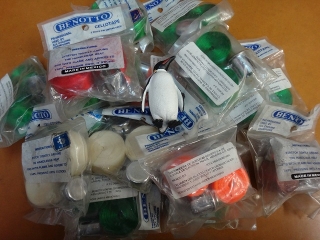
The later version's bar end cap changed to a logo-less,
chromed plastic piece.
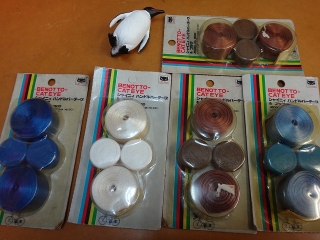
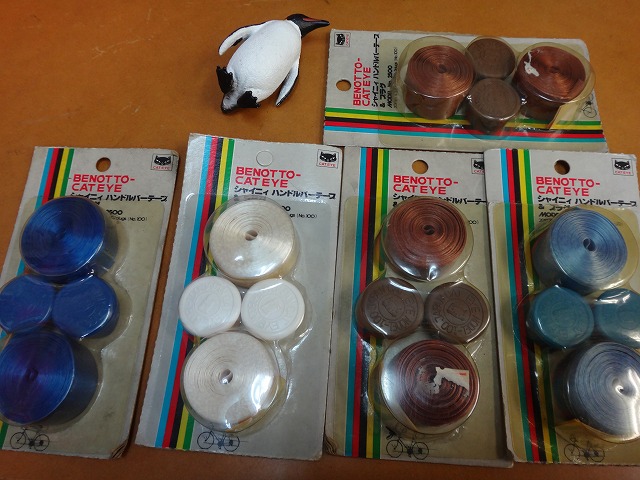
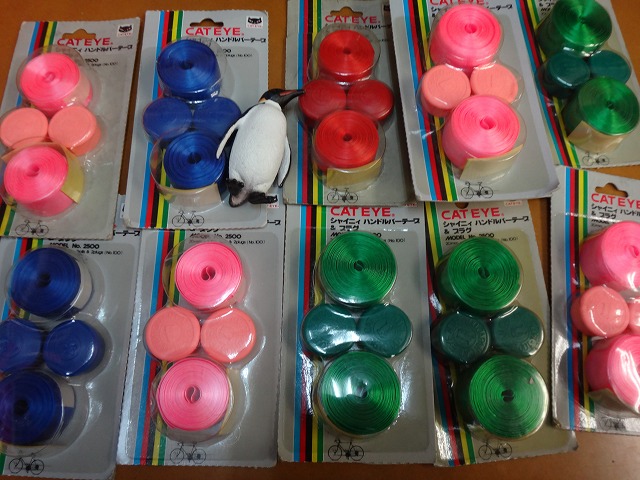
Next is the early version of Cat's Eye Shiny.
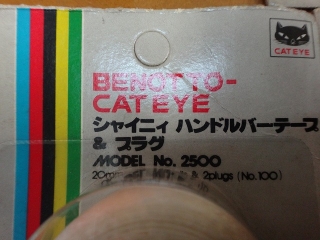
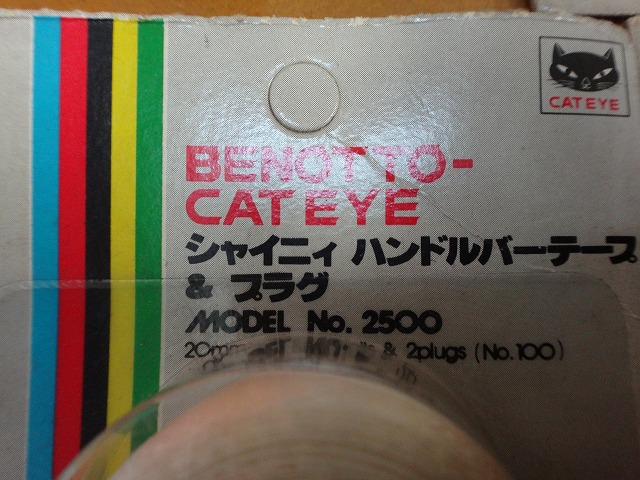
The early version is branded "Benotto Cat's Eye" as a dual name.
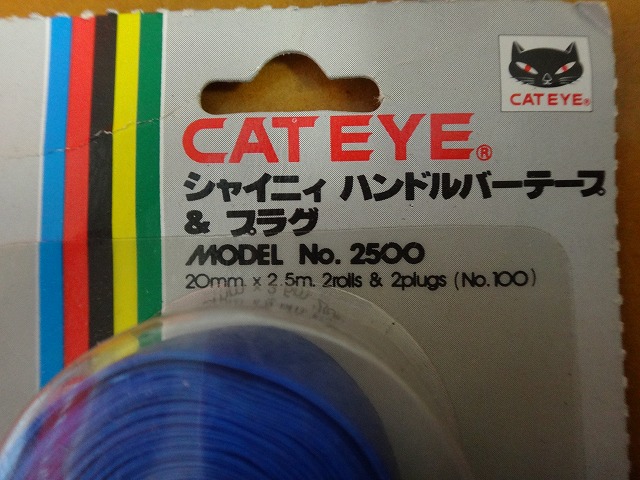
The product model number is No. 2500.
I've been writing "Shiny" up to this point, but the official spelling appears to be "Shinyi."

The bar end cap is MODEL-100.

The later version of Shiny has
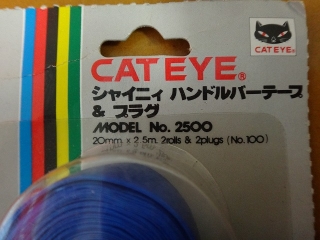
Cat's Eye branding alone,
but the model name is still No. 2500,
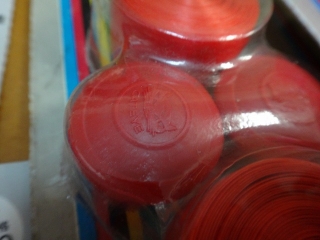
and the bar end cap is basically MODEL-100, though
there are also some unmarked MODEL-100-style caps mixed in (with slightly different shapes).
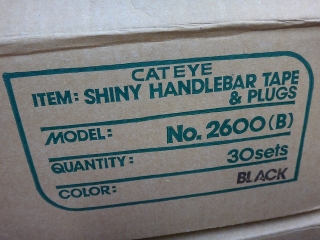
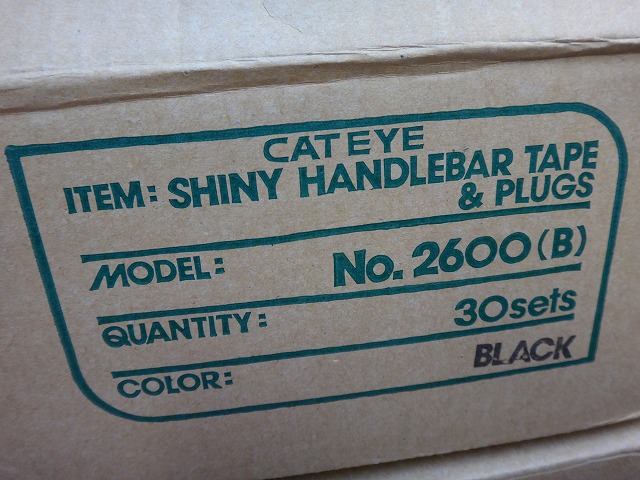
After No. 2500, Shiny also came in
a No. 2600 version,
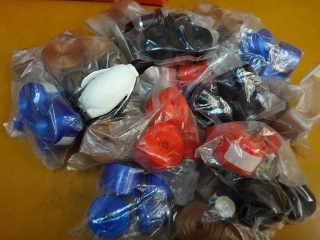
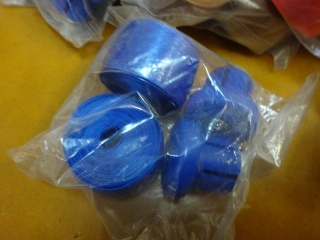
which comes in simpler packaging.
Compared to Benotto and No. 2500,
the feel or texture seems slightly different,
but that might just be because the old cello tape and Shiny
have aged slightly.
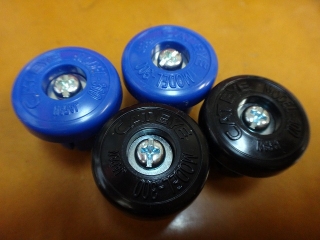

Also, No. 2600 comes with a MODEL-300 bar end cap.
It's the same color as the bar tape, and if you push it with your finger, it deforms slightly with a squishy feel,
but since it's on the heavy side for a bar end cap,
it's not used for weight reduction purposes.
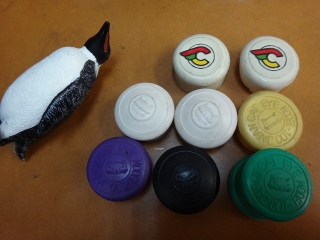
MODEL-100 series bar end caps.
The one with the Cinelli logo is not Cat's Eye but vintage Cinelli.
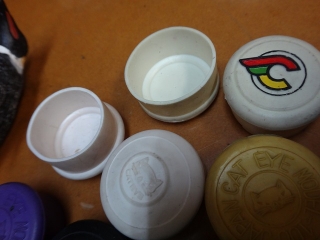
These caps are soft and go on the bar end before wrapping the tape—extremely lightweight.
The other day, a racing buddy asked if I had one in light blue,
so I gave them one.That's valuable stuff.
Anyway, so Cat's Eye did make bar tape in the past,
but recently I acquired something I found interesting.
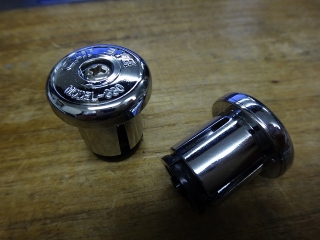
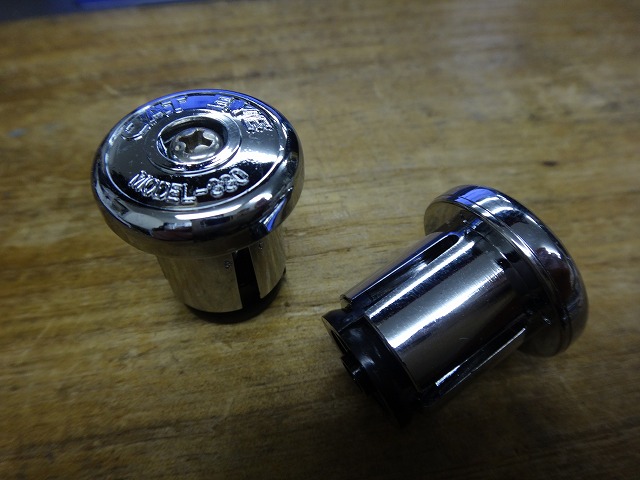
A non-sale bar end cap that Cat's Eye distributes
at cycling events.
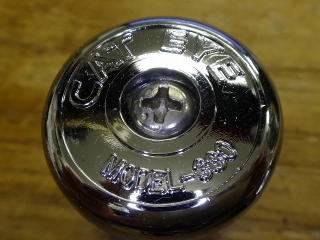
It's marked MODEL-330, which is similar to MODEL-300, but
it's made of hard plastic rather than slightly soft nylon,
and has a chrome finish.
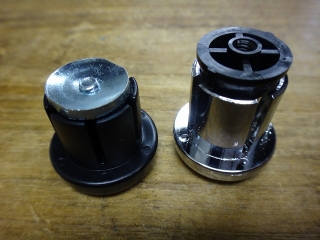
One reason MODEL-300 is heavy is
that the expanding part is made of metal,
but MODEL-330 has all parts except the screw
made of plastic, so it's not that heavy.
The reason I said "interesting" is that
if they're releasing bar end caps like this,
maybe they're thinking about reviving Shiny...or so I wondered.
Not particularly Cat's Eye propaganda, but
I'll categorize this article under "Cat's Eye propaganda" anyway
Addendum: a rejected image I prepared for this article but forgot to use
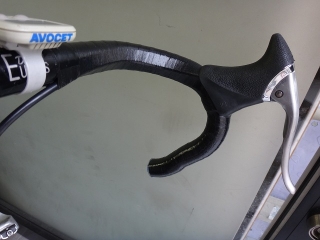
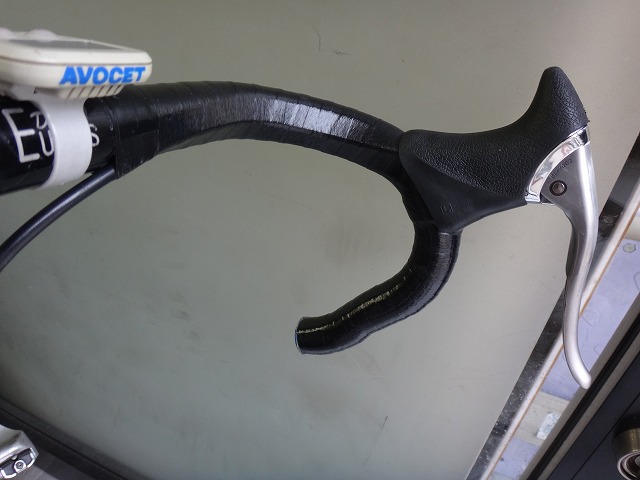
I asked a racing buddy to ride any bike with Shiny wrapped on it and let me photograph it.
They let me take this shot.In the end, I had enough with just my own bikes.
The handlebar wrapped in this is
a Cinelli model called "Diet Eubios,"
hidden by the cycle computer mounting band, but
above the EUBIOS it says "Diet" on the right.
The Diet Eubios is a model where the straight section at the bar end of the Eubios anatomic bar
has been cut short, with no other differences.
So technically, if you cut the bar end section of Eubios a bit, you get the Diet Eubios.
But the handlebar in the image above
has had the Diet Eubios bar end section cut even further,
leaving almost no straight section.
So you could call it Diet Diet Eubios.
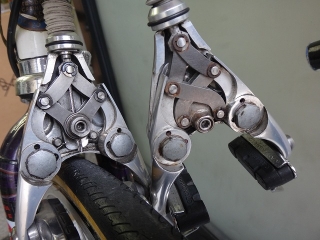
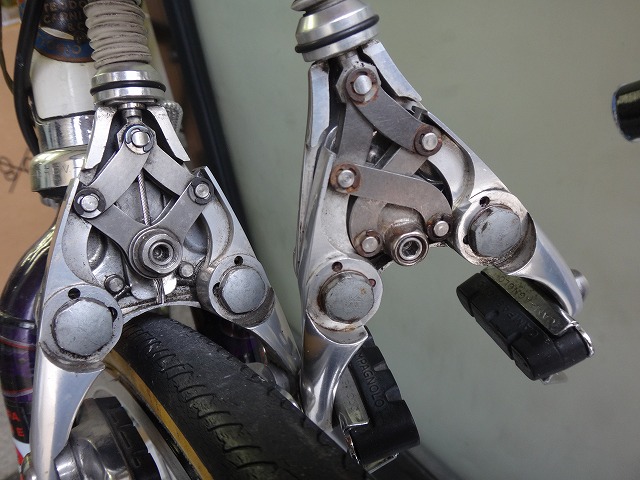
Also, I happened to photograph the differences in internal structure between old and new Delta brakes.
The old type is a simple diamond pantograph, with a shape close to an equilateral triangle,
while the new type has a slightly more complex structure and is more elongated.
To be precise, this old type is also not the earliest model—
the earliest didn't have white bellows and had the Campagnolo logo on the cover
stamped rather than printed.
Now some photos of my own bikes
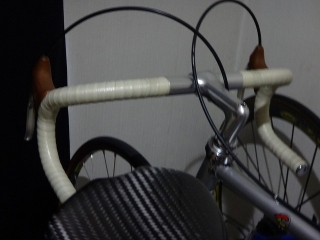
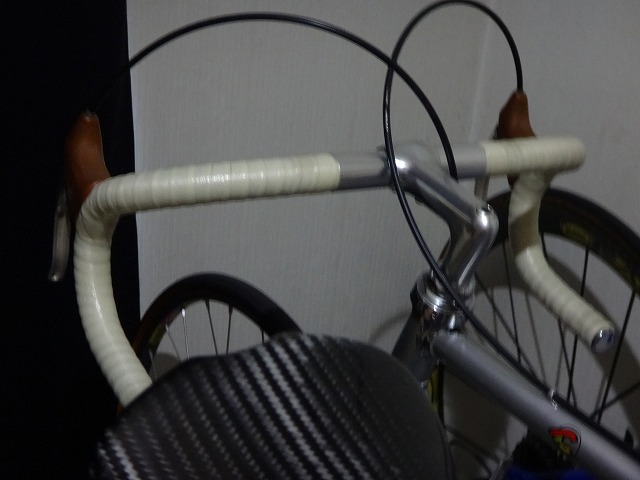
I have a Cinelli Super Corsa with nearly the same spec as everything except the frame of
the Bernard Hinault bike I mentioned earlier (→here),
and I'm wrapping it in white Benotto to recreate it.

To achieve sub-4kg weight, I need lightweight bar tape, so
I'm wrapping it in blue Shiny.
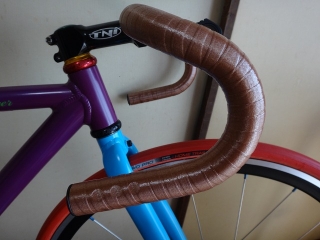
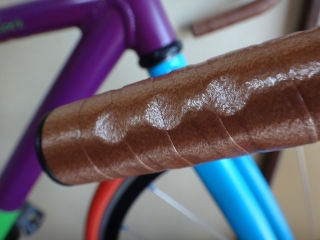
Because dirt doesn't show as much even with heavy use, I'm wrapping my three-roller bike
in brown Shiny.
Brown because it's the color I have the most of.
The handlebar end has lightening holes, but
since the tape is so thin, you can see through the holes.
While I think "I should be careful because these are precious," when I really think about it, I'm actually using them up quite a bit.
If they'd restock them, I wouldn't need to consume the originals...
and trimmed it to the minimum necessary length, then split the cord in the middle. I've been thinking it would be nice to do this for ages, and I finally got around to making it.
A waterproof connector.

Of course it responds to the magnet.
Anyway, this has nothing to do with what I'm about to write.
It's just Cat's Eye-related.
The title "Nastro" is
an Italian word meaning tape or ribbon,
but when used as a bicycle part, in most cases it refers to bar tape,
and occasionally to rim tape.

↑For example, this is Pinarello bar tape,
and it says "Nastro Cork."
The meaning is straightforward—cork bar tape.
Last year, I recommended Cat's Eye's "Shiny" bar tape to a racer who placed in the Champion class at Norikura, and installed it on their bike.
During a post-race interview, when asked "Did you have any special preference for equipment?", they apparently answered "Shiny bar tape."
At first glance it just looks like a wide nylon string,
but it doesn't slip that much as long as you don't grip it with bare hands covered in sweat.
In other words, it's not just a lightweight part—
it's actually a bar tape that works fine in practice.
The thing to watch out for is that if you lean the bike against a bumpy wall and the handlebar slides, it can tear easily.
Being careful about where you lean it is the way of those who use Shiny.
And this racer liked Shiny so much that
they apparently searched around for more,
but since it was discontinued long ago, there's no way to find ones in good condition. Ha ha.
Then one time at another race, there was a Cat's Eye booth, so
they asked the Cat's Eye person there, "Will you restock Shiny?"
"We've never made bar tape."
That's the shocking answer they got back.
Not everyone, of course, but
some employees don't know about their company's past products.

I'll go into more detail about Shiny later,
but first let me provide a definitive counterexample.
"Cat's Eye bar tape"

This one is made of cotton.
Also, remember that the included bar end cap
is "MODEL-100."
In a book I have called "Road Bikes Explained, Volume 3,"
there's a photo of Manabe's bike from Miyata (at the time),

and the bar tape wrapped around this handlebar is Cat's Eye Shiny.
It says it's been discontinued for a long time,
but this book came out about 20 years ago.

The same book also features Bernard Hinault's 1985 actual bike,
which also has what looks like Shiny-style bar tape, but
this is actually "Benotto," not Shiny.
Benotto is a Mexican brand that
produced frames in addition to bar tape,
but got sued by Pierre Cardin to stop using the similar old logo.
There's a poster from the old logo era of Pearl Izumi, featuring
Rebecca Twigg (spelled as Twigge on Wi○pedia), a strong female racer at the time,
and I have the actual poster, but I can't find it right now, so
I grabbed an image from the internet.
Her team was Seven Eleven, and both the frame and bar tape are Benotto.
Here comes a flood of self-taken images

This is 3T's "Cello Nastro Professional," which is likely the origin of Shiny-style bar tape.
The meaning is straightforward—cello tape—but
Shiny-style bar tape doesn't have any adhesive tape or anything.
The logo on the packaging and bar end cap is from the earliest 3T era.
Next is Cello Nastro Pro from
the subsequent logo era.
This features a stapler with shorter staples, similar to what you see
on old Campagnolo small parts bags—narrower than the Japanese standard.
Whether this is related to Cello Nastro Pro is unclear, but
this is Benotto's "Cello Tape."

The early version had some paper packaging with BENOTTO logo
bar end caps,
while the later version came in this packaging.
Made in Mexico.
The later version's bar end cap changed to a logo-less,
chromed plastic piece.
Next is the early version of Cat's Eye Shiny.
The early version is branded "Benotto Cat's Eye" as a dual name.
The product model number is No. 2500.
I've been writing "Shiny" up to this point, but the official spelling appears to be "Shinyi."
The bar end cap is MODEL-100.
The later version of Shiny has
Cat's Eye branding alone,
but the model name is still No. 2500,

and the bar end cap is basically MODEL-100, though
there are also some unmarked MODEL-100-style caps mixed in (with slightly different shapes).
After No. 2500, Shiny also came in
a No. 2600 version,

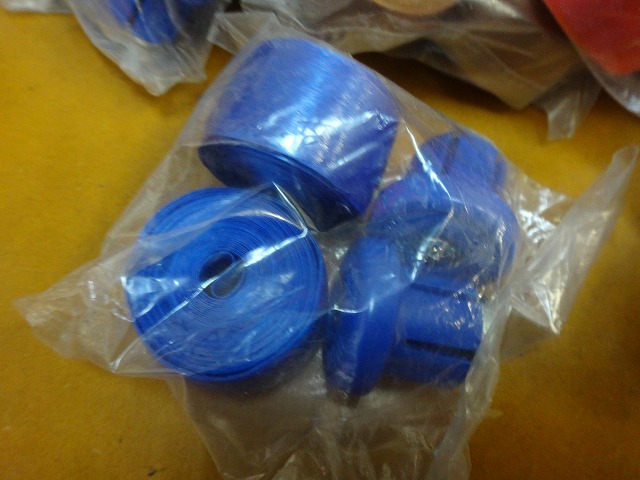
which comes in simpler packaging.
Compared to Benotto and No. 2500,
the feel or texture seems slightly different,
but that might just be because the old cello tape and Shiny
have aged slightly.
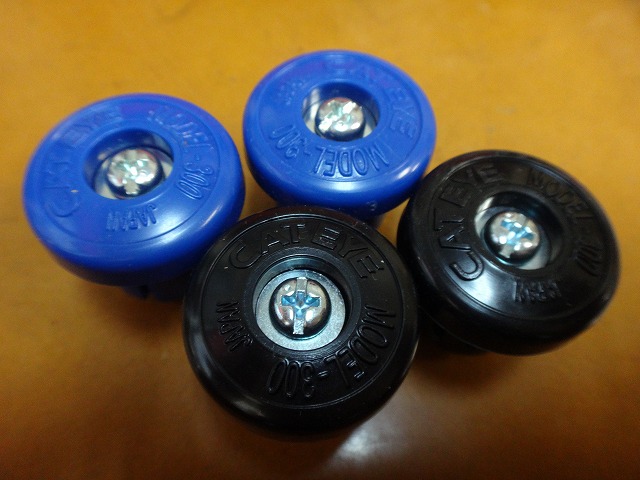
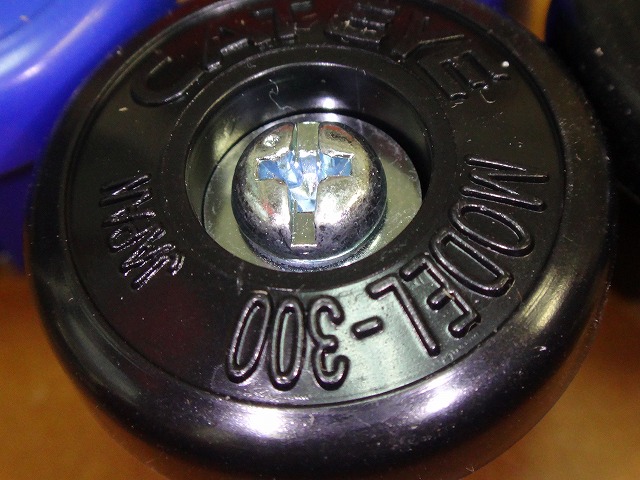
Also, No. 2600 comes with a MODEL-300 bar end cap.
It's the same color as the bar tape, and if you push it with your finger, it deforms slightly with a squishy feel,
but since it's on the heavy side for a bar end cap,
it's not used for weight reduction purposes.
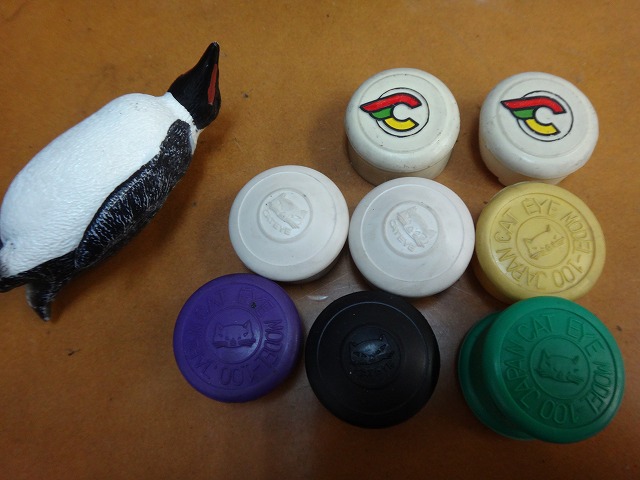
MODEL-100 series bar end caps.
The one with the Cinelli logo is not Cat's Eye but vintage Cinelli.

These caps are soft and go on the bar end before wrapping the tape—extremely lightweight.
The other day, a racing buddy asked if I had one in light blue,
so I gave them one.
Anyway, so Cat's Eye did make bar tape in the past,
but recently I acquired something I found interesting.
A non-sale bar end cap that Cat's Eye distributes
at cycling events.

It's marked MODEL-330, which is similar to MODEL-300, but
it's made of hard plastic rather than slightly soft nylon,
and has a chrome finish.

One reason MODEL-300 is heavy is
that the expanding part is made of metal,
but MODEL-330 has all parts except the screw
made of plastic, so it's not that heavy.
The reason I said "interesting" is that
if they're releasing bar end caps like this,
maybe they're thinking about reviving Shiny...or so I wondered.
I'll categorize this article under "Cat's Eye propaganda" anyway
Addendum: a rejected image I prepared for this article but forgot to use
I asked a racing buddy to ride any bike with Shiny wrapped on it and let me photograph it.
They let me take this shot.
The handlebar wrapped in this is
a Cinelli model called "Diet Eubios,"
hidden by the cycle computer mounting band, but
above the EUBIOS it says "Diet" on the right.
The Diet Eubios is a model where the straight section at the bar end of the Eubios anatomic bar
has been cut short, with no other differences.
So technically, if you cut the bar end section of Eubios a bit, you get the Diet Eubios.
But the handlebar in the image above
has had the Diet Eubios bar end section cut even further,
leaving almost no straight section.
So you could call it Diet Diet Eubios.
Also, I happened to photograph the differences in internal structure between old and new Delta brakes.
The old type is a simple diamond pantograph, with a shape close to an equilateral triangle,
while the new type has a slightly more complex structure and is more elongated.
To be precise, this old type is also not the earliest model—
the earliest didn't have white bellows and had the Campagnolo logo on the cover
stamped rather than printed.
Now some photos of my own bikes
I have a Cinelli Super Corsa with nearly the same spec as everything except the frame of
the Bernard Hinault bike I mentioned earlier (→here),
and I'm wrapping it in white Benotto to recreate it.
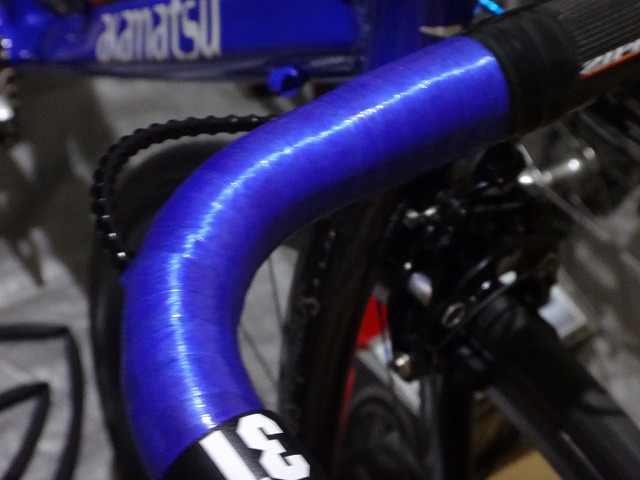
To achieve sub-4kg weight, I need lightweight bar tape, so
I'm wrapping it in blue Shiny.
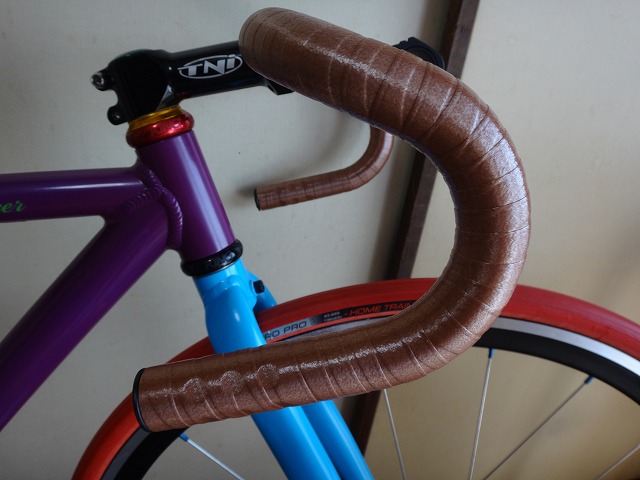
Because dirt doesn't show as much even with heavy use, I'm wrapping my three-roller bike
in brown Shiny.
Brown because it's the color I have the most of.
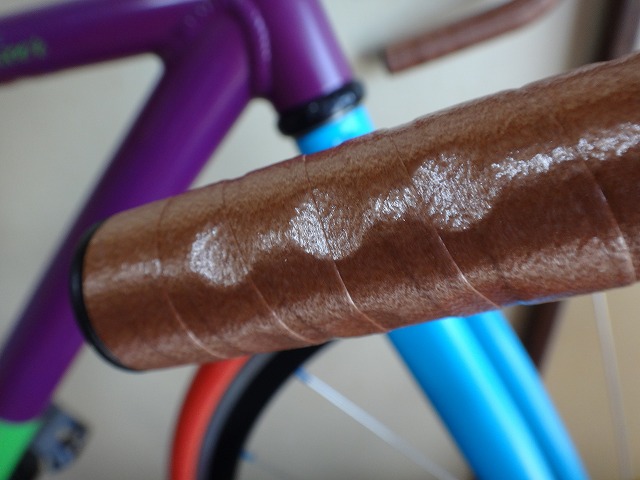
The handlebar end has lightening holes, but
since the tape is so thin, you can see through the holes.
While I think "I should be careful because these are precious," when I really think about it, I'm actually using them up quite a bit.
If they'd restock them, I wouldn't need to consume the originals...