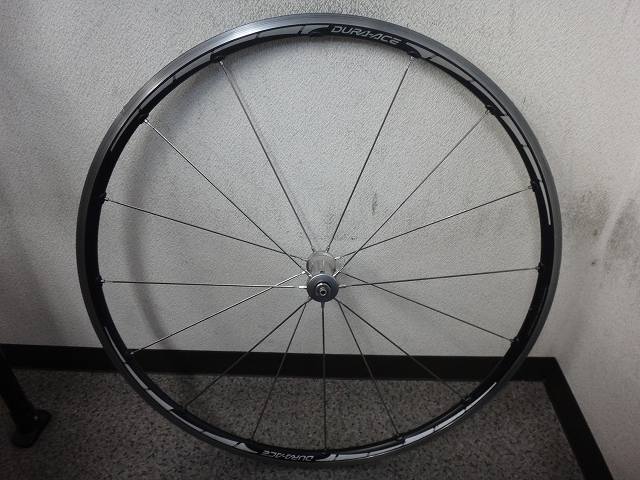
A customer brought in the front wheel of a WH-7801-SL for me to work on.
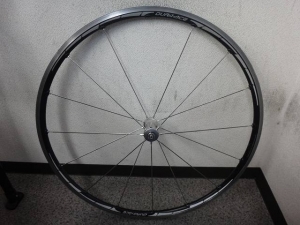
It's the world's first road tubeless wheel,
and quite an ambitious design with a scandium rim.
The matching tire was a Hutchinson (that's what the distributors called it back then)
Fusion 2 tubeless,
and initially that was the only combination available.
When people first tried out this road tubeless setup, the most common complaints I heard were
"The tire is sticky and rolls heavy" and "It slides abnormally on wet pavement,"
but that had nothing to do with the tubeless system itself—
the Fusion 2 was just that kind of tire.
Plus, the weather resistance was poor so it would crack, and it was prone to punctures too.
Hutchinson tires tend to be high-maintenance with lots of air loss,
so you'd often see significant differences in how much air leaked from the front versus rear,
but back then without proper sealants, the handling was difficult, which I think
really gave tubeless a bad rap.
They picked the wrong partner, so they totally botched the chance to make it mainstream.
If the air retention had been flawless at that point,
we could've ended up in a world where premium clinchers were inherently tubeless
and tube-equipped versions were only for cheap models.
The fact that top pros weren't using them in races probably mattered a lot too.
Anyway, I'm getting sidetracked.
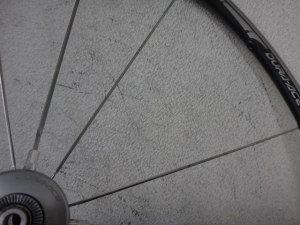
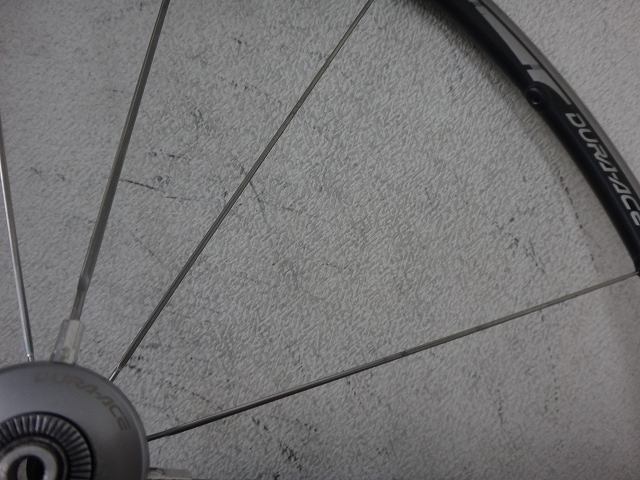
The customer wants the broken spoke repaired.
When they brought it in, the spoke was still attached, but I removed it.
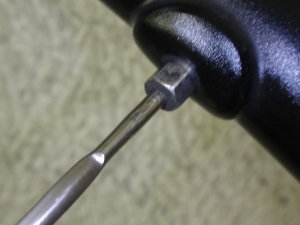
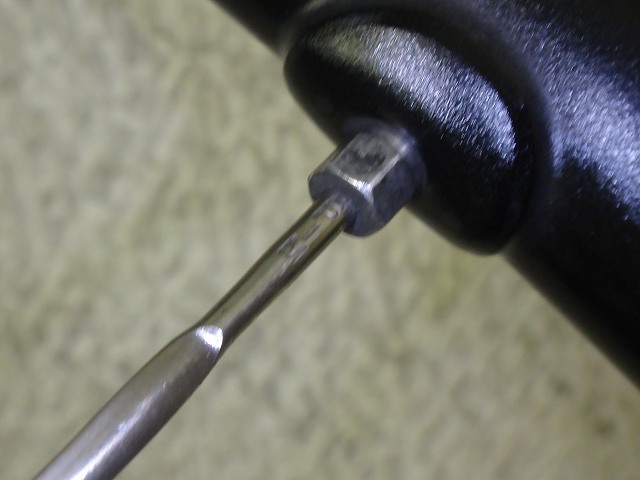
Let me look at the undamaged spoke.
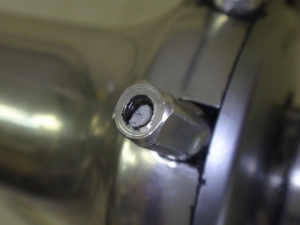
I can see letters reading "APIM" on the nipple at the rim side.
I wonder if that's some OEM manufacturer name.
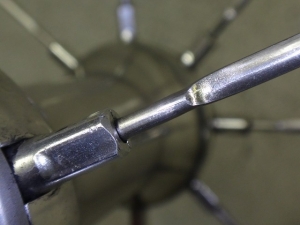
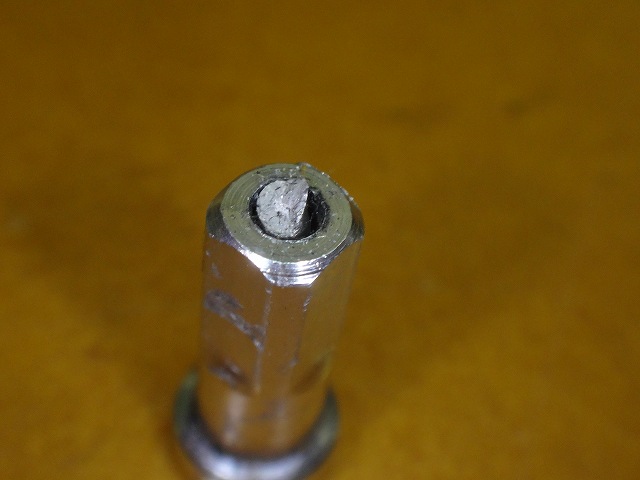
The hub-side nipple looks like this.

This is the rim side of the broken spoke.
The spoke was pretty badly bent—looks like it caught on something.
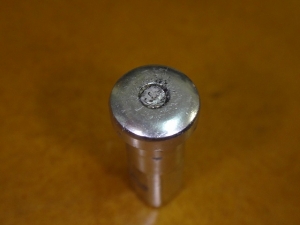
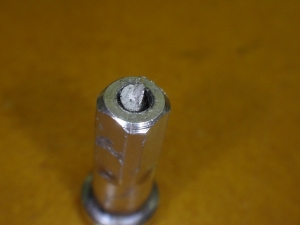
↑Hub-side nipple of the broken spoke.
Since a piece of the broken spoke is jammed in there, it can't be reused.
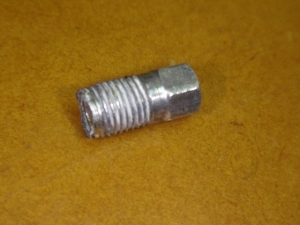
I cut through the butted section of an aero spoke and recovered the rim-side nipple.
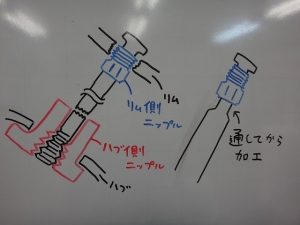
This diagram explains what's going on.
The rim-side nipple spokes are flattened after passing through a round spoke,
so you can't just replace the spoke portion alone.
And here's the real problem: the spoke kit for the WH-7801-SL
(which includes rim-side nipple spokes and hub-side nipples)
has been discontinued for ages.
Yeah, this situation looks stuck.
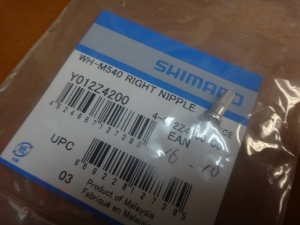
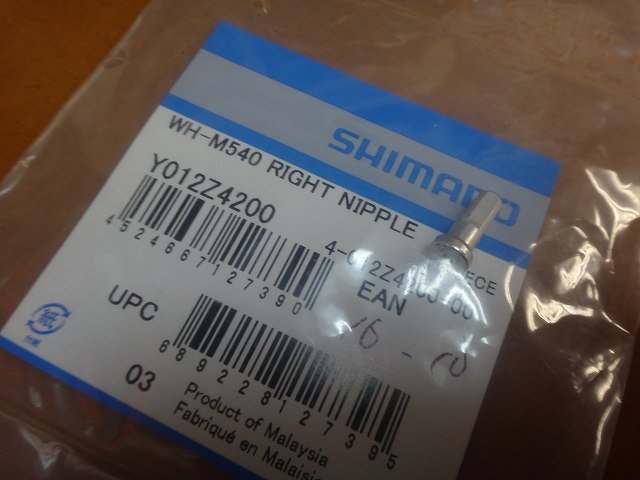
I tracked down that the hub-side nipple is the same one used on the WH-M540,
an older pre-built MTB wheel's freewheel-side nipple.
That's also discontinued, but I found stock available.
Based on the width and thickness of the WH-7801-SL aero spokes,
they're definitely right around 100% spoke content, so
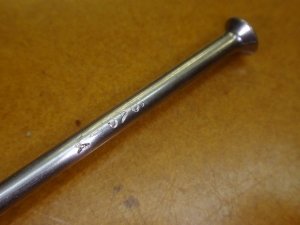
For the round spoke to pass through the rim-side nipple,
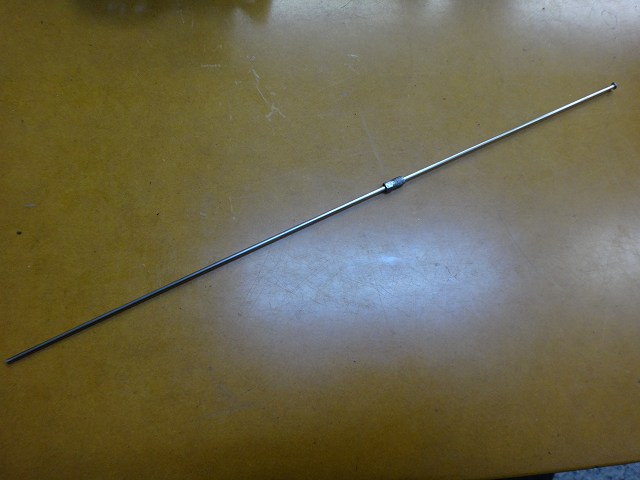
I went with a Sapim Leader in 14-gauge plain straight.
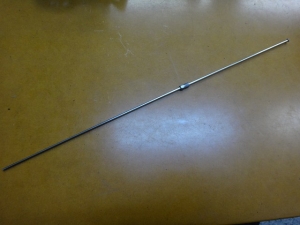
For some reason the 2.0mm wouldn't pass through easily,
so I'm lightly reaming it with a 2.0mm drill bit.
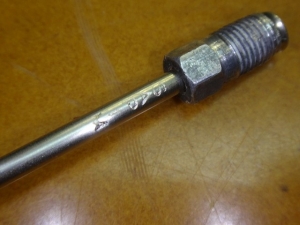
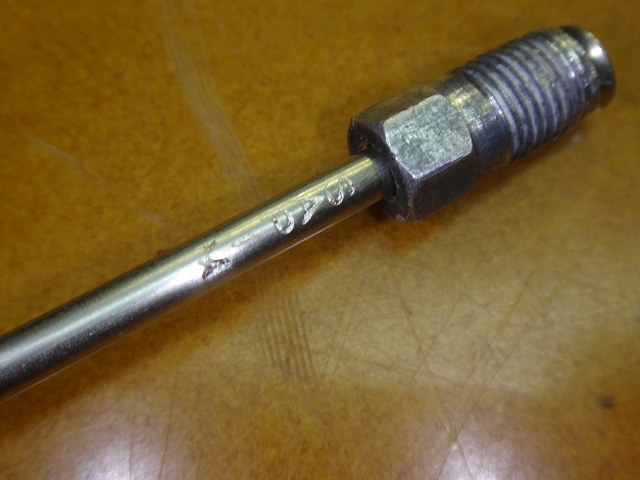
Ah, the mystery of "APIM" is solved!
It turns out part of "SAPIM" was just hidden by the nipple.
So... this wheel used Sapim spokes after all!
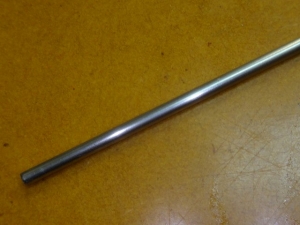
The Leader straight spokes don't have threads cut into them at all—
they're 14-gauge plain, which means you can set the length freely,
a really handy spec.
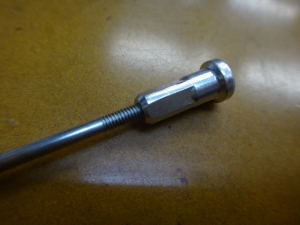
The original custom spokes appear to have longer threaded sections,
and the threads I cut with our spoke cutter
should be about one pitch longer than Sapim's standard,
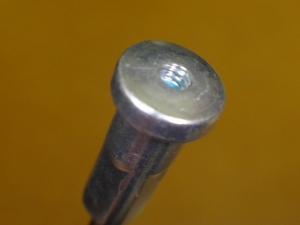
↑but even when tightened all the way down,
the spoke end doesn't reach the hub-side nipple end surface,
just like in the earlier image of the jammed nipple.
So I need to make it shorter than the 282mm nominal length of the original spoke.

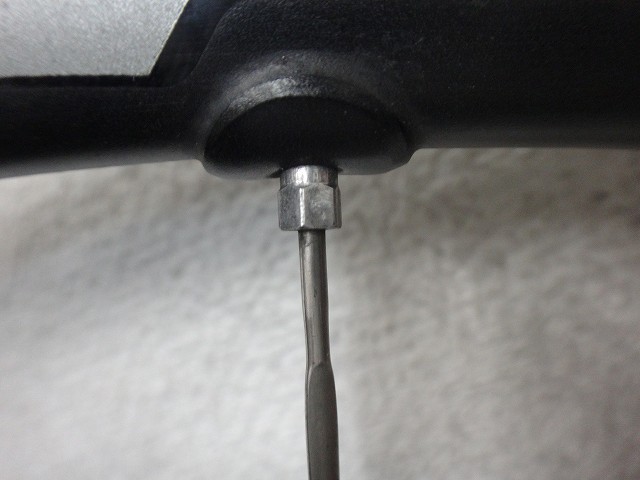
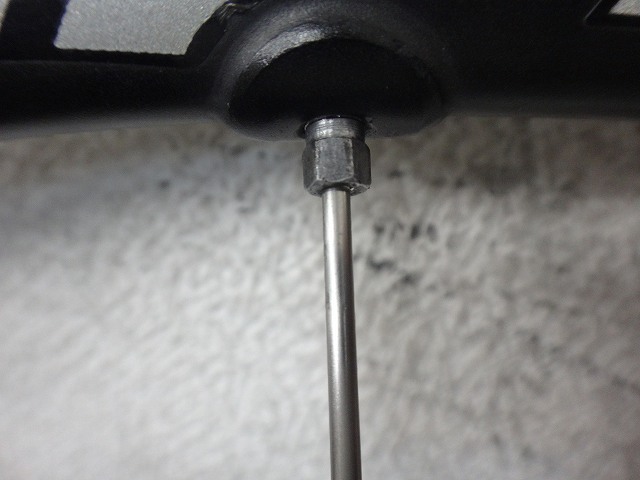
I replaced the spoke.
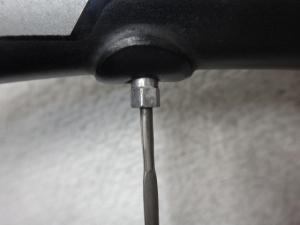
↑Original

↑Non-original
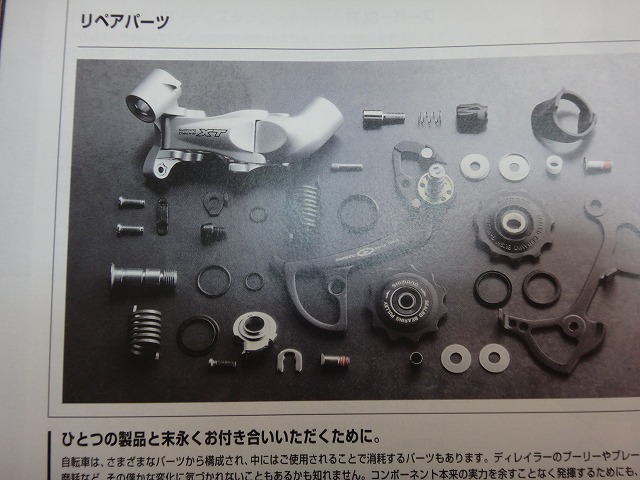
In Shimano's catalog, they write about repair parts,
"So you can be together with one product for a long time."
That's complete nonsense.
Because parts aren't available, the service life ends up shorter than a hand-built wheel.
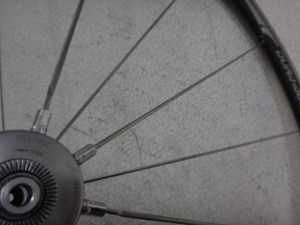
↑The replaced section
First, I tighten just the nipple on the replacement spoke
to get it as straight as possible.
If the worst runout on the wheel is eliminated here,
then what's left is just normal runout.
There was some minor runout, but the rim isn't bent
and I got it dialed in better than off-the-shelf Shimano wheels,
so there's no problem using it.
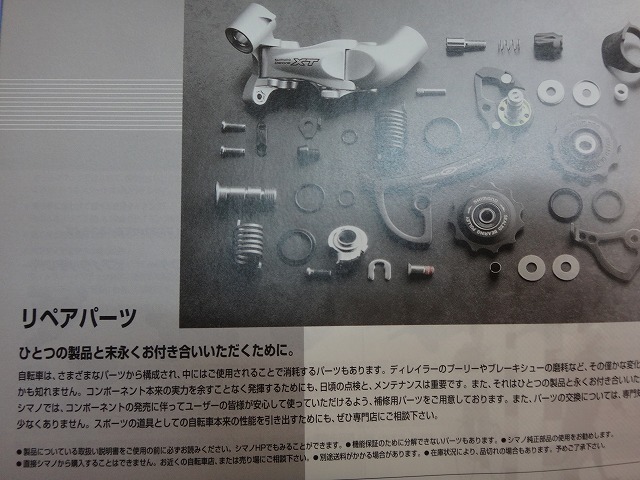
Addendum: I looked into that "So you can be together with one product for a long time" phrase.

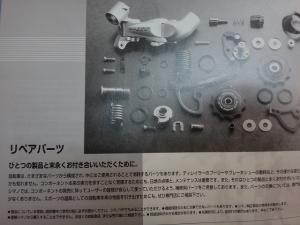
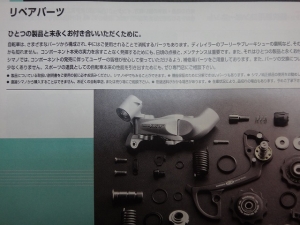
When I flipped through Shimano's catalogs, from 2006 for several years
that phrase appeared with the XT rear derailleur disassembly images,
which is what I remembered and referenced in the main text.
You might think if they really meant to have you "be together with one product for a long time,"
they should have made it possible to upgrade a 10-speed freewheel body wheel to 11-speed!
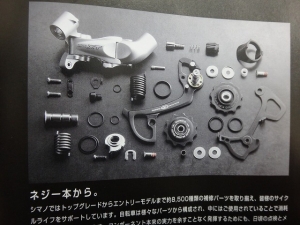
But in the 2012 catalog, the caption for that same image
changed to "From a single screw,"
and the phrase "for a long time" vanished entirely.
Current Shimano products show no intention of having users
stick with one thing for a long time,
so my earlier criticism of "complete nonsense" was way off base. I apologize.
What they want is for you to become "fodder,"
constantly buying new products.
It's the world's first road tubeless wheel,
and quite an ambitious design with a scandium rim.
The matching tire was a Hutchinson (that's what the distributors called it back then)
Fusion 2 tubeless,
and initially that was the only combination available.
When people first tried out this road tubeless setup, the most common complaints I heard were
"The tire is sticky and rolls heavy" and "It slides abnormally on wet pavement,"
but that had nothing to do with the tubeless system itself—
the Fusion 2 was just that kind of tire.
Plus, the weather resistance was poor so it would crack, and it was prone to punctures too.
Hutchinson tires tend to be high-maintenance with lots of air loss,
so you'd often see significant differences in how much air leaked from the front versus rear,
but back then without proper sealants, the handling was difficult, which I think
really gave tubeless a bad rap.
They picked the wrong partner, so they totally botched the chance to make it mainstream.
If the air retention had been flawless at that point,
we could've ended up in a world where premium clinchers were inherently tubeless
and tube-equipped versions were only for cheap models.
The fact that top pros weren't using them in races probably mattered a lot too.
Anyway, I'm getting sidetracked.
The customer wants the broken spoke repaired.
When they brought it in, the spoke was still attached, but I removed it.
Let me look at the undamaged spoke.
I can see letters reading "APIM" on the nipple at the rim side.
I wonder if that's some OEM manufacturer name.
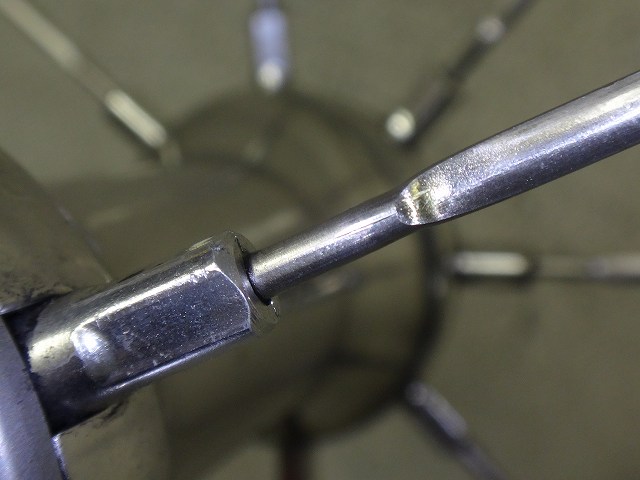
The hub-side nipple looks like this.
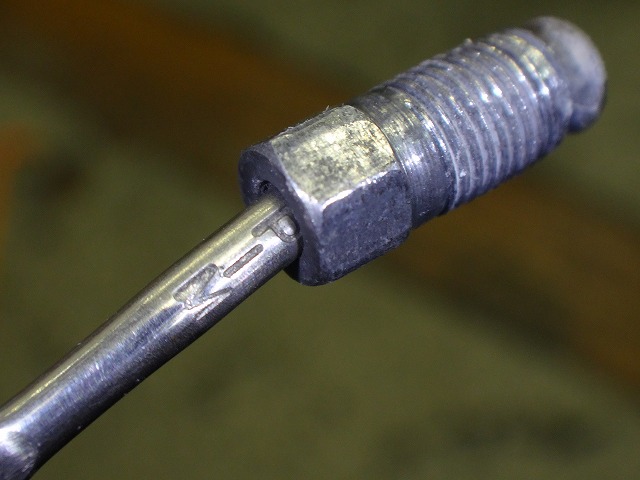
This is the rim side of the broken spoke.
The spoke was pretty badly bent—looks like it caught on something.
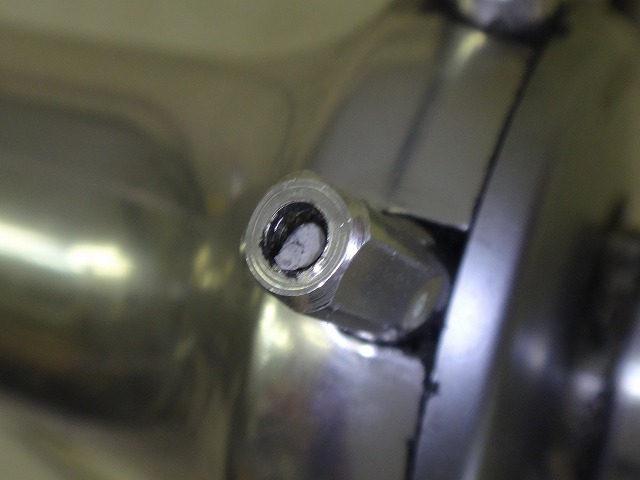
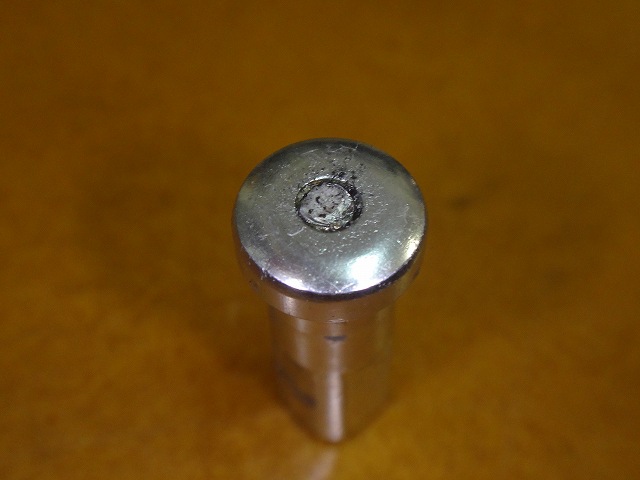
↑Hub-side nipple of the broken spoke.
Since a piece of the broken spoke is jammed in there, it can't be reused.

I cut through the butted section of an aero spoke and recovered the rim-side nipple.

This diagram explains what's going on.
The rim-side nipple spokes are flattened after passing through a round spoke,
so you can't just replace the spoke portion alone.
And here's the real problem: the spoke kit for the WH-7801-SL
(which includes rim-side nipple spokes and hub-side nipples)
has been discontinued for ages.
Yeah, this situation looks stuck.
I tracked down that the hub-side nipple is the same one used on the WH-M540,
an older pre-built MTB wheel's freewheel-side nipple.
That's also discontinued, but I found stock available.
Based on the width and thickness of the WH-7801-SL aero spokes,
they're definitely right around 100% spoke content, so

For the round spoke to pass through the rim-side nipple,
I went with a Sapim Leader in 14-gauge plain straight.
For some reason the 2.0mm wouldn't pass through easily,
so I'm lightly reaming it with a 2.0mm drill bit.
Ah, the mystery of "APIM" is solved!
It turns out part of "SAPIM" was just hidden by the nipple.
So... this wheel used Sapim spokes after all!
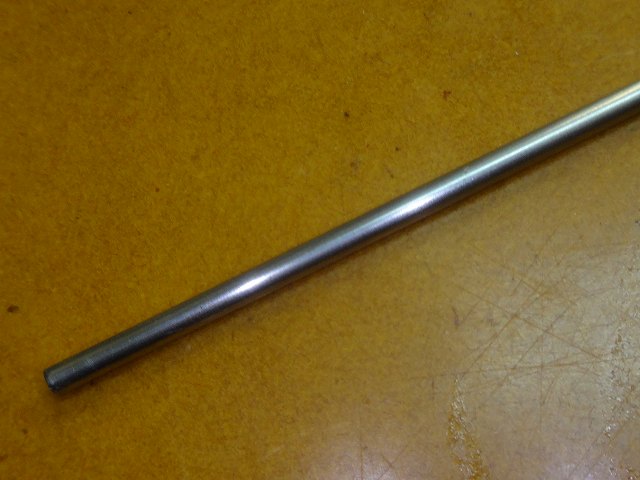
The Leader straight spokes don't have threads cut into them at all—
they're 14-gauge plain, which means you can set the length freely,
a really handy spec.
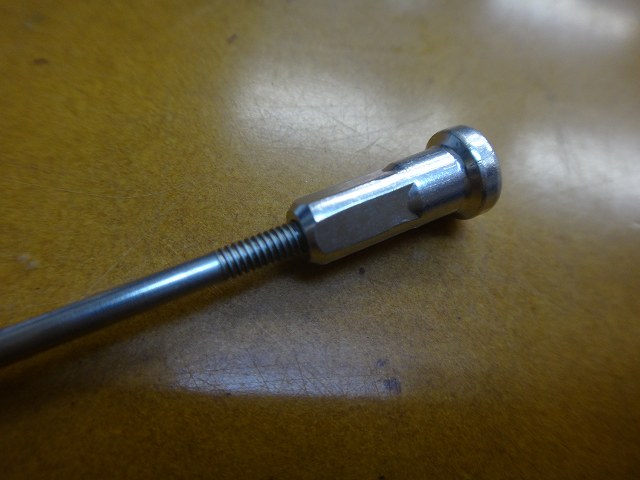
The original custom spokes appear to have longer threaded sections,
and the threads I cut with our spoke cutter
should be about one pitch longer than Sapim's standard,
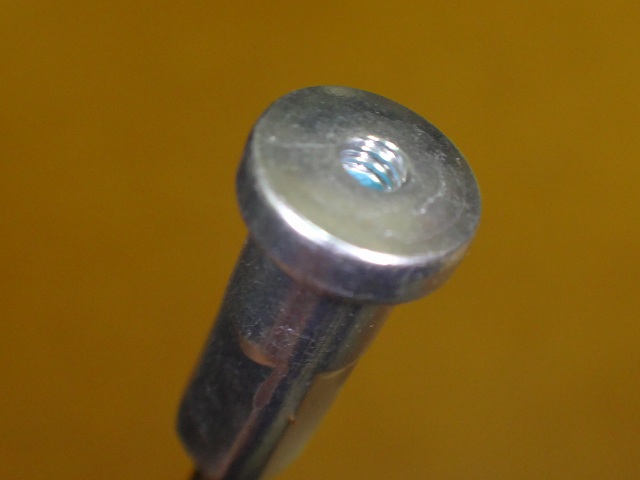
↑but even when tightened all the way down,
the spoke end doesn't reach the hub-side nipple end surface,
just like in the earlier image of the jammed nipple.
So I need to make it shorter than the 282mm nominal length of the original spoke.
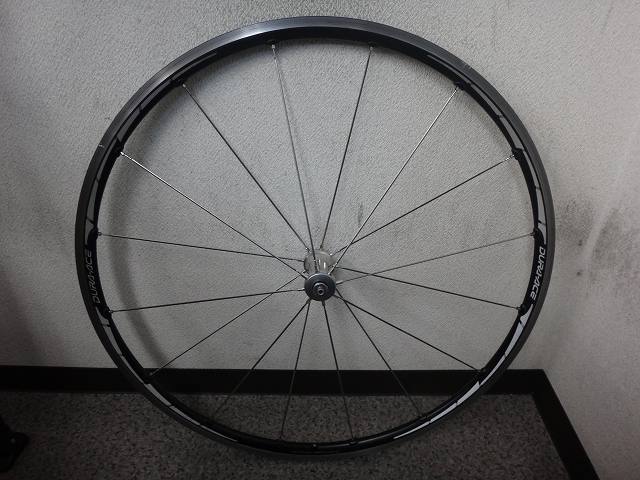
I replaced the spoke.
↑Original
↑Non-original
In Shimano's catalog, they write about repair parts,
"So you can be together with one product for a long time."
That's complete nonsense.
Because parts aren't available, the service life ends up shorter than a hand-built wheel.

↑The replaced section
First, I tighten just the nipple on the replacement spoke
to get it as straight as possible.
If the worst runout on the wheel is eliminated here,
then what's left is just normal runout.
There was some minor runout, but the rim isn't bent
and I got it dialed in better than off-the-shelf Shimano wheels,
so there's no problem using it.
Addendum: I looked into that "So you can be together with one product for a long time" phrase.
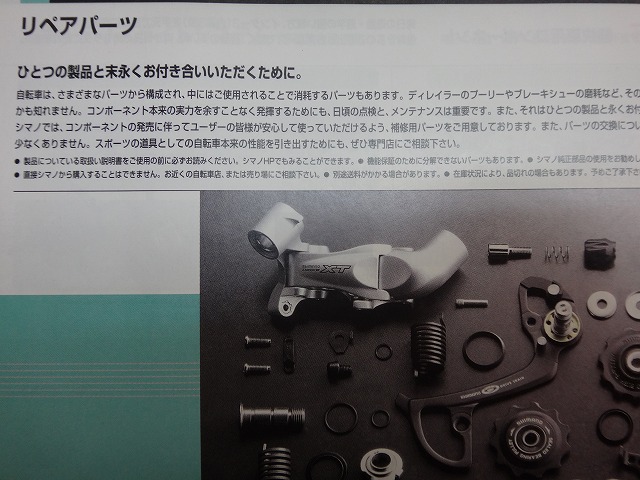
When I flipped through Shimano's catalogs, from 2006 for several years
that phrase appeared with the XT rear derailleur disassembly images,
which is what I remembered and referenced in the main text.
You might think if they really meant to have you "be together with one product for a long time,"
they should have made it possible to upgrade a 10-speed freewheel body wheel to 11-speed!
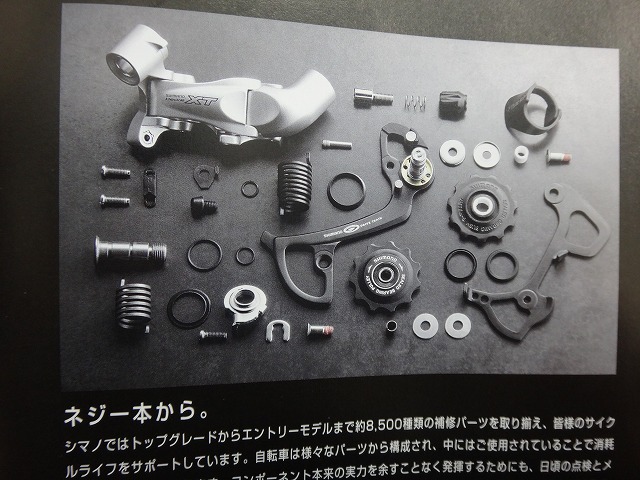
But in the 2012 catalog, the caption for that same image
changed to "From a single screw,"
and the phrase "for a long time" vanished entirely.
Current Shimano products show no intention of having users
stick with one thing for a long time,
so my earlier criticism of "complete nonsense" was way off base. I apologize.
What they want is for you to become "fodder,"
constantly buying new products.