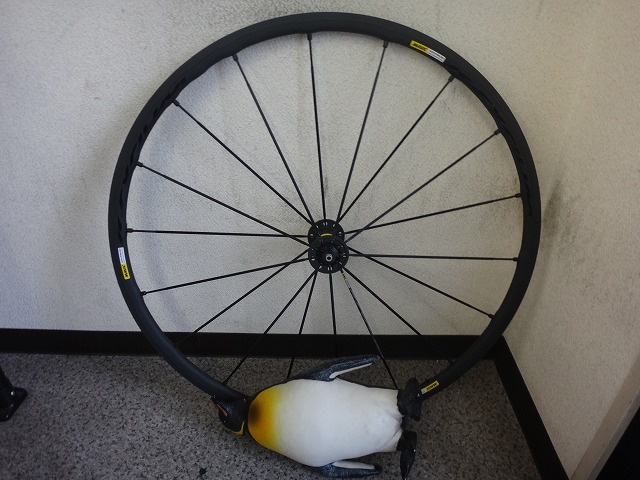
I took in a Kyxerium (though the rear wheel is essentially an R-SYS) from a customer.
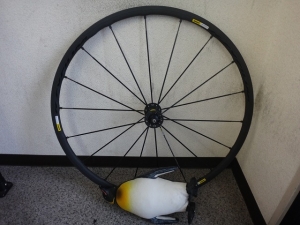
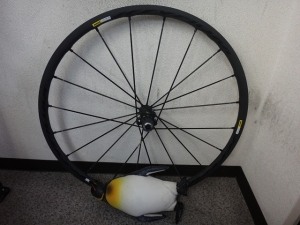
Brand new.
The wheels came from a pro shop, and since there's a shop name sticker on the rim,
I'm being careful to make sure it doesn't show up in any photos.
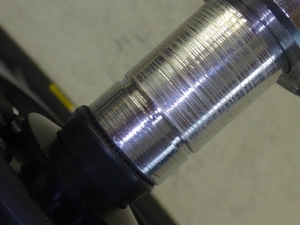

For the front wheel, when I measured on the right side and compared it to the left, there was a faint gap.
It's right at the borderline where some center gauges would give an OK reading.
With this particular gauge, I can see gaps up to about one-third of this space.
The customer's requests are:
・If spoke tension is low, tighten the spokes
・If the center is off, correct it
・Apply anti-rattle treatment to the rear hub's freehub body
These three points.
As a stock wheel, the front wheel spokes were tensioned pretty high—about as much as you'd expect on a new build—
and there was barely any center deviation,
so I thought (confidently?) that by putting on a shop name sticker,
they were delivering it with an inspection already done. That's what I assumed at this point.

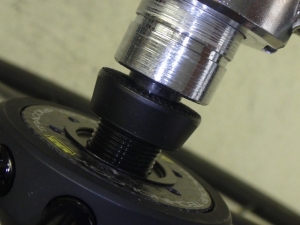
The rear wheel is quite badly off-center.
Turns out the high tension on the front wheel was just a coincidence with that particular stock wheel.
I see—if the customer really trusted that shop,
they wouldn't bother sending us a brand new wheel from so far away.
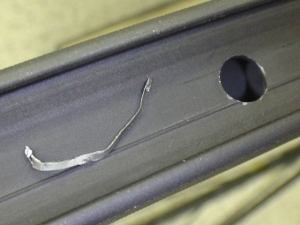
Also, if they'd removed the tire for inspection,
they couldn't possibly have missed this inside the rim.


Since I'm not working in front of the customer,
I get to do a bit of verification too.
First, I removed the left dust cap (which has a cone-seating function)
and reinstalled just the push-on type left end cap.
With this rear hub, once the right end nut is fully tightened against the shaft,
there's no play between the hub body and shaft (they don't slide and change dimensions).
What I'm getting at is: the wheel center doesn't change
whether the left dust cap is on or off.
And at this point, the freehub body is pressed in,
but if I remove it, the wheel center should shift.
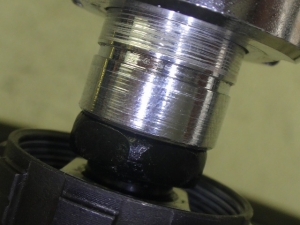
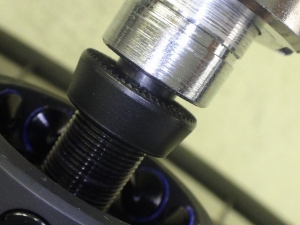
I removed the freehub body.
There's no difference visible to the naked eye,
but in this case the gap should decrease.
If a 2mm gap reduced by 0.2mm, it would fall within
the "error" margin, so it's hard to compare—that's my excuse anyway.
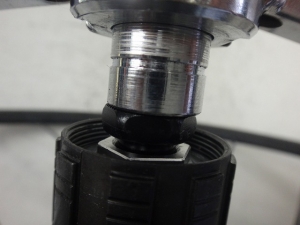
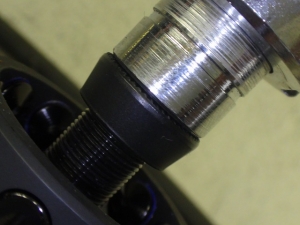
I achieved perfect center.
Of course I did a true check too (though it was barely out of true).
I didn't take photos, but when I reinstalled the left dust cap in this state,
the wheel center remained perfectly centered.

I applied high-viscosity silicone grease (→here)
on the spoke heads, almost like a decorative coating,
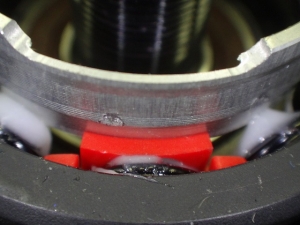
and pressed the freehub body back in, offsetting the contact points.

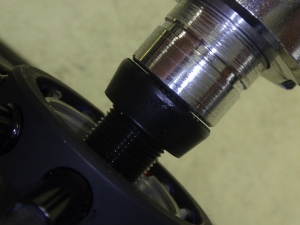
I confirmed "center deviation caused by freehub body press-in."
I have never in my life intentionally created center deviation by manipulating the center gauge
(nor have I ever been accused of it).
As proof of this, I always make sure the gauge body itself appears in both left and right images.
If the extension length of the measuring probe isn't the same,
even a tiny difference should be visible.
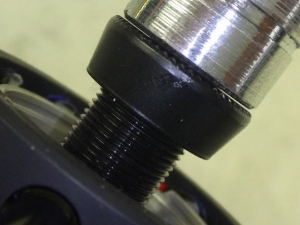
That's why I almost never take close-up shots like this.

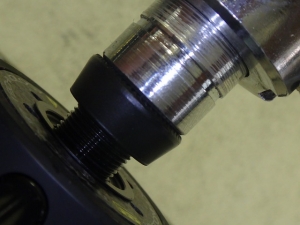
I did the center adjustment again with the freehub body pressed in.
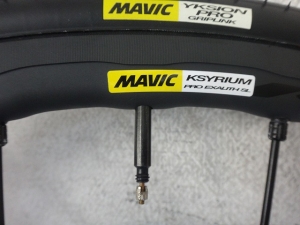
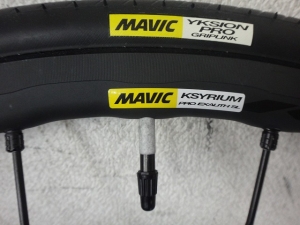
I wrapped some "valve rattle prevention tape" to prevent any valve chatter noise.
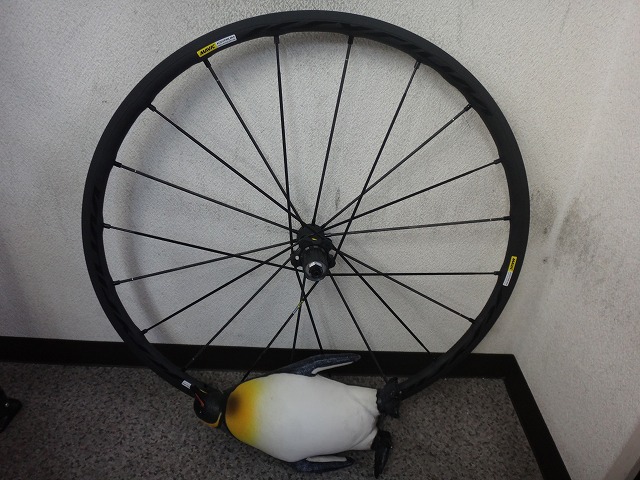
Brand new.
The wheels came from a pro shop, and since there's a shop name sticker on the rim,
I'm being careful to make sure it doesn't show up in any photos.
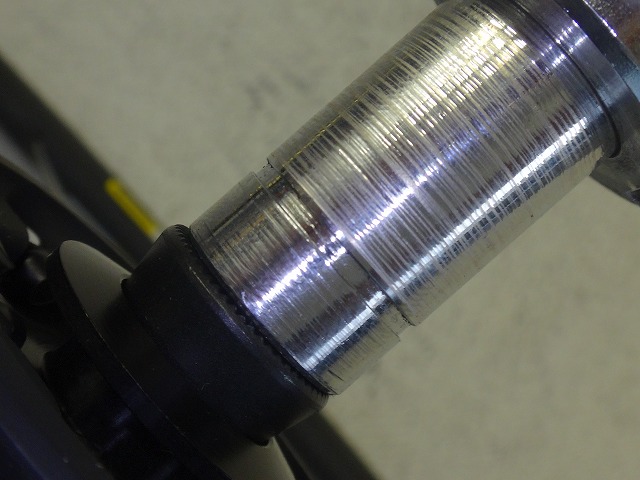
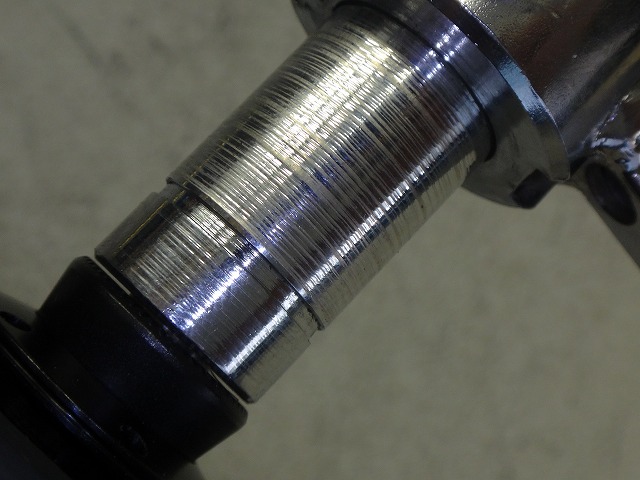
For the front wheel, when I measured on the right side and compared it to the left, there was a faint gap.
It's right at the borderline where some center gauges would give an OK reading.
With this particular gauge, I can see gaps up to about one-third of this space.
The customer's requests are:
・If spoke tension is low, tighten the spokes
・If the center is off, correct it
・Apply anti-rattle treatment to the rear hub's freehub body
These three points.
As a stock wheel, the front wheel spokes were tensioned pretty high—about as much as you'd expect on a new build—
and there was barely any center deviation,
so I thought (confidently?) that by putting on a shop name sticker,
they were delivering it with an inspection already done. That's what I assumed at this point.
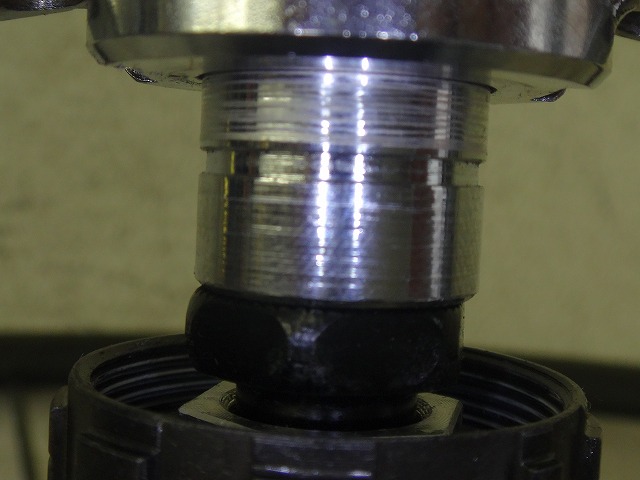
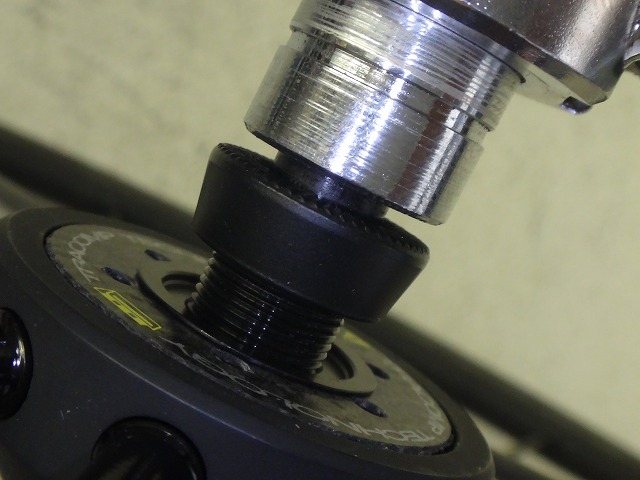
The rear wheel is quite badly off-center.
Turns out the high tension on the front wheel was just a coincidence with that particular stock wheel.
I see—if the customer really trusted that shop,
they wouldn't bother sending us a brand new wheel from so far away.

Also, if they'd removed the tire for inspection,
they couldn't possibly have missed this inside the rim.
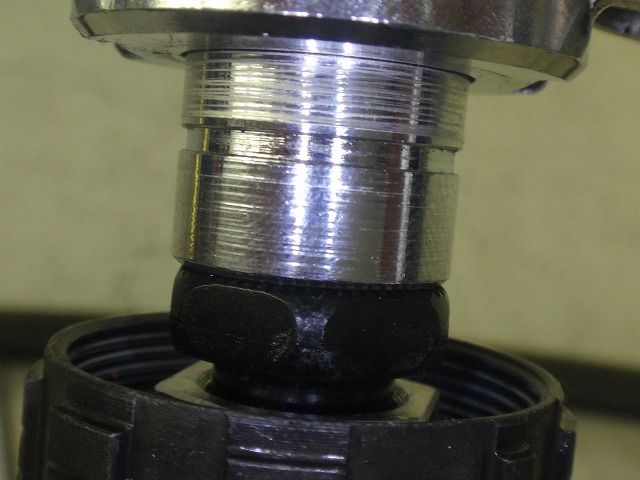
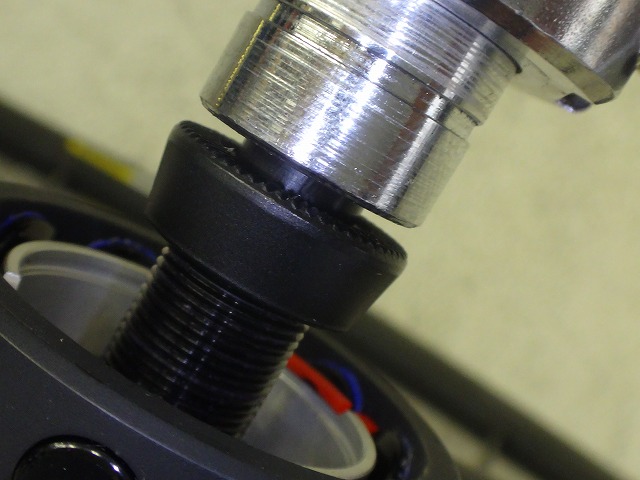
Since I'm not working in front of the customer,
I get to do a bit of verification too.
First, I removed the left dust cap (which has a cone-seating function)
and reinstalled just the push-on type left end cap.
With this rear hub, once the right end nut is fully tightened against the shaft,
there's no play between the hub body and shaft (they don't slide and change dimensions).
What I'm getting at is: the wheel center doesn't change
whether the left dust cap is on or off.
And at this point, the freehub body is pressed in,
but if I remove it, the wheel center should shift.
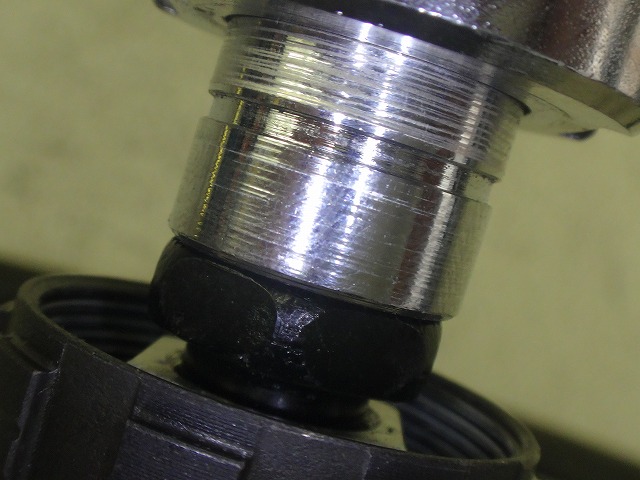

I removed the freehub body.
There's no difference visible to the naked eye,
but in this case the gap should decrease.
If a 2mm gap reduced by 0.2mm, it would fall within
the "error" margin, so it's hard to compare—that's my excuse anyway.
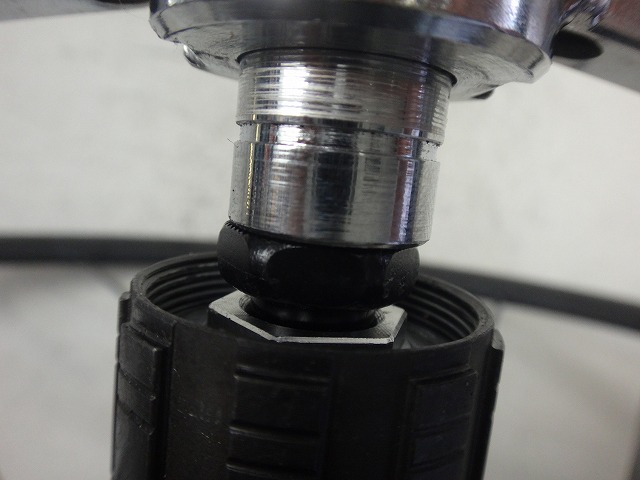
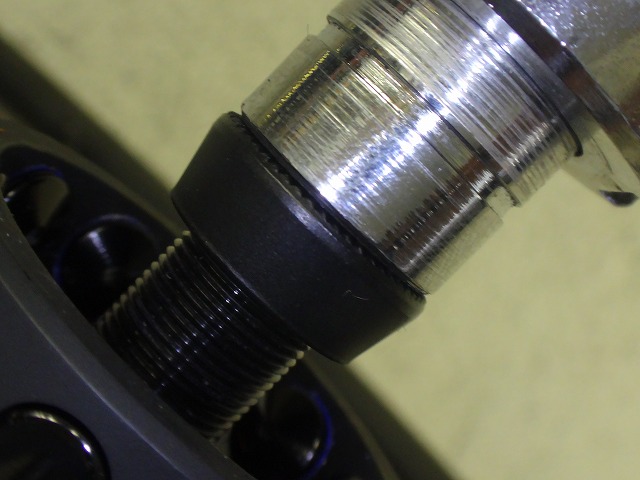
I achieved perfect center.
Of course I did a true check too (though it was barely out of true).
I didn't take photos, but when I reinstalled the left dust cap in this state,
the wheel center remained perfectly centered.

I applied high-viscosity silicone grease (→here)
on the spoke heads, almost like a decorative coating,

and pressed the freehub body back in, offsetting the contact points.

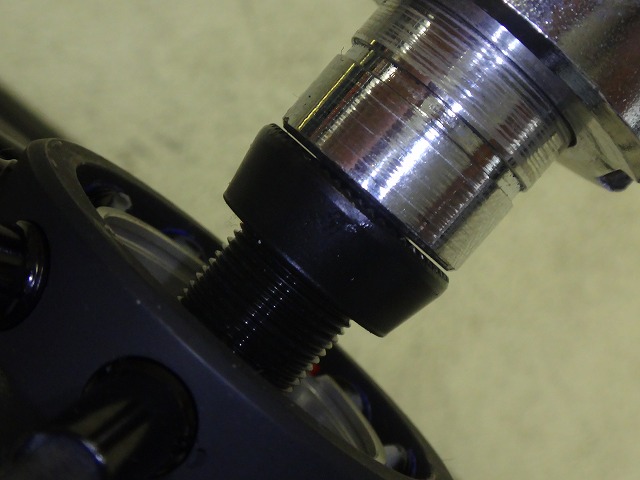
I confirmed "center deviation caused by freehub body press-in."
I have never in my life intentionally created center deviation by manipulating the center gauge
(nor have I ever been accused of it).
As proof of this, I always make sure the gauge body itself appears in both left and right images.
If the extension length of the measuring probe isn't the same,
even a tiny difference should be visible.

That's why I almost never take close-up shots like this.

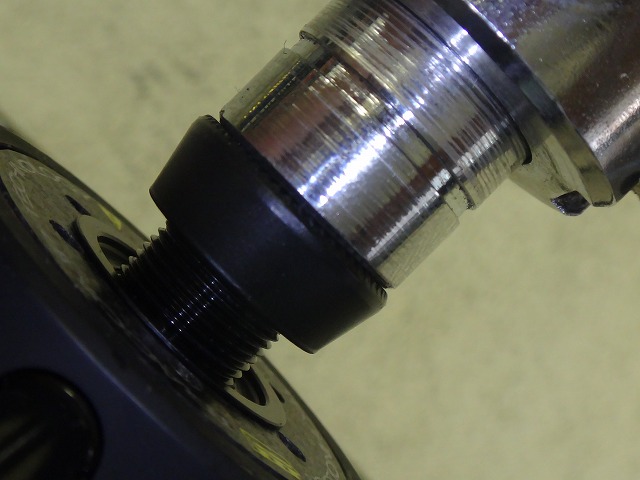
I did the center adjustment again with the freehub body pressed in.
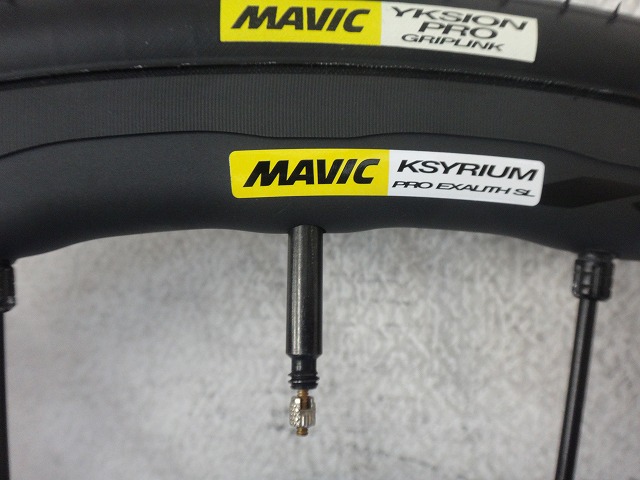
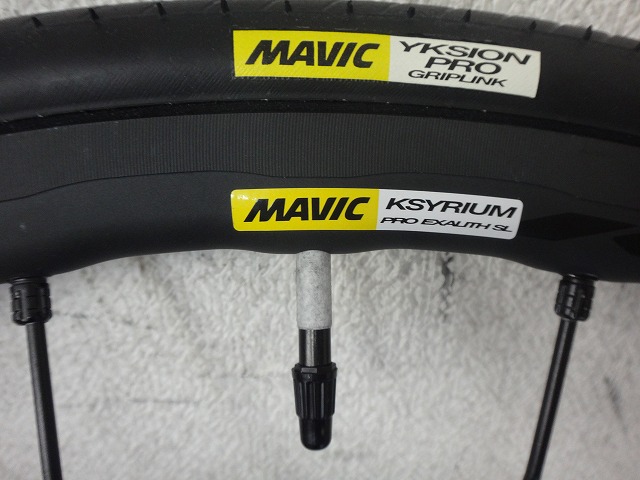
I wrapped some "valve rattle prevention tape" to prevent any valve chatter noise.