I received a Corima VIVA MCC from a customer for service.
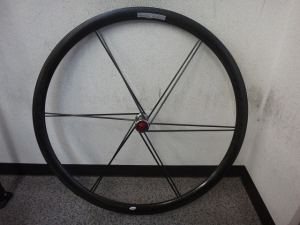
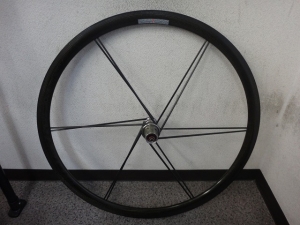
Like batten wheels and disc wheels,
there are no adjustment elements such as truing or centering.
(Though there are some exceptions regarding centering)
If the hub rotation were even slightly rough,
I could swap in Ceramic Speed bearings,
but I determined there's no need to do so, so I'm leaving it as is.
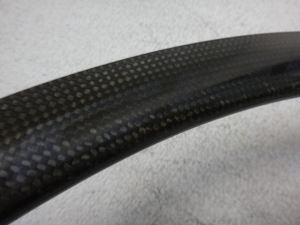
The sticker has been peeled off, but due to the difference in fading
between when it was applied and when it was removed,
I can faintly make out the text.
The part in the image is the "CO" from CORIMA.

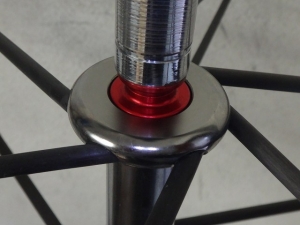
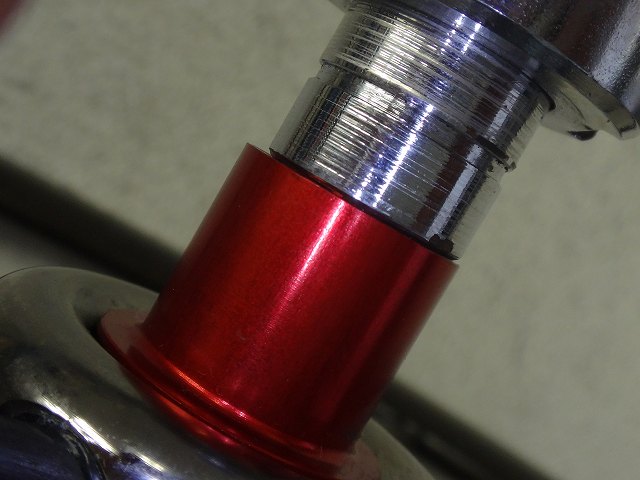
With Corima's anodized finish on this hub,
it's unavoidable that dot-like corrosion will appear.
When it's new, it has that gorgeous mercury-like lustre, but...
For the front wheel centering,
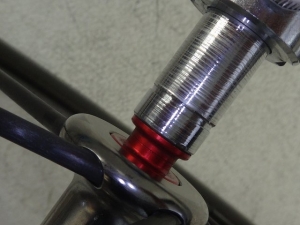
I place the gauge against the left dropout

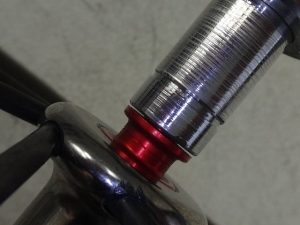
and against the right like this.
The rim is offset toward the right side.
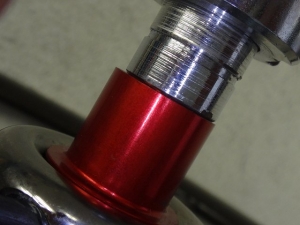

The rear wheel looks like this. The rim is offset toward the right side (the freewheel side).
Due to the structural design, there's nothing that can be done about it, so you just have to accept it and use it as is.
You shouldn't try to achieve perfect centering by inserting washers or spacers between the components.
This isn't just a recommendation against it—it's a safety prohibition.
Just to explain anyway, even though I wouldn't do this:
if the rim were offset toward the non-freewheel side,
I could extend that dropout, but
in this case it's offset toward the freewheel side, so
extending the freewheel-side dropout would also shift the derailleur adjustment position.
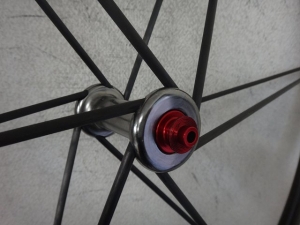
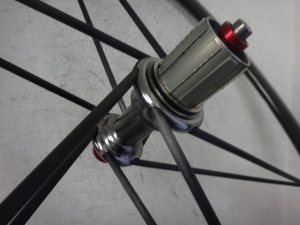
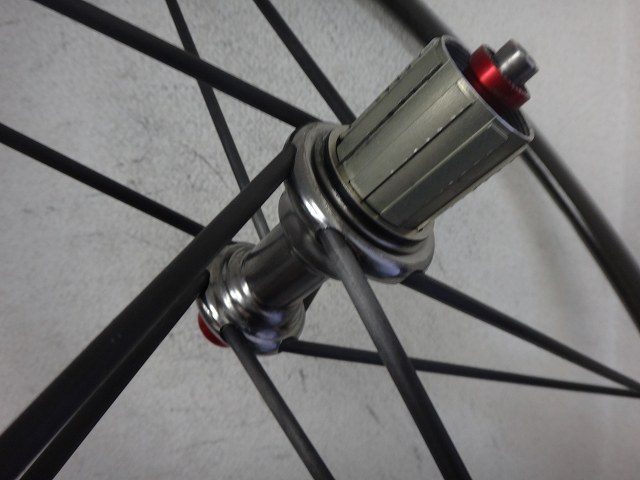
The spokes follow a logic-driven structure where only the porcupine direction remains,
yet they don't budge. Because of this structure, the front wheel also has left and right designations.
I sometimes use the term height/weight ratio for a rim alone,
but there's also stiffness/weight ratio for the entire wheel.
"The stiffness relative to the entire wheel's weight."
For example, Racing Zero WO wheels are
clearly superior to hand-built wheels.
If someone were to boldly claim "my hand-built wheel rides better than Racing Zero!",
(I feel like someone used to say that),
then they'd need to meet one of these conditions:
"a wheel at Racing Zero's weight but stiffer"
or "a wheel at Racing Zero's stiffness but lighter"
and satisfy even just one of them slightly.
But in my assessment, that's impossible.
First, building a wheel lighter than Racing Zero is easy.
The Nomura Lab Wheel No. 5 is far lighter.
However, Nomura Lab Wheel No. 5 can't achieve Racing Zero's stiffness level.
Also, if I build with 36H and thick spokes as rigid as possible,
I can assemble a wheel that's approximately Racing Zero's stiffness.
("Approximately" because I feel lateral stiffness is achievable but vertical stiffness is impossible)
But that wheel will definitely be heavier than Racing Zero.
If generic materials could exceed Racing Zero's
stiffness/weight ratio,
Fulcrum wouldn't need to use special materials(particularly aluminum spokes)to make wheels.
That said, Racing Zero is also a mass-produced wheel, so
the assumed use case regarding where, by whom, and how
must be set quite high.
For instance, it doesn't flinch even if someone weighing 0.1 tons does 80 km/h downhill.
Such a wheel would have excessive stiffness for someone with less body weight or power,
and as long as it doesn't fall below the threshold(which naturally varies by rider)where someone finds it too soft,
lighter is always better for the wheel.
(If made too light and feels mushy, that's NG)
So if someone doesn't find Nomura Lab Wheel No. 5 mushy,
they should use that since it's lighter than Racing Zero,
and if they do find it mushy, I always tension the spokes right up to the limit regardless of the rider's weight,
so the only changeable elements left are spoke count and gauge,
and the rim itself(like using No. 1 rim).
Being able to adjust these factors according to the rider is the advantage of hand-built wheels.
However, it's impossible to build a wheel that completely surpasses Racing Zero in stiffness/weight ratio.
Now, if asked whether I can build a hand-built aluminum WO rim wheel exceeding
say Shimano C24 WO wheel's ratio, I can.
If asked whether I can build a hand-built carbon tubular rim exceeding
FFW F4R specs, I can.
Not that these wheels are bad.
It's just that against steel-spoked mass-produced wheels, I usually know from experience
the means and configurations to surpass them.
After that long preamble,
this Corima VIVA MCC is both highly stiff and extremely lightweight.
I don't think surpassing its stiffness/weight ratio is possible with a hand-built wheel.
If I were given a 280g rim, I could build a wheel slightly lighter than the VIVA MCC.
But I have absolutely no mental image of that hand-built wheel finishing up
stiffer or with snappier feel than the VIVA MCC.
Like with Racing Zero, it's theoretically possible to build a hill-climb special
using a 200g carbon rim, achieving a wheel lighter than VIVA MCC
that doesn't feel mushy to a particular rider, but when considering stiffness standards,
I can't build an improved version of this.
If that were possible, Corima wouldn't need to make wheels with 12 carbon spokes.
If discussing this, I really should reveal the VIVA MCC's weight,
but regrettably, I cannot do so.
And that "guy" who used to do that... is already dead!
↓Crab Beam Revival Button

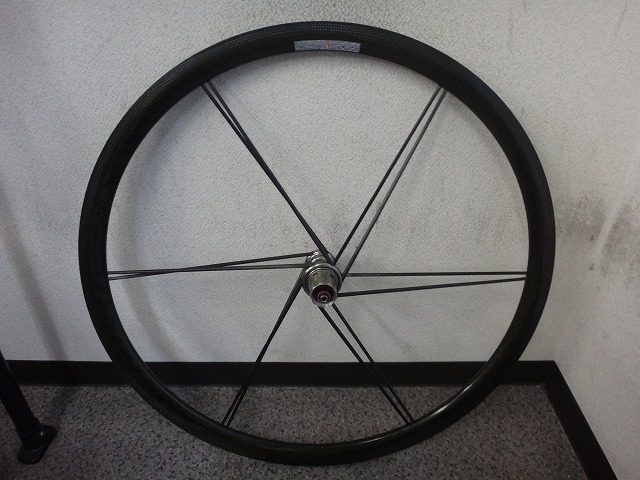
Like batten wheels and disc wheels,
there are no adjustment elements such as truing or centering.
(Though there are some exceptions regarding centering)
If the hub rotation were even slightly rough,
I could swap in Ceramic Speed bearings,
but I determined there's no need to do so, so I'm leaving it as is.
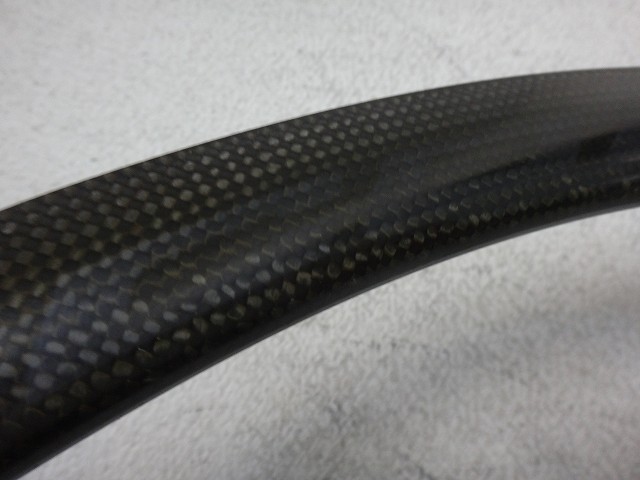
The sticker has been peeled off, but due to the difference in fading
between when it was applied and when it was removed,
I can faintly make out the text.
The part in the image is the "CO" from CORIMA.
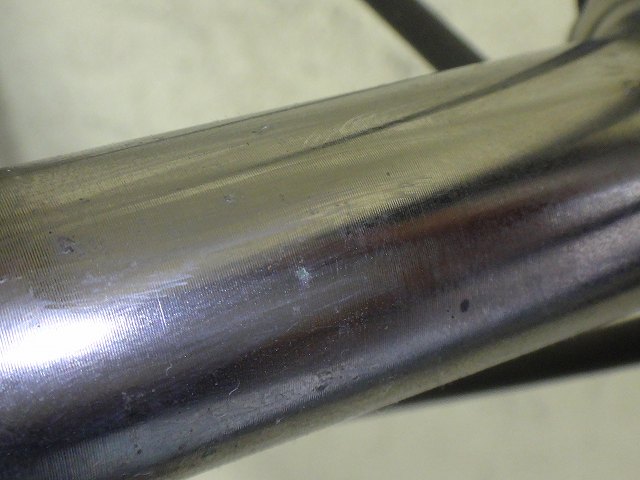
With Corima's anodized finish on this hub,
it's unavoidable that dot-like corrosion will appear.
When it's new, it has that gorgeous mercury-like lustre, but...
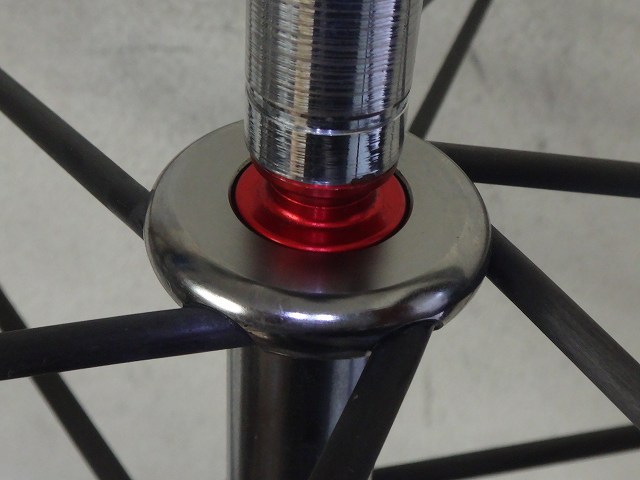
For the front wheel centering,
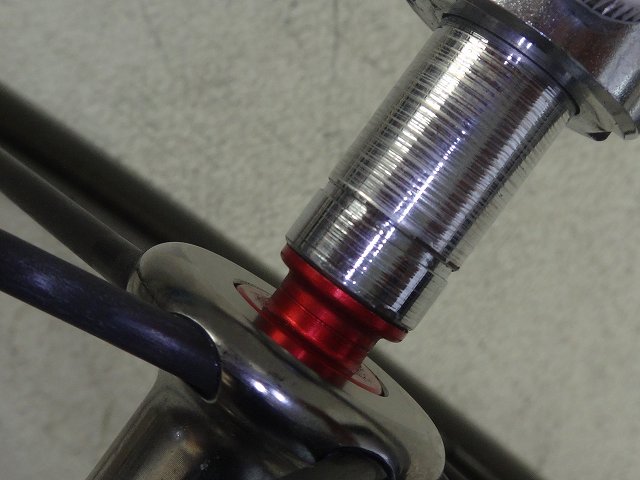
I place the gauge against the left dropout
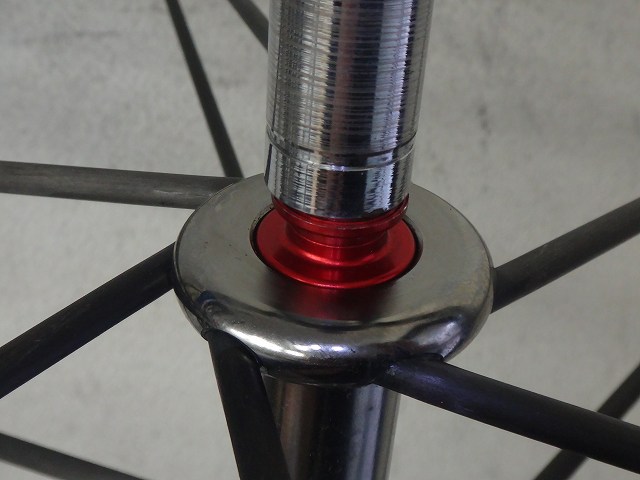
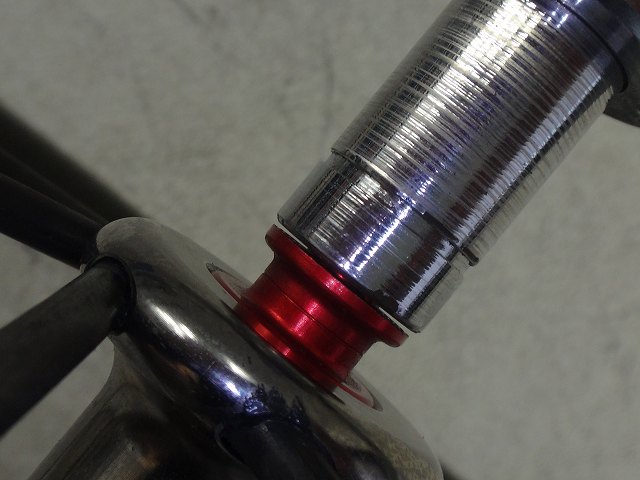
and against the right like this.
The rim is offset toward the right side.

The rear wheel looks like this. The rim is offset toward the right side (the freewheel side).
Due to the structural design, there's nothing that can be done about it, so you just have to accept it and use it as is.
You shouldn't try to achieve perfect centering by inserting washers or spacers between the components.
This isn't just a recommendation against it—it's a safety prohibition.
Just to explain anyway, even though I wouldn't do this:
if the rim were offset toward the non-freewheel side,
I could extend that dropout, but
in this case it's offset toward the freewheel side, so
extending the freewheel-side dropout would also shift the derailleur adjustment position.

The spokes follow a logic-driven structure where only the porcupine direction remains,
yet they don't budge. Because of this structure, the front wheel also has left and right designations.
I sometimes use the term height/weight ratio for a rim alone,
but there's also stiffness/weight ratio for the entire wheel.
"The stiffness relative to the entire wheel's weight."
For example, Racing Zero WO wheels are
clearly superior to hand-built wheels.
If someone were to boldly claim "my hand-built wheel rides better than Racing Zero!",
(I feel like someone used to say that),
then they'd need to meet one of these conditions:
"a wheel at Racing Zero's weight but stiffer"
or "a wheel at Racing Zero's stiffness but lighter"
and satisfy even just one of them slightly.
But in my assessment, that's impossible.
First, building a wheel lighter than Racing Zero is easy.
The Nomura Lab Wheel No. 5 is far lighter.
However, Nomura Lab Wheel No. 5 can't achieve Racing Zero's stiffness level.
Also, if I build with 36H and thick spokes as rigid as possible,
I can assemble a wheel that's approximately Racing Zero's stiffness.
("Approximately" because I feel lateral stiffness is achievable but vertical stiffness is impossible)
But that wheel will definitely be heavier than Racing Zero.
If generic materials could exceed Racing Zero's
stiffness/weight ratio,
Fulcrum wouldn't need to use special materials(particularly aluminum spokes)to make wheels.
That said, Racing Zero is also a mass-produced wheel, so
the assumed use case regarding where, by whom, and how
must be set quite high.
For instance, it doesn't flinch even if someone weighing 0.1 tons does 80 km/h downhill.
Such a wheel would have excessive stiffness for someone with less body weight or power,
and as long as it doesn't fall below the threshold(which naturally varies by rider)where someone finds it too soft,
lighter is always better for the wheel.
(If made too light and feels mushy, that's NG)
So if someone doesn't find Nomura Lab Wheel No. 5 mushy,
they should use that since it's lighter than Racing Zero,
and if they do find it mushy, I always tension the spokes right up to the limit regardless of the rider's weight,
so the only changeable elements left are spoke count and gauge,
and the rim itself(like using No. 1 rim).
Being able to adjust these factors according to the rider is the advantage of hand-built wheels.
However, it's impossible to build a wheel that completely surpasses Racing Zero in stiffness/weight ratio.
Now, if asked whether I can build a hand-built aluminum WO rim wheel exceeding
say Shimano C24 WO wheel's ratio, I can.
If asked whether I can build a hand-built carbon tubular rim exceeding
FFW F4R specs, I can.
Not that these wheels are bad.
It's just that against steel-spoked mass-produced wheels, I usually know from experience
the means and configurations to surpass them.
After that long preamble,
this Corima VIVA MCC is both highly stiff and extremely lightweight.
I don't think surpassing its stiffness/weight ratio is possible with a hand-built wheel.
If I were given a 280g rim, I could build a wheel slightly lighter than the VIVA MCC.
But I have absolutely no mental image of that hand-built wheel finishing up
stiffer or with snappier feel than the VIVA MCC.
Like with Racing Zero, it's theoretically possible to build a hill-climb special
using a 200g carbon rim, achieving a wheel lighter than VIVA MCC
that doesn't feel mushy to a particular rider, but when considering stiffness standards,
I can't build an improved version of this.
If that were possible, Corima wouldn't need to make wheels with 12 carbon spokes.
If discussing this, I really should reveal the VIVA MCC's weight,
but regrettably, I cannot do so.
And that "guy" who used to do that... is already dead!
↓Crab Beam Revival Button