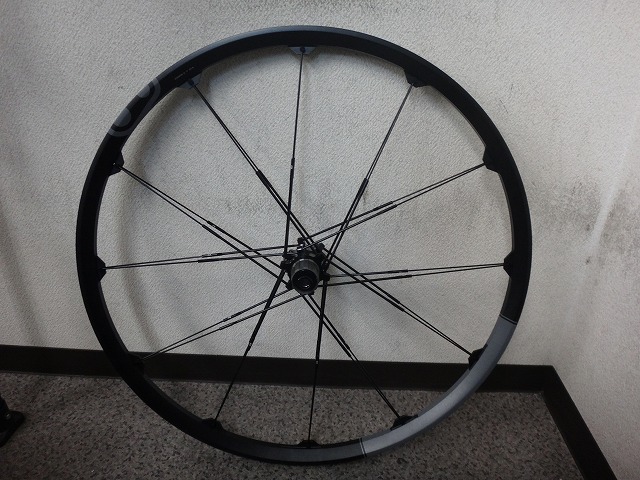
A customer brought in a Crank Brothers wheel, the Iodine 2, for service.
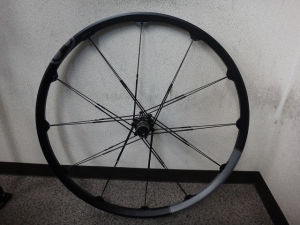
Crank Brothers MTB wheels come in the "Cobalt" series for XC racing,
and the "Iodine" series for enduro,
with larger numbers at the end indicating higher-tier models.
This isn't limited to wheels—there are also Iodine 2 handlebars,
Cobalt 3 stems, seatposts, etc., which gets confusing.
This is an Iodine 2, but there's also a Cobalt 2 model at the same price.
The Iodine 2 has a rim width of 32.5mm, while the Cobalt 2 is 27.5mm.
For the customer's intended use, Cobalt would be better,
but their MTB is a 27.5-inch standard, and there's no Cobalt option for that,
so they had to go with Iodine by necessity.
Recently there's a new hub standard for MTBs called BOOST,
and the Cobalt 2 comes in 29-inch, 29-inch Boost, and 27.5-inch Boost configurations—
the traditional 27.5-inch standard isn't in the lineup.
The Iodine 2 comes in two types: 27.5-inch and 27.5-inch Boost,
so choosing the former works.
But that's not all—they wanted to use a separate kit to convert
a 100/142mm thru-axle to a 100/135mm quick-release,
and then center the wheel.
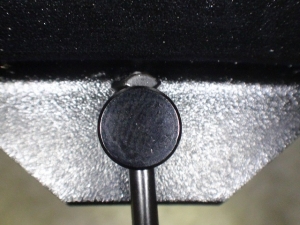
The "dumpling wing" protrusions from the rim create tension when pulled,
but since it doesn't use traditional rim holes, designing a tubeless rim is much easier.
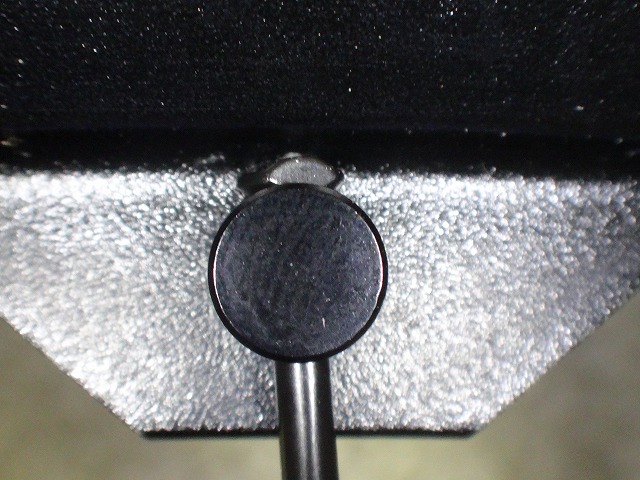
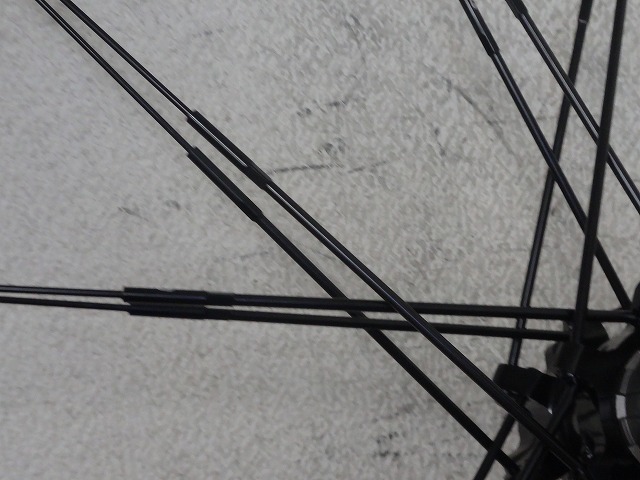
The spoke heads are flattened on the sides,
so even with round-section spokes, there's no spoke windup during adjustment.
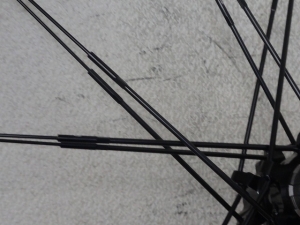
The entire extra-long nipple extending from the hub rotates.
If you interpret it generously, you could say the spokes are shorter so deformation is reduced,
or that the extra-long nipple section is essentially an aluminum spoke,
or that the nipple section extending from the hub body counts as part of the hub itself—
there are various ways to look at it.
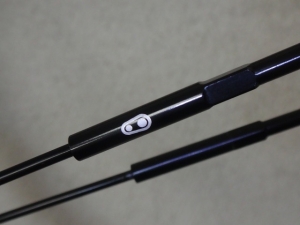
↑The extra-long nipple has a grip point for a 3.2mm wrench flat,
so adjustment is possible with standard tools.
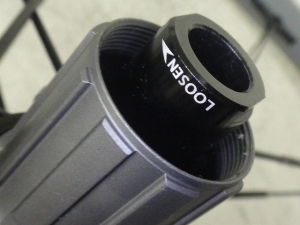
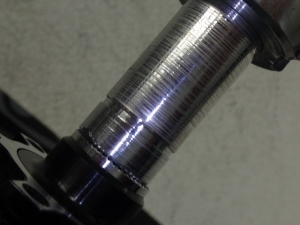
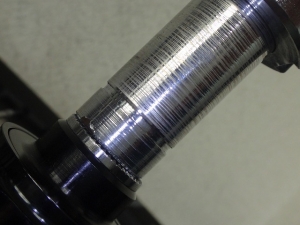
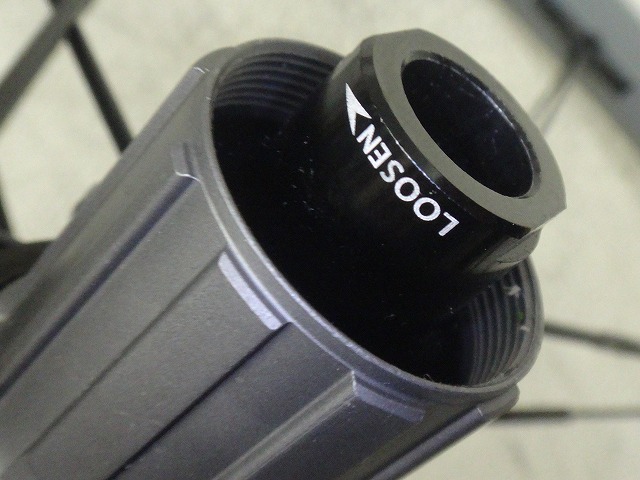
On the rear hub, first remove the left-side snap-on thru-axle end.
It's press-fit, so it's fairly tight.
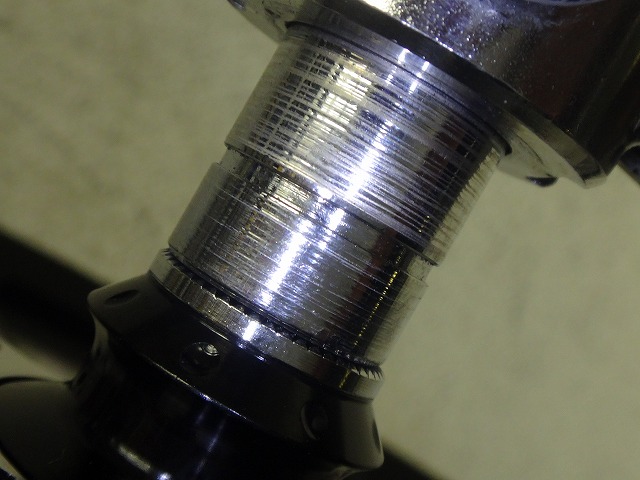
Then there's a 12mm Allen key hole in the hub shaft,
so you use tools on both that and the right-side 17mm hub wrench-compatible reverse-threaded locknut (in the image above) to loosen it.
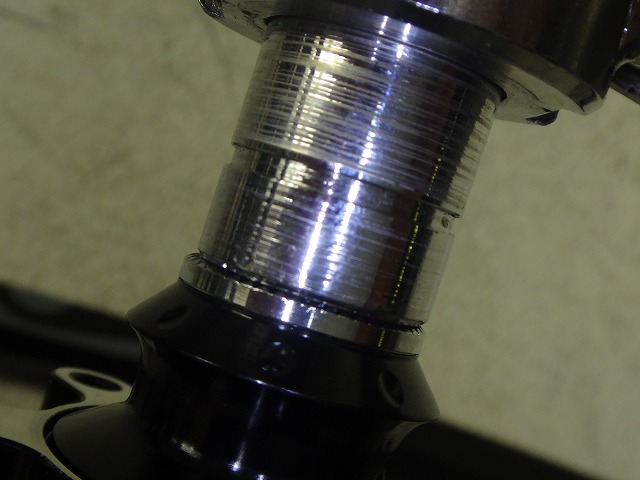
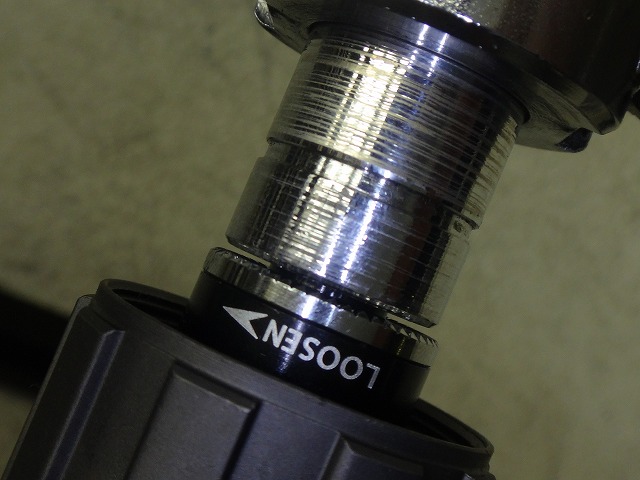
The quick-release right locknut has a 5mm Allen key hole, and
you co-tighten it with the 12mm Allen key on the hub shaft,
then snap on the left end cap for the snap-on quick-release,
and you've converted the 142mm thru-axle to a 135mm quick-release.
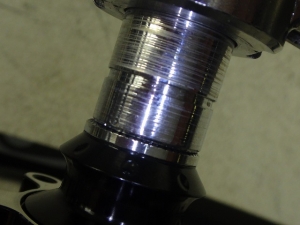

I didn't check the temporary center when it was 142mm,
so I'm not sure if the offset came from the conversion to 135mm.
The shape of the left snap-on end cap is remarkably detailed—
that's a nice touch.
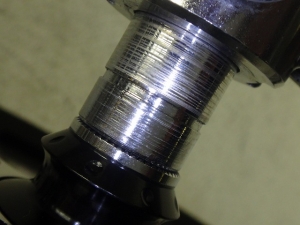
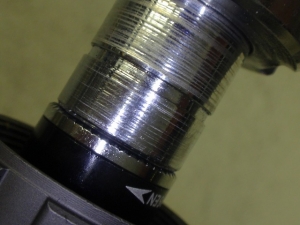
I centered the rear wheel.
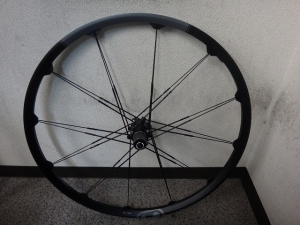
↑Rear wheel after quick-release conversion
For the front wheel, I was planning to check the temporary center with the thru-axle end, but
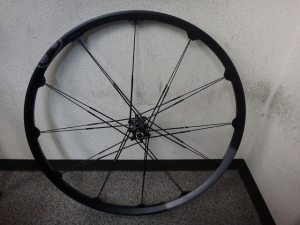
I forgot about that and converted it to quick-release instead.

However, since we changed from a left/right-indistinguishable, same-dimension
press-fit snap-on thru-axle end cap to a left/right-indistinguishable, same-dimension
press-fit snap-on quick-release end cap,
and both have 100mm over-locknut dimensions,
for the front wheel, the end change and center offset are unrelated.
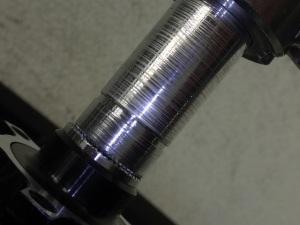
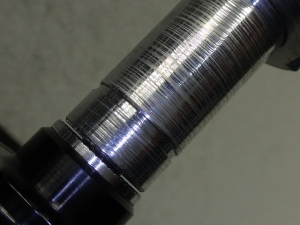
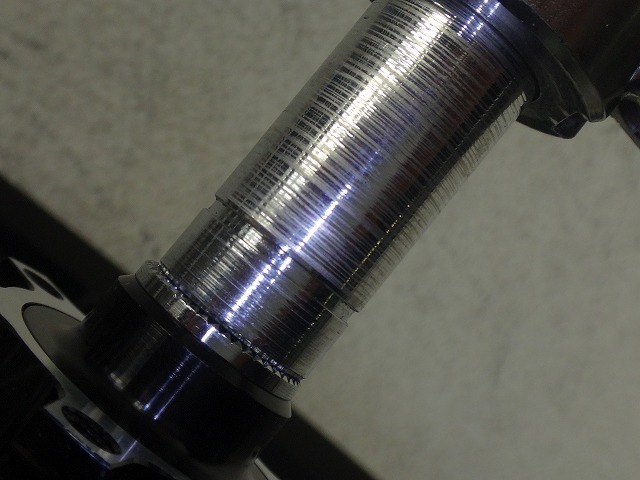
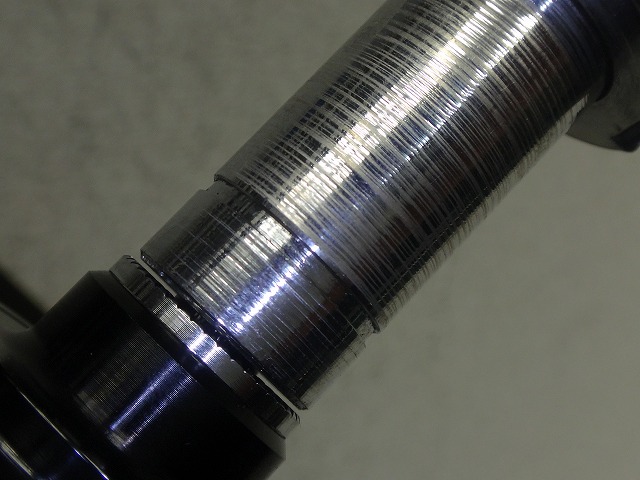
But it was offset.
When I measured using the disc-brake side (left side) dimension against the right side and found a gap at the hub,
that means "the rim is shifted to the right."
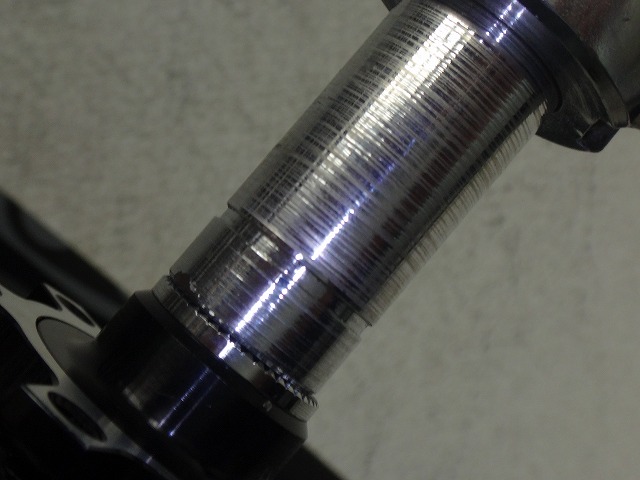
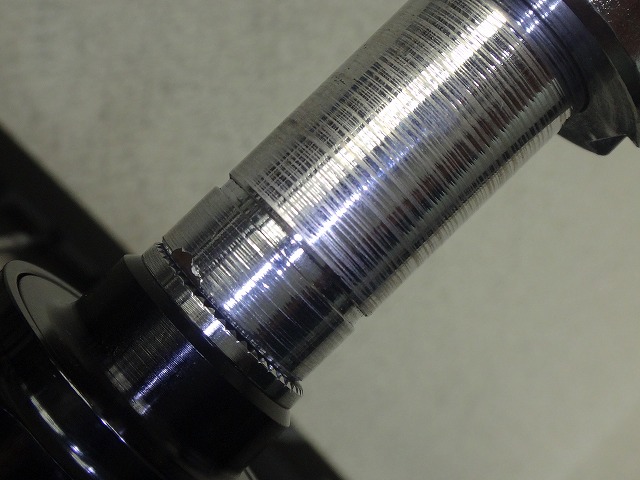
I corrected the center offset.

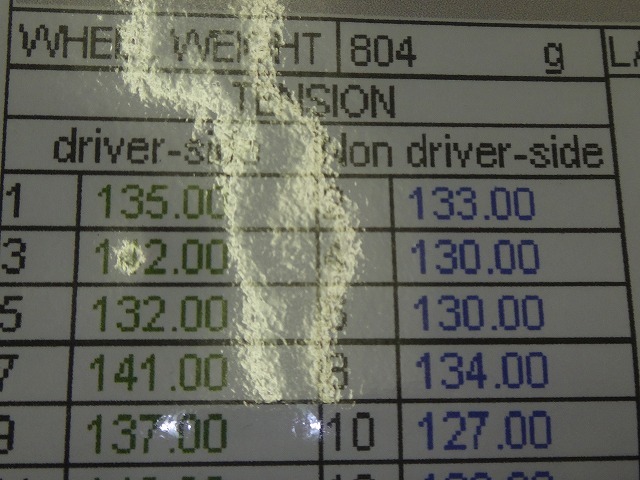
There was an inspection sheet pompously tied to the wheel,
but I think they should fix the center offset before worrying about that.
It says 804g, so this is the front wheel.
It says "Driveside" and "Non-Driveside," which I interpret the same way as the rear wheel,
meaning right and left respectively.
According to the Crank Brothers Japanese distributor's website,
these wheels have a "left/right completely symmetrical spoke design,"
so if they're truly symmetrical, spoke tension should be equal left-to-right on both wheels.
Actually, looking at the data, the right side is slightly higher,
but the maximum on the left exceeds the minimum on the right—
a left-right spoke tension difference that would be impossible on a traditional
same-number-spoke, offset-hole wheel.
The front wheel was shifted to the right, as I mentioned,
and correcting this means either tightening the left side or loosening the right side,
so after centering, the spoke tension difference between left and right should be roughly the same.
Crank Brothers MTB wheels come in the "Cobalt" series for XC racing,
and the "Iodine" series for enduro,
with larger numbers at the end indicating higher-tier models.
Cobalt 3 stems, seatposts, etc., which gets confusing.
This is an Iodine 2, but there's also a Cobalt 2 model at the same price.
The Iodine 2 has a rim width of 32.5mm, while the Cobalt 2 is 27.5mm.
For the customer's intended use, Cobalt would be better,
but their MTB is a 27.5-inch standard, and there's no Cobalt option for that,
so they had to go with Iodine by necessity.
Recently there's a new hub standard for MTBs called BOOST,
and the Cobalt 2 comes in 29-inch, 29-inch Boost, and 27.5-inch Boost configurations—
the traditional 27.5-inch standard isn't in the lineup.
The Iodine 2 comes in two types: 27.5-inch and 27.5-inch Boost,
so choosing the former works.
But that's not all—they wanted to use a separate kit to convert
a 100/142mm thru-axle to a 100/135mm quick-release,
and then center the wheel.
The "dumpling wing" protrusions from the rim create tension when pulled,
but since it doesn't use traditional rim holes, designing a tubeless rim is much easier.
The spoke heads are flattened on the sides,
so even with round-section spokes, there's no spoke windup during adjustment.
The entire extra-long nipple extending from the hub rotates.
If you interpret it generously, you could say the spokes are shorter so deformation is reduced,
or that the extra-long nipple section is essentially an aluminum spoke,
or that the nipple section extending from the hub body counts as part of the hub itself—
there are various ways to look at it.

↑The extra-long nipple has a grip point for a 3.2mm wrench flat,
so adjustment is possible with standard tools.
On the rear hub, first remove the left-side snap-on thru-axle end.
It's press-fit, so it's fairly tight.
Then there's a 12mm Allen key hole in the hub shaft,
so you use tools on both that and the right-side 17mm hub wrench-compatible reverse-threaded locknut (in the image above) to loosen it.
The quick-release right locknut has a 5mm Allen key hole, and
you co-tighten it with the 12mm Allen key on the hub shaft,
then snap on the left end cap for the snap-on quick-release,
and you've converted the 142mm thru-axle to a 135mm quick-release.
I didn't check the temporary center when it was 142mm,
so I'm not sure if the offset came from the conversion to 135mm.
The shape of the left snap-on end cap is remarkably detailed—
that's a nice touch.

I centered the rear wheel.
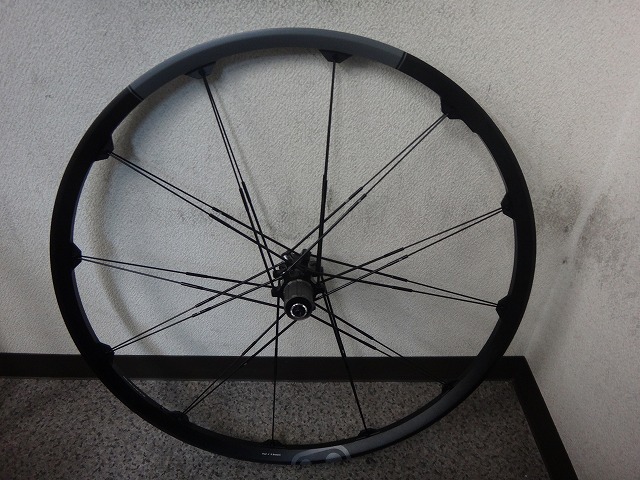
↑Rear wheel after quick-release conversion
For the front wheel, I was planning to check the temporary center with the thru-axle end, but
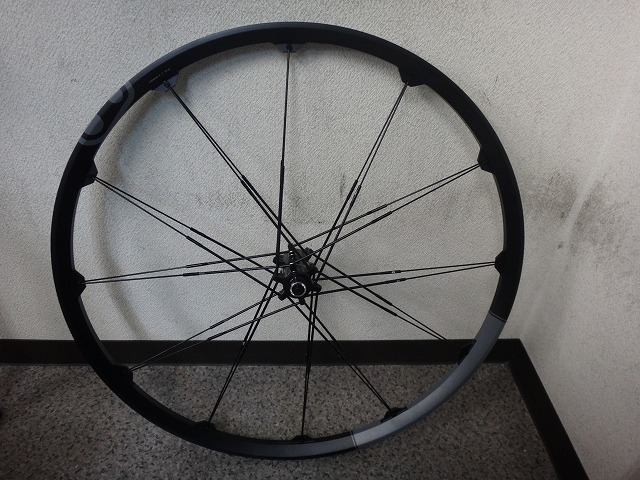
I forgot about that and converted it to quick-release instead.
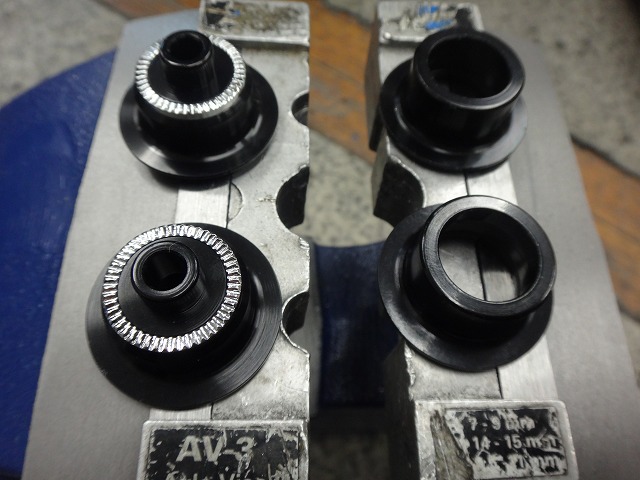
However, since we changed from a left/right-indistinguishable, same-dimension
press-fit snap-on thru-axle end cap to a left/right-indistinguishable, same-dimension
press-fit snap-on quick-release end cap,
and both have 100mm over-locknut dimensions,
for the front wheel, the end change and center offset are unrelated.
But it was offset.
When I measured using the disc-brake side (left side) dimension against the right side and found a gap at the hub,
that means "the rim is shifted to the right."
I corrected the center offset.
There was an inspection sheet pompously tied to the wheel,
but I think they should fix the center offset before worrying about that.
It says 804g, so this is the front wheel.
It says "Driveside" and "Non-Driveside," which I interpret the same way as the rear wheel,
meaning right and left respectively.
According to the Crank Brothers Japanese distributor's website,
these wheels have a "left/right completely symmetrical spoke design,"
so if they're truly symmetrical, spoke tension should be equal left-to-right on both wheels.
Actually, looking at the data, the right side is slightly higher,
but the maximum on the left exceeds the minimum on the right—
a left-right spoke tension difference that would be impossible on a traditional
same-number-spoke, offset-hole wheel.
The front wheel was shifted to the right, as I mentioned,
and correcting this means either tightening the left side or loosening the right side,
so after centering, the spoke tension difference between left and right should be roughly the same.