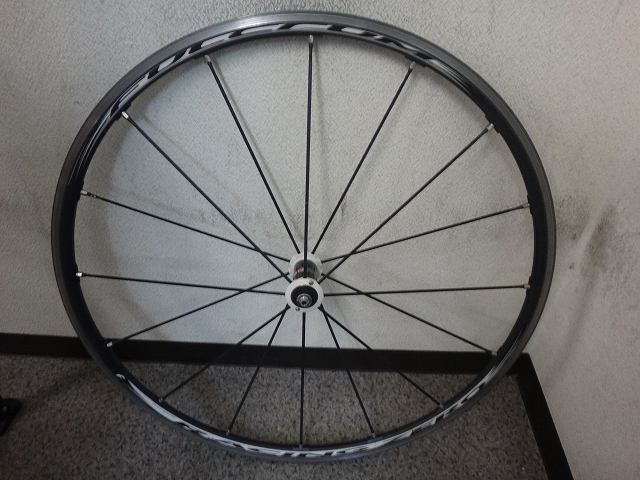
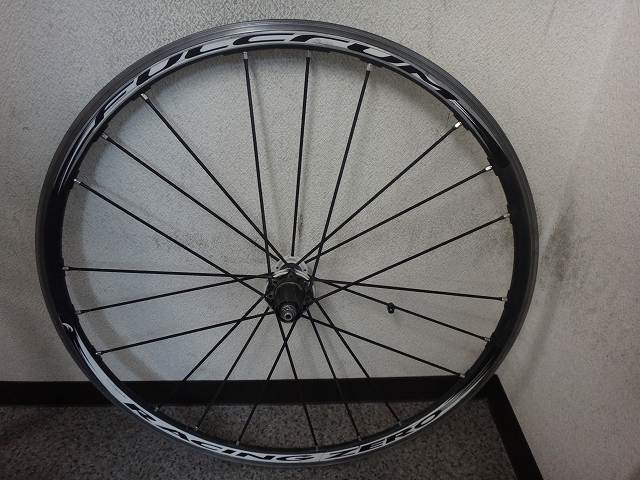
I received a Racing Zero (Campagnolo rear hub) from a customer.
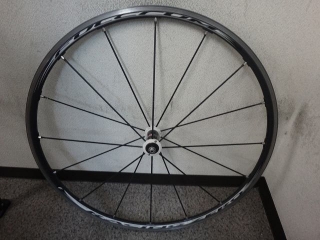

It's been used for quite a long time with no maintenance,
and the rear hub rotation is clearly grinding.
I initially thought the problem might be the bearings in the freebody,
but since it still grinds even with the freebody removed—essentially in "front hub mode"—
I'm confident there's definitely some race damage somewhere.
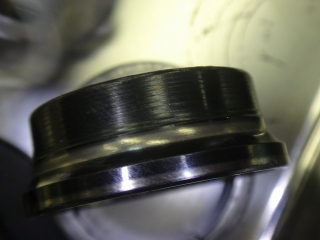
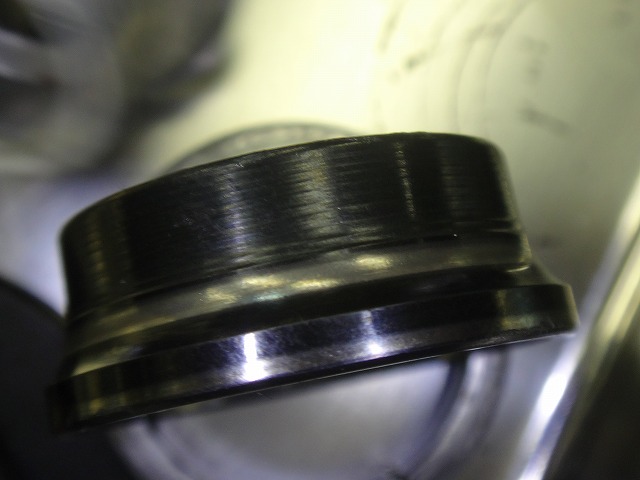
↑This is the cone on the freebody side.
The races here look fine, but
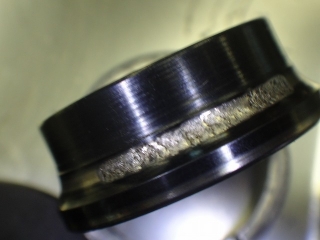
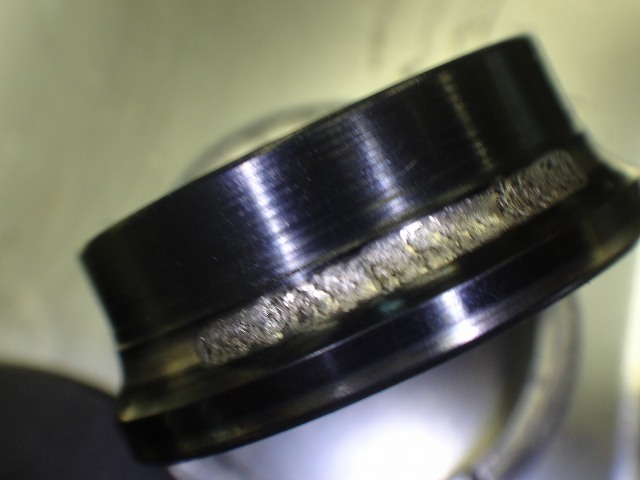
when I flip it over, it's all mangled.
On early-model USB (Ultra Solid Bearing) hubs with black cones and ceramic bearings,
this is a commonly seen problem, so
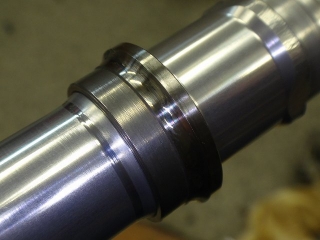
I replaced it with a silver cone.
Besides the damaged cone, other bearing components aren't in perfect condition,
so ideally I'd replace both ball retainers on the left and right, the races, and the cones completely.
However, just replacing the cone eliminated most of the grinding,
and since the customer wanted to keep costs down,
I didn't do a complete bearing overhaul.

One of the three freebody pawls isn't standing up properly—it stays lying flat.
When I removed the spring, I found it was deformed.
Of course, I'm replacing it.
Now, "if the hub shaft rotation stops grinding when the freebody is removed,
then the bearing damage is on the freebody side"—that's true.
But "if the hub shaft still grinds even with the freebody removed,
then the bearing damage is on the hub body side"—that only means that, and
doesn't rule out the possibility of damage to the freebody as well.
This job is exactly that case: when I press the freebody back onto the hub shaft,
the grinding returns.
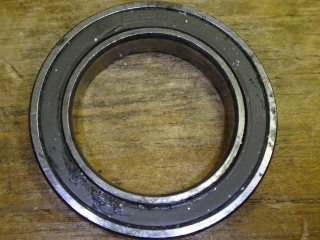
The outer bearing of the freebody was damaged, so I replaced it.
The inner bearing damage was very minor, so considering cost (and so on).
The rotation is grinding, with the inner race rattling around relative to the outer race.
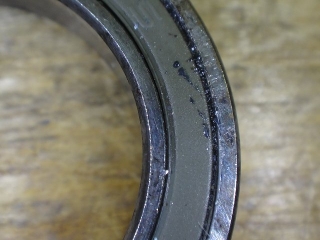
I pushed the inner race toward →→→.
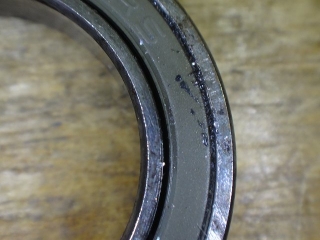
Then toward ←←← the other way.
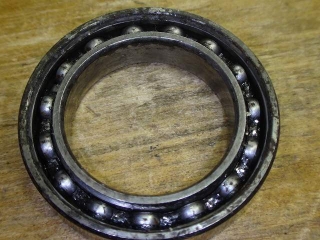
These bearings have such poor durability, don't they?
That's what someone commented the other day.
I agree.
The OEM 6803-size bearings
are relics of an era when you could remove the set screws on the freebody splines
and pump grease inside the freebody with a grease gun—
they only have seals on one side.
Because there's no seal on the other side, rust deposits from the bearing seep in,
becoming an abrasive, and afterward the bearing wear inside accelerates rapidly.
If there were seals on both sides, even if they were non-contact types, this would be greatly reduced.
I know this from experience with aftermarket bearings because
there was a period when freebody bearings weren't supplied as spare parts—
only replacing the entire freebody was the official solution.
Also, the inner diameter of the part that holds the freebody bearing
is clearly larger than the bearing's outer diameter,
so the fit is loose rather than a proper press-fit.
Sometimes the outer bearing just pops out when you remove the freebody.
When the reverse-threaded right end nut loosens,
the entire freebody slides left and right, and
the outer bearing can sit slightly proud of where it should be.
The inner bearing fit is also loose,
but it's held in place by a snap ring, so
it doesn't shift position inside the freebody body.
Because of all these conditions,
it's overwhelmingly the outer bearing that fails on freedbodies.
Today I also did a separate job replacing the freebody bearing on a later-generation black-label Racing Zero.
When I turned the crank, there was a squeaking noise,
and the customer said "Maybe the BB is shot?"
I said "No, the noise is coming from the back—it's the rear derailleur pulley,"
but the culprit turned out to be the freebody bearing.
When they deteriorate to an advanced stage, they make a noise exactly like pulley squeaking—
that's the first time I've seen that.
Regarding wheel inspection,
the rear wheel had lateral runout that seemed from age,
and it was full of wobble besides, but
there were an extremely high number of nipples on the verge of seizing,
so I struggled quite a bit.
The time spent truing the rear wheel and building a rear wheel from scratch are
roughly the same.
Even if there's another opportunity to re-true this in a year or two,
by then the nipples will be seized and won't turn, so
I let the customer know there's a chance I might have to say I can't do it.
Addition:
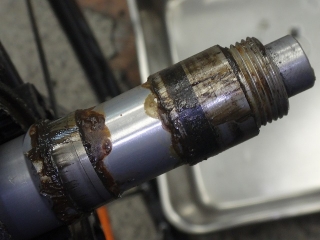
This is from a different job, showing freebody bearing rust
transferred onto the hub shaft.
The rust transfer is only on the outer side here too.
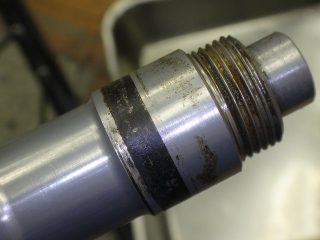
I wiped it off.
This rust-transfer ring and the outer bearing
are stuck together pretty firmly (gently speaking), so
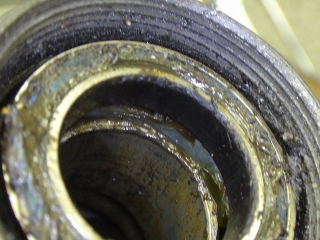
starting from the hub shaft + freebody state removed from the rear hub,
I tapped the end of the hub shaft lightly to break the rust bond, then
just jiggling the freebody to pull it out
caused the outer bearing to pop right out of its press-fit.
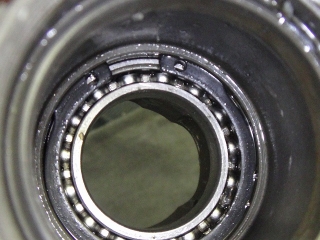
Here's a photo after cleaning the freebody interior.
I'm making a special grease gun just for greasing this inner bearing.
It's been used for quite a long time with no maintenance,
and the rear hub rotation is clearly grinding.
I initially thought the problem might be the bearings in the freebody,
but since it still grinds even with the freebody removed—essentially in "front hub mode"—
I'm confident there's definitely some race damage somewhere.
↑This is the cone on the freebody side.
The races here look fine, but
when I flip it over, it's all mangled.
On early-model USB (Ultra Solid Bearing) hubs with black cones and ceramic bearings,
this is a commonly seen problem, so

I replaced it with a silver cone.
Besides the damaged cone, other bearing components aren't in perfect condition,
so ideally I'd replace both ball retainers on the left and right, the races, and the cones completely.
However, just replacing the cone eliminated most of the grinding,
and since the customer wanted to keep costs down,
I didn't do a complete bearing overhaul.

One of the three freebody pawls isn't standing up properly—it stays lying flat.
When I removed the spring, I found it was deformed.
Of course, I'm replacing it.
Now, "if the hub shaft rotation stops grinding when the freebody is removed,
then the bearing damage is on the freebody side"—that's true.
But "if the hub shaft still grinds even with the freebody removed,
then the bearing damage is on the hub body side"—that only means that, and
doesn't rule out the possibility of damage to the freebody as well.
This job is exactly that case: when I press the freebody back onto the hub shaft,
the grinding returns.

The outer bearing of the freebody was damaged, so I replaced it.
The inner bearing damage was very minor, so considering cost (and so on).
The rotation is grinding, with the inner race rattling around relative to the outer race.
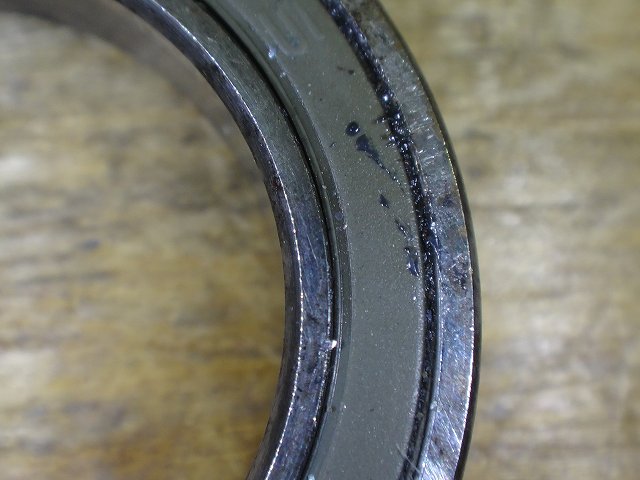
I pushed the inner race toward →→→.

Then toward ←←← the other way.

These bearings have such poor durability, don't they?
That's what someone commented the other day.
I agree.
The OEM 6803-size bearings
are relics of an era when you could remove the set screws on the freebody splines
and pump grease inside the freebody with a grease gun—
they only have seals on one side.
Because there's no seal on the other side, rust deposits from the bearing seep in,
becoming an abrasive, and afterward the bearing wear inside accelerates rapidly.
If there were seals on both sides, even if they were non-contact types, this would be greatly reduced.
I know this from experience with aftermarket bearings because
there was a period when freebody bearings weren't supplied as spare parts—
only replacing the entire freebody was the official solution.
Also, the inner diameter of the part that holds the freebody bearing
is clearly larger than the bearing's outer diameter,
so the fit is loose rather than a proper press-fit.
Sometimes the outer bearing just pops out when you remove the freebody.
When the reverse-threaded right end nut loosens,
the entire freebody slides left and right, and
the outer bearing can sit slightly proud of where it should be.
The inner bearing fit is also loose,
but it's held in place by a snap ring, so
it doesn't shift position inside the freebody body.
Because of all these conditions,
it's overwhelmingly the outer bearing that fails on freedbodies.
Today I also did a separate job replacing the freebody bearing on a later-generation black-label Racing Zero.
When I turned the crank, there was a squeaking noise,
and the customer said "Maybe the BB is shot?"
I said "No, the noise is coming from the back—it's the rear derailleur pulley,"
but the culprit turned out to be the freebody bearing.
When they deteriorate to an advanced stage, they make a noise exactly like pulley squeaking—
that's the first time I've seen that.
Regarding wheel inspection,
the rear wheel had lateral runout that seemed from age,
and it was full of wobble besides, but
there were an extremely high number of nipples on the verge of seizing,
so I struggled quite a bit.
The time spent truing the rear wheel and building a rear wheel from scratch are
roughly the same.
Even if there's another opportunity to re-true this in a year or two,
by then the nipples will be seized and won't turn, so
I let the customer know there's a chance I might have to say I can't do it.
Addition:
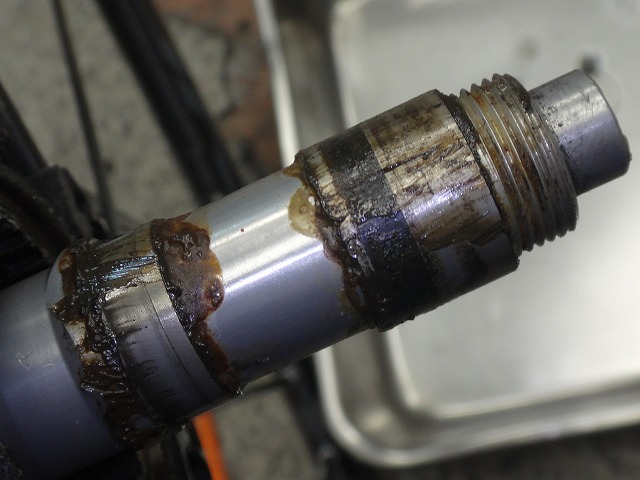
This is from a different job, showing freebody bearing rust
transferred onto the hub shaft.
The rust transfer is only on the outer side here too.

I wiped it off.
This rust-transfer ring and the outer bearing
are stuck together pretty firmly (gently speaking), so
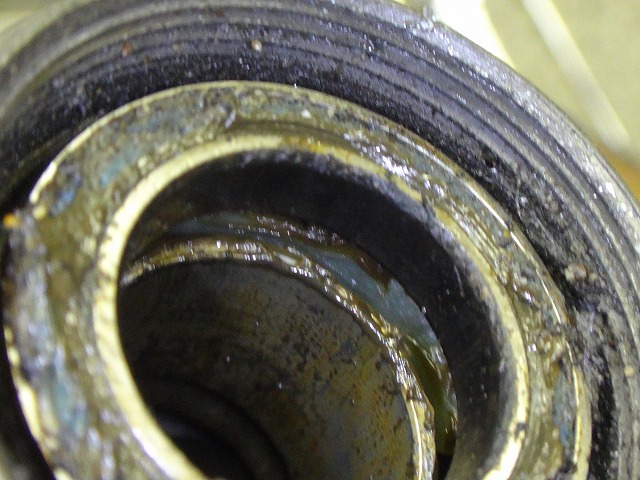
starting from the hub shaft + freebody state removed from the rear hub,
I tapped the end of the hub shaft lightly to break the rust bond, then
just jiggling the freebody to pull it out
caused the outer bearing to pop right out of its press-fit.
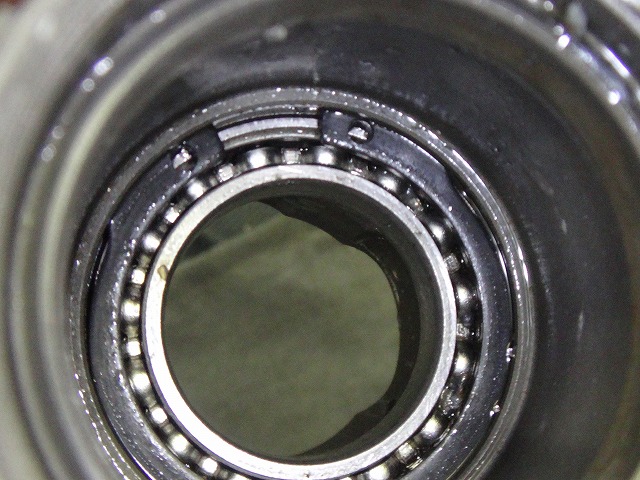
Here's a photo after cleaning the freebody interior.
I'm making a special grease gun just for greasing this inner bearing.