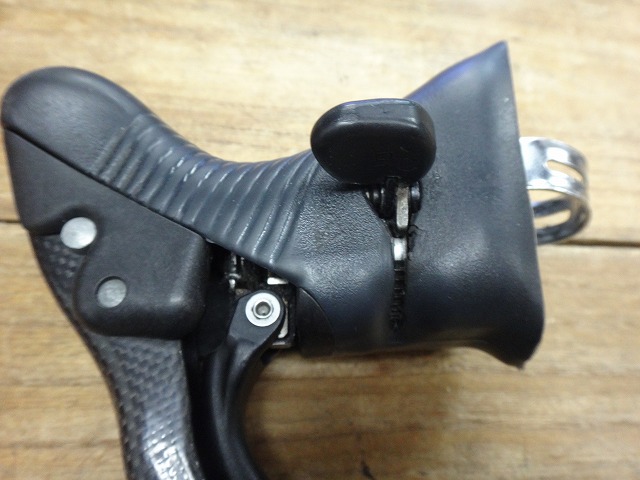
The Campagnolo Athena 11S ErgoPower levers on my regular bike have become unusable due to a malfunction.
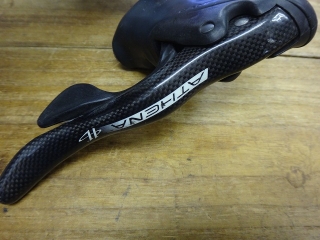
↑This is the right lever, but the left one is the one that broke.
When dividing ErgoPower levers by generation based on bracket shape,
we're currently at the third generation (probably).
The first generation has chunky levers with sharp bracket tips,
the second generation is slightly smaller with rounded bracket tips,
and the current model has wavy long brake levers in the third generation.
Even in the third generation, the higher-grade levers
had their bracket shape change slightly starting in 2015.
From the later second generation onwards, mid-range and budget-tier ErgoPower levers
became incapable of multi-stage shifting,
and the brake cover shape differs from higher-end models.
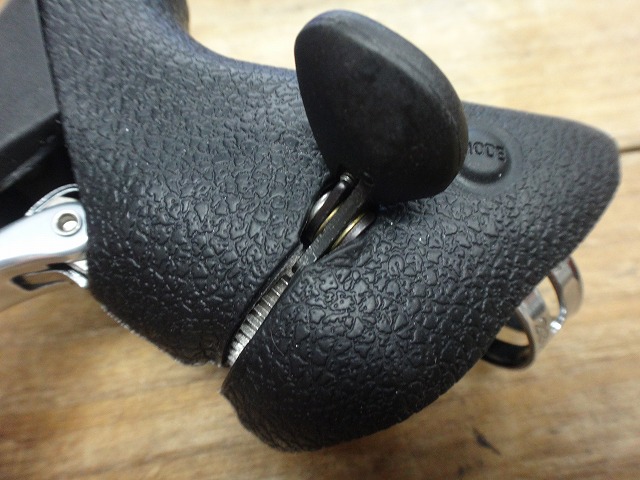
ErgoPower levers that can perform grinding multi-stage shifts
have a slit cut from the side downward, whereas
ErgoPower levers that click and shift only one gear at a time
just have a hole on the side for the lever to protrude.
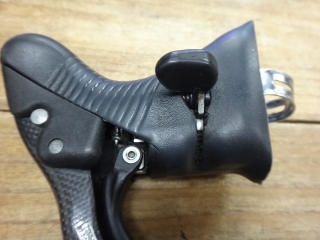
This Athena is a model from when a discontinued grade name
was revived as an 11S groupset in 2010,
and Athena being a grinding lever was a specification only for that year of debut.
The part number EP10-AT1C, and as I mentioned before,
EP = ErgoPower lever
10 = 2010
AT = Athena
1 = 11S
C = left and right set
is what it means.
The 2010 10S Centaur levers are a continued model from 2009,
with aluminum brake levers as EP9-CEUXC,
and carbon ones as EP9-CEUXCC.
The final C in CC stands for carbon.
CE means Centaur, but the U after that means UltraShift.
10S groupsets have two specifications: UltraShift and QuickShift,
with UltraShift being grinding levers and QuickShift being click levers.
Separate from that, there's the Escape specification unique to lower-tier front mechs,
where the wire fixing position from the front mech pantograph and
the wire pull amount inside the left ErgoPower differ from higher grades.
The 2010 Veloce 10S had the confusing situation of
both UltraShift and QuickShift being sold simultaneously,
with UltraShift (grinding lever) as EP9-VLUXC,
and QuickShift (click lever with Escape) as EP9-VLXC.
The 2010 Athena ErgoPower levers
come only with carbon levers, but these carbon levers are
semi-carbon levers with carbon adhered to aluminum.
The Centaur carbon levers that existed before
are full carbon levers the same as higher grades,
so in this regard the grade and specifications are reversed.
From 2011 onwards, Athena also became click levers,
but from 2011 the click lever designation changed to PowerShift for both 11S and 10S.
Whether an ErgoPower lever is UltraShift or PowerShift and
whether the crankset is UltraTorque or PowerTorque
have been completely matched from 2011 onwards.
Since PowerTorque cranks themselves are from 2011,
before that there were combinations of click levers + UltraTorque cranks
on the same grade in that year.
The 2011 Athena ErgoPower levers
are EP11-AT1C (or CC) and are PowerShift.
The final C is aluminum levers, CC is carbon levers.
To make a long story short,
my goal is to switch to 11S grinding shift ErgoPower levers
without changing the front and rear mechs.
Potenza 11 has PowerShift click levers
(so the matching crank is PowerTorque),
and including Potenza 11, the current 11S front mechs
seem like nothing but a direct copy of Shimano's 9000 series
have the wire fixing position from the pantograph
set much further out (even more than the old Escape),
and the lever side also has wire pull amounts matched to that,
so you need to replace the front mech too.

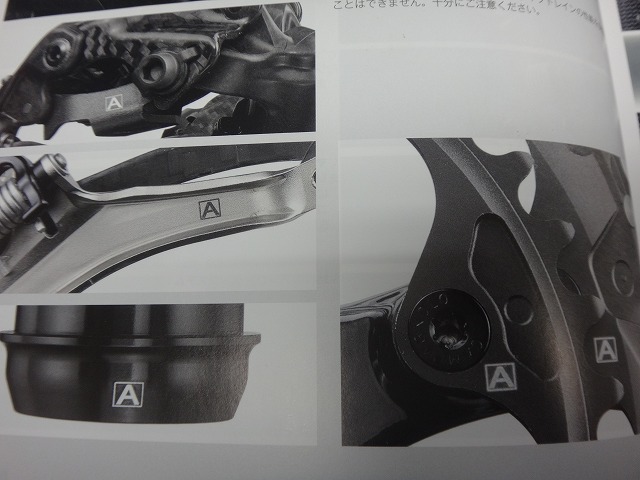
To be more precise, the current top three grades from Chorus and up
have an "A in a square" stamp on certain shifting-related parts of the groupset
(left and right ErgoPower, front and rear mechs, BB cup, crankset), and performance
is only guaranteed if they match each other.
Even on rear mechs and BB cups—things that surely maintain compatibility
with previous models no matter how you look at it.
This will presumably change from B to C and beyond
with each future model change.
I came up with a way to avoid this issue and manage with just
replacing the grinding shift ErgoPower levers.
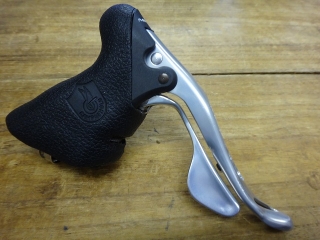
At a certain shop I've been going to since high school,
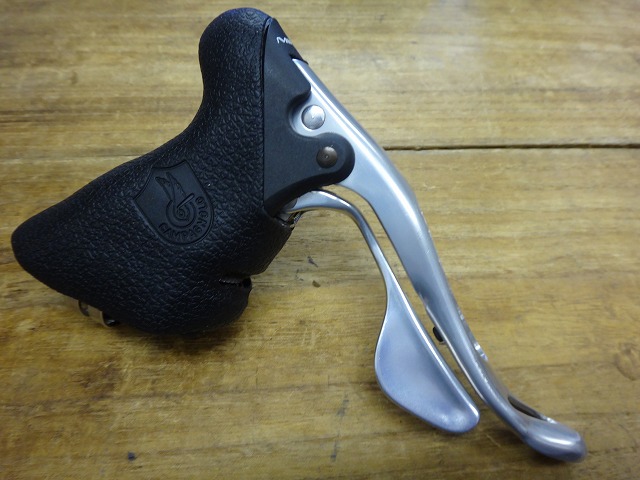
I picked up a Mirage 9S second-generation ErgoPower.
I remembered seeing it in the corner of my vision on a previous visit.
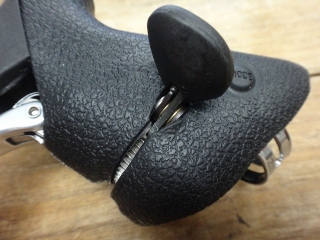
A grinding lever! Alright!
Whether it's 9S or 10S doesn't matter!
I'm gonna shove an aftermarket 11S sprocket set in there anyway!
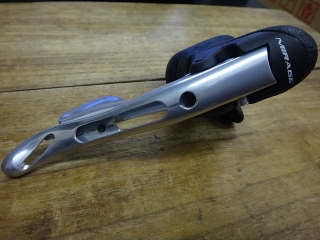
So now this is an 11S lever.
I took careful care not to give off any
"this has been modified" vibes.

Front shifting feels definitely better compared to the grinding Athena right before the swap.
Click levers have limited trim adjustment positions,
but grinding levers have (somewhat coarse) indexing,
so you can adjust to a position where the front mech and chain don't touch.
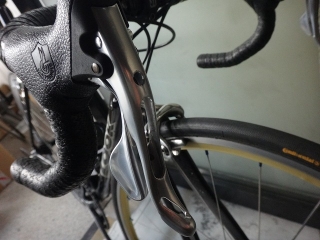
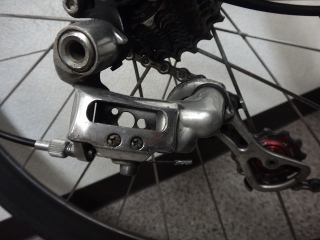
The all-important rear shifting also works without issues.
There are problems with the images and the intent of this post.
From experience, second-generation ErgoPower levers converted to 11S
often need the rear mech low-side adjustment screw moved inward,
but in this case it worked without any tweaking.
More than anything, the feel of the second-generation ErgoPower grip is nostalgic.
Yeah, this is really good.
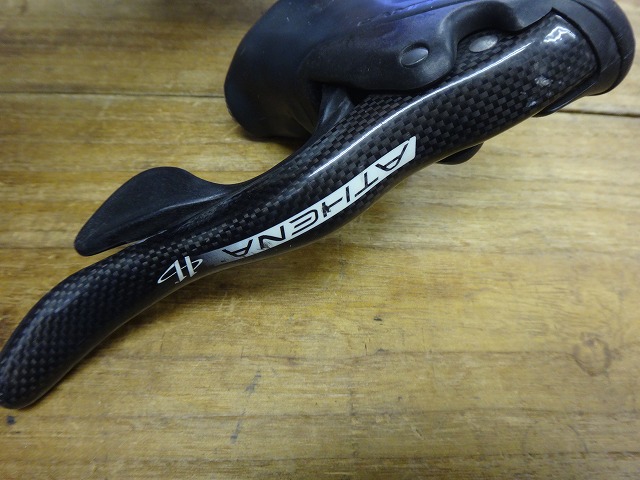
↑This is the right lever, but the left one is the one that broke.
When dividing ErgoPower levers by generation based on bracket shape,
we're currently at the third generation (probably).
The first generation has chunky levers with sharp bracket tips,
the second generation is slightly smaller with rounded bracket tips,
and the current model has wavy long brake levers in the third generation.
Even in the third generation, the higher-grade levers
had their bracket shape change slightly starting in 2015.
From the later second generation onwards, mid-range and budget-tier ErgoPower levers
became incapable of multi-stage shifting,
and the brake cover shape differs from higher-end models.
ErgoPower levers that can perform grinding multi-stage shifts
have a slit cut from the side downward, whereas
ErgoPower levers that click and shift only one gear at a time
just have a hole on the side for the lever to protrude.
This Athena is a model from when a discontinued grade name
was revived as an 11S groupset in 2010,
and Athena being a grinding lever was a specification only for that year of debut.
The part number EP10-AT1C, and as I mentioned before,
EP = ErgoPower lever
10 = 2010
AT = Athena
1 = 11S
C = left and right set
is what it means.
The 2010 10S Centaur levers are a continued model from 2009,
with aluminum brake levers as EP9-CEUXC,
and carbon ones as EP9-CEUXCC.
The final C in CC stands for carbon.
CE means Centaur, but the U after that means UltraShift.
10S groupsets have two specifications: UltraShift and QuickShift,
with UltraShift being grinding levers and QuickShift being click levers.
Separate from that, there's the Escape specification unique to lower-tier front mechs,
where the wire fixing position from the front mech pantograph and
the wire pull amount inside the left ErgoPower differ from higher grades.
The 2010 Veloce 10S had the confusing situation of
both UltraShift and QuickShift being sold simultaneously,
with UltraShift (grinding lever) as EP9-VLUXC,
and QuickShift (click lever with Escape) as EP9-VLXC.
The 2010 Athena ErgoPower levers
come only with carbon levers, but these carbon levers are
semi-carbon levers with carbon adhered to aluminum.
The Centaur carbon levers that existed before
are full carbon levers the same as higher grades,
so in this regard the grade and specifications are reversed.
From 2011 onwards, Athena also became click levers,
but from 2011 the click lever designation changed to PowerShift for both 11S and 10S.
Whether an ErgoPower lever is UltraShift or PowerShift and
whether the crankset is UltraTorque or PowerTorque
have been completely matched from 2011 onwards.
Since PowerTorque cranks themselves are from 2011,
before that there were combinations of click levers + UltraTorque cranks
on the same grade in that year.
The 2011 Athena ErgoPower levers
are EP11-AT1C (or CC) and are PowerShift.
The final C is aluminum levers, CC is carbon levers.
To make a long story short,
my goal is to switch to 11S grinding shift ErgoPower levers
without changing the front and rear mechs.
Potenza 11 has PowerShift click levers
(so the matching crank is PowerTorque),
and including Potenza 11, the current 11S front mechs
have the wire fixing position from the pantograph
set much further out (even more than the old Escape),
and the lever side also has wire pull amounts matched to that,
so you need to replace the front mech too.
To be more precise, the current top three grades from Chorus and up
have an "A in a square" stamp on certain shifting-related parts of the groupset
(left and right ErgoPower, front and rear mechs, BB cup, crankset), and performance
is only guaranteed if they match each other.
Even on rear mechs and BB cups—things that surely maintain compatibility
with previous models no matter how you look at it.
This will presumably change from B to C and beyond
with each future model change.
I came up with a way to avoid this issue and manage with just
replacing the grinding shift ErgoPower levers.
At a certain shop I've been going to since high school,
I picked up a Mirage 9S second-generation ErgoPower.
I remembered seeing it in the corner of my vision on a previous visit.
A grinding lever! Alright!
Whether it's 9S or 10S doesn't matter!
I'm gonna shove an aftermarket 11S sprocket set in there anyway!
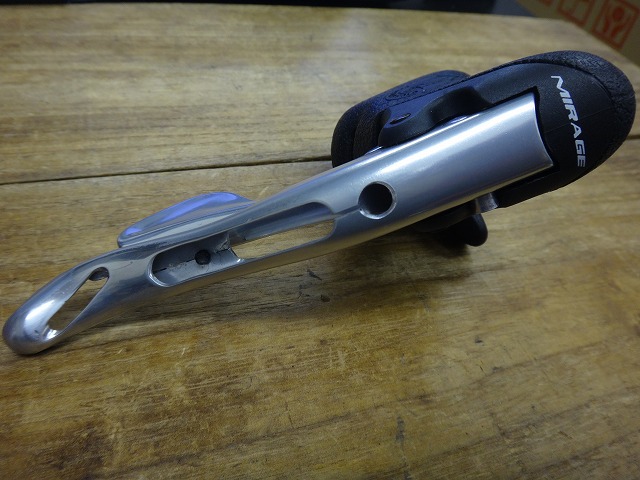
So now this is an 11S lever.
I took careful care not to give off any
"this has been modified" vibes.
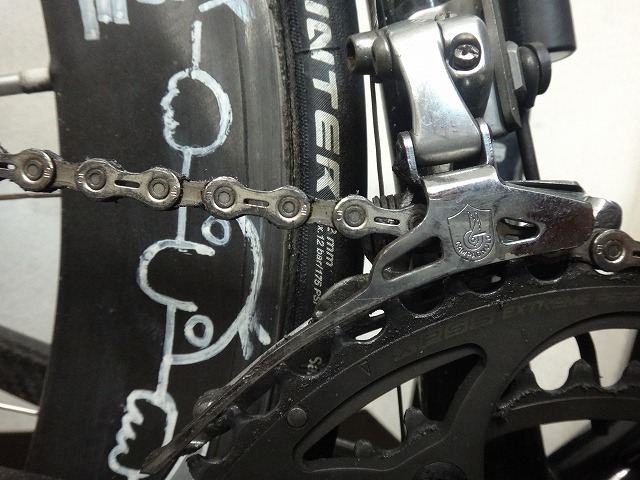
Front shifting feels definitely better compared to the grinding Athena right before the swap.
Click levers have limited trim adjustment positions,
but grinding levers have (somewhat coarse) indexing,
so you can adjust to a position where the front mech and chain don't touch.
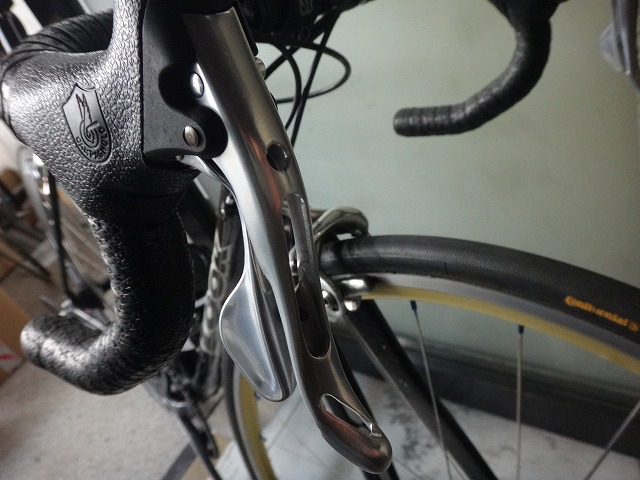

The all-important rear shifting also works without issues.
From experience, second-generation ErgoPower levers converted to 11S
often need the rear mech low-side adjustment screw moved inward,
but in this case it worked without any tweaking.
More than anything, the feel of the second-generation ErgoPower grip is nostalgic.
Yeah, this is really good.