A customer dropped off a Reynolds Strike for me to work on.
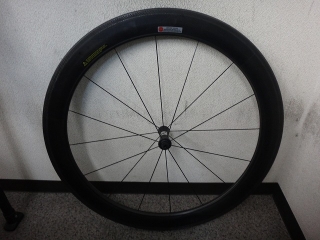
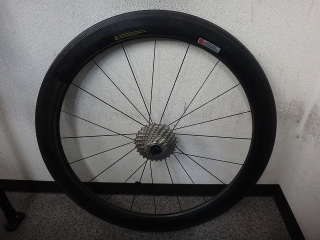
The rear wheel was drifting toward the freewheel side, but
they let me tighten up the non-freewheel side unilaterally, so I'll call that good.
Everything else checks out fine.

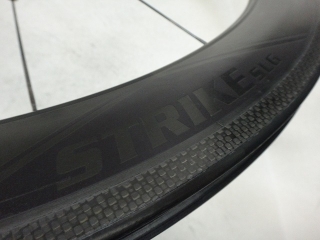
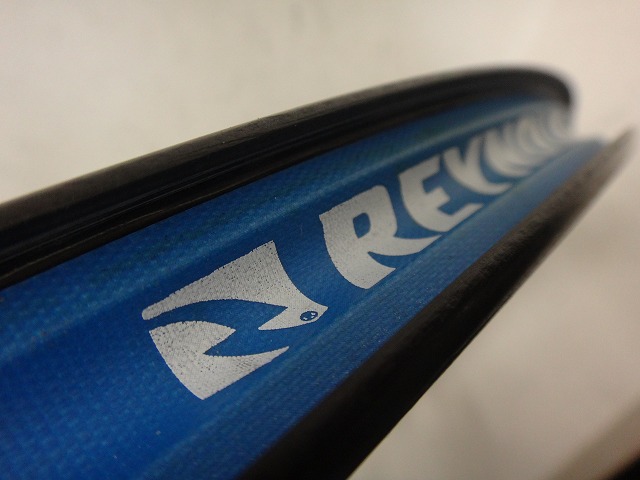
↑Can't read the lettering at all.
Is this style trendy these days?
The other day, I mentioned that the Assault before it went tubeless-ready
used a stretch-band style rim tape, and that
the current model with a hump (tubeless-ready)
uses tape-style rim tape,
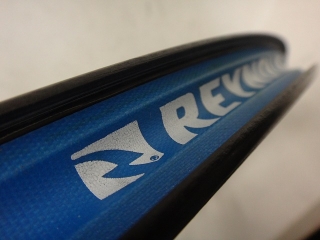
but this Strike has a hump and comes with stretch-style tape,
with tubeless tape and a valve included as accessories.
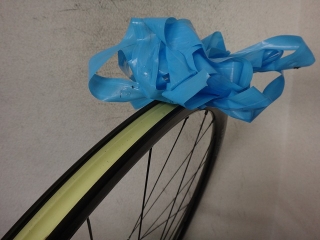
This is the Assault from the previous post.
Reynolds' tubeless-ready rim tape (blue)
can't be reused once you peel it off, so
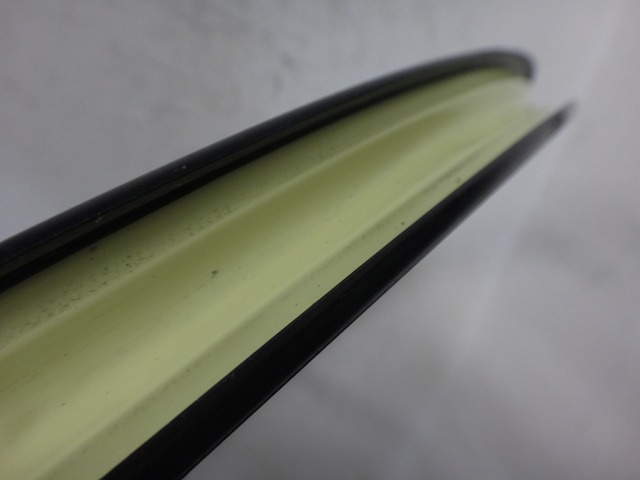
at our shop we usually go with Stans NoTubes tape (yellow) instead.
The Assault has externally-accessible nipples (you can turn them from the outer edge too), so
unless something's really wrong, we do the work without peeling the tape,
but the Strike has internal nipples, so that's not an option.
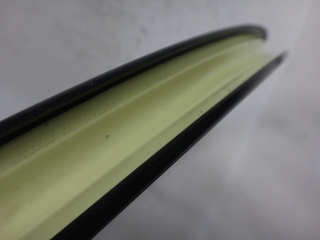
Reynolds' blue tape adheres very weakly to the rim,
but sticks well to itself, so you need two-plus wraps.
The included blue tape came in two pieces about 2.5 wraps long, so
effectively one roll gets used up per wheel.
Stans' yellow tape grips the rim really well, so
it's usable with just one wrap, but I almost always do two wraps.
The image above is two wraps.
The way the rim tape in the image conforms to the rim's hump and other contours
is because I mounted the tire and pressurized it after applying the tape.
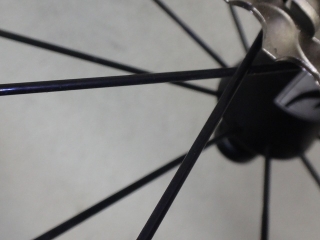
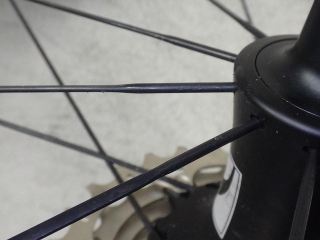
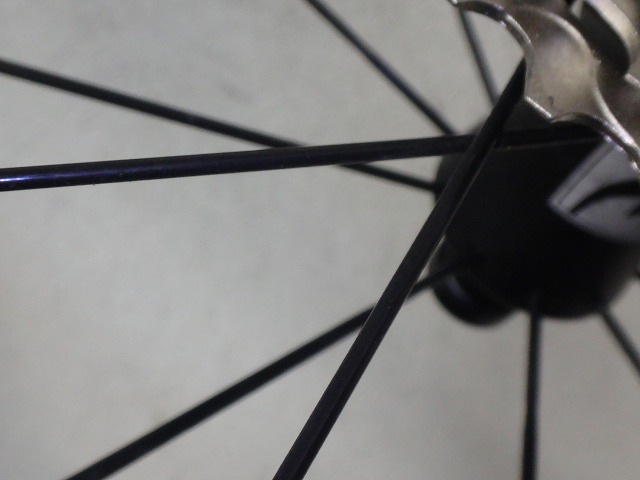
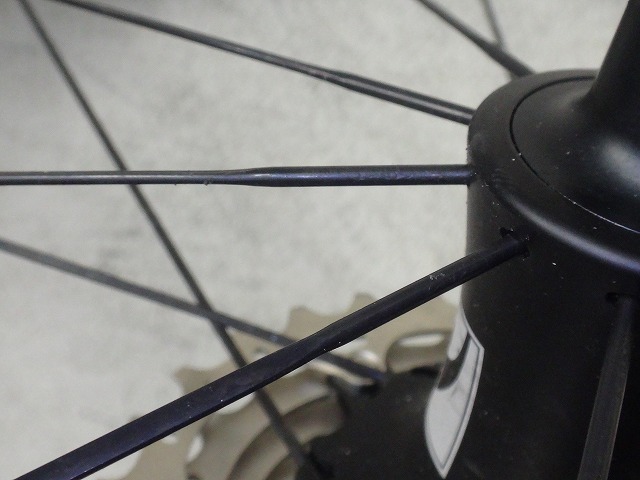
On the Strike, the freewheel side uses round-butted spokes
and the non-freewheel side uses flat spokes.
There's not enough difference to call them different-sized spokes,
so maybe they thought "we don't want to use aero spokes on the freewheel side."
If this is the same reasoning as my belief that "even if aero spokes with about 85% spoke density became reliably available,
they'd never replace semi-comp spokes,"
then Reynolds might be onto that phenomenon too. Hmm.
By the way, semi-aero-comp spokes (aero-comp/CX-RAY) and such fall into that category, but
whether "semi-comp is better than those"
really depends on the spoke density ratio of the freewheel side.
If the freewheel side is 100% spoke density,
then semi-CX or semi-Champ is fine either way.
Semi-Champ is my preference though.
The reason most of the rear wheels on Nomu Lab Wheel #3 are semi-Champ
is actually due to this deliberate choice.
In any case, flat spokes at 100% spoke density
require spoke holes (slits), which limits which hubs you can use to build with.
My personal EDGE 68 rim's rear wheel uses a Black hub with semi-CX,
but if I had some free time I'd like to rebuild it as semi-Champ.
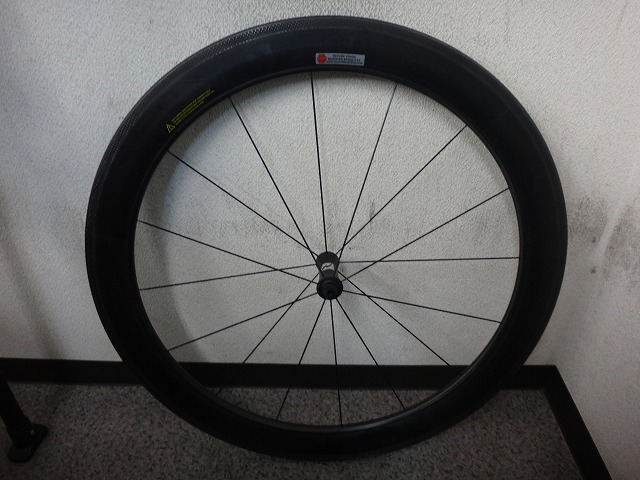
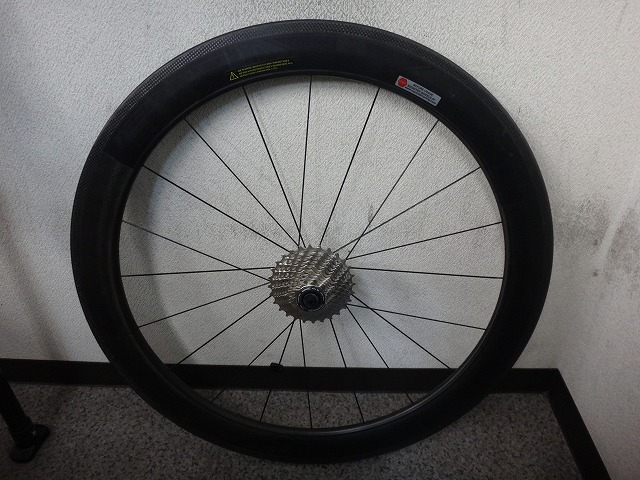
The rear wheel was drifting toward the freewheel side, but
they let me tighten up the non-freewheel side unilaterally, so I'll call that good.
Everything else checks out fine.
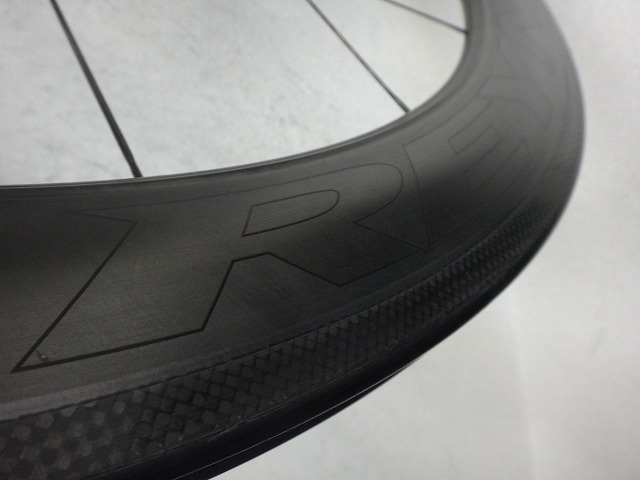
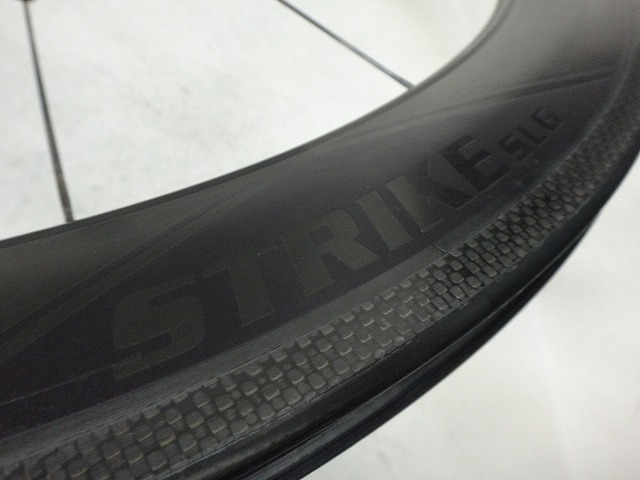
↑Can't read the lettering at all.
Is this style trendy these days?
The other day, I mentioned that the Assault before it went tubeless-ready
used a stretch-band style rim tape, and that
the current model with a hump (tubeless-ready)
uses tape-style rim tape,
but this Strike has a hump and comes with stretch-style tape,
with tubeless tape and a valve included as accessories.

This is the Assault from the previous post.
Reynolds' tubeless-ready rim tape (blue)
can't be reused once you peel it off, so
at our shop we usually go with Stans NoTubes tape (yellow) instead.
The Assault has externally-accessible nipples (you can turn them from the outer edge too), so
unless something's really wrong, we do the work without peeling the tape,
but the Strike has internal nipples, so that's not an option.
Reynolds' blue tape adheres very weakly to the rim,
but sticks well to itself, so you need two-plus wraps.
The included blue tape came in two pieces about 2.5 wraps long, so
effectively one roll gets used up per wheel.
Stans' yellow tape grips the rim really well, so
it's usable with just one wrap, but I almost always do two wraps.
The image above is two wraps.
The way the rim tape in the image conforms to the rim's hump and other contours
is because I mounted the tire and pressurized it after applying the tape.
On the Strike, the freewheel side uses round-butted spokes
and the non-freewheel side uses flat spokes.
There's not enough difference to call them different-sized spokes,
so maybe they thought "we don't want to use aero spokes on the freewheel side."
If this is the same reasoning as my belief that "even if aero spokes with about 85% spoke density became reliably available,
they'd never replace semi-comp spokes,"
then Reynolds might be onto that phenomenon too. Hmm.
By the way, semi-aero-comp spokes (aero-comp/CX-RAY) and such fall into that category, but
whether "semi-comp is better than those"
really depends on the spoke density ratio of the freewheel side.
If the freewheel side is 100% spoke density,
then semi-CX or semi-Champ is fine either way.
Semi-Champ is my preference though.
The reason most of the rear wheels on Nomu Lab Wheel #3 are semi-Champ
is actually due to this deliberate choice.
In any case, flat spokes at 100% spoke density
require spoke holes (slits), which limits which hubs you can use to build with.
My personal EDGE 68 rim's rear wheel uses a Black hub with semi-CX,
but if I had some free time I'd like to rebuild it as semi-Champ.