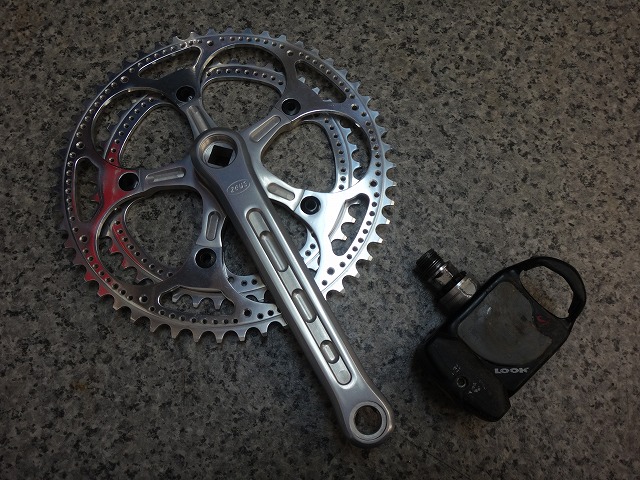
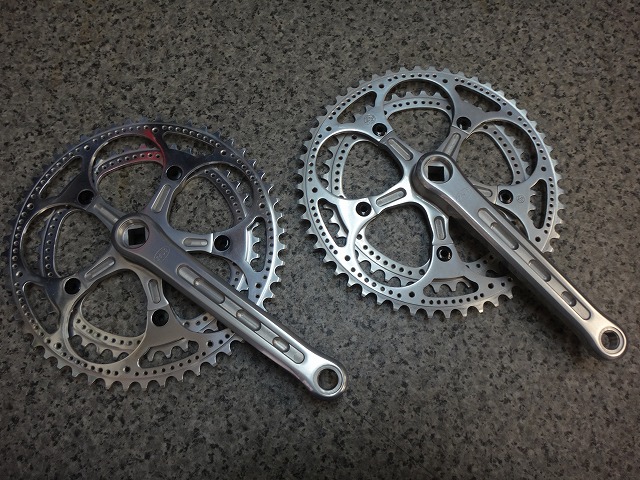
A customer (probably) left me a ZEUS 2000 crank to work on.
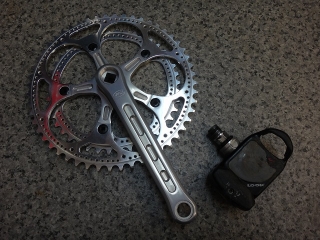
ZEUS is a Spanish component maker that produced Campagnolo-style copies,
but the 2000 (a component group with that name) has such refined finishing that
from what I know, it's a component set that sometimes costs more than
Campagnolo's own Super Record.
Just looking at the crankset alone, you can see how much craftsmanship went into it—
lightening holes in the chainrings and two-stage cuts in the main arm.
The ZEUS brand itself has been revived in name only as Orbea's parts brand
(the equivalent of Trek's Bontrager)—also from Spain.
It really fell far.
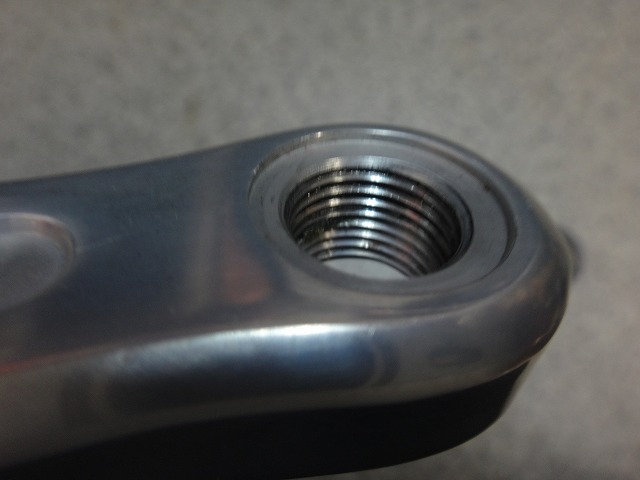
Anyway, the issue was "the pedal won't come off."
The pedal had seized about halfway through the thread engagement,
stuck tight like it was welded.
It wasn't a case of cross-threading per se.
I mean, the resistance was obviously heavy—whoever did this just kept forcing it in.
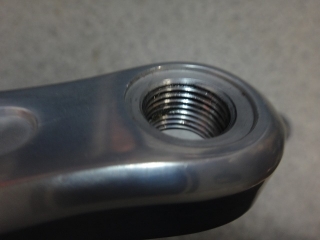
I managed to get the pedal off somehow.
The thread spec (diameter and pitch) isn't particularly unusual,
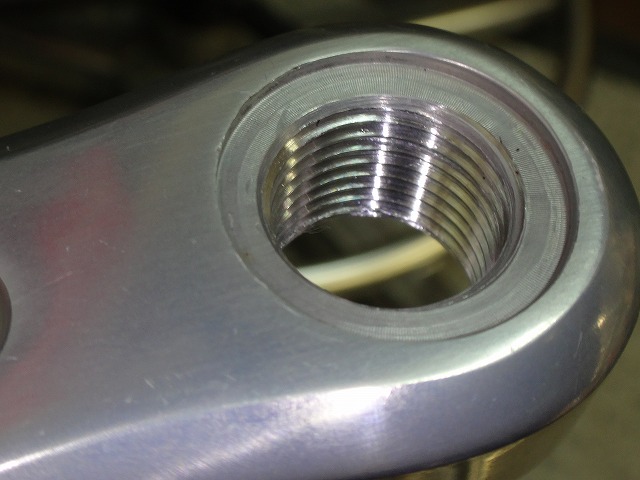
but the threads seem to be cut high or at a dull angle, making pedal insertion difficult.
This isn't unique to this individual crank—
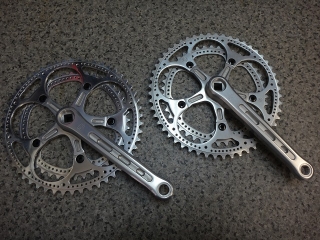
My own 2000 has the same issue, so I figured it out.
When I tried installing various pedals on it,
the thread engagement was noticeably tight.

So I ran a pedal tap through it.
With bottom bracket taps and such, Hozan tools can cut all the way through and be fine,
but if you do that with Campagnolo tools, the threads thin out
and the BB goes in too easily afterward, tending to loosen over time.
So you need the trick of deliberately not tapping the deeper part,
leaving the tight threads there.
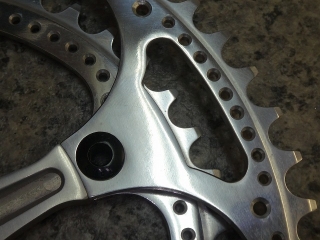
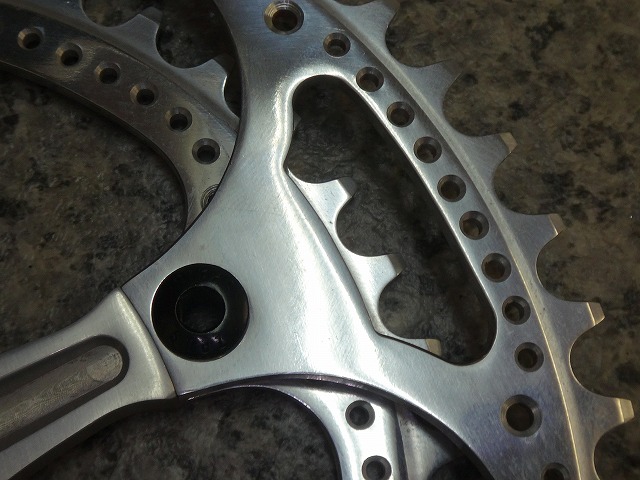
The customer's (probably) chainring has a more polished finish
depending on how the buffing was done, compared to mine,
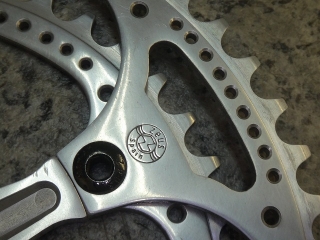
but mine has the ZEUS stamp on it.
Which means I win (makes no sense).
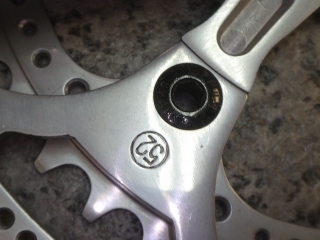
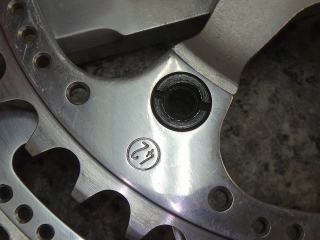
Mine also has tooth count stamping on the chainring.
By the way, this crank has a PCD of 120mm with a 36T minimum chainring—
it's also an uncommon spec that never became standard.
ZEUS is a Spanish component maker that produced Campagnolo-style copies,
but the 2000 (a component group with that name) has such refined finishing that
from what I know, it's a component set that sometimes costs more than
Campagnolo's own Super Record.
Just looking at the crankset alone, you can see how much craftsmanship went into it—
lightening holes in the chainrings and two-stage cuts in the main arm.
The ZEUS brand itself has been revived in name only as Orbea's parts brand
(the equivalent of Trek's Bontrager)—also from Spain.
Anyway, the issue was "the pedal won't come off."
The pedal had seized about halfway through the thread engagement,
stuck tight like it was welded.
It wasn't a case of cross-threading per se.
I mean, the resistance was obviously heavy—whoever did this just kept forcing it in.
I managed to get the pedal off somehow.
The thread spec (diameter and pitch) isn't particularly unusual,
but the threads seem to be cut high or at a dull angle, making pedal insertion difficult.
This isn't unique to this individual crank—
My own 2000 has the same issue, so I figured it out.
When I tried installing various pedals on it,
the thread engagement was noticeably tight.
So I ran a pedal tap through it.
With bottom bracket taps and such, Hozan tools can cut all the way through and be fine,
but if you do that with Campagnolo tools, the threads thin out
and the BB goes in too easily afterward, tending to loosen over time.
So you need the trick of deliberately not tapping the deeper part,
leaving the tight threads there.
The customer's (probably) chainring has a more polished finish
depending on how the buffing was done, compared to mine,
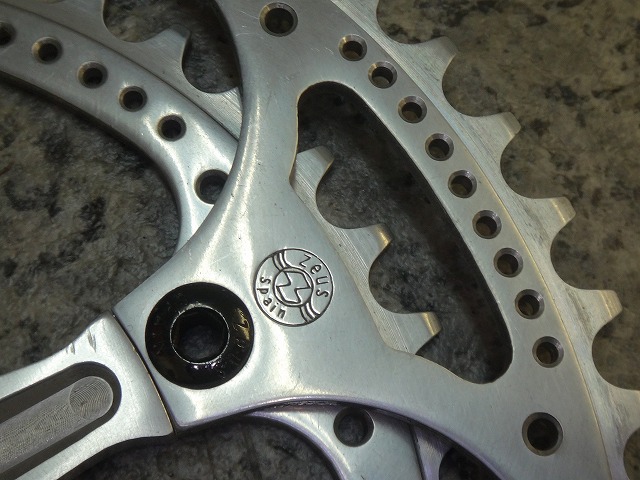
but mine has the ZEUS stamp on it.
Which means I win (makes no sense).

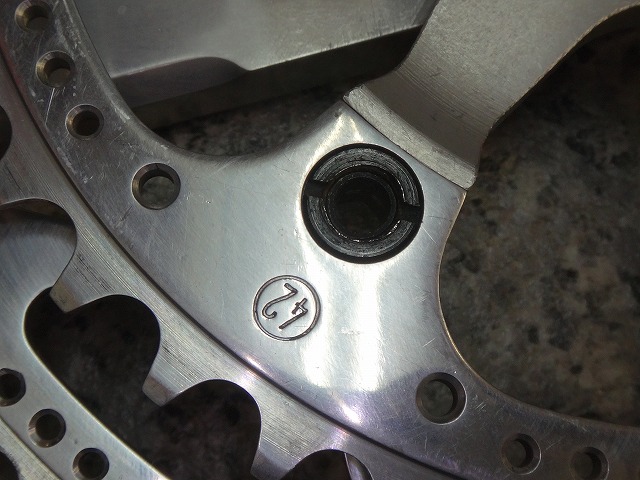
Mine also has tooth count stamping on the chainring.
By the way, this crank has a PCD of 120mm with a 36T minimum chainring—
it's also an uncommon spec that never became standard.