I've been doing repairs on various Racing Zero wheels, and since they're all from the same customer,
I'll bundle them together.
Not all from the same owner—some were brought in by a proxy.

First up: the Racing Zero rear wheel.

From a crash, there was spoke bending near the hub.

And the adjacent spoke is bent near the rim.

Replaced them.

Next: a Racing Zero Carbon rear wheel.
One spoke was so loose I could shake it around by hand—really wobbly—and
the overall spoke tension was on the low side too.
The wobbly spoke was causing noticeable lateral runout at its position, so
I first corrected the lateral runout by adjusting just that spoke's nipple,
then tightened everything up a bit across the board.

And now the real problem child: the Racing Zero 2WAY-FIT rear wheel.
Apparently it had a rim replacement done at a local shop once, but
the wheel building itself is so sloppy it's basically double the work.
The spoke tension is even lower than the Racing Zero Carbon I just did—
it doesn't even meet the minimum hang-weight spec.
On top of that, it's got centering issues and no radial runout correction at all.
I didn't ask which shop, but
this is not work I'd charge for.

One spoke is broken.
This itself happened during riding, but
it's definitely not accidental—it's the shop's screwup.
If you look at the adjacent spoke in the image, you'll see
the spoke is twisted because proper tools weren't used to prevent twist.
Especially on the freewheel side—there were almost no spokes with zero twist.
If they'd cranked down hard on high-tension spokes with nipples that were stuck, I could barely accept it,
but with tension this low, why would spokes get twisted like this?
Really baffling.
Using Fulcrum's spoke twist tool—running the twisted part along the long slot in the direction of rotation—
I managed to eliminate most of the spoke twist.
First I replaced the broken spoke, then by adjusting only that spoke's nipple
I worked through the lateral runout correction,
roughly recreating the state just before the spoke broke.


And this much radial runout showed up.
The rim's bouncing up and down all over the place.
The phase of the radial runout peaks and valleys
has no relationship to the replaced spoke's position.
Since there's almost no lateral runout, they were riding it like this.
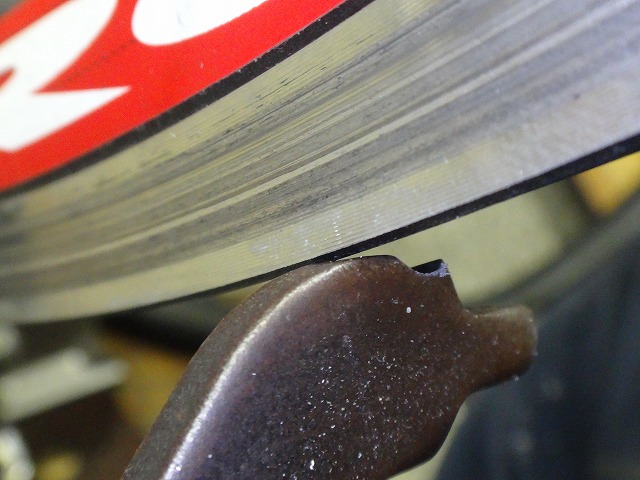
You can see the evidence in the image—the brake marks like Saturn's rings (the Cassini gap)
are all the same distance from the wheel center.
The distance from the outer edge of the brake mark to the truing stand gauge
stays constant regardless of where the rim is positioned.


The rim was offset toward the freewheel side by this much.
That's not the direction it would shift from age and use, and the amount doesn't make sense either.
So this is what happens when someone who can only do lateral runout tries to build a wheel.
I didn't have confidence I could correct the radial runout and centering with just tightening from here, so
first I loosened the nipples quite a bit across the board.
It's basically a wheel rebuild—a complete rebuild, actually.
The work time went through stations like: "I could have finished a Nomu Lab front wheel by now" →
"I could have finished a Nomu Lab rear wheel by now" →
"I could probably have built a brand-new Racing Zero from scratch by this point"
and so on, passing quite a few milestones.

On the freewheel side, there were about three nipples stuck in the tightening direction.
Fortunately I was able to loosen them, so those ones got
completely separated from the spokes and the threads cleaned,
separate from the general loosening.
The reason some wouldn't tighten past a certain point was crispy adhesive residue hardened into the threads.
When the feel is clearly off (too hard) but you force it anyway,
the spoke twists—
(though non-stuck spokes are twisted too, somehow).
The spoke in the image has a mark at its original depth before loosening.
If it had been stuck on the loosening side too, I'd really be stuck.
From the provisional assembly state, with radial and lateral runout nearly gone
but the rim shifted hard toward the freewheel side,
I then center the wheel by one-sided tightening on the non-freewheel side.


Deliberately offset state.
Rim shifted hard toward the freewheel side
with nearly zero radial and lateral runout—


Centered.
I also corrected any runout that appeared from the centering work, just in case.


I pushed the radial runout correction to the limit.
I've seen this before on another Racing Zero,
but when the wheel spins, the brake marks dance up and down
within the brake zone that has no radial runout.

Fixed. I didn't overtension it—
I showed the customer the tension meter readings as I worked
(also showed them how low the pre-work numbers were)
and built it around the hang-weight upper limit, but
the condition it arrived in wasn't something you could call a wheel, so
there's no way the customer won't notice the difference when riding.
I did warn them beforehand that I might snap a spoke during the work,
but somehow I managed not to break a single one.
I'll bundle them together.
Not all from the same owner—some were brought in by a proxy.
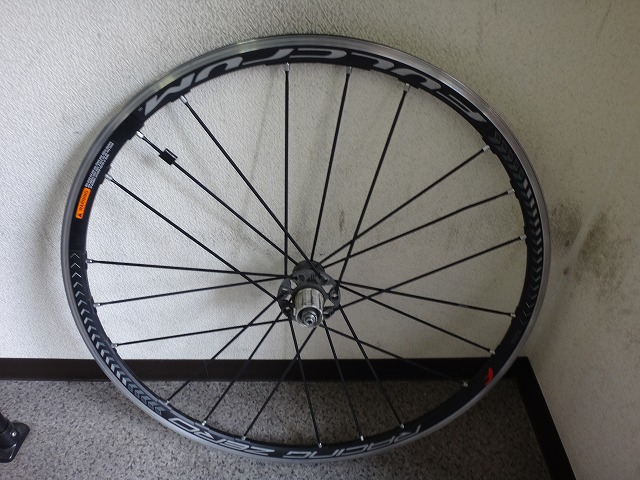
First up: the Racing Zero rear wheel.
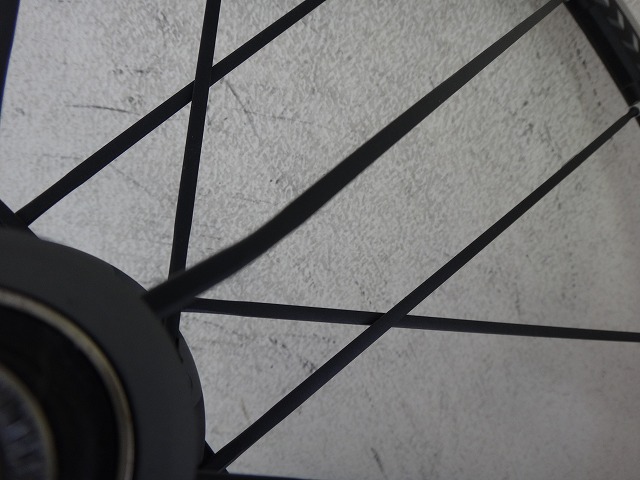
From a crash, there was spoke bending near the hub.
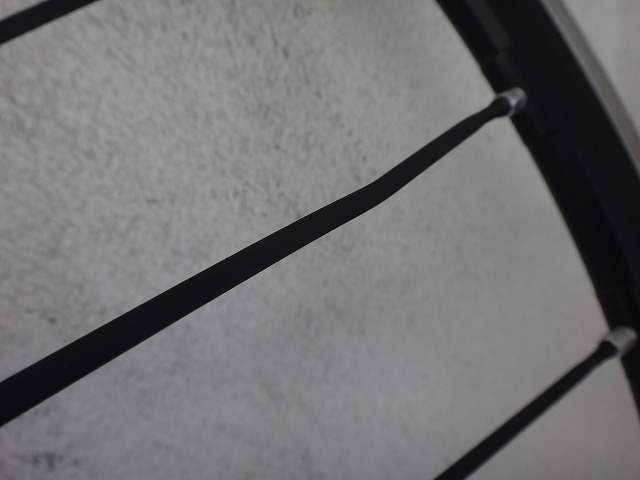
And the adjacent spoke is bent near the rim.
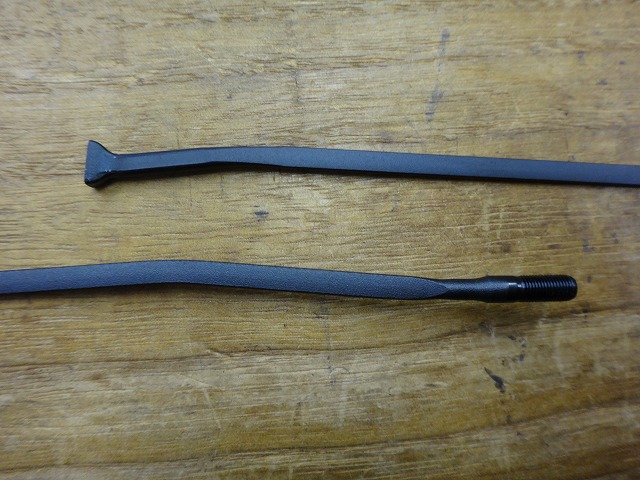
Replaced them.
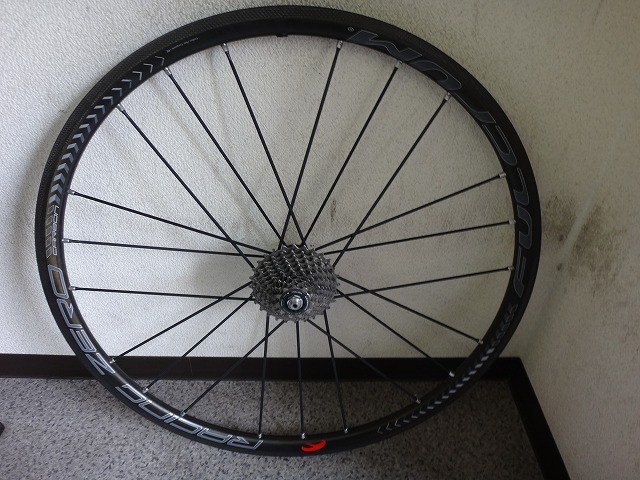
Next: a Racing Zero Carbon rear wheel.
One spoke was so loose I could shake it around by hand—really wobbly—and
the overall spoke tension was on the low side too.
The wobbly spoke was causing noticeable lateral runout at its position, so
I first corrected the lateral runout by adjusting just that spoke's nipple,
then tightened everything up a bit across the board.
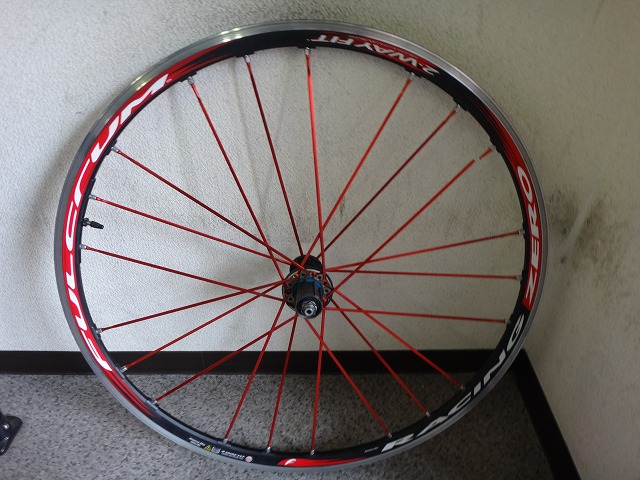
And now the real problem child: the Racing Zero 2WAY-FIT rear wheel.
Apparently it had a rim replacement done at a local shop once, but
the wheel building itself is so sloppy it's basically double the work.
The spoke tension is even lower than the Racing Zero Carbon I just did—
it doesn't even meet the minimum hang-weight spec.
On top of that, it's got centering issues and no radial runout correction at all.
I didn't ask which shop, but
this is not work I'd charge for.
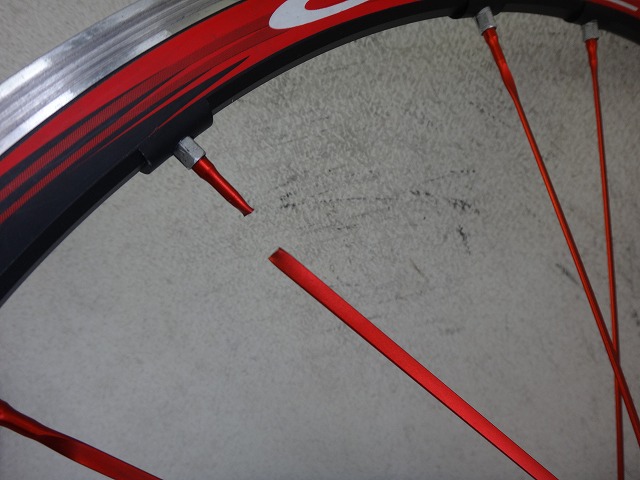
One spoke is broken.
This itself happened during riding, but
it's definitely not accidental—it's the shop's screwup.
If you look at the adjacent spoke in the image, you'll see
the spoke is twisted because proper tools weren't used to prevent twist.
Especially on the freewheel side—there were almost no spokes with zero twist.
If they'd cranked down hard on high-tension spokes with nipples that were stuck, I could barely accept it,
but with tension this low, why would spokes get twisted like this?
Really baffling.
Using Fulcrum's spoke twist tool—running the twisted part along the long slot in the direction of rotation—
I managed to eliminate most of the spoke twist.
First I replaced the broken spoke, then by adjusting only that spoke's nipple
I worked through the lateral runout correction,
roughly recreating the state just before the spoke broke.

And this much radial runout showed up.
The rim's bouncing up and down all over the place.
The phase of the radial runout peaks and valleys
has no relationship to the replaced spoke's position.
Since there's almost no lateral runout, they were riding it like this.
You can see the evidence in the image—the brake marks like Saturn's rings (the Cassini gap)
are all the same distance from the wheel center.
The distance from the outer edge of the brake mark to the truing stand gauge
stays constant regardless of where the rim is positioned.
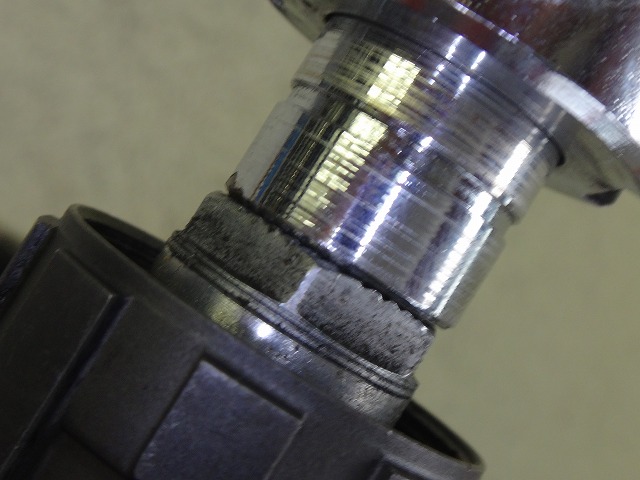
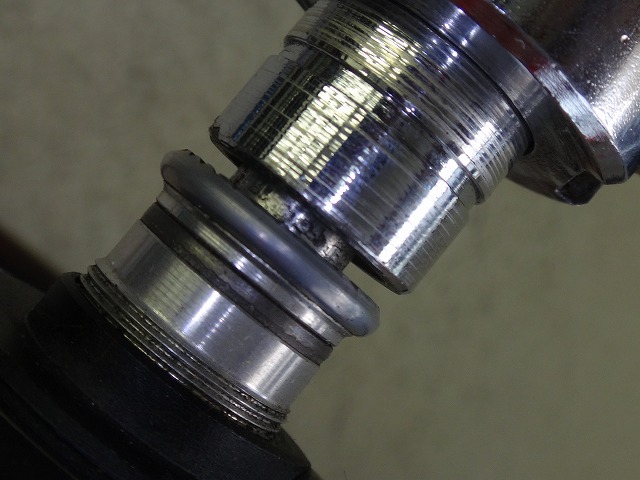
The rim was offset toward the freewheel side by this much.
That's not the direction it would shift from age and use, and the amount doesn't make sense either.
So this is what happens when someone who can only do lateral runout tries to build a wheel.
I didn't have confidence I could correct the radial runout and centering with just tightening from here, so
first I loosened the nipples quite a bit across the board.
It's basically a wheel rebuild—a complete rebuild, actually.
The work time went through stations like: "I could have finished a Nomu Lab front wheel by now" →
"I could have finished a Nomu Lab rear wheel by now" →
"I could probably have built a brand-new Racing Zero from scratch by this point"
and so on, passing quite a few milestones.
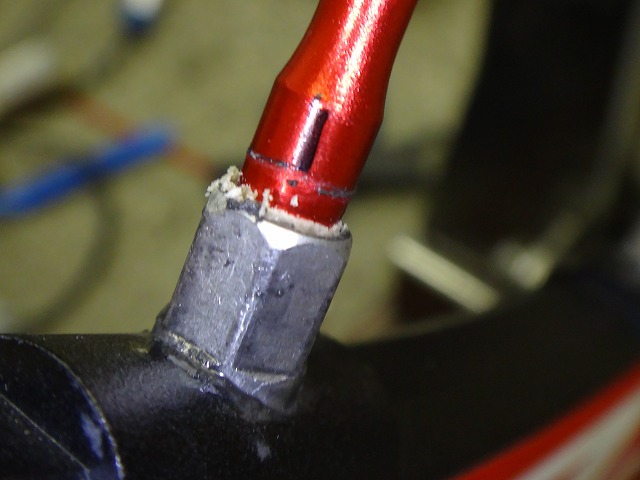
On the freewheel side, there were about three nipples stuck in the tightening direction.
Fortunately I was able to loosen them, so those ones got
completely separated from the spokes and the threads cleaned,
separate from the general loosening.
The reason some wouldn't tighten past a certain point was crispy adhesive residue hardened into the threads.
When the feel is clearly off (too hard) but you force it anyway,
the spoke twists—
(though non-stuck spokes are twisted too, somehow).
The spoke in the image has a mark at its original depth before loosening.
If it had been stuck on the loosening side too, I'd really be stuck.
From the provisional assembly state, with radial and lateral runout nearly gone
but the rim shifted hard toward the freewheel side,
I then center the wheel by one-sided tightening on the non-freewheel side.
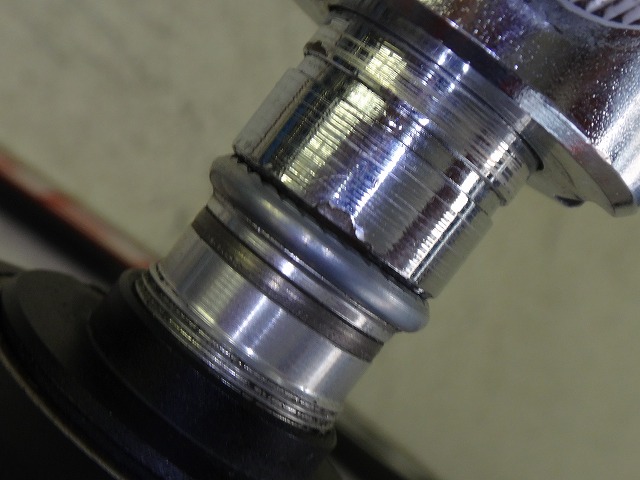

Deliberately offset state.
Rim shifted hard toward the freewheel side
with nearly zero radial and lateral runout—
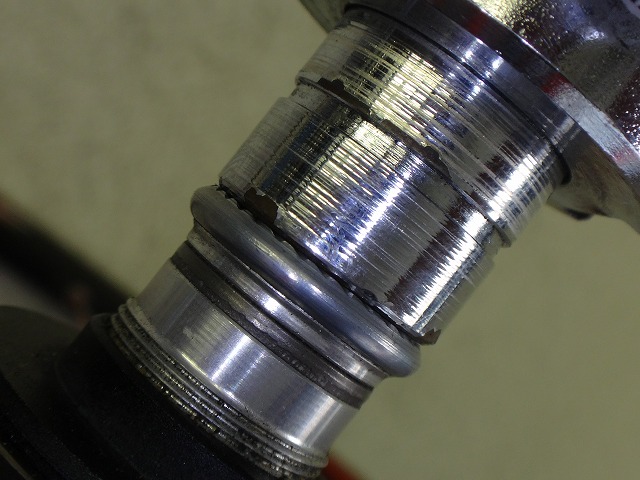

Centered.
I also corrected any runout that appeared from the centering work, just in case.

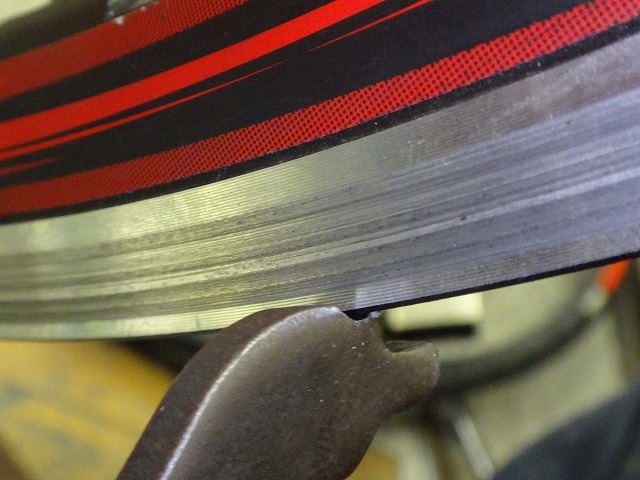
I pushed the radial runout correction to the limit.
I've seen this before on another Racing Zero,
but when the wheel spins, the brake marks dance up and down
within the brake zone that has no radial runout.

Fixed. I didn't overtension it—
I showed the customer the tension meter readings as I worked
(also showed them how low the pre-work numbers were)
and built it around the hang-weight upper limit, but
the condition it arrived in wasn't something you could call a wheel, so
there's no way the customer won't notice the difference when riding.
I did warn them beforehand that I might snap a spoke during the work,
but somehow I managed not to break a single one.