True, wheels again today (and so on).
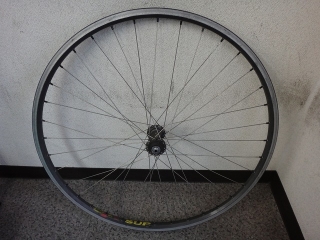
I received a wheel built with Mavic X517 rims from a customer (sort of).
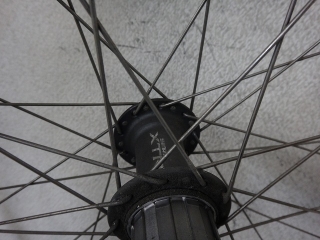
Both front and rear hubs are 950-series XTR 36H
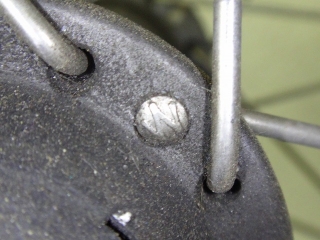
The spokes are Wheelsmith's
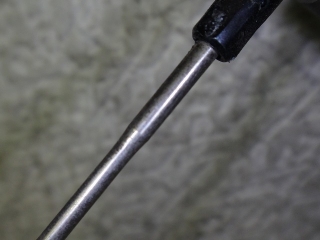
1.8–1.5–1.8mm butted round spokes, and
both wheels are built four-cross Italian pattern.
These spokes have nearly the same weight-to-spoke ratio as DT Revolution #15,
but DT has discontinued the #15-based Revolution in their current lineup.
In terms of sheer lightness, they exceed even CX-RAY,
but naturally their resistance to spoke wind-up is low, and with some rims it's almost guaranteed to occur.
However, with 32H or 36H, it's possible to finish building before it happens.
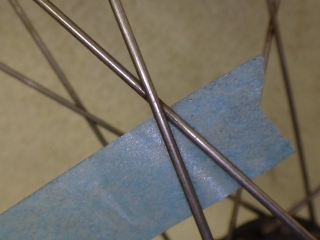
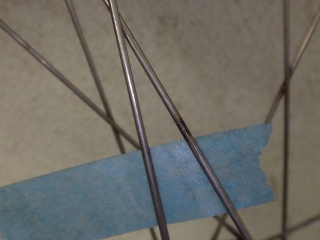
The looseness wasn't original—it was from a long period of non-use, which had caused the tension to drop.
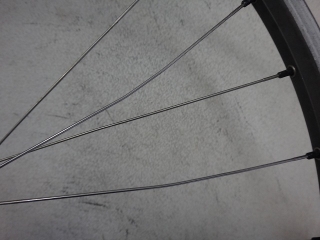
Also, there were some bent spokes,
so I decided to replace all the spokes.
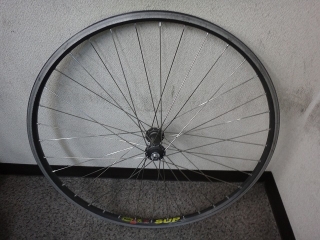
Built.
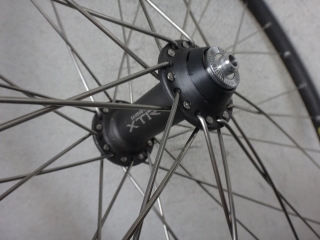
HB-M950 36H, all Competition 4-cross Italian pattern.
Before building the wheel, I cleaned the hub exterior while it was still unassembled,
and after preliminary assembly with some spoke tension applied,
I cleaned and greased the hub internals.
The reason for choosing 4-cross pattern was:
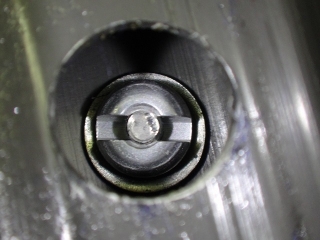
Among radial (0-cross), 4-cross, and 6-cross patterns for this rim and hub,
from my shop's Competition spoke inventory, the length that works without cutting
fit perfectly only for the 4-cross pattern.
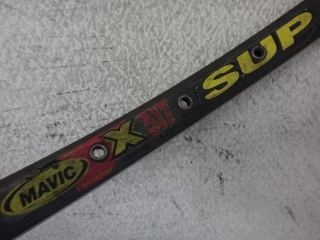
The rim—
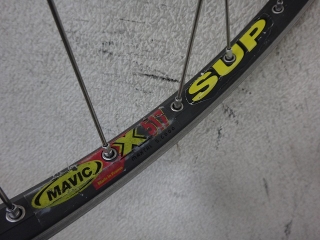
I cleaned it, but it didn't come out very clean.
If I were okay with removing the label, there would be another method, but...
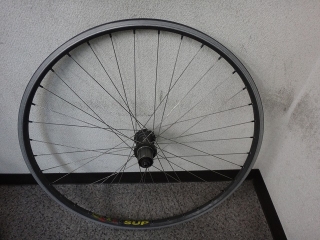
Now for the rear wheel.
Ultra-lightweight round spokes are completely pointless except for building wheels that "feel light" to hold.
I only use Revolution when building 32H or 36H
low-profile rims—specifically things like Ambrosio Formula Crono 20 or
Mavic GEL280.
Even with those rims, "Revolution is usable" is all it means.
From my experience, with the materials I currently have on hand,
I can build a wheel that actually rides properly with CX-RAY or Competition spokes.
Going back very far in history, you'd reach the era before CX-RAY and Aerolight even existed,
but even then, 14-gauge plain and 15-gauge plain spokes should exist,
and I would choose 15-gauge plain as the lightweight spoke option
that won't cause wind-up.
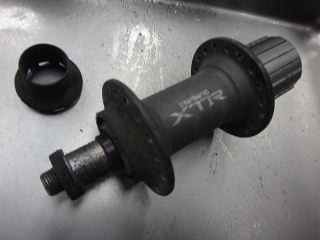
I adjusted the front hub's bearing play in the preliminary assembly state
because the bearing feel changes when spoke tension is applied.
However, if bearing adjustment becomes necessary mid-build,
it's easier to do the hub overhaul first anyway,
so I did a full overhaul on the rear hub while it was still disassembled.
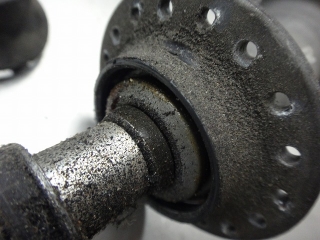
Before
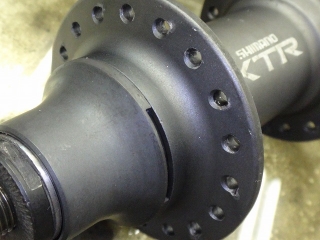
(Timeline's a bit jumbled) After

The 950-series XTR rear hub axle is

titanium.
With Shimano, hub axle length is the over-locknut dimension plus 11mm, so
this axle for 135mm hubs is 146mm long,
and for 130mm road hubs it's 141mm.
The contemporary 7700-series Dura-Ace rear hub has a steel axle, so
by sourcing this axle and cutting 5mm off the length,
you can lighten a Dura-Ace rear hub.
The 7700 and M950 front hubs both have
aluminum butted axles where the thread diameter differs between the bearing cone and end nut portions,
so they can't be lightened through parts swapping.
The 7700 is, as far as Shimano goes—and arguably in front hub history—
one of the finest cup-and-cone style thin-diameter aluminum-axle front hubs ever made.
The front hub on my current wheel is also a 7700.
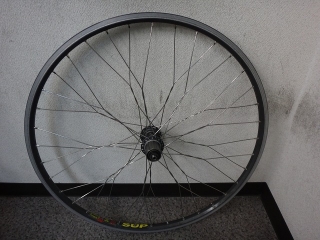
Built.
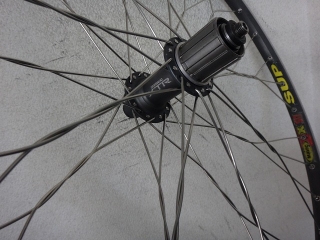
FH-M950 36H, Championship/Competition 4-6 Morabon Italian pattern.
This pattern choice was my call, but I did get approval from the customer.
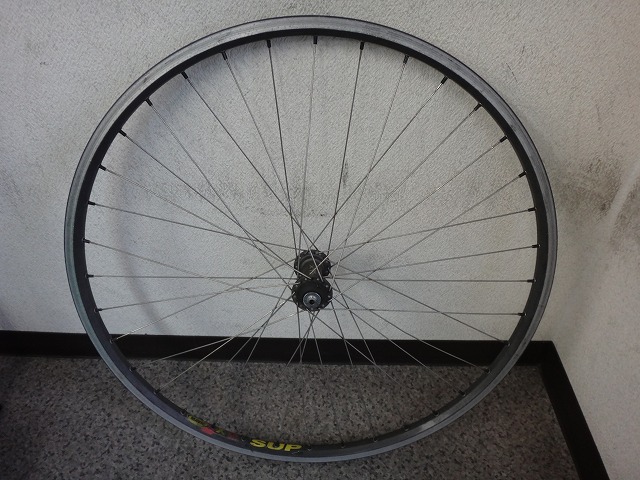
I received a wheel built with Mavic X517 rims from a customer (sort of).
Both front and rear hubs are 950-series XTR 36H

The spokes are Wheelsmith's
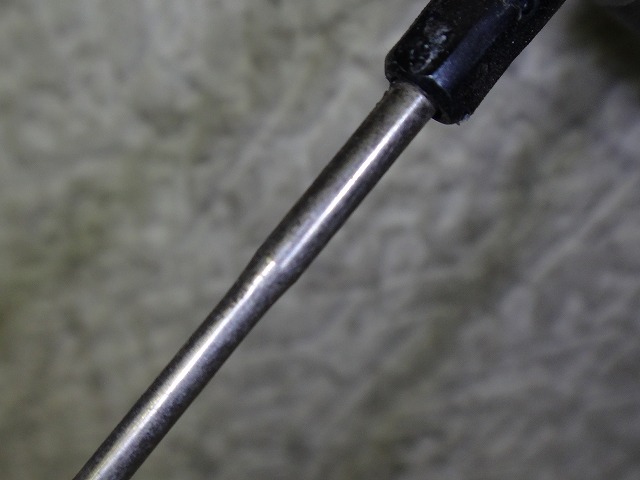
1.8–1.5–1.8mm butted round spokes, and
both wheels are built four-cross Italian pattern.
These spokes have nearly the same weight-to-spoke ratio as DT Revolution #15,
but DT has discontinued the #15-based Revolution in their current lineup.
In terms of sheer lightness, they exceed even CX-RAY,
but naturally their resistance to spoke wind-up is low, and with some rims it's almost guaranteed to occur.
However, with 32H or 36H, it's possible to finish building before it happens.

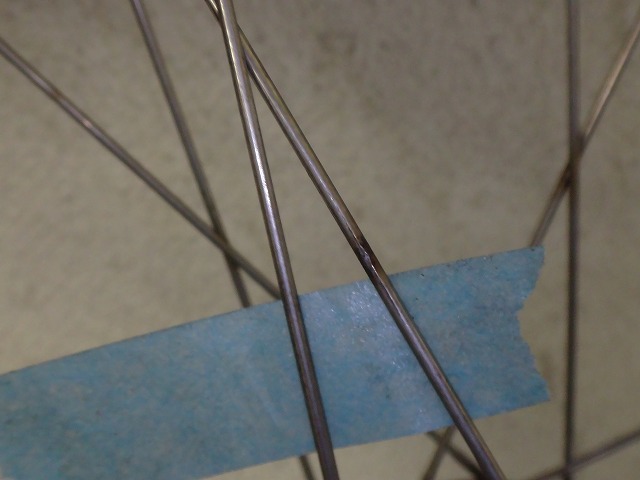
The looseness wasn't original—it was from a long period of non-use, which had caused the tension to drop.
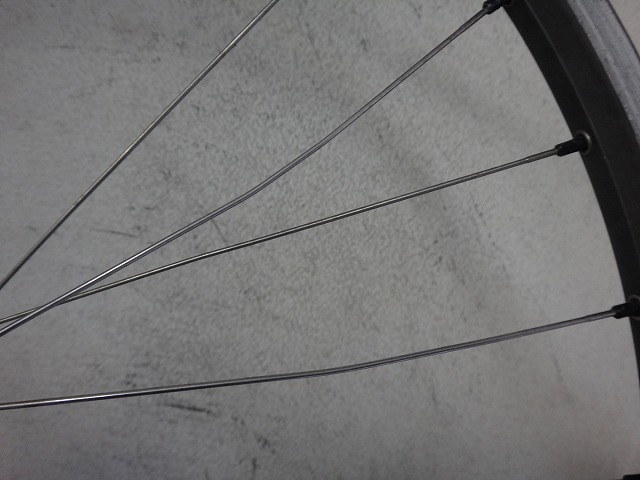
Also, there were some bent spokes,
so I decided to replace all the spokes.
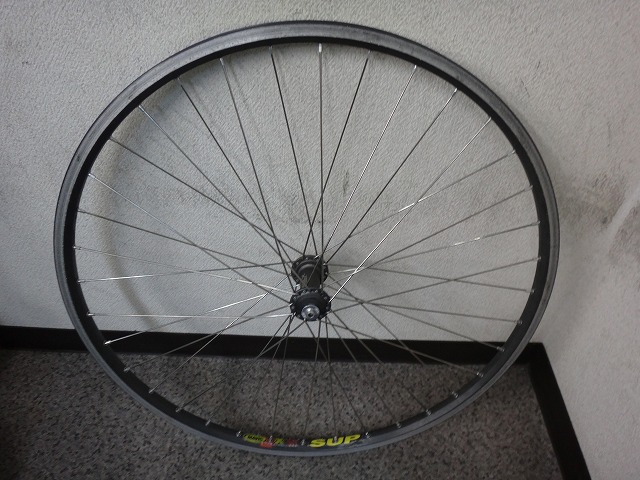
Built.
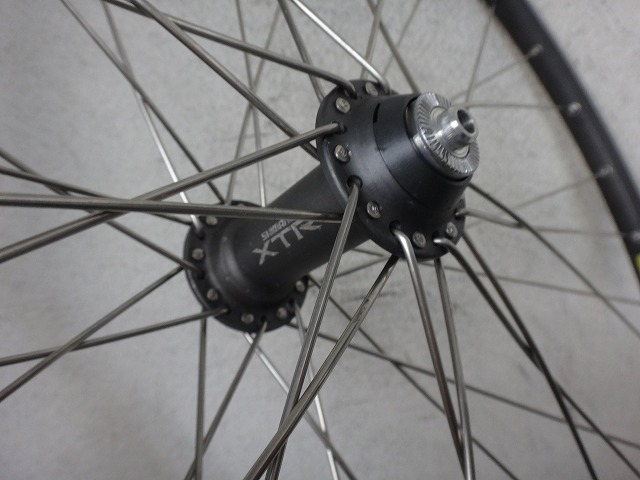
HB-M950 36H, all Competition 4-cross Italian pattern.
Before building the wheel, I cleaned the hub exterior while it was still unassembled,
and after preliminary assembly with some spoke tension applied,
I cleaned and greased the hub internals.
The reason for choosing 4-cross pattern was:
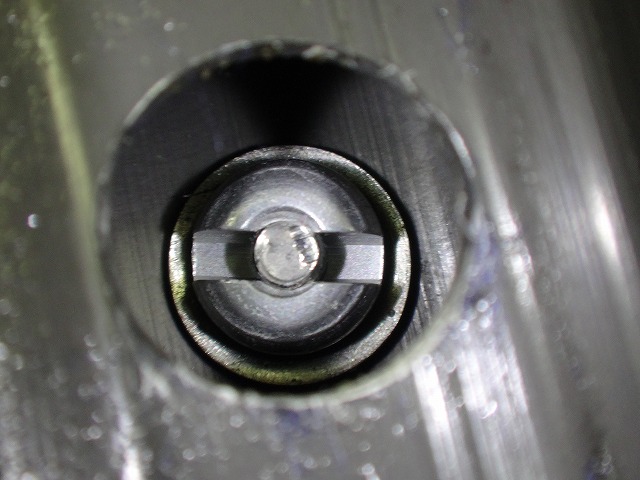
Among radial (0-cross), 4-cross, and 6-cross patterns for this rim and hub,
from my shop's Competition spoke inventory, the length that works without cutting
fit perfectly only for the 4-cross pattern.

The rim—
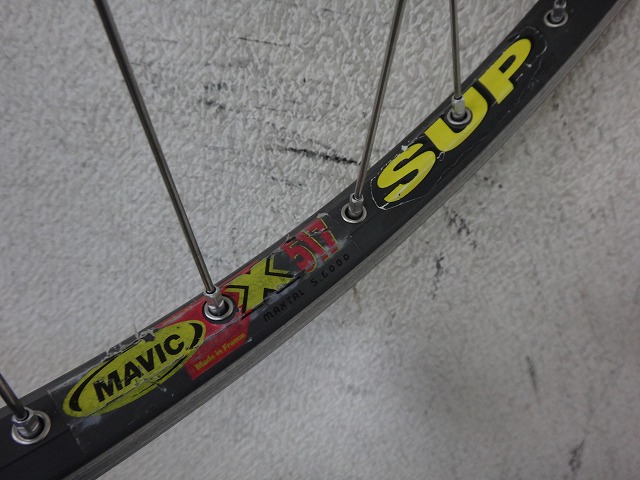
I cleaned it, but it didn't come out very clean.
If I were okay with removing the label, there would be another method, but...

Now for the rear wheel.
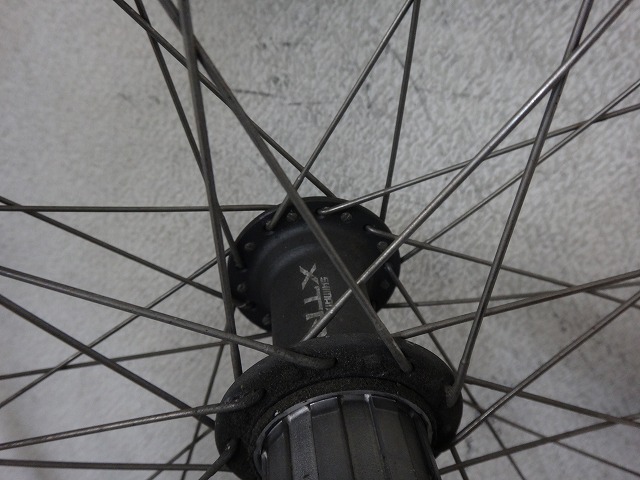
Ultra-lightweight round spokes are completely pointless except for building wheels that "feel light" to hold.
I only use Revolution when building 32H or 36H
low-profile rims—specifically things like Ambrosio Formula Crono 20 or
Mavic GEL280.
Even with those rims, "Revolution is usable" is all it means.
From my experience, with the materials I currently have on hand,
I can build a wheel that actually rides properly with CX-RAY or Competition spokes.
Going back very far in history, you'd reach the era before CX-RAY and Aerolight even existed,
but even then, 14-gauge plain and 15-gauge plain spokes should exist,
and I would choose 15-gauge plain as the lightweight spoke option
that won't cause wind-up.

I adjusted the front hub's bearing play in the preliminary assembly state
because the bearing feel changes when spoke tension is applied.
However, if bearing adjustment becomes necessary mid-build,
it's easier to do the hub overhaul first anyway,
so I did a full overhaul on the rear hub while it was still disassembled.
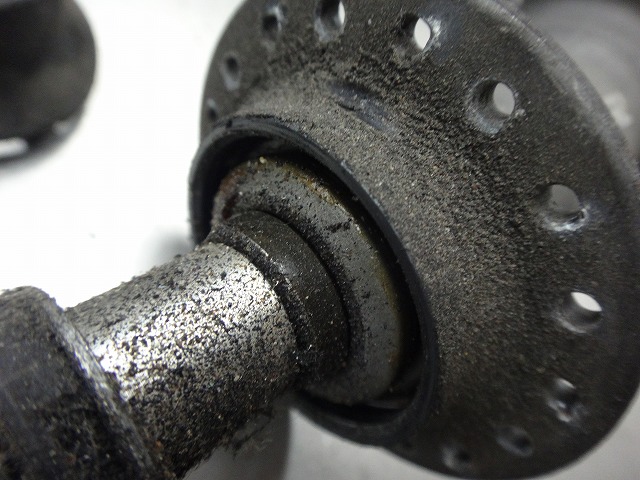
Before

(Timeline's a bit jumbled) After
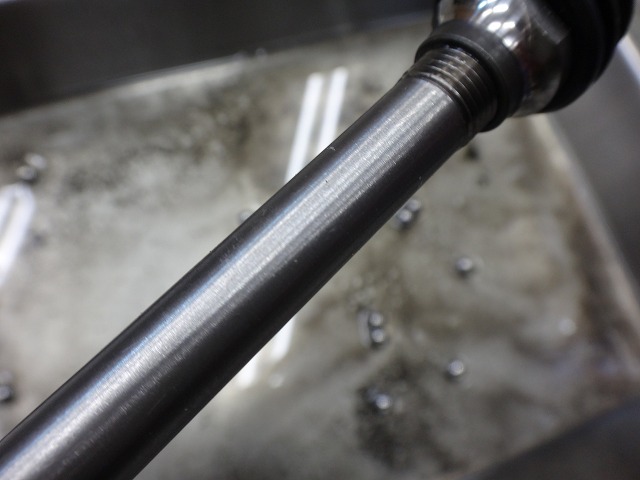
The 950-series XTR rear hub axle is
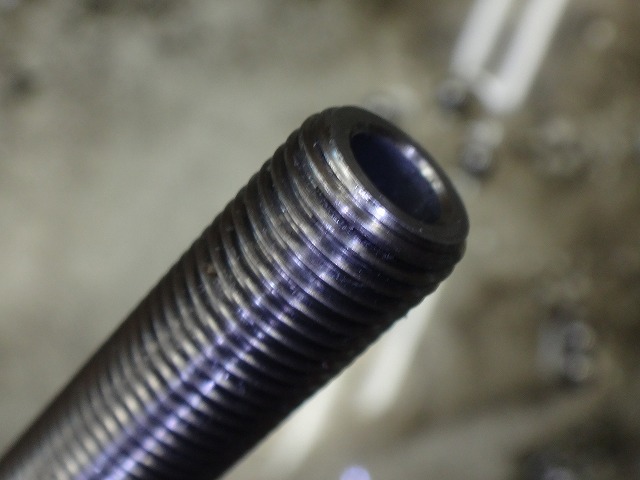
titanium.
With Shimano, hub axle length is the over-locknut dimension plus 11mm, so
this axle for 135mm hubs is 146mm long,
and for 130mm road hubs it's 141mm.
The contemporary 7700-series Dura-Ace rear hub has a steel axle, so
by sourcing this axle and cutting 5mm off the length,
you can lighten a Dura-Ace rear hub.
The 7700 and M950 front hubs both have
aluminum butted axles where the thread diameter differs between the bearing cone and end nut portions,
so they can't be lightened through parts swapping.
The 7700 is, as far as Shimano goes—and arguably in front hub history—
one of the finest cup-and-cone style thin-diameter aluminum-axle front hubs ever made.
The front hub on my current wheel is also a 7700.
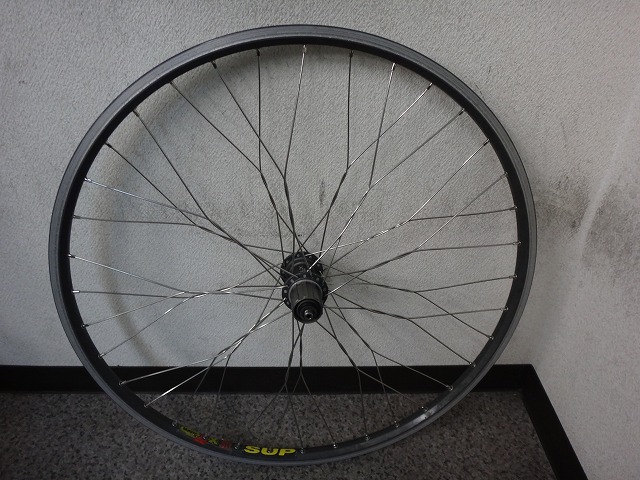
Built.
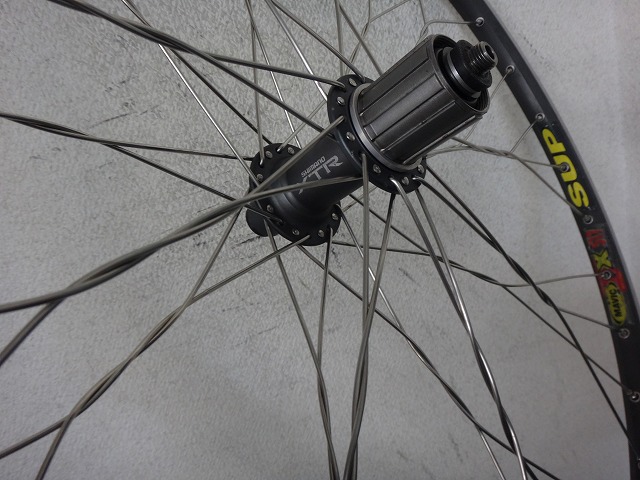
FH-M950 36H, Championship/Competition 4-6 Morabon Italian pattern.
This pattern choice was my call, but I did get approval from the customer.